Which Time Zone Arizona Deadlines Use
It’s a tale as old as time, or at least as old as online hunting applications: you’ve meticulously planned your Arizona hunt, studied the units, picked your dream tags, and then, boom, you miss the deadline because of a silly time zone mix-up. It's frustrating, and honestly, Arizona's unique approach to time can be a real head-scratcher. This guide is here to clear up exactly which time zone Arizona uses for its critical hunting application deadlines, so you never miss another opportunity to chase big game in the Grand Canyon State.
Arizona's Peculiar Time Zone and Hunting Implications
Arizona is known for its stunning landscapes and diverse hunting opportunities, but it's also famous for one quirky detail: its relationship with Daylight Saving Time. This unique situation often catches out-of-state hunters, or even residents who aren't constantly tracking the calendar, leading to last-minute scrambles or, worse, missed application windows. Understanding this nuance is absolutely critical for anyone hoping to draw a coveted Arizona tag.
The Year-Round Mountain Standard Time Rule
For the vast majority of the state, Arizona operates on Mountain Standard Time (MST) all year long. This means that when most of the country "springs forward" for Daylight Saving Time in March, Arizona simply stays put. It doesn't adjust its clocks. This unchanging approach keeps things consistent locally but creates a fluctuating relationship with other states' time zones throughout the year.
During the fall and winter months, when states like Colorado and Utah are on Mountain Standard Time (MST), Arizona aligns perfectly. However, come spring and summer, when those states switch to Mountain Daylight Time (MDT), Arizona's MST becomes equivalent to Pacific Daylight Time (PDT). So, if you're sitting in Salt Lake City in July at 5 PM MDT, it's 5 PM MST in Phoenix, which is the same as 5 PM PDT in Los Angeles. This might sound like a minor detail, but it’s precisely where the confusion lies for important deadlines. If you’re trying to submit an application at 7 PM Arizona time from, say, Denver, and you don’t account for the shift, you could easily be an hour late without realizing it. The key takeaway is that when the Arizona Game and Fish Department (AZGFD) says "Arizona Time," they mean MST, regardless of what time of year it is.
The Navajo Nation Exception
Just to add another layer of complexity, it's worth noting that the Navajo Nation, which spans parts of northeastern Arizona, does observe Daylight Saving Time. So, within the state borders, there's actually a region that switches its clocks. However, for the purposes of state-level hunting permit applications, this exception rarely, if ever, affects the deadlines set by the Arizona Game and Fish Department. The AZGFD consistently uses the non-Daylight Saving Time standard for its official business. Therefore, while it's an interesting local detail, hunters applying for statewide permits should always default to the main Arizona (MST year-round) time standard to avoid any application snafus.
Decoding Arizona Game and Fish Department Deadlines
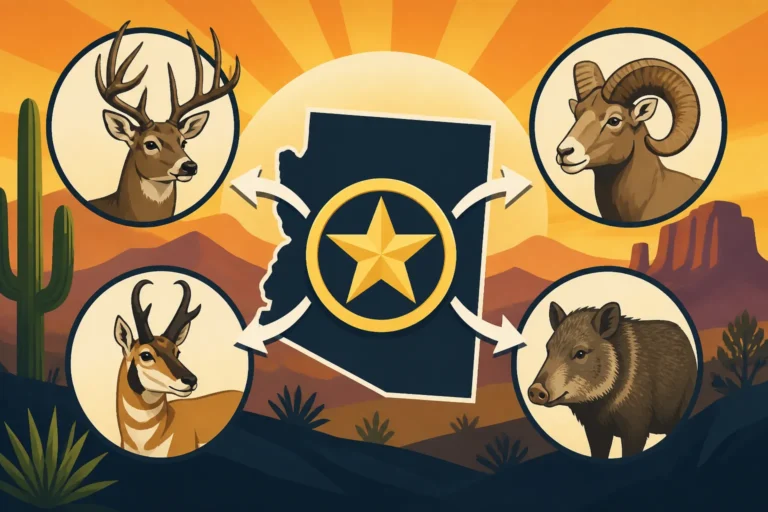
Arizona runs two primary draw cycles for its big game tags, each with specific deadlines that you absolutely cannot afford to miss. These deadlines are set firmly in "Arizona Time," and misunderstanding what that means can literally cost you a chance at a tag. Let's break down these crucial periods.
The February Draw Cycle for Elk and Antelope
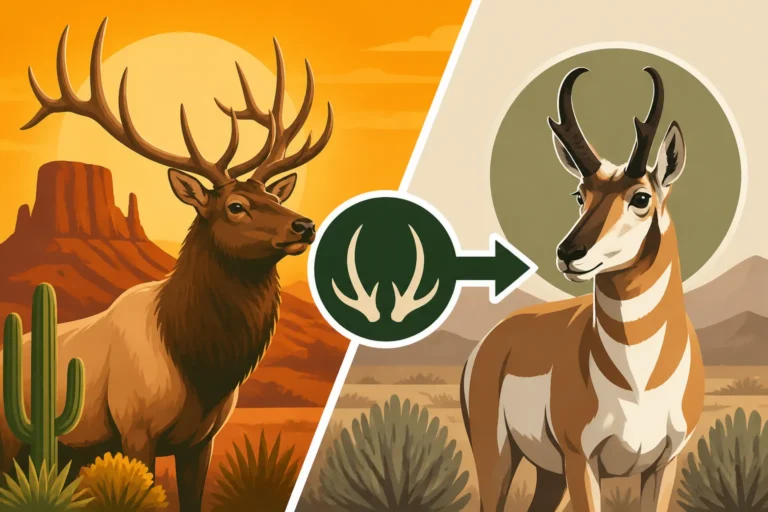
The first major application window typically closes in early to mid-February for premier species like elk and pronghorn antelope. For example, in past years, the deadline has often fallen on the second Tuesday of February, closing promptly at 7:00 PM "Arizona Time." During this time of year, most of the country is also operating on Standard Time (e.g., MST in the Mountain West, PST on the West Coast, CST in the Central states). This means that for states on Mountain Standard Time, the deadline will align directly. If you’re in a state observing Pacific Standard Time, you'll be an hour behind, and Central Standard Time will be an hour ahead.
It's vital to remember that "Arizona Time" means Mountain Standard Time (MST). So, if you're applying from, say, Albuquerque, New Mexico, which is also on MST in February, the deadline will feel consistent. But if you’re in California, planning to submit your application right at 7 PM PST, you’ll actually be submitting it at 8 PM Arizona Time, and your application will be too late. Always mark your calendar with the converted time for your local area. The stakes are high for these highly sought-after tags, and you don't want a simple time zone error to be the reason you're not in the running. For more details on this specific window, you might want to look into articles like The Arizona Elk and Antelope Application Deadline.
The June Draw Cycle for Deer, Bighorn, and Bison
The second major draw cycle, covering species like deer (both Coues and Mule deer), bighorn sheep, and bison, typically has its deadline in early to mid-June. Similar to the February draw, this deadline often lands on the second Tuesday of June, also closing at 7:00 PM "Arizona Time." This is where the time zone difference becomes particularly tricky for many out-of-state applicants, as most of the country is observing Daylight Saving Time during June.
As Arizona remains on Mountain Standard Time (MST) year-round, while neighboring states switch to Mountain Daylight Time (MDT), the effect is that Arizona's time aligns with Pacific Daylight Time (PDT). So, if you're in a state observing MDT (like Colorado or Utah), the 7:00 PM Arizona deadline will be 8:00 PM your time. If you’re on the West Coast, say in California or Nevada, the 7:00 PM Arizona deadline will be 7:00 PM PDT, matching your local time. This reversal of the time difference compared to the winter months is a common point of confusion. Many hunters have missed out on coveted tags, including those for Arizona Holds Desert and Rocky Mountain Bighorns or even the popular OTC archery deer, because they miscalculated the deadline. Always perform the conversion to your local time zone carefully. You can find more specific information on the deer and other species deadlines in guides like The Arizona Deer, Sheep and Bison Deadline.
Strategies to Avoid Missing Your Chance
Missing a hunting application deadline due to a time zone miscalculation is a painful lesson to learn. Thankfully, with a little proactive planning and by using the right resources, it’s an easily avoidable mistake. The key is to never assume and always verify.
Double-Checking the Official Arizona Game and Fish Website
The absolute, definitive source for all Arizona hunting deadlines is the official Arizona Game and Fish Department (AZGFD) website and their annual hunting regulations booklet. Before you even think about hitting submit, navigate directly to their portal. Look for the specific wording of the deadline—it will always state "Arizona Time." Do not rely on third-party websites or even forums without cross-referencing with the official source. The AZGFD will explicitly mention "What Time Arizona Applications Close" in their official documentation, often in the application instructions themselves.
I always recommend downloading the official regulations and reading them cover-to-cover, particularly the sections pertaining to application dates and times. It might seem tedious, but it’s far less painful than realizing you’ve waited all year only to miss an application because you weren't clear on the exact closing minute. Setting up an Setting Up an Arizona Portal Account well in advance also helps familiarize you with the system and avoids last-minute tech glitches on deadline day.
Leveraging Technology and Reminders
In today's digital age, there's no excuse for missing a deadline when so many tools are at our fingertips. As soon as the application dates are announced, go straight to your digital calendar—Google Calendar, Outlook, whatever you use—and create an event. Crucially, when you set this reminder, specify the time zone as your local time after you've made the conversion from "Arizona Time." For instance, if the Arizona deadline is 7:00 PM MST in June (which is 7:00 PM PDT for California hunters), set your reminder for 7:00 PM PDT. If you're in Colorado, where it's 8:00 PM MDT, set your reminder for 8:00 PM MDT. Better yet, set multiple reminders: a week before, a day before, and then two hours before the actual deadline.
Tools like GoHunt are incredibly valuable for this. Their Insider platform offers robust application data, strategy articles, and, perhaps most importantly, a comprehensive "Application Deadlines" section. Many hunters use GoHunt not just for checking Reading Arizona Hunt Permit Application Data or E-Scouting an Arizona Unit Before the Season, but specifically for their personalized deadline reminders. These services can send you alerts directly to your phone or email, often tailored to your specific application plans. This kind of redundancy is your best friend when dealing with time-sensitive applications across different time zones. Don't wait until the last possible minute to submit, even with reminders. Server loads can be heavy, and unexpected internet issues can arise. Aim to complete your application at least a day in advance to give yourself a buffer.
Here’s a quick reference table for those critical deadlines, assuming a 7:00 PM Arizona Time closure:
| Application Cycle | Typical Deadline Month | Arizona Time (MST) | During DST (e.g., June) Equivalent | Your Local Time (If MDT) | Your Local Time (If PDT) |
|---|---|---|---|---|---|
| Elk & Antelope | February | 7:00 PM MST | 7:00 PM MST | 7:00 PM MST | 6:00 PM PST |
| Deer, Bighorn, Bison | June | 7:00 PM MST | 7:00 PM PDT | 8:00 PM MDT | 7:00 PM PDT |
Note: Always verify exact dates and times on the official AZGFD website, as they can shift slightly year to year.
Understanding What Happens Post-Deadline
So, you’ve meticulously checked the time zone, submitted your application well before the deadline, and now you’re playing the waiting game. What happens next? The period after the application deadline is filled with anticipation, but it also has its own timeline for results, notifications, and, if you're lucky, financial transactions.
Draw Results and Notifications
Once the application window closes, the Arizona Game and Fish Department begins the process of sorting applications, running the draw, and allocating tags. This is where your bonus points, accumulated over years of applying, really come into play. For instance, the system for How Arizona's Bonus Point Pass Awards the First Twenty Percent significantly impacts who draws. Typically, draw results for the February cycle (elk and antelope) are posted in late March or early April, while the June cycle (deer, bighorn, bison) results often appear in late July or early August.
The AZGFD will notify successful applicants primarily through their online portal and often via email. You won't receive a physical letter in the mail confirming your draw success initially. It’s a good habit to regularly check the "Draw Results" section of your AZGFD portal account during these anticipated timeframes. Knowing When Arizona Posts Draw Results and How Arizona Notifies Successful Applicants is almost as important as submitting on time! If you’ve applied as part of a group, everyone in the group will receive notification.
Financial Transactions and Tag Acquisition
One of the most exciting moments after the draw results are released, besides seeing your name on the successful list, is when your credit card is charged. This is the definitive confirmation that you've drawn a tag. The AZGFD typically charges credit cards for successful applicants shortly before or as the draw results are officially posted. It's a good idea to ensure the credit card linked to your application has sufficient funds during this period, or you risk your drawn tag being forfeited. Information on When Arizona Charges Your Card for a Tag can help you prepare financially.
If you don't draw a tag, your application fee (which is typically separate from the tag fee) is usually non-refundable, but your tag fee itself won't be charged. For those who are unsuccessful in the main draw, there might be opportunities for Arizona Leftover Tag Sales After the Draw or even OTC tags for species like javelina or specific archery deer seasons. Always review the regulations for these options, but drawing a coveted permit in the main draw, made possible by meticulous application and time zone awareness, is always the preferred path.
Disclaimer
Please remember that hunting regulations, seasons, and application deadlines are subject to change. While this guide provides comprehensive information, always consult the official Arizona Game and Fish Department website and the current year's hunting regulations booklet for the most accurate and up-to-date details before applying or heading afield.