The Nonresident Tag Cap in Arizona
Applying for big game tags in Arizona can feel like trying to solve a complex puzzle, especially for nonresident hunters who often grapple with lower draw odds and a feeling that the deck is stacked against them. This comprehensive guide will pull back the curtain on Arizona's nonresident tag cap, explaining exactly what it means for your hunting aspirations, how it affects your strategy, and what factors are at play.
The Specifics of Arizona's Nonresident Tag Cap
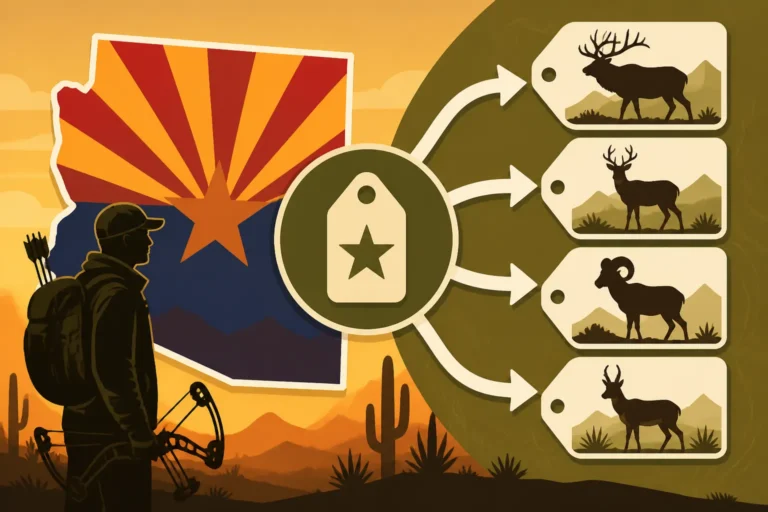
Arizona has a legal framework in place that limits the number of big game hunting tags allocated to nonresidents for any given species. This isn't just a suggestion; it's a hard rule established in state law. The Arizona Game and Fish Department (AZGFD) is mandated to ensure that no more than 10% of the total available tags for any specific big game species hunt are awarded to nonresident applicants. This 10% cap applies to all permit-tag species, including highly sought-after animals like elk, mule deer, Coues deer, bighorn sheep, and pronghorn.
It's crucial to understand that this cap applies to the total number of tags issued for a specific hunt, not just a general statewide percentage. So, if a particular elk hunt code has 100 tags available, no more than 10 of those tags can go to nonresident hunters. This limitation is a significant hurdle that nonresident applicants face, making every application a highly competitive endeavor. This isn't unique to Arizona; many western states have similar provisions, but understanding the specifics here is key to managing expectations and refining your application strategy.
The cap is an overall limitation, not necessarily applied equally across every single draw pass. Instead, it acts as an umbrella over the entire allocation process, ensuring that the final distribution adheres to the 90/10 resident/nonresident split. This distinction is important because it means the cap impacts how tags are distributed in both the bonus point pass and the random draw pass, which we'll explore in more detail shortly.
Why Arizona Implements a Nonresident Tag Cap
Understanding the "why" behind the nonresident tag cap sheds light on the priorities of the Arizona Game and Fish Commission and the state's wildlife management philosophy. The primary reason, and one often cited by wildlife agencies across the West, is to prioritize hunting opportunities for state residents.
Prioritizing Resident Opportunities
Arizona's wildlife resources are largely considered a public trust for the citizens of the state. Residents contribute to the management and conservation efforts through their general tax dollars, license fees, and sales taxes on hunting equipment, all year long. The cap ensures that the majority of hunting opportunities, especially for limited-entry and trophy big game hunts, remain accessible to those who fund and live in the state. This fosters a sense of ownership and stewardship among residents, encouraging their continued support for wildlife conservation programs. Without such a cap, the immense popularity of Arizona's trophy hunting could lead to a situation where nonresidents, potentially with more disposable income, could dominate the draw, marginalizing resident hunters.
Economic and Conservation Contributions
While nonresidents certainly contribute significantly to Arizona's economy through their travel, lodging, and hunting expenditures, the foundational financial support for the Arizona Game and Fish Department often comes from residents. License fees, application fees, and excise taxes on hunting equipment (through the Pittman-Robertson Act) are vital for wildlife research, habitat restoration, and enforcement. By ensuring that residents receive the vast majority of tags, the state reinforces the idea that these opportunities are primarily for those who consistently contribute to the state's conservation budget and reside within its borders. It's a way of recognizing and rewarding the consistent investment of Arizona's own citizens in their wildlife.
Managing Hunting Pressure and Quality
Another less overt reason for the cap can be related to managing overall hunting pressure. While Arizona certainly has vast public lands, certain units and specific hunts are incredibly popular. By limiting nonresident participation, the state can exert more control over the total number of hunters in particular areas, especially during prime seasons. This helps maintain the quality of the hunting experience for all, preventing overcrowding in popular units and ensuring sustainable harvest levels. It’s a delicate balancing act to provide opportunity while also protecting the resource.
How the Cap Interacts with Arizona's Draw System
Arizona's big game draw system is renowned for its complexity, primarily due to the two-pass system: the bonus point pass and the random pass. The nonresident tag cap weaves through both of these passes, influencing how tags are distributed. This is where many nonresident hunters find themselves scratching their heads.
The Bonus Point Pass and the Nonresident Cap
The first 20% of tags for any given hunt are allocated through the bonus point pass. In this pass, hunters with the most accumulated bonus points for a specific species have the highest chance of drawing a tag. For nonresidents, this pass is where the impact of the cap is keenly felt. Even if you have a significant number of bonus points, you are still competing within the smaller pool of nonresident tags.
The 10% nonresident cap applies to the total tags for a hunt code. This means that if a hunt has 100 tags, only 10 can go to nonresidents. When the bonus point pass begins, it doesn't mean nonresidents get 20% of their 10% (i.e., 2 tags). Instead, the system works to ensure that at the end of both passes, the 10% nonresident cap is met, but not exceeded.
What often happens is that nonresidents with very high bonus points do draw in the bonus point pass, but only until the nonresident allocation for that hunt code is approaching its 10% limit. Once that threshold is hit, even a nonresident with a massive number of points might not draw if the remaining tags in the bonus point pass would push the nonresident total over the 10% limit for that hunt. This is why you often hear stories of nonresidents with 20+ points for elk still failing to draw, as they’re competing for a very limited number of high-point tags. Resources like GoHunt are invaluable for analyzing historical draw odds and seeing how many nonresident tags were truly available in the bonus point pass for a given unit.
For a deeper dive, you can explore specific articles like How Arizona's Bonus Point Pass Awards the First Twenty Percent or Three Ways to Earn an Arizona Bonus Point to better understand this foundational layer of the draw.
The Random Pass and Nonresident Chances
After the bonus point pass allocates the initial 20% of tags, the remaining 80% of tags are distributed in the random pass. In this pass, all applicants, regardless of their bonus point total (except for a weighted chance based on points), have a random chance to draw. This is where many nonresidents hope to get lucky.
However, the nonresident cap still applies. The number of nonresident tags available in the random pass will be whatever tags remain from the 10% total allocation after the bonus point pass has run its course. For instance, if 5 nonresident tags were drawn in the bonus point pass for a 100-tag hunt, only 5 more nonresident tags can be drawn in the random pass. The odds here are even more daunting, as nonresidents are competing with a vast pool of residents for those very few remaining nonresident spots.
This setup makes it incredibly difficult for a nonresident with few or no bonus points to draw a desirable tag. While the random pass is random, the pool of available nonresident tags is so minuscule that success is often a long shot. This dynamic underscores why building points consistently, year after year, is a common strategy, even if it doesn't guarantee a tag. Learning about Earning an Arizona Point by Applying is a smart first step.
Here's a simplified look at how the cap can affect allocation for a hypothetical hunt:
| Hunt Code Example | Total Tags Available | Resident Tag Pool (90%) | Nonresident Tag Pool (10%) |
|---|---|---|---|
| Unit 23 Elk | 100 | 90 tags | 10 tags |
| Unit 9 Mule Deer | 50 | 45 tags | 5 tags |
| Unit 37B Pronghorn | 20 | 18 tags | 2 tags |
This table clearly illustrates the very limited number of tags available to nonresidents, especially for hunts with smaller quotas.
Navigating the Draw as a Nonresident Hunter
Given the strict 10% nonresident tag cap and Arizona's competitive draw system, nonresidents need a clear strategy to maximize their chances. It's not about being discouraged, but about being realistic and smart.
Consistent Point Accumulation
The most fundamental strategy for any nonresident is to consistently apply for bonus points. Even if you don't plan to hunt every year, applying for a point-only option (if available for your desired species) keeps you in the game and increases your odds in the bonus point pass over time. Remember, points don't carry over between species, so focus on the animal you most want to hunt. Learn more about What Happens to Arizona Points When You Draw to understand the full lifecycle of your points.
Strategic Unit and Species Selection
Not all Arizona hunts are created equal when it comes to nonresident draw odds. Some units are perennially difficult to draw, even for residents with many points. As a nonresident, it might be beneficial to research units with slightly higher tag allocations or those that historically have better (though still tough) nonresident draw rates. Utilizing resources like GoHunt can provide crucial data on past draw odds, allowing you to make more informed decisions when selecting your hunt codes. Tools that analyze Reading Arizona Hunt Permit Application Data can be a game-changer.
Considering less popular species or weapon types can also offer a sliver of improved opportunity. For example, while rifle elk tags are incredibly hard to draw, some muzzleloader or archery hunts might have slightly different draw dynamics, though the 10% cap still applies. You can also look into Arizona Runs Two Draw Cycles, February and June to understand when to apply for different species.
Exploring Over-the-Counter Opportunities
While this article focuses on permit-tags, it's worth noting that Arizona does offer some robust over-the-counter (OTC) hunting opportunities that are not subject to the draw or the 10% cap. The most prominent example is the five-month archery deer season, which allows nonresidents to purchase an OTC tag and hunt during specific periods. Similarly, archery javelina tags are available year-round OTC. These hunts offer a fantastic way for nonresidents to experience Arizona hunting without the stress of the draw, and often provide excellent hunting experiences themselves. The article on Arizona's Over-the-Counter Archery Deer Tag Explained provides more details.
Group Applications
Nonresidents can apply as part of a group, which can be beneficial or detrimental depending on the specific rules. In Arizona, group applications average the bonus points of all applicants. This means if you have high points and apply with a partner who has fewer points, your effective point total for the draw will be lower. While this might decrease your odds in the bonus point pass, it can be a good strategy for hunting partners who want to ensure they hunt together if drawn. Understanding Group Application Rules in the Arizona Draw is essential before you apply this way.
Final Thoughts on the Nonresident Cap
The nonresident tag cap in Arizona is a fundamental aspect of its big game management and draw system. It's designed to prioritize resident hunters and manage the state's valuable wildlife resources sustainably. For nonresidents, this means navigating a more challenging landscape, where every tag is a coveted prize. Success hinges on a combination of patience, consistent point accumulation, strategic application choices, and diligent research into draw odds and unit specifics. With a clear understanding of the cap and the draw system, you can develop a realistic and effective plan for your Arizona hunting adventures.
Disclaimer
Please remember that hunting regulations, seasons, and tag allocation processes can change. Always consult the most current Arizona Game and Fish Department regulations and official publications before applying for any hunt or heading into the field. This guide provides general information and should not replace official sources.