What an OHV Decal Covers on Trust Land
Navigating Arizona's vast landscapes for hunting can feel like untangling a ball of yarn, especially when it comes to understanding public land access and all the permits involved. A common point of confusion for many hunters is exactly what an Off-Highway Vehicle (OHV) decal allows you to do, particularly when you’re driving across Arizona State Trust Land. This guide aims to clear up that mystery, detailing the true scope and limitations of your OHV decal so you can focus on the hunt without worrying about unexpected fines or trespassing issues.
Deciphering Arizona State Trust Land: More Than Just Public Access
Before we dive into OHV decals, it's crucial to understand what Arizona State Trust Land actually is. Unlike federal lands managed by the Bureau of Land Management (BLM) or the U.S. Forest Service, which are generally open to the public for recreation, Arizona State Trust Land exists to generate revenue for specific state beneficiaries, primarily public schools. This fundamental difference means access rules can be a little more stringent and, frankly, confusing for hunters who are used to a more open-door policy on traditional public land.
Arizona manages a massive amount of this land, nearly 9.2 million acres, which means it pops up everywhere from the desert floor to high country plateaus. You'll find it interspersed with national forests, BLM ground, and even private ranches. This patchwork quilt of ownership makes knowing where you are and what rules apply absolutely critical. Many hunters simply assume if it's not marked private, it's fair game, but on Trust Land, that assumption can lead to trouble. While your hunting license generally serves as your permit for recreational activities like hunting on these lands, the nuances of vehicle use, especially with OHVs, add another layer to the puzzle. For a deeper dive, check out Do You Need a Permit for Arizona State Trust Land?.
The Core Purpose of State Trust Land
Imagine a vast school endowment, but instead of stocks and bonds, it's land. That's essentially Arizona State Trust Land. Every use of this land, from grazing leases to mining operations to recreational permits, is designed to generate income for a list of beneficiaries. This commercial mandate means that public access, while often granted, is always secondary to its revenue-generating purpose. This isn't just a technicality; it directly impacts how you can use the land, particularly concerning vehicles and even temporary camps. Understanding this core purpose helps explain why there are specific rules for OHVs and why simply having a hunting license isn't a blanket pass for all activities.
Your Hunting License: General Access, Not Vehicle-Specific
It's a common and understandable belief: "I have my hunting license, so I can hunt anywhere legal, and that includes driving my truck or ATV to get there." And for the most part, you're right about the hunting part on Trust Land. Your valid Arizona hunting license does serve as your permit for general recreational use, including hunting, fishing, and hiking, on State Trust Land. This means you don't need a separate "recreational permit" just to be on the land with your rifle or bow. However, this general access permit is not a free pass for every type of vehicle use. That's where the OHV decal comes into play, creating a specific set of rules for off-highway vehicles that often surprise hunters who just bought their new side-by-side. You can learn more about this by reading Does a Hunting License Cover Trust Land Access?.
What an Arizona OHV Decal Actually Covers
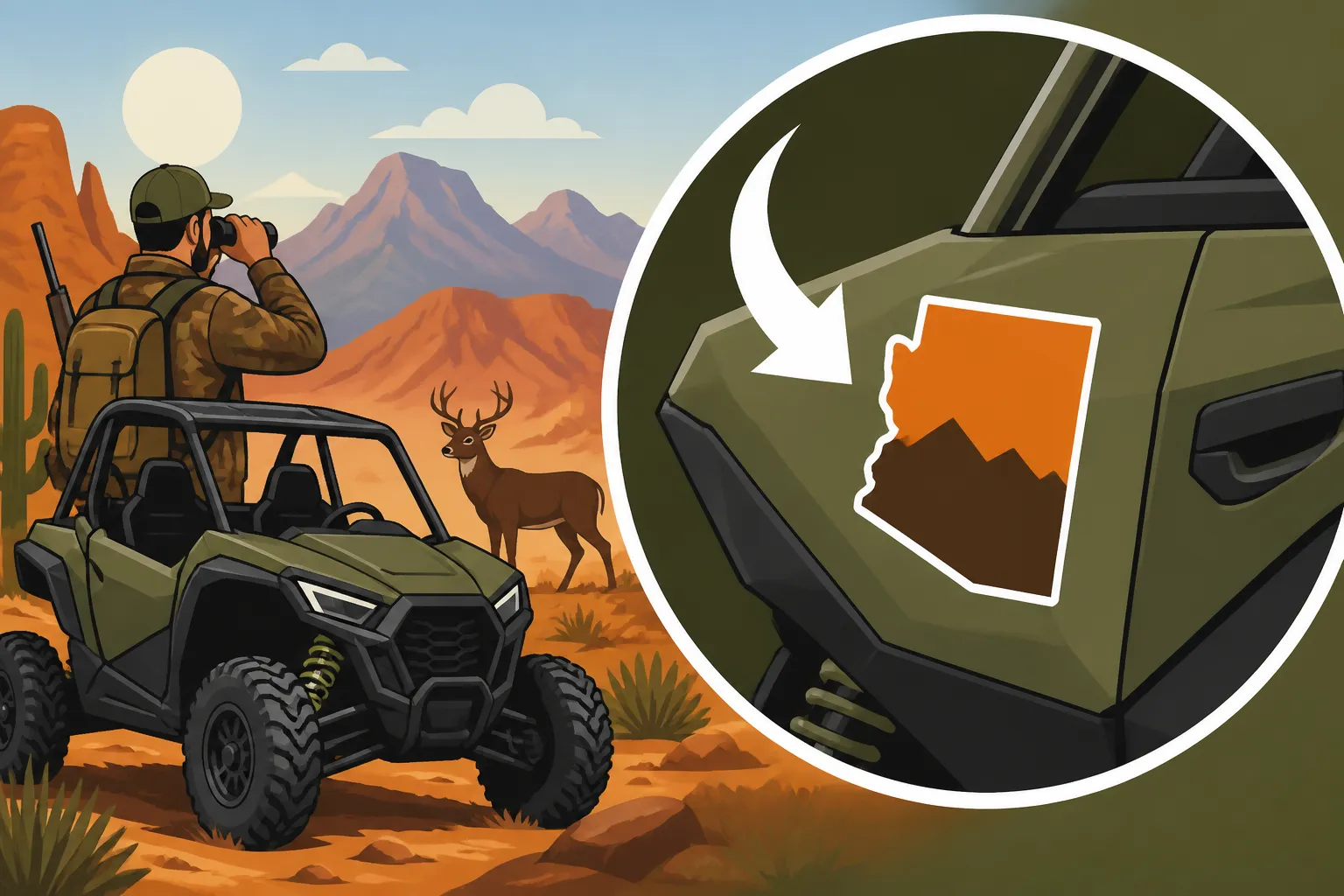
So, you've got your OHV decal proudly displayed on your quad or side-by-side. You know it's required for operating off-highway vehicles on public land in Arizona, and that's a good start. But what exactly does it do for you when you're traversing State Trust Land, or even other public lands like national forests or BLM acreage? Simply put, an OHV decal legalizes your vehicle for operation on designated routes and trails, assuming your vehicle meets all other equipment requirements. It's about making the vehicle itself street-legal for off-road roads.
It’s easy to think of the decal as a golden ticket, granting unlimited access, but it’s much more nuanced. The decal certifies that your OHV is registered and approved for use on public lands, but it doesn't grant you permission to drive anywhere you please. The emphasis here is on designated routes and trails. This means roads that are clearly marked or are part of an established road system. This is a critical distinction, as driving off these designated routes, even with a valid decal, can still lead to fines and habitat damage.
Legal Operation on Designated Routes
The primary function of your OHV decal is to allow you to legally operate your off-highway vehicle on routes specifically designated for OHV use. On State Trust Land, this usually means existing roads and trails that haven't been expressly closed. These are often the same dirt roads that are open to any licensed vehicle. The decal doesn't open up new areas for your OHV; it simply makes sure that when you're on a legal road or trail, your OHV meets the state's registration requirements. Think of it as a specialized license plate for your off-road machine. It’s a requirement for the vehicle, not an expansion of where you can drive it. If a road is gated, signed as closed, or simply isn't an established path, your OHV decal doesn't give you the right to open that gate or create a new trail.
What the OHV Decal Doesn't Cover
This is where many hunters get tripped up. While necessary, the OHV decal is not an "access permit" in the broader sense. It doesn't grant you permission to cross private property, even if that property is leased Trust Land. It doesn't override temporary closures due to fire, weather, or land management decisions. Most importantly, it absolutely does not give you permission to drive off-road or create new tracks. This is an enormous point of friction in many hunting areas. Hunters, in their eagerness to get to a remote glassing knob or retrieve a downed animal, sometimes leave established roads, assuming their OHV decal justifies it. It does not. Driving off-road, even a short distance, can result in significant penalties, even on public land, and especially on Trust Land where revenue generation and resource protection are paramount. For clarity on general vehicle rules, see Motorized Travel Rules on Arizona Public Land.
Here’s a quick overview of what the OHV decal covers and what it definitely does not:
| Feature | What the OHV Decal Covers | What the OHV Decal Doesn't Cover |
|---|---|---|
| Vehicle Legality | Legal operation of your OHV on designated public land routes. | Permission to operate an OHV that doesn't meet equipment standards. |
| Access Rights | Use of established roads/trails open to public vehicles. | Access to private land, gated roads, or explicitly closed areas. |
| Off-Road Travel | Nothing beyond designated routes. | Creating new trails or driving off existing roads/two-tracks. |
| Additional Permits | Your OHV registration. | A separate recreational permit if specifically required for other activities beyond hunting. |
| Overriding Rules | State OHV registration requirements. | Local or federal land management rules for specific areas or closures. |
Beyond the Decal: Comprehensive Access for Hunters
An OHV decal is just one piece of the puzzle. For hunters, a successful and legal trip to Arizona's Trust Land requires understanding how the decal interacts with your hunting license, the types of permits that might apply, and how to identify legal routes. It's about being a responsible land user, which in Arizona's vast and varied terrain, means doing your homework before you ever put the key in the ignition.
The Recreational Permit Quandary
While your hunting license generally covers your presence on State Trust Land for hunting purposes, there are specific instances where a separate recreational permit might be required. This usually pertains to activities beyond simple transit or hunting, such as long-term camping or certain forms of non-hunting recreation. For hunters, this is less common, but it's important to be aware. For instance, if you're planning an extended stay that goes beyond what's typically considered "dispersed camping" for a hunt, or if you're using Trust Land for other recreational activities outside of hunting, you might need to acquire an additional permit. It's always best to err on the side of caution and check the Arizona State Land Department's website if you have any doubts. A great resource is When a Recreational Permit Is Required Instead.
Respecting Leaseholders and Private Access
A significant challenge on State Trust Land is the presence of agricultural and grazing leases. Ranchers and other leaseholders have a primary interest in the land, and while your hunting license generally allows you to hunt on leased Trust Land, their operations take precedence. This means hunters must be exceptionally mindful of gates (always leave them as you found them), livestock, and ranching infrastructure. Your OHV decal does not give you the right to drive through a pasture or across a farmer's field, even if it's technically Trust Land. If there's a conflict or a question, the leaseholder's rights often come first, and driving without permission can be considered trespassing. The complexities of this situation are worth understanding, especially when you consider Why Arizona Lessees Can Restrict Trust Land Access.
Navigating Trust Land Responsibly with Your OHV
Hunting in Arizona often means covering serious ground, and an OHV can be an invaluable tool for accessing remote areas, scouting, or retrieving game. However, responsible use on Trust Land, and indeed all public lands, is paramount. This means knowing your routes, being prepared, and respecting the land and its other users.
Using Digital Mapping Tools
Modern technology has made navigating complex land ownership boundaries significantly easier. Tools like onX Hunt are indispensable for identifying not only public and private land but also the boundaries of State Trust Land. These apps typically have layers that show vehicle restrictions, designated roads, and wilderness areas where motorized travel is prohibited. Before you head out, spend time with these apps to map your route, identify potential access points, and understand where you can legally operate your OHV. Don't just rely on general maps; look for specific motor vehicle use maps (MVUMs) that outline exactly where vehicles are allowed. Using onX Layers for Arizona Public Land can help you get started with these tools.
Staying on Designated Routes
This cannot be stressed enough: stay on designated roads and trails. The OHV decal is a permit to operate your vehicle on these routes, not an invitation to create new ones. Driving off-road can cause significant environmental damage, including soil erosion, harm to fragile desert vegetation, and disturbance to wildlife. It also leaves highly visible scars on the landscape that detract from the experience for other users. Beyond the environmental impact, it can lead to hefty fines and even loss of hunting privileges. Always assume that if there isn't a clearly established, drivable two-track, you shouldn't be driving there.
Emergency Preparedness and Ethical Considerations
Beyond legal compliance, responsible OHV use is about safety and ethics. Trust Land, like many remote areas of Arizona, can be unforgiving. Ensure your OHV is in good working order, carry extra fuel, water, a first-aid kit, and communication devices. Let someone know your plans and expected return time. Ethically, consider the impact of your OHV use on other hunters and recreationists. Loud vehicles and dust clouds can disturb wildlife and other people's hunting experiences. Use your OHV efficiently and respectfully, minimizing your footprint and maintaining the quiet solitude that draws many of us to the outdoors.
Planning Your Hunt with OHV Access in Mind
When you're applying for tags or scouting a unit, consider the OHV access in that area. Some units might have a dense network of forest roads or BLM tracks, making OHV use very practical. Others, particularly those with a higher percentage of wilderness areas or significant private land holdings, might offer limited motorized access. While GoHunt provides excellent data on draw odds and unit specifics, cross-reference that with land ownership maps to ensure your OHV will actually be an asset, not a liability, for your chosen hunt. Planning ahead means knowing if you'll be able to use your OHV to get where you need to go, or if you'll need to rely more on foot travel. A little research with these mapping tools can save you a lot of headache and potential legal trouble once you're in the field.
Disclaimer
This article is for general informational purposes only and does not constitute professional advice. Laws, prices and regulations vary by location and change over time. Consult a qualified professional for guidance on your specific situation.