When a Recreational Permit Is Required Instead
It's a common scenario: you've got your Arizona hunting license in hand, you're looking at a map, and you see all those beautiful blocks of State Trust Land. Naturally, you assume your hunting license covers access, and for the act of hunting itself, you're absolutely right! But then you start wondering about other activities, like scouting a few weeks out, taking your side-by-side for a joyride after the hunt, or just setting up a non-hunting camp. This is where the waters can get murky, and many hunters scratch their heads. This guide is here to clear up that confusion, explaining precisely when your hunting license is enough, and when you absolutely need that separate recreational permit from the Arizona State Land Department.
Decoding Arizona State Trust Land Access with Your Hunting License
For most hunters, the biggest question revolves around whether their existing hunting license is sufficient for accessing Arizona's vast State Trust Land. The good news is, for activities directly tied to the pursuit of game, your hunting license acts as your permit. However, the line becomes less clear when your activities stray from that core purpose.
Your Hunting License: The Primary Permit for Pursuit
Let's cut right to it: when you're actively engaged in hunting, scouting, or anything directly related to those activities, your valid Arizona hunting license does serve as your permit to be on State Trust Land. This is a huge relief for many, and it means you don't need to double up on permits just to pursue your passion. Think about it: setting up a temporary camp during your deer hunt, driving on established roads to get to your glassing knob, stalking a javelina through the washes, or retrieving a downed elk—all of these essential actions fall under the umbrella of your hunting license. It's understood that these are integral parts of the hunting experience. The Arizona Game and Fish Department and the Arizona State Land Department have worked to make this process as seamless as possible for hunters. Arizona State Trust Land Needs a Permit, and Your License Counts This foundational understanding is key to navigating Arizona's public and trust lands.
The Unique Nature of Arizona's State Trust Land
To fully grasp when a different permit might be needed, it helps to understand what Arizona State Trust Land actually is. Unlike federal lands like National Forests or Bureau of Land Management (BLM) property, which are managed for broad public use, State Trust Land has a very specific mandate: to generate revenue for a variety of public institutions, primarily schools. This purpose means that every activity on Trust Land that isn't explicitly covered by another permit (like a hunting license) is typically expected to contribute to that revenue goal through a recreational permit. What Arizona State Trust Land Is This is a crucial distinction, as hunters accustomed to the more open access of federal lands can sometimes be caught off guard by the specific rules governing Trust Land. Arizona holds an impressive How Many Acres of Trust Land Arizona Holds, making it a significant part of the state's hunting landscape. Understanding that these lands are essentially a business asset for Who Benefits From Arizona Trust Land Revenue helps to clarify why specific permits are required for non-hunting activities.
Identifying Activities That Demand a Separate Recreational Permit
This is where many hunters get tripped up. While your hunting license covers the act of hunting, many other perfectly legal and enjoyable outdoor pursuits require a specific recreational permit when conducted on Arizona State Trust Land. It boils down to whether your primary activity is directly related to hunting or falls under general recreation.
Recreational Activities Beyond the Hunt's Scope
If your activity isn't explicitly hunting or scouting for a hunt, chances are you'll need a separate permit. Let's break down some common scenarios:
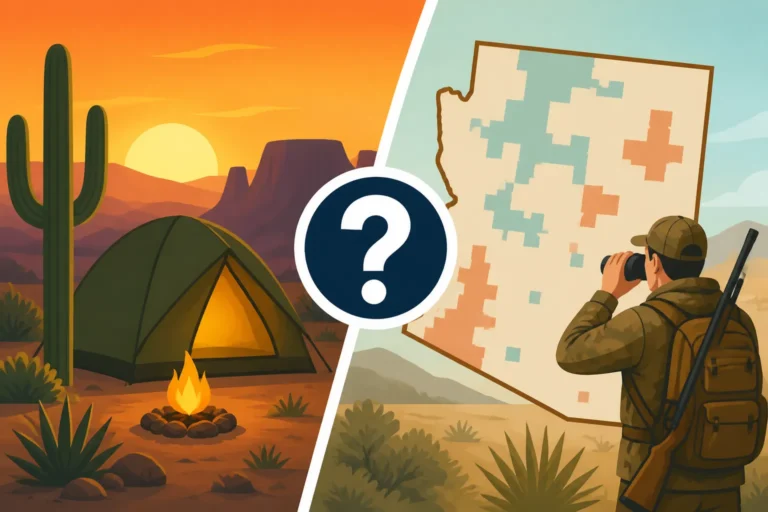
- Camping Beyond the Hunt: This is a big one. If you're establishing a camp for your five-day elk hunt, your hunting license covers it. But what if you decide to go camping with the family a month before the season starts, just to enjoy the desert stars? Or perhaps you're out exploring and want to pitch a tent overnight, and there's no active hunt going on for you? In these cases, where the camping isn't directly tied to an active hunting endeavor, you need a recreational permit. Can You Camp on Arizona Trust Land? for a closer look at these nuances. The intent behind your visit makes all the difference here.
- Recreational OHV Use: Using your quad or side-by-side to access a remote part of your hunting unit or to retrieve game is typically covered by your hunting license. However, if you're taking your off-highway vehicle (OHV) out for a casual joyride on marked trails on State Trust Land, or simply exploring without a direct hunting purpose, you'll need that recreational permit. Don't forget that even with a permit, you'll need the appropriate OHV Decals on Arizona Trust Land for your vehicle. The key distinction is the purpose of your ride: direct hunting support versus general recreation.
- Target Shooting and Plinking: While many hunters enjoy sighting in their rifles or practicing with their pistols outdoors, using State Trust Land purely for target shooting or "plinking" is almost always considered a recreational activity that requires a separate permit. It's not directly related to the act of hunting itself, and therefore falls outside the scope of your hunting license. This helps manage safety and environmental concerns in areas that might also see other recreational users or even grazing livestock.
- General Sightseeing, Hiking, and Photography: If you're simply out for a hike to enjoy the scenery, bird-watching, taking landscape photographs, or just exploring the backcountry without the specific intent of scouting for an upcoming hunt, you'll need a recreational permit. Even if you're a hunter who enjoys these activities, when they're decoupled from your direct hunting efforts, the permit becomes necessary.
- Collecting or Foraging: Thinking about gathering some firewood for your non-hunting camp, collecting interesting rocks, or foraging for wild edibles like prickly pear fruits? These activities, while seemingly innocuous, also fall under the recreational permit requirement on State Trust Land. The Trust aims to regulate activities that consume or remove resources, even in small amounts.
- Organized Events: Any larger gathering, such as a charity run, a group mountain bike ride, commercial filming, or other organized group activities, will undoubtedly require a special use permit from the Arizona State Land Department, which is a step beyond a standard individual recreational permit.
How to Secure Your Arizona State Land Department Recreational Permit
The good news is that obtaining an Arizona State Land Department recreational permit is a straightforward process, designed to be accessible online. You won't be navigating a complicated maze, but you do need to be proactive.
To get your permit, you'll generally head to the Arizona State Land Department's official website. There, you'll find options for individual or family recreational permits. The application usually asks for basic personal information and requires you to agree to a set of terms and conditions that outline permissible activities and responsibilities while on Trust Land. You'll need to pay a fee, which is structured to be affordable for individuals and families, though specific amounts can vary over time. The permit is typically valid for a year from the date of purchase. It's crucial to purchase this permit before you head out, and to keep a copy (digital or physical) with you at all times while on State Trust Land for any non-hunting related recreation. Having your permit easily accessible proves your compliance and can save you a lot of hassle if you encounter a land manager or law enforcement officer.
Navigating Boundaries and Ensuring Full Compliance
Knowing the rules is one thing, but consistently applying them in the vast and varied Arizona landscape can be challenging. It requires careful planning and the right tools to ensure you're always on the right side of the law.
The Criticality of Knowing Your Location
Arizona's landscape is a patchwork of land ownership: State Trust Land, BLM, National Forest, private property, and tribal lands. Accidentally wandering onto land where you don't have the appropriate permit can lead to unpleasant encounters. This is where modern mapping technology becomes an absolute game-changer for hunters and outdoor enthusiasts alike.
I can't stress enough the value of a reliable GPS mapping app on your phone or tablet, especially one like Using onX Layers for Arizona Public Land. These apps offer incredibly detailed land ownership layers that color-code different land types, making it instantly clear whether you're on State Trust Land, Forest Service ground, or private property. Before you even leave home, you can scout your unit using these tools, identifying potential access points, understanding where different land types begin and end, and even spotting those tricky landlocked public parcels. Reading a Land Ownership Layer Correctly is a skill every Arizona hunter should master. Don't just look at a general topo map; understand the land ownership beneath your feet. This vigilance prevents unintentional trespass and ensures you're always operating within the bounds of your permits.
Avoiding Pitfalls and Understanding Restrictions
Beyond just knowing where you are, it's vital to understand that State Trust Land can have additional layers of regulation.
- Lessees' Rights: A significant portion of Arizona State Trust Land is leased for activities like ranching and agriculture. These lessees have certain rights and interests that the public must respect. While your permit grants you access, it doesn't grant you the right to interfere with their operations. You might encounter closed gates (always leave gates as you found them!), grazing cattle, or farming equipment. Understanding Why Arizona Trust Land Lessees Have Priority is key to being a respectful and responsible land user.
- Temporary Closures and Specific Restrictions: Occasionally, specific parcels of State Trust Land might have temporary closures due to fire danger, wildlife management, or other administrative reasons. Always check for current conditions and any posted signage. What might be legal on one parcel could be restricted on another, so staying informed is crucial.
- Penalties for Non-Compliance: Operating on State Trust Land without the proper permit, whether it's a hunting license for hunting or a recreational permit for other activities, can lead to serious consequences. You could face citations, fines, and potentially even misdemeanor charges. Penalties for Entering Trust Land Without a Permit are in place to ensure compliance and protect the integrity of Trust Land assets. It's simply not worth the risk. If you're ever in doubt about whether an activity requires a permit, it's always best to err on the side of caution and either obtain the permit or choose a different location (like federal lands) for your activity. The Arizona State Land Department is also a great resource for specific questions and clarifications.
Here's a quick reference table to help clarify which permit applies to various activities on Arizona State Trust Land:
| Activity Type | Valid Arizona Hunting License Only | Separate Arizona State Land Department Recreational Permit Required |
|---|---|---|
| Scouting for an upcoming big game hunt | Yes | No |
| Actively hunting big game during open season | Yes | No |
| Retrieving legally harvested game | Yes | No |
| Driving on established roads for hunting access | Yes | No |
| Camping during an active hunt season (hunt camp) | Yes, as long as it's directly supportive of the hunt | No |
| General hiking, backpacking, or nature photography | No | Yes |
| Recreational OHV riding (not for hunt access) | No | Yes (and required OHV decal) |
| Target shooting or plinking | No | Yes (or specific special use permit for large groups/ranges) |
| Camping for leisure (not hunt-related) | No | Yes |
| Gathering firewood, rocks, or non-game plants | No | Yes (some activities may require specialized permits) |
| Organized group events or commercial filming | No | Yes (special use permits required, not standard recreational) |
Disclaimer
This article is for general informational purposes only and does not constitute professional advice. Laws, prices and regulations vary by location and change over time. Consult a qualified professional for guidance on your specific situation.