Why the Arizona Strip Is Hard to Reach
Ah, the Arizona Strip. Just uttering those words conjures up images of giant mule deer bucks, vast, untamed landscapes, and the kind of remote beauty that calls to every serious hunter. But let's be honest, for all its legendary allure, the Strip also carries a reputation for being incredibly difficult to access. It's not just a casual drive into the woods; it’s an expedition, and many hunters find themselves scratching their heads wondering why this iconic piece of Arizona seems to actively resist their presence. This guide is going to peel back the layers and explain exactly why the Arizona Strip is so hard to reach, helping you understand the challenges so you can better prepare for your own adventure.
Geographical Isolation and Remoteness Define the Arizona Strip
When you look at a map of Arizona, the Strip jumps out as a unique geographical anomaly. It’s that vast, often blank space north of the Grand Canyon, stretching all the way to the Utah border. This isn't just "remote" in the sense of being far from a city; it's remote by design, carved out by nature itself, and its isolation is a fundamental reason for its challenging access.
The Grand Canyon as a Natural Barrier
Perhaps the most obvious and impactful reason the Arizona Strip is so hard to reach is the massive, unyielding chasm that is the Grand Canyon. Seriously, this isn't just a big ditch; it's a geological marvel that effectively severs the Strip from the rest of Arizona. If you're coming from Phoenix or Flagstaff, you can't just drive north across the canyon. Instead, you're looking at a lengthy detour, often hundreds of miles, either far to the west through Nevada or far to the east near Page, Arizona, to cross the Colorado River.
This means that geographically, the Strip functions almost like a separate state, accessed primarily from Utah rather than from the heart of Arizona. Imagine planning a trip that requires you to drive into another state just to get into a specific hunting unit in your home state. That's the reality for many Arizona hunters eyeing the Strip. This colossal natural barrier dictates travel routes, adds significant mileage to any journey, and immediately sets the tone for the extreme self-reliance required to hunt this area.
Limited Road Networks and Infrastructure
Once you manage to circumnavigate the Grand Canyon and finally set tires on the Arizona Strip, you'll quickly realize that the concept of a "road network" is a generous term. Paved roads are scarce, primarily limited to a few main arteries like Arizona Highway 389 and portions of Highway 89A, which mostly serve as transit routes to other destinations or as initial access points to the perimeter of the Strip.
The vast interior is crisscrossed by an intricate web of dirt roads, many of which are poorly maintained, un-graded, and can quickly become impassable with adverse weather. These aren't your typical forest service roads you might find in more timbered regions. They can be sandy, rocky, deeply rutted, or riddled with washouts. A common frustration for hunters is pouring over E-Scouting an Arizona Unit Before the Season maps, seeing a spiderweb of tracks, only to find in person that what looks like a well-traveled route is barely a two-track requiring extreme caution. Even a simple flat tire can become a multi-hour ordeal, assuming you even have cell service to call for help, which is a rare luxury out here.
Vast, Undivided Public Lands (but hard to get to)
One of the great appeals of the Arizona Strip is that it’s overwhelmingly public land, managed by the Bureau of Land Management (BLM) and the U.S. Forest Service. This means once you're there, you often have vast expanses of open country to roam without worrying about private land access issues. However, the sheer scale of these public lands contributes to the "hard to reach" factor. Unlike areas with more fragmented land ownership, where towns and private parcels might offer services or easier access points, the Strip is a continuous, unbroken wilderness.
This lack of development means there are very few established trailheads, campgrounds with amenities, or even marked routes once you venture off the main dirt tracks. It pushes hunters further into self-sufficient mode. You're not just finding a spot to hunt; you're finding a spot to survive, to camp, and to navigate without external assistance. Understanding Reading a Land Ownership Layer Correctly is critical here, not just for knowing where you can hunt, but for appreciating the vastness of the public domain you'll be navigating.
Challenging Terrain and Environmental Factors
Beyond the grand-scale geographical barriers, the ground itself on the Arizona Strip presents its own set of formidable challenges. This isn't gentle rolling hills; it's a raw, untamed landscape that demands respect and thorough preparation.
Rugged Canyons, Mesas, and Washes
The terrain of the Arizona Strip is deceptively complex. From a distance, some areas might look like flat, open plateaus, but upon closer inspection, they reveal a labyrinth of steep-sided canyons, abrupt mesas, and countless dry washes. These washes, harmless and dusty most of the time, can quickly become raging rivers during monsoon season, cutting off roads and stranding vehicles. Many a hunter has found their well-planned route blocked by a washed-out road or an impassable gully.
Navigating this broken country, especially on foot, is physically demanding. You're constantly ascending and descending, often over rocky, unforgiving ground. This kind of movement is slow and tiring, making it difficult to cover large distances, even when scouting for prime areas known for The Arizona Strip Mule Deer Reputation. It's a land where a seemingly short distance on a map can translate into hours of strenuous hiking through rough country, emphasizing the need for proper footwear and physical conditioning. Choosing Boots for Rocky Desert Ground isn't just a comfort choice; it's a necessity for safety and endurance.
Extreme Weather Conditions and Preparedness
The Arizona Strip experiences extreme weather patterns that can drastically impact accessibility and safety. Summers are brutally hot, with temperatures regularly soaring well over 100 degrees Fahrenheit. This intense heat makes even basic activity difficult and dangerous, raising concerns about heat stroke and dehydration. Early archery seasons, if applicable, are often characterized by these conditions, demanding meticulous planning for hydration and heat management.
Winters, while offering a respite from the heat, can bring heavy snowfalls, especially on the higher elevations of the Kaibab Plateau and other parts of the Strip. These snows can close roads, making large portions of the units completely inaccessible for vehicles. Hunters often underestimate how much snow Arizona can get in its northern reaches. Even spring and fall can be unpredictable, with sudden thunderstorms that cause flash floods or rapid temperature drops. Being prepared for these dramatic shifts is paramount, as emergency services are a long way off.
Water Scarcity and Its Impact on Access
Perhaps one of the most critical environmental challenges on the Arizona Strip is the pervasive scarcity of water. Natural, reliable water sources are few and far between. This isn't just a concern for wildlife; it’s a massive logistical hurdle for hunters. You simply cannot rely on finding water out there. Every drop you need for drinking, cooking, and even minimal hygiene must be packed in, often in considerable quantities.
This necessity impacts how long you can stay, how far you can venture from your vehicle, and even where you can establish a camp. Water points, often man-made stock tanks or guzzlers, become critical waypoints, but even these aren't always reliable. The weight of carrying enough water significantly adds to the burden of any trip, turning even a day hunt into a more involved logistical exercise. Water You Must Carry on a Day Hunt is a topic not to be underestimated in this arid environment.
Logistical Hurdles and Planning Demands
Beyond the physical landscape, the sheer logistics of hunting the Arizona Strip are enough to deter all but the most committed. It requires a level of foresight and self-sufficiency that many hunters, accustomed to more accessible areas, might not initially appreciate.
Distant Supply Points and Fueling Up
Imagine being hundreds of miles from the nearest gas station, grocery store, or even a tire shop. That's the reality on the Strip. Towns like Fredonia, Jacob Lake, or St. George, Utah, are the primary supply hubs, and they can be hours away from many of the prime hunting units. This means you need to bring absolutely everything with you, and then some.
Fuel is a major concern. You must carry extra fuel for your vehicle, possibly multiple cans, especially if you plan on doing extensive driving around your unit. A round trip of just scouting or retrieving an animal can easily eat up a full tank, and running out of gas in this country is not just an inconvenience; it can be a life-threatening situation. The same goes for food, water, medical supplies, and spare parts. This requirement for extreme self-reliance is a huge logistical hurdle that demands meticulous planning and a well-stocked rig.
Communication Blackouts and Navigation
Cell service on the Arizona Strip is virtually non-existent outside of a few very specific, high-elevation spots or close to major towns. This communication blackout is a significant safety concern and a major logistical challenge. If your vehicle breaks down, you get injured, or you become disoriented, you can't simply pull out your phone and call for help.
This necessitates carrying alternative communication devices, such as satellite phones, satellite messengers, or a reliable two-way radio system if hunting with a partner within range. Furthermore, navigation relies heavily on robust GPS units, paper maps, and compasses. Cell Coverage Across Arizona Hunt Units is almost universally poor here. While applications like onX Hunt are invaluable for their detailed maps and land ownership layers, they are only as good as your device's battery life and its ability to function without a constant cell signal. Knowing how to read a topographic map and use a compass is a skill that becomes absolutely essential, not just a nice-to-have.
Vehicle Requirements and Off-Road Capability
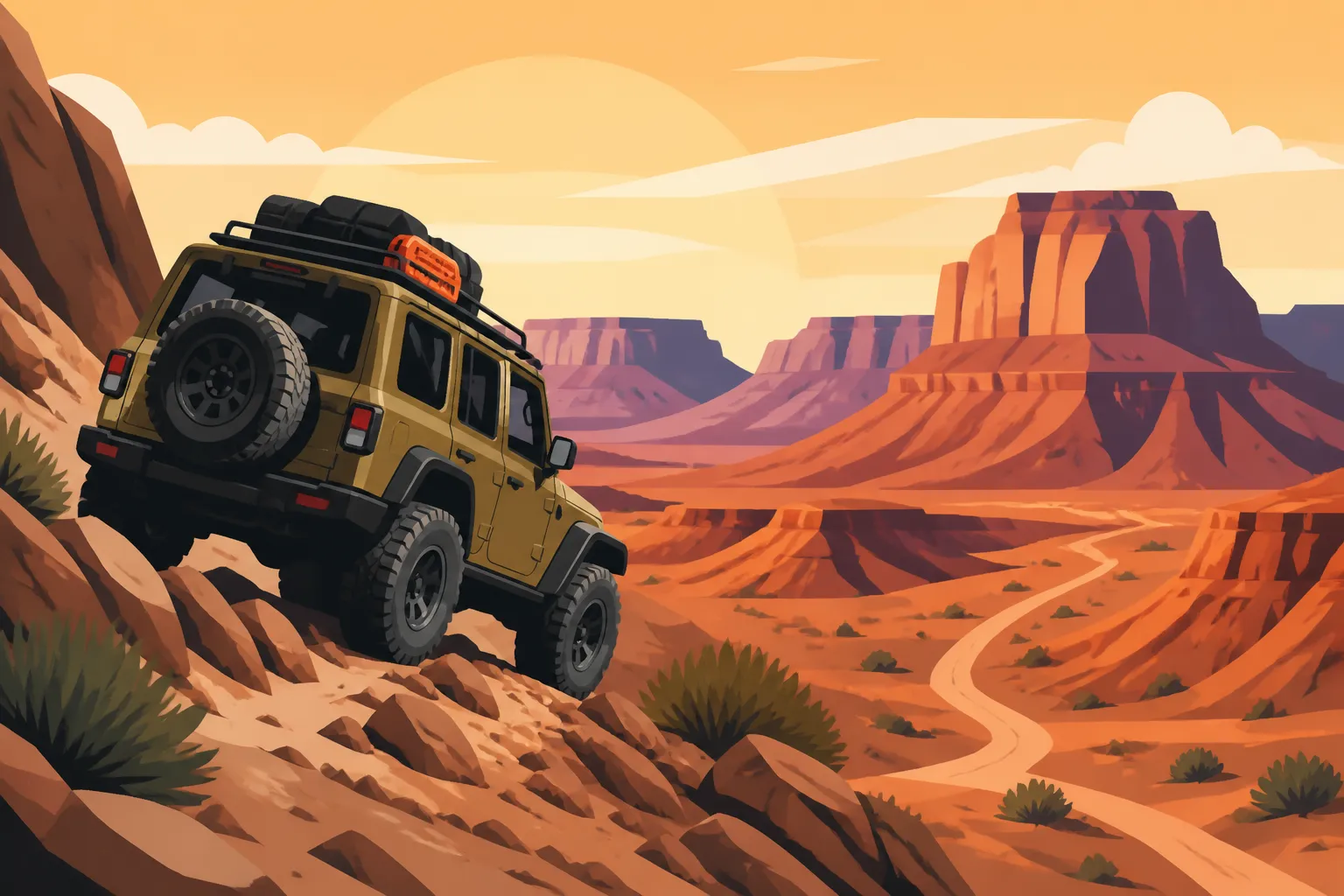
Forget your two-wheel-drive pickup with street tires. Hunting the Arizona Strip demands a high-clearance, four-wheel-drive vehicle, preferably with stout off-road tires and a winch. The roads, or lack thereof, are notoriously rough. You will encounter deep ruts, sharp rocks, sandy washes, and steep climbs. A vehicle breakdown is more than an inconvenience; it can lead to being stranded in a truly isolated area.
Many seasoned Strip hunters carry multiple spare tires, a full set of tools, tire repair kits, air compressors, and recovery gear like shovels, straps, and traction boards. The financial investment in a capable vehicle and the necessary recovery equipment is significant, and it’s a non-negotiable part of accessing this rugged landscape. Trying to skimp on vehicle preparation is a gamble that rarely pays off on the Strip.
Permits, Regulations, and Land Ownership Complexity
While much of the Arizona Strip is public land, navigating the various jurisdictions and understanding specific rules adds another layer of complexity to its already challenging accessibility. It's not just about getting there; it's about knowing where you can be and what you can do once you've arrived.
Understanding BLM and Forest Service Ground
The Arizona Strip is a mosaic of different federal lands, primarily managed by the Bureau of Land Management (BLM) and the U.S. Forest Service (USDA Forest Service). While both are public lands, there can be subtle differences in regulations regarding camping, vehicle travel, and fire restrictions. For instance, Motor Vehicle Use Maps for Forest Ground are essential for the small pockets of National Forest land, while BLM often has its own set of rules, though generally more permissive for dispersed camping and cross-country travel where not specifically restricted.
Hunters need to be diligent in identifying which agency manages the specific parcel of land they are on to ensure compliance with all regulations. This requires careful study of maps and understanding the distinctions, which can be confusing for those not accustomed to hunting large swaths of federal land.
Wilderness Areas and Travel Restrictions
Within the Arizona Strip, there are designated Wilderness Areas. These are special designations that protect pristine natural environments and prohibit mechanized and motorized travel. This means no vehicles, no mountain bikes, and sometimes even restrictions on pack animals. While these areas offer unparalleled solitude and hunting opportunities for those willing to go in on foot or with horses, they inherently restrict vehicle access.
Encountering a Wilderness Area boundary can quickly halt your vehicle progress and force a significant change in your hunting plans. Hunters must be acutely aware of these boundaries when using mapping tools like onX Hunt, as inadvertently driving into a Wilderness Area can result in hefty fines and penalties. Understanding these restrictions is part of the extensive planning required to hunt these remote landscapes.
Tribal Lands and Private Inholdings to Avoid
Finally, while the vast majority of the Strip is public, there are interspersed parcels of private land and, importantly, boundaries with sovereign Tribal Nations. The Grand Canyon itself, while a natural barrier, is bordered by several tribal lands including the Hualapai, Havasupai, and Navajo Nations. These lands have their own distinct laws and regulations, and hunting on them without the appropriate tribal permits and licenses is a serious offense.
Hunters must be vigilant in identifying these boundaries. How to Spot a Reservation Boundary on a Map is crucial, as is recognizing the occasional private inholding or grazing allotment that may exist, even within large swaths of public land. Respecting these boundaries is not just a legal requirement but an ethical imperative. Trespassing, even accidentally, can lead to severe consequences and reflects poorly on the hunting community as a whole.
The Arizona Strip is truly a hunter's paradise for those seeking a profound challenge and the potential for a once-in-a-lifetime animal. But its hard-to-reach nature is not an exaggeration; it’s a defining characteristic. It demands meticulous planning, extensive preparation, a robust vehicle, and a deep well of self-reliance. While it may be hard to reach, the rewards for those who overcome these hurdles can be immeasurable.
| Challenge Category | Arizona Strip (Hard to Reach) | More Accessible Arizona Units (e.g., Rim Country) |
|---|---|---|
| Geographical Access | Severed by Grand Canyon, long detours, primarily accessed from north. | Direct access from major highways, central Arizona. |
| Road Infrastructure | Mostly unmaintained dirt roads, prone to washouts, 4×4 often required. | Extensive network of maintained forest service roads, many paved sections. |
| Supply Distances | Hours from nearest services (fuel, food, repairs). | Towns with full services often within an hour's drive. |
| Communication | Very limited to no cell service, satellite comms essential. | Spotty but often available cell service, easier emergency contact. |
| Terrain Difficulty | Rugged canyons, mesas, deep washes, physically demanding. | Rolling hills, timbered slopes, generally easier foot travel. |
| Water Availability | Extreme scarcity, must pack in all water. | More natural springs, creeks, and stock tanks (still plan, but less dire). |
| Vehicle Necessity | High-clearance 4×4, off-road tires, recovery gear mandatory. | Standard 4×4 or even 2WD with good ground clearance often sufficient. |
| Planning Complexity | High degree of self-reliance, extensive safety/survival planning. | Still requires planning, but less emphasis on extreme isolation. |
Disclaimer
This article is for general informational purposes only and does not constitute professional advice. Laws, prices and regulations vary by location and change over time. Consult a qualified professional for guidance on your specific situation.