Arizona Unit 21 Coues Deer Ground
The sheer thrill of pursuing Coues deer in Arizona's rugged backcountry is undeniable, but it's also a humbling experience that often leaves hunters feeling overwhelmed by the vast, unforgiving landscape. Unit 21, particularly known for its challenging terrain and elusive "gray ghosts," can be especially daunting for those trying to crack the code of these small whitetails. This guide aims to demystify hunting Unit 21, providing a detailed breakdown of its unique features, essential scouting tactics, and practical advice to increase your odds in this challenging yet rewarding deer country.
Understanding Unit 21's Unique Landscape
Unit 21 is a vast expanse of diverse terrain, primarily located within the Coronado National Forest, that offers a classic Coues deer hunting experience. It's not a unit for the faint of heart, demanding keen glassing skills, physical stamina, and a deep understanding of how these deer utilize the landscape. For many, the biggest frustration is simply knowing where to start in such a large and complex unit.
Topography and Habitat Diversity
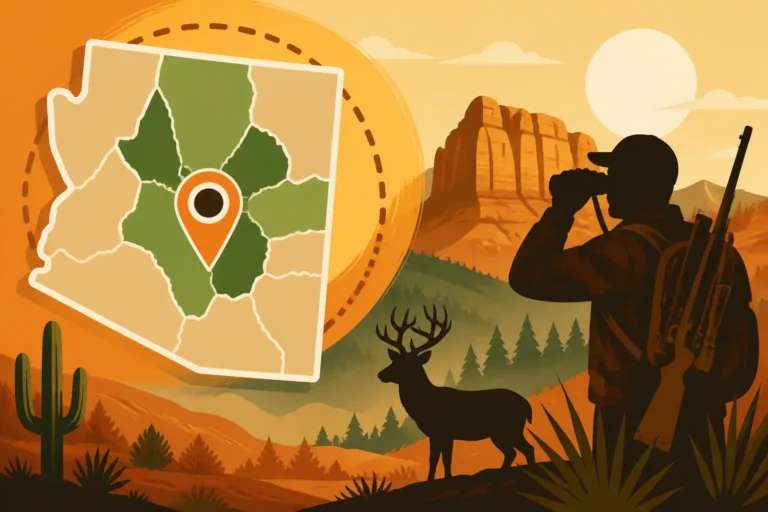
When you look at a map of Unit 21, you'll immediately notice the dramatic elevation changes. It's characterized by steep, brushy mountainsides that quickly give way to deep canyons and rolling hills dotted with ocotillo, prickly pear, and mesquite. Higher elevations often feature juniper and oak woodlands, transitioning to grasslands in flatter, more accessible areas. This varied topography creates a mosaic of habitats, each offering different challenges and opportunities for the Coues deer hunter. You might start your day glassing a rocky, cholla-covered ridge at dawn, and by midday, find yourself stalking through an oak-studded draw. The "sky island" effect is real here, where higher, cooler elevations provide different forage and cover than the baking desert flats below. It means understanding the subtle shifts in vegetation and how deer use them at different times of the day, or depending on the season. The Sky Island Ranges That Hold Coues describes this phenomenon well.
The sheer density of the brush in many areas of Unit 21 can be incredibly frustrating. What looks like a gentle slope on a topographical map can turn into an impenetrable thicket of catclaw acacia, wait-a-minute bush, and shin daggers. This forces hunters to adapt their tactics, often relying heavily on long-range glassing to locate deer before attempting a stalk. The deer, in turn, are masters of concealment, often bedding down in the densest cover imaginable, making them exceptionally difficult to spot.
Water Sources and Their Importance
In a desert environment, water is life, and Unit 21 is no exception. While many areas are quite arid, especially during drier parts of the year, Coues deer are never far from a water source. These can range from natural springs bubbling up in a canyon bottom to man-made stock tanks and guzzlers designed for wildlife. Identifying these water sources is absolutely crucial for your scouting and hunting strategy. During the hotter early archery seasons, deer will often move between bedding areas and water in predictable patterns, especially in the early mornings and late evenings.
Finding these critical water points can be a puzzle. Old maps might show springs that have dried up, and some guzzlers are tucked away in incredibly remote corners. Using a mapping application like onX Hunt can be invaluable here, as many water sources are marked on their layers. However, recent rainfall or lack thereof will heavily influence their current status. Don't assume a marked water source is active without verifying it, either through in-person scouting or reliable reports. Finding Water in Arizona's Dry Country highlights this challenge across the state. Deer might be scattered across a unit if water is abundant, but if it's scarce, they'll concentrate around the few reliable sources, making these areas prime hunting spots – and often, prime hunting pressure spots too.
Key Areas for Coues Deer in Unit 21
Unit 21 isn't a monolith; it has distinct regions that offer different hunting experiences and challenges. Knowing these general zones can help you narrow down your focus and develop a more effective strategy.
The Higher Sky Islands and Juniper-Oak Zones
The higher elevations within Unit 21, often referred to as "sky islands," are classic Coues deer habitat. These mountain ranges rise dramatically from the desert floor, creating cooler, often wetter microclimates that support juniper, oak, and even some pine species. Deer often spend considerable time in these areas, particularly during the rut and cooler months. The dense cover and broken terrain provide excellent escape routes and bedding areas.
Hunting these higher zones typically involves extensive glassing from elevated positions. You'll spend hours behind your binoculars and spotting scope, meticulously picking apart every shadowed canyon and brushy hillside. The deer here are masters of using the topography to their advantage, often disappearing into thickets or behind ridges with astonishing speed. This is where patience truly pays off. Consider setting up a tripod and really settling in for a long glassing session. Glassing Grids for Arizona Coues Deer offers some excellent techniques for this. The rewards, however, can be substantial, as these areas often hold older, larger bucks.
Lower Elevation Desert Washes and Foothills
While the sky islands get a lot of attention, don't overlook the lower elevation desert washes and foothills within Unit 21. These areas, though hotter and often drier, can hold significant numbers of Coues deer, especially during the early archery season or when there's been recent rainfall. The network of washes provides natural travel corridors and often conceals surprisingly dense pockets of mesquite and palo verde, offering shade and browse.
Hunting these lower areas requires a different approach. While glassing is still important, you might find yourself still-hunting the washes or focusing more on tracking and fresh sign. Deer in these areas tend to be more spread out but can offer unique opportunities for close-range encounters, particularly if you can catch them moving between feeding and bedding areas at dawn or dusk. Finding the confluence of several washes, or a wash that leads to a hidden spring or water hole, can be a goldmine. The trick is to move slowly, using the available cover to break up your silhouette, and constantly scanning ahead.
Access and Navigation Challenges in Unit 21
One of the biggest hurdles for any hunter new to, or even experienced with, Unit 21 is simply getting around. The terrain is rugged, roads can be rough, and knowing public versus private land boundaries is paramount.
Navigating Forest Roads and Entry Points
Most of Unit 21 is within the Coronado National Forest, meaning there's generally good public access. However, "good" is a relative term in Arizona's backcountry. The network of forest roads can vary wildly in quality, from graded dirt roads suitable for most trucks to severely washed-out two-tracks requiring high-clearance 4×4 vehicles. During monsoon season, even well-maintained roads can become impassable due to flash floods, so checking road conditions before you head out is crucial. Coronado National Forest Sky Island Access discusses these issues in detail.
It's common to find roads that dead-end abruptly, or that are seasonally closed behind locked gates. Having detailed maps, either paper or digital, is non-negotiable. Digital mapping apps like onX Hunt are incredibly useful here, showing not only road networks but also road status (e.g., open, closed, private). Identifying your main entry and exit points, as well as alternative routes, is a key part of your planning. Expect long drives on rough roads to get to your hunting grounds, and factor in potential tire damage or getting stuck. Cell service is spotty at best in many parts of Unit 21, so don't rely on it for navigation or emergencies.
Understanding Public vs. Private Boundaries
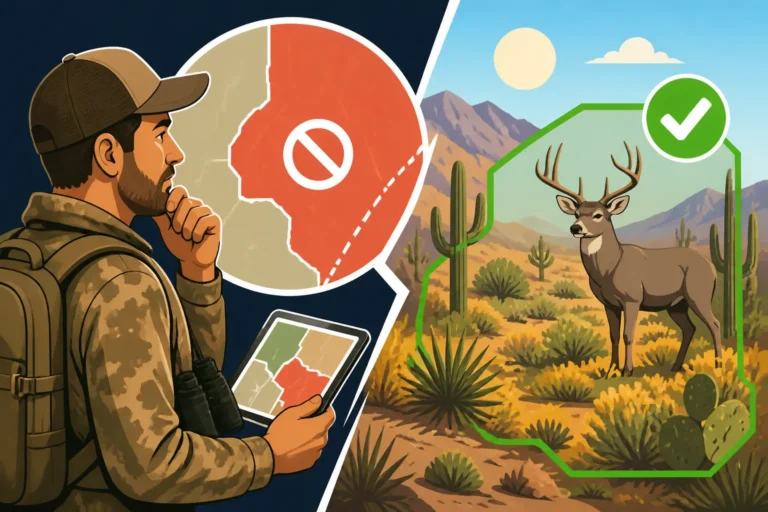
While much of Unit 21 is public land, it's not exclusively so. There are pockets of private land, state trust land, and even small parcels of patented mining claims scattered throughout. Respecting these boundaries is not just a matter of courtesy, it's a legal requirement, and trespassing can lead to severe penalties. This is where detailed land ownership maps become absolutely essential.
An app like onX Hunt allows you to display property boundaries directly on your phone, even without cell service. This is a game-changer for hunting in units like 21. Before you set foot on the ground, familiarize yourself with the land ownership in your target areas. Identify any private inholdings, and understand where state trust land might require a recreational permit (though your hunting license typically covers this for hunting purposes, it's good to be aware). Reading a Land Ownership Layer Correctly can help you interpret these maps accurately. It's not uncommon to be glassing a ridge and spot deer on private land, which can be incredibly frustrating. Knowing the boundary allows you to decide if a stalk is even possible without crossing onto prohibited ground.
Scouting Strategies for Unit 21 Coues Deer
Scouting is paramount for success in Coues deer hunting, especially in a unit as vast and complex as Unit 21. You can't just show up and expect to find deer; you need a plan.
E-Scouting Essentials Before You Go
Before you ever leave your living room, you can accomplish a significant amount of scouting for Unit 21. This "e-scouting" involves using online mapping tools, hunt planning resources, and even government agency websites to gather information. Start by studying topographic maps to identify potential glassing knobs, likely travel corridors (like washes or saddles between ridges), and areas with dense cover that might hold bedding deer. Look for changes in vegetation that could indicate different habitat types.
Tools like onX Hunt and GoHunt are indispensable for e-scouting. With onX Hunt, you can mark waypoints for potential water sources, access roads, and glassing points. Use the different map layers to understand terrain steepness, identify shaded north-facing slopes (where deer might bed during hotter days), and confirm land ownership. GoHunt offers valuable unit-specific information, including harvest statistics, draw odds, and often, insights into typical deer behavior for that unit. E-Scouting an Arizona Unit Before the Season goes into detail on these methods. Plot out several potential routes and hunting areas, understanding that your boots-on-the-ground scouting will refine these initial ideas.
Boots-on-the-Ground Reconnaissance
As helpful as e-scouting is, there's no substitute for getting your boots on the ground in Unit 21. This physical scouting allows you to verify what you saw on the map, assess road conditions, and find fresh sign that might not be visible from a satellite image. A good scouting trip involves hiking into potential areas, looking for deer tracks, droppings, rubs, and active trails. Pay close attention to transition zones between different habitat types, as these are often prime areas for deer movement.
During your scouting, also identify potential ambush points or spots where you might be able to intercept deer moving between bedding and feeding areas. Find vantage points that offer wide views for glassing, and consider setting up trail cameras on established game trails near water sources or food plots (ensure you understand Trail Camera Rules on Arizona Public Land). When scouting, carry the same optics you'll use for hunting to get a feel for the terrain through your glass. Practice spotting objects at distance, mimicking how you'd look for a Coues deer. It's not just about finding deer; it's about learning the unit intimately.
Hunter Considerations for Unit 21
Hunting Coues deer in Unit 21 demands specific gear and a certain level of physical preparedness. Overlooking these aspects can quickly turn a challenging hunt into a miserable one.
Essential Optics and Gear Selection
Given the vast, open, and often brushy terrain of Unit 21, high-quality optics are not just recommended, they are absolutely essential for Coues deer hunting. You'll spend far more time looking through glass than walking. A good pair of 10x or 12x binoculars with a wide field of view is your primary tool. Paired with these, a quality spotting scope (20-60x or even 25-75x) mounted on a sturdy tripod is indispensable for picking apart distant hillsides and evaluating bucks. This combination allows you to scan broadly with your binoculars and then zoom in for detailed inspection with the spotting scope. Optics Power for Arizona's Long Desert Sightlines emphasizes this.
Beyond optics, ensure you have reliable navigation tools – a GPS device or a robust phone app like onX Hunt with downloaded offline maps. Dehydration is a real threat in the Arizona desert, so carrying plenty of water (and a way to filter more if available) is non-negotiable. Comfortable, broken-in hiking boots with good ankle support are a must for navigating the steep, rocky terrain. Lastly, appropriate clothing that can handle extreme temperature swings – from chilly mornings to scorching midday heat – will make your hunt much more comfortable.
| Gear Category | Recommended Item | Why It's Crucial for Unit 21 |
|---|---|---|
| Optics | 10x-12x Binoculars | Primary scanning tool for vast Coues country, essential for initial deer detection. |
| 20-60x or 25-75x Spotting Scope + Tripod | For detailed inspection of distant deer, confirming sex, and antler evaluation. Tripod for stability. | |
| Navigation | GPS device or onX Hunt app with offline maps | Critical for understanding land ownership, finding water, and not getting lost in rugged terrain. |
| Hydration | Hydration pack (2-3L capacity) + water filter/bottles | Desert heat demands constant hydration; ability to refill from springs/tanks extends endurance. |
| Footwear | Sturdy, broken-in hiking boots (high ankle support) | Navigating steep, rocky, and brushy terrain requires superior traction and ankle protection. |
| Clothing | Layered system (wicking base, insulating mid, outer shell) | Accommodates extreme temperature swings common in Arizona's high desert environments. |
| Safety | First-aid kit, signaling device, headlamp/flashlight | Remote hunting increases risk; preparedness for injuries or unexpected overnight stays is vital. |
Physical Demands and Preparation
Hunting Coues deer in Unit 21 is physically demanding. You'll be climbing steep, rocky hillsides, navigating dense brush, and covering significant distances on foot, often in challenging temperatures. If you're not accustomed to hiking in elevation or desert heat, you'll be at a distinct disadvantage. Many stalks involve long, arduous climbs just to get into position, and then more effort to pack out a harvested animal.
Start your physical preparation well in advance of your hunt. Focus on cardiovascular fitness through hiking, stair climbing, or trail running. Incorporate strength training, especially for your legs and core, to handle steep ascents and descents with a pack. Practice hiking with your hunting pack, loaded with the gear you intend to carry, to simulate real hunting conditions. Don't underestimate the impact of heat; if you're hunting early seasons, acclimate yourself to warmer temperatures if possible. The fitter you are, the more enjoyable and successful your hunt will be, allowing you to cover more ground and maintain focus during those critical moments. Preparing Physically for a Desert Hunt offers more guidance on this.
Strategic Hunting Approaches in Unit 21
Once you've scouted and prepared, it's time to put your strategy into action. Coues deer are notoriously challenging, requiring a blend of patience, stealth, and adaptability.
Mastering the Art of Glassing
In Unit 21, hunting Coues deer is largely a glassing game. These deer are small, blend incredibly well into their environment, and inhabit terrain that makes still-hunting difficult and noisy. Your ability to patiently and meticulously pick apart vast landscapes with your binoculars and spotting scope will be your greatest asset. Find high vantage points that offer expansive views of multiple drainages, ridges, and slopes. Set up your tripod and settle in for long periods.
The key is not to just casually scan, but to methodically grid-search every inch of visible ground. Look for horizontal lines, patches of color that don't quite match the vegetation, or subtle movements. Often, you'll only catch a flicker of an ear, a patch of hide, or a tail flicking before you recognize the entire animal. Pay special attention to shaded areas during the heat of the day, and sun-drenched slopes in the early morning. Be patient; it might take hours to find a deer, but the moment of discovery is incredibly rewarding.
Stalking the Gray Ghost
Once you've located a buck, the real challenge begins: the stalk. Coues deer are often called "gray ghosts" for a reason – their uncanny ability to disappear into seemingly sparse cover. A successful stalk in Unit 21 demands extreme stealth, an understanding of the wind, and a keen eye for terrain features that can hide your approach. Study your maps and the actual terrain through your optics to plan your route, identifying natural folds, washes, and vegetation lines that can conceal your movement.
Always pay attention to the wind, as Coues deer have an exceptional sense of smell. Thermals in mountainous terrain can shift dramatically throughout the day, often rising in the morning and falling in the evening. Approach slowly, taking one careful step at a time, often stopping to glass ahead and ensure the deer hasn't moved or spotted you. Use every piece of cover available, no matter how small. Be prepared for long, slow, and often frustrating stalks. Getting within bow range on Coues deer in this terrain can be incredibly difficult. How Far to Stalk a Bedded Coues Buck emphasizes the patience needed.
Reading Deer Behavior and Patterns
Coues deer behavior in Unit 21, like anywhere else, is influenced by several factors: time of year, weather, and pressure. Understanding these patterns can give you a significant advantage. During the early archery seasons in August and September, deer will be focused on food and water, often moving during the cooler parts of the day. The rut, typically peaking in late December and early January, sees bucks becoming more active and less cautious as they search for does. This is often when you'll see more deer moving during daylight hours.
Pay attention to where deer are feeding, bedding, and watering. Are they using north-facing slopes for bedding to stay cool, or south-facing slopes to catch the sun on a cold morning? Are they hitting a specific water hole every evening? By observing their habits, you can develop a more predictable hunting strategy. Look for signs of recent activity – fresh tracks, droppings, or rubbed trees – to confirm areas that deer are currently using. Even though they are elusive, Coues deer are creatures of habit to some extent, and learning those habits in Unit 21 will lead to greater success.
Disclaimer
This article is for general informational purposes only and does not constitute professional advice. Laws, prices and regulations vary by location and change over time. Consult a qualified professional for guidance on your specific situation.