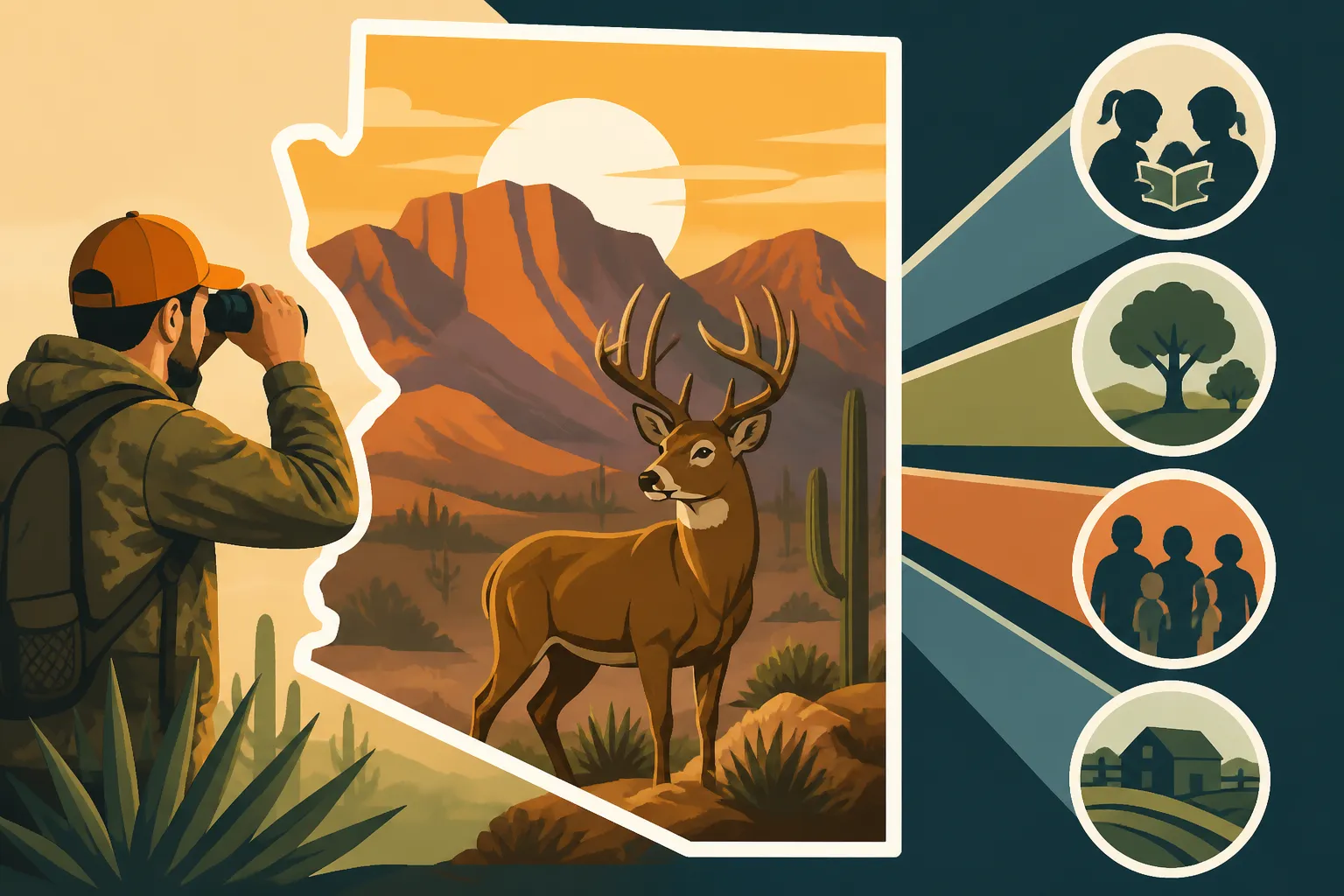
Who Arizona Trust Land Revenue Serves
Navigating Arizona's vast landscapes can often feel like solving a complex puzzle, especially when you're trying to figure out where you can legally hunt, hike, or simply enjoy the outdoors. One of the biggest pieces of that puzzle is State Trust Land, which isn't quite public land in the traditional sense, and many folks get confused about who it actually benefits. This guide will peel back the layers on Arizona State Trust Land, helping you understand its unique purpose, how its revenue is used, and what that means for your outdoor adventures.
Understanding Arizona State Trust Land and Its Unique Purpose
Arizona is fortunate to have a huge amount of land managed by various entities, but State Trust Land often presents the most questions for hunters and recreationists. Unlike National Forest or Bureau of Land Management (BLM) acreage, which is managed for general public use and conservation, Arizona's State Trust Land operates under a very specific mandate: to generate revenue for specific public institutions. It's not "public land" in the way many people assume, meaning it's not managed for broad public access or recreation in the same way federal lands are. Instead, it's a valuable asset held in trust, much like an investment portfolio, with the goal of maximizing financial returns.
When Arizona became a state in 1912, it was granted over 10 million acres of federal land to support public institutions, primarily K-12 education. This was a common practice for western states to establish a financial foundation for their future. Today, that acreage has shifted slightly due to sales and acquisitions, but the fundamental purpose remains. The Arizona State Land Department (ASLD) is the agency tasked with managing these Arizona Holds 9.2 Million Acres of State Trust Land, ensuring they generate income through leases, sales, and permits. This often means that while the land looks like any other open desert or forest, its management prioritizes financial gain over open access for the general public, which can be a source of frustration for those just wanting to enjoy it.
The Historical Mandate of State Trust Lands
The concept of state trust lands dates back to the federal Enabling Acts, which granted lands to states upon their admission into the Union. For Arizona, this meant a significant endowment to support specific beneficiaries. The intention was to create a perpetual funding source, allowing the state to grow and provide essential services without solely relying on direct taxation. It was a forward-thinking approach, but one that inherently places a different value on the land than, say, a national park. The lands are essentially an asset base, a portfolio of real estate that the state is obligated to manage prudently for the long-term financial health of its beneficiaries.
This historical mandate is why the rules for accessing and using State Trust Land differ so much from federal lands. Every decision made by the ASLD, from granting grazing leases to approving large-scale solar projects, must be evaluated through the lens of revenue generation for the trust. This isn't just a suggestion; it's a constitutional and statutory obligation. This fiduciary responsibility shapes everything from the type of activities allowed to the permit requirements for something as simple as a day hike, creating a system that can feel less welcoming than traditional public lands.
Who Manages Arizona State Trust Land?
The Arizona State Land Department (ASLD) is the primary agency responsible for the management, administration, and disposition of these lands. Their role is multifaceted, encompassing everything from mapping and surveying to lease management and resource protection. The Commissioner of the ASLD is appointed by the Governor, and they, along with their staff, are tasked with ensuring the trust is managed efficiently and transparently. They act as stewards of this vast estate, constantly balancing the need for revenue with responsible land use and conservation practices.
The ASLD also plays a critical role in enforcing compliance. They oversee countless leases for everything from agriculture and commercial development to mineral extraction and communications sites. This involves a lot of boots on the ground, making sure lessees adhere to their agreements and that activities don't unduly harm the land's long-term value. For the average hunter or recreationist, understanding that the ASLD is the gatekeeper for these lands is crucial, as they are the ones who set the rules for Do You Need a Permit for Arizona State Trust Land? and determine how you can interact with these areas.
The Beneficiaries of State Trust Land Revenue
The most crucial aspect of Arizona State Trust Land is understanding who the revenue ultimately serves. It's not a general fund that goes into the state's coffers for just anything; it's earmarked for specific beneficiaries, primarily public education. This means that when you purchase a permit to access trust land, or when a rancher pays for a grazing lease, that money is directly supporting critical public services. Knowing this can help put the permit fees and access restrictions into perspective, even if they still feel like a hurdle.
Imagine millions of acres of land essentially acting as an endowment, constantly working to provide resources for the state's future. The revenue generated from these lands helps fund everything from textbooks and teacher salaries to new school buildings and technology upgrades. It's a foundational component of Arizona's public services funding model, making the State Trust Land system vital to the well-being of its citizens.
Funding Public Education and Other Institutions
The lion's share of State Trust Land revenue goes directly to K-12 public education. This is the primary beneficiary, reflecting the foresight of the state's founders to establish a stable funding source for future generations. When you see new schools being built or educational programs expanding, a portion of that funding stream might very well trace back to a grazing lease in Cochise County or a commercial development lease outside of Phoenix. It's a powerful and direct link between Arizona's natural resources and its educational infrastructure.
Beyond K-12 education, other public institutions also benefit. These can include state universities, community colleges, hospitals, and even correctional facilities. While K-12 is the largest recipient, the diverse list of beneficiaries highlights the broad impact these lands have on the state's ability to provide a wide array of public services. This diversified support ensures that the revenue generated helps strengthen various pillars of Arizona society, making the effective management of State Trust Land even more critical.
How Trust Land Revenue is Allocated
The allocation of revenue is tightly regulated to ensure it goes to the intended beneficiaries. Funds generated through sales, leases, permits, and mineral rights are deposited into specific accounts dedicated to these institutions. It's not a free-for-all; there are strict accounting procedures and legal frameworks governing how every dollar is handled. This ensures accountability and transparency in the system, aiming to protect the integrity of the trust.
For example, when an oil and gas lease is granted on State Trust Land, the revenue generated from that lease is funneled into the specific trust accounts. Similarly, if a large parcel is sold for commercial development, the proceeds become part of that endowment. This methodical approach ensures that the funds are not diverted but rather serve their constitutional purpose, providing long-term financial stability for the state's vital institutions. This table illustrates the diverse sources of revenue and their general allocation:
| Revenue Source | Primary Contribution To | Example Activities | Impact on Public |
|---|---|---|---|
| Grazing Leases | K-12 Education | Cattle ranching, livestock operations | Supports rural economies, provides food |
| Commercial Leases | K-12 Education, Universities | Retail developments, industrial parks, office buildings | Job creation, property tax base |
| Mineral Leases | Various Beneficiaries | Mining for copper, gold, sand/gravel extraction | Raw materials, economic activity |
| Agricultural Leases | K-12 Education | Crop farming, hay production | Food supply, agricultural jobs |
| Rights-of-Way | Various Beneficiaries | Utilities (power lines, pipelines), roads | Infrastructure development, public services access |
| Recreational Permits | K-12 Education | Hunting, camping, hiking, OHV use | Direct funding for education, managed public access |
| Sales of Trust Land Parcels | Permanent Funds | Large-scale development, urban expansion | Long-term growth of endowment |
This structured allocation means that the money generated by that land isn't just disappearing into a bureaucratic black hole; it's going directly to support the schools and services that impact everyday Arizonans.
How Revenue is Generated from Trust Land Activities
The Arizona State Land Department employs a variety of strategies to generate revenue from the land it manages. These aren't just limited to selling parcels; a significant portion of income comes from leasing the land for various uses. This active management ensures a steady stream of funds, maximizing the long-term value of the trust. From sprawling cattle ranches to large-scale infrastructure projects, every activity on State Trust Land is designed with this revenue generation goal in mind.
It's a delicate balancing act for the ASLD. They need to ensure that current revenue streams are strong, while also protecting the land's value for future generations. This often means making tough decisions about what activities are allowed and where, weighing environmental concerns against economic benefit. For the hunter, this might translate to seeing more commercial activity or fenced-off areas than you'd expect on other public lands, as those activities are often directly tied to the trust's financial health.
Leasing for Grazing and Agriculture
One of the oldest and most widespread uses of Arizona State Trust Land is for grazing livestock. Vast tracts of the state's desert and rangeland are leased to ranchers, allowing them to run cattle and other animals. These grazing leases provide critical income for the trust, supporting the beneficiaries. While some hunters might grumble about cattle on "their" hunting grounds, it's important to remember that these leases are a direct revenue stream that funds schools.
Similarly, in areas with suitable water resources, portions of State Trust Land are leased for agricultural purposes. This can range from growing traditional crops to more specialized farming operations. These agricultural leases contribute significantly to the trust's income, leveraging the land's fertility for both economic and educational benefit. The presence of these operations means that hunters might encounter cultivated fields or active ranching operations, requiring extra awareness of property boundaries and respecting the activities of the lessees. Why Arizona Trust Land Lessees Have Priority means their operations are a primary consideration.
Commercial, Industrial, and Residential Development
As Arizona's population grows, so does the demand for land for commercial, industrial, and residential development. The ASLD strategically sells or leases parcels of State Trust Land that are well-suited for these purposes, particularly near urban and suburban areas. This often generates the highest per-acre revenue for the trust, creating substantial endowments for the beneficiaries. Think of large shopping centers, master-planned communities, or industrial parks; many of these began as State Trust Land parcels.
These developments are critical for the trust's financial health, but they also mean that the footprint of what was once open land shrinks. For hunters, this translates to less accessible land around growing communities, and a greater need to use tools like onX Layers for Arizona Public Land or GoHunt's mapping features to distinguish between trust land, private holdings, and other public grounds. It’s a constant evolution of the landscape that hunters need to keep abreast of to avoid trespassing or wasting time scouting areas that are no longer accessible.
Mineral Extraction and Rights-of-Way
Arizona is a state rich in mineral resources, and the extraction of these minerals also contributes to State Trust Land revenue. Mining leases for copper, gold, and other valuable minerals, as well as sand, gravel, and aggregate, provide another significant income stream. These leases come with strict environmental regulations and reclamation requirements, but their economic impact on the trust is undeniable.
Furthermore, rights-of-way for utilities, pipelines, and transportation infrastructure are frequently granted across State Trust Land. This allows for the development of essential services that benefit the entire state, from electricity grids to new roadways. While these infrastructure projects might alter the landscape, they represent necessary easements that generate further revenue for the trust. For hunters, this could mean encountering power line cuts, gas pipeline corridors, or new roads, which can sometimes provide access but also alter wildlife patterns.
Accessing Arizona State Trust Land for Outdoor Recreation
This is where things often get a little murky for hunters and outdoor enthusiasts. While State Trust Land looks like open country, it's not managed for general public recreation in the same way federal public lands are. Because its primary purpose is revenue generation, access for recreational activities is treated differently, requiring specific permits and adherence to unique rules. Many hunters mistakenly believe their hunting license grants them universal access, which isn't always the case, leading to confusion and potential legal issues.
It’s a crucial distinction to make: just because land isn’t privately owned, doesn't mean it’s "open to all" in Arizona. You really need to know What Arizona State Trust Land Is and how to identify it to avoid problems. This is where modern mapping applications become invaluable, allowing hunters to differentiate between BLM, Forest Service, and State Trust Land boundaries with precision.
The Recreational Permit Requirement
For most recreational activities on Arizona State Trust Land, including hunting, fishing, hiking, and camping, you do need a permit. This is one of the most common points of confusion. While your hunting license does act as your general recreational permit for many activities on State Trust Land, there are exceptions. If you're going to use an off-highway vehicle (OHV), for instance, you'll need an OHV Decals on Arizona Trust Land, and other specialized activities might require a When Arizona Requires a Recreational Permit Instead. The key takeaway is: always check the current Arizona State Land Department regulations before heading out.
The permit system serves a dual purpose: it generates revenue for the trust (however modest for individual permits) and it provides a mechanism for the ASLD to manage the impact of recreational users. By requiring permits, they can track usage, communicate rules, and fund enforcement efforts. It’s a small fee to pay for the privilege of accessing millions of acres, but it’s a non-negotiable step that many hunters overlook, sometimes to their detriment.
Respecting Lessees and Existing Operations
One of the most important aspects of recreating on State Trust Land is respecting the rights and operations of lessees. As mentioned, these lands are often leased for grazing, agriculture, or commercial purposes. The lessees have prior rights to use the land for their permitted activities. This means that if you're hunting on State Trust Land, you might encounter active cattle operations, agricultural fields, or even mining sites. It's imperative to give these operations a wide berth, avoid disturbing livestock, and certainly never interfere with commercial activities.
Why Arizona Trust Land Lessees Have Priority is not just a polite request; it's a legal fact. Their lease agreements often grant them exclusive rights for their specific activities. While your permit allows you recreational access, it doesn't give you free rein to disrupt their livelihood. This mutual respect is key to ensuring continued access for hunters and other recreationists. Always be prepared to yield, detour, or even find alternative access if an active lease operation makes your intended route or hunting spot unfeasible. Using mapping tools like onX Hunt can help you identify potential conflict zones before you even leave home.
Navigating Boundaries and Identifying Trust Land
Identifying State Trust Land can be tricky, as it often intermingles with private land, BLM land, and National Forest land. This creates a patchwork ownership mosaic that can be incredibly confusing without the right tools. Unlike federal lands that often have clear signage, State Trust Land can be much more ambiguous on the ground. This is where advanced mapping technology becomes an absolute necessity for the responsible hunter.
Tools like onX Hunt and GoHunt provide detailed land ownership layers that clearly delineate State Trust Land from other categories. This visual clarity is invaluable, allowing hunters to plan routes, identify access points, and avoid accidental trespass. Without such tools, relying solely on physical signs or general knowledge can lead to frustrating encounters or even legal issues. Take the time to learn Reading a Land Ownership Layer Correctly on your app of choice; it will save you a lot of headaches and ensure you're always on legal ground.
Distinguishing Trust Land from Other Public Lands
Understanding the nuances of land ownership in Arizona is paramount for any hunter or outdoor enthusiast. Simply calling it "public land" is a vast oversimplification because the rules and purposes behind different types of public land vary dramatically. State Trust Land, National Forests, and BLM lands each have their own governing bodies, mandates, and access regulations, and confusing them can lead to problems. It's not just a matter of semantics; it's about knowing where you can go, what you can do, and what permits you need.
The patchwork nature of Arizona's landscape means you might cross between different land types multiple times in a single day. One moment you could be on National Forest land, then suddenly on a private parcel, only to find yourself on State Trust Land moments later. Being able to identify these transitions quickly and accurately is a critical skill, especially when Checking Public Land Percentage by Unit while scouting for your next hunt.
Bureau of Land Management (BLM) Land
BLM land comprises a significant portion of Arizona's public domain, particularly in the desert and lower elevation regions. These lands are generally managed for multiple uses, including recreation, grazing, mining, and energy development. Crucially for hunters, BLM Access Rules Across Arizona typically allow for open, unpermitted recreational access, assuming you have a valid hunting license if you're pursuing game. Dispersed camping is often permitted, and the overall management philosophy leans towards broad public use, though specific restrictions might apply to certain areas or activities.
While BLM lands are managed differently from State Trust Land, they do share some similarities in terms of their economic contributions through grazing and mineral leases. However, the overarching goal for BLM is to balance these uses with conservation and public access. This distinction is vital for hunters who may experience more freedom and fewer direct access fees on BLM land compared to State Trust Land.
National Forest Lands
National Forests in Arizona, like the Coconino, Kaibab, or Apache-Sitgreaves, are managed by the U.S. Forest Service. These lands are typically found in the higher elevations and timbered regions, offering different ecosystems and hunting opportunities than the desert lowlands. Similar to BLM, National Forest Access Across Arizona is generally open for public recreation, including hunting, without the need for an additional permit beyond your hunting license. Camping, hiking, and other activities are broadly permitted, though specific regulations for designated wilderness areas or developed recreation sites apply.
The management priorities of National Forests include timber production, watershed protection, wildlife habitat, and recreation. While they also generate revenue from resource extraction, the emphasis on public enjoyment and conservation is more pronounced than on State Trust Land. Hunters often appreciate the relative simplicity of access on National Forest land, where the primary concern is adhering to hunting regulations and respecting Leave No Trace principles.
Key Differences in Management and Access
The table below summarizes the key differences between these three major land types in Arizona, offering a quick reference for hunters trying to navigate the complex landscape:
| Feature | Arizona State Trust Land | BLM Land | National Forest Land |
|---|---|---|---|
| Governing Body | Arizona State Land Department | Bureau of Land Management (US) | U.S. Forest Service (US) |
| Primary Purpose | Generate revenue for beneficiaries (K-12 schools, etc.) | Multiple use (recreation, grazing, energy, conservation) | Multiple use (timber, recreation, wildlife, watershed) |
| Recreational Access | Requires Recreational Permit (often covered by hunting license, but check) | Generally open, no additional permit for recreation | Generally open, no additional permit for recreation |
| Camping | Often restricted, specific rules apply, sometimes prohibited | Dispersed camping generally allowed | Dispersed camping generally allowed |
| Lessee Priority | High, lessees have prior rights for their specific activities | Yes, but public access is also a strong consideration | Yes, but public access is also a strong consideration |
| Signage | Can be ambiguous, relies on mapping tools for identification | Variable, some signs, relies on mapping | Generally well-signed at boundaries and access points |
| Brands | onX Hunt, GoHunt (for boundary identification) | onX Hunt, GoHunt | onX Hunt, GoHunt |
This comparison makes it clear why understanding the specific type of land you're on is so vital. What's perfectly legal on a National Forest might require a specific permit or even be prohibited on State Trust Land.
The Role of the Arizona State Land Department
The Arizona State Land Department (ASLD) is the central player in the story of State Trust Land. They are the administrators, the managers, and the guardians of this vast and valuable estate. Their work directly impacts not only the financial health of Arizona's public institutions but also the experiences of countless hunters, hikers, and outdoor enthusiasts who wish to access these lands. Understanding their mission and responsibilities helps demystify why certain rules and regulations exist.
It's a huge undertaking to manage nearly 9.2 million acres, encompassing diverse landscapes from saguaro-studded deserts to high-elevation ponderosa pine forests. The ASLD's decisions have far-reaching consequences, affecting everything from urban growth patterns to wildlife habitat, and of course, hunter access.
Management and Oversight Responsibilities
The ASLD's core responsibility is to manage the State Trust Land in a way that generates maximum revenue for the beneficiaries, consistent with the state's fiduciary duties. This involves a complex array of tasks, including land sales, leases for various uses (grazing, commercial, agricultural, mineral), and issuing permits for recreational activities. They are responsible for appraising land values, negotiating lease agreements, and ensuring compliance with all legal and environmental requirements. It’s a very business-oriented approach to land management, driven by the need to fund public services.
Beyond revenue generation, the ASLD also plays a role in land conservation and resource protection, though these are often balanced against the primary financial mandate. They must ensure that the land's long-term value is not diminished by current uses, which can involve managing water resources, addressing invasive species, and even protecting cultural sites. This multi-faceted oversight demands a diverse team of professionals, from real estate experts to environmental scientists, all working to uphold the trust's mission.
How ASLD Interacts with Hunters and the Public
For the average hunter, interaction with the ASLD primarily revolves around understanding and complying with their access rules. The ASLD is the authority that issues the Does a Hunting License Cover Trust Land Access? and manages any additional permits you might need for specific activities on State Trust Land. Their website is the official source for current regulations, maps, and permit applications. It's always a good idea to consult their resources directly before planning a trip involving State Trust Land, as rules can occasionally be updated.
The ASLD also engages with the public through various outreach efforts, sometimes participating in public forums or stakeholder meetings. While their mandate is clear, they are also responsive to public input regarding land use and access, seeking to balance the needs of beneficiaries with the broader interests of Arizona's citizens. However, their primary duty remains the generation of revenue, which means recreational access will always be viewed through that lens, rather than purely as a public good like on federal lands. It's a system designed to fund the future of Arizona, one permit and lease at a time.
Disclaimer
This article is for general informational purposes only and does not constitute professional advice. Laws, prices and regulations vary by location and change over time. Consult a qualified professional for guidance on your specific situation.