Finding Water in Arizona’s Dry Country
Hunting in Arizona's vast, often unforgiving dry country presents a unique and frustrating challenge: water is life, not just for us as hunters, but for the game we pursue. It's easy to feel overwhelmed by the sheer scale of the desert and the apparent lack of moisture, leaving many to wonder how any animal survives, let alone where to find them. This guide aims to demystify the critical role of water in Arizona's arid landscapes and equip you with the knowledge, tools, and mindset to effectively locate these vital sources, ultimately increasing your hunting success and ensuring your own safety in the process.
Why Water is the Ultimate Magnet for Arizona Game
Let's be real, Arizona is a desert state. While we have stunning mountains and pine forests, much of our hunting ground is defined by sparse rainfall and searing temperatures. This means that water, or the lack thereof, dictates everything. It’s not just a nice-to-have; it’s the absolute, non-negotiable cornerstone of animal survival and, therefore, your hunting strategy. Trying to hunt without understanding water is like trying to find a needle in a haystack blindfolded.
Animals in Arizona, from the smallest javelina to the biggest elk, are constantly thinking about water. Their daily movements, bedding areas, and feeding patterns are all intricately linked to their need to hydrate. In dry periods, a reliable water source becomes a funnel, drawing animals from miles around. This creates predictable patterns that a savvy hunter can exploit. Without sufficient water, game simply cannot thrive, or often, cannot even exist in a given area.
Furthermore, ignoring water is a safety hazard for hunters. Out there, far from paved roads and cell service, dehydration can become a severe problem quickly, especially during Heat Management on an Arizona Early Season Hunt conditions. Understanding where you can find water, or at least where game finds it, helps you plan routes, understand animal behavior, and stay safe. It's about respecting the environment and understanding the fundamental forces that shape wildlife movement.
The Lifeblood of Desert Survival
Imagine a hot August afternoon in southern Arizona. The sun beats down mercilessly, and the air shimmers above the creosote. A desert mule deer buck isn't just seeking shade; he's calculating his next drink. Every drop of moisture in his diet, whether from prickly pear fruit or a muddy seep, is precious. He’ll travel significant distances, often under the cover of darkness, to reach a water source. This journey creates trails, leaves sign, and establishes patterns that become obvious to the hunter who knows what to look for.
This survival instinct for water means that areas with consistent access to it often host higher densities of game. It's not uncommon to find multiple species using the same water hole, sometimes even during the same day, especially in more remote and untouched areas. This congregation around water can make them prime spots for scouting and setting up ambushes, particularly if you’re targeting animals like javelina or deer in dry periods.
How Water Dictates Animal Movements and Patterns
Think about it: an animal needs food, cover, and water. While food and cover might be abundant across a vast landscape, reliable water sources are often few and far between. This scarcity creates bottlenecks. Animals will graze and browse for hours, then make a direct beeline to the nearest water. These travel corridors, often well-worn trails leading to and from water, are invaluable scouting tools.
For instance, elk on the Mogollon Rim, even in more timbered country, will still have preferred watering holes, especially during the early archery season. Understanding Where Elk Water During Early Archery can be the difference between seeing a few cows and finding the herd bull. Similarly, a string of reliable tanks or seeps can act like a series of beads on a necklace, with game moving between them, offering a sequence of potential ambush points. Without water, these patterns simply wouldn’t exist, and hunting would be far more random and challenging.
Types of Water Sources You'll Encounter in Arizona
Arizona's dry country might seem barren, but it’s actually dotted with various types of water sources, each with its own characteristics and implications for hunting. From natural springs hidden in canyons to man-made tanks, understanding these differences is crucial for effective scouting and hunting. You can't just look for "water"; you need to identify the type of water and understand how game uses it.
Some sources are perennial, meaning they flow year-round, while others are ephemeral, drying up quickly after rain. The permanence of a water source heavily influences how consistently animals use it and, consequently, how valuable it is to your hunting strategy. A permanent spring, even a small one, is a goldmine. An ephemeral puddle, while used, might only be productive for a few days.
Natural Water Sources
These are the purest forms of hydration for wildlife, often hidden in the most remote and rugged terrain. Finding them can feel like discovering a hidden treasure.
- Springs and Seeps: These are perhaps the most valuable natural water sources. Springs are where groundwater naturally flows to the surface, often in canyons or at the base of mountains. Seeps are less dramatic, just wet spots on a rock face or along a ravine where water slowly oozes out. They can be incredibly small, sometimes just enough to create a muddy depression, but they are consistently used. Animals know exactly where these are, and they will rely on them heavily, especially during extended dry spells. Look for lush vegetation that stands out against the arid surroundings, often a vibrant green pocket in a sea of brown and gray.
- Ephemeral Potholes and Washes: After a monsoon storm or significant rainfall, the desert can temporarily transform. Rock potholes collect water, and washes, which are typically dry streambeds, might flow briefly. These sources are invaluable for a few days or weeks, allowing game to disperse from permanent water. However, they are unreliable and will dry out quickly. Hunting over these requires impeccable timing and knowledge of recent weather patterns. Don't plan your entire hunt around them, but be aware of them if recent rains have occurred.
- Rivers and Creeks: While less common in the true "dry country," Arizona does have perennial rivers and creeks, especially in its higher elevations and along its major waterways like the Salt River or parts of the Gila. These are obviously permanent water sources, but the sheer size can make them harder to hunt directly. However, the smaller feeder creeks and riparian zones along their banks are fantastic places to find game, as the constant water supports denser vegetation and a richer ecosystem.
Man-Made Water Developments
Humans have played a significant role in providing water for wildlife in Arizona, primarily through the efforts of agencies like Arizona Game and Fish Department, conservation groups, and ranchers. These developments are often critical in areas where natural water is scarce.
- Stock Tanks and Ponds: These are perhaps the most common man-made water sources you'll encounter. Built primarily for livestock, these earthen dams capture and hold rainwater. They vary greatly in size, from small puddles to significant ponds. Finding Stock Tanks on a Unit Map is a key skill, as they are often marked on topographical maps. They are magnets for all types of game, including deer, elk, javelina, and even predators. Look for well-worn game trails leading to and from the water's edge, and note signs of recent activity like tracks and droppings.
- Guzzlers: These ingenious contraptions are specifically designed for wildlife. Typically, a large metal or fiberglass apron collects rainwater and funnels it into an underground storage tank, which then feeds a drinker box accessible to animals. Guzzlers are often strategically placed in remote areas far from natural water, and they are lifelines for many species. They might not be as obvious as a stock tank but are highly effective. Many are unmarked on public maps to prevent overuse or vandalism, making them harder to find without local knowledge or extensive scouting.
- Windmills and Wells: In some ranching areas, windmills pump water from underground wells into troughs or small tanks. These are generally reliable sources, providing consistent water regardless of rainfall. However, they are often on private land or within active grazing pastures, so always verify land ownership and access before planning to hunt near one. Respect for private property and ranching operations is paramount.
To give you a quick overview, here's a simple comparison of different water sources:
| Water Source Type | Reliability | Game Attraction | Ease of Finding | Notes |
|---|---|---|---|---|
| Springs/Seeps | High (Perennial) | Very High | Difficult | Often hidden, look for lush vegetation. |
| Ephemeral Potholes | Low (Rain-dependent) | Medium | Medium | Temporary, timing is everything. |
| Rivers/Creeks | High (Perennial) | High | Easy | Can be large, focus on riparian edges. |
| Stock Tanks/Ponds | Medium (Rain-fed) | Very High | Medium | Often marked on maps, highly used. |
| Guzzlers | High (Engineered) | High | Difficult | Specific for wildlife, often unmarked. |
| Windmills/Wells | High (Mechanical) | Medium | Medium | Often on private land, check access. |
Tools and Techniques for Locating Water in Arizona
Finding water in Arizona's vast and often featureless landscape requires a combination of modern technology, keen observation skills, and good old-fashioned boots on the ground. You can't just drive around hoping to stumble upon it; you need a systematic approach. This is where effective Scouting an Arizona Unit Before the February Deadline truly pays off.
Modern tools have revolutionized the way we scout for water, but they are only part of the puzzle. Understanding the terrain, reading the landscape, and interpreting game sign are equally important. Combine all these methods, and you'll significantly increase your odds of locating those crucial water sources.
E-Scouting and Mapping Applications
Before you ever set foot in the unit, start with your digital tools. Applications like OnX Hunt, BaseMap, and even platforms like GoHunt provide incredibly detailed satellite imagery and topographical maps that can reveal potential water sources from the comfort of your home.
- Satellite Imagery: Zoom in and scour the landscape. Look for darker green vegetation, which often indicates moisture. Springs and seeps, even small ones, can create noticeable pockets of denser, greener foliage, especially in dry areas. Look for unnatural circular or rectangular shapes—these often indicate man-made stock tanks or guzzlers. Old aerial photos can sometimes reveal historical water sources that might still be active. Platforms like GoHunt often integrate various map layers that can highlight water developments or riparian areas, making this process much more efficient.
- Topographical Maps: Water flows downhill. Use contour lines to identify drainages, canyons, and low points where water would naturally collect or run. Springs typically occur where a geological fault or impermeable layer brings groundwater to the surface, often at the head of a canyon or along a hillside. Understanding the flow of the land can guide you to these locations. Cross-reference topo maps with satellite imagery to see if those drainages show signs of water.
- Public and Private Land Data: While scouting for water, always be mindful of land ownership. Your mapping app should clearly delineate public and private boundaries. Many stock tanks and wells are located on private ranch land, and trespassing is never an option. Knowing these boundaries beforehand, especially if using a resource like GoHunt's detailed maps, will save you a lot of grief and ensure you're hunting ethically and legally. This is also critical for understanding general unit access, as detailed in Reading a Unit Before You Ever Walk It.
Boots-on-the-Ground Reconnaissance
E-scouting gets you in the ballpark, but nothing beats actually being there. Your physical presence allows you to confirm what you saw on a map and discover things that satellite imagery might miss.
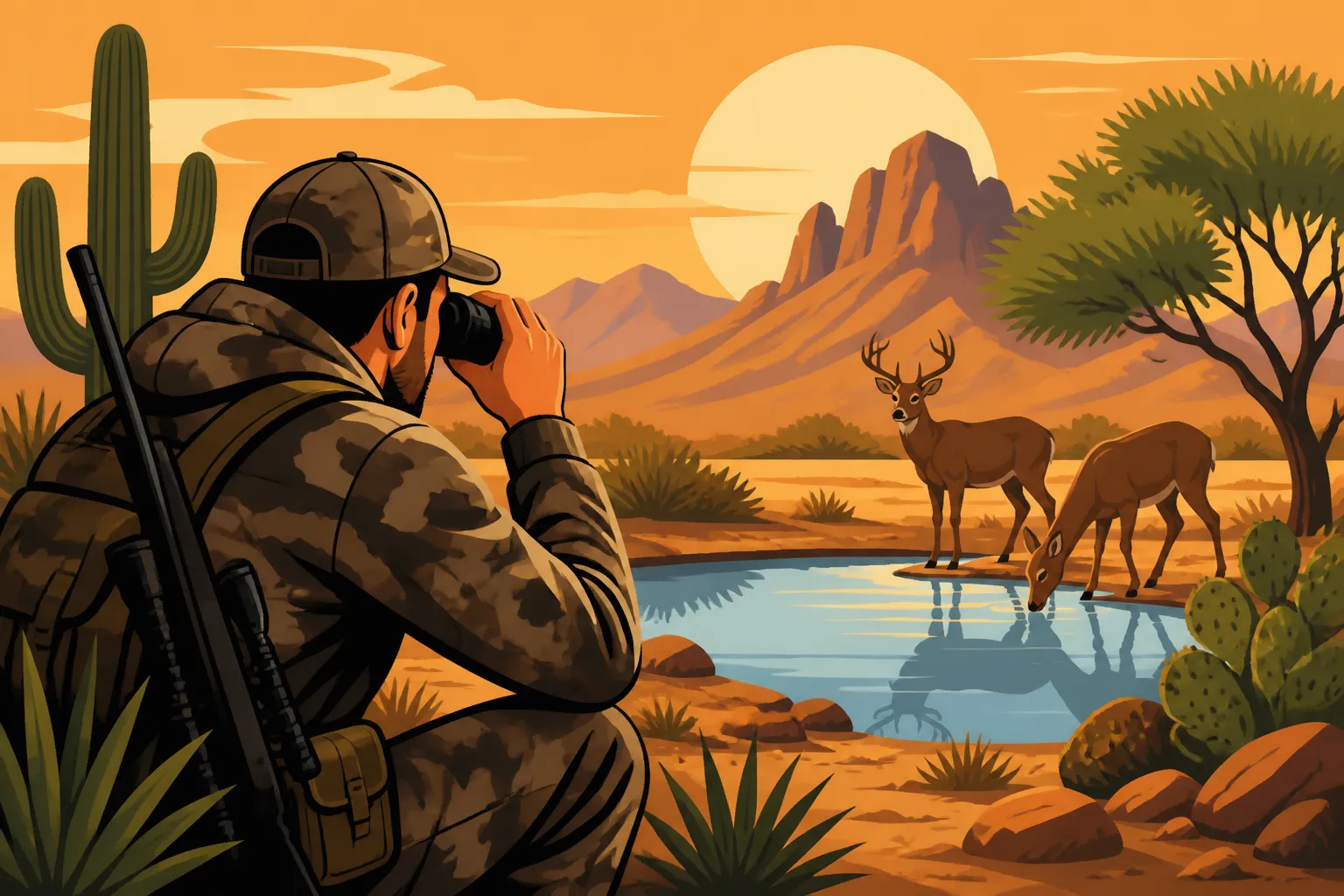
- Glassing: Once you're in the unit, put your optics to work. Use powerful binoculars or a spotting scope, especially with high Optics Power for Arizona's Long Desert Sightlines, to systematically The Grid Glassing Method, Step by Step hillsides, canyon bottoms, and open flats. Look for game trails converging towards specific points, patches of green vegetation, and tell-tale dust from animals watering. During the hottest parts of the day, glassing known water sources from a distance can reveal activity patterns.
- Following Game Trails: Animals know the shortest, most efficient routes to water. If you find a well-used game trail, especially one that seems to drop in elevation or head towards a canyon bottom, follow it. It will almost always lead to water, a bedding area, or a feeding area. Look for fresh tracks, droppings, and rubbed vegetation along these trails to confirm active use.
- Listening for Cues: In surprisingly quiet desert environments, sounds carry far. Listen for the distinct calls of crows, ravens, and even quail – birds often congregate around water sources. During certain times, you might even hear the splashing or movement of animals at a waterhole, especially during dawn or dusk. Pay attention to subtle sounds that might indicate life.
- Checking Water Levels and Sign: Once you find a water source, assess its current condition. Is it full or nearly dry? How fresh is the game sign around it? Look for tracks in the mud, droppings, and trampled vegetation. These clues will tell you not only that animals are using it but also how recently and how heavily. This information is vital for deciding if a particular water source is a reliable hunting spot.
Ethical Considerations and Conservation
Finding water in Arizona's dry country isn't just about hunter success; it’s deeply intertwined with ethical hunting practices and conservation. The scarcity of water means that every source is a vital resource for wildlife, and it demands our respect and responsible stewardship.
As hunters, we have a unique connection to the land and a responsibility to protect these resources. Our actions around water sources can have a significant impact on wildlife, and being mindful of this is part of being a true conservationist.
Respecting Water Developments and Wildlife
Many of the man-made water sources you find, especially guzzlers and some stock tanks, are there specifically to benefit wildlife. They are critical infrastructure that often requires significant effort and funding to maintain.
- Leave No Trace: This fundamental principle is even more critical around water sources. Don't leave trash, human waste, or any other debris. Pack out everything you pack in. Leaving trash contaminates water, harms wildlife, and disrespects the efforts of those who maintain these sites. Even simple things like discarded orange peels can take years to decompose in the desert and detract from the natural experience for others.
- Avoid Contamination: Be extremely careful not to contaminate any water source with chemicals, fuel, or anything that could make it unsafe for animals to drink. If you're filtering water for yourself, do it away from the edge of the actual source. Always ensure your hunting camp is situated far enough away from any water source to prevent runoff or waste from polluting it.
- Minimize Disturbance: If you find a water source that is being heavily used by game, try to minimize your presence and disturbance. While it might be a prime spot to hunt, constant pressure can drive animals away from a crucial resource. Consider how your actions affect the animals' ability to access water, especially during times of extreme drought. Hunting over water is a powerful tactic, but it must be done with restraint and foresight.
The Hunter's Role in Water Conservation
Hunters are often at the forefront of conservation efforts, and nowhere is this more apparent than in Arizona's arid environment. We are often the first to notice changes in water availability and animal behavior related to drought conditions. How Drought Affects Desert Deer Numbers is a stark reminder of how fragile these ecosystems can be.
- Report Issues: If you come across a damaged guzzler, a dry spring that should be flowing, or any other issue impacting a wildlife water source, report it to the Arizona Game and Fish Department. They rely on observant individuals to help maintain these vital sites. Your report could save countless animals.
- Support Conservation: Consider supporting organizations that fund and build water developments, like the Arizona Game and Fish Department's Habitat Partnership Committee or local chapters of conservation groups. Your license fees and donations directly contribute to these essential projects that benefit all wildlife.
- Educate Others: Share your knowledge about the importance of water and ethical practices with other hunters and outdoor enthusiasts. The more people who understand and respect these critical resources, the better off Arizona's wildlife will be. It's about fostering a culture of responsibility and ensuring these hunting opportunities continue for generations to come.
Disclaimer
Please remember that hunting regulations, land access rules, and environmental conditions in Arizona can change. Always consult the latest Arizona Game and Fish Department regulations and verify land status before any hunting or scouting trip. This guide is for informational purposes only and does not supersede official regulations. Stay safe and hunt ethically.