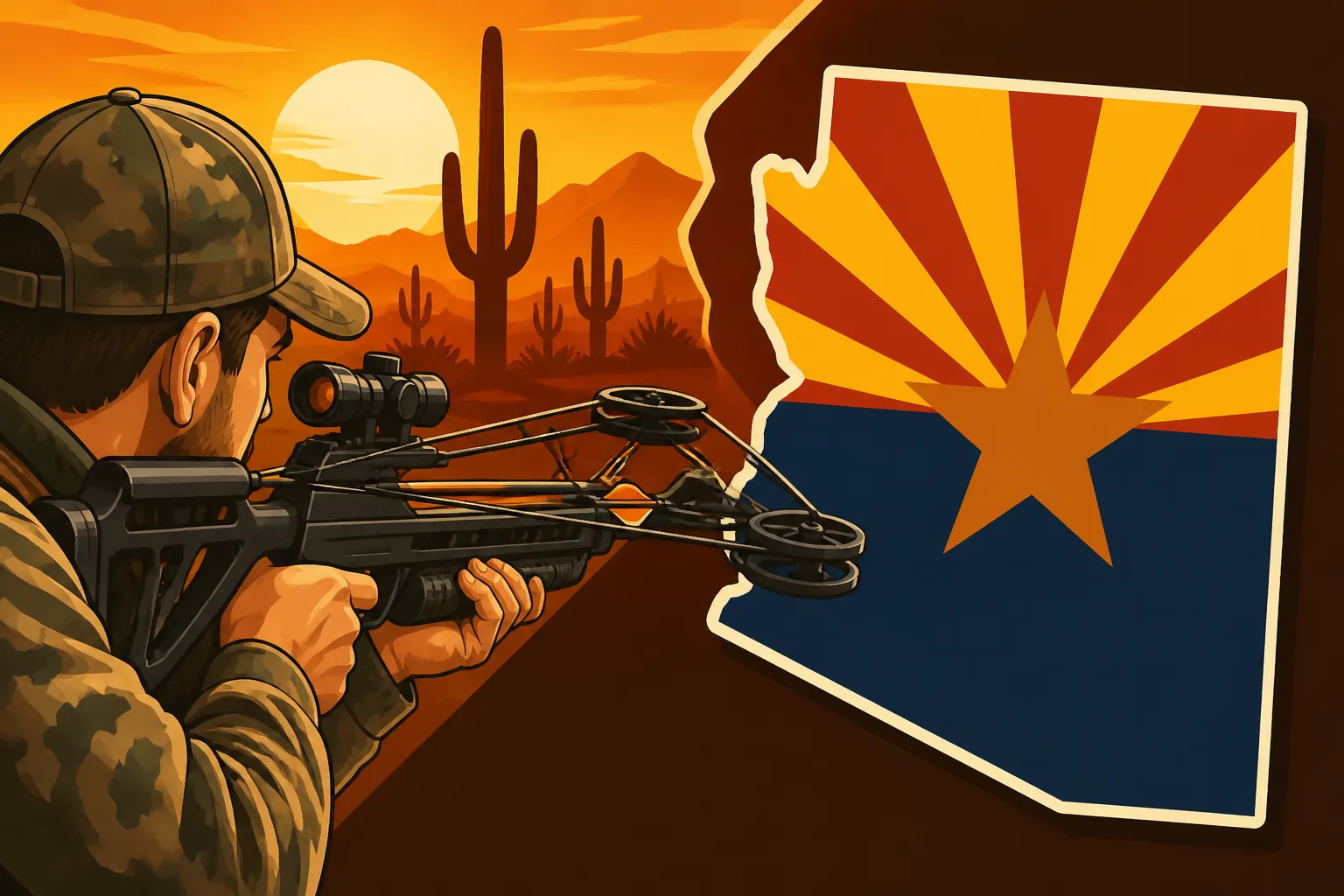
The 125-Pound Crossbow Draw Weight Arizona Requires
It can be incredibly frustrating to keep up with hunting regulations, especially when it comes to specific weapon requirements that seem to change or have unique interpretations. For Arizona crossbow hunters, one of the most important rules to understand is the mandated 125-pound minimum draw weight, a standard designed to ensure ethical and effective harvesting of big game. This guide will meticulously break down what this regulation means for you, why it's in place, and how to ensure your equipment is always compliant.
Understanding Arizona's Crossbow Draw Weight Rule
The Arizona Game and Fish Department (AZGFD) isn't just throwing numbers around for the sake of it when they set equipment minimums. These regulations are deeply rooted in wildlife management principles and the ethical pursuit of game animals. For crossbows, that 125-pound draw weight isn't an arbitrary figure; it's a carefully considered standard.
The Rationale Behind the 125-Pound Minimum
When Arizona mandates a 125-pound minimum draw weight for crossbows, it's primarily focused on ensuring sufficient kinetic energy and penetration for a humane harvest. A crossbow, much like a vertical bow, relies on stored energy to propel an arrow, or in this case, a bolt. If the draw weight is too low, the bolt simply won't have enough force to penetrate deeply through hide, muscle, and bone to reach vital organs. This can lead to wounded animals that escape, causing unnecessary suffering and a lost opportunity for the hunter. The 125-pound threshold is seen as the baseline for generating enough power to consistently achieve ethical kills on larger big game animals, such as deer and elk, which are common quarry in Arizona.
This isn't just about the animal; it's also about the hunter's responsibility. No one wants to wound an animal and not recover it. Hunters are stewards of wildlife, and ensuring a quick, clean kill is paramount. The AZGFD, in setting this standard, is providing clear guidance to minimize these unfortunate occurrences. It pushes hunters to use equipment capable of delivering a swift and humane dispatch, aligning with the broader principles of ethical hunting that are so important to the hunting community here in Arizona and across the country.
Consider the diverse range of big game across Arizona's varied landscapes, from the thick hide of an elk in the White Mountains to a Coues deer in the rugged Sky Islands. Each animal presents different challenges in terms of shot placement and penetration. The 125-pound minimum aims to provide a reliable standard across these scenarios, giving hunters a better chance at success while upholding ethical hunting practices. It removes some of the guesswork for hunters, ensuring that any crossbow used for big game hunting meets a baseline power requirement.
How Draw Weight Impacts Kinetic Energy and Ethics
Draw weight is directly correlated with the kinetic energy a crossbow can impart to a bolt. In simple terms, the higher the draw weight, the more potential energy is stored in the limbs when cocked, and thus, the more kinetic energy transferred to the bolt upon release. Kinetic energy, measured in foot-pounds, is critical for achieving adequate penetration. Without enough kinetic energy, your bolt might not pass through the animal, or it might not penetrate deeply enough to damage critical organs. This is especially true for quartering shots or when encountering a shoulder blade, which can deflect or stop a low-energy projectile.
From an ethical standpoint, adequate kinetic energy isn't just about penetration; it's about shot placement and effectiveness. Even a perfectly placed shot might fail to be lethal if the bolt lacks the energy to reach the vitals efficiently. This leads to longer tracking jobs, greater risk of losing the animal, and ultimately, a less ethical outcome. By requiring a 125-pound minimum draw weight, Arizona is implicitly stating that they expect hunters to use equipment that delivers enough punch to cleanly harvest game, respecting the animal and the hunting tradition. It’s a measure that supports responsible hunting and reinforces the importance of using appropriate tools for the job.
Think about a common scenario: you've made a great stalk on a mule deer in the high desert of northern Arizona, and you're presented with a broadside shot at 30 yards. If your crossbow is underpowered, even a perfectly executed shot through the ribs might not achieve full pass-through, reducing the blood trail and making recovery incredibly difficult. The 125-pound minimum helps mitigate this risk, providing a greater margin of success and, more importantly, a higher probability of a humane kill, which is the ultimate goal for any responsible hunter.
Distinguishing Between Draw Weight and Stored Energy
It's easy to confuse "draw weight" with "stored energy" in crossbows, but understanding the difference is key to full compliance. Draw weight, often listed as pounds (e.g., 125 lbs), is the peak force required to pull the string back to its cocked position. It's the maximum resistance you feel or the amount of force the cocking mechanism overcomes. Stored energy, on the other hand, is the total amount of energy held within the bow's limbs and string when it's fully cocked. This stored energy is what's ultimately transferred to the bolt as kinetic energy upon release. Modern crossbows are incredibly efficient, meaning they can store a significant amount of energy even with what might seem like a moderate draw weight, especially when compared to traditional longbows or recurves.
While the AZGFD specifically states "draw weight" as the minimum standard, the underlying intent is to ensure sufficient stored energy to generate adequate kinetic energy. A crossbow with a longer power stroke (the distance the string travels forward) can generate more stored energy, and thus more kinetic energy, than a crossbow with a shorter power stroke, even if both have the same draw weight. However, draw weight is a much simpler, more consistent metric for regulators to enforce and for hunters to verify. Manufacturers typically prominently display the draw weight, making it easy to confirm your crossbow meets the 125-pound Arizona standard. Always consult your crossbow's owner's manual or the manufacturer's specifications to confirm its stated draw weight, ensuring it clearly meets or exceeds the Arizona requirement. This distinction is vital for understanding not just the letter of the law, but its spirit in promoting ethical hunting.
It's also worth noting that while some crossbows might have adjustable draw weights, it's the maximum draw weight that typically defines the model. Ensure that if your crossbow has a lower adjustable setting, you are using it at or above the 125-pound threshold for big game in Arizona. For anyone needing to understand the difference between vertical bow and crossbow requirements, you might find it helpful to look into Arizona's 30-Pound Minimum for Vertical Bows to see how these regulations vary.
Navigating Crossbow Legality in Arizona's Hunt Seasons
The legal landscape for crossbows in Arizona has seen some significant shifts, particularly concerning archery-only seasons. It's crucial for every crossbow hunter to be aware of these changes and understand precisely when and where their weapon is permitted. The days of simply assuming a crossbow is an "archery" weapon for all purposes are largely behind us.
Crossbows and Archery-Only Seasons: The Recent Changes
This is perhaps the biggest point of confusion and frustration for many crossbow hunters in Arizona, and understandably so. Historically, crossbows were generally allowed during archery-only seasons for big game. However, a significant regulation change took effect, beginning with the 2026 hunting seasons, where Crossbows Leave Arizona's Archery-Only Seasons in 2026. This means that for general archery deer, elk, javelina, and other archery-only hunts, a conventional vertical bow (compound, recurve, or longbow) will be the only legal archery equipment allowed. This change was a big deal and prompted a lot of discussion within the hunting community.
The decision to exclude crossbows from general archery-only seasons stemmed from various factors, including concerns about hunter opportunity, weapon effectiveness, and maintaining the traditional challenge associated with archery hunting. Many traditional archers felt that crossbows offered an unfair advantage in seasons specifically designed for the close-range, high-skill demands of vertical bowhunting. While passionate arguments were made on both sides, the Arizona Game and Fish Commission ultimately decided to make the change, reserving those special seasons exclusively for vertical bowhunters. For those who built their entire archery season strategy around using a crossbow, this requires a complete rethinking of their approach or a switch to a different weapon type.
It's vital for all hunters, especially those who prefer crossbows, to be aware of What Changed for Arizona Crossbows on January 1 of the year this regulation takes effect. This shift requires careful planning, checking the current year's hunting regulations booklet, and potentially adjusting your hunting strategy if you've traditionally hunted archery-only seasons with a crossbow. This change impacts hunts like the popular over-the-counter archery deer season, meaning hunters will need to explore other options or learn to use a vertical bow.
Where Crossbows Are Still Permitted for Big Game
While the news about archery-only seasons might be a tough pill to swallow for some, it's important to remember that crossbows are absolutely still a legal and effective tool for hunting big game in Arizona in many other seasons. Crossbows are generally permitted during any general firearms season where rifles are legal. This includes most general deer, elk, javelina, and bear hunts. They are also often allowed during specific "HAM" (Handgun, Archery, Muzzleloader) seasons, though this can vary by hunt code and unit, so always double-check the regulations. For instance, if you're drawn for a general rifle elk tag, your 125-pound minimum draw weight crossbow is a perfectly legal choice, offering a unique hunting experience.
This flexibility means crossbow hunters still have ample opportunities to pursue their favorite big game species across the state. In many of these hunts, particularly rifle seasons, the primary advantage of a crossbow lies in its accuracy and ease of use compared to a traditional bow, while still offering a quieter, more personal hunting experience than a firearm. For hunters who may have physical limitations preventing them from drawing a vertical bow, or simply prefer the mechanical advantages of a crossbow, these seasons remain viable and exciting options. You can explore more about these opportunities in Crossbows in Arizona HAM, Muzzleloader and General Hunts.
Remember, the key is always to refer to the official Arizona Game and Fish Department hunting regulations specific to the current year and the hunt code you're interested in. Do not rely on past seasons or hearsay. Regulations are complex, and the specific weapon rules can vary significantly between general, HAM, and archery-only seasons, as well as by species and unit. A quick check of the regulations booklet or the AZGFD website is always your best friend before planning any hunt, especially as you explore if Are Crossbows Legal for Elk in Arizona? for your specific tag.
Special Considerations for CHAMP Permit Holders
Arizona offers a special provision for hunters with qualifying disabilities through the CHAMP (Challenged Hunter Access/Mobility Permit) program. This permit allows individuals with severe physical disabilities to utilize specific adaptive equipment or methods that would otherwise be restricted, including the use of a crossbow during what would typically be an archery-only season. This is a vital program that ensures hunting remains accessible to all who wish to participate, regardless of physical challenges.
If you are a CHAMP permit holder, you may be exempt from the general crossbow restrictions in archery-only seasons. However, even with a CHAMP permit, the 125-pound minimum draw weight for your crossbow still applies. The permit grants you access to certain seasons or methods, but it doesn't waive the core equipment standards designed for ethical harvest. This ensures that while accessibility is prioritized, the welfare of the animal remains paramount. It’s a balanced approach that supports challenged hunters while upholding responsible hunting practices.
Applying for a CHAMP permit involves a detailed process with the AZGFD, requiring medical documentation and approval. If you believe you qualify, it's worth exploring the program thoroughly. Understanding What a CHAMP Permit Allows is crucial, as is knowing Who Qualifies for a Crossbow Permit in Arizona. This permit can open up a world of hunting opportunities that might otherwise be inaccessible, allowing you to participate in a wider range of hunts across the beautiful Arizona landscape.
Choosing a Crossbow That Meets Arizona's Requirements
Selecting a crossbow isn't just about finding one that feels good in your hands; it's about ensuring it complies with all state regulations, especially the 125-pound draw weight minimum in Arizona. The market is flooded with excellent options, but due diligence is key to avoiding issues in the field.
Identifying Compliant Crossbow Models and Specifications
The good news is that most modern crossbows designed for big game hunting easily meet or exceed Arizona's 125-pound draw weight minimum. Manufacturers understand these regulations and build their products accordingly. When you're shopping for a crossbow, whether online or at a local pro shop like Archery Headquarters or Cabela's, always look for the specifications listed by the manufacturer. Draw weight is a primary metric that will be prominently displayed.
Typically, you'll find crossbows ranging from 150 pounds all the way up to over 200 pounds of draw weight. This wide range ensures that almost any "hunting ready" crossbow you consider will be compliant. However, it's vital to avoid any models marketed specifically for youth or target shooting that might fall below this threshold. Always double-check. For example, a beginner crossbow might have a lighter draw weight for easier cocking, but it likely won't meet the Arizona big game standard. Don't be afraid to ask questions at your local archery shop or consult the manufacturer's website for the definitive specifications. Investing in a quality crossbow like those from TenPoint, Ravin, or Excalibur will almost always ensure you're well within the legal draw weight limits for Arizona's big game seasons.
To help you visualize what to look for, here's a simple comparison table highlighting compliant versus non-compliant examples:
| Feature | Compliant Crossbow Example | Non-Compliant Crossbow Example |
|---|---|---|
| Draw Weight (Arizona) | 150 lbs, 175 lbs, 200 lbs | 90 lbs, 110 lbs, 120 lbs |
| Kinetic Energy (Avg.) | 100+ ft-lbs | < 80 ft-lbs |
| Intended Use | Big Game Hunting (deer, elk, bear) | Small Game, Target Practice, Youth |
| Manufacturer Rating | Often explicitly states "Hunting Ready" | May say "Recreational" or "Beginner" |
| Common Brands | Ravin, TenPoint, Excalibur, Barnett, Wicked Ridge | Some entry-level or recreational models |
This table shows a general guideline; always check the specific model you're interested in. The goal is to ensure your crossbow is designed and rated for the task of ethically harvesting big game, and the 125-pound minimum is Arizona's way of setting that standard.
The Importance of Bolt Selection and Minimum Lengths
Meeting the draw weight is only half the battle; the bolts you choose are equally critical. Arizona also has regulations concerning minimum crossbow bolt length, which complements the draw weight requirement in ensuring ethical performance. While this article focuses on draw weight, it's impossible to talk about crossbow effectiveness without mentioning the bolts. A properly spined, weighted, and fletched bolt is essential for accuracy, kinetic energy retention, and penetration.
Most big game hunting bolts are made of carbon or aluminum, typically ranging from 20 to 22 inches in length. Arizona's regulations specify a minimum bolt length, which must be met. Using bolts that are too short can negatively impact accuracy, especially with broadheads, and may not seat properly in the crossbow's retention system, potentially leading to misfires or damage. Furthermore, the weight of your bolt (measured in grains) significantly affects kinetic energy and momentum. A heavier bolt, while traveling slower, retains more energy and momentum downrange, leading to better penetration. It's often a trade-off between speed and punch. Therefore, pairing your 125+ pound draw weight crossbow with an appropriately weighted and legal length bolt is crucial for maximizing its ethical hunting potential. To ensure full compliance and effectiveness, make sure you also review Minimum Crossbow Bolt Length in Arizona and Minimum Crossbow Bolt Length for Big Game.
Always use bolts recommended by your crossbow's manufacturer for optimal performance. They design their systems to work best with specific bolt lengths and weights. Experimenting with unapproved bolts can be dangerous and could void your warranty, not to mention compromise your accuracy and ethical killing power. Furthermore, broadhead selection is another critical component of your setup, and Arizona has specific rules regarding their width and type, like Why Broadheads Must Exceed Seven-Eighths of an Inch, which must also be adhered to.
Verifying Your Setup Before Heading Afield
Before you even think about putting on your camo and heading to your favorite hunting spot, it is absolutely essential to verify that your crossbow setup is fully compliant with Arizona's regulations. This means not just checking the draw weight and bolt length, but also ensuring everything is in proper working order. A pre-season check-up can save you a lot of headache, and potentially a citation, in the field.
Start by meticulously checking your crossbow's specifications against the current Arizona Game and Fish Department regulations. Have the owner's manual handy or a printout from the manufacturer's website showing your model's draw weight. Next, measure your bolts to confirm they meet the minimum length requirements. Inspect your broadheads to ensure they too are legal. Beyond just legal compliance, perform a thorough inspection of your crossbow itself. Check the string for any fraying, ensure the limbs are free of cracks, and test the trigger mechanism and safety. A well-maintained crossbow is a safe and effective crossbow.
Finally, shoot your hunting setup – the exact crossbow, bolts, and broadheads you plan to use – at various distances. This isn't just for accuracy; it's to confirm everything functions as it should. Does your scope hold zero? Are your broadheads flying true? This verification process provides peace of mind, ensures you're hunting ethically, and confirms you're abiding by all Arizona hunting laws. Imagine being checked by a game warden and confidently showing them your compliant setup; it’s a much better scenario than hoping for the best.
Practical Implications for Crossbow Hunters
Beyond the legal requirements, the 125-pound draw weight, and the overall design of a crossbow, carries practical implications for hunters. From physical exertion to maintenance, understanding these aspects can greatly enhance your hunting experience.
Overcoming Physical Challenges with Higher Draw Weights
While a 125-pound draw weight might sound like a lot, modern crossbows are designed with various cocking aids that make them incredibly user-friendly. Most contemporary crossbows come with either a rope cocking device or an integrated crank cocking system. A rope cocker can effectively cut the felt draw weight by half, making a 125-pound crossbow feel like a 62.5-pound pull. This is manageable for most adult hunters, including those who might struggle with the physical demands of drawing a high-poundage vertical bow.
Integrated crank cocking devices, such as those found on many TenPoint or Ravin models, make the process almost effortless, typically requiring only a few pounds of force to operate. These systems are a game-changer for hunters with shoulder issues, back problems, or reduced upper body strength. The ease of cocking means you can maintain focus on your hunt rather than expending significant energy to prepare your weapon. This accessibility is one of the primary reasons crossbows have gained popularity, allowing more people to enjoy big game hunting. It removes a significant barrier for many who might otherwise be unable to participate in archery seasons (where legal for them, or during general weapons seasons).
Even with these aids, practicing cocking your crossbow is important. Get comfortable with the motion, especially in hunting scenarios. Can you quietly re-cock if you need a follow-up shot? Can you do it from a seated position in a ground blind or a treestand? These are the practical considerations that enhance your effectiveness in the field. Don't underestimate the importance of becoming proficient with your cocking device under various conditions.
Maintenance and Care for High-Performance Crossbows
A crossbow with a 125-pound or higher draw weight is a high-performance piece of equipment, and it demands diligent maintenance. The string and cables are under immense tension, and they are the heart of your crossbow's power and accuracy. Regular waxing of the string and cables is essential to prevent fraying and extend their lifespan. Many manufacturers recommend waxing every 5-10 shots, or at least before and after every hunting trip. Inspect them closely for any signs of wear, especially near the cam systems and serving.
Beyond the string and cables, lubricate the rail where the bolt sits and slides. This reduces friction, enhances speed, and minimizes wear on both the rail and the bolt. Check all screws and bolts on the crossbow frequently, ensuring they are tightened to the manufacturer's specifications. Vibrations from shooting and movement during hunting can cause them to loosen over time. Storing your crossbow properly, away from extreme temperatures and humidity, also contributes to its longevity. A well-maintained crossbow isn't just more reliable; it's safer and performs more consistently, which is crucial when that once-in-a-lifetime elk steps into your shooting lane in Arizona's Unit 9.
Investing in a good quality crossbow case will protect your investment during transport and storage. Consider having your crossbow professionally inspected by an archery pro shop annually, especially before the start of hunting season. They can spot issues you might miss, ensure your cams are synchronized, and replace worn strings or cables as needed. This proactive approach to maintenance ensures your crossbow is always ready for peak performance, allowing you to focus on the hunt itself, not equipment failures.
Practice and Proficiency with a 125-Pound Crossbow
Owning a compliant crossbow is one thing; being proficient with it is another. The 125-pound draw weight indicates power, but power is useless without precision. Regular practice is non-negotiable for ethical hunting. Unlike traditional bows where drawing back and holding might be physically taxing, the main practice for a crossbow involves aiming, trigger control, and judging distance. The crossbow does the holding for you, allowing you to focus purely on the shot.
Practice shooting from various positions you might encounter while hunting: standing, kneeling, sitting, and even from a simulated treestand or ground blind. Many critical moments in the field don't offer the luxury of a bench rest. Practice cocking and uncocking your crossbow quietly and efficiently. If you use a rangefinder, practice ranging targets quickly and fluidly. Most importantly, practice with the exact broadheads you plan to hunt with (or a practice version that flies identically). Broadheads can fly differently than field points, and knowing your setup's true point of impact is critical. Many hunters find that utilizing e-scouting tools like GoHunt, which can help pinpoint potential shot distances in varied terrain, makes their practice sessions more realistic and effective.
Aim for tight groups at all ethical hunting distances you expect to encounter. For most crossbows, this might be up to 60 yards, but your personal ethical limit might be much closer depending on conditions and your own comfort level. Remember, just because a crossbow can shoot that far doesn't mean you should take that shot in a hunting scenario. The goal is a quick, humane kill, and that starts with unwavering confidence in your accuracy at a given range. Ethical hunting demands that you know your limits and stick to them, no matter how powerful your crossbow.
Comparing Crossbows to Traditional Archery in Arizona
The debate between crossbows and traditional vertical bows (compound, recurve, longbow) is long-standing and often passionate. In Arizona, understanding the regulatory distinctions and performance differences is crucial for any hunter considering their weapon choice.
Performance Differences: Crossbows vs. Vertical Bows
Crossbows, generally speaking, offer several performance advantages over vertical bows. Their primary benefit is accuracy. The ability to cock the bow and then take your time aiming through a scope, without holding tension, significantly reduces the human error element of the shot process. This often translates to tighter groups and increased confidence, especially for newer archers or those with physical limitations. Crossbows also tend to be faster, with bolts reaching higher velocities and flatter trajectories, which can simplify range estimation, particularly in the open desert country of Arizona where distances can be deceiving. This speed and accuracy make them incredibly effective tools.
On the other hand, vertical bows, especially modern compounds, offer incredible versatility and a deep connection to the shot process. While they require more physical exertion and practice to master, the satisfaction of executing a perfect shot with a vertical bow is immense. Compounds are generally lighter and more maneuverable in dense cover, such as the Ponderosa pine forests of the Mogollon Rim when you're Calling Bulls on Arizona's Mogollon Rim. They also allow for quicker follow-up shots in some scenarios, though re-cocking a crossbow has become much faster with modern crank systems. Recurves and longbows, while requiring even greater skill and practice, offer the most primitive and arguably the most challenging hunting experience. The choice between these weapon types often comes down to personal preference, physical capability, and the type of hunting experience one seeks.
Ultimately, both weapon types, when used proficiently and within their ethical limits, are highly effective hunting tools. The performance difference often boils down to the hunter's skill and practice with their chosen weapon. It's not about one being inherently "better" than the other, but rather about which one best suits the individual hunter's needs, capabilities, and desired hunting style, all while respecting Arizona's specific regulations for each.
Ethical Considerations for Weapon Choice
When choosing between a crossbow and a vertical bow, ethical considerations should weigh heavily in your decision-making. The core principle of ethical hunting is to ensure a quick, humane kill. Both crossbows and vertical bows, when used correctly, are capable of achieving this. However, the characteristics of each weapon can influence how easily a hunter can adhere to this principle. Crossbows, with their inherent accuracy and scope sighting, can make it easier for hunters to consistently place shots in the vital zone, especially at longer distances that might be challenging for a vertical bow hunter. This can lead to a higher probability of a humane harvest, particularly for hunters who may not have the extensive practice time that vertical bows demand.
Conversely, some argue that the "ease" of use of a crossbow diminishes the challenge of archery hunting, making it less ethical by reducing the effort and skill traditionally required. This perspective often comes from purists who value the more traditional aspects of archery. However, ethics should primarily focus on the outcome for the animal, not solely the challenge for the hunter. If a crossbow allows a hunter to be more consistently accurate and therefore more humane, then its use is ethically sound. The key is for any hunter, regardless of weapon, to understand their effective range, practice diligently, and take only high-percentage shots at game.
The decision to hunt with a crossbow or a vertical bow is a personal one, but it should always be grounded in a commitment to ethical hunting practices. For those with physical limitations, a crossbow might be the most ethical choice, enabling them to make clean shots they couldn't otherwise. For others, the challenge of a vertical bow adds to the satisfaction, and they commit the time and effort to ensure ethical proficiency. Arizona's regulations reflect this by allowing both, with specific season differences like When Crossbows Left Archery-Only Seasons, demonstrating an effort to manage both ethical harvest and hunter opportunity.
The Future of Crossbow Hunting Regulations
The landscape of hunting regulations is constantly evolving, and crossbow rules are no exception. The recent changes in Arizona regarding crossbows in archery-only seasons are a testament to this ongoing process. It's likely that debates surrounding crossbow use will continue, driven by factors such as hunter participation rates, conservation funding, perceived fairness among different user groups, and technological advancements in crossbow design. As more hunters choose crossbows, state wildlife agencies will continue to evaluate their impact on game populations, hunter opportunity, and ethical standards.
Future regulations might consider further distinctions based on crossbow technology, such as speed limits or additional restrictions on certain features. There could also be continued discussions about season frameworks, potentially exploring dedicated crossbow seasons or further integration into general weapons seasons. What's crucial for hunters is to stay informed. Rely on official sources like the Arizona Game and Fish Department, engage respectfully in discussions about hunting policy, and adapt to changes as they occur. Organizations like the National Wild Turkey Federation and Pope and Young Club often play a role in advocating for or against various hunting regulations, so paying attention to their positions can also offer insight into potential future trends.
Ultimately, the goal of regulation is to ensure sustainable wildlife populations and maintain a fair and ethical hunting environment for all. As hunters, our responsibility is to understand and respect these rules, advocating for common-sense approaches that benefit both wildlife and the hunting tradition. Engaging with official channels and being part of the conversation, especially through hunter surveys or public comment periods, is vital for shaping the future of hunting in Arizona.
Resources and Next Steps for Arizona Crossbow Hunters
Navigating hunting regulations and planning a successful hunt can be a complex endeavor. Fortunately, there are excellent resources available to help Arizona crossbow hunters stay informed and prepare effectively.
Official Arizona Game and Fish Department Resources
The Arizona Game and Fish Department (AZGFD) website and their annual hunting regulations booklet are your absolute best friends for staying compliant and informed. Seriously, treat them like gospel. The online portal offers a wealth of information, from current regulations and season dates to draw results and unit maps. You can download PDF versions of the hunt regulations, which contain all the specifics on weapon requirements, bag limits, season dates, and unit boundaries. They also provide vital updates on emergency closures or rule changes throughout the year, especially concerning topics like Arizona Mountain Lion Harvest Limits by Unit or Arizona Bear Season and Harvest Limits that might have dynamic closures.
Beyond the regulations booklet, the AZGFD website has sections dedicated to hunter education, licensing, and specific species information. If you ever have a question about a regulation that isn isn't clear, their regional offices are staffed with knowledgeable individuals who can provide clarification. Don't hesitate to call or visit. It's always better to ask a question beforehand than to face a violation in the field. They also provide valuable insights into things like Where Arizona Publishes Unit Access Maps or even how to read hunt success reports, which can be invaluable when planning your next adventure. Taking the time to thoroughly review these official resources is the single most important step for any Arizona hunter.
They often host seminars or online webinars before major draw cycles or season openers, which can be fantastic for getting direct answers to your questions. Many experienced hunters make it a ritual to pour over the new regulations booklet the moment it's released, marking key dates and rules relevant to their preferred hunts. This proactive approach is key to a stress-free and legal hunting season.
Leveraging E-Scouting Tools Like GoHunt
In today's digital age, e-scouting tools have become indispensable for hunters, and platforms like GoHunt are leading the way in providing comprehensive data and mapping capabilities. For Arizona crossbow hunters, GoHunt can be a powerful asset for planning, especially when considering the nuances of unit boundaries, public land access, and terrain. While it doesn't directly verify your crossbow's draw weight, it helps you identify where to hunt legally and effectively.
GoHunt provides detailed maps with land ownership overlays, helping you distinguish between BLM land, National Forest, State Trust Land (where you need a hunting license to access), and private property. This is crucial for avoiding trespass issues and maximizing your time on accessible public land. Their draw odds and harvest success data can also help you strategize which units to apply for if you're looking for a draw tag, like those for elk or pronghorn. It’s also incredibly useful for scouting terrain from your couch – identifying potential bedding areas, water sources, and travel corridors, long before you ever set foot in the unit. Tools like these give you a significant advantage in understanding a unit's potential without burning precious fuel and time on initial reconnaissance.
For example, if you're planning an archery deer hunt in a general season where crossbows are allowed, GoHunt can help you find suitable terrain in a unit like Unit 21, which holds Coues deer. You can use its satellite imagery to pick out potential glassing knobs and plan your approach routes, taking into account elevation changes and natural cover. This level of detail, combined with the knowledge of Arizona's specific weapon requirements, gives you a robust planning toolkit for any hunt.
Connecting with the Arizona Hunting Community
One of the most valuable, yet often overlooked, resources for hunters is the hunting community itself. Connecting with other Arizona hunters can provide invaluable insights, practical advice, and camaraderie. Online forums, local hunting clubs, and social media groups dedicated to Arizona hunting are excellent places to ask questions, share experiences, and learn from seasoned veterans. Chances are, if you have a question about the 125-pound crossbow draw weight, someone else in the community has already grappled with it and can offer real-world advice.
However, a word of caution: always cross-reference information found in forums or social media with official AZGFD regulations. While the community is a great source of anecdotal advice and experience, regulations change, and interpretations can vary. Use it as a starting point for discussion, but never as your sole source of truth for legal compliance. Attending local sportsmen's shows, archery shoots, or conservation banquets is another fantastic way to connect with fellow hunters, guides, and industry professionals. These events often provide opportunities to handle different crossbow models, talk to manufacturers' reps, and get firsthand advice on equipment and techniques.
Ultimately, hunting is a passion that often thrives on shared experiences. Engaging with the Arizona hunting community not only helps you become a more informed and skilled hunter but also fosters a sense of stewardship and responsibility for Arizona's wildlife and wild places. From discussing tactics for Glassing Arizona's Sky Islands for Coues Deer to sharing tips on proper meat care in the desert heat, these connections are truly priceless.
Disclaimer
Please be aware that hunting regulations are subject to change. While every effort has been made to provide accurate and up-to-date information in this guide, it is ultimately the hunter's responsibility to consult the current official Arizona Game and Fish Department hunting regulations booklet and website for the most accurate and recent rules before participating in any hunting activity. This guide is for informational purposes only and should not be considered legal advice.