Glassing Arizona’s Sky Islands for Coues Deer
Hunting Coues deer in Arizona's rugged Sky Islands can feel like an impossible puzzle, especially when those "gray ghosts" vanish into the vast, broken terrain right before your eyes. Many hunters get frustrated, spending hours hiking only to glimpse a flash of white tail or a shadow melting into the brush, leaving them wondering if they're even in the right spot. This comprehensive guide is here to demystify the art of glassing for Coues deer, offering proven strategies and practical advice to help you locate these elusive animals and turn those fleeting glimpses into real hunting opportunities.
Understanding the Elusive Coues Deer and Their Habitat
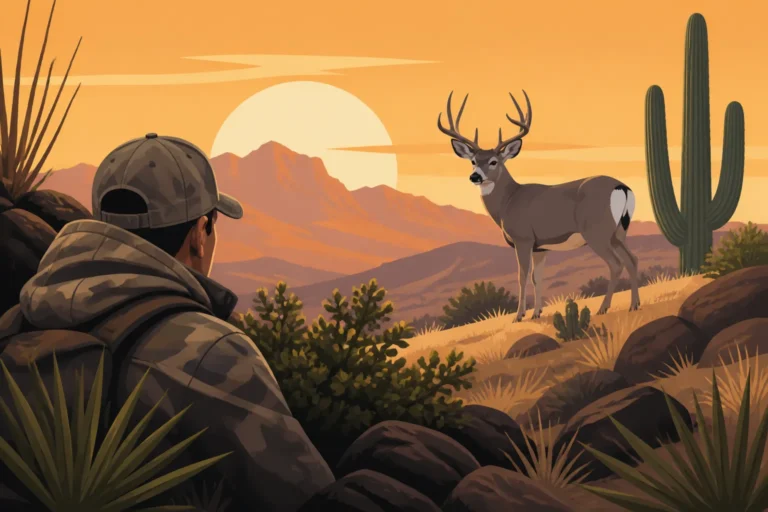
Coues deer are often called the "gray ghosts of the desert" for a very good reason. These aren't your typical whitetails that hang out in woodlots; they thrive in some of the most unforgiving, yet breathtaking, landscapes Arizona has to offer. Trying to hunt them without understanding their unique behaviors and the intricacies of their habitat is like trying to find a needle in a haystack, blindfolded. It's a frustrating endeavor that many seasoned hunters still grapple with, but by peeling back the layers of their world, we can start to see them through a different lens.
What Makes Coues Deer So Challenging to Hunt
The sheer challenge of hunting Coues deer is what draws so many to their pursuit. They are small, typically weighing under 100 pounds, making them incredibly difficult to spot in the vast, broken terrain they inhabit. Their coats blend seamlessly with the rocky, oak-chaparral hillsides, providing natural camouflage that rivals any military stealth technology. You might be looking directly at a bedded buck, and without the right tools and technique, you'd never know it. Their natural instinct is to vanish at the first hint of danger, often moving silently and quickly through dense cover, leaving behind only dust and doubt.
Beyond their physical camouflage, Coues deer possess an uncanny ability to utilize the terrain to their advantage. They often bed in spots that offer commanding views of their surroundings, allowing them to detect threats from a distance. When spooked, they don't necessarily bolt far; instead, they might just drop into a wash or a slight depression, disappearing entirely from sight within seconds. This makes still-hunting incredibly difficult, as you're constantly fighting against their superior senses and their knowledge of the landscape. It’s why so many of us spend days wondering, "Did I just see a deer, or was that just a rock playing tricks on my eyes?"
The Unique Ecosystem of Arizona's Sky Islands
Arizona's Sky Islands are not just beautiful mountains; they are truly unique ecological marvels that define Coues deer country. Imagine isolated mountain ranges rising dramatically out of the surrounding desert floor, creating cooler, wetter "islands" of diverse habitats. These ranges—like the Chiricahuas, Huachucas, Santa Ritas, and Galiuros—are precisely "The Sky Island Ranges That Hold Coues". They act like inverted ecological staircases, moving from arid desert scrub at their base to grasslands, oak woodlands, pine forests, and even spruce-fir forests at higher elevations. This incredible vertical diversity means that in a single day, you can pass through several distinct ecosystems.
This varied terrain is the perfect laboratory for Coues deer to thrive. They utilize different elevations and vegetation types depending on the season, time of day, and hunting pressure. During warmer months or in heavily hunted areas, they might retreat to higher, denser timber. In cooler periods or during the rut, they'll often be found lower down, browsing on diverse vegetation in the oak-chaparral belts. Understanding these zones and how deer move between them is paramount. It’s not just about finding deer; it’s about understanding which "island" they prefer at a given moment and why, which is a major part of the puzzle for any hunter hoping to succeed.
Key Habitat Features Coues Deer Utilize
To effectively glass for Coues deer, you need to know where to focus your attention. These deer are not randomly scattered; they consistently use specific habitat features that provide food, water, cover, and security. Identifying these key features on a map, and then confirming them on the ground, will dramatically increase your chances of success. Think about south-facing slopes, for instance, which receive more sunlight and often have earlier green-ups, providing crucial forage. These are natural attractants, especially in late fall and winter.
Coues deer also gravitate towards areas with a mix of open and dense cover. They love feeding in more open, grassy slopes and then retreating into thicker oak brush or canyons for bedding and security. Look for the transition lines where different vegetation types meet, or where canyons begin to break up a hillside. Water sources are also critical, especially in the arid desert environment. While Coues can go long periods without drinking, they will frequent seeps, springs, and stock tanks. Remember, these are not just places to drink; they are travel corridors and points of interest that deer will often pass through, making them prime glassing locations. Understanding these patterns is key to predicting their movements and setting up your glassing stations effectively.
Essential Glassing Gear for Sky Island Success
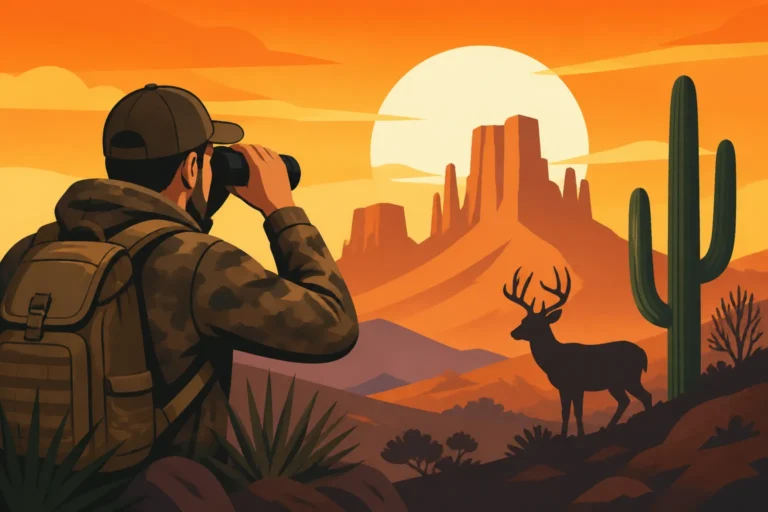
Let's be real, you can't hunt Coues deer effectively in the Sky Islands without the right glass. This isn't a spot-and-stalk from a treestand kind of hunt. This is a sit-and-observe, pick-apart-the-mountain-grid-by-grid kind of hunt. Investing in quality optics isn't just a recommendation; it's an absolute necessity. Many hunters, myself included, have made the mistake of trying to get by with budget optics, only to realize that the faint brown speck they dismissed as a rock was actually a trophy buck standing broadside a mile away. Don't let that be you.
Choosing the Right Binoculars and Spotting Scope
When it comes to binoculars, you're looking for a balance of power and field of view. While some folks swear by 10x42s, many experienced Coues hunters, myself included, lean towards 12×50 or even 15×56 binoculars. These higher magnifications really help pick apart distant hillsides. Brands like Swarovski, Zeiss, Leica, and Vortex (especially their Razor line) are popular choices, and for good reason – their clarity and light-gathering capabilities are simply superior, especially in the dim light of dawn and dusk. The difference in quality might seem subtle on a showroom floor, but it becomes glaringly obvious when you're straining to see through heat waves at a distant slope. Choosing a "Binocular Size That Survives an All-Day Session" is about more than just magnification; it's about comfort and optical quality that minimizes eye strain over hours of intense observation.
The spotting scope is truly your secret weapon in Coues country. This is where you confirm what your binoculars are hinting at, and it's essential for field judging a buck before you commit to a long stalk. A 60-80mm objective lens is standard, offering a good balance between light gathering and packability. Variable power eyepieces, typically ranging from 20-60x or 25-75x, are incredibly versatile. You'll start on lower power to scan and then crank it up to examine any suspicious shapes. The "Spotting Scope Power for Coues Country" article goes into detail on why this range is ideal. Again, the same top-tier optical brands are your best bet. A cheap spotting scope will leave you frustrated with fuzzy images and chromatic aberration, making it impossible to confidently identify a deer, let alone judge its antlers.
Tripods and Steadiness: Non-Negotiable for Long Sessions
You can have the best optics money can buy, but without a solid tripod, they're practically useless for serious Coues glassing. Handholding binoculars, even 10x, for more than a few minutes will lead to debilitating eye fatigue and an inability to truly pick apart the details of a hillside. For anything 12x and above, a tripod is absolutely mandatory. Look for a lightweight, sturdy carbon fiber tripod that extends high enough for comfortable viewing, whether you're sitting or standing. Brands like Slik, Manfrotto, Vortex, and Outdoorsman are trusted names in the hunting community for their reliability and ease of use.
The tripod isn't just for your spotting scope; it's for your binoculars too. A bino adapter, which connects your binoculars to the tripod head, is just as crucial. This setup provides a rock-solid platform that eliminates shake, allowing your eyes to relax and focus on detecting subtle movements or shapes. You'll be amazed at how much more you see when your optics are perfectly steady. The "Tripod Setup for Glassing From a Ridge" guide shares some excellent tips on optimizing your setup, from leg angle adjustments to quick-release plates. Remember, a cheap, wobbly tripod will cause more frustration than it solves; invest in stability, and your eyes will thank you.
Packing Smart: Other Gear for Extended Glassing
While optics are king, don't forget the supporting cast of gear that makes those long glassing sessions bearable and productive. A comfortable, lightweight backpack is essential to carry your optics, tripod, and other essentials. You'll be spending hours, sometimes entire days, on a glassing knob, so pack accordingly. This includes plenty of water – the Arizona desert is no joke, even at higher elevations. Electrolyte supplements are also a good idea to combat dehydration. A good wide-brimmed hat, sunglasses, and sunscreen are crucial for sun protection.
Beyond the basics, think about comfort items that keep you focused. A lightweight ground pad or small stool can make a huge difference in preventing fatigue from sitting on hard rocks for hours. Snacks that provide sustained energy, like nuts, jerky, and energy bars, are far better than sugary junk food. A small first-aid kit, headlamp, and communication device (like a satellite messenger or two-way radio if with a partner) are also non-negotiable safety items. Remember, you might be miles from the nearest road, so being prepared for an extended stay or an unexpected emergency is paramount. The goal is to be comfortable enough that you can stay behind the glass as long as it takes, without external factors pulling your attention away.
Mastering the Art of Grid Glassing
You've got your prime location, your top-tier optics are set up, and you're ready to go. But how do you actually find a deer in all that vastness? This is where grid glassing comes in. It's not just randomly scanning the hillside; it's a systematic, disciplined approach that maximizes your chances of detecting those camouflaged Coues deer. Without a method, you're essentially just hoping for luck, and in Coues country, luck is a fickle friend.
The Step-by-Step Grid Glassing Method
The "The Grid Glassing Method, Step by Step" is precisely what it sounds like: you break down a large area into smaller, manageable sections, and then meticulously examine each one. Here’s how it works:
- Define Your Area: Start by choosing a manageable section of the mountain, perhaps a canyon, a specific ridge, or a distinct burn scar. Don't try to bite off more than you can chew at once.
- Pick a Starting Point: Begin at one edge of your chosen area, usually the top or bottom, and establish a horizontal line across your field of view.
- Slow and Steady Scan: Using your binoculars on a tripod, slowly move your focus along that horizontal line, pausing frequently to let your eyes adjust and pick apart details. Don't just sweep; genuinely look at every rock, every shadow, every cluster of oak brush. Imagine it like reading a line of text, word by word.
- Drop and Repeat: Once you reach the end of that horizontal line, drop your binoculars slightly, overlap your previous scan by about 10-20%, and then scan back in the opposite direction. Continue this pattern, moving back and forth, up and down, until you've covered your entire defined area.
- Change Magnification (Spotting Scope): Once you've completed a grid with your binoculars, switch to your spotting scope for a more detailed examination of any suspicious areas. Start at a lower magnification (e.g., 20x) and increase it (e.g., 60x or higher) on specific spots that look "deery."
The key is to be methodical and disciplined. Your eyes are looking for anything that breaks the natural pattern of the landscape – a horizontal line in a vertical world, a patch of brown that seems a little too uniform, or a sudden change in texture. It's a mental game as much as it is a visual one.
Patience and Persistence: The Coues Deer Glassing Mantra
If there's one thing Coues deer teach you, it's patience. You could glass a hillside for an hour, take a quick break, and look back to find a buck standing right where you'd just scanned. They bed down, they stand up, they move ever so subtly. This is why "Why Coues Deer Reward Patience Over Movement" is an axiom among Coues hunters. You simply cannot rush this process. An effective glassing session often means dedicating hours to a single hillside, sometimes even an entire morning or afternoon.
Persistence means going back to the same areas, even if you’ve already picked them apart. Deer don't stay in one spot. They feed, they bed, they stretch, they stand. A buck that was completely hidden a few minutes ago might suddenly stand up to reposition, or a slight shift in light could reveal an antler tine. It’s a constant vigil, a waiting game where the hunter with the most time behind the glass usually comes out on top. Many times, I've almost given up on a spot, only to decide to "just check one more time" and that's when a deer materializes. It’s a testament to the power of continuous, patient observation.
Recognizing "Deer" vs. "Not Deer" at Extreme Distances
This is where the rubber meets the road. When you're glassing vast distances, everything can look like a deer. Rocks, shadows, dead tree stumps, even clumps of dirt – they all conspire to trick your eyes. The frustration of getting excited by a "deer" only for it to remain a rock after 20 minutes is a rite of passage for Coues hunters. The key is to develop a keen eye for subtle cues and to always maintain a healthy skepticism until you've confirmed your sighting with higher magnification.
Look for patterns that are not natural. Coues deer, even when bedded, rarely look perfectly symmetrical like a rock. You might see a horizontal topline, a slight dip in the back, or the distinct curve of an antler. Pay attention to color, too. While their camouflage is excellent, there's often a richness to their brown coat that differentiates it from the grays and reds of the rocks. Movement, no matter how slight, is a dead giveaway. A flick of an ear, a tail twitch, or even the subtle glint of an eye can be the first sign. Use your spotting scope to confirm. Zoom in, look for the head, legs, and if you're lucky, antlers. If you can't distinguish it after a thorough inspection, mark it mentally and move on, but remember its location for future reference. Over time, your brain will train itself to recognize those distinct "deery" shapes among the natural clutter.
Strategic Positioning and Thermals for Optimal Glassing
Finding the right glassing knob isn't just about getting high. It's about finding a position that offers the best vantage point while also taking into account the nuances of the wind and the sun. Many hunters just hike to the nearest peak, but a truly effective glassing station is a strategic choice that considers multiple factors to maximize visibility and minimize your impact on the deer.
Identifying Key Glassing Knobs and Vantage Points
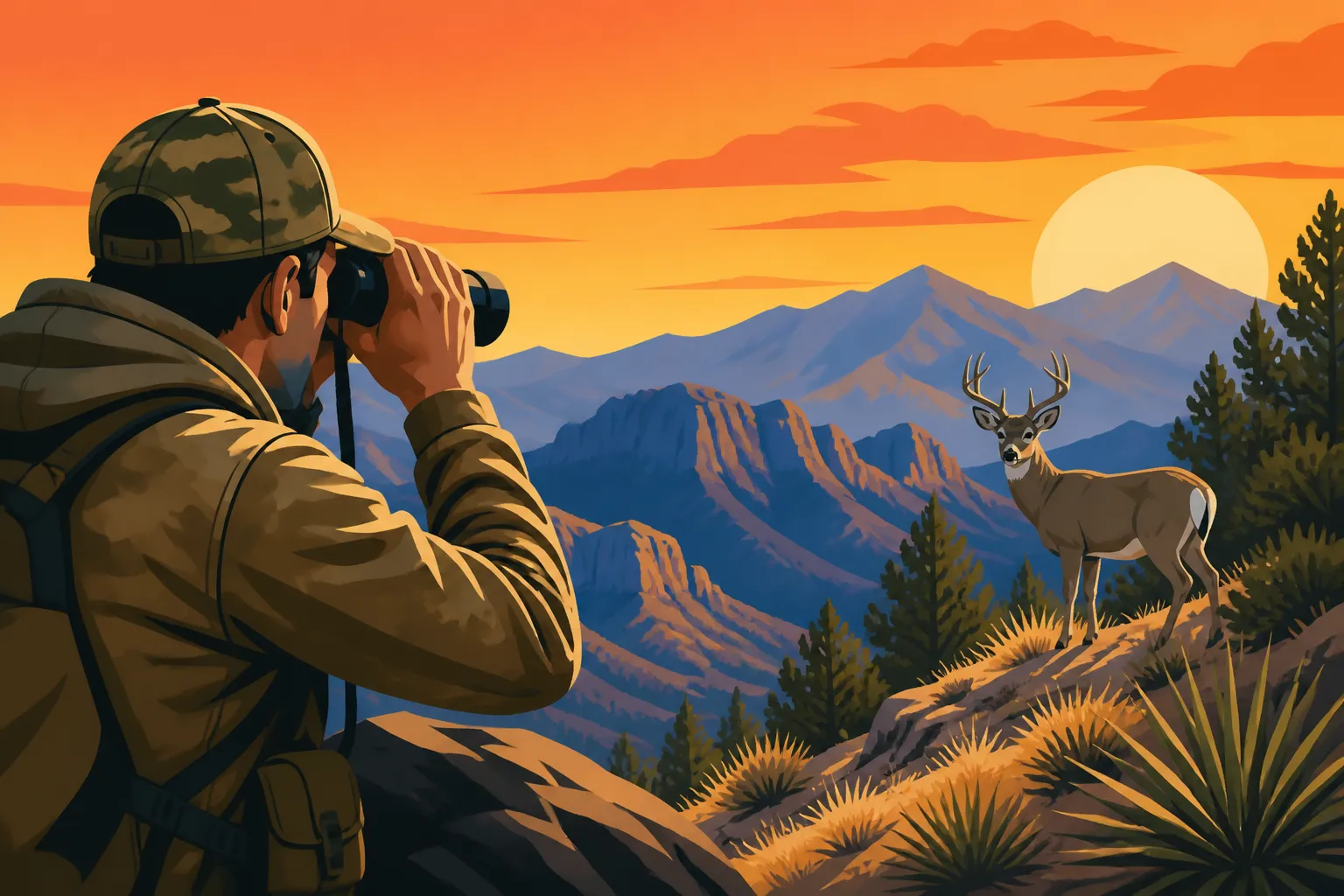
When scouting, whether physically or with a tool like GoHunt's mapping layers, look for knobs, ridges, or saddles that offer expansive, unobstructed views of drainages, opposite slopes, and transition zones. Ideally, you want a position that allows you to comfortably glass a wide arc of terrain, preferably 180 degrees or more. Higher elevation is often good, but it's not always about being the highest. Sometimes, being slightly lower, on an opposing ridge, can give you a better cross-canyon view into bedding areas that might be obscured from a direct overhead perspective.
Consider the aspect of the slopes you're glassing. Early morning, south- or east-facing slopes will be hit by the sun first, often warming up deer and prompting them to move or feed. Later in the day, north- or west-facing slopes might offer shaded bedding cover. Your glassing position should allow you to efficiently cover these areas as the day progresses. The best knobs also offer some form of cover for you, whether it's a large rock, a juniper tree, or a slight depression, allowing you to remain concealed while staying behind your glass. Remember, you want to see the deer before they see you.
Playing the Thermals: How Wind Affects Scent and Sight
Thermals are a huge factor in the Sky Islands, especially when you're thinking about moving from your glassing position to a stalk. Understanding "Playing Thermals on a Canyon Stalk" is crucial. Thermals are air currents that move up and down slopes due to temperature changes throughout the day. In the morning, as the sun heats the ground, air warms and rises, creating an uphill thermal. As evening approaches and the ground cools, air descends, creating a downhill thermal. During midday, or on cloudy, windy days, thermals can be less predictable and more influenced by prevailing winds.
When you set up your glassing station, you want your scent to be carried away from the areas you expect deer to be. This usually means setting up on a knob where the prevailing wind or thermal will carry your scent over a canyon, not directly into the bedding areas you're watching. While glassing, your primary concern is detection, but always keep in mind the potential for a stalk. If you spot a deer in a prime bedding area, you'll need to plan your approach carefully, taking into account how the thermals will shift and carry your scent. A sudden switch in wind direction, even a subtle one, can blow your entire stalk, validating the frustration of being so close, yet so far.
Adjusting Your Strategy Throughout the Day
The Coues deer's behavior, and therefore your glassing strategy, isn't static. It evolves with the sun, the temperature, and the deer's natural rhythms. Early mornings are prime time. As the sun begins to warm the slopes, deer will often be up and feeding before bedding down for the day. This is when you want to be on your glassing knob, set up before first light, ready to catch them moving from feeding areas to secure bedding cover.
Midday can be slower, but it's not a time to pack up. Deer are bedded, but they will often stand to stretch, reposition, or browse a bit before settling back down. This is when your persistent grid glassing truly pays off, looking for those subtle movements or breaks in pattern in dense cover. As the afternoon progresses into evening, the thermals will shift, and deer will once again become more active, moving towards evening feeding grounds. You might want to reposition to catch deer moving out of north-facing bedding slopes towards more open feeding areas on sunnier aspects. Adapting your location and your focus based on these natural rhythms is key to maximizing your time behind the glass and increasing your odds of success.
Timing Your Glassing Sessions for Peak Activity
Knowing when to glass can be just as important as knowing how to glass. Coues deer, like most big game, have periods of peak activity and rest, and aligning your efforts with these times can drastically improve your chances of spotting a buck. It’s all about understanding their daily and seasonal routines, which are heavily influenced by the environment.
Best Times of Day to Spot Coues Deer
Without a doubt, the prime glassing times for Coues deer are the first two to three hours after legal shooting light and the last two to three hours before dark. These are the periods when deer are most likely to be actively feeding, moving between bedding areas, or generally less cautious. Getting to your glassing spot well before first light, perhaps an hour or more, is absolutely essential. This allows your eyes to adjust to the dim light, your body to settle, and your mind to focus before the deer even start to stir. You want to be watching those south-facing slopes as the first rays of sun hit them, potentially revealing deer that were already there, or catching those moving out of shadows.
Similarly, the late afternoon and evening are crucial. As temperatures begin to drop and the sun gets lower, deer often emerge from their midday beds. Focus on the same feeding areas, saddles, and transition lines you watched in the morning, but remember that the lighting will be different, and deer might be moving in reverse patterns. The "Best Time of Day to Glass a Sky Island" typically reinforces this, emphasizing the "golden hours" of dawn and dusk. Midday can still be productive for finding bedded deer, but it requires even more patience and meticulous grid glassing, as movement will be minimal. Don't discount these quieter hours; often, the biggest bucks are the ones that move the least during daylight.
Understanding the Coues Rut and Its Impact on Movement
The Coues deer rut is a game-changer, dramatically increasing buck activity and making them more susceptible to being spotted. While the exact timing can vary slightly by unit and year, the primary rut for Coues deer in Arizona typically peaks from late December through mid-January. During this period, bucks are actively searching for does, covering more ground, and often throwing caution to the wind. They'll be seen chasing does, fighting with other bucks, and generally exhibiting behaviors that make them much more visible than at any other time of year.
Glassing during the rut means focusing on areas where does congregate, such as prime feeding grounds or open hillsides. Bucks will often be found moving between these areas, or actively tending does. While you still need to be diligent, the increased movement and decreased wariness of bucks during the rut can make glassing significantly more productive. It's a window of opportunity that many dedicated Coues hunters live for. If you've been struggling to find deer, applying for a late December or January tag might just be your best bet for seeing consistent buck movement.
Seasonal Considerations for Glassing Efforts
Beyond the rut, other seasonal factors influence Coues deer behavior and your glassing approach. Early archery seasons (often August/September) mean extremely hot weather. Deer will be largely nocturnal or crepuscular, seeking dense shade during the day and watering frequently. Glassing water sources or heavily shaded north-facing slopes might be more productive. You'll also need to manage your own heat exposure.
As fall progresses into winter, temperatures drop, and deer can be active for longer periods during the day. This is often when forage quality changes, and deer might shift their preferred feeding areas. Snow can also be a significant factor in northern Arizona Sky Islands, making deer stand out dramatically against a white background, and potentially concentrating them in lower, less snow-covered areas. During colder periods, south-facing slopes that catch more sun become even more attractive. Always consult the specific regulations for your unit, and be aware of how environmental changes might be influencing deer movement and behavior in your chosen hunting area.
Advanced Glassing Techniques and Common Mistakes
Once you've mastered the basics, there are always ways to refine your glassing strategy. Experienced Coues hunters continually adapt their techniques, learning from every session. It's about optimizing your visual acuity and avoiding those subtle errors that can cost you a valuable sighting.
Utilizing Shadows and Light to Your Advantage
Light and shadow play a crucial role in how well you can see deer, and how well deer can see you. In the early morning, as the sun rises, shadows are long and constantly shifting. These shadows can hide deer, but they can also create contrast that makes a deer stand out. Often, a deer bedded just at the edge of a shadow line will be visible, whereas one fully engulfed in shadow is invisible. As the sun moves higher, pay attention to how light illuminates different parts of the mountain. Sometimes, a previously obscured area will suddenly be bathed in light, revealing a deer you've missed.
When glassing, try to have the sun at your back, or at least to your side, rather than looking directly into it. Looking into the sun causes glare and washes out detail, making it nearly impossible to see anything beyond a silhouette. Conversely, if deer are bedded on a north-facing slope, the sun might be at your back, illuminating them beautifully for you. During midday, harsh overhead light can flatten terrain and eliminate shadows, making everything look uniform. This is when your meticulous grid glassing and searching for subtle anomalies become even more critical. Think about the angle of the light and how it interacts with the terrain; it can be your best friend or your worst enemy.
Overcoming Eye Fatigue and Maintaining Focus
Hours behind the glass can be incredibly taxing on your eyes and mind. Eye fatigue is a real problem, leading to blurry vision, headaches, and ultimately, missed deer. To combat this, take regular breaks. Every 20-30 minutes, pull away from the binoculars, close your eyes, stretch, and let your eyes refocus on something nearby. Hydration is also key; dehydration contributes significantly to eye strain.
Maintaining mental focus is just as important. It's easy for your mind to wander after extended periods of inactivity. Develop a rhythm. Set small goals for yourself, like "I'm going to meticulously glass this one canyon for the next 45 minutes, no matter what." Stay present and engaged with the landscape. Imagine a deer could appear anywhere, at any moment. This active, expectant mindset will keep you sharp. Some hunters use a small timer to manage their glassing intervals and breaks. Remember, a refreshed eye and a focused mind are far more effective than a tired one.
Avoiding the Pitfalls of Rushing the Glass
One of the most common mistakes, especially for new Coues hunters or those accustomed to more active hunting styles, is rushing the glass. They'll sweep across a hillside too quickly, hoping to spot a walking deer, and completely miss the bedded buck that was staring right back at them. As discussed earlier, Coues deer are masters of stillness and camouflage. If you're moving your binoculars too fast, your brain simply doesn't have time to process the intricate details of the landscape and identify anomalies.
Another pitfall is not covering the entire area thoroughly. Many hunters will focus on the "obvious" spots – the open feeding areas or the distinct saddles – and neglect the thick, gnarly oak brush or the deep shadows of a canyon. These are often precisely where a smart Coues buck will choose to bed. Adopt the mindset that a deer is there, and it's your job to find it, even if it's in the most unlikely spot. Every rock, every tree, every shadow deserves a second look, especially through your spotting scope. Patience and thoroughness are the hallmarks of a successful Coues glasser.
Scouting and E-Scouting for Sky Island Coues
Before you even set foot in the field, or certainly before opening day, a significant amount of your success will be determined by how well you've scouted your area. For Coues deer in the Sky Islands, this means a combination of digital reconnaissance and boots-on-the-ground investigation. The more you know about your unit before the hunt, the less time you'll spend guessing and the more time you'll spend hunting.
Pre-Season E-Scouting with Mapping Tools
E-scouting is revolutionizing how we hunt, and it's particularly effective for Coues deer, given their vast habitat. Tools like GoHunt and OnX Hunt are invaluable. Start by identifying your target unit. Then, use satellite imagery to zoom in on key terrain features: likely glassing knobs with good vantage points, steep north-facing slopes that might hold deer during warmer times, south-facing slopes for colder periods, saddles, benches, and especially water sources like stock tanks, springs, and guzzlers. The article on "E-Scouting an Arizona Unit Before the Season" provides a fantastic roadmap for this process.
Pay close attention to changes in vegetation types. Look for the transition lines between different plant communities, as these often act as travel corridors or feeding edges. Identify potential bedding areas within dense cover. Use topographical lines to understand slope angles and how deer might move through the terrain. With GoHunt, you can even overlay public land boundaries to ensure you're within legal hunting areas. Mark all these points of interest as waypoints on your app. This initial digital legwork will save you countless hours of unproductive hiking in the field and help you prioritize which areas to check first.
On-the-Ground Scouting to Confirm Hot Spots
While e-scouting is powerful, there's no substitute for actually putting boots on the ground. A scouting trip a few weeks or months before the season allows you to verify what you saw on the map. Hike to those identified glassing knobs and see if they offer the commanding views you anticipated. Are there closer, more convenient vantage points? What about access roads, or trails that might be less visible from satellite? Sometimes, what looks like a great spot on a map turns out to be choked with dense brush on the ground, or a better spot is just around the corner.
During your physical scouting, look for actual deer sign: tracks, droppings, rubs, and scrapes. While rubs and scrapes are less common with Coues than with other whitetail species, fresh tracks around water sources or in dusty washes are undeniable proof of presence. Pay attention to how the wind and thermals actually behave in the canyons you plan to hunt. How does the light hit different slopes at various times of the day? These are observations you can only make in person. A good scouting trip transforms a theoretical hunt into a tangible plan, giving you the confidence to execute when the season opens.
Interpreting Sign and Water Sources from Afar
When you're behind the glass, you're not just looking for deer; you're looking for evidence of deer. Sometimes, you'll spot something that isn't a deer, but indicates one is nearby. This could be a faint trail winding through dense brush, a patch of disturbed earth from digging, or even fresh browse marks on a plant. While you can't always confirm these details from extreme distances, identifying areas where such sign is likely can guide your glassing efforts.
Water sources are particularly telling. While Coues deer are resilient, they need water, especially in the dry Arizona environment. Look for game trails leading to and from stock tanks, springs, or guzzlers. These trails indicate regular use. Even if you don't see deer directly at the water, their presence tells you that the area is active. Glassing these approaches, especially during hot periods, can be very productive. Remember, these aren't just drinking spots; they're social hubs and travel corridors. Integrating your observations of subtle sign with your knowledge of water sources allows you to build a more complete picture of deer movement and helps you narrow down your search.
Integrating Technology: GoHunt and Beyond
In today's hunting world, technology isn't just a convenience; it's a powerful ally, especially when tackling challenging hunts like Coues deer in the Arizona Sky Islands. From advanced mapping to weather predictions, these tools can give you a significant edge.
How GoHunt Can Aid Your Glassing Strategy
GoHunt, with its robust mapping and filtering tools, is a fantastic resource for planning your Coues deer hunt. Before you even leave the house, you can use GoHunt's high-resolution satellite imagery and topographic maps to identify potential glassing locations. Look for prominent points, saddles, and ridges that offer sweeping views of large canyons or entire mountain faces. You can save these as waypoints and even measure distances to ensure your potential glassing range covers key feeding and bedding areas.
Beyond simply identifying terrain, GoHunt's filtering capabilities can help you understand draw odds and unit characteristics, guiding you toward areas with better success rates for Coues deer. While it doesn't tell you where the deer are on a given day, it provides the foundational geographical intelligence to plan where to start your glassing efforts. You can study historical weather patterns for the unit, aiding in predicting deer movement based on temperature shifts. By having all this information at your fingertips, you can make more informed decisions about where to focus your invaluable time behind the glass.
Digital Tools for Tracking Weather and Deer Movement
Beyond dedicated hunting apps, general weather apps with highly localized forecasts are indispensable. Understanding projected temperatures, wind direction changes, and precipitation chances allows you to anticipate deer behavior. For example, a significant drop in temperature might spur deer to feed more actively, while a strong, unpredictable wind could make them hold tight in thick cover. There are also digital tools and forums where hunters share real-time observations, providing a general sense of deer movement patterns or rut activity in broader regions.
While no app can perfectly predict individual deer movement, many provide moon phase data, which some hunters believe influences deer activity. While controversial, it's another piece of data to consider. More importantly, keeping a digital log or journal of your own observations—when and where you saw deer, weather conditions, time of day—can create a personalized database that improves your future planning. This continuous feedback loop, driven by technology and personal experience, is how you truly learn the intricacies of Coues deer hunting.
Mapping and GPS Integration for Efficient Navigation
Once you've identified your glassing knobs and potential stalk routes through e-scouting and on-the-ground recon, integrating these into a reliable GPS system or a mobile mapping app is critical. Your phone, loaded with GoHunt or OnX Hunt, becomes your primary navigation tool. Mark your truck, your glassing locations, potential bedding areas, water sources, and any deer sightings. This allows you to quickly and efficiently navigate to your pre-planned spots, even in the dark.
Crucially, these mapping apps also track your movement, creating a breadcrumb trail. This is invaluable when stalking, especially if you get turned around in thick brush or a complicated canyon system. You can always refer back to your previous location or your main glassing point. Additionally, knowing your exact position on a map allows you to quickly assess distances to potential deer, aiding in shot placement estimation. Reliable GPS and mapping aren't just about not getting lost; they're about optimizing your time, enhancing safety, and confidently executing your hunt plan in the vast and sometimes disorienting terrain of the Sky Islands.
Disclaimer
The information provided in this guide is for general informational purposes only and does not constitute legal advice. Hunting regulations, laws, and policies are subject to change, and it is the responsibility of each individual hunter to thoroughly review and comply with all current Arizona Game and Fish Department regulations, federal laws, and local ordinances before participating in any hunting activities. Always prioritize safety, ethical hunting practices, and respect for wildlife and public lands.