Why Broadheads Must Exceed Seven-Eighths of an Inch
You’ve spent countless hours practicing your archery shot, poured over maps, and envisioned your dream Arizona hunt. But when it comes to broadheads, the regulations can feel like another hurdle to clear. This guide is dedicated to untangling Arizona’s specific requirement that broadheads must exceed seven-eighths of an inch in width, ensuring you understand this crucial rule for legal and ethical hunting in the Grand Canyon State.
Understanding Arizona's Broadhead Width Requirement
Navigating hunting regulations can often feel like deciphering a complex legal document, and broadhead rules are no exception. Many states have specific guidelines designed to ensure humane harvests, and Arizona is quite clear about the minimum width your broadheads must possess. It's not just a suggestion; it's a critical part of being a responsible and legal bowhunter in the state.
The Specific Regulation and What It Means for Bowhunters
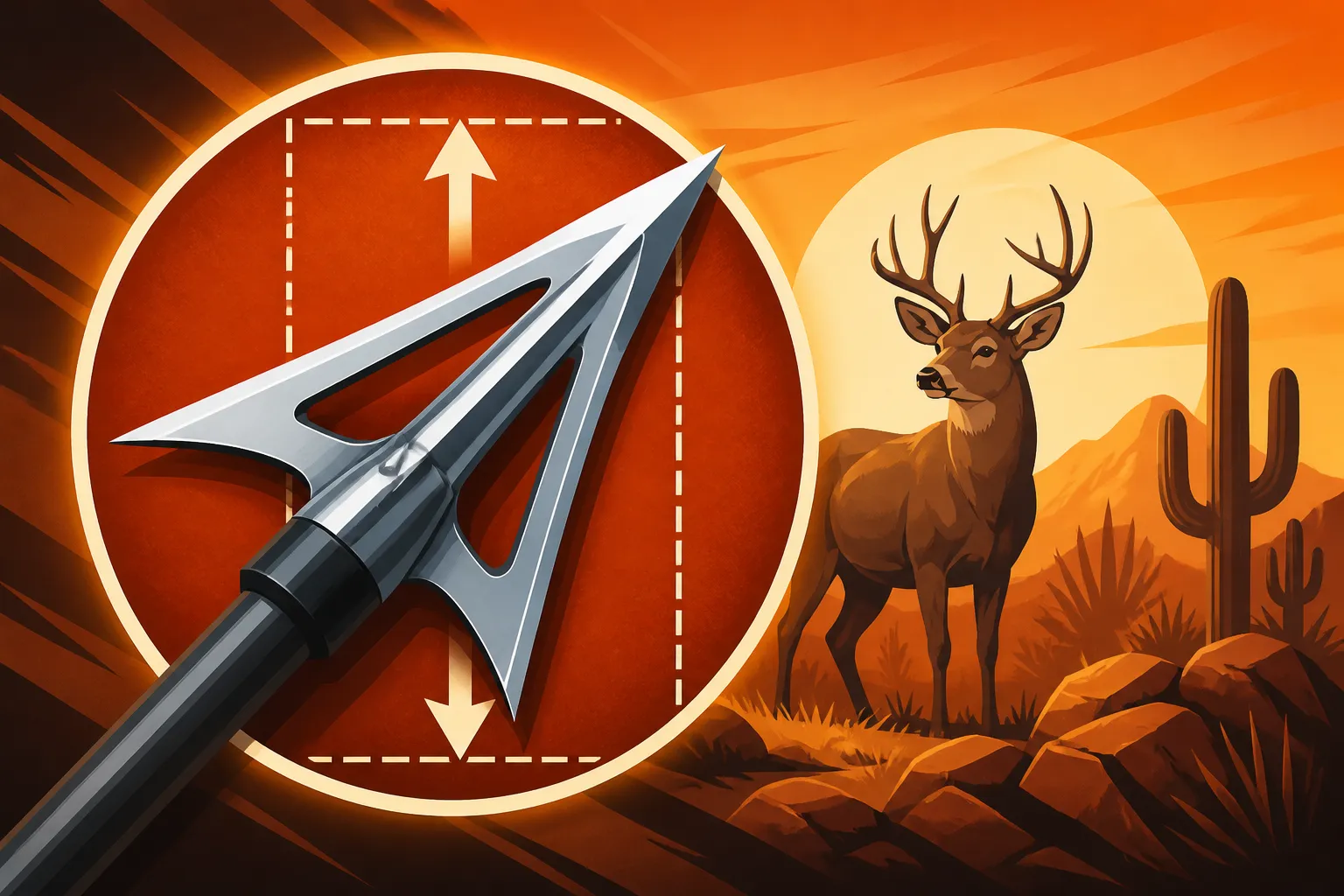
The Arizona Game and Fish Department (AZGFD) regulations state unequivocally that all broadheads used for hunting big game must have a cutting width exceeding seven-eighths of an inch (7/8"). This seemingly small detail carries a lot of weight. It means your broadhead can’t just be equal to 7/8 of an inch; it has to be noticeably larger. This applies to both vertical bows (compound, recurve, longbow) and crossbows.
For fixed-blade broadheads, this measurement is straightforward: it’s the distance from one cutting edge across to the furthest opposite cutting edge. You can literally measure it with calipers. For mechanical or expandable broadheads, the rule specifies that this measurement applies to the broadhead in its fully expanded or deployed position. This is a critical distinction that sometimes trips up even seasoned hunters. You might have a mechanical broadhead that measures only 1/2 inch in its un-deployed state, but if it expands to 1 inch or more, it's legal. However, if it only expands to, say, 13/16 inch, it would be illegal, despite being an "expandable" broadhead. The regulations are designed to leave no room for ambiguity when it comes to the minimum wound channel size.
Why a Minimum Width? The Goal of Ethical Harvest
At its heart, this regulation is about ethics and animal welfare. The Arizona Game and Fish Department, like many wildlife agencies, is committed to promoting humane hunting practices that result in quick, clean kills. A broadhead's primary purpose isn't just to penetrate; it's to create a wound channel that severs blood vessels and causes rapid blood loss, leading to a swift and ethical harvest.
A broadhead that is too narrow simply doesn't create a large enough cutting surface to reliably achieve this. Imagine the difference between piercing an animal with a narrow pencil point versus a wider blade. While both penetrate, the wider blade causes significantly more trauma and blood loss. Broadheads smaller than 7/8 of an inch, which some might consider more akin to a field point or specialized small game head, run a much higher risk of merely wounding an animal, leading to prolonged suffering and a lost animal. We all strive to harvest game humanely, and this regulation is a foundational step in ensuring that. The larger cutting diameter helps ensure that vital organs are impacted and a sufficient blood trail is left, making tracking and recovery much more efficient. It is a critical component of responsible hunting.
Broadhead Types and Arizona Compliance
The world of broadheads is vast, offering everything from traditional fixed blades to high-tech mechanical designs. Understanding how each type complies with Arizona's 7/8-inch minimum is crucial before you head into the field. It’s not just about what looks good on the shelf; it’s about what performs ethically and legally.
Fixed Blade Broadheads and the 7/8-Inch Rule
Fixed blade broadheads are the traditional workhorses of the archery world. They consist of a rigid body (ferrule) with blades that are permanently attached and do not move. Their design is simple, robust, and reliable. For these broadheads, complying with the 7/8-inch rule is often quite straightforward. You can easily measure the widest point of the cutting edges with a ruler or, better yet, a set of calipers, to confirm it exceeds 0.875 inches.
Many popular fixed blade broadheads on the market easily clear this hurdle. Brands like Muzzy, G5 Montec, and Slick Trick, for example, offer numerous models with cutting diameters well over 1 inch, making them perfectly legal in Arizona. However, it’s still imperative to check the specifications of your specific model. Some traditional two-blade broadheads, or those designed for very light bows or small game, might fall short of the minimum width. Always double-check your gear. The simplicity of a fixed blade means less to go wrong, and if it measures up, you’re good to go. This reliability is why many bowhunters stick with them, especially when hunting in rugged terrain where every component needs to be absolutely dependable. If you're considering a new fixed blade, checking the packaging or manufacturer's website will give you the precise cutting diameter.
Mechanical Broadheads and Deployment Requirements
Mechanical, or expandable, broadheads gained popularity for their field-point-like flight characteristics, as their blades are tucked away during flight and deploy upon impact. This design, while offering flight advantages, introduces a crucial compliance point for Arizona hunters: the 7/8-inch rule applies to the broadhead in its fully expanded state. This is where hunters can sometimes make an honest mistake.
When you're shopping for mechanicals, pay close attention to the advertised deployed cutting diameter, not just the ferrule width when the blades are closed. Many popular mechanical broadheads, such as those from Rage, NAP, and Swhacker, boast deployed cutting diameters ranging from 1.5 inches up to 2.5 inches, well exceeding Arizona's minimum. However, there are also specialty mechanicals or older designs that might deploy to just under the 7/8-inch mark. It’s critical to understand that if the blades don't reliably open to more than 7/8 inch, that broadhead is not legal for big game in Arizona.
Before you ever take one into the field, it's wise to test the deployment of your mechanical broadheads into a suitable target material, like a broadhead target or dense foam. This not only confirms they deploy reliably but also gives you a visual confirmation of the actual cutting width. Don't assume; verify. If you're curious about the specifics of mechanicals, a deeper dive into topics like "Are Mechanical Broadheads Legal in Arizona?" can provide even more detail.
| Broadhead Type | Cutting Diameter (Deployed) | Arizona Legal Status (7/8" minimum) | Notes |
|---|---|---|---|
| Fixed Blade (Muzzy) | 1 3/16" (1.1875") | Legal | Simple, reliable, always check stated diameter. |
| Fixed Blade (Slick Trick) | 1 1/16" (1.0625") | Legal | Compact design with solid performance, verify specific model. |
| Mechanical (Rage Hypodermic) | 2" (2.00") | Legal | Blades deploy on impact, ensuring large cutting diameter. Crucial to verify full deployment. |
| Mechanical (NAP Spitfire) | 1.5" (1.50") | Legal | Well-regarded for consistent deployment. |
| Small Game Head | < 7/8" (e.g., 0.75") | Illegal | Not designed for big game; insufficient cutting diameter for humane harvest. |
| Narrow Fixed Blade | 0.80" (potential model) | Illegal | Must exceed 7/8" (0.875"). Even if it's close, it's not enough. |
The Ethical Implications and Hunter Responsibility
Beyond simply following the letter of the law, the broadhead width regulation is a cornerstone of ethical hunting. As bowhunters, we accept a profound responsibility for the animals we pursue. That responsibility extends to using equipment that maximizes our chances of a clean, humane harvest every single time. It's not just about getting a tag in hand or hitting the woods during a "What a HAM Hunt Actually Is"; it's about honoring the animal and the hunt.
Maximizing Effectiveness for a Humane Kill
A broadhead's cutting diameter directly impacts its ability to create a significant wound channel, leading to rapid incapacitation and reduced suffering. A wider broadhead simply has a better chance of severing major arteries and veins, or hitting vital organs, even if your shot placement isn't absolutely perfect under pressure. This isn't an excuse for poor shooting, but a recognition that hunting in the field presents variables that a practice range doesn't. Wind, animal movement, and adrenaline can all affect a shot.
Kinetic energy transfer is also a factor. While a broadhead's width doesn't directly create more energy, the larger cutting surface allows for that energy to be more efficiently transferred into tissue damage and blood loss, rather than just deep penetration. Remember, the goal isn't just to stick an arrow in an animal; it's to put it down quickly and humanely. This is why discussions around topics like "How Close a Bowhunter Needs to Get on Coues" are so important – close shots with the right broadhead dramatically increase the odds of success and a clean kill. And once the animal is down, knowing how to handle it, particularly "Field Dressing in Desert Heat", ensures the meat is salvaged ethically.
Verification and Practice for Compliance
Your responsibility as an Arizona bowhunter doesn't end with buying a legal broadhead. You must verify its compliance and practice with it. Here’s how:
- Measure and Confirm: Don't rely solely on the packaging. Use calipers to measure your broadheads, especially mechanicals in their deployed state, to ensure they exceed 7/8 inch. Keep the packaging or documentation that states the cutting diameter in your hunting pack as an extra layer of proof, should you ever need it.
- Practice with Hunting Setup: Shoot your actual hunting broadheads (or at least identical practice versions) with your hunting arrows. This ensures your bow is tuned, and you're confident in the flight characteristics. Just because a broadhead is legal doesn't mean it flies perfectly from your setup. Many resources, including websites like GoHunt, offer valuable insights and gear reviews that can help you select and fine-tune your equipment.
- Stay Informed: Regulations can change. Before each hunting season, make it a habit to check the latest Arizona Game and Fish Department regulations booklet. It's the definitive source for all rules, including broadhead requirements, "Arizona Sets Bow Draw at 30 Pounds and Crossbows at 125", "Minimum Crossbow Bolt Length in Arizona", and other archery-specific rules like "The Minimum Bow Draw Weight Arizona Requires" or "The Crossbow Draw Weight Floor in Arizona".
- Embrace Ethical Education: Understanding the why behind regulations is as important as knowing the rules themselves. Courses like "The Ethically Hunting Arizona Course Earns a Permanent Point" offer invaluable perspectives on responsible hunting practices, and "Hunter Education Is Required Under 14 in Arizona" ensures that future generations are brought up with a strong ethical foundation. These educational opportunities reinforce the principles behind rules like the broadhead minimum, turning compliance into conviction. Your knowledge and practice are just as crucial as the equipment itself.
Disclaimer
Please remember that hunting regulations can change. It is always the hunter's responsibility to review and understand the most current Arizona Game and Fish Department regulations prior to any hunting activity. This guide is for informational purposes only and should not be considered a substitute for official state publications.