How Close a Bowhunter Needs to Get on Coues
There's nothing quite like the rush of an archery hunt, but when you set your sights on a Coues deer in Arizona, you quickly realize you're playing a different game entirely. These diminutive "gray ghosts" are notorious for their elusive nature and incredible senses, making the close-range demands of bowhunting feel like an insurmountable challenge for many. This guide is dedicated to dissecting just how close a bowhunter realistically needs to get to a Coues deer to ensure an ethical shot, and more importantly, the strategies and mindset required to bridge that often-frustrating gap.
Understanding the Coues Deer Challenge for Bowhunters
Bowhunting Coues deer is a true test of skill, patience, and persistence. Unlike chasing larger, more predictable game, Coues deer present a unique set of obstacles that demand a specialized approach.
The Nature of the "Gray Ghost"
The Coues deer, a subspecies of the white-tailed deer, earned its moniker "gray ghost" for a reason. These deer are small, typically weighing between 80-120 pounds, with some larger bucks pushing 150. Their compact size makes their vital zone incredibly small, demanding pinpoint accuracy. Beyond their size, their senses are nothing short of phenomenal. They possess exceptional eyesight, rivaling that of an antelope, especially when it comes to detecting movement. Their hearing is acute, picking up the slightest rustle of clothing or crunch of a twig. And their noses, well, they're deer noses, constantly sampling the air for anything out of place.
Living primarily in Arizona's rugged "sky island" mountain ranges, these deer are masters of their environment. The broken, brushy terrain provides endless opportunities for them to appear and disappear in the blink of an eye. You might spot a buck at 800 yards, a distant speck on a far hillside, and spend hours planning your approach, only to have it vanish into the seemingly sparse cover long before you get within rifle range, let alone bow range. It's a humbling experience that often leaves hunters scratching their heads, wondering how something so small can be so incredibly adept at evading detection.
The Bowhunter's Disadvantage
For bowhunters, this inherent elusiveness is compounded by the limited effective range of archery equipment. While a rifle hunter might comfortably take a shot at 300, 400, or even 500 yards, a bowhunter's ethical maximum range is typically far shorter, often between 30 and 50 yards for most practitioners. This difference in range creates an exponential increase in the difficulty of the hunt. Not only do you have to locate the deer, but you then have to close the vast majority of the distance without detection.
Beyond the range, the actual shot itself demands precision. Broadheads, while lethal, require proper placement to be effective. Unlike a rifle bullet that creates a significant wound channel, a broadhead relies on hemorrhage, meaning a well-placed shot through the vitals is crucial for a quick, ethical kill. Factors like string jump – where a deer reacts to the sound of the bowstring before the arrow arrives – become a much greater concern at longer ranges, especially with a target as wary and reactive as a Coues deer. It's not uncommon to miss a seemingly "easy" 40-yard shot on a Coues, not because your aim was off, but because the deer took one small step or crouched at the sound of your bow, causing the arrow to strike an unintended spot. This necessitates getting even closer to minimize the time the arrow is in flight and the deer has to react.
Defining "Close Enough" for Coues Bowhunting
So, what does "close enough" truly mean when you're pursuing these ghost-like creatures with a bow? It’s a dynamic target, not a fixed number, influenced by both your personal skill and the specific hunting situation.
Realistic Effective Range for Most Bowhunters
When it comes to big game bowhunting, most ethical bowhunters adhere to a self-imposed maximum range that is significantly shorter than their practice range. While you might be able to consistently group arrows at 60 or even 80 yards on a static target, the added stress, varied terrain, and unpredictable movements of a live animal in a hunting situation drastically reduce that effective range. For larger deer or elk, many experienced bowhunters feel comfortable at 40-50 yards under ideal conditions.
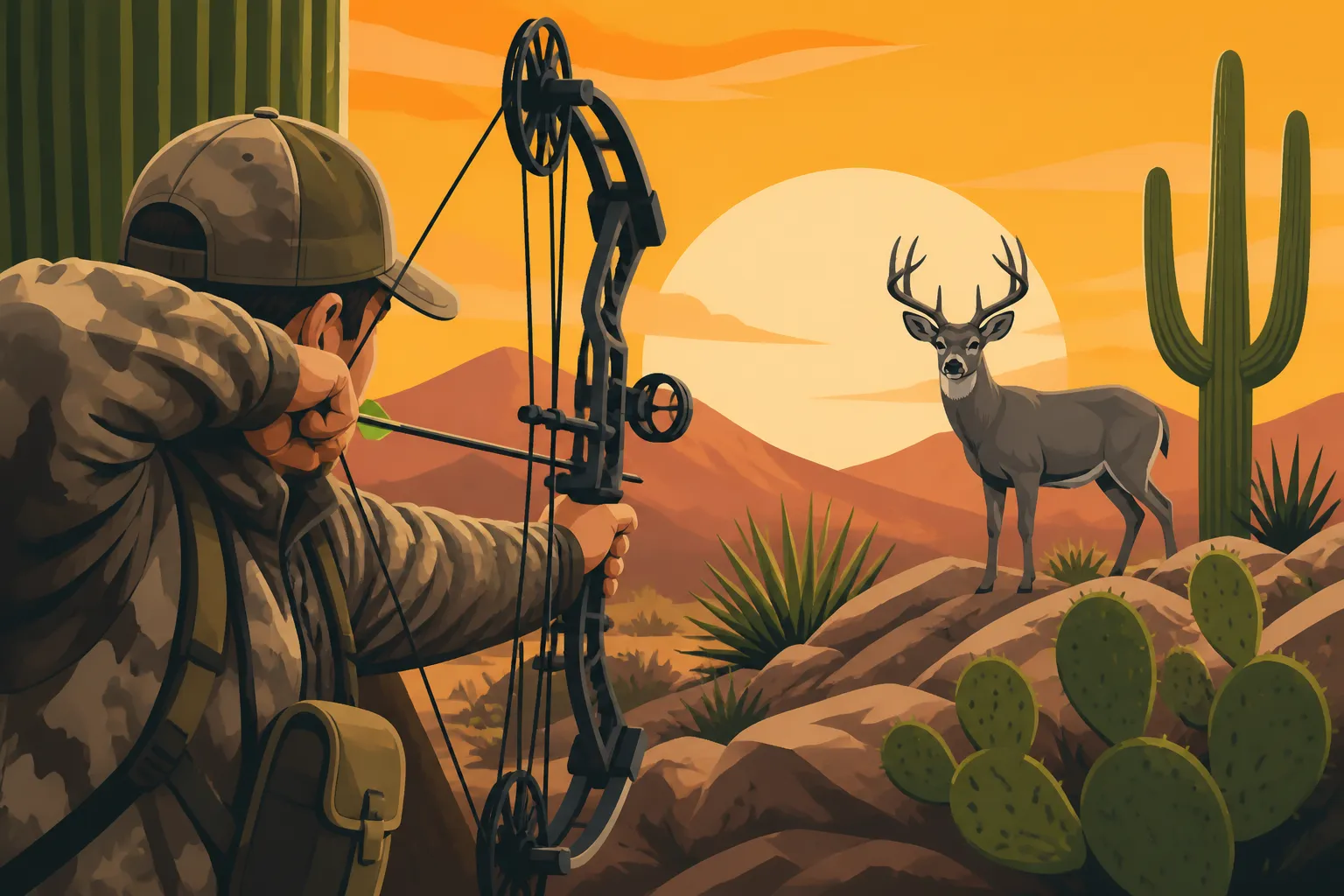
However, for Coues deer, that window shrinks even further. Given their small size, tiny vital zone, and incredible ability to react, the sweet spot for a high-percentage, ethical shot often falls within the 20-40 yard range. Pushing beyond 40 yards on a Coues with a bow introduces significant variables that can lead to a less-than-ideal outcome. Imagine a hunter who consistently shoots 60 yards at the target range, grouping arrows tightly. When that same hunter encounters a Coues buck at 55 yards in the field, adrenaline pumping, wind swirling, and the deer subtly twitching its ear, the wise choice is often to hold off and try to close more distance. The goal isn't just to hit the deer, but to make a clean, humane kill, and for Coues, that means getting truly intimate.
Factors Influencing Your Personal Range
Your personal effective range isn't just about your ability to shoot a bow; it's a complex interplay of several factors. First, your skill level is paramount. How consistently do you group arrows under pressure? Can you accurately judge yardage in varying terrain? How well do you control your nerves? Next is your equipment setup. A faster bow and heavier arrow might reduce an animal's reaction time, but ultimately, accuracy trumps speed. Are your broadheads flying true with your field points?
Shot angle plays a huge role. A broadside shot at 40 yards might be comfortable, but a steep downhill or uphill shot at the same distance, or a deer quartering slightly, can feel much more challenging. Wind is another major influencer in Arizona's open country; even a slight breeze can push an arrow off course, especially with a broadhead. Terrain itself, with its uneven footing, steep slopes, and thick brush, can make drawing and settling your pin difficult.
And finally, there's adrenaline. The moment you see that buck, your heart rate spikes, your breathing might quicken, and your muscles tense. This physiological response can make even a routine shot feel monumental. A hunter might feel incredibly confident shooting at a flat 50-yard target, but put them on a steep slope, staring at a Coues at 35 yards, and the shot suddenly feels much more precarious. Understanding and being honest about these personal and environmental factors is critical in determining your real "close enough" for any given situation.
Strategies for Closing the Distance on Coues
Closing the distance on a Coues deer is often the most challenging, yet most rewarding, part of the bowhunt. It demands patience, meticulous planning, and an intimate understanding of the terrain.
Masterful Glassing and Patient Stalking
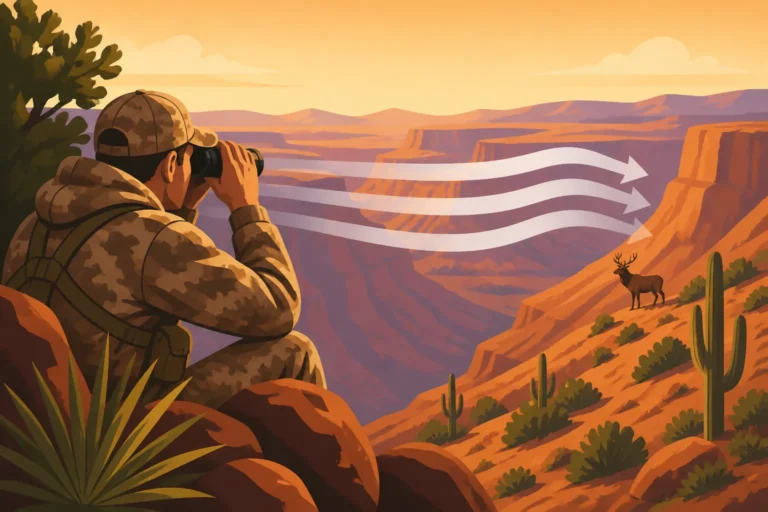
The old adage that Coues deer are "killed with optics" holds even truer for bowhunters. Your journey to getting within bow range almost always begins with powerful binoculars and a spotting scope. Without effective glassing, you're merely walking around, hoping to stumble upon a deer, which is a low-percentage strategy for these elusive animals. You need to get high, find a vantage point, and spend hours meticulously picking apart the opposing hillsides. This is where the real work begins, using techniques described in "Why Arizona Coues Hunting Is a Glassing Game" to locate the deer first. Once a buck is spotted, the next step is perhaps the most critical: the stalk. This isn't a casual stroll; it's a calculated, often agonizingly slow, chess match against one of the wariest animals in North America.
The success of your stalk hinges entirely on your ability to use the terrain to your advantage. You're looking for draws, washes, ridgelines, and any undulation in the landscape that can shield your movement. As you plan your stalk, consider the wind direction above all else. A single puff of your scent carried on the breeze can instantly ruin hours of effort. Always try to approach with the wind in your face or quartering, ensuring your scent cone is blowing away from the deer. Understanding how the wind shifts throughout the day, especially as thermals change from downhill in the mornings to uphill in the afternoons, is crucial, as detailed in "Playing Thermals on a Canyon Stalk". Sometimes, getting within range might mean backing off a ridge, dropping hundreds of feet into a canyon, and then climbing back up the other side, all to stay out of sight and maintain a favorable wind. It's a grueling process, but it's the only way to consistently get within that tight bowhunting window.
Utilizing Terrain and Cover Effectively
Arizona's desert and semi-desert landscapes, while appearing open, actually offer a surprising amount of cover if you know how to read them. Washes and draws, for instance, are natural highways for wildlife and can be excellent conduits for a stealthy approach. These depressions in the landscape provide natural concealment, allowing you to move unseen as you follow their contours, as explored in "Using Washes and Draws to Close Distance". However, be mindful of the noise you make in rocky washes.
Beyond the washes, the vegetation itself can be your best friend. Thick patches of prickly pear, ocotillo, and especially oak brush, can obscure your outline and muffle your footsteps. These plants, while thorny and sometimes painful to navigate, offer the broken visual cover needed to melt into the landscape. Always move slowly, scanning ahead not just for the deer, but for every foot placement and every branch that might snap or scrape against your clothing. Staying in the shadows, particularly during harsh midday sun, can also make you less conspicuous. Remember, even if the deer can't fully discern your shape, any unnatural movement or glint can give you away. The goal is to become part of the environment, moving with the same stealth and patience as a predator hunting its prey. Often, the best approach might not be the most direct one, but the one that keeps you out of sight and in the wind's favor the longest.
Decoy and Calling Tactics
When it comes to Coues deer, calling is generally far less effective than with larger, more vocal whitetail subspecies or elk. Their communication tends to be more subtle, and aggressive calling can often spook them rather than draw them in. However, in very specific situations, a soft bleat or fawn distress call might elicit a response or momentarily stop a deer. The key here is realism and extreme moderation.
Decoys can be a different story, though they require careful consideration and the right setup. A small, realistic doe decoy, or even a buck decoy if you're targeting rutting bucks, can sometimes draw attention away from your movement or even entice a curious buck to come a few steps closer. The "peek-a-boo" method, where you quickly show and then hide a decoy behind cover, can occasionally freeze a buck that's on alert, giving you those precious few seconds to draw your bow or get a clearer shot. However, decoys also come with risks; an unnatural presentation or a deer that approaches from an unexpected angle can quickly expose your position. If you use a decoy, always be aware of your backdrop, ensuring the decoy doesn't silhouette you or provide an easy target for other hunters. For the most part, though, a successful Coues bowhunt relies more on stealth and woodsmanship than on active calling or decoying.
Shot Placement and Ethical Considerations
Once you've navigated the treacherous terrain and the keen senses of a Coues deer to get within bow range, the focus shifts entirely to the shot. The ethical responsibility of a bowhunter demands precision, especially when targeting such a small animal.
Targeting the Small Vitals
The Coues deer's small body size means its vital organs – heart and lungs – occupy a proportionally smaller area than on a larger deer or elk. This leaves very little room for error. A shot that might be considered "good enough" on a 250-pound mule deer could easily result in a wounded animal on a Coues. Therefore, absolute precision is paramount. The ideal shot for a Coues deer is almost always a broadside or slightly quartering away shot, aiming for the lung and heart area just behind the shoulder. This angle maximizes your chances of hitting both lungs, which is critical for a quick and humane kill.
Avoid shots that are quartering toward you, as these present a much smaller vital target and a higher risk of hitting non-vital areas like the shoulder or paunch. Straight-on shots should be avoided entirely due to the minimal vital exposure and the heavy bone shielding the front. Practice, practice, practice on 3D targets that mimic a Coues deer's profile. Visualize that small vital triangle behind the shoulder. It also helps to ensure your broadheads are sharp and fly true with your field points. Arizona requires broadheads to be "wider than 7/8 inch" and "Are Mechanical Broadheads Legal in Arizona?" clarifies the rules, but the key is choosing one that delivers maximum penetration and cutting action once it hits the mark. Understanding these nuances can make the difference between a successful recovery and a frustrating, unethical outcome.
Waiting for the Perfect Shot Opportunity
One of the hardest lessons to learn in bowhunting, particularly for Coues deer, is patience at the moment of truth. You've just spent hours, maybe even days, meticulously stalking, battling the elements, and outwitting the deer's senses. The buck is finally within your ethical range, your heart is pounding, and every fiber of your being is screaming "shoot!" But often, the deer isn't in the perfect position. It might be standing behind a small bush, or quartering slightly too much, or it might be feeding with its head down, making an undetected draw difficult.
This is where true discipline comes into play. You must wait. Wait for the deer to relax, to take that one extra step that clears a shooting lane, or to turn into that ideal broadside or slightly quartering-away angle. Holding an arrow at full draw for several minutes, muscles trembling, while you wait for a branch to clear or the buck to lift its head, is a common scenario in Coues hunting. The ethical responsibility rests squarely on your shoulders to only release an arrow when you have the highest possible chance of making a clean, swift kill. Rushing the shot, or taking a questionable shot angle simply because you're exhausted or overwhelmed by adrenaline, is a disservice to the animal and yourself. Remember, the goal isn't just to harvest, but to do so ethically and humanely.
The Role of Practice and Scouting in Bridging the Gap
No matter how good your gear or how strong your stalking skills, success on Coues deer with a bow requires a foundation built on consistent practice and thorough scouting. These two elements are the bedrock upon which all other hunting strategies rest.
Year-Round Archery Practice
For Coues deer, the importance of consistent archery practice cannot be overstated. This isn't just about shooting a few arrows a week in the month leading up to the season. It's about a year-round commitment to honing your skills under varied conditions. Your practice routine should go beyond shooting at a static target from a flat range. Incorporate shooting from kneeling, sitting, and even awkward standing positions, mimicking the real-world scenarios you might encounter on a stalk. Practice shooting uphill and downhill, as the steep "sky island" terrain will almost guarantee such shots.
Crucially, practice in varying wind conditions. Understand how even a slight breeze can affect arrow flight, especially when broadheads are attached. Shoot with your hunting broadheads often to ensure they fly identically to your field points. Incorporate an element of surprise into your practice; have a friend give you an unexpected "draw!" command to simulate the adrenaline rush of a real encounter. As detailed in "Building a Practice Routine Before Opener", consistent, mindful practice builds muscle memory and confidence, allowing you to execute a clean shot when the pressure is on. Remember, the difference between a hit and a miss on a Coues can be literally an inch, so every bit of precision you gain in practice directly translates to ethical success in the field.
Pre-Season Scouting and E-Scouting
Effective scouting is the second pillar of success for Coues bowhunting. You can't just show up to a new unit and expect to be successful, especially for an animal as elusive as the Coues deer. Pre-season scouting, both physically and virtually, helps you understand the unit, identify high-percentage areas, and discover those crucial small details that can make a difference. Tools like GoHunt and onX Hunt are invaluable here. They allow you to e-scout from home, pouring over topographic maps, satellite imagery, and public land ownership layers. You can identify potential bedding areas on north-facing slopes, glassing points that offer expansive views, and pinch points or travel corridors that deer might use to move between feeding and bedding areas.
Physically scouting the unit before the season takes this a step further. Walking the terrain, checking for fresh sign, and locating water sources—especially in Arizona's arid environment—are critical. During your scouting trips, pay close attention to the prevailing wind patterns in different drainages and canyons. Find those hidden pockets of dense cover or secluded washes where deer might feel safe. As discussed in "Scouting an Arizona Unit Before the February Deadline" and "E-Scouting an Arizona Unit Before the Season", this groundwork allows you to go into the hunt with a solid plan, rather than aimlessly wandering. You'll know which ridges to glass from, which washes to sneak through, and where to set up for an ambush, drastically increasing your chances of getting within that tight bow range.
Mental Game and Managing Expectations
Beyond the physical skills and meticulous planning, bowhunting Coues deer demands a robust mental game. It's a hunt that will test your patience and resilience, often pushing you to your limits.
The Patience Tax of Coues Hunting
If there's one thing Coues deer will teach you, it's patience. And then they'll ask for more. The reality of bowhunting these animals is that you will experience far more unsuccessful stalks than successful ones. You might spend two hours planning and executing a flawless approach, crawling on hands and knees through prickly pear, only for a sudden gust of wind to shift, carrying your scent directly to the deer. Or perhaps a raven spots your movement and alarms the entire hillside. Maybe the buck you were stalking stands up and walks away just as you were about to draw, simply because it felt like it.
These setbacks are not failures; they are an inherent part of the Coues bowhunting experience. The "patience tax" is steep, and it's easy to get discouraged, frustrated, and even angry. However, a successful Coues bowhunter understands that these challenges are part of the game. They learn to take a deep breath, re-evaluate, and start the process all over again. Mental fortitude is key. Don't let a busted stalk ruin your entire hunt. Accept it as a learning experience, an opportunity to refine your approach, and move on. The mental toughness to pick yourself up after repeated disappointments is often what separates those who eventually succeed from those who give up.
Celebrating the Small Victories
Given the immense difficulty of bowhunting Coues deer, it's vital to adjust your definition of success. The ultimate goal is, of course, a harvested animal, but the true reward often lies in the journey, in the small victories along the way. Getting within 50 yards of a Coues buck without being detected, even if you don't get a shot, is a huge accomplishment in itself. Successfully executing a stalk that brings you into bow range, even if the deer moves off before you can draw, is a testament to your skill and dedication.
Each close encounter, each successfully navigated stalk, and each time you fool a Coues deer's senses, even momentarily, should be celebrated. These moments are what build confidence and provide the motivation to keep going when the odds feel stacked against you. The Coues deer is a truly special animal, and pursuing it with a bow in Arizona's rugged landscapes offers an unparalleled hunting experience. Embrace the challenge, learn from every interaction, and remember that even getting "close enough" is a significant achievement on these legendary gray ghosts.
| Factor | Typical Big Game Bowhunting Range | Realistic Coues Deer Bowhunting Range | Impact on Hunter |
|---|---|---|---|
| Average Ethical Max. | 40-50 yards | 20-40 yards | Requires extreme stealth and patience to close extra distance. |
| Vital Zone Size | Moderate | Small | Demands pinpoint accuracy; smaller margin for error. |
| Deer Senses | Strong | Exceptional (especially eyesight) | Magnifies difficulty of undetected movement; requires superior camouflage and wind awareness. |
| Terrain | Varied | Rugged, broken, brushy | Provides both cover and obstacles; requires careful foot placement and route planning. |
| Adrenaline Factor | High | Very High | Can significantly reduce actual effective range; emphasizes practice under pressure. |
| Stalk Success Rate | Moderate | Low | Requires significant mental fortitude and ability to restart stalks repeatedly. |
Disclaimer
Please remember that hunting regulations can change. Always consult the latest Arizona Game and Fish Department regulations prior to your hunt to ensure compliance. This guide is for informational purposes only and does not replace official state documentation.