Field Dressing in Desert Heat
There’s almost nothing more disheartening than working your tail off to harvest an animal in the Arizona desert, only to worry about the meat spoiling before you can even get it home. That intense desert heat is relentless, and it doesn't care how hard you hunted. This guide is all about giving you the practical, actionable steps you need to properly field dress your game, combat the heat, and ensure that delicious wild meat makes it to your table, even when the thermometer is pushing triple digits.
Why Desert Heat is Your Biggest Enemy After the Shot
Let's be honest, Arizona's desert environment is breathtakingly beautiful, but it's also incredibly harsh. When you’re fortunate enough to make a successful harvest, the clock immediately starts ticking. Unlike cooler climates where you might have a bit of leeway, the desert heat accelerates the spoilage process at an alarming rate, turning your hard-earned trophy into a potential loss if you don't act swiftly and decisively. This isn't just about losing a meal; it's about respecting the animal and your efforts.
The Rapid Decline of Meat Quality in High Temperatures
When an animal is down, its body temperature is naturally high. In a desert environment, instead of cooling down, that internal temperature can actually rise even further if the carcass isn't properly handled. Bacteria thrive in warm, moist conditions, and the inside of a freshly harvested animal is prime real estate. The primary concern is bacterial growth, which leads to souring, off-flavors, and ultimately, spoilage. This process starts almost immediately and is dramatically sped up by ambient temperatures above 40 degrees Fahrenheit. Here in Arizona, where summer and early fall hunts can easily see temperatures soaring into the 90s, even 100s, that window of opportunity is incredibly narrow. The meat's natural enzymes, meant to tenderize after death, instead contribute to rapid breakdown if not chilled quickly, leading to what's often called "bone sour" or "green meat" if deep tissues don't cool properly.
Common Mistakes That Ruin a Harvest
Many hunters, especially those new to desert hunting or coming from cooler regions, underestimate the urgency. One of the biggest mistakes is delaying the field dressing process. Maybe you're savoring the moment, maybe you're celebrating with your hunting partners, or maybe you're just exhausted. But every minute spent admiring your animal in the sun is a minute lost in the fight against spoilage. Leaving the internal organs in for too long traps heat inside the body cavity, essentially creating an oven. Another common error is not getting enough air circulation around and inside the carcass. Laying the animal flat on its side or back on hot ground prevents heat from escaping. Lastly, insufficient cooling during transport can undo all your hard work in the field. You might do a perfect field dress, but if the meat then sits in a truck bed exposed to direct sun, you're back to square one. Remember, proper meat salvage requirements for big game mean you have an ethical and legal responsibility to care for your harvest.
Essential Gear for a Desert Field Dress
Before you even step foot into the Arizona desert, you need to be prepared for the moment of truth. Having the right tools on hand isn't just convenient; it's absolutely critical for efficient and clean field dressing, which directly translates to better meat quality in high temperatures. Thinking ahead and packing smart can be the difference between a successful hunt and a heartbreaking loss. This preparation ties directly into overall Heat Management on an Arizona Early Season Hunt, so don't overlook any details.
Tools of the Trade for Clean and Efficient Work
Your field dressing kit needs to be sharp, clean, and ready. Forget flimsy knives; you need reliable tools that can stand up to the task.
- Sharp Knives: This is non-negotiable. A sharp knife makes clean cuts, reduces effort, and speeds up the process significantly. Consider carrying two: a gut hook for opening the cavity without puncturing organs, and a sturdy drop-point or skinning knife. Ceramic or replaceable blade knives (like those from Outdoor Edge or Havalon) are fantastic for staying sharp without constant sharpening.
- Gloves: Always carry several pairs of disposable nitrile or latex gloves. They protect you from potential pathogens and keep the meat cleaner. Sanitize your hands before and after handling the animal, even with gloves.
- Knife Sharpener/Strop: Even the best knives dull. A small, lightweight sharpener or ceramic rod can put an edge back on quickly, saving you frustration and time.
- Game Bags: These are paramount in the desert. Cotton or synthetic game bags (like those from Caribou Gear or Alaskan Game Bags) protect the meat from flies, dirt, and debris while allowing it to breathe and cool. Never use tarps or plastic bags directly on the meat, as they trap heat and moisture.
- Headlamp/Flashlight: If you're hunting during the early or late hours, or if the process runs longer than expected, a reliable light source is essential. It's often darker under the shade of a mesquite tree than you might think.
Crucial Cooling and Transport Supplies
Getting the animal field dressed is only half the battle. The next step is getting that internal temperature down and keeping it there. This requires a dedicated approach to cooling.
- Ice Chests/Coolers: You'll need large, high-quality coolers. Think YETI, RTIC, or Canyon Coolers. For a deer, you might need two 65-quart coolers; for an elk, prepare for several larger ones. Pre-chill them with ice for at least 24 hours before your hunt.
- Plenty of Ice: And we mean plenty. Block ice lasts longer than cubed ice, but a combination works well. Cubed ice can be packed into body cavities for immediate cooling, while block ice provides sustained cold for transport. Frozen water bottles are excellent because the melted water remains clean and can even be used for drinking or cleaning.
- Tarps/Ground Cloths: A large, light-colored tarp can be invaluable. It can be used to lay the animal on to keep it off the hot ground, create shade, or protect meat during transport.
- Clean Water: You'll want water for rinsing off your hands, knives, and potentially any soiled meat. A small spray bottle can be handy. Carrying Water You Must Carry on a Day Hunt is not just for you, but for your harvest too.
- Ratchet Straps/Ropes: For securing quarters in your vehicle or on an ATV.
- Plastic Sheeting/Liners: To line your vehicle or ATV bed to contain blood and keep things sanitary.
By taking the time to gather and organize these items, you’re already giving yourself a huge advantage in the desert environment. Many hunters use apps like GoHunt to create gear lists and scout access points, which can help ensure you have everything you need for the field dressing process and subsequent transport.
Step-by-Step Field Dressing in the Arizona Desert
Once your animal is down, the clock starts ticking faster than a roadrunner crossing the highway. Every second counts. Your goal is to remove the heat-generating organs and expose the body cavity to air as quickly as possible. This isn't a time for hesitation; it's a time for action.
Immediate Actions Upon Recovery
The first few minutes after harvesting an animal in the desert are the most critical. Don't waste them.
- Safety First: Before approaching, ensure the animal is truly expired and secure.
- Move to Shade: If at all possible, and if safe to do so, immediately drag or carry the animal to the nearest patch of shade. Even a small mesquite tree's shadow is better than direct sun. This isn't always feasible, especially with larger animals like elk, but even shifting the animal's orientation so its belly is shaded can help.
- Position the Animal: Lay the animal on its back, propping it open with rocks or logs if needed to keep the cavity elevated and splayed. This allows gravity to assist in blood drainage and helps air circulate around the body.
- Tagging: In Arizona, you must immediately validate and attach your tag to the carcass. This is often done before or during the initial steps of field dressing. Knowing How Soon You Must Tag a Downed Animal is crucial, as this is a legal requirement.
Opening and Airing Out the Cavity
This is where the real work begins. Your objective is a clean, swift evisceration.
- Wear Gloves: Don your gloves for hygiene and protection.
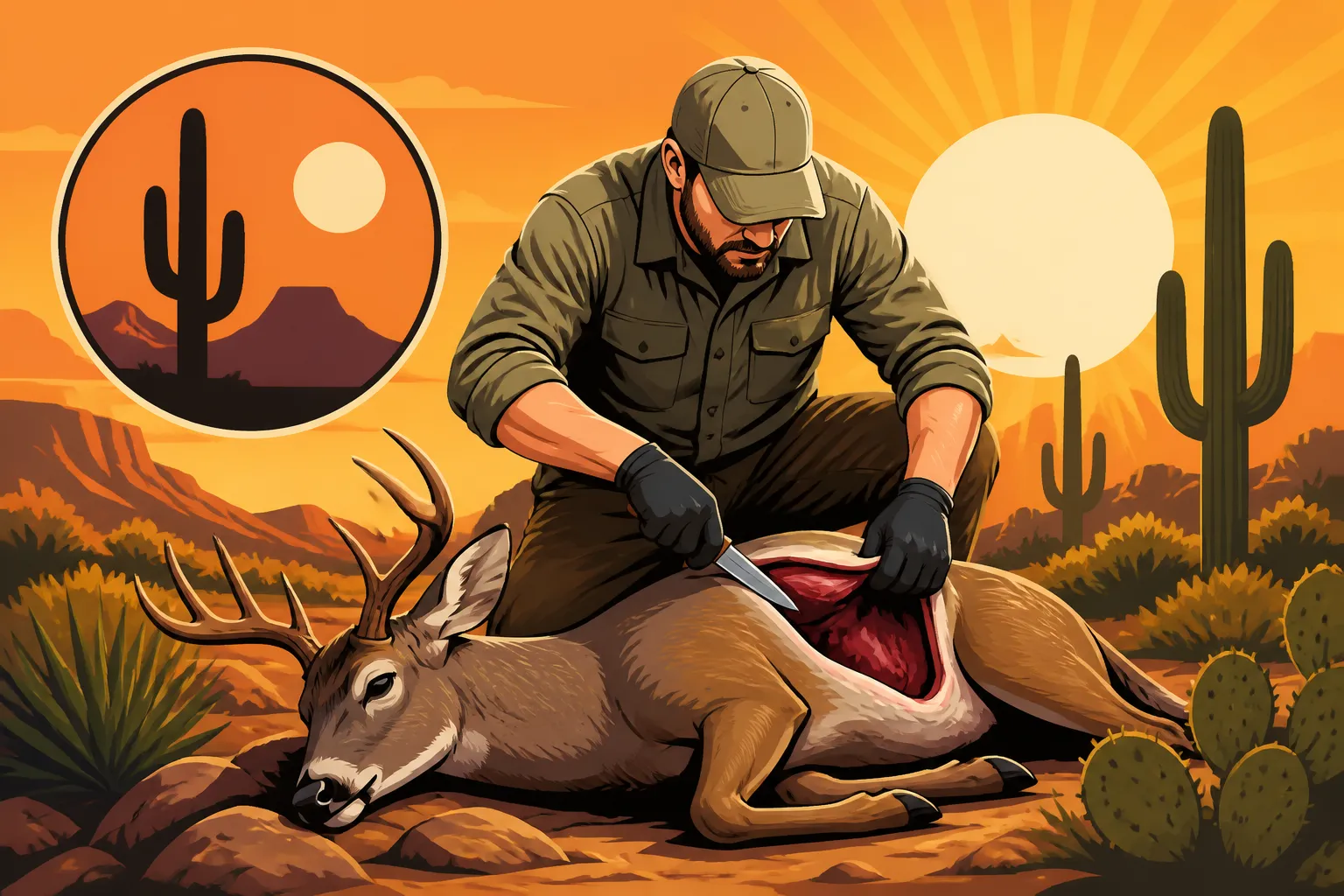
- Make the Incision: Start at the sternum and make a shallow cut through the skin down to the pelvic bone. Be extremely careful not to puncture the intestines or stomach. Many hunters prefer a gut hook for this initial cut as it lifts the skin away from the organs. Once the skin is cut, deepen the incision through the abdominal wall, again taking great care. Extend the cut around the anus to free the rectum and colon.
- Severing the Windpipe and Esophagus: Reach deep into the chest cavity, past the diaphragm, and locate the windpipe and esophagus. Cut these as far forward as you can reach. This ensures all organs come out cleanly.
- Rolling Out the Entrails: With the windpipe and esophagus severed, you can now begin to roll the entire mass of internal organs out of the cavity. Use your knife to cut any remaining membranes or attachments. Work methodically from the front to the back.
- Pelvic Bone and Bladder: If hunting a large buck or bull, you may need to split the pelvic bone to completely remove the lower intestines and bladder. A small hand saw or specialized bone saw can be helpful here. Ensure the bladder is carefully removed without rupturing.
- Inspection and Cleaning: Once all organs are removed, inspect the cavity. Scrape out any remaining blood clots or fecal matter. If you have a water bottle, a light rinse can help, but ensure you dry the cavity as much as possible afterward to prevent bacterial growth.
Getting the Hide Off When Applicable and Practical
While not always necessary for immediate cooling in cooler climates, skinning in the field can be a game-changer in the Arizona desert. The hide acts like an insulating blanket, trapping heat.
- Consider Quartering: For larger animals like elk or large mule deer, quartering the animal in the field is often the most practical and efficient way to cool the meat and transport it. This means separating the animal into four major sections (two front quarters, two hindquarters) and the backstraps/tenderloins. This process naturally involves removing the hide from each quarter.
- Skinning Technique: Start by making cuts along the inside of the legs, connecting to your central belly cut. Work the hide away from the meat using your knife and fists. Try to keep the meat as clean as possible. Remember, the goal is to expose the muscle to air.
- Hang If Possible: If you can hang the quarters from a tree limb or a sturdy game gambrel, it allows for maximum air circulation, accelerating the cooling process significantly. This is especially useful if you're processing a larger animal like an elk where Packing an Elk Out of Rim Country Alone can be a monumental task.
Post-Field Dress Cooling and Transport Strategies
Field dressing is a huge step, but the work isn't over. Getting the meat cooled down and keeping it cool during transport from the dusty desert floor to a processing facility is where many hunts fail. This stage requires methodical planning and execution. It's truly about giving your harvest the best chance.
Game Bag Selection and Usage
Game bags are your first line of defense against dirt, flies, and warm air trapping. They are not optional in the desert.
- Breathability is Key: Choose game bags made of breathable material, like sturdy cotton, synthetic blend, or even specialized synthetic game bags with anti-microbial treatments. Avoid burlap sacks or plastic. The breathability allows heat to escape while forming a protective barrier.
- Proper Sizing: Ensure you have game bags sized appropriately for the animal. For deer, smaller bags for each quarter and the backstraps are perfect. For elk or larger game, you'll need heavy-duty, large quarter bags.
- Cleanliness and Placement: Once the meat is quartered (and preferably skinned), immediately place each piece into a clean game bag. Tie them securely. If you have to lay them on the ground, use a clean tarp or space blanket underneath to prevent contamination from dirt and to reflect some heat.
- Elevate for Airflow: Whenever possible, even for a short period, try to hang game-bagged meat from a sturdy branch or a game pole. This elevates it off the hot ground and allows air to circulate around all sides, drawing heat away from the meat more effectively. This is where a lot of hunters leverage mapping tools from GoHunt to identify potential shady spots or even old structures that might offer a good hanging spot near their access point.
The Critical Role of Ice and Water
You've cleaned the cavity; now you need to chill it. Ice isn't just for drinks on a desert hunt; it's essential for preserving meat.
- Internal Cooling: For smaller animals that aren't quartered immediately (like javelina or small deer), once the cavity is completely clean and dry, fill it with clean cubed ice or frozen water bottles. This provides direct internal cooling.
- Frozen Water Bottles: These are gold in the desert. You can place them directly into body cavities or alongside game-bagged quarters in a cooler. As they melt, the water is clean and can be drained or used for drinking or cleaning, avoiding the mess of melted ice.
- Insulated Coolers: Your coolers should be pre-chilled and waiting. As you place game-bagged quarters into the cooler, pack ice around them. Layering ice and meat, ensuring no meat touches the warm sides of the cooler, is vital.
- Draining Meltwater: While ice is critical, don't let the meat sit in a pool of icy water for extended periods. This can lead to waterlogging and affect meat quality. If you're using loose ice, drain the meltwater periodically. Frozen water bottles mitigate this issue. For a comprehensive guide on this, check out Getting Meat Cooled on an Early Season Hunt.
Getting Meat to a Cooler or Processor
The journey from kill site to final cooling is often the most challenging. This is especially true for those hunting deep in the backcountry, far from paved roads.
- Protect from Sun: During transport from the field to your vehicle, never expose the game-bagged meat to direct sunlight. Use a tarp, blanket, or even your hunting jacket to shield it.
- Vehicle Preparation: Line your truck bed, ATV cargo box, or vehicle interior with heavy-duty plastic sheeting or a tarp. This keeps things clean and makes cleanup easier. Place your pre-chilled coolers strategically.
- Speed is Essential: The faster you can get the meat into a truly cold environment (like your pre-iced coolers or a walk-in cooler at a processor), the better. Minimize stops and delays.
- Processor Contact: If you plan to use a professional meat processor, call them ahead of time. Let them know you're coming and understand their drop-off procedures and hours. Some processors are set up specifically to handle game in desert heat and can offer quick chilling services.
- Longer Hauls: For multi-day hunts or long drives home, consistently monitoring the ice in your coolers is crucial. Top it off regularly. If you're on a multi-day hunt, planning for consistent re-supply of ice is a must, especially if you’re using services that help you E-Scouting an Arizona Unit Before the Season to identify potential towns or stores nearby.
| Cooling Method | Pros | Cons | Best Use Case |
|---|---|---|---|
| Loose Cubed Ice | Rapid direct cooling, flexible packing | Messy meltwater, shorter lifespan | Immediately filling body cavity, short transport |
| Block Ice | Long-lasting cold, less meltwater | Slower to cool initially, less flexible | Base layer in coolers for sustained cold |
| Frozen Water Bottles | Clean meltwater, reusable, flexible | Slower initial cooling, can be bulky | Direct contact with meat, extended cooling in coolers |
| Hanging in Shade | Excellent airflow, natural process | Limited availability, only for initial cooling | Field dressing, short-term cooling before transport |
| Insulated Coolers | Essential for transport, maintains temp | Requires pre-chilling, space-intensive | Primary method for meat transport and holding |
Advanced Tips for Extreme Heat Conditions
Sometimes, the Arizona desert throws everything it has at you. When temperatures are truly extreme, or you're far from your vehicle, you need to pull out all the stops to save your meat. These advanced tactics can make the difference between a ruined harvest and a successful one. Hunters often use tools like GoHunt to understand the terrain and plan for these extreme situations, identifying potential shady canyons or water sources.
When to Quarter in the Field
While field dressing generally involves eviscerating the animal, sometimes the heat and distance demand more aggressive action right away. Quartering in the field means completely breaking down the animal into its major muscle groups at the kill site.
- Necessity in Extreme Heat: When temperatures are over 80-90°F and you have a significant pack-out, quartering is almost always the best strategy. The large mass of an entire animal, even gutted, retains heat for hours. By breaking it into smaller pieces, you expose much more surface area to the air, allowing it to cool far more rapidly.
- Larger Animals: For elk, large mule deer, or even a big coues deer in summer, quartering is often the only way to manage the harvest effectively. It makes the load lighter for packing and allows for immediate skinning of all major meat portions.
- The Process: After eviscerating, remove the legs at the joints. Separate the backstraps and tenderloins. Then, remove the front and hindquarters, cutting through the muscle and bone. Immediately place each quarter into a game bag. This method dramatically reduces cooling time and makes for a more manageable pack out. This is a critical skill for any hunter who finds themselves needing to Pack an Elk Out of Rim Country Alone.
Using Ground Cloths and Tarps for Shade
Finding natural shade in many parts of the Arizona desert can be like finding a needle in a haystack. But even without a towering ponderosa pine, you can create your own.
- Emergency Shade Structures: Carry a lightweight, reflective tarp or even a large emergency blanket. You can often rig these up using trekking poles, tree branches, or even by tying them to your vehicle. The goal is to create a pocket of shade where you can work and where the bagged meat can rest before transport. Light-colored tarps are better than dark ones, as they reflect more sunlight.
- Keep Off the Hot Ground: Always place field-dressed meat or bagged quarters on a ground cloth or tarp, never directly on the scorching desert earth. The ground absorbs and radiates heat, turning your cooling efforts into a losing battle.
- Ventilation is Key: Ensure that any improvised shade structure allows for airflow. You don't want to create an enclosed space that traps heat. The air needs to move to carry heat away from the meat.
Pre-Hydration and Personal Safety
This isn't directly about the meat, but it's critically important. You can't properly care for your harvest if you're succumbing to the heat yourself.
- Aggressive Hydration: Before, during, and after the hunt, especially when you're exerting yourself field dressing, drink plenty of water. Electrolytes are crucial too. For more on this, revisit Water You Must Carry on a Day Hunt.
- Listen to Your Body: Symptoms of heat exhaustion or heat stroke can come on quickly. Dizziness, nausea, headache, excessive sweating (or lack thereof), and confusion are serious signs. If you feel any of these, stop, rest in the shade, and rehydrate. Your safety is paramount.
- Planning for Emergencies: Always hunt with a partner if possible, and carry a satellite communication device if you're venturing into areas without cell service. Breaking down an animal in the heat is strenuous, and accidents can happen. Being prepared for your own well-being is part of ethical hunting.
By implementing these advanced strategies, you're not just hoping for the best; you're actively taking control of the situation and maximizing your chances of bringing home quality wild game, even when facing the formidable challenges of Arizona's desert heat.
Disclaimer
The information provided in this guide is intended for educational and informational purposes only and is not a substitute for professional advice or formal hunter education. Hunting regulations and best practices can change, and it is the hunter's responsibility to know and follow all applicable laws set by the Arizona Game and Fish Department and other governing bodies. Always prioritize safety, ethical hunting practices, and responsible game handling.