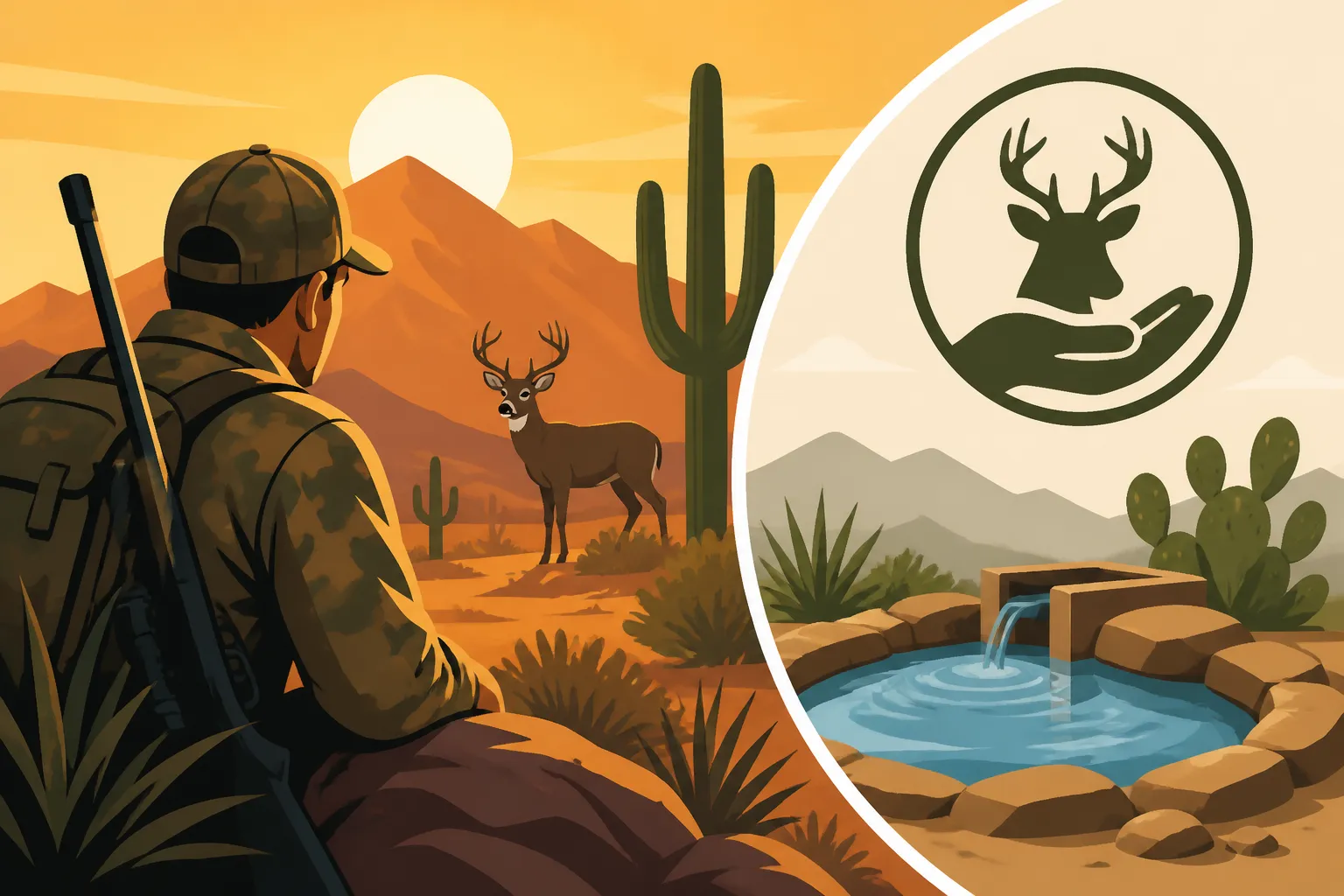
Water Sources and Ethics in Arizona Desert Hunting
Hunting in the vast, often parched landscapes of Arizona presents a unique set of challenges, especially when it comes to understanding and ethically utilizing the precious resource that is water. Many hunters struggle with the conflicting desire to find game concentrated near water sources and the deep-seated ethical responsibility to not exploit these vital oases, recognizing they are often the only lifeline for wildlife in an otherwise unforgiving environment. This guide aims to thoroughly explore the critical role of water in Arizona's desert ecosystems, delve into the ethical considerations that should shape every hunter's approach, and provide practical strategies for locating and responsibly hunting around these essential natural features.
The Lifeline of the Desert: Understanding Arizona's Water Sources
In Arizona, particularly in the lower desert regions and even in the higher elevations during dry spells, water is the singular most important factor dictating where wildlife can survive and thrive. It's not just a convenience for animals; it's an absolute necessity. Understanding the different types of water sources available is the first step in comprehending the delicate balance of desert hunting.
Natural Water Sources: Springs, Seeps, and Ephemeral Puddles
Arizona’s diverse topography, from sky islands to expansive desert flats, offers a variety of natural water sources, each with its own characteristics and implications for wildlife. Springs are perhaps the most reliable, often bubbling up from subterranean aquifers, providing consistent water flow even during the driest months. These precious spots can be tiny trickles barely enough for a bird, or substantial flows that create riparian corridors sustaining lush vegetation and a rich array of species. Finding Water in Arizona's Dry Country often means knowing how to identify and interpret geological formations that indicate a spring.
Seeps are similar to springs but often less pronounced, merely damp spots on a rock face or along a canyon wall where groundwater slowly oozes to the surface. While they might not offer enough water for large animals to drink deeply, they can be critical for smaller creatures and provide enough moisture for certain plants, drawing in herbivores. Ephemeral puddles, on the other hand, are temporary. These are depressions in the earth that fill with rainwater during monsoon storms or winter rains, holding water for days or weeks before evaporating under the relentless sun. While short-lived, these puddles can be game-changers in the immediate aftermath of a rain event, spreading animals out across the landscape for a brief period before they return to more permanent sources.
Man-Made Water Sources: Stock Tanks, Guzzlers, and Wells
Recognizing the crucial role of water, both Arizona Game and Fish Department (AZGFD) and private landowners have invested heavily in developing and maintaining artificial water sources across the state. These man-made features often become central hubs for wildlife activity. Stock tanks are perhaps the most common, created by damming washes or digging out low-lying areas to collect and store rainwater runoff. Many times, these tanks are maintained for livestock, but wildlife benefits immensely from them. Hunting a Stock Tank During Early Archery can be incredibly productive, but it also carries significant ethical weight due to the high concentration of game.
Guzzlers are purpose-built wildlife watering systems, designed to collect precipitation from a catchment apron and funnel it into a storage tank, from which animals can drink. These are strategically placed in areas lacking natural water and are solely for wildlife. Unlike stock tanks, guzzlers are generally not shared with livestock. Wells, often equipped with windmills or solar pumps, provide year-round water, primarily for cattle operations, but again, wildlife will readily use them. These human-made sources are invaluable, especially in extensive stretches of desert public land where natural water is scarce. When scouting, especially with tools like E-Scouting an Arizona Unit Before the Season and Using onX Layers for Arizona Public Land, identifying these man-made features is just as important as pinpointing natural ones.
Ethical Considerations Around Desert Water
Given the scarcity of water in Arizona's arid environment, hunting around these vital sources comes with a heightened ethical responsibility. It's not merely about following the law, but about upholding the spirit of fair chase and respecting the delicate balance of desert ecosystems.
The Principle of Fair Chase and Water
The concept of fair chase is foundational to ethical hunting, and it's particularly poignant when applied to hunting near water sources in the desert. Fair chase dictates that the hunter does not take unfair advantage of the animal. In an environment where water is a bottleneck, concentrating animals due to extreme thirst, setting up directly on a waterhole can be seen by many as pushing the boundaries of fair chase. Animals are often at their most vulnerable when they approach water, driven by a primal need for survival. They are less focused on predators and more on relief.
While hunting over water is explicitly legal in Arizona, the ethical hunter must ask themselves if the situation truly offers a fair and sporting chance for the animal. Is the animal so parched that it has no other option? Are you exploiting a critical vulnerability? This introspective questioning is what separates ethical hunting from mere legality. It's about respecting the animal and the hunt, ensuring the pursuit requires skill, effort, and an appreciation for the wildness of the game. For more on the broader ethical framework, consider reviewing The Ethically Hunting Arizona Course Explained.
Avoiding Disturbance at Critical Water Sites
Beyond the immediate act of the shot, ethical hunting around water also involves minimizing disturbance to the overall ecosystem. Water sources, especially during drought periods, serve as communal gathering points for all manner of wildlife, not just the game species you might be targeting. Frequent or prolonged presence by hunters can stress animals, disrupt their natural patterns, and even deter them from using a vital water source. This can have ripple effects throughout the local population.
When you choose to hunt near water, it's crucial to employ tactics that reduce your footprint. This means carefully planning your approach and exit, minimizing scent, noise, and visual impact. It also means not setting up camp directly next to a critical waterhole, as human presence and activity can turn animals away. Being mindful of legal Arizona Legal Shooting Hours for Big Game and adhering to them is another way to ensure animals have undisturbed access during certain times. The goal should always be to be a temporary, unobtrusive observer rather than a disruptive presence.
Strategic Hunting Around Water Sources
While ethical considerations are paramount, understanding how to strategically and effectively hunt near water is also a key skill for Arizona desert hunters. This involves thorough scouting, careful setup, and an ability to read the subtle cues of animal behavior.
Scouting Water Sources Effectively
Successful hunting around water starts long before the season opens, with dedicated scouting. This isn't just about finding the water; it's about understanding how, when, and by whom it's being used. Start with topographic maps and satellite imagery (like those on GoHunt or onX Hunt) to identify potential springs, seeps, washes that might hold ephemeral water, and known stock tanks or guzzlers. Once you have a list of potential spots, E-Scouting an Arizona Unit Before the Season allows you to overlay public land boundaries and access routes.
Next comes boots-on-the-ground reconnaissance. Visit these water sources during the off-season or well before your hunt. Look for tracks, scat, rub lines, and bedding areas. Are multiple species using the same water? What time of day do they visit? Are there preferred approach and exit routes? Pay attention to prevailing winds and potential ambush points. You're trying to build a picture of the daily rhythm of the animals using that particular water source. Don't forget to also consider Heat Management on an Arizona Early Season Hunt and plan for your own water needs; remember to pack Water You Must Carry on a Day Hunt.
Setup and Approach for Hunting Water
Once you've identified a promising water source and understand its usage patterns, your setup and approach become critical. The goal is always to remain undetected. This means playing the wind meticulously. Animals will almost always approach water from downwind, circling to scent-check before committing to drink. Your setup should position you so that your scent blows away from their likely approach routes.
Consider natural cover – a stand of mesquite, a rocky outcrop, or a wash bank. Evaluate shooting lanes and distances to the water's edge. For bowhunters, this means getting How Close a Bowhunter Needs to Get on Coues, often within 20-30 yards. Rifle hunters may have more leeway, but closer shots reduce the chance of a non-lethal hit. When you approach your chosen spot, do so slowly, quietly, and well before animals are expected to arrive. If possible, avoid walking directly on well-used game trails to minimize leaving your scent where animals will be moving.
Reading Sign and Animal Behavior at Water
Animals leave a rich tapestry of information around water sources. Learning to read this sign is a vital skill. Fresh tracks tell you not only what species have visited but also how recently. Large, clear tracks indicate a recent visit, while dry, dust-filled tracks mean the visit was longer ago. Scat can indicate diet and also freshness. Browsed vegetation around the water's edge, rubbed trees, or even depressions in the mud where animals have laid down can provide valuable clues.
Beyond static sign, observing animal behavior at the water is crucial. Animals are often cautious, especially mature bucks or bulls. They might pause, scan, and listen for extended periods before taking a drink. They might follow specific trails to and from the water. Note if they are coming in alone or in groups, and if they have a preferred side of the tank or spring. Understanding these nuanced behaviors helps you anticipate their movements and refine your strategy. This keen observation is similar to Glassing Arizona's Sky Islands for Coues Deer, but with a more localized focus. For those interested in Sitting Water for Javelina and Deer, these observations become even more vital given the wary nature of these animals.
Water Management and Conservation in Arizona
The significance of water in Arizona extends far beyond individual hunting tactics. It's a critical component of wildlife management and conservation efforts across the state. Hunters often play a vital role in these broader initiatives.
Arizona Game and Fish Department's Role
The Arizona Game and Fish Department (AZGFD) is at the forefront of managing and conserving water resources for wildlife. They undertake extensive projects to construct new guzzlers, repair existing ones, and maintain natural springs to ensure consistent water availability. This work is meticulously planned, often in conjunction with biological surveys, to identify areas with water deficits and where new sources would have the greatest positive impact on wildlife populations. AZGFD also works with private landowners and other agencies to ensure access to water for wildlife on state trust and private lands. Their proactive approach to water management directly underpins the health and distribution of all Arizona's game species.
AZGFD also sets regulations, such as Baiting Rules That Apply in Arizona, which are crucial for maintaining fair chase and preventing the unethical exploitation of animals, particularly around natural resources like water. While hunting over water is legal, the distinction between a natural water source and an artificially enhanced bait site is important to understand.
Hunter Contributions to Water Projects
Hunters in Arizona have a long and proud tradition of contributing to water conservation efforts. Through license fees and specific conservation stamps, hunters provide significant funding for AZGFD's water development projects. Beyond financial contributions, many individual hunters and hunting organizations volunteer countless hours to help build and maintain guzzlers and stock tanks. This might involve hauling materials, digging trenches, or fixing fences around water sources to prevent damage from livestock.
Organizations like the Arizona Deer Association, Arizona Elk Society, and local chapters of national groups frequently organize work parties dedicated to improving water availability. This hands-on involvement reinforces the hunter's role as a conservationist, actively contributing to the health of the wildlife populations they pursue. It’s a tangible way to give back to the resource and ensure sustainable hunting opportunities for future generations.
Navigating Regulations and Respecting Private Property
Hunting near water sources, especially in a state with a complex land ownership mosaic like Arizona, requires a keen understanding of regulations and a deep respect for private property boundaries.
Legalities of Hunting Over Water
As previously mentioned, hunting over a natural or man-made water source is legal in Arizona, provided it is not considered baiting. The distinction typically lies in the intent and the introduction of non-native attractants. A natural spring, seep, or even a stock tank is a legitimate feature of the landscape. However, adding feed, minerals, or other attractants near water, even if the water itself is natural, would likely fall under baiting regulations, which are prohibited for big game. Hunters must be diligent in understanding and adhering to these rules to avoid legal issues and maintain ethical standing.
Another critical aspect of legality is ensuring you are on public land or have explicit permission to hunt on private land. This often requires careful map reading and awareness of your surroundings. Using GPS mapping applications, such as those provided by GoHunt or other reliable sources, can be indispensable for knowing exactly where you stand in relation to property lines.
Accessing Water on State Trust Land and Private Parcels
Arizona's landscape includes vast tracts of State Trust Land and numerous private ranches. Many crucial water sources, both natural and man-made, are located on these lands. While Arizona State Trust Land Needs a Permit, and Your License Counts as your recreational permit for most hunting activities, it's vital to be aware of any potential lessee restrictions, particularly around active ranching operations. Lessees often have priority, and some areas may be temporarily inaccessible due to livestock or specific ranching activities.
For private land, explicit permission from the landowner is absolutely essential. Even if an animal you've shot on public land crosses onto private property, you cannot retrieve it without permission, which is covered in topics such as Retrieving Game From Private Land in Arizona. Respecting these boundaries isn't just a legal requirement; it's a fundamental tenet of ethical hunting and maintaining good relationships with landowners, which can ultimately benefit future access for all hunters. Always double-check land ownership using tools like Using onX Layers for Arizona Public Land when identifying potential water sources.
Here's a quick comparison of common water sources and their hunting implications:
| Water Source Type | Description | Reliability | Ethical Considerations | Scouting Notes |
|---|---|---|---|---|
| Natural Spring/Seep | Groundwater emerging from the earth, often creating lush oases. | High | Very high, as these are critical, often sole, water sources in an area. | Look for green vegetation, converging game trails, fresh sign. Often in rugged terrain. |
| Stock Tank | Man-made impoundments collecting rainwater runoff, primarily for livestock but heavily used by wildlife. | Medium-High | Moderate, depends on water availability elsewhere. Can be highly pressured. | Check for tracks, scat, and historical use patterns. Note livestock presence. Hunting a Stock Tank During Early Archery is common. |
| Wildlife Guzzler | Purpose-built systems for wildlife, collecting rain into storage tanks with animal-friendly access points. | High | Moderate, designed for wildlife. Still requires fair chase and minimal disturbance. | Often marked on maps (e.g., GoHunt or AZGFD resources). Look for game trails converging from all directions. |
| Ephemeral Puddle | Temporary pools of water formed after rain, lasting days to weeks. | Low (Seasonal) | Lower, as animals are less dependent on these for long-term survival. | Post-rain opportunity. Animals may be spread out. Look for fresh tracks in soft mud before it dries. |
| River/Perennial Stream | Continuous flowing water bodies, often in canyons or high country. | Very High | Low-Moderate, as water is less of a concentration point, more widespread. | Animals may not be "watering" but rather moving through riparian zones. Focus on travel corridors and bedding areas nearby. |
Disclaimer
Always consult the most current Arizona Game and Fish Department regulations before planning any hunt, as rules and seasons can change. This information is for educational purposes and should not be considered legal advice.