Is Blaze Orange Required for Archery Hunting?
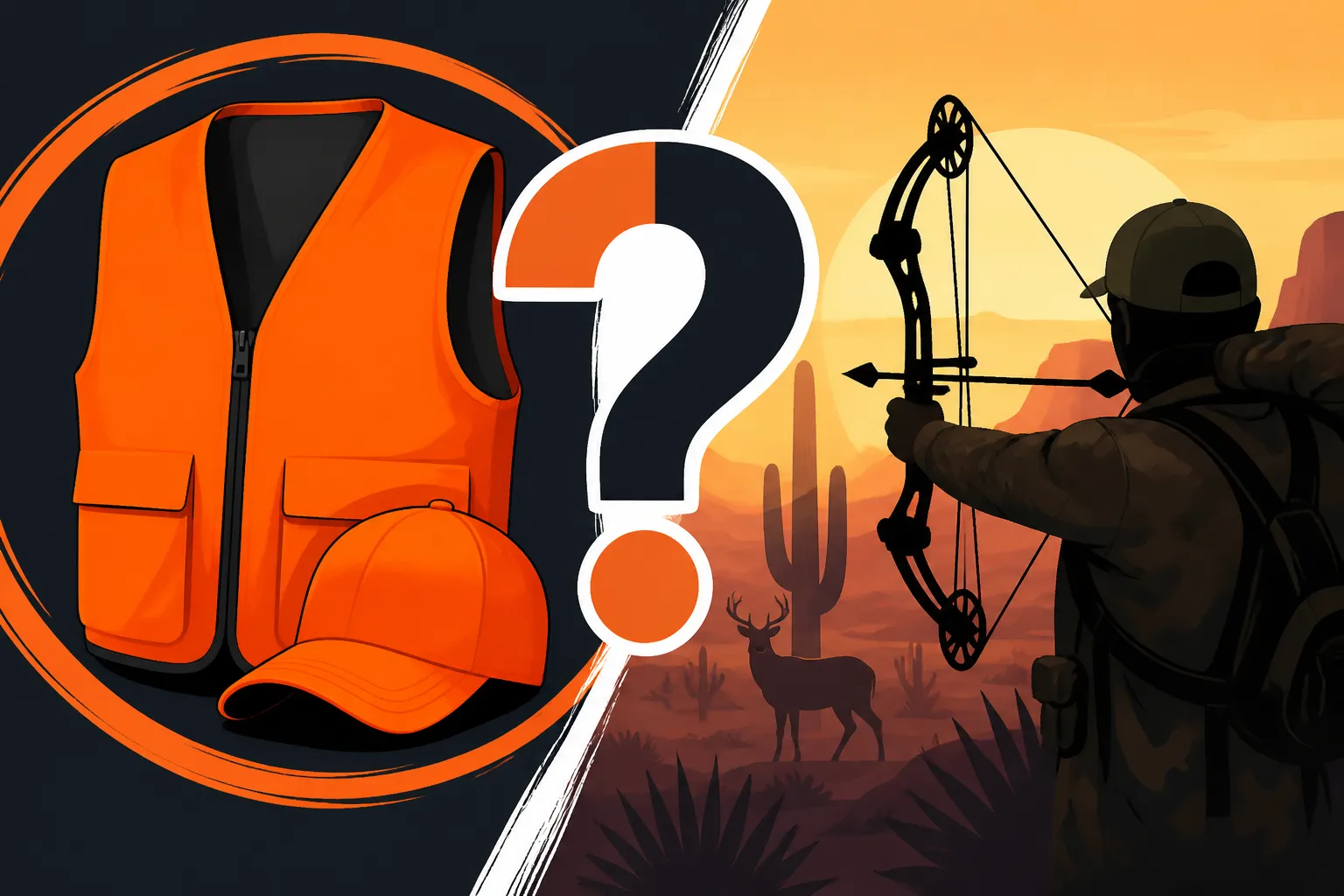
One of the most common head-scratchers for new and even experienced hunters in Arizona, especially those eyeing an archery tag, is figuring out the blaze orange rules. It can feel like a maze, trying to understand when that bright color is absolutely mandatory for safety and when it's better left in the truck. This guide is going to untangle all that confusion, breaking down exactly when you need to wear blaze orange for archery hunting in Arizona, why these rules exist, and offer some practical advice for staying safe and legal in the field.
Is Blaze Orange Required for Archery Hunting in Arizona?
This is the big question, and the simple answer for most dedicated archery-only seasons in Arizona is no, blaze orange is generally not required. However, and this is a huge however, there are critical exceptions and overlaps with general firearm seasons that every archery hunter needs to understand deeply. Ignoring these exceptions isn't just a risk to your hunt; it's a risk to your safety and legality.
General Archery Season Rules
For many of Arizona's popular archery seasons, such as the lengthy over-the-counter (OTC) archery deer season or specific archery-only elk and javelina hunts, the Arizona Game and Fish Department (AZGFD) does not mandate the wearing of blaze orange. This is a deliberate choice, recognizing the unique nature of bowhunting. Archery hunting often involves getting much closer to game, demanding absolute stealth and concealment. The vibrant color of blaze orange, while highly effective at making hunters visible to other humans, can be a detriment to bowhunters who rely on blending into their surroundings to get within ethical bow range.
Think about it: when you're trying to sneak within 40 yards of a wary Coues deer in the thick brush of the Sky Islands, every visual cue matters. That bright orange could be the very thing that spooks a buck you've been stalking for hours. Archery seasons are designed around these hunting ethics and methods, which prioritize camouflage and scent control above all else. This distinction is crucial, and it's why you often see archery hunters decked out head-to-toe in various camouflage patterns, from desert digital to woodland blends, rather than bright safety colors. These are the hunts where your focus is purely on the animal and the terrain, without the added visual signature of blaze orange. You can find more details on how these seasons operate in our guide, "How to Hunt Arizona's Five-Month OTC Archery Deer Season".
When Archery Hunters Must Wear Blaze Orange
Now, here's where things get tricky, and where a lot of hunters can inadvertently find themselves in violation or, worse, in a dangerous situation. While blaze orange isn't typically required for archery-only seasons, it becomes mandatory for archery hunters when they are afield during a concurrent general firearm hunt for the same species in the same unit. This overlap is a critical safety measure designed to protect all hunters in the field.
Imagine you've drawn a coveted early archery elk tag, and a few weeks later, a general rifle elk hunt opens in the very same unit. If you're still out there, chasing that bull with your bow during the rifle season, you absolutely must comply with the blaze orange requirements that apply to firearm hunters. This rule is in place because, from a safety perspective, you are sharing the woods with hunters using firearms, who might be scanning for movement or shapes that could be game at much longer distances. Their hunting methods and safety zones are different, and your visibility becomes paramount. The same principle applies if you're on a late archery deer hunt that overlaps with a general rifle deer season. Always cross-reference your hunt dates and unit regulations with the general season dates. This information is readily available in the official Arizona Game and Fish Department hunt proclamation, or through digital mapping and regulation services like GoHunt, which can help you quickly identify these overlaps.
The Arizona hunting regulations specifically state that "a person taking or attempting to take big game with a firearm during an open season" must wear outer clothing of "daylight fluorescent orange." This requirement extends to archers when they are present in the field during those firearm seasons for big game. So, while your bow itself doesn't trigger the blaze orange rule, the presence of firearm hunters does. This is one of those rules that really underscores the importance of checking all relevant season dates, not just your specific tag, as detailed in articles like "Arizona Elk Season Structure by Hunt Code" and "Arizona Deer Seasons Across the Calendar".
Special Considerations: CHAMP Permits and Crossbows
The landscape of archery hunting has also evolved with the inclusion of crossbows and specific permits. In Arizona, individuals with a Physically Challenged Hunter Access/Mobility Permit (CHAMP) can often use crossbows during archery-only seasons. The question then becomes, does using a crossbow under a CHAMP permit change the blaze orange requirement?
Generally, no, it does not. If you are hunting with a crossbow under a CHAMP permit during a dedicated archery-only season where no general firearm season for that species is concurrently open in that unit, you are typically not required to wear blaze orange. The spirit of the rule remains: if you're in an archery-exclusive environment, the camouflage principles apply.
However, the same caveat applies as with vertical bows: if that CHAMP crossbow hunt happens to coincide with a general firearm season for the same species in the same unit, then the blaze orange rule kicks in. The weapon type (vertical bow or crossbow) is less relevant than the presence of general firearm hunters in the same hunting area and timeframe. It’s about ensuring visibility for all users of the public lands when higher-powered weapons are in play. Understanding these nuances is critical, especially given recent changes regarding crossbow use, which you can learn more about in "When Crossbows Left Archery-Only Seasons" and "What a CHAMP Permit Allows". So, while crossbows might fall under broader archery rules for draw weight, as explored in "Arizona Sets Bow Draw at 30 Pounds and Crossbows at 125," their blaze orange requirements are tied to the concurrent seasons in play.
Understanding Arizona's Broader Blaze Orange Requirements
To fully appreciate why archery seasons often have an exemption, it helps to understand the foundational blaze orange rules that govern other types of hunts in Arizona. These regulations are primarily driven by hunter safety and are a cornerstone of responsible hunting practices.
General Firearm Hunt Requirements
For most general firearm seasons in Arizona, blaze orange is not just a suggestion; it's a mandatory safety measure. The rule typically states that hunters must wear at least 36 square inches of "daylight fluorescent orange" that is visible from 360 degrees. This usually means a vest, hat, or other outerwear that clearly stands out against the natural backdrop. This requirement applies to rifle, shotgun, and muzzleloader hunts for big game.
The rationale is clear: firearms have a much longer effective range than bows, and the chances of a hunter being mistaken for game by another hunter increase significantly. The bright, unnatural color of blaze orange dramatically reduces these risks, making hunters instantly recognizable as human. It's about creating a visual signal that screams, "I am not an animal, do not shoot!" This helps prevent tragic accidents in areas where multiple hunters might be pursuing the same species. For hunters using muzzleloaders, even though their weapon might seem more "primitive," they are still considered firearm hunters in this context, and thus, the blaze orange rule applies. Our article "Legal Shooting Hours and Blaze Orange in Arizona" delves deeper into this alongside other essential safety regulations.
Small Game and Predator Hunting
When it comes to small game like rabbits, squirrels, or quail, and predator hunting for species like coyotes, the blaze orange rules often become less stringent or even non-existent as a mandatory requirement. For many small game seasons, especially those using shotguns or rimfire rifles, blaze orange is often recommended for safety, particularly in areas of high hunter density, but it might not be legally mandated.
This distinction usually comes down to the perceived risk. Small game hunting typically involves different tactics, often with smaller calibers or shotguns, and in environments where visibility might be less of an issue, or the animals themselves pose less of a "mistaken for game" risk. However, it's always smart to err on the side of caution. Even if not required, wearing a blaze orange hat or vest during a quail hunt in tall grass or a rabbit hunt in heavy cover can significantly increase your visibility to other hunters and recreationists, enhancing overall safety. For predator hunting, especially at night (where legal) or in remote areas, the primary concern is usually concealment from the animal, and blaze orange is generally not required unless there's an overlap with a big game firearm season.
Here’s a quick overview of Arizona’s typical blaze orange requirements:
| Hunt Type | Blaze Orange Required? | Conditions |
|---|---|---|
| Archery-Only (Big Game) | No | Unless a general firearm season for the same species is open concurrently in the same unit. |
| General Firearm (Big Game) | Yes | Mandatory at least 36 sq. inches visible 360 degrees. Applies to rifle, shotgun, muzzleloader seasons. |
| Crossbow (CHAMP Permit) | No | Same rules as archery-only hunts: unless concurrent with general firearm season for same species in same unit. |
| Small Game | Generally No | Often recommended for safety, especially in high-pressure areas. Specific regulations vary; always check the current proclamation. |
| Predator/Varmint | Generally No | Not typically required unless overlapping with a big game firearm season. Hunters prioritize concealment. |
Why Arizona's Rules Differ for Archery
It might seem contradictory to have different safety standards, but Arizona's approach to blaze orange reflects a careful balance between hunter safety, ethical hunting practices, and the unique challenges presented by various hunting methods. The distinctions aren't arbitrary; they're rooted in logic and experience.
Hunter Safety and Visibility
The primary purpose of blaze orange is unequivocally hunter safety. Studies have shown that wearing bright, fluorescent colors dramatically reduces the likelihood of a hunter being mistaken for game or being accidentally shot by another hunter. In a state as vast and diverse as Arizona, with millions of acres of public land and a wide array of hunting styles, ensuring maximum visibility when firearms are present is paramount.
For firearm seasons, where shots can be taken at hundreds of yards, a hunter's silhouette can easily be mistaken, especially in low light, dense cover, or during moments of high excitement. Blaze orange acts as a clear, unmistakable signal that communicates "human" to other hunters, even those with limited visibility or in suboptimal conditions. It's a non-negotiable tool in preventing mistaken-for-game accidents, which, thankfully, are rare but can be catastrophic. The AZGFD, like wildlife agencies across the nation, prioritizes this above all else during firearm seasons. Our guide on "Hunter Education Is Required Under 14 in Arizona" also emphasizes safety education for younger hunters, which includes understanding these rules.
Game Perception and Hunter Success
For archery hunters, the equation shifts. While human safety is always important, the method of hunting itself relies on a different set of tactical considerations. Archery hunting, by its very nature, demands close-range encounters, typically within 20-60 yards for most ethical shots. This requires a level of concealment that blaze orange fundamentally compromises.
Deer, elk, and other big game animals don't see colors the same way humans do. They are dichromatic, essentially red-green colorblind, perceiving the world in shades of blue and yellow. So, while blaze orange (which is usually a fluorescent yellow-orange) might not appear as a vibrant "orange" to them, it still stands out against natural greens and browns. More importantly, deer and elk are highly sensitive to movement and contrasts, and they possess superior low-light vision and a keen ability to detect ultraviolet (UV) light. Many synthetic hunting fabrics, even those marketed as camouflage, can glow under UV light, making a hunter stand out like a neon sign to an animal, particularly in dawn and dusk conditions. This is why dedicated archery apparel often emphasizes UV-neutral materials and sophisticated camouflage patterns designed to break up the human silhouette.
Wearing blaze orange, even if the animal doesn't perceive it as bright orange, still creates an unnatural block of color and a distinct outline that can alert a wary animal. For an archery hunter, this can mean the difference between getting a shot opportunity and having the animal bust out of the area before you even know it was there. The emphasis in archery is on stealth, blending in, and controlling scent and movement, making blaze orange counterproductive to hunter success. It's a trade-off that wildlife agencies acknowledge, hence the typical exemption for archery-only periods.
Practical Advice for Arizona Archery Hunters
Navigating hunting regulations, especially those that involve safety, can be daunting. Here are some practical tips to ensure you're always legal, safe, and successful during your Arizona archery hunts.
Checking Regulations Before Every Hunt
This cannot be stressed enough: always check the current year's Arizona hunting regulations proclamation before you go afield. Regulations can and do change year to year, or even within a season due to emergency closures (like bear harvest limits or fire restrictions). What was true last year might not be true this year. Relying on old knowledge or campfire stories is a recipe for trouble.
The Arizona Game and Fish Department (AZGFD) publishes detailed hunt proclamations online, which are the definitive source for all rules, dates, and requirements. Get into the habit of reviewing the specific unit and species you're hunting. Pay close attention to the "General Regulations" section, as this is where statewide rules like blaze orange requirements are often detailed, and then cross-reference with your specific hunt number and dates. Digital tools and apps, such as GoHunt's Insider platform, can be incredibly valuable for staying on top of these changes, providing up-to-date regulation summaries and mapping overlays that show unit boundaries and public land access. This kind of e-scouting can save you a lot of headaches, as mentioned in "E-Scouting an Arizona Unit Before the Season." Always remember to review the official "Reading the Arizona Hunt Regulations Booklet" to ensure you understand all the specifics.
When to Consider Wearing Blaze Orange Voluntarily
Even when it's not legally mandated, there are situations where voluntarily wearing blaze orange is a smart and responsible decision for an archery hunter.
- Walking to/from a stand or blind in low light: Dawn and dusk are prime hunting times, but they are also periods of reduced visibility. If you're walking along a trail, a forest road, or through open country to get to your hunting spot, wearing a blaze orange vest or hat can make you much more visible to other early-morning or late-evening users of the area, including other hunters, hikers, or even ATV riders. You can easily remove it once you're settled in your camouflaged position.
- High-pressure public land areas: If you're hunting in a unit known for heavy recreational use or dense hunter populations, especially during periods that might overlap even marginally with small game seasons or general recreation, adding a bit of blaze orange can be a proactive safety measure. This is particularly true if you are hunting in areas where you might be moving around frequently.
- Shared access points or roads: If your hunting area requires you to walk or drive along shared roads or trails frequently used by others, consider wearing blaze orange during these transit times. Again, it’s about making your presence known to prevent misunderstandings or accidents.
- Retrieving game: Once an animal is down, your priority shifts from stealth to recovery. When tracking or packing out an animal, especially in dense cover or rugged terrain, putting on a blaze orange vest or hat is highly recommended. This makes you visible to anyone else in the area who might be hunting or recreating, and it clearly distinguishes you as a human engaged in game recovery.
Layering and Visibility
If you decide to wear blaze orange voluntarily, or if it's legally required due to overlapping seasons, make sure it's worn correctly to maximize its effectiveness.
- Outer layer: Blaze orange should always be an outer layer. Don't cover it with a backpack, an outer coat, or anything else that obstructs its visibility from all directions. A blaze orange vest or a solid orange hat are common choices.
- 360-degree visibility: Ensure that the required amount of blaze orange (if applicable) is visible from all angles. A small patch on your back is insufficient if it's not visible from the front or sides.
- Integration with camouflage: If you're going into an area where blaze orange is required, but you still want some camouflage for the archery portion, consider an orange vest that can be quickly put on or taken off, or an orange hat. Some companies make reversible vests, with camo on one side and blaze orange on the other, offering versatility.
- Condition of gear: Ensure your blaze orange gear isn't faded or dirty to the point where its fluorescent properties are compromised. The brighter and cleaner it is, the more effective it will be at reflecting light and standing out.
By understanding the specific rules for archery, the overarching safety principles of blaze orange, and applying common sense in the field, you can enjoy Arizona's incredible hunting opportunities confidently and safely.
Disclaimer
Please remember that hunting regulations are subject to change. Always consult the most current Arizona Game and Fish Department hunting regulations proclamation for the definitive and up-to-date rules before embarking on any hunting trip. This guide is intended for informational purposes only and should not be considered a substitute for official legal documents.