Rules on Hunting From a Vehicle
Hunting in Arizona offers incredible opportunities, but navigating the rules around vehicle use can feel like trying to solve a Rubik's Cube in the dark. It’s a common source of confusion for many hunters, new and seasoned alike, leading to accidental violations or missed opportunities. This comprehensive guide will break down everything you need to know about legally and ethically using your vehicle while hunting in Arizona, clarifying what's allowed, what's strictly forbidden, and the nuances in between.
The Core Rule: No Shooting From a Vehicle
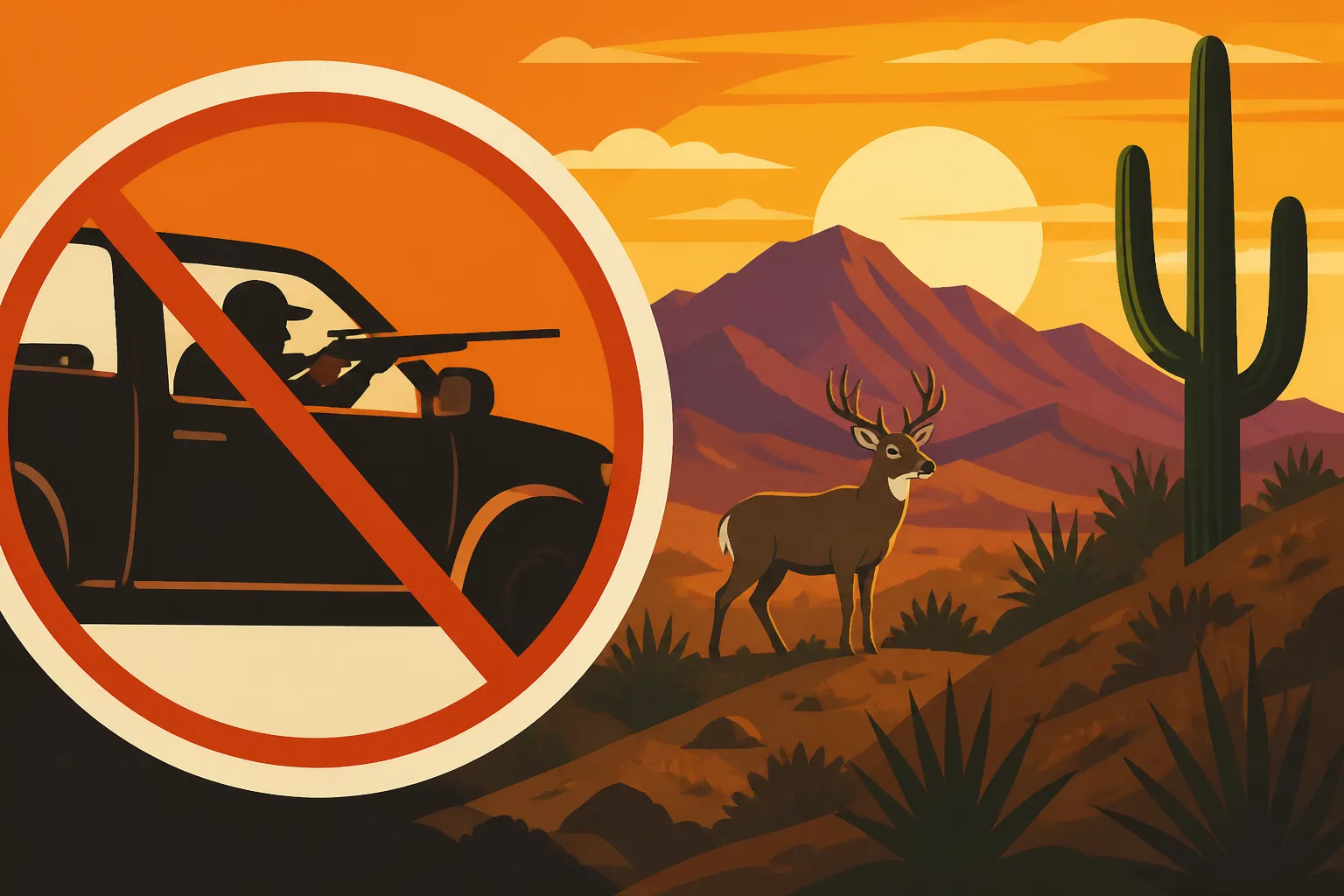
Let's get right to the heart of the matter: in Arizona, it is absolutely, unequivocally illegal to shoot any wildlife from a mechanically propelled vehicle. This isn't just a suggestion; it's a foundational principle of fair chase and a strict legal requirement. This rule aims to preserve the integrity of hunting, ensuring that animals aren't subjected to an unfair advantage on the hunter's part. It's about respecting the game and the challenge inherent in pursuing them on their terms.
Understanding "Mechanically Propelled"
When the Arizona Game and Fish Department (AZGFD) talks about "mechanically propelled vehicles," they're casting a pretty wide net. This includes your everyday pickup truck, SUVs, ATVs, UTVs, motorcycles, and even electric bicycles if they're being operated under power. Essentially, if it moves under its own mechanical power, it falls under this definition. The intent here is clear: you cannot use the mobility, speed, or elevated platform a vehicle provides to gain an unfair advantage over wildlife.
Think about it this way: a vehicle provides a stable shooting rest, a quick escape, and the ability to cover vast distances rapidly, all of which fundamentally alter the dynamics of a hunt. The rule is designed to ensure that the hunter is on foot, engaging with the environment and the animal in a more traditional, challenging manner. Many states have similar rules, and Arizona's stance is firmly rooted in maintaining ethical hunting practices. For example, even if your truck is turned off and you're simply resting a rifle on the hood, if you're still in or on the vehicle, or using it as a direct part of the shooting act, you're likely in violation. It’s a nuance that can sometimes trip hunters up, emphasizing the need for clarity.
The Definition of "Hunting" From a Vehicle
The prohibition extends beyond just pulling the trigger. Arizona law defines "hunting" as including "pursuing, shooting, wounding, killing, capturing, trapping, or collecting any wildlife." This means you cannot actively pursue game with your vehicle. If you spot a deer from the road and then proceed to drive off-road to get closer, you're now engaging in illegal pursuit. The vehicle is being used to harass or pursue the animal, which is just as illegal as shooting it from the vehicle.
This doesn't mean you can't spot game from your vehicle while driving on a legal road. Many hunters use their trucks to access remote areas, slowly driving and glassing hillsides. This is perfectly legal. The line is crossed when that observation turns into an active advantage for the hunt itself, specifically when it involves the vehicle moving or being used to directly facilitate the act of taking game. Once you spot an animal you intend to pursue, you must exit your vehicle, disengage from it, and then proceed on foot, adhering to all other hunting regulations. This is where the concept of "road hunting" gets tricky. Merely driving on established roads with a firearm in the vehicle is generally fine, but using the vehicle itself as an active tool in the immediate act of hunting (beyond simple transportation to an area) is not.
When Vehicles Are Permitted and Prohibited
While shooting from a vehicle is out, vehicles are undeniably crucial tools for accessing vast stretches of Arizona's hunting grounds. Understanding the fine print about when and where you can use them is vital to a successful and legal hunt. It’s all about context and intent.
Vehicle Use for Access and Retrieval
Your truck or ATV is perfectly legal for getting you and your gear to and from your hunting area. Arizona boasts millions of acres of public land, including extensive National Forests and BLM land, crisscrossed by a network of roads and trails. These are your lifelines to the backcountry. You can drive on any legally open road, be it a paved highway, a maintained dirt road, or a designated two-track trail. The critical distinction is that the vehicle is for transportation to a hunting spot, not for the act of hunting itself.
Retrieving downed game is another area where vehicles often come into play. After a successful harvest, the thought of packing out an elk quarter by quarter over rough terrain is daunting. In many instances, you are permitted to use a vehicle to retrieve game, but with significant caveats. You must stay on established, open roads or designated trails. You cannot simply drive cross-country to retrieve an animal, creating new tracks or damaging sensitive habitat. This is especially true on public lands managed by the Forest Service or BLM. Always consult a Motor Vehicle Use Map (MVUM) for the specific area you are hunting to identify legal routes. Driving off-road to retrieve game, even after it's down, is a common violation that hunters inadvertently commit. If you're wondering about the specifics, you'll find much more detail in articles like Can You Drive Off Road to Retrieve Game?. Always err on the side of caution; if there isn't a designated trail or road to the animal, be prepared to pack it out.
Specific Restrictions on Vehicle Type and Location
Arizona has specific rules governing off-highway vehicles (OHVs), like ATVs and UTVs. If you plan to use an OHV, ensure it is properly registered, street legal (if applicable), and has the required Arizona OHV decal. These vehicles are generally restricted to designated OHV trails and routes. Using them to create new trails or operating them in areas closed to motorized travel will land you in hot water with land management agencies. Mapping apps like GoHunt or onX are invaluable for identifying these routes and understanding land ownership boundaries. They provide layers that clearly show which roads are open and which areas are off-limits to motorized travel, helping you avoid accidental trespass or violations.
Furthermore, hunters must always be aware of seasonal road closures, especially in higher elevations or during periods of heavy rain. Many forest roads close seasonally to protect wildlife, prevent road damage, or reduce fire danger. These closures are clearly marked and enforced. Attempting to bypass a closed gate or drive around signage is a serious offense. Before heading out, always check with the local Forest Service or BLM office for current road conditions and closures, or refer to resources like Seasonal Road Closures Across Arizona Forests. Understanding these rules is crucial, not just for compliance but also for your own safety and to ensure you don't get stuck in a remote area. For a comprehensive look at navigating forest roads, check out Reading an Arizona Forest Service Road Map.
Special Circumstances and Exceptions
While the general rule is clear, there are specific situations and populations for whom the rules surrounding vehicle use are different. Arizona Game and Fish recognizes that not all hunters have the same physical capabilities, and certain activities require tailored regulations.
Hunters with Disabilities and CHAMP Permits
Arizona understands that physical disabilities can make traditional hunting methods incredibly challenging, if not impossible. For this reason, the state offers the Conservation, Handicap, Archery, Muzzleloader, and Pioneer (CHAMP) permit. This permit provides specific accommodations for qualifying hunters, allowing them some flexibility regarding vehicle use that is otherwise prohibited. A hunter holding a CHAMP permit, for instance, may be authorized to shoot from a stationary vehicle on a designated road or track, under specific conditions.
The CHAMP permit is not a blanket exemption. It comes with strict guidelines and is issued only after a thorough application process that verifies the applicant's disability and need for accommodation. It's designed to provide reasonable access while still upholding the principles of ethical hunting. If you or someone you know qualifies, applying for a CHAMP permit can open up significant hunting opportunities that would otherwise be inaccessible. For a detailed breakdown of what this permit allows and the criteria for eligibility, you can refer to articles like What a CHAMP Permit Allows and Who Qualifies for a Crossbow Permit in Arizona. It's a fantastic program that ensures hunting remains accessible to a wider community of enthusiasts.
Night Hunting and Spotlighting Regulations
Night hunting big game from a vehicle is strictly illegal in Arizona. This is a crucial distinction. The vast majority of big game hunting in Arizona, whether for elk, deer, or bighorn sheep, must occur during legal shooting hours, which are typically from one-half hour before sunrise to one-half hour after sunset. Using artificial light or vehicles at night to locate, harass, or shoot big game is a serious violation.
However, there are limited exceptions for predator and varmint hunting. Coyote, bobcat, and javelina (during specific archery seasons) can sometimes be hunted at night, but even then, the use of vehicles and artificial lights comes with its own set of detailed regulations. For instance, while you might be able to use a spotlight to locate predators, you generally cannot shoot from a vehicle, and there are often restrictions on light intensity and aiming. It's a complex area, and anyone considering night hunting for predators must meticulously review the current Arizona Game and Fish regulations. Ignorance of the law is not an excuse, and violating these rules can lead to significant penalties, including fines and loss of hunting privileges. To truly understand these nuances, I recommend reading Spotlighting Rules for Predator Hunting and Is Night Hunting Legal for Coyotes Out West?.
Legal vs. Illegal Vehicle Use Scenarios
To help clarify the often-confusing regulations surrounding vehicles in Arizona hunting, let's break down some common scenarios into what is generally legal and what is strictly prohibited. Keep in mind that specific unit restrictions or temporary closures can always add further complexity, so always verify local rules before your hunt.
| Scenario | Legal Status | Explanation |
|---|---|---|
| Driving on open forest roads to access hunting areas | Legal | Vehicles are primary transport to get you to and from where you plan to hunt on foot. |
| Spotting game from a vehicle on an open road, then exiting to stalk | Legal | You can glass from a vehicle on a legal road. The act of hunting (stalking, shooting) must occur on foot, away from the vehicle. |
| Driving off-road to pursue game | Illegal | Using a vehicle to actively chase, harass, or gain advantage on an animal is prohibited. This violates fair chase principles. |
| Shooting any wildlife from within or on a stationary vehicle | Illegal | Even if the engine is off and the vehicle isn't moving, using it as a shooting platform for big game is illegal, unless you possess a valid CHAMP permit. |
| Retrieving a downed animal by driving off-road to it | Illegal | Vehicle retrieval must occur on established, open roads or designated trails. Creating new tracks or driving cross-country is prohibited and can damage habitat. Refer to Can You Drive Off Road to Retrieve Game?. |
| Using an OHV on designated trails with proper permits | Legal | OHVs (ATVs/UTVs) are allowed on marked trails with valid registration and an Arizona OHV decal. Stay on designated routes. |
| Operating any vehicle on a closed road or past a gate | Illegal | Disregarding road closure signs, gates, or barriers is a violation and often leads to fines and potential habitat damage. Consult Seasonal Road Closures Across Arizona Forests. |
| Using a spotlight from a vehicle to hunt big game at night | Illegal | Big game hunting is restricted to legal daylight hours. Spotlighting big game is strictly forbidden. |
| Using a spotlight from a vehicle to locate predators/varmints, then exiting to hunt | Potentially Legal* | With strict caveats. Night hunting rules for predators/varmints are complex. You usually cannot shoot from the vehicle, and specific rules apply to light use. Always check current regulations. Refer to Spotlighting Rules for Predator Hunting. |
Staying Legal: Tips and Best Practices
Navigating Arizona's vast and varied landscapes requires not only good hunting skills but also a thorough understanding of the regulations that govern vehicle use. Staying on the right side of the law means being prepared and proactive.
Knowing Your Unit and Its Rules
The first and arguably most important step to avoiding vehicle-related violations is to know the specific rules for the Game Management Unit (GMU) you're hunting, as well as the particular land management agency. Arizona's diverse public lands are managed by different entities like the Forest Service, Bureau of Land Management (BLM), and State Trust Land, each with their own set of access and travel rules. What's allowed on one piece of ground might be prohibited on another, even if they're adjacent.
Before you ever leave home, immerse yourself in the maps and regulations. The AZGFD website is your primary source for statewide hunting regulations, but for road and trail access, you'll want to consult Motor Vehicle Use Maps (MVUMs) provided by the Forest Service, or similar maps for BLM land. These maps clearly mark roads that are open, closed, or restricted, and are often updated seasonally. Relying on outdated maps or general assumptions can easily lead to a violation. Tools like GoHunt and onX are incredibly powerful for this. They provide detailed satellite imagery combined with land ownership layers and, crucially, MVUMs and road data that help you understand exactly where you can drive. Using these Using onX Layers for Arizona Public Land can be a game-changer, allowing you to scout access points and plan your routes long before you hit the dirt. There's also Reading an Arizona Forest Service Road Map that can help you understand the symbols and nuances. Don't underestimate the value of pre-scouting, both digitally and on the ground, to identify legal access points and potential challenges.
Ethical Hunting and Fair Chase Considerations
Beyond the letter of the law, there's the spirit of fair chase and ethical hunting that every responsible hunter upholds. The restrictions on vehicle use are not just about preventing lawbreaking; they're about preserving the integrity and challenge of hunting. It's about giving the animal a fair chance and ensuring that the pursuit is a genuine test of skill, patience, and woodsmanship.
While you might be able to legally glass from your vehicle along an open forest road, imagine the feeling of earning that shot after a long, arduous stalk on foot, rather than just pulling over and shooting. The ethical hunter recognizes that true success in hunting often lies in the journey and the effort expended, not just the outcome. Relying on vehicles too heavily can also negatively impact public perception of hunting. When non-hunters see vehicles driving off-road or seemingly "chasing" animals, it can foster a negative image of our sport. By adhering to the spirit of fair chase and minimizing our vehicle's impact, we contribute to a positive reputation for hunters. Get out of the truck, stretch your legs, and truly immerse yourself in the landscape. Sometimes, Glassing From a Vehicle Along a Forest Road is a necessary part of covering ground, but the real hunt begins when you shut the engine off and start walking. Respecting the animals, the land, and the regulations ensures that hunting remains a cherished and defensible tradition for generations to come.
Disclaimer
Please be aware that hunting regulations can change frequently. While we strive to provide accurate and up-to-date information, this guide is for informational purposes only and should not be considered legal advice. Always consult the most current official Arizona Game and Fish Department regulations and relevant land management agency rules before planning and engaging in any hunting activities.