Spotlighting Rules for Predator Hunting
The desert night in Arizona holds a unique allure for hunters, but it also carries a minefield of regulations, especially when it comes to using artificial light. Many hunters, new and seasoned alike, grapple with understanding what’s legal and what’s not when contemplating predator hunting after dark. This comprehensive guide is here to untangle the complexities of Arizona's spotlighting rules, specifically focusing on how they apply to pursuing predators and varmints, ensuring you stay on the right side of the law while enjoying your hunt.
Understanding Arizona's General Spotlighting Regulations
Before we dive into the specifics of predator hunting, it's absolutely crucial to grasp the foundational rules surrounding spotlighting in Arizona. The state takes a very firm stance on the use of artificial light, and for good reason. Violating these rules can lead to severe penalties, including hefty fines, loss of hunting privileges, and even jail time.
What Spotlighting Legally Means
In Arizona, "spotlighting" generally refers to the use of artificial light, such as headlights, spotlights, or other illuminating devices, to locate or take wildlife. This isn't just about blinding an animal with a powerful beam; it includes any artificial light source used with the intent to spot game. Think about it: if you're driving down a dirt road at night, scanning the mesquite with your truck's high beams or a handheld spotlight, and you're actively looking for animals, you're likely engaging in spotlighting as the Arizona Game and Fish Department (AZGFD) defines it.
This definition is broad for a reason. It's designed to prevent an unfair advantage over wildlife that are naturally nocturnal or simply more vulnerable in the dark. The legal distinction often hinges on intent. Are you merely driving home and happen to see an animal, or are you specifically using light to find one with the purpose of hunting it? That distinction can be critical in the eyes of the law, and ignorance is rarely accepted as an excuse.
Why Big Game Spotlighting is Illegal
The primary reason spotlighting is prohibited for big game animals like deer, elk, or javelina (which, while small, is classified as big game in Arizona) is rooted in the principles of fair chase and wildlife conservation. Imagine a deer, naturally accustomed to moving under the cover of darkness, suddenly caught in a blinding spotlight. It's disoriented, vulnerable, and an easy target. This dramatically reduces the challenge and skill required for hunting, essentially stripping away the "fair chase" aspect that underpins ethical hunting practices.
Furthermore, illegal spotlighting is a rampant tool for poachers. It allows them to quickly locate, kill, and often leave behind parts of animals under the cover of night, making enforcement incredibly difficult. By having a blanket prohibition on spotlighting for big game, AZGFD aims to protect these valuable resources from exploitation and ensure that all legal harvests are conducted in a manner that respects the animal and the hunting tradition. It’s about preserving the integrity of the hunt for everyone.
The Serious Consequences of Missteps
Mistakes regarding spotlighting laws can be incredibly costly, both financially and to your hunting future. Arizona takes these violations seriously. If you're caught spotlighting big game, you could be facing substantial fines that run into the thousands of dollars, depending on the species and the circumstances. Beyond the monetary penalties, a conviction often results in the suspension or revocation of your hunting license for a significant period. For a passionate hunter, losing the privilege to hunt for years can be far more devastating than any fine.
In some cases, especially with repeat offenses or egregious violations, spotlighting can even lead to jail time. Equipment used in the commission of the crime, such as firearms, vehicles, and spotlights, can also be confiscated. It's not just a slap on the wrist; it's a harsh deterrent designed to protect Arizona's wildlife. Always err on the side of caution, and if you have any doubt, don't use the light.
When and How You CAN Spotlight for Predators
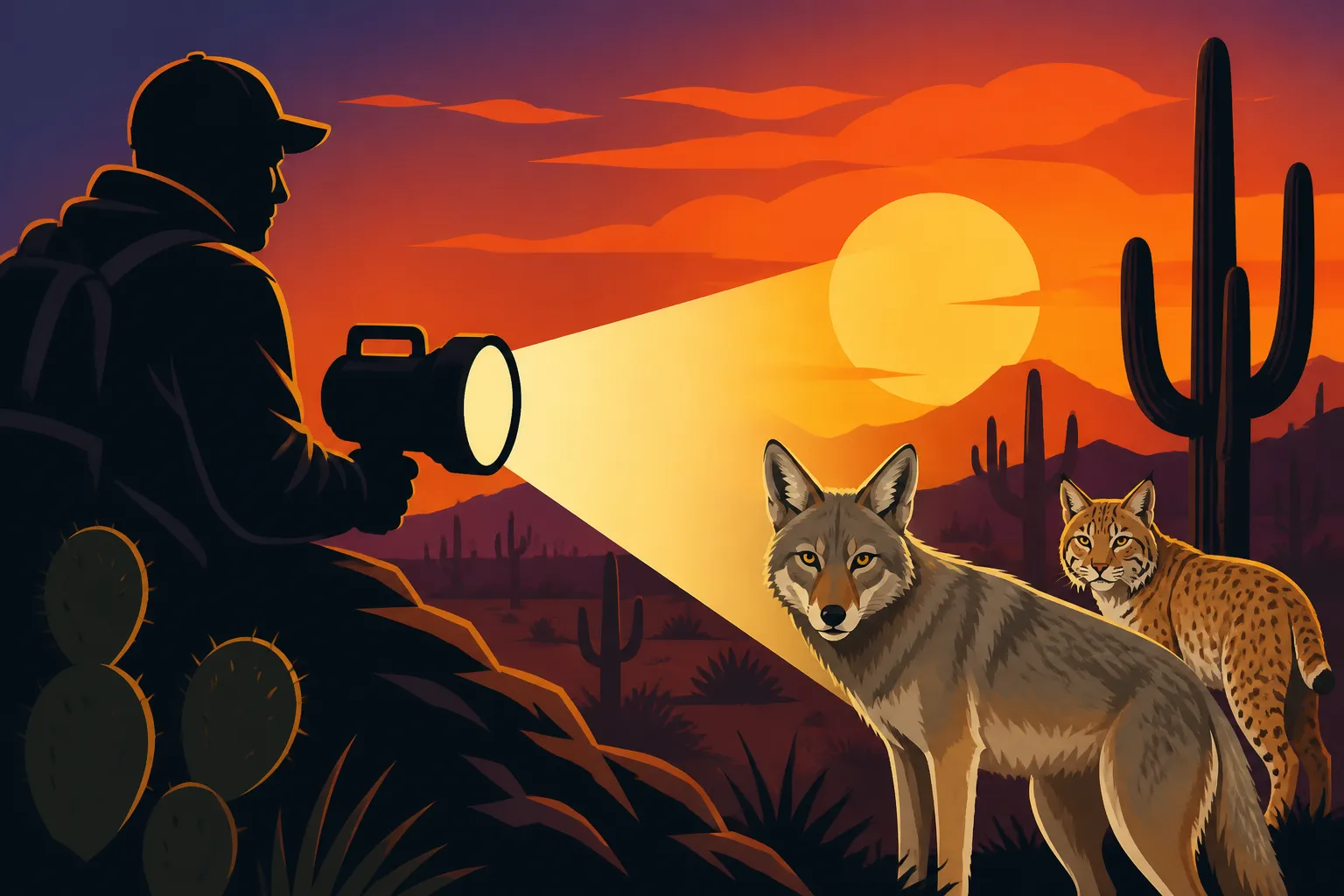
Now, let's get to the good news for night owls: Arizona does allow the use of artificial light for hunting certain species, specifically many predators and varmints. This exception is a vital tool for managing populations of animals that can be detrimental to livestock, other wildlife, or are simply abundant and provide excellent hunting opportunities after dark.
Identifying Legal Predator and Varmint Species
Arizona law generally permits the use of artificial light to hunt unprotected species and certain regulated furbearers and predators. The most common species hunted this way are coyotes and bobcats. You can hunt coyotes year-round in the desert, often finding them more active at night. For bobcats, there are specific seasons and Bobcat Season and Pelt Tag Rules that apply, so always check the current regulations booklet before heading out. Other species like foxes and raccoons also fall under these allowances, but again, always consult the most current regulations for Fox and Raccoon Season Dates and any specific unit restrictions.
It's critical to remember that this does not extend to big game. Even if you're calling a coyote, and a javelina or a deer walks in, you cannot use your light to take that big game animal. The moment you shine a light on a big game animal with the intent to locate or hunt it, you're in violation. Stay focused on your target species and be prepared to let other animals walk by untouched if you're using artificial light.
Permitted Equipment for Nighttime Hunting
When hunting predators and varmints at night, the range of permitted equipment for illumination is quite broad. You can use handheld spotlights, vehicle-mounted spotlights (though generally not to hunt from the vehicle, more on that in a moment), headlamps, and even high-tech solutions like night vision optics and thermal imaging devices. These technologies have revolutionized night hunting, allowing hunters to identify animals from great distances without disturbing them as much as traditional bright lights.
The key is that the light or device must be used in accordance with the regulations for the specific species you are targeting. For instance, while you can use a thermal imager to spot a coyote, you cannot use it to spot an elk during an archery-only season, even if you are not intending to shoot the elk. Technology, while helpful, doesn't override the core principles of fair chase for protected species. Many hunters combine red or green lights, which are less alarming to some animals, with electronic calls to draw in coyotes. If you're curious about different calling techniques, you might find valuable insights in this article on Electronic Calls for Predators and Varmint Hunting.
Crucial Time and Location Restrictions
While spotlighting for predators is allowed, it's not a free-for-all. There are important time and location restrictions you must adhere to. Generally, night hunting begins after sunset and ends before sunrise. Specific times are often outlined in the annual regulations. You also cannot discharge a firearm within a quarter-mile of an occupied dwelling without permission, and this rule is especially critical at night when sound carries further and light beams can be mistaken for nefarious activity.
Be mindful of roads and trails. While you might use a vehicle-mounted spotlight to locate predators from a road, you generally cannot shoot from a vehicle. Rules on Hunting From a Vehicle are very clear in Arizona: you must be off the road and out of the vehicle to legally take game. Always consider your backstop and the topography. A light beam at night can make judging distances and backgrounds extremely difficult, increasing the risk of an unsafe shot. Pay close attention to unit boundaries, as some areas may have specific closures or restrictions for night hunting, and you can generally identify these by understanding How Arizona Numbers Its Hunting Units and their unique designations.
Weapon Choices for Nighttime Predator Hunting
For predator and varmint hunting at night, a wide array of weapons is typically permitted. This includes rifles, shotguns, and handguns. The specific calibers and gauges will depend on personal preference and the species targeted, with many coyote hunters opting for fast, flat-shooting centerfire rifles like a .223 Remington or .204 Ruger. Shotguns are also popular, especially in thicker cover where shots might be closer.
Just as with any other hunt, ensure your weapon is in good working order and that you are proficient with it, especially given the added challenge of low light conditions. While scopes are certainly legal, consider illuminated reticles or night-specific optics to improve visibility and accuracy. And remember, all the standard firearms safety rules apply, perhaps even more so, when you are operating in the dark. Always identify your target and what lies beyond it before taking a shot, a task made considerably harder when relying solely on artificial light.
Accessing Land for Night Hunting Safely and Legally
One of the biggest hurdles for any hunter, especially those looking to hunt at night, is understanding land ownership and access. Arizona offers a mix of private, state, and federal lands, and the rules for each can vary significantly. Never assume you have permission, and always do your homework before setting foot on unfamiliar ground after dark.
The Absolute Necessity of Private Land Permission
This cannot be stressed enough: if you are hunting on private land, you must have explicit permission from the landowner. This isn't just a courtesy; it's the law. Trespassing to hunt, especially at night, is a serious offense that can carry severe penalties and reflects poorly on all hunters. Even if you've hunted on a property during the day, night hunting often requires a separate, explicit conversation with the landowner to ensure they are comfortable with your presence after dark.
It's always a good idea to get permission in writing if possible, detailing the dates, times, and specific areas you're allowed to hunt. This protects both you and the landowner. When asking for permission, be respectful, offer to share any game taken, and be prepared for a "no." Building a good relationship with landowners is paramount for maintaining access. Tools like GoHunt's mapping features can be invaluable here, allowing you to clearly identify private property boundaries and the names of landowners to contact. Knowing how to interpret these boundaries, as discussed in Reading a Land Ownership Layer Correctly, is key.
Navigating State Trust Land Regulations
Arizona State Trust Land comprises millions of acres across the state and offers significant hunting opportunities. However, it's not entirely "public" in the same way BLM or Forest Service land is. While a valid Arizona hunting license often acts as your general recreation permit for many activities on State Trust Land, there are nuances. For instance, sometimes a separate recreational permit is needed, especially if you're not actively hunting. Understanding Do You Need a Permit for Arizona State Trust Land? is vital.
Always check the Arizona State Land Department website for any specific rules or closures that might impact your night hunting plans. Some State Trust Land parcels are leased for grazing or other purposes, and while hunting may still be allowed, these lessees often have priority. Always be respectful of fences, gates, and any existing infrastructure. Again, mapping tools like those from GoHunt can show you precisely where State Trust Land boundaries lie, helping you avoid accidental trespass onto private property or restricted areas.
Understanding Federal Lands: BLM and National Forests
A vast amount of Arizona is managed by federal agencies, primarily the Bureau of Land Management (BLM) and the U.S. Forest Service. These lands are generally open to public hunting, including night hunting for predators, provided you adhere to state hunting regulations and any specific federal land rules. Unlike State Trust Land, you typically don't need an additional permit beyond your hunting license to access these areas for hunting.
However, don't assume there are no local restrictions. Individual National Forests (like the Prescott, Coconino, or Tonto National Forests) or BLM districts may have seasonal road closures, fire restrictions, or other local ordinances that could affect your night hunting plans. Always check with the local Forest Service or BLM office before you go. Additionally, be aware of "wilderness areas" within federal lands, where motorized vehicle access is strictly prohibited, and certain equipment may be restricted. Always use an up-to-date map and understand the unit boundaries you're hunting in. Scouting these areas, perhaps using satellite imagery as described in E-Scouting an Arizona Unit Before the Season, can help you identify potential access points and avoid problematic areas.
Ethical Practices for Responsible Night Hunting
Legal doesn't always equate to ethical. While Arizona's regulations allow for spotlighting predators, a responsible hunter goes beyond the minimum legal requirements to ensure their actions are respectful, safe, and maintain a positive image for the hunting community.
Beyond Legalities: Upholding Fair Chase Principles
The concept of fair chase is often debated, especially in the context of night hunting with modern technology. While legally permitted for predators, it's important to consider your personal ethical line. Is it fair to continually harass an animal with a spotlight, or should you wait for a clear, ethical shot opportunity? How does the use of thermal or night vision affect your personal definition of fair chase? These are questions every hunter must answer for themselves.
Think about the animal. While coyotes are often seen as pests, they are still living creatures that deserve a quick, humane harvest. Avoid taking low-percentage shots in the dark, where tracking a wounded animal becomes exponentially more difficult. A responsible hunter ensures that their methods, even when technologically advanced, still provide the animal with a reasonable chance of escape and that any animal shot is recovered quickly and efficiently. This commitment to ethical hunting ensures the activity remains respected by the wider public.
Prioritizing Safety for Yourself and Others
Night hunting introduces a whole new layer of safety considerations. Visibility is drastically reduced, making it harder to identify your target accurately, confirm your backstop, and even navigate the terrain. Always hunt with a partner, and make sure both of you are aware of each other's positions at all times. Communicate constantly. Carry reliable flashlights, headlamps, and a first-aid kit. A quality GPS device or a mapping app like GoHunt with downloaded offline maps is non-negotiable for navigating in the dark.
Before you even raise your weapon, be 100% certain of your target and what lies beyond it. Light can play tricks on the eyes, making a fence post look like an animal or obscuring houses or other structures in the distance. The sound of a gunshot travels farther at night, so be extra cautious about proximity to homes or other campsites. Consider carrying two-way radios if you’re hunting with a partner to ensure constant communication, as detailed in "Two-Way Radio Use Between Hunting Partners". Always treat every firearm as if it's loaded, keep the muzzle pointed in a safe direction, and keep your finger off the trigger until you're ready to shoot.
Being a Good Neighbor: Public Perception and Courtesy
The way you conduct yourself while night hunting directly impacts the public's perception of all hunters. A bright spotlight sweeping across a residential area or disturbing campers on public land can quickly generate complaints and lead to stricter regulations. Be discreet, respectful, and minimize any disturbance. If you encounter other people, whether they are campers, other hunters, or residents, dim your lights or turn them off until you've passed them.
Avoid shining lights into dwellings or across busy roads. Even if you're on public land, remember that others may be enjoying the night sky or camping nearby. Your actions can lead to negative encounters or, worse, calls to law enforcement. By being courteous and responsible, you help foster a positive image of hunting and demonstrate that you are a respectful user of the land. Our continued access to these lands and opportunities hinges on how we collectively conduct ourselves.
Arizona Night Hunting Scenarios
To help illustrate the rules, here's a quick reference table of common night hunting situations.
| Scenario | Legality for Big Game (Deer, Elk, Javelina) | Legality for Predators (Coyote, Bobcat, Fox) | Notes |
|---|---|---|---|
| Shining a spotlight on an animal from a vehicle, then getting out to shoot it. | Illegal | Legal (for predators only) | For big game, this is textbook spotlighting and illegal. For predators, you must be off the maintained road and out of the vehicle to shoot. Ensure no local ordinances prohibit shooting from or across roads. |
| Using thermal optics to locate a coyote at night. | Illegal | Legal | Thermal is an "artificial light" source in the broader sense for locating game. While specifically allowed for predators, it's illegal for big game. |
| Driving home, seeing a deer in your headlights, and shooting it. | Illegal | N/A (not a predator) | Even if accidental, using headlights with the intent to hunt big game is illegal. If it's truly accidental and you had no hunting intent, you still cannot take it. |
| Using a handheld flashlight to walk into your stand at night. | Legal (if no intent to locate game) | Legal | Perfectly fine if you are solely using the light for navigation. If you sweep the light to find a deer on the way to your stand, it becomes problematic. Focus the light on your path. |
| Using an electronic call with a red light at night to call in a fox. | N/A (not big game) | Legal | This is a common and legal method for predator hunting. Ensure Electronic Calls for Predators and Varmint Hunting are used according to any specific rules (e.g., volume, distance from dwellings). |
| Spotlighting on private property without permission. | Illegal (Trespassing) | Illegal (Trespassing) | Always requires explicit landowner permission, whether day or night, for any species. |
| Shooting a coyote at night near a road, while still in your truck. | Illegal | Illegal | You must be off the road and outside the vehicle to shoot any game animal in Arizona. This rule applies day or night. |
| Spotting an animal with a light, but then waiting until sunrise to shoot it. | Illegal | Legal (for predators only) | For big game, the act of using light to locate is itself illegal. For predators, if you simply locate with light and then hunt it legally after sunrise, it can be fine, but often, the intent is to take them under cover of darkness. |
Disclaimer
Please remember that hunting regulations can change. It is always your responsibility to consult the most current Arizona Game and Fish Department regulations booklet before engaging in any hunting activity. This guide is for informational purposes only and should not be considered legal advice.