Two-Way Radio Use Between Hunting Partners
You've been there, right? Deep in the Arizona backcountry, maybe chasing a screaming bull elk or tracking a Coues deer through the oak brush, and you need to communicate with your hunting partner. One minute you're whispering coordinates, the next, the radio's crackling silence or just static, and you're left wondering if they heard you, if they're safe, or if you're both headed in different directions. This guide is all about navigating that common frustration, helping you understand how to effectively use two-way radios with your hunting partners in Arizona's diverse and often challenging terrain, ensuring everyone stays connected and safe.
The Role of Two-Way Radios in Arizona's Diverse Hunting Grounds
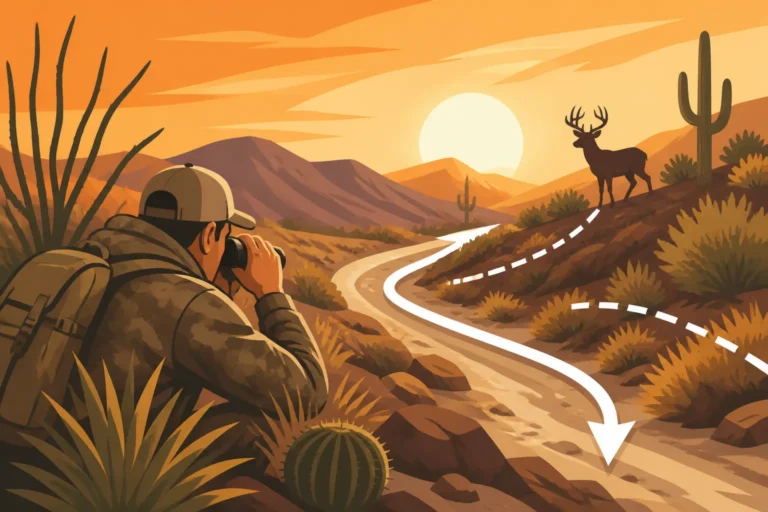
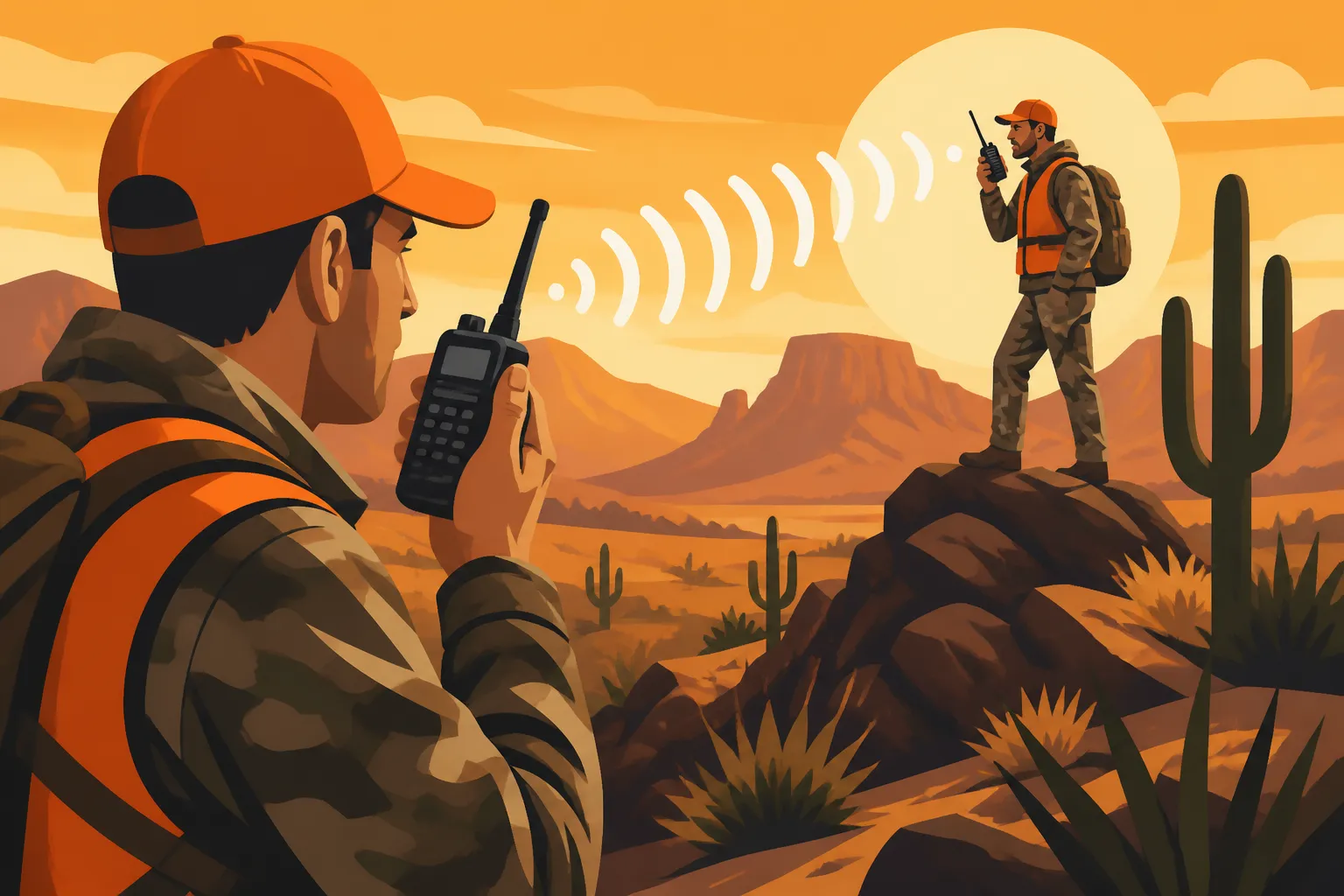
Hunting in Arizona often means covering vast, rugged, and sometimes remote landscapes. From the dense Ponderosa pine forests of the Mogollon Rim to the unforgiving, wide-open desert floor, reliable communication with your hunting partners isn't just a convenience – it's a critical safety measure and a huge advantage for coordinating your hunt. When you're glassing from separate ridges for a Coues buck or setting up a two-man calling scenario for elk, radios bridge the gap that even the best hand signals can't cover. They transform a solo venture into a coordinated effort, enhancing both safety and success.
Why Communication is Crucial in Arizona's Landscapes
Arizona's terrain is notoriously deceptive. A ridge that looks like a short walk on a map can turn into a monumental climb, and what seems like a simple valley can hide countless washes and ravines. Cell service is spotty at best in many prime hunting units, making traditional phones unreliable. This is where two-way radios shine. Imagine you're spread out on a hillside trying to push a javelina herd, or one partner is making a slow stalk on a bedded mule deer while the other watches for wind shifts. Effective radio communication allows for real-time updates, adjustments, and warnings, preventing accidental spooking of game, ensuring everyone knows where others are, and crucially, what their intentions are. It’s also invaluable when someone needs help, whether it’s a minor sprain or a more serious situation, providing a vital link to assistance. When you're out there, miles from the truck, proper communication can literally be a lifesaver. This is especially true on an early season hunt where Heat Management on an Arizona Early Season Hunt is critical, and knowing your partner's status is paramount.
Understanding Different Radio Types and Their Limitations
Not all two-way radios are created equal, and understanding the differences is key to making the right choice for your Arizona hunts.
- FRS (Family Radio Service) Radios: These are the most common and often the cheapest. They're typically low-power (0.5 to 2 watts) and don't require a license. While they're great for short-range communication in open terrain, their range drops significantly in heavy timber or mountainous country, often to less than a mile. They're ideal for small groups staying relatively close, perhaps for a quail hunt or tracking javelina in thick brush.
- GMRS (General Mobile Radio Service) Radios: GMRS radios offer higher power output (up to 50 watts, though most handhelds are 5-10 watts) and usually have better range than FRS radios. However, operating a GMRS radio requires an FCC license, which covers your entire family for ten years. This isn't a difficult or expensive license to get, and it’s a worthwhile investment for the increased reliability and range you gain, especially in the rugged country of Arizona. The improved range and clarity can be a game-changer when you're coordinating complex maneuvers, like a two-man calling setup for elk or a strategic drive.
- Satellite Messengers/Devices: While not traditional two-way radios, devices like the Garmin inReach or Zoleo offer satellite communication, allowing you to send text messages and SOS signals even when completely out of cell and radio range. These are absolute essentials for emergency situations and can be a fantastic backup for communication, particularly if you're hunting remote areas or your hunt involves extended periods away from civilization. They don't offer real-time voice communication, but their ability to reach emergency services or check in with family from anywhere is unparalleled. When planning a big trip, a tool like GoHunt can help you assess the remoteness of a unit and decide if a satellite messenger is a must-have for your Preparing Physically for a Desert Hunt and overall safety plan.
Range Expectations and Environmental Factors
Don't believe the "30-mile range" claims on radio packaging; those are usually under ideal, line-of-sight conditions (like mountaintop to mountaintop) that you rarely encounter in the field. In Arizona, the reality is far different.
- Mountains and Canyons: These are the biggest enemies of radio waves. Signal can be completely blocked by a single ridge line or significantly attenuated by canyon walls. In the Sky Islands, for instance, you might have great communication across a wide valley, but as soon as you drop into a wash or behind a prominent peak, the signal can vanish.
- Dense Timber: Areas like the Mogollon Rim with thick Ponderosa pine forests absorb and scatter radio waves, drastically reducing range. A radio that works fine in open desert might struggle to transmit more than a mile or two in dense timber.
- Weather: Heavy rain or snow can also slightly degrade radio performance, though this is usually less of a factor than terrain.
The best way to assess actual range is to test your radios in the specific terrain you plan to hunt. Head out before the season, perhaps when you're scouting an Arizona unit, and see how far you can communicate between different features. This real-world testing is far more valuable than any manufacturer's claim.
Maximizing Communication Effectiveness in the Field
Having radios is one thing; using them effectively is another. In the heat of the moment, or when adrenaline is pumping, clear and concise communication can make or break a hunt, or even prevent an accident. Mastering a few techniques can drastically improve your team's coordination and safety.
Channel Selection and Privacy Codes
Most FRS/GMRS radios offer multiple channels and "privacy codes" (often called sub-channels or CTCSS/DCS codes). While these codes don't actually make your conversation private, they filter out transmissions from other radios not using the same code, reducing chatter and interference.
- Choose an Unused Channel: When you arrive at your hunting unit, scan through the channels to find one that's clear. Many hunters just default to channel 1, and in popular units, you might find yourself sharing the airwaves with numerous other groups. Picking a less-used channel (e.g., 8, 12, or 15) can give you clearer communication.
- Use Privacy Codes: Once you've selected a clear channel, agree on a specific privacy code with your partners. This ensures that you only hear transmissions from radios set to your exact channel and code, cutting down on unwanted noise from other hunting parties or recreational users. Just remember, these codes only filter your receiver; others on the same main channel can still hear you if they're not using a code or are using a different one.
- Consistency is Key: Before heading out, always double-check that everyone's radios are on the same channel and privacy code. A simple mistake here can lead to frustrating communication breakdowns when you need it most. This kind of careful planning extends to all aspects of your trip, including ensuring all your gear is ready and accounted for. GoHunt's gear lists can be a helpful tool for this.
Battery Life Management in the Field
Nothing is more frustrating than a dead radio battery when you're miles from camp. Arizona's weather extremes, from scorching heat to surprising cold snaps, can impact battery performance.
- Start with Fully Charged Batteries: This might seem obvious, but always begin each day with a full charge. Consider carrying spare batteries or a portable power bank, especially for multi-day hunts.
- Conserve Power: Resist the urge to transmit unnecessary chatter. The longer you talk, the faster your battery drains. Use short, clear messages. Some radios have a "power save" feature; enable it.
- Protect from Extremes: Extreme cold can reduce battery life significantly, while extreme heat can also impact performance and potentially damage batteries. In cold weather, keep radios in an inner pocket close to your body heat. In the desert, keep them out of direct sunlight.
- Monitor Battery Indicators: Pay attention to your radio's battery indicator. If it's getting low, communicate that to your partners and plan accordingly.
Strategic Radio Use and Backup Methods
Radios are a tool, and like any tool, they're most effective when used wisely.
- When to Talk, When to Listen: Establish a protocol. For example, when one hunter is actively stalking or calling, the other might remain silent unless absolutely necessary. A simple "standby" or "over" can signal you're ready to receive or transmit.
- Clear and Concise Language: Avoid slang or overly complex sentences. Use standard hunting terms. "Deer headed south, 300 yards, moving fast" is far better than "He's going over there, hurry up!" Practice using clear communication before the hunt.
- Establishing Check-in Times: For safety, agree on specific times to check in, especially if you plan to split up for extended periods. "Check in at 10 AM and 2 PM." If a check-in is missed, you have a pre-arranged plan for concern and action.
- Hand Signals and Visual Cues: Radios are great, but never forget the basics. Hand signals, whistles, or even pre-arranged flag signals can be invaluable backup communication methods if a radio fails or you need silent communication during a critical moment, such as when one hunter is performing Two-Hunter Calling Setups That Actually Work for elk. Visual cues are especially helpful when you're trying to communicate across a wide canyon, where Reading Wind on a Sky Island Stalk is crucial, and you might not want to speak.
Choosing the Right Radio System for Your Arizona Hunt
Selecting the best two-way radio for your Arizona hunting adventures involves balancing features, durability, and cost with the specific demands of the environment and your hunting style. It's not about the flashiest model, but the one that performs reliably when you need it most.
Key Features to Look For in Hunting Radios
When you're out there, miles from paved roads, your gear needs to be tough and dependable. Here's what to consider:
- Durability and Waterproofing: Arizona's terrain is unforgiving. Radios will get dropped, bumped, and exposed to dust, rain, and possibly even snow. Look for models with a rugged casing (often MIL-STD rated) and at least an IPX4 waterproof rating to withstand splashes, or even higher for full submersion protection if you anticipate river crossings or heavy monsoon rains. Brands like Motorola Talkabout and Midland often offer robust, water-resistant options suitable for outdoor use.
- Power Output: This directly relates to range. For GMRS radios, a higher wattage (5-10 watts for handhelds) will give you better reach, especially in broken terrain. FRS radios are capped at lower power, so manage your expectations accordingly. For serious backcountry hunting, investing in GMRS with a license is usually the smarter move for enhanced performance.
- Battery Life: As discussed, prolonged battery life is crucial. Look for radios that offer 10+ hours of continuous use or come with high-capacity rechargeable battery packs. The ability to swap in standard AA or AAA batteries in an emergency is a huge bonus.
- Privacy Features (CTCSS/DCS): While not truly private, these codes are essential for filtering out other users' chatter and ensuring you hear only your hunting partners. Make sure your chosen radio has a good selection of these codes.
- VOX (Voice Activated Transmission): This hands-free feature can be useful when you need to keep your hands on your rifle or binoculars. However, it can also be triggered by wind or heavy breathing, so test it thoroughly and understand its limitations before relying on it in critical situations.
- NOAA Weather Alerts: Many modern FRS/GMRS radios include NOAA weather alerts, which can be invaluable for staying informed about sudden thunderstorms, flash flood warnings, or extreme temperature drops in the backcountry. Knowing if a monsoon is rolling in can significantly impact your safety and hunting plans. GoHunt's resources often highlight weather patterns relevant to specific units, so combining that knowledge with real-time alerts is a powerful duo.
Integrating Radios with Other Hunting Tools
Modern hunting is increasingly reliant on technology, and your radio system can be part of a larger, integrated approach to safety and navigation.
- GPS and Mapping Apps: While your radio keeps you in touch, your GPS device or smartphone mapping app (like Gaia GPS or onX Hunt) keeps you found. Use your radio to relay coordinates or landmarks found on your map to your partner. For instance, "I'm at the saddle shown on the map at Waypoint 17, see anything east?" This is critical for E-Scouting an Arizona Unit Before the Season and then translating those digital findings to real-world communication.
- Headsets and Earpieces: For quiet communication, especially during a stalk or when calling, a wired or wireless headset with a push-to-talk (PTT) button is a game-changer. It allows you to hear clearly without broadcasting your conversation to nearby game, and the PTT button can be discreetly clipped to your collar or pack strap.
- External Antennas: Some higher-end GMRS radios allow for external antennas. While not practical for constant carry, a longer, more efficient antenna can significantly boost your range from a static glassing position or a camp.
- GoHunt Planning Tools: Tools like GoHunt's mapping and planning features can help you anticipate potential communication dead zones by visualizing terrain features. You can plan your movements with communication in mind, trying to maintain line-of-sight whenever possible, or marking areas where you expect to lose contact. This proactive approach saves frustration in the field.
Cost vs. Benefit Analysis
The price of two-way radios can vary widely, from under $50 for a pair of basic FRS radios to several hundred dollars for advanced GMRS units or satellite messengers.
- Basic FRS: Inexpensive, no license, good for short-range and very open terrain. Limited in Arizona's mountains.
- Mid-Range GMRS Handhelds: Moderate cost (often $75-$150 per radio), requires a license, but offers significantly better range and features. This is often the sweet spot for most serious Arizona hunters.
- High-End GMRS/Commercial Radios: More expensive ($200+ per radio), top-tier performance, often more robust and with advanced features. For dedicated hunters who frequently venture into remote, challenging areas, this investment can be well worth it.
- Satellite Messengers: An additional investment ($200-$500 for the device, plus subscription fees), but provides unparalleled safety and global communication capability where radios and cell phones fail. Consider this a crucial safety backup, not a primary communication tool for coordination, unless you're solo.
Your budget and your specific hunting units should guide your decision. For casual hunts in accessible areas, FRS might suffice. For serious backcountry excursions, GMRS is almost a necessity, and a satellite messenger is a strong recommendation for emergency preparedness.
Best Practices and Etiquette for Radio Use
Using two-way radios responsibly isn't just about functionality; it's about respecting the land, wildlife, and other hunters. Proper etiquette ensures clear communication for your group and minimizes disturbance to the natural environment and others who share it.
Clear and Concise Communication
When you're trying to coordinate a critical move, or simply letting your partner know you've spotted some Tracking Javelina Through Thick Cover, every word counts.
- Identify Yourself: Start your transmission by stating who you are and who you're calling. For example, "John to Mike, copy?" This avoids confusion, especially if multiple groups are inadvertently on the same channel or if there's static.
- Speak Clearly: Enunciate your words and speak at a moderate pace. Don't shout into the microphone; it often distorts your voice.
- Use "Over" and "Out": "Over" means you've finished speaking and are awaiting a reply. "Out" means you're finished with the conversation and are signing off. This old-school radio protocol helps maintain clarity and ensures that everyone knows when it's their turn to speak or when the conversation has concluded.
- Phonetic Alphabet for Clarity: In situations with poor reception, using the phonetic alphabet (Alpha, Bravo, Charlie, etc.) for crucial letters can be invaluable. "We're at Grid R-O-M-E-O-17."
- Give Specifics: Instead of "I see deer," try "I see three deer, two does and one small buck, heading northwest towards the big juniper tree on the far ridge." The more detail, the better. This is especially true when Glassing From a Vehicle Along a Forest Road and trying to relay what you've seen.
Avoiding Interference with Other Hunters
Just as you appreciate peace and quiet in the woods, so do other hunters. Radios can carry surprisingly far, especially on open ridge lines.
- Keep Conversations Brief: The wilderness isn't a place for casual chatter on the radio. Keep your communications to essential information only.
- Lower Volume: Use an earpiece if possible, or keep your radio volume low enough that only your group can hear it.
- Be Mindful of Open Channels: If you hear other hunters on your chosen channel, try to move to another one or keep your transmissions to an absolute minimum. Acknowledge that you hear them if necessary, but don't engage in conversation or try to interfere. Respect their space.
- No Music or Loud Noises: Radios are for communication, not entertainment. Avoid playing music or making loud noises over the channel.
Emergency Protocols and What to Do If a Partner Goes Silent
This is where your radios become a critical safety tool. Planning for emergencies before they happen is non-negotiable.
- Establish a "No Contact" Plan: What do you do if your partner doesn't answer a scheduled check-in or goes silent for too long? A common protocol is to try multiple channels, then return to a pre-arranged meet-up point, or begin a search pattern.
- Distress Signal: Agree on a clear distress signal. This could be a specific phrase like "Emergency, need assistance," or repeatedly saying your call sign without waiting for a reply.
- Basic First Aid and Wilderness Skills: Radios help you call for help, but hands-on skills are vital. Ensure at least one person in your group has basic Wilderness First Aid on a Guided Hunt training.
- Share Your Plan: Always leave a detailed hunt plan with someone responsible back home. Include your unit, planned routes, expected return time, and who to call if you don't check in.
- Satellite Messengers for True Emergencies: As mentioned earlier, while radios are great for group coordination, a satellite messenger (like a Garmin inReach) is your ultimate lifeline for contacting emergency services when out of all other range. Your radio can get you to your partner, but the satellite device can get you rescued. This is a crucial distinction and a reason why many experienced Arizona hunters carry both.
Respecting Wildlife and Other Hunters
Ethical hunting extends to how we use all our tools, including radios.
- Minimize Disturbance: Avoid unnecessary noise that could disturb wildlife or other hunters. The goal is to blend in, not to broadcast your presence.
- No Harassment of Wildlife: Never use radios to coordinate cornering, chasing, or otherwise harassing wildlife. This is illegal and unethical.
- Courtesy to Others: If you encounter other hunters in the field, a friendly, quiet wave is often more appropriate than a radio call across the canyon. Maintain the spirit of quiet solitude that draws many of us to the wilderness.
By following these best practices, you ensure your radios enhance your Arizona hunting experience rather than detract from it. They become an invisible tether, keeping you and your partners connected, safe, and efficient in the vast, beautiful, and sometimes challenging Arizona backcountry.
Here's a quick comparison of common radio types:
| Feature | FRS Radios (e.g., Motorola Talkabout T402) | GMRS Radios (e.g., Midland GXT1000VP4) | Satellite Messenger (e.g., Garmin inReach Mini 2) |
|---|---|---|---|
| Purpose | Casual comms, short range | Enhanced comms, moderate range | Emergency SOS, global messaging, tracking |
| Power Output | 0.5-2 Watts | 1-50 Watts (handhelds typically 5-10W) | N/A (Satellite transmission) |
| License Req. | No license required | FCC license required (one per family) | Subscription plan required |
| Range (Typical) | 0.5 – 2 miles (line-of-sight: up to 10 mi) | 2 – 8 miles (line-of-sight: up to 35 mi) | Global (where satellite coverage exists) |
| Terrain Impact | Heavily impacted by terrain/obstructions | Moderately impacted by terrain/obstructions | Minimal impact, unless physically blocked |
| Communication | Voice | Voice | Text messaging (pre-set, custom, SOS) |
| Cost (Device) | Low ($30-80/pair) | Moderate ($75-150/radio) | High ($200-500) |
| Pros | Cheap, no license, easy to use | Better range, more features, durable | Global coverage, SOS, tracking, long battery |
| Cons | Limited range, often crowded channels | Requires license, slightly more costly | No voice comms, subscription fees, slower comms |
| Best For | Small group, close proximity, open areas | Serious hunting, larger groups, varied terrain | Remote areas, solo hunts, critical safety backup |
Disclaimer
Please remember that hunting regulations and best practices can change. Always consult the most current Arizona Game and Fish Department regulations before heading into the field. This information is intended for educational purposes and should not be considered legal advice.