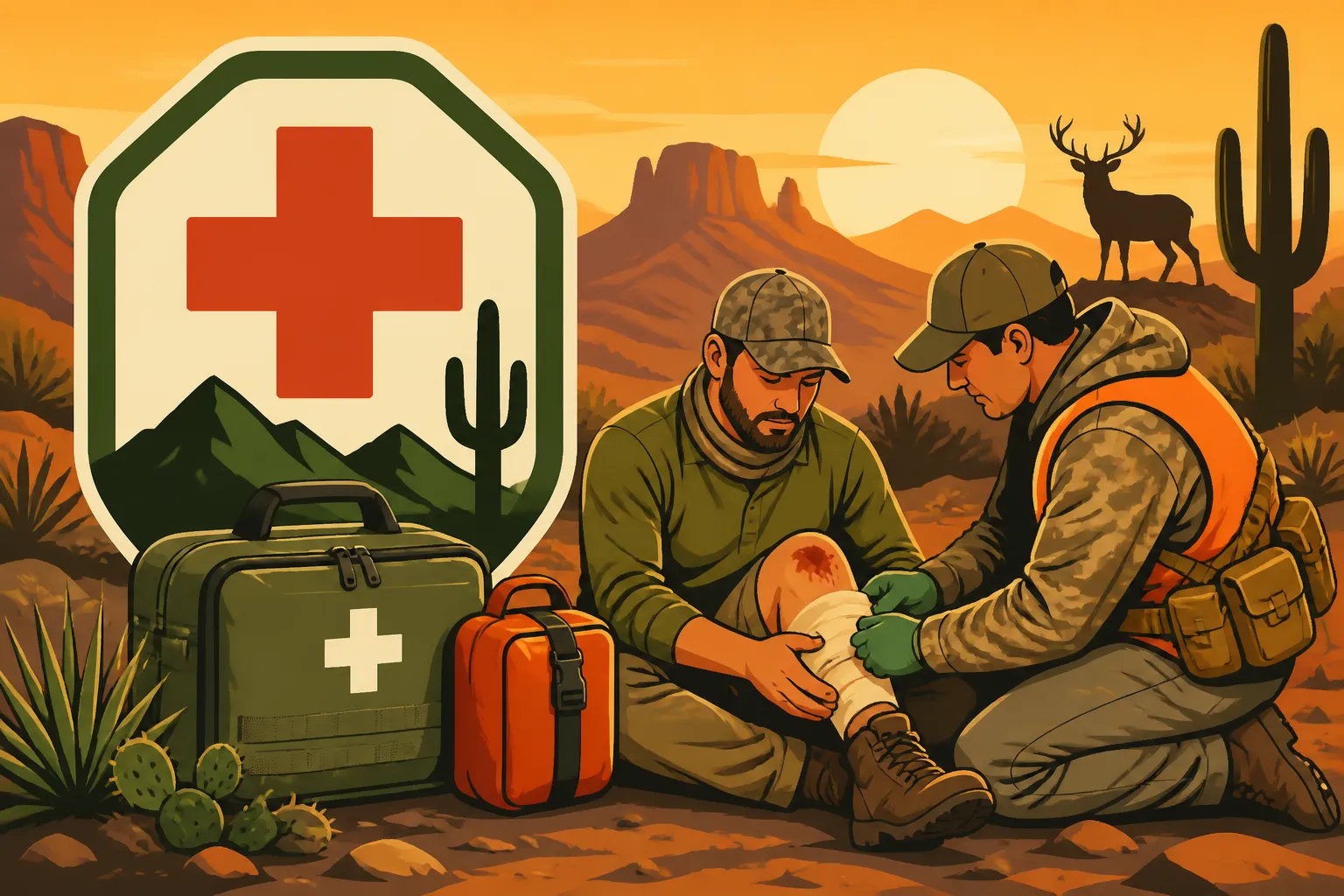
Wilderness First Aid on a Guided Hunt
Embarking on a guided hunt in Arizona's vast and often unforgiving wilderness is an incredible adventure, but it also comes with a serious, often overlooked reality: the potential for injury or medical emergency far from professional help. When you're miles deep in the backcountry, whether chasing elk on the Mogollon Rim or glassing for Coues deer in the Sky Islands, a simple twisted ankle or a more serious accident can quickly turn a dream hunt into a nightmare. This guide will help you understand the critical role of wilderness first aid on a guided hunt, clarifying what to expect from your outfitter and, crucially, what personal responsibility you carry to ensure your safety and the safety of your hunting partners.
Why Wilderness First Aid Matters on an Arizona Guided Hunt
Hunting in Arizona isn't like a walk in the park. We're talking about rugged, often steep terrain, extreme temperature swings, and remote locations where cell service is a distant memory. The very elements that make these hunts so thrilling—the solitude, the challenge, the untamed beauty—are also the reasons why being prepared for a medical emergency is non-negotiable.
The Realities of Remote Hunting Environments
Imagine you're deep in the ponderosa pines of the Apache-Sitgreaves National Forest, miles from the nearest paved road. You've been stalking an elk all morning, your heart pounding. Suddenly, you misstep on a loose rock, and your ankle rolls violently. The pain is instant and debilitating. In town, this is an inconvenience; a quick trip to urgent care. Out here, it's a major problem. Your guide, while experienced in the woods, isn't a paramedic. Evacuation could take hours, or even a full day, depending on the severity and location. The remoteness magnifies every injury, every illness. Dehydration can turn into a serious medical event far quicker when you're exerting yourself in dry air, and a simple cut can become infected without proper care. Heat Management on an Arizona Early Season Hunt is a critical factor, as is being ready for unexpected weather shifts.
Time is Critical: The Golden Hour and Beyond
The concept of the "golden hour" in trauma care, where rapid medical intervention significantly improves outcomes, is drastically extended in the backcountry. A helicopter might be an option in some scenarios, but it's not a given, nor is it immediate. Search and rescue operations can take hours to mobilize and even longer to reach a remote location. This means the immediate care given in the field by your guide, or even by you or a hunting partner, is paramount. Knowing how to stabilize an injury, manage bleeding, or address shock can literally be the difference between a successful evacuation and a dire outcome. It’s not about being a doctor; it’s about having the fundamental skills to bridge the gap until professional medical help can arrive, whenever that might be.
Unique Hazards of Arizona's Wilderness
Arizona presents its own specific set of challenges. Beyond the common sprains, cuts, and scrapes, hunters might encounter venomous critters like rattlesnakes, scorpions, and Gila monsters. Snake Awareness on an August Archery Hunt is something every hunter needs to internalize. The desert sun can be brutal, leading to heat stroke or severe sunburn, while higher elevations can bring unexpected cold and even hypothermia. The thorny vegetation, from prickly pear to catclaw acacia, can inflict deep punctures and scratches that are prone to infection if not treated promptly. Being aware of these specific hazards helps tailor your first aid preparedness to the environment you'll be hunting in.
A Guide's Responsibility Versus Your Own Preparedness
When you book a guided hunt, there's an understandable expectation that your guide will handle most things, including safety. And while a good guide will be prepared, it's crucial to understand the limits of their role and the non-negotiable importance of your own personal readiness.
What to Expect from Your Outfitter
A reputable Arizona outfitter, especially those you might find listed on platforms like BookYourHunt, or through extensive research on sites like GoHunt, will undoubtedly prioritize safety. They should carry a basic and often intermediate first aid kit, tailored to the type of hunt and terrain. This kit will likely include bandages, antiseptic wipes, pain relievers, blister treatment, and potentially some splinting materials. Many guides will also have some level of first aid certification, such as a Wilderness First Aid (WFA) or even a Wilderness First Responder (WFR) certification, especially if they operate in truly remote areas or offer multi-day pack-in trips. During your pre-hunt conversations, it's perfectly reasonable to ask about their first aid training and what medical supplies they carry. They should also have a clear emergency communication plan, whether it's a satellite phone or an inReach device, for contacting help. Questions to Ask an Arizona Outfitter should definitely include inquiries about their safety protocols.
Your Personal Responsibility as a Hunter
While your guide is prepared, their kit and training are for the group. What if they are the one injured? What if you get separated? This is where your personal preparedness becomes critical. You are ultimately responsible for your own safety and well-being. This isn't just about having a small personal first aid kit; it's also about having some basic knowledge yourself. Knowing how to apply pressure to a wound, identify symptoms of heat exhaustion, or even just properly dress a blister can make a significant difference. Consider taking a basic first aid course, or even a wilderness-specific course if you plan to do a lot of backcountry hunting. Think about the scenarios: if you're out on a long stalk and you're the first one to spot a rattlesnake, your immediate reaction can prevent a bite. Your guide might be a hundred yards behind you. Personal responsibility means carrying enough water, knowing your physical limits, and being able to self-sustain for a period if necessary. Water You Must Carry on a Day Hunt is a topic that can't be stressed enough in Arizona.
The Importance of Communication and Disclosure
Before the hunt, you should openly communicate any pre-existing medical conditions, allergies, or medications you take to your guide. This isn't just polite; it's potentially life-saving information. Your guide needs to know if you're diabetic, have a severe allergy to bee stings, or have a heart condition. This allows them to plan for potential issues and ensures they have the right information if they need to relay it to emergency services. Likewise, if you develop any symptoms during the hunt, no matter how minor they seem, communicate them immediately. Don't try to "tough it out." Early intervention for issues like dehydration or altitude sickness can prevent them from escalating into serious emergencies.
Essential First Aid Kit Items for Arizona's Backcountry
When packing for your guided hunt, your personal first aid kit shouldn't be an afterthought. This isn't about duplicating your guide's efforts, but augmenting them and ensuring you have immediate access to essentials for your specific needs.
Personal Medications and Allergy Kit
This is arguably the most crucial component of your personal kit. Pack a sufficient supply of any prescription medications you take, along with a few extra days' worth in case of delays. Ensure they are protected from moisture and impact. If you have severe allergies (e.g., to insect stings, certain foods), carry an EpiPen or other prescribed auto-injector, and make sure your guide knows where it is and how to administer it. Over-the-counter medications like anti-inflammatories (ibuprofen), pain relievers (acetaminophen), antacids, and anti-diarrhea medication are also vital. The stress of travel, changes in diet, and physical exertion can all trigger minor ailments that, while not life-threatening, can certainly ruin a hunt if not managed.
Wound Care and Blister Prevention
The Arizona wilderness is full of sharp things: thorns, rocks, and rough branches. Cuts and scrapes are common. Your kit should include:
- Various sized bandages: Adhesive strips, gauze pads, and medical tape.
- Antiseptic wipes or a small bottle of hand sanitizer: Crucial for cleaning wounds in a sterile-challenged environment.
- Small tube of antibiotic ointment: To prevent infection.
- Moleskin or blister pads: Hiking for miles in new boots or uneven terrain almost guarantees a blister at some point. Addressing these early prevents them from becoming debilitating.
- Sterile needles/tweezers: For splinters or thorns, which are abundant.
- Duct tape: An all-purpose solution for everything from reinforcing bandages to fixing gear.
Injury Stabilization and Emergency Signaling
While your guide will likely have more robust splinting materials, having a few personal items for immediate stabilization can be helpful. A small roll of elastic bandage can support a sprained joint, and a triangular bandage has multiple uses, including a sling or pressure dressing. Beyond immediate care, consider how you would signal for help if separated or if your guide becomes incapacitated. A small whistle, a signal mirror, or a personal locator beacon (PLB) or satellite messenger (like an InReach) are invaluable. While your guide should have one, a backup on your person is a wise precaution. This is especially true if you plan to cover significant ground, or if you're on a hunt where you might be Hunting Solo Against Hiring a Guide.
| Item Category | Essential Items | Why It's Important in Arizona |
|---|---|---|
| Personal Meds | Prescriptions, EpiPen, antihistamines, pain relievers, anti-diarrhea | Crucial for existing conditions; heat, dust, and exertion can trigger issues; rapid relief from pain/discomfort. |
| Wound Care | Bandages (various sizes), gauze, medical tape, antiseptic wipes, antibiotic ointment, moleskin | Protection against thorns, sharp rocks, and potential infection in a dirty environment. |
| Injury Support | Elastic bandage, triangular bandage, small splinting material (e.g., tongue depressors) | Immediate stabilization for sprains, breaks, or deep cuts before professional help. |
| Protection & Prevention | Sunscreen, lip balm with SPF, insect repellent, water purification tablets | Intense sun, diverse insect populations, and critical need for clean drinking water in arid regions. |
| Emergency Signaling | Whistle, signal mirror, personal locator beacon/satellite messenger | Essential for contacting help if separated or guide is incapacitated, given lack of cell service. |
| Basic Tools | Tweezers, small scissors, small knife, disposable gloves | Handling splinters, cutting tape/gauze, maintaining hygiene during care. |
Handling Common Injuries and Emergencies in the Field
Knowing what to put in your kit is one thing, but understanding how to use it in common backcountry scenarios is another entirely. This isn't a comprehensive medical course, but a guide to essential first reactions.
Dealing with Sprains, Fractures, and Major Trauma
A fall on uneven ground, a slip crossing a wash, or a stumble on a steep ridge can lead to sprains or even fractures. The immediate response follows the "RICE" protocol (Rest, Ice, Compression, Elevation) for sprains, but "ice" is often hard to come by in the Arizona desert. The priority is to immobilize the injured limb to prevent further damage. Your guide will likely have a more robust splinting solution, but a makeshift splint using branches and tape, or even a folded sleeping pad, can work in a pinch. If it's a suspected fracture, avoid moving the person unless absolutely necessary. For major trauma, like a deep cut or puncture wound, the immediate priority is to control bleeding with direct pressure and, if severe, a tourniquet (only as a last resort for life-threatening hemorrhage). Always wear gloves if possible to protect yourself from blood-borne pathogens. Your guide should be assessing the situation and initiating their emergency communication plan, whether through a satellite device or sending someone out for help.
Managing Environmental Hazards: Heat and Cold
Arizona can swing from extreme heat to surprising cold, even on the same day in higher elevations like the Mogollon Rim.
- Heat Exhaustion/Heat Stroke: The desert sun is unforgiving. Symptoms include heavy sweating, nausea, dizziness, headache, and confusion. Get the person into shade immediately, loosen clothing, and encourage sips of water with electrolytes. If confusion or unconsciousness sets in (heat stroke), it's a dire emergency. Cool the body rapidly with any available water, fan them, and seek immediate medical evacuation. Preparing Physically for a Desert Hunt means understanding your body's limits in the heat.
- Hypothermia: While less common in typical Arizona big game seasons, cold rain, wind, or unexpected snow at higher altitudes can lead to hypothermia, where the body loses heat faster than it can produce it. Symptoms include shivering, confusion, slurred speech, and loss of coordination. Get the person out of the elements, remove wet clothing, and replace with dry layers. Provide warm, sugary drinks. Share body heat if necessary. Your guide will be invaluable here, having emergency blankets and warm drinks ready.
Snakebites and Other Animal Encounters
While rare, a snakebite is a very real concern in Arizona. If bitten by a rattlesnake, the most important thing is to remain calm and keep the bitten limb still and below the heart level. Do NOT try to cut the wound, suck out venom, or apply a tourniquet. These actions are often more harmful than helpful. Get away from the snake and alert your guide immediately. Your guide's priority will be to stabilize you and arrange for rapid evacuation to a medical facility that has anti-venom. Tracking Arizona Javelina Through Prickly Pear also means being mindful of what might be lurking in that thick cover. For other animal encounters, like a run-in with a javelina or even a bear, basic first aid might involve treating punctures or lacerations. Prevention is key: make noise, be aware of your surroundings, and respect wildlife.
Ultimately, a guided hunt is a partnership. Your guide brings expertise in the land and the game, and a certain level of safety preparedness. You, as the hunter, bring your physical ability, your awareness, and your own dedication to personal readiness. By understanding these roles and taking personal responsibility for wilderness first aid, you ensure that your Arizona hunting adventure remains a memory of a lifetime, for all the right reasons. How Outfitters Plan Emergency Evacuations is a crucial topic to review with any prospective guide.
Disclaimer
This article is for general informational purposes only and does not constitute professional advice. Laws, prices and regulations vary by location and change over time. Consult a qualified professional for guidance on your specific situation.