Hunting Solo Against Hiring a Guide
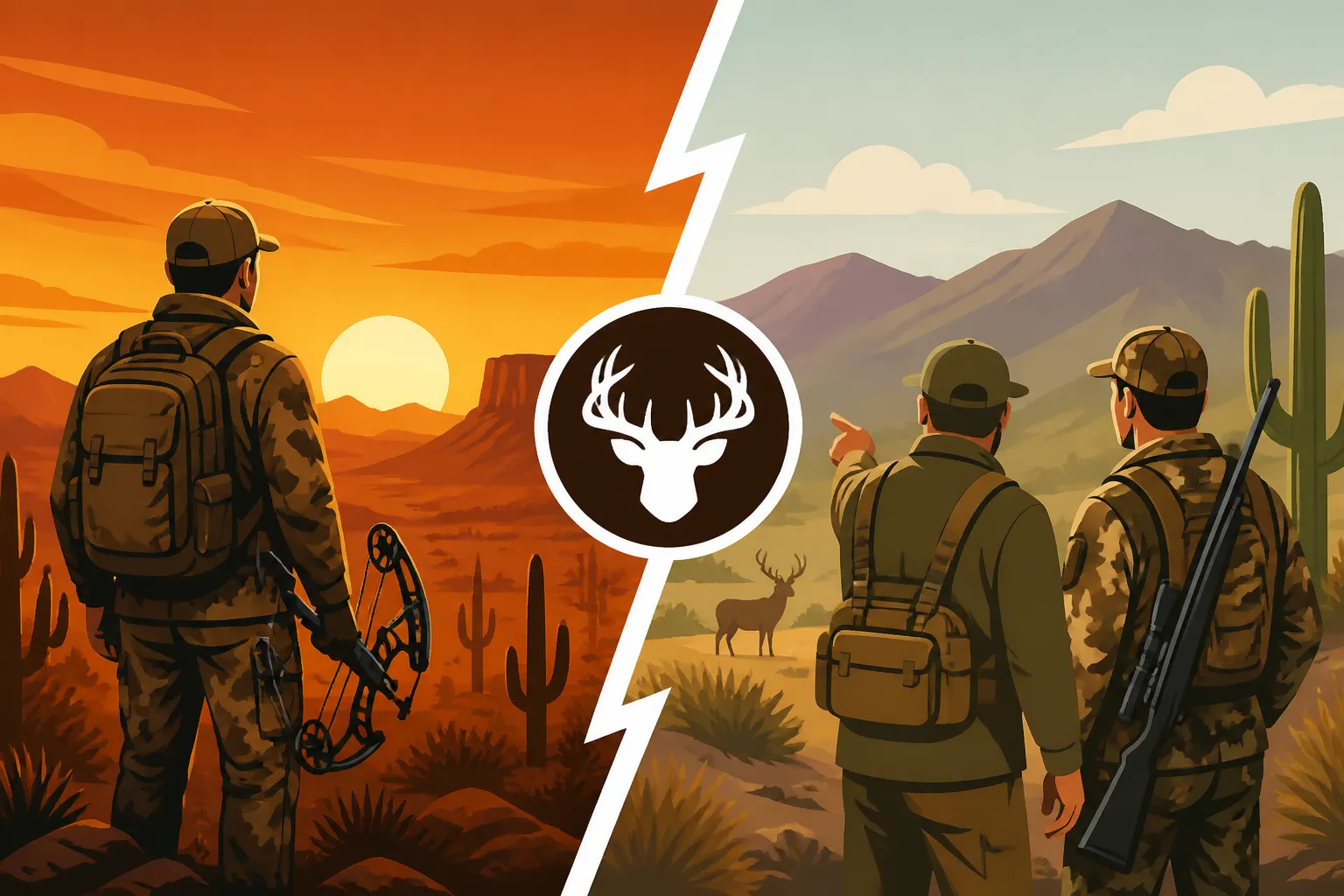
The crisp Arizona desert air, the vast expanse of ponderosa pines, or the rugged isolation of a Sky Island peak – these are the dreams that pull us to hunt. But before you even consider packing your truck, a fundamental question often arises: do you tackle this adventure solo, relying on your own grit and research, or do you enlist the help of a professional guide? It's a deeply personal choice that often feels like a fork in the trail, and this guide is here to help you navigate the terrain of that decision, weighing the joys and challenges of hunting Arizona on your own against the benefits of an outfitted experience.
The Allure and Challenges of Solo Hunting in Arizona
There's something profoundly appealing about a do-it-yourself (DIY) hunt in Arizona. It’s the ultimate test of your skills, your preparation, and your endurance. You scout the maps, pick the unit, drive the miles, set up your own camp, and make all the decisions. This independence, while incredibly rewarding, comes with its own set of practical realities and potential hurdles.
The Deep Rewards of Self-Reliance
For many of us, the heart of hunting lies in self-sufficiency. The moments of quiet solitude, the meticulous planning, and the hard-won success on your own terms create a deeply personal connection to the land and the experience. Imagine pouring over satellite imagery for months, then finally putting boots on the ground in a remote canyon, navigating by instinct and compass. When you finally locate that elusive Coues buck or cut fresh elk sign, the satisfaction is immense because every step of the journey, every decision, was yours.
It's a continuous learning curve, pushing you to refine your skills in navigation, game behavior, and even self-rescue. You learn how to read subtle changes in the wind on a desert slope, how to find hidden water sources, and how to stay comfortable in extreme temperatures. There’s no guide to lean on for unit knowledge; you become the expert, soaking up every detail of the terrain. This mastery of your own hunt builds confidence that extends far beyond the field, shaping you as a hunter and an individual. It’s a primal challenge that many pursue precisely for its inherent difficulty.
Practical Considerations and Risks
However, the romantic notion of solo hunting quickly meets the harsh realities of Arizona’s vast and often unforgiving landscape. Logistics can be a nightmare. Are you bringing enough water for yourself and your camp, especially during early archery seasons when temperatures can easily soar past triple digits? Remember, Water You Must Carry on a Day Hunt isn't just a suggestion, it's a survival imperative. Planning meals, packing all your gear, setting up camp, and dealing with potential vehicle breakdowns all fall squarely on your shoulders.
Physical demands are another huge factor. Hauling out an entire elk quartered alone from a remote canyon deep in the Mogollon Rim is a monumental task. Even a Coues deer, small as they are, can be a significant pack-out over rocky, steep terrain. You need to consider Physical Conditioning for a Sky Island Hunt or any rugged Arizona terrain. Beyond the physical, there are significant safety concerns. A twisted ankle miles from the nearest road, an unexpected encounter with a rattlesnake, or getting genuinely lost in unfamiliar country can quickly turn a dream hunt into a perilous situation. Without a partner or a guide, immediate assistance is often hours away, at best. Many hunters have found themselves in situations where Heat Management on an Arizona Early Season Hunt became a critical survival skill rather than just a comfort tip. Solo hunting requires a heightened sense of awareness, meticulous preparation, and a strong understanding of self-rescue techniques.
When an Arizona Guided Hunt Makes Sense
While solo hunting offers unparalleled personal satisfaction, there are many scenarios where hiring a guide in Arizona isn't just a luxury, but a strategic advantage, and sometimes even a necessity. For some hunters, it's about maximizing a once-in-a-lifetime opportunity; for others, it's about accessing terrain and knowledge they simply couldn't on their own.
Leveraging Local Expertise and Resources
One of the primary benefits of a guided hunt is the immediate access to years, often decades, of local knowledge. Guides spend countless hours year-round in their units. They know the elk’s migration patterns, where the biggest Coues bucks prefer to bed, and the subtle nuances of terrain that hold game. They’ve already done the hard work of scouting, allowing you to hit the ground running on your hunt. Arizona Coues Guides Sell Glassing, Not Ground, a testament to how crucial their eyes and experience are for finding these elusive deer. They know exactly which glassing knobs to sit on and when, saving you days of aimless wandering.
Beyond knowledge, guides provide the infrastructure. They often have established camps, specialized equipment like spotting scopes and high-quality binoculars, and vehicles capable of navigating rough backcountry roads. They handle the cooking, the camp chores, and the difficult task of game recovery. If you harvest a bull elk deep in a canyon, a good outfitter will have the horsepower—literally, sometimes with horses or mules—to get it out. This allows you to focus 100% on the hunt itself, not the logistics surrounding it. Guides also understand the current conditions, from recent rainfall affecting water sources to which areas might be holding more pressure due to recent draws.
Mitigating Risks and Maximizing Opportunity
Hunting with a guide significantly enhances your safety. You're part of a team, and someone always knows where you are. Guides are typically trained in wilderness first aid and carry satellite communication devices for emergencies. Should you sprain an ankle or experience a medical issue in a remote area, you have immediate support and a clear plan for How Outfitters Plan Emergency Evacuations. This peace of mind allows you to push harder and hunt more aggressively, knowing there's a safety net.
For species that are notoriously difficult to draw or hunt, such as desert bighorn sheep or trophy elk, a guide dramatically increases your odds of success. They know the specific pockets where these animals live and how to approach them effectively. While a guided hunt incurs a cost—and What a Guided Arizona Elk Hunt Costs can be substantial—for many, it’s a worthwhile investment to capitalize on a hard-won tag. They also often have experience with various hunting methods, whether it's calling in a bull or setting up for a long-range shot on a Pronghorn. Furthermore, for those looking for a specific kind of experience, like a true backcountry hunt, guides often specialize in The Logistics of a Horseback Drop Camp, providing access to areas that would be almost impossible for a solo hunter to reach and pack out of.
Evaluating Your Personal Readiness and Hunt Goals
The decision between hunting solo and hiring a guide isn't just about the practicalities of the hunt; it's deeply tied to your own capabilities, desires, and the kind of experience you're truly seeking. It’s a self-assessment that can save you a lot of heartache and money in the long run.
Self-Assessment for a DIY Adventure
Before you commit to a solo hunt in Arizona, take an honest look in the mirror. How much experience do you have hunting in diverse, challenging terrain? Are you comfortable navigating with a map and compass, or relying solely on GPS in areas with no cell service? E-Scouting an Arizona Unit Before the Season is a great start, but how confident are you in translating those digital lines to the actual landscape? And perhaps more importantly, how physically fit are you? Arizona hunting, whether in the mountains or the desert, is rarely a flat, easy stroll. You’ll be hiking, climbing, and potentially packing heavy loads over uneven ground.
Consider your budget beyond just the tag. Do you have reliable off-road vehicles, quality camping gear, and the necessary optics? DIY hunting isn't necessarily cheaper if you have to invest heavily in equipment you don't already own. How much time can you realistically dedicate to scouting, both before and during the season? A solo hunt demands a significant time commitment, not just for the hunt itself, but for the meticulous preparation beforehand. Finally, are you genuinely comfortable being alone in the backcountry for extended periods? The solitude can be a powerful draw for some, but a significant challenge for others. Take time to Reading a Unit Before You Ever Walk It and understand the topography, water sources, and access points to gauge the level of difficulty.
Defining Success: Trophy Versus Experience
What does a successful hunt look like to you? For some, success is measured by the size of the animal, the Boone and Crockett score, or simply filling the freezer. If your primary goal is to harvest a specific class of animal, especially in units with notoriously low draw odds or for difficult species, a guide’s expertise often provides a significant edge. They know where the big bulls or bucks live and how to get you an opportunity.
For others, success is about the journey, the challenge, and the personal growth that comes from overcoming obstacles independently. A solo hunter might define success not just by a kill, but by the navigation skills honed, the breathtaking views witnessed, the wildlife observed, and the feeling of absolute self-reliance. It’s about being immersed in the wilderness, learning its secrets, and proving to yourself that you can do it. The cost factor is also a huge part of this. While the actual tag fee for something like What a Nonresident Arizona Elk Tag Costs is the same for solo or guided, the total expenditure will differ dramatically, influencing what you consider "successful" for your investment.
Navigating the Decision: Key Factors to Consider
Ultimately, the choice comes down to weighing several interconnected factors. There's no single "right" answer, as it depends entirely on your unique circumstances and what you value most in a hunting experience.
Cost, Time, and Opportunity
Let's talk about the elephant in the room: cost. A guided hunt is almost always a more significant financial investment up front. While What a Guided Arizona Elk Hunt Costs can be considerable, it often bundles in scouting, equipment, camp, food, and expert knowledge, saving you the personal time and effort those elements would require. Solo hunting might seem cheaper, but don't forget the hidden costs: fuel, lodging for scouting trips, specialized gear, and potentially lost wages from extensive time off. Consider your total budget, not just the tag price.
Time is another crucial element. If you have limited vacation days, a guided hunt allows you to optimize your time in the field. The guide has already done the legwork, maximizing your hunting hours. For those with more flexible schedules and a desire to learn the ropes, dedicating weeks to Scouting an Arizona Unit Before the February Deadline and then more time actually hunting might be feasible. Sometimes, the decision is made for you based on when you Booking Before Arizona Draw Results Post. Many top outfitters are booked years in advance, so a last-minute draw success might push you towards a DIY hunt if you haven't planned ahead.
For researching outfitters or finding specific public land opportunities, platforms like BookYourHunt can be incredibly useful for comparing guided options and availability, giving you a clear picture of what's out there. Meanwhile, resources like GoHunt provide valuable insights for DIY hunters, offering detailed unit breakdowns, draw odds, and filtering tools to help you plan your own adventure.
Researching and Booking Your Arizona Hunt
If you lean towards a guided experience, the research phase is critical. Don't just pick the first name you find. Ask for references, check their success rates, and have a thorough conversation about what's included and what's not. Understanding Vetting an Arizona Outfitter Before You Send a Deposit is paramount to a successful booking. Make sure you're clear on the payment schedule, cancellation policy, and what happens if you fail to draw a tag. A good outfitter will be transparent and willing to answer all your questions.
For the solo hunter, thorough research means diving deep into maps, regulations, and public land access. Utilize online mapping tools and government agency websites to understand unit boundaries, road closures, and land ownership. Where Arizona Publishes Unit Access Maps is an invaluable resource. You’ll also want to familiarize yourself with specific game regulations, legal shooting hours, and any special restrictions for your chosen unit. Whether guided or solo, responsible hunting starts with being well-informed and prepared for anything Arizona can throw at you.
Disclaimer
This article is for general informational purposes only and does not constitute professional advice. Laws, prices and regulations vary by location and change over time. Consult a qualified professional for guidance on your specific situation.