Arizona Coues Guides Sell Glassing, Not Ground
Hunting Coues deer in Arizona isn't just another big game pursuit; it's an immersive experience in some of the most challenging, yet rewarding, terrain the state has to offer. Many hunters arrive with high hopes but quickly find themselves overwhelmed by the vastness of the Sky Islands, the dense Sonoran desert, and the sheer elusiveness of these "gray ghosts." Trying to locate these small whitetails in their intricate habitats can feel like searching for a needle in a thousand haystacks. This guide aims to demystify the role of an Arizona Coues deer guide, detailing exactly what they bring to your hunt, what services to expect, and how to select a professional partner who can significantly increase your odds of success in this unique landscape.
The Unique Challenge of Hunting Coues Deer
Chasing Coues deer is a far cry from hunting the vast prairies for pronghorn or the dense timber for elk. These miniature whitetails, often called "gray ghosts," inhabit rugged, broken country, primarily the "Sky Islands" of Southern Arizona. Their small size, elusive nature, and specialized habitat mean that success hinges on a specific set of skills and a deep understanding of their behavior. It's an entirely different ballgame, and many hunters quickly learn that their usual tactics don't translate.
The Elusiveness of the Gray Ghost
Coues deer are known for their ability to blend seamlessly into their environment. Their coats are a perfect camouflage against the tan and gray hues of the desert mountains, making them incredibly difficult to spot, even at relatively close range. They are small, often weighing less than 100 pounds, and their movements are subtle. A flick of an ear, a flash of white rump, or the brief glint of an antler tine might be the only indication they are there. This means hours upon hours of meticulous glassing are required, often without immediate reward, which can be mentally exhausting for hunters accustomed to more active stalking.
Beyond their physical camouflage, Coues deer are masters of using topography to their advantage. They often bed in areas that offer sweeping views while keeping them hidden from below or above. They navigate the steep, rocky canyons and brushy slopes with incredible agility, vanishing almost instantly when pressured. Understanding their escape routes, bedding habits, and feeding patterns within a specific micro-habitat is crucial, and it's knowledge that only comes with extensive time spent in the field.
The Vast, Rugged Terrain of the Sky Islands
Arizona's Sky Islands are isolated mountain ranges that rise dramatically from the surrounding desert, creating unique ecosystems. These ranges, like the Huachucas, Santa Ritas, and Chiricahuas, are a patchwork of saguaro-studded foothills, oak and juniper woodlands, and higher elevation pine forests. They are incredibly steep, rocky, and often covered in dense, thorny vegetation. Access can be limited, and traversing the terrain is physically demanding.
For an uninitiated hunter, simply navigating these mountains can be a struggle. Every step might involve loose rock, prickly pear cactus, or catclaw acacia. Water sources are scarce, and the weather can swing wildly from scorching desert heat in the lower elevations to cold, windy conditions on the peaks. Finding productive glassing points that offer both visibility and a tactical advantage requires knowing the land intimately. Without this local knowledge, hunters can waste days covering unproductive ground, never even seeing a deer, let alone getting a shot opportunity. The Sky Island Ranges That Hold Coues describes these unique habitats in more detail.
What an Arizona Coues Guide Brings to the Hunt
Given the unique challenges of Coues deer, a skilled guide offers far more than just transportation or camp setup. They are essentially your eyes, your local knowledge base, and your strategic partner in a hunt where every detail matters. They don't sell "ground" in the sense of private land access, but rather an unparalleled understanding of the public land where Coues deer thrive and the expertise to find them.
Expert Glassing and Optics Skills
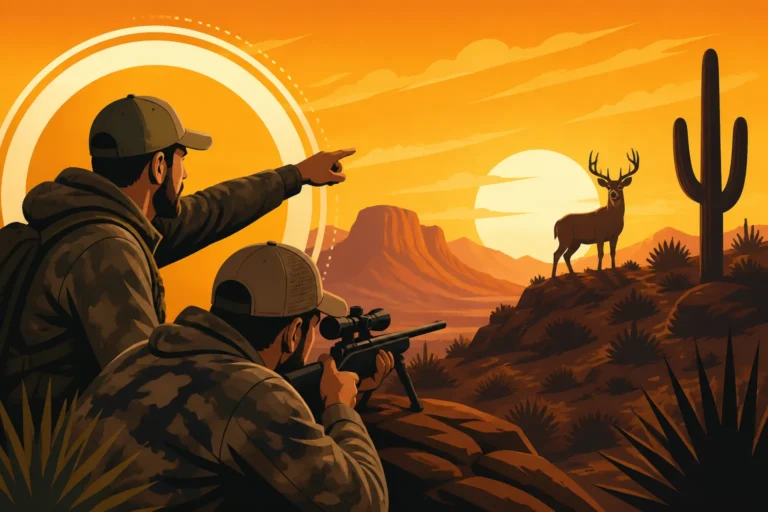
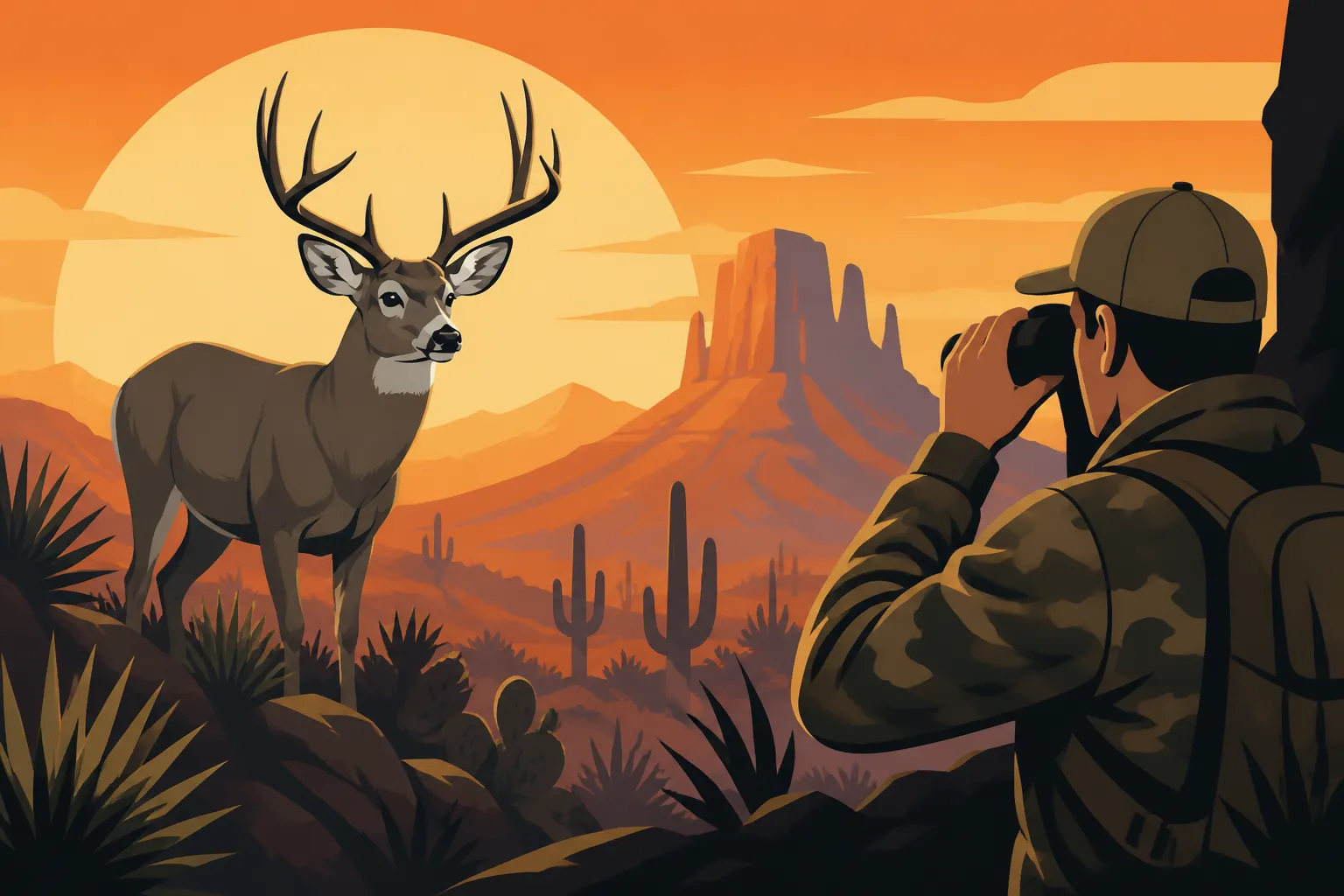
The adage "Coues hunting is a glassing game" is absolutely true, and this is where an Arizona Coues guide truly shines. These professionals spend hundreds of hours behind high-powered optics, honing their ability to spot the smallest detail that gives away a deer's presence. They're looking for an ear twitch, a horizontal line in a vertical world, or the glint of an antler in a sea of brush. This isn't just about having good binoculars or a spotting scope; it's about knowing how to use them effectively.
Guides often employ systematic glassing strategies, like Glassing Grids for Arizona Coues Deer, meticulously scanning every inch of a mountainside. They teach you to slow down, to be patient, and to look for patterns. They understand how light and shadows affect visibility throughout the day, how thermals carry scent and sound, and where deer are most likely to bed or feed. Their experience allows them to quickly dismiss unproductive areas and focus on high-probability zones, saving you invaluable time and effort. Many top-tier Coues guides invest heavily in premium optics, from 15x binoculars on tripods to powerful spotting scopes, and they know how to get the most out of them.
Intimate Knowledge of Coues Habitat and Behavior
A good Coues guide has an encyclopedic knowledge of their hunting units, often cultivated over decades. They know where specific herds live, which canyons hold the biggest bucks, and how deer react to different weather patterns or hunting pressure. This isn't just map knowledge; it's on-the-ground, boots-on-the-ground familiarity with every wash, ridge, and water hole. Finding Water in Arizona's Dry Country is often a key piece of information guides hold.
They understand the nuances of the Coues rut, how it peaks at different times depending on elevation or specific areas, and how to capitalize on that behavior. They know how to interpret subtle sign, like tracks, droppings, and rubs, to determine deer activity and direction of travel. This deep understanding allows them to put you in the right place at the right time, minimizing the guesswork and maximizing your chances of encountering a mature buck. They can quickly assess a situation, make tactical decisions on the fly, and adapt to changing conditions, which is essential in such dynamic terrain.
Navigation and Safety in Rugged Country
The Sky Islands are beautiful but unforgiving. Getting lost, running out of water, or encountering dangerous wildlife are real concerns for solo or inexperienced hunters. A professional guide provides crucial navigation expertise, often carrying GPS units, satellite communicators, and detailed topographical maps. They know the safe routes, the treacherous areas, and how to get you out of a tough spot if needed.
Beyond navigation, guides prioritize safety. They understand the risks of rattlesnakes, scorpions, and other desert creatures. They're often trained in wilderness first aid and carry essential emergency gear. They manage hydration, heat exhaustion risks, and ensure you're prepared for the physical demands of the hunt. This level of logistical support and inherent safety allows you to focus purely on the hunt, knowing you're in capable hands. They'll know the closest access points and how to Retrieve Game From Private Land in Arizona if a deer crosses a boundary.
Types of Guided Coues Hunts Available
While the core skills of a Coues guide remain consistent, the level of service and involvement can vary significantly. Understanding the different types of guided hunts will help you choose the option that best fits your budget, experience level, and desired hunting style.
Fully Guided Hunts
A fully guided Coues hunt is the most comprehensive option and typically includes everything from pre-hunt scouting to field dressing and packing out your animal. You'll often meet your guide at a designated point, and they'll handle all the logistics from there. This usually means comfortable camp accommodations (which could be anything from wall tents to cabins or even local motels), all meals, and dedicated one-on-one or two-on-one guiding services throughout the hunt.
With a fully guided experience, your guide will typically provide all the necessary optics, transportation in the field (usually 4×4 vehicles), and will lead the entire hunt from glassing to stalk. They'll help you spot deer, judge their size, and assist with the final approach. Once an animal is down, they'll handle the field dressing, caping, and packing it out to a vehicle. This option is ideal for hunters who want to maximize their chances of success, minimize logistical stress, and learn from an expert without having to worry about the day-to-day details of a backcountry hunt. What a Guided Arizona Coues Deer Hunt Costs reflects this level of service.
Semi-Guided Hunts
Semi-guided hunts offer a middle ground between a fully outfitted experience and a do-it-yourself (DIY) trip. In this scenario, the outfitter provides some level of support, but the hunter retains more independence and responsibility. This might include detailed maps of productive areas, pre-scouted locations, advice on deer movement, and possibly some basic camp amenities. However, you'll be responsible for your own food, sleeping arrangements, and often your own transportation in the field.
A guide might spend a day or two with you, showing you around the unit, pointing out glassing spots, and offering tactical advice, but then you'll hunt independently for the remainder of the trip. Other variations might include a designated camp where you'll stay, but you'll do your own hunting each day with the option to consult with the outfitter for intel. This option is excellent for hunters who have some experience and prefer more autonomy but still want the benefit of local knowledge and a head start on a new unit. It's generally a more budget-friendly option than a fully guided hunt.
Drop Camp Hunts
While less common for Coues deer specifically due to the highly mobile nature of the hunt, some outfitters do offer variations of drop camps. A drop camp involves the outfitter transporting you and your gear to a remote, pre-selected campsite and then leaving you to hunt independently. They will return at a pre-arranged time to pick you up and pack out any harvested game. This is usually reserved for more remote, wilderness-style hunts where vehicle access is limited.
For Coues, a "drop camp" might look more like a pre-set spike camp in a strategically located area, accessible only by foot or ATV, where the outfitter has placed a tent, cots, and perhaps some cooking equipment. Hunters are responsible for their own food, water, and hunting. This option is for experienced backcountry hunters who are confident in their abilities to navigate and hunt on their own but want to access harder-to-reach areas without the burden of packing in all their heavy gear. It provides isolation and a truly immersive experience but requires a high level of self-sufficiency.
Understanding the Costs and What's Included
The cost of a guided Coues deer hunt can vary widely depending on the type of service, the duration of the hunt, and the outfitter's reputation. It's crucial to understand what's typically included in the price and what additional expenses you should budget for.
Typical Price Ranges and Inclusions
A fully guided 5-7 day Coues deer hunt in Arizona can run a significant amount, often less than an elk hunt but still a substantial investment. These prices generally include the guide's services, all meals, lodging in camp, transportation during the hunt, and field care of the animal. Some outfitters might also include basic caping for taxidermy and transportation of the meat to a local processor. What a Guided Arizona Coues Deer Hunt Costs can vary greatly, so always ask for a detailed breakdown.
Semi-guided hunts will naturally be less expensive, as they provide fewer services. Drop camps, if offered, generally represent the lowest cost for professional support, as they mainly cover logistics and camp setup, with the hunting being entirely up to you. It's important to remember that these prices do not typically include your hunting license, deer tag, personal gear, gratuities for the guide, meat processing fees, or taxidermy. These are all separate expenses that you'll need to factor into your total budget.
Common Exclusions and Hidden Costs
When comparing outfitters, always scrutinize the contract or service agreement for exclusions. Here's a list of common items not included in the base price:
- Hunting License and Tags: You are always responsible for purchasing your own Arizona hunting license and the appropriate Coues deer tag (either drawn permit or over-the-counter archery tag). These are separate costs entirely.
- Travel Expenses: This includes your airfare to Arizona, rental car, fuel, and any pre- or post-hunt lodging outside of the outfitter's camp.
- Gratuities: Tipping your guide is customary and expected, usually calculated as a percentage of the total hunt cost. This is a significant expense that many first-time clients overlook.
- Meat Processing and Shipping: Once your deer is field dressed, you'll need to pay for professional processing. If you're a nonresident, you'll also need to budget for shipping the meat and/or cape/antlers home.
- Taxidermy: If you plan to mount your trophy, taxidermy fees are a separate and often substantial cost.
- Personal Gear: You'll need to bring all your own hunting clothing, footwear suitable for rugged terrain, optics (even if the guide has their own, having your own familiar set is a good idea), rifle or bow, ammunition, and personal items.
- Pre-hunt Meals/Lodging: If you arrive a day early or stay a day late, those costs are on you.
It's a good practice to create a comprehensive budget that accounts for all these potential "hidden" costs to avoid surprises. Many outfitters list their services on platforms like BookYourHunt, which can give you a general idea of pricing structures and what's typically bundled together for Coues hunts.
Payment Schedules and Cancellation Policies
Outfitters typically require a deposit to secure your hunt dates, often 50% of the total cost, with the remaining balance due closer to the hunt date. Be sure to understand their payment schedule and, critically, their cancellation and refund policy. What happens if you can't make the hunt? What if you fail to draw a tag?
Many outfitters have strict non-refundable deposit policies, especially if the cancellation is close to the hunt date. Some might offer to roll your deposit over to the following year if you can't make it, but this is not universal. If the hunt is contingent on drawing a tag, ensure you understand what happens to your deposit if you're unsuccessful in the draw. Some outfitters will refund your deposit (minus a small administrative fee), while others might require you to reapply with them the following year. This is a vital question to ask upfront, especially if you're applying for highly sought-after units. Resources like GoHunt can help you understand draw odds, informing your application strategy before you even contact an outfitter. Always get these terms in writing before sending any money.
Finding and Vetting Your Arizona Coues Guide
Choosing the right guide is paramount for a successful Coues hunt. It's not a decision to be rushed, and a thorough vetting process can save you from a disappointing experience.
Where to Find Reputable Outfitters
There are several avenues for finding Arizona Coues deer guides:
- Online Directories and Booking Platforms: Websites like BookYourHunt host listings for numerous outfitters, allowing you to browse by species, location, and services offered. They often include reviews from previous clients, which can be a valuable starting point.
- Hunting Shows and Expos: Attending major hunting conventions is an excellent way to meet guides in person. You can shake their hand, ask questions, and get a feel for their personality and approach.
- Referrals and Word-of-Mouth: Personal recommendations from trusted hunting friends or fellow outdoor enthusiasts are often the most reliable way to find a quality guide. Ask around in your hunting network.
- State Game and Fish Departments: The Arizona Game and Fish Department may maintain a list of licensed outfitters, though they typically don't offer recommendations. This is primarily for verifying licenses and permits.
- Forums and Online Communities: Hunting forums and social media groups dedicated to Arizona hunting can be a source of recommendations, but approach these with a critical eye, as not all opinions are unbiased.
Once you have a list of potential guides, you'll need to narrow down your options based on their experience, reputation, and how well they align with your hunting goals.
Questions to Ask a Potential Guide
Before committing to a guide, engage in a detailed conversation. Don't be shy about asking tough questions. Here's a list to get you started:
- Experience Specific to Coues Deer: How long have you been guiding Coues deer in these specific units? How many Coues hunts do you conduct each year? Experience with other species is good, but Coues hunting is specialized.
- Success Rates: What are your typical success rates on Coues deer? Be wary of guides who guarantee success or provide unrealistic numbers. Ask for harvest photos and testimonials.
- References: Ask for at least three references from clients who have hunted Coues deer with them in the last two years. Call these references and ask about their experience, the guide's demeanor, the quality of the hunt, and if they would book again.
- Hunting Style and Philosophy: How do you typically hunt Coues deer? (e.g., primarily glassing, spot-and-stalk, still hunting). Does their approach match your desired experience? Are they patient? Do they push hard?
- Physical Demands: What are the physical demands of the hunt? How much hiking is involved, and what kind of terrain will we cover? This helps you gauge if your fitness level is appropriate.
- Equipment and Logistics: What optics will you provide? What vehicles do you use? What are the camp accommodations like? What about food and water?
- Safety and Emergency Protocols: What are your safety protocols? Do you have satellite communication? What's your plan in case of an emergency or injury?
- Hunt Unit Specifics: Which units do you primarily guide in? Why those units? Do you have Reading an Arizona Unit Boundary Before You Apply down to an art form?
- What's Included/Excluded: Get a clear, written breakdown of what is and isn't included in the price. Reiterate the questions about licenses, tags, tips, meat processing, etc.
- Deposit and Cancellation: Reconfirm their deposit schedule and cancellation policy, especially regarding draw success or personal emergencies.
- Hunt Duration and Guiding Ratio: How many days is the hunt? Will it be 1-on-1, 2-on-1, or more? A lower client-to-guide ratio is generally preferable for Coues.
Red Flags to Watch Out For
While most outfitters are ethical professionals, some red flags should prompt further investigation or lead you to look elsewhere:
- Guaranteed Success: No ethical guide can guarantee success in hunting. It's called hunting, not killing. Be wary of anyone who makes such promises.
- Unclear Pricing or Inclusions: If a guide is vague about costs or what's included, or if they add surprise charges, that's a major red flag. Everything should be in writing.
- Poor Communication: If they're slow to respond, don't answer questions thoroughly, or seem disorganized, it could be a sign of things to come.
- No References or Bad References: A reputable guide will gladly provide references. If they can't or won't, or if their references give lukewarm or negative feedback, move on.
- Disregard for Regulations: Any hint that a guide might bend or break hunting regulations (e.g., shooting hours, baiting, tagging rules) should be an immediate deal-breaker.
- Pressure to Book Immediately: High-pressure sales tactics are rarely a sign of a quality service. Take your time to make an informed decision.
- Lack of Specific Coues Experience: If a guide primarily hunts elk or bears and only occasionally Coues, they might not have the specialized skills needed for consistent success on these particular deer.
Remember, this is an investment in an experience. Taking the time to properly vet an outfitter, perhaps even using platforms like GoHunt to research unit data they discuss, is crucial for making an informed decision. Vetting an Arizona Outfitter Before You Send a Deposit is a critical step.
Booking and Preparing for Your Guided Coues Adventure
Once you've selected an outfitter, the booking process begins, followed by the exciting, yet crucial, phase of preparation. Proper planning ensures you arrive ready for the demands of the hunt.
Timing Your Booking and Applications
For guided Coues deer hunts, especially those in highly desirable units or during the rut, booking often needs to happen well in advance. Many top outfitters have clients who book year after year, and their schedules fill up quickly. For drawn tags, you might book with an outfitter even before draw results are announced, with a contingency plan for a refund or rollover if you don't draw. This is common practice, but ensure the refund policy is crystal clear. Booking an Arizona Hunt Around the February Deadline is a strategy many hunters use.
Arizona runs two main draw cycles: February (for elk and antelope) and June (for deer, sheep, and bison). If you're targeting a permit-only Coues hunt (less common than OTC archery but still an option), you'll need to coordinate your application with your guide's recommendations. Many hunters focus on the over-the-counter (OTC) archery Coues seasons, which offer more flexibility without the draw uncertainty. However, even for OTC hunts, booking a guide well in advance is essential to secure their services during peak times like the late December/January rut.
Physical Conditioning for Coues Terrain
Coues deer hunting is physically demanding. The terrain is often steep, rocky, and covered in thick brush. You'll spend long hours behind glass, followed by potentially arduous spot-and-stalk approaches across uneven ground. Don't underestimate the physical toll. Start a focused conditioning program several months before your hunt.
Your training should include:
- Cardiovascular Endurance: Hiking with a loaded pack (mimicking your daypack weight) on varied terrain, stair climbing, or incline treadmill work. Aim for sustained periods of activity.
- Strength Training: Focus on leg strength (squats, lunges, calf raises), core strength, and overall back and shoulder strength to handle pack weight and awkward carries.
- Flexibility and Balance: Yoga or stretching can help prevent injuries and improve agility on steep slopes.
- Footwear Break-in: Absolutely crucial: break in your hunting boots well in advance. Blisters can ruin a hunt. Wear them on your training hikes.
Discuss the expected physical demands with your guide. They can give you a realistic assessment of the terrain and activity level, helping you tailor your fitness regimen.
Essential Gear List
Your outfitter will provide a detailed gear list, but here are some critical items for a Coues hunt:
- Optics: While your guide will have premium optics, having your own high-quality binoculars (10x, 12x, or even 15x on a tripod) and a spotting scope (if you plan to use one) is beneficial. Practice with them.
- Footwear: Sturdy, well-broken-in hiking boots with excellent ankle support and a stiff sole for rocky terrain are non-negotiable. Consider gaiters to protect against thorns and burrs.
- Clothing: Layering is key in Arizona's desert mountains. Days can be warm, but mornings and evenings, especially at higher elevations, can be cold. Pack quiet, durable clothing in earth tones. Don't forget rain gear; monsoon season can bring sudden downpours.
- Hydration System: A quality hydration pack and extra water bottles are essential. Water sources are scarce.
- Navigation Tools: While your guide will navigate, having your own GPS or a mapping app like GoHunt's mapping feature on your phone (with downloaded offline maps) is a smart backup.
- Hunting Pack: A comfortable daypack capable of carrying water, extra layers, snacks, and personal gear, plus the ability to haul out meat if you're doing a semi-guided or drop camp hunt.
- First Aid Kit: A personal kit with blister care, pain relievers, and any personal medications.
- Sun Protection: Wide-brimmed hat, sunglasses, and sunscreen.
- Weapon: Your rifle or bow, sighted in and thoroughly tested. Bring enough ammunition or arrows.
Prepare diligently, both physically and with your gear, and you'll arrive confident and ready for the challenge of the gray ghost.
Maximizing Your Success with a Coues Guide
Hiring a guide is an investment, and to truly maximize your chances of success and enjoyment, there are a few things you, as the client, can do. It's a partnership, and your active participation and good attitude can make a significant difference.
Communication and Trust with Your Guide
Effective communication with your guide is paramount. Be honest about your physical abilities, your hunting experience, and your expectations for the hunt. If you have a specific goal (e.g., "I just want to get a deer," or "I'm holding out for a mature buck"), articulate it clearly. If you're feeling tired, hungry, or need a break, speak up. Your guide isn't a mind-reader.
Once the hunt begins, trust your guide's judgment. They are the experts in that terrain and on those animals. When they tell you to slow down, be quiet, or follow a specific route, do it without hesitation. Respect their decisions, even if you don't fully understand them at the moment. Building a good rapport with your guide makes the entire experience more enjoyable and productive. What Guides Expect From Their Clients usually includes active listening and cooperation.
Patience and Persistence
Coues deer hunting demands immense patience. You might spend hours or even days behind glass without seeing a deer that meets your criteria. The desert can seem empty, only to reveal a buck from seemingly nowhere. Frustration can set in, but a good guide will encourage you to stay focused and keep glassing.
Persistence is also key. A Coues stalk can be long, slow, and challenging. You might get busted, or the deer might move. Be prepared to keep at it, to re-evaluate, and to try again. The reward of a Coues buck is often directly proportional to the effort and grit you put in. Understand that success isn't guaranteed, and sometimes the best guide in the world can't make a deer appear. Enjoy the process, the challenge, and the beauty of the Arizona landscape.
Ethical Hunting Practices
Adhere strictly to all Arizona hunting regulations and your guide's ethical guidelines. This includes legal shooting hours, blaze orange requirements (if applicable to your hunt), proper tagging, and fair chase principles. Your guide will ensure you're compliant, but ultimately, it's your responsibility as a hunter.
When a shot opportunity arises, listen carefully to your guide's instructions. They will help you confirm the target, assess the shot angle, and determine if it's an ethical shot. Making a clean kill is paramount, and your guide will be there to assist with tracking and recovery. Respect for the animal, the land, and the regulations should always be at the forefront of your hunt. Legal Shooting Hours and Blaze Orange in Arizona are critical details your guide will help you with.
Disclaimer
This article is for general informational purposes only and does not constitute professional advice. Laws, prices and regulations vary by location and change over time. Consult a qualified professional for guidance on your specific situation.