Snake Awareness on an August Archery Hunt
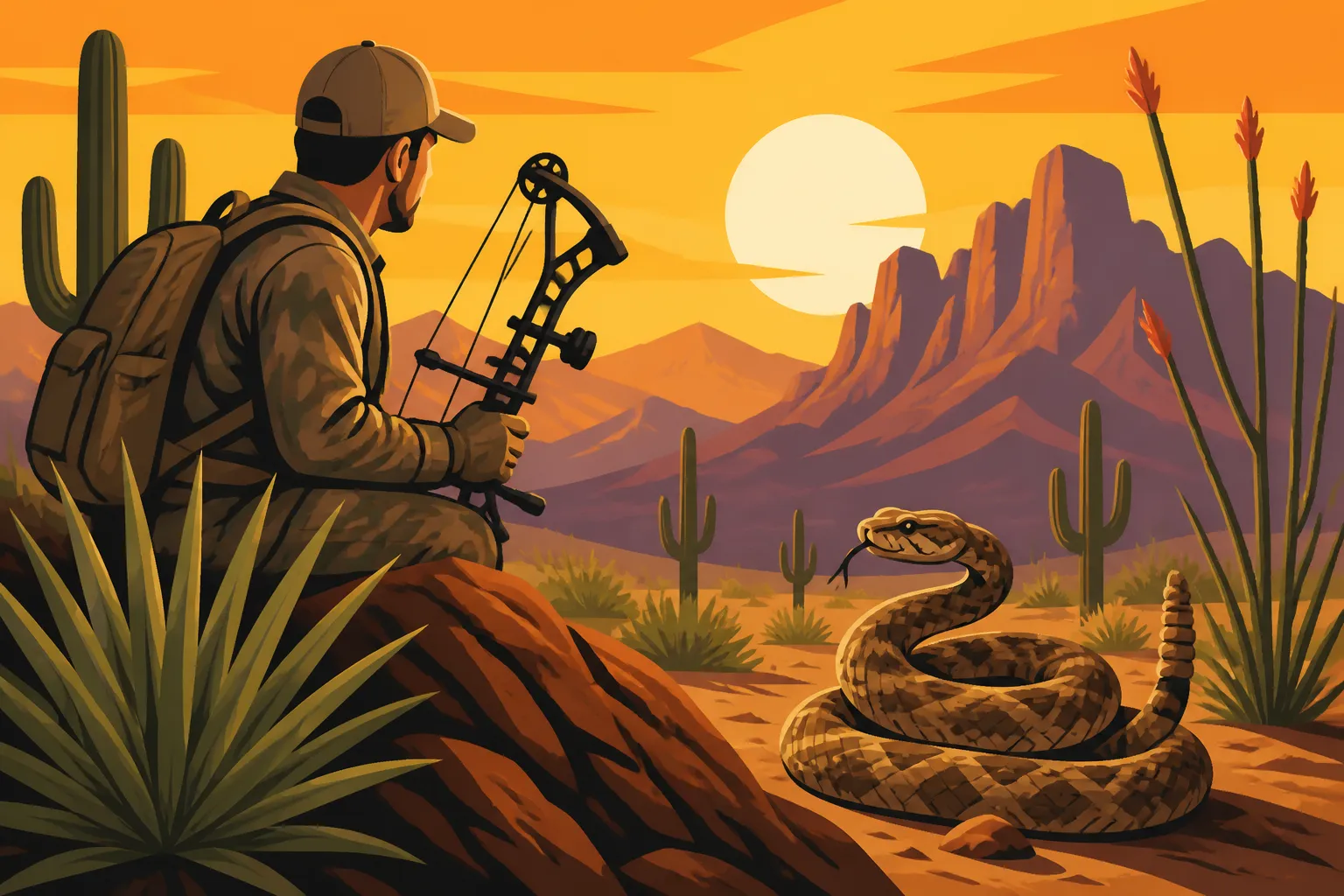
August in Arizona is a beast. The heat is relentless, the miles are long, and the physical demands of an archery hunt are enough to test even the most seasoned hunter. But beyond the sweat and strain, there’s another, often underestimated, danger lurking in the brush: venomous snakes. A surprise encounter with one of Arizona’s slithery residents can quickly turn a thrilling pursuit into a life-threatening emergency, making snake awareness absolutely critical for anyone venturing into the desert with a bow.
Understanding Arizona's Venomous Serpents
Arizona is home to more species of rattlesnakes than any other state, not to mention the Sonoran coral snake. Knowing who you're sharing the desert with is the first step in staying safe. It’s not about fear; it’s about respect and preparedness.
Identifying Common Rattlesnakes You'll Encounter
The vast majority of venomous snake encounters in Arizona will involve a rattlesnake. They are masters of camouflage, and their primary defense mechanism is often silence until you're uncomfortably close. This is especially true when they're cool and sluggish in the mornings or evenings, or if they're simply trying to avoid detection.
- Western Diamondback Rattlesnake (Crotalus atrox): This is probably the most iconic and widespread rattlesnake in Arizona, found from the low desert up into higher elevations. They're typically light brown to gray, with dark, diamond-shaped patterns down their back. The most distinguishing feature is the black and white banding just above the rattles, resembling a coon tail. They can grow quite large, often over four feet, and possess potent venom that causes significant tissue damage. You'll find them almost anywhere, from rocky washes to dense mesquite thickets in the Sonoran Desert.
- Mojave Rattlesnake (Crotalus scutulatus): Often considered one of the more dangerous species due to its neurotoxic venom, which can affect the nervous system and breathing, in addition to hemotoxic effects. They usually have a greenish-gray or olive color with dark diamond patterns. The black bands on their tail are noticeably narrower than the white bands, distinguishing them from the Western Diamondback. They're common in grasslands and desert scrub, particularly in central and southern Arizona. Their disposition can be a bit more aggressive than some other rattlesnakes, so giving them ample space is paramount.
- Tiger Rattlesnake (Crotalus tigris): Smaller and typically found in rocky, hilly areas in central and southern Arizona, particularly in the Sky Islands. They are named for their distinctive crossband pattern, which can resemble tiger stripes, but this pattern fades as they age. They have a proportionally small head and a potent venom that's a mix of neurotoxins and hemotoxins. Because they blend so well with rocky terrain, they can be incredibly hard to spot until you’re right on top of them.
- Sidewinder (Crotalus cerastes): These smaller rattlesnakes are desert specialists, known for their unique sidewinding locomotion that helps them move across loose sand. They have a pale, sandy coloration that makes them almost invisible in their dune and wash habitats, often found in the southwestern parts of the state. Their prominent supraocular scales (horn-like projections above their eyes) are a dead giveaway. While their bite isn't as potent as a Western Diamondback, it still requires immediate medical attention.
Remember, identifying a snake in the field isn't always easy, especially when you're startled. The safest approach is to assume any snake you encounter is venomous and give it a wide berth. Many of the tools available for E-Scouting an Arizona Unit Before the Season can also highlight areas known for specific snake habitats.
The Elusive Coral Snake
Arizona is also home to the Sonoran coral snake (Micruroides euryxanthus), a much smaller, brightly colored snake that is often mistaken for non-venomous kingsnakes. The key to remembering which is which is a classic rhyme: "Red touch yellow, kill a fellow; red touch black, venom lack." The coral snake has red bands bordered by yellow bands, while the harmless kingsnake has red bands bordered by black.
Unlike rattlesnakes, coral snakes have small, fixed fangs and deliver venom by chewing rather than striking. This means they usually need to hold on to inject their potent neurotoxic venom, which can cause paralysis and respiratory failure. While bites are rare due to their reclusive nature and small size, they are extremely serious. You're most likely to find them under rocks, logs, or leaf litter, typically in the southern parts of the state. They are nocturnal and most active after rains, making them less of a direct daytime threat, but still something to be aware of if you're Camping on Forest Ground During Hunting Season and turning over rocks for firewood or camp setup.
Proactive Measures for Snake Safety on Your Hunt
Prevention is your best friend when it comes to avoiding snake bites. A little foresight and proper gear can make all the difference in ensuring your August archery hunt stays focused on the hunt, not on emergency medical care.
Essential Gear for Protection and Awareness
Your gear choices can significantly reduce your risk. Don't skimp on protection, especially when you're navigating rough terrain where a misstep can put you in a bad situation.
- Snake Gaiters or Snake Boots: These are non-negotiable for serious desert hunters. Quality snake gaiters, like those from TurtleSkin or CrackShot, or full snake boots, provide a physical barrier against fangs. Most rattlesnake bites occur on the lower leg and ankle, so protecting this area is paramount. Make sure they fit well and don't impede your movement or cause chafing over long distances.
- Sturdy Hiking Boots: Even if you wear gaiters, good, thick-soled hiking boots add another layer of protection. Avoid flimsy footwear in snake country.
- Headlamp/Flashlight: While August archery hunts often mean early mornings and late evenings, which are often cooler and thus more active times for snakes, you might also find yourself on a long blood trail after dark. A powerful headlamp is crucial for seeing where you're stepping and spotting snakes before you get too close. Always carry extra batteries.
- Trekking Poles: These aren't just for stability on steep slopes or Packing an Elk Out of Rim Country Alone. They can be used to probe dense brush, move small obstacles, or even encourage a snake to move off the trail without getting close yourself. A quick tap ahead of your footfall can alert a coiled snake to your presence.
- Personal Locator Beacon (PLB) or Satellite Communicator: In remote Arizona units, cell service is a distant dream. Devices like the Garmin inReach or Zoleo are lifesavers, allowing you to call for help even if you’re miles from civilization. This is especially true for emergency situations like a snake bite. For more on this, check out Satellite Communication From a Hunting Camp. Having an emergency contact and a clear plan communicated beforehand is vital.
Vigilant Movement and Habitat Awareness
This is where your situational awareness becomes your most important tool. You can't just cruise through the desert; you need to be actively looking and listening.
- Watch Your Step: Always look where you're placing your feet, hands, and where you're sitting. Snakes love to hide in shaded, rocky crevices, under logs, in thick grass, or beneath dense patches of prickly pear. Avoid stepping over logs or large rocks without first looking on the other side.
- Avoid Blind Steps: Never place your hand or foot where you cannot see clearly. If you need to retrieve an arrow from thick brush, use a stick or your trekking pole to probe the area first.
- Listen: While not all rattlesnakes rattle before striking, many do. Train yourself to listen for that distinctive buzz, especially when moving through noisy vegetation.
- Glassing: When you're glassing from a ridge or a shady spot, take a moment to thoroughly glass the immediate area around your feet and where you intend to sit or lie down. A good pair of binos, perhaps those recommended in Binocular Size That Survives an All-Day Session, can help you scan your immediate surroundings as well as distant hillsides. GoHunt maps can also help you identify rocky areas, washes, and dense cover that are prime snake habitat.
- Rocky Outcrops and Washes: These are prime snake real estate. Rocks offer shelter and warmth, and washes provide travel corridors and ambush points. Exercise extreme caution in these areas, especially during the cooler parts of the day when snakes might be basking.
Camp Safety and Water Sources
Even back at camp, vigilance doesn't end. Snakes are opportunists and will seek out shelter or water.
- Check Your Gear: Before putting on boots or clothes left outside, shake them out. Check your sleeping bag, tent, and any stored gear for unwanted guests. Snakes love the cool, dark recesses of your camp gear.
- Keep Camp Clean: Minimize clutter around your tent. Store food properly to avoid attracting rodents, which in turn can attract snakes.
- Water Sources: Natural water sources like seeps, springs, and stock tanks are magnets for wildlife, including snakes, especially during the dry August months. Be extra cautious when approaching any water source, whether you're trying to fill up or using it as a vantage point for game. A good rule of thumb when Hunting a Stock Tank During Early Archery is to approach slowly and quietly, scanning the entire area before committing. Snakes will often be coiled near the water's edge, waiting for prey.
What to Do in Case of a Snake Bite
Despite all precautions, accidents can happen. Knowing how to react to a snake bite can literally save your limb, or even your life. Panic is your biggest enemy.
Immediate First Aid and Dispelling Myths
The most crucial thing to remember is to stay calm and get medical help immediately. Do NOT try to be a hero or rely on old wives' tales.
- Stay Calm: This is easier said than done, but panic increases heart rate, which can spread venom faster. Take deep breaths.
- Call for Help Immediately: If you have cell service, call 911. If you're in a remote area, use your satellite communicator or PLB to send an SOS. Provide your exact location.
- Move Away from the Snake: Ensure you are out of striking distance from the snake to prevent another bite.
- Remove Constricting Items: Take off any rings, watches, or tight clothing from the bitten limb. Swelling will start almost immediately, and these items can quickly become tourniquets.
- Keep the Affected Limb Below Heart Level: This can help slow the spread of venom.
- Immobilize the Limb: Try to keep the bitten limb as still as possible. You can loosely splint it if necessary, but don't restrict blood flow.
- DO NOT:
- Cut and Suck: This is ineffective and can introduce infection.
- Apply a Tourniquet: This can restrict blood flow and lead to tissue damage or amputation.
- Apply Ice: Ice does not help and can further damage tissue.
- Drink Alcohol or Caffeine: These can increase heart rate and accelerate venom spread.
- Try to Catch or Kill the Snake: This puts you at risk of another bite and isn't necessary for treatment. Medical professionals treat based on symptoms, not snake identification.
A well-stocked first-aid kit is essential on any Arizona hunt, and should include basic wound care, pain relief, and possibly an emergency blanket. For more on what to pack, considering the harsh environment, look into Heat Management on an Arizona Early Season Hunt.
Evacuation and Medical Attention
Once first aid is administered, the priority shifts entirely to getting to a medical facility where antivenom can be administered. Antivenom is the only effective treatment for a venomous snake bite.
- Rapid Transport: The faster you get to a hospital, the better the outcome. This is where having a partner and a solid emergency plan with designated meeting points or evacuation routes becomes critical. If you're solo, your satellite communicator is your lifeline.
- Hospital Choice: Not all hospitals stock antivenom, especially smaller rural clinics. It's wise to know which hospitals near your hunting unit are equipped to handle snake bites. For example, hospitals in larger cities like Phoenix, Tucson, or Flagstaff are typically well-equipped.
- Stay Calm During Transport: Continue to monitor the bite site for swelling and discoloration. If possible, keep the bitten limb elevated slightly lower than the heart.
Remember, even seemingly minor bites require medical evaluation. Some rattlesnake bites can be "dry bites," where no venom is injected, but only a medical professional can confirm this.
Integrating Snake Awareness into Your Hunting Strategy
Snake awareness isn't just a side thought; it needs to be integrated into your entire hunting approach, from scouting to shot recovery. When you're focused on How Close a Bowhunter Needs to Get on Coues or reading wind on a stalk, it's easy to forget about what's at your feet.
Scouting and Trail Camera Considerations
Your preseason scouting efforts are a great time to assess snake risk in potential hunting areas.
- Habitat Mapping: When using tools like GoHunt, pay attention to areas with significant rock formations, dense thorny brush, and washes. These are not just prime deer or javelina habitat; they are prime snake habitat too. If you're doing a Scouting an Arizona Unit Before the February Deadline, factor snake potential into your decisions.
- Trail Cameras: Setting up trail cameras can reveal more than just game movement. While you won't usually capture snakes, the images can show you the type of terrain and cover in an area, which can help you anticipate where snakes might be active. When retrieving SD cards, always approach the camera carefully, scanning the base and surrounding area. For rules on this, review Trail Camera Rules on Arizona Public Land.
- Water Sources: As mentioned, water is critical in August. Snakes will congregate near these areas, particularly during dry spells. When you're scouting or hunting a stock tank, be extra vigilant.
Shot Recovery and Blood Trailing
This is perhaps one of the most dangerous situations for snake encounters. You're adrenalized, focused on the track, and often moving through thick cover, potentially in fading light.
- Slow Down and Be Methodical: If you make a good shot and the animal goes down quickly, still approach the area with caution. If it's a long track, especially into dense mesquite, catclaw, or prickly pear, slow your pace significantly.
- Use a Long Stick or Arrow: When probing thick brush where a downed animal might be, use a long stick or an arrow to part the vegetation ahead of you. This can scare off a snake or reveal its presence before you step on it.
- Night Tracking: If you're forced to track at night, your headlamp becomes your most crucial tool. Shine it ahead, not just where you're walking, but into the brush on either side. Consider if the track can wait until morning light, especially if the weather is cool enough to preserve meat. The risk of a snake bite, or getting lost, increases dramatically at night. Always weigh the risks against the rewards. While Tracking Javelina Through Thick Cover can be challenging enough, adding venomous snakes to the mix exponentially increases the danger.
Partner Communication and Emergency Plans
Hunting with a partner offers a significant safety advantage. Even if you prefer to hunt solo, having a detailed emergency plan in place and shared with someone not on the hunt is non-negotiable.
- Communicate Your Plan: Discuss snake safety with your hunting partners before the hunt. Agree on a signal if someone spots a snake, and clearly outline the steps for a snake bite emergency.
- Emergency Contact Information: Ensure everyone has emergency contacts for each other, and that someone at home knows your exact hunting location and your planned return time.
- Designate Roles: In an emergency, who will make the call? Who will administer first aid? Who will lead the evacuation? Having these roles predetermined can prevent chaos in a stressful situation.
- First Aid Training: Consider taking a wilderness first aid course. Knowing how to react in a medical emergency far from definitive care is an invaluable skill for any backcountry hunter.
Ultimately, hunting in Arizona during August is a challenging and rewarding experience. By understanding the risks posed by venomous snakes, taking proactive measures, and knowing how to respond in an emergency, you can ensure your focus remains on the incredible hunting opportunities Arizona has to offer, rather than a potentially dangerous encounter. Always be vigilant, stay prepared, and respect the wild environment you're privileged to explore.
Disclaimer
This article is for informational purposes only and is not a substitute for professional medical advice, diagnosis, or treatment. Always seek the advice of a qualified health provider for any medical questions or emergencies. Hunting regulations and safety protocols can change; always consult the latest Arizona Game and Fish Department regulations before planning any hunt.