Are Drones Legal for Scouting in Arizona?
The temptation to gain an edge in scouting can be intense, especially when you're staring down vast Arizona landscapes, wondering where to even begin. It's easy to look at the latest technology, like drones, and think, "Could this be the answer to finding those elusive desert deer or high country elk?" But before you launch that drone over your favorite hunting unit, it’s crucial to understand the rules and why they exist in the first place, because the Arizona Game and Fish Department has a very clear stance on using these tools for hunting purposes.
The Arizona Game and Fish Department's Stance on Drones for Hunting
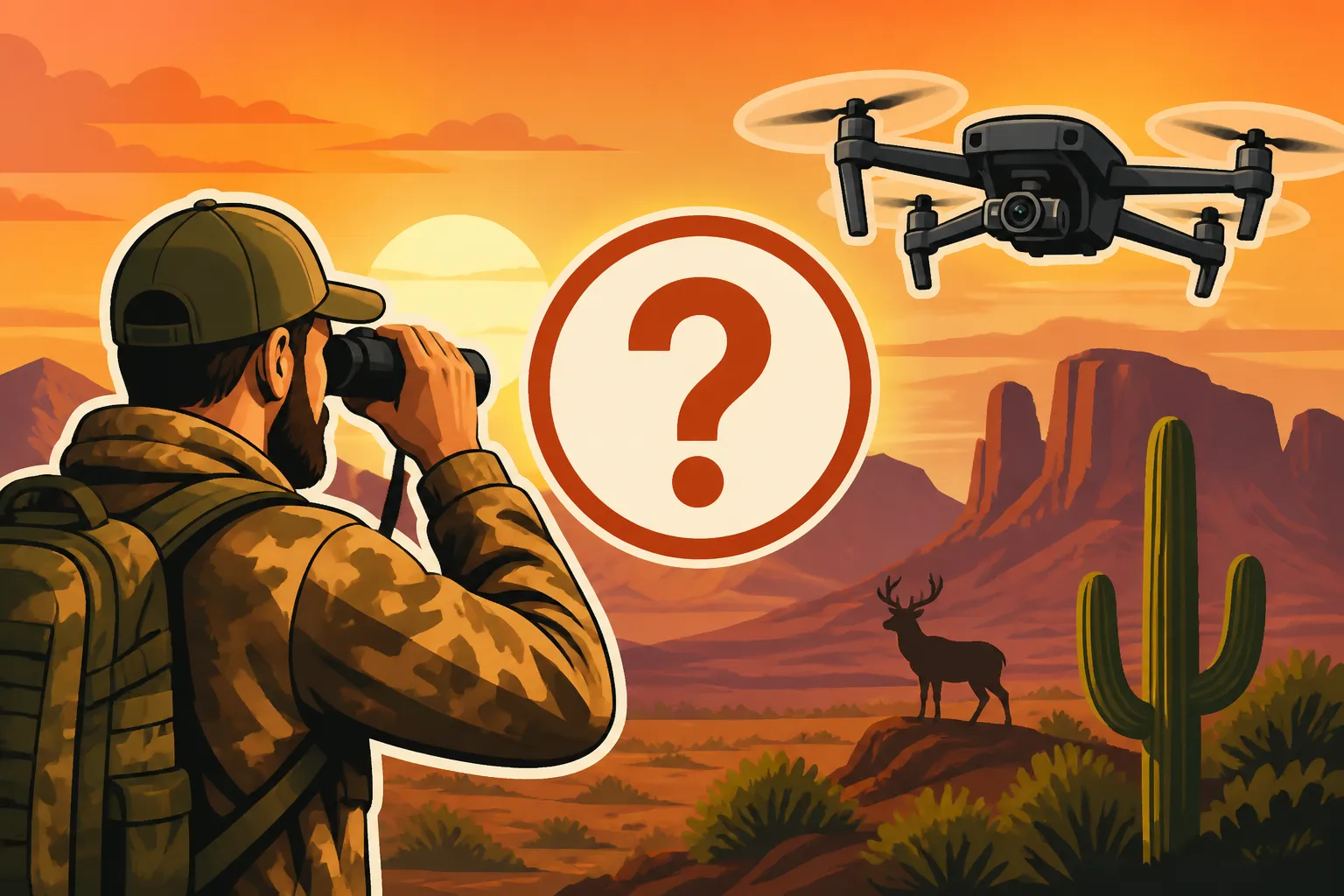
Let's cut right to the chase: using a drone to scout for big game in Arizona, or to assist in any way with the "take" of an animal, is against the rules. The Arizona Game and Fish Department (AZGFD) is pretty unequivocal on this, and it's a regulation born out of a commitment to fair chase and ethical hunting practices that many of us hold dear. The frustration of trying to cover so much ground and find game is real, but the state has drawn a line in the sand when it comes to technology that gives an unfair advantage.
Understanding the Regulations
Arizona's hunting regulations define "take" broadly, encompassing not just the act of shooting an animal, but also "pursuing, shooting, capturing, trapping, snaring, or netting wildlife, or any attempt to do so." Crucially, this also includes any act of "aiding" in the take. When you use a drone to locate game, whether it's flying high above a remote canyon to spot a bedded Coues deer or scanning an open mesa for a mule deer buck, you are essentially "aiding" in the take by gaining an advantage in locating that animal. This directly violates the spirit and letter of the law. The rules are designed to ensure that hunters rely on traditional methods of scouting and tracking, like glassing grids for Arizona Coues deer or learning to read fresh elk sign in ponderosa timber, rather than technology that removes the challenge.
The AZGFD considers real-time information gathered by a drone about the presence or location of game animals to be a form of illegal aid. This isn't just a casual guideline; it's a regulation with enforcement behind it. The goal is to preserve the integrity of the hunt, ensuring that every animal taken is done so through skill, persistence, and fair methods. It's about maintaining a level playing field and preventing a situation where those with advanced drone technology have an insurmountable advantage over hunters using traditional means.
Why the Ban Exists
The reasoning behind the ban is rooted deeply in the principles of fair chase. Hunting, at its core, is about connecting with nature and the challenge of pursuing wild animals on their terms. When technology like drones allows a hunter to quickly locate game from miles away, it diminishes the effort, skill, and knowledge required for a successful hunt. It reduces the animal's natural advantage and changes the nature of the pursuit entirely. Many long-time hunters feel strongly that this kind of technology crosses an ethical boundary.
Imagine spending days on end, hiking rugged terrain, using your optics to meticulously glass thousands of acres of desert, all to locate a single buck. Now imagine another hunter flying a drone for an hour, quickly locating the same animal, and then simply hiking in for the shot. That doesn't feel like fair chase, does it? The regulations are an attempt to uphold a standard where the hunter's woodsmanship, physical conditioning, and understanding of the game and its habitat are what lead to success, not merely pushing a button on a remote control. It’s also about preventing undue harassment to wildlife, as low-flying drones can stress animals, particularly during sensitive times like calving or fawning season. The department strives to protect the wildlife resource and ensure that hunting remains a respected and ethical pursuit for future generations.
Federal and State Airspace Rules Beyond Hunting
While the Arizona Game and Fish Department is primarily concerned with drones in relation to hunting, it’s important to remember that general drone use is subject to a whole host of other federal and state regulations. Even if you swear you're only using a drone for scenic photography and not scouting, you could still be breaking other laws. Airspace isn't a free-for-all, and public lands come with their own set of rules that often predate the drone craze.
FAA Regulations for Drone Operation
The Federal Aviation Administration (FAA) governs all airspace in the United States, including the low altitudes where drones operate. Whether you're a recreational flyer or a commercial operator, you have to abide by FAA rules. For recreational users, the basic guidelines include keeping your drone within your visual line of sight, flying below 400 feet, and never flying near manned aircraft or airports. You also need to register your drone with the FAA if it weighs over 0.55 pounds and pass The Recreational UAS Safety Test (TRUST). For commercial operations (which could sometimes be interpreted if you're taking photos for a guide service, for instance), you need to obtain a Part 107 remote pilot certificate.
These regulations are in place for safety, preventing collisions with other aircraft and protecting people and property on the ground. Beyond these general rules, there are specific areas where drones are prohibited or restricted, such as near military installations, national parks, and in certain controlled airspace. Ignorance of these rules is no excuse, and violations can lead to significant fines and penalties, even if you weren't actively hunting with the drone.
Restrictions on Public Lands
Beyond the FAA and AZGFD hunting rules, many public land management agencies have their own specific regulations regarding drone use. This is particularly relevant for Arizona hunters, as so much of our hunting takes place on lands managed by the Bureau of Land Management (BLM), the U.S. Forest Service, and Arizona State Parks.
For instance, National Parks, like the Grand Canyon National Park, have an outright ban on drones within their boundaries to protect wildlife and the wilderness experience of visitors. Many National Forests, which make up vast tracts of prime hunting land across Arizona, also have restrictions, especially within designated wilderness areas where motorized and mechanized equipment, including drones, are strictly prohibited. These wilderness areas are specifically set aside to preserve a primitive experience, and the noise and presence of a drone fundamentally go against that ethos. Even outside of wilderness, local forest or BLM offices might have specific orders or restrictions in place depending on current conditions or sensitive wildlife areas. It's always your responsibility to check with the specific land management agency for the area you plan to visit. Understanding the nuances of motorized travel rules on Arizona public land, for example, often extends to airspace as well.
Alternative and Ethical Scouting Methods
So, if drones are out, what’s a hunter to do? The good news is that tried-and-true scouting methods are not only legal and ethical, but they’re also incredibly effective and deeply rewarding. There's a satisfaction that comes from genuinely learning a piece of ground, understanding the movements of game, and honing your own skills, a satisfaction that a drone simply can't provide.
Traditional Ground Scouting
Nothing beats "boots on the ground" when it comes to understanding a hunting unit. This means physically getting out there, walking the drainages, climbing the ridges, and exploring the habitat where game lives. Traditional scouting is all about observation: looking for tracks, scat, rub lines, scrapes, and feeding areas. It’s about learning to read the terrain that hides an approach in desert country, understanding where water sources that concentrate Arizona desert game are, and figuring out how animals use the landscape throughout the day and across seasons.
Spend time glassing. In Arizona, especially for species like Coues deer, glassing is not just a method; it’s the method. Setting up a tripod and a good spotting scope or powerful binoculars and systematically picking apart hillsides and canyons is how many successful hunters find their animals. You learn to spot the flick of an ear, the shine of an antler, or the subtle outline of a bedded animal. Why Arizona Coues Hunting Is a Glassing Game is an excellent resource for anyone looking to master this critical skill. This kind of scouting builds a deep connection to the land and the animals, making the eventual harvest far more meaningful.
Digital Scouting with Mapping Software
In the modern age, "digital scouting" has become an invaluable tool that complements traditional ground scouting perfectly. While you can't fly a drone, you can certainly use powerful mapping applications on your phone or computer to gather a wealth of information. Services like onX Hunt, BaseMap, and even specialized platforms like GoHunt are fantastic for this.
These apps allow you to study topography, identify public versus private land boundaries, locate water sources like stock tanks and springs, and mark potential bedding and feeding areas, all from the comfort of your home. You can look at satellite imagery to pinpoint game trails, understand vegetation changes, and even predict travel corridors. GoHunt, for example, offers detailed maps and data layers that can show you historical burn areas, potential cover, and access points. You can effectively "e-scout an Arizona unit before the season," marking waypoints for glassing knobs, potential camp spots, and even routes to avoid steep canyons or thick brush. This pre-scouting saves you valuable time and physical effort once you're in the field, allowing you to focus your ground scouting efforts on the most promising areas.
The Role of Trail Cameras
Trail cameras are another completely legal and highly effective scouting tool in Arizona, as long as you follow the rules. They offer a "24/7" pair of eyes in the woods, allowing you to monitor game activity without being physically present. You can use trail cameras to pattern a buck in the weeks before opener, identify specific animals, and understand their movement patterns. This is especially useful for understanding when the elk rut peaks on the Rim or how deer utilize water sources during early archery season.
However, there are still rules to follow. For example, baiting rules that apply in Arizona prohibit placing attractants specifically for the purpose of luring big game in front of your camera if that bait is then used for hunting. While you can use trail cameras, you can't use them in conjunction with bait for big game. Always check the current Arizona Game and Fish Department regulations for specific rules on trail camera use, including any restrictions on public land or around water sources. Used correctly, trail cameras provide invaluable intelligence, helping you make informed decisions about where and when to hunt, without crossing any ethical or legal lines.
Penalties and Ethical Considerations of Drone Use
Disregarding the regulations around drone use for hunting in Arizona carries real consequences, both legal and ethical. It's not just a slap on the wrist; violations can significantly impact your hunting privileges and reputation.
Consequences of Illegal Drone Use
If you're caught using a drone to aid in the take of wildlife in Arizona, you could face severe penalties. This typically includes substantial fines, forfeiture of hunting equipment (which could include your drone, firearms, or even your vehicle), and the suspension or revocation of your hunting license. A license revocation means you won't be able to hunt in Arizona, and potentially other states through interstate compacts, for a significant period. Beyond the financial and legal ramifications, there's also the long-term impact on your hunting record, which can affect future draw applications. The Arizona Game and Fish Department takes these violations seriously, as they undermine conservation efforts and fair chase principles. It's simply not worth the risk.
Maintaining Fair Chase Principles
Ultimately, the legality of drones for scouting boils down to the fundamental ethics of hunting. Fair chase is more than just a set of rules; it's a philosophy. It emphasizes respecting the animal, the land, and the traditions of hunting. It means giving the animal a reasonable chance to escape and relying on your own skills, knowledge, and effort to succeed. When we embrace fair chase, we uphold the integrity of hunting as a conservation tool and a valued outdoor pursuit. Using a drone for scouting shortcuts this process, creating an artificial advantage that many argue detracts from the true spirit of the hunt.
By choosing ethical, legal scouting methods, you contribute to a positive image of hunting and ensure that the legacy of fair chase continues for generations to come. It’s about earning your success, not simply acquiring it through technological means that diminish the challenge and respect for the game.
| Scouting Method | Legality for Hunting in Arizona | Advantages | Disadvantages |
|---|---|---|---|
| Drones | Illegal | Quick aerial view, covers vast ground quickly | Violates fair chase, potential legal penalties, disturbs wildlife |
| Ground Scouting | Legal | Deep understanding of terrain/game, physical conditioning, ethical | Time-consuming, physically demanding, limited by visibility |
| Digital Mapping | Legal | Efficient planning, covers large areas virtually, identifies key features | No real-time ground info, requires interpretation, screen time |
| Trail Cameras | Legal (with restrictions) | 24/7 monitoring, patterns game, identifies specific animals | Requires physical setup/retrieval, can be stolen/damaged, battery life |
Disclaimer
Please remember that hunting regulations can change. It is always your responsibility to consult the most current Arizona Game and Fish Department hunting regulations booklet or website before heading afield. This guide provides general information and ethical considerations, but specific laws and rules are subject to revision.