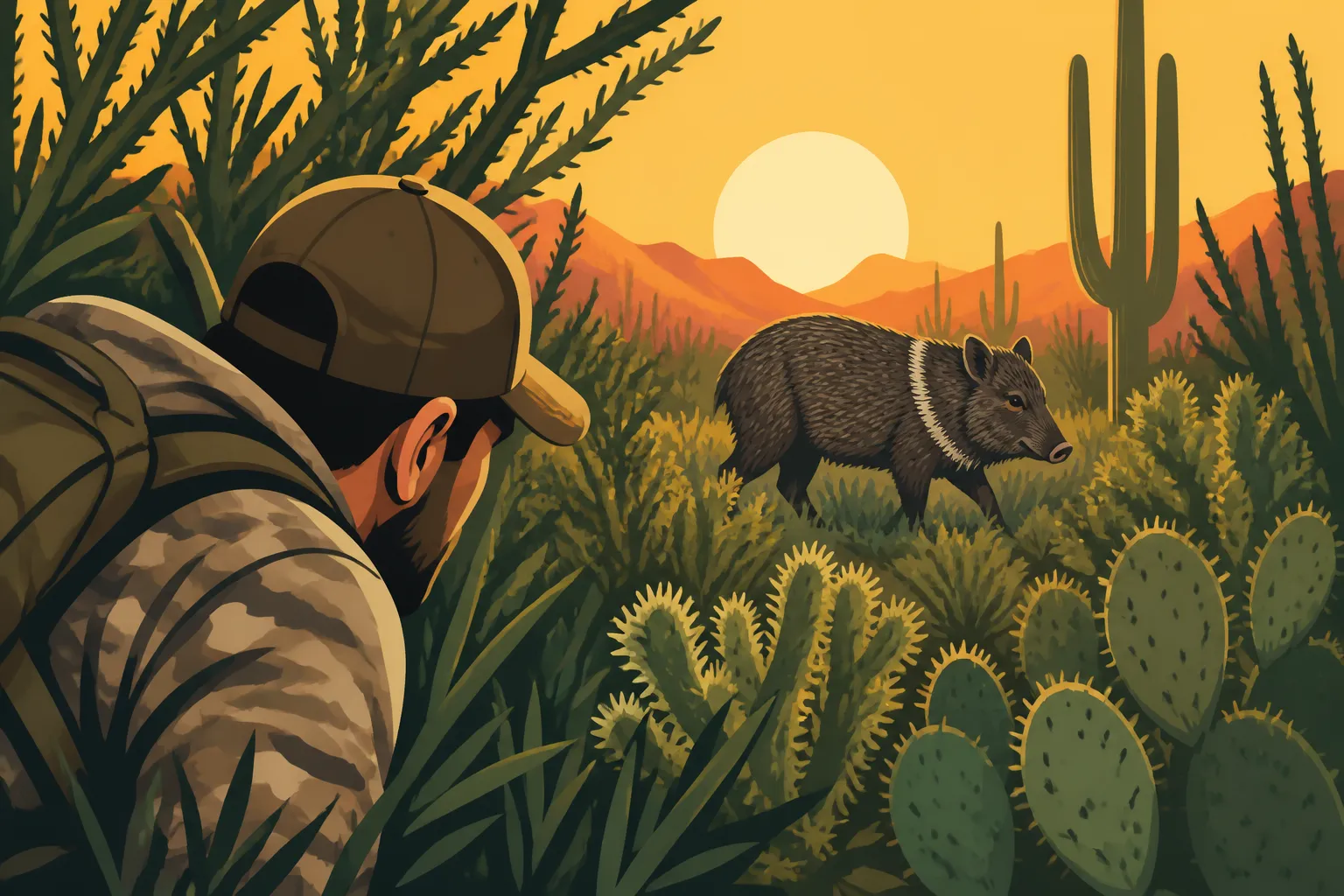
Tracking Javelina Through Thick Cover
The experience of tracking a javelina in Arizona's rugged, thorny expanses can test the patience and skill of even the most seasoned hunter. These wily desert dwellers have a knack for disappearing into seemingly impenetrable thickets, leaving you wondering if they vanished into thin air. If you've ever felt the frustration of a lost blood trail or a herd that simply melts away into the brush, you know the challenge firsthand. This comprehensive guide is designed to equip you with the knowledge and tactics to effectively track javelina through thick cover, turning those frustrating disappearances into successful recoveries.
Understanding Javelina Habitat and Behavior in Thick Cover
Before you can effectively track javelina, you need to truly understand why they favor dense vegetation and how their natural behaviors play into their elusiveness. It’s not just about finding tracks; it’s about anticipating their next move.
Why Javelina Seek Dense Vegetation
Javelina, also known as collared peccaries, are perfectly adapted to the Sonoran Desert, and much of that adaptation revolves around utilizing thick cover. First and foremost, dense vegetation offers crucial protection from the harsh elements. The Arizona sun can be relentless, especially during the early archery seasons or late winter hunts, and these thickets provide vital shade and cooler microclimates where javelina can escape the heat of the day. Without such refuge, they’d quickly overheat and become vulnerable.
Beyond temperature regulation, this cover is their primary defense against predators. Coyotes, bobcats, and mountain lions all pose a threat, and a javelina's best defense isn't always fighting—it’s disappearing. A dense mesquite stand, a tangled palo verde patch, or a formidable prickly pear forest can become an instant fortress. These areas provide visual concealment, making it incredibly difficult for predators (and hunters) to spot them, and the thorny nature of much of this vegetation acts as a physical barrier. They know how to navigate these environments with remarkable agility, seemingly shrugging off spines and thorns that would shred human skin and clothing. Additionally, these dense areas often harbor vital food sources, from the juicy pads and fruits of prickly pear cactus to various roots, tubers, and insects they unearth by rooting around. This means that a thick patch of cover isn't just a hiding spot; it's often their dining room and bedroom, making it a prime location to focus your tracking efforts.
Javelina Herd Dynamics and Scent Marking
Unlike solitary big game animals, javelina are highly social creatures, typically moving and living in herds that can range from a few individuals to more than a dozen. This herd dynamic presents both advantages and disadvantages for the tracker. On one hand, more animals mean more tracks, more disturbed vegetation, and potentially more scent. If you lose one track, another might lead you in the right direction. On the other hand, a confused jumble of tracks from multiple animals can be incredibly difficult to unravel, especially if they scatter after being spooked. Their collective movement can create a wider, more challenging tracking scenario.
Javelina have relatively poor eyesight compared to deer or elk, but they compensate with an exceptional sense of smell and keen hearing. This is a critical piece of information for the tracker. They rely heavily on scent for communication, employing scent glands located on their backs to mark territory, identify herd members, and communicate their presence. When tracking, especially in stagnant air, you might occasionally catch a faint, musky odor that indicates a javelina recently passed through. This distinct smell can be a strong indicator that you’re on the right path, even if visual signs are scarce. To learn more about this fascinating aspect of their communication, take a look at our guide on How Javelina Use Scent to Communicate.
They are primarily diurnal, meaning they are most active during the day, but their activity patterns are heavily influenced by temperature. During the hottest parts of the year or the middle of a warm day, they will often bed down deep in the thickest cover, becoming less active and harder to detect. Conversely, in cooler weather or during the early morning and late evening, they might move more openly, though they're rarely far from the safety of dense brush. Understanding these daily rhythms can help you predict when and where they'll be most likely to leave fresh, traceable signs.
Essential Tracking Techniques for Arizona's Tough Terrain
Once you understand the "why" behind their movements, you can focus on the "how" of tracking. Arizona's diverse and often unforgiving landscape demands a meticulous and patient approach to following these elusive animals.
Reading Subtle Signs in Hard Ground and Undergrowth
Tracking javelina through hard, rocky desert ground or dense undergrowth is far from a textbook exercise. You won't always find perfectly defined tracks. Instead, you'll need to develop an eye for the subtle clues they leave behind.
Start with prints. Javelina tracks are distinct: they have four toes on their front feet and three on their hind feet, but typically only the two main toes register clearly in the soil, sometimes showing a small, rounded imprint from the dewclaws in softer ground. Their prints are generally smaller and more pointed than a domestic pig's, and they lack the sharp, cloven shape of a deer track. Don't just look for a full print; sometimes all you'll see is a faint scuff mark, a shifted pebble, or a barely perceptible impression in the dust. You might only catch a partial print where a toe dug in, or a slight drag mark from their foot.
Beyond tracks, look for scat. Javelina droppings are small, pellet-like, and dark, often found in clusters or small piles. Fresh scat will be moist and dark, gradually drying out and turning lighter with age. Noticing scat near a bedding area or along a travel corridor can confirm their presence. They are also avid foragers. Look for disturbed earth where they've been rooting for tubers, bulbs, or insects, or torn and chewed prickly pear pads, which are a favorite food source. The spines might be broken or laid flat where they've fed. Occasionally, you might even find strands of their coarse, black-and-gray hair snagged on thorns or sharp branches, especially where they’ve squeezed through a particularly tight spot.
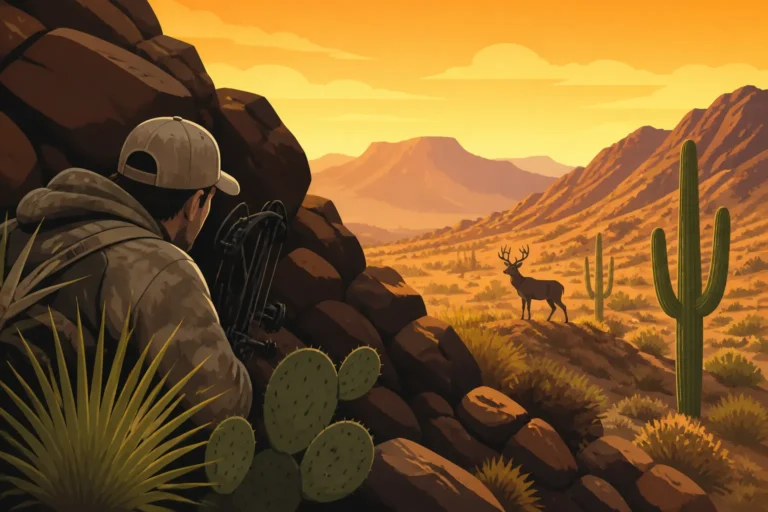
When you're actively tracking, move incredibly slowly. Stop often, taking a moment to scan not just the ground directly in front of you, but also the brush ahead with your binoculars. Even in thick cover, you might spot a twitching ear, the outline of a javelina's back, or a patch of disturbed leaves just beyond your immediate view. This "track and sign" method is invaluable: one moment you're focused on a print, the next you're looking up to confirm movement or further sign ahead. The ability to switch your focus from microscopic detail to a broader scan is a vital skill when chasing javelina through this kind of country.
Slow and Steady: The Art of the Grid Search
Losing a javelina's track in dense Arizona cover is not a failure; it’s an inevitability. The true measure of a tracker is how you respond to losing the trail. The key is to avoid rushing and instead adopt a systematic approach, often employing a grid search.
When you lose the track, mark your last confirmed sign. This is your anchor point. From there, resist the urge to immediately push forward blindly. Instead, expand your search outwards in ever-widening circles or a grid pattern around that last known sign. Imagine dividing the area into smaller squares and meticulously searching each one. You’re looking for any sign – not just clear tracks. This might include broken twigs, scuffed leaves, turned-over rocks, or even faint body impressions in softer ground where an animal might have momentarily paused or bedded. Remember that javelina often follow the path of least resistance through dense areas, so focus on game trails, washes, and openings in the brush.
Using a mapping application like GoHunt can be incredibly beneficial here. Before you even start hunting, GoHunt allows you to meticulously scout an area, identifying dense pockets of vegetation, potential bedding areas, and natural travel corridors like washes or canyons that javelina might use. You can mark waypoints when you find a track or lose one, creating a visual record of your search area. This digital aid helps you maintain your bearings, especially when you're deeply engrossed in a grid search and feel like you're going in circles. The "track and sign" method, where one hunter focuses on the minute details on the ground while a partner scans ahead for larger disturbances or movement, is highly effective for maintaining momentum while still being thorough.
Following Scent and Sound Cues
While visual signs are paramount, javelina tracking is a multi-sensory experience. Their excellent senses of smell and hearing mean that you, too, must employ yours to the fullest. The musky scent from their dorsal gland, mentioned earlier, can sometimes be surprisingly strong in calm, humid conditions or within a stagnant thicket where air isn't moving freely. If you catch this distinctive odor, it’s a strong indication that javelina are very close, perhaps even bedded just out of sight. Trust your nose as much as your eyes.
Javelina are also quite vocal, especially when agitated or communicating within their herd. Listen for their characteristic "woof" or a series of teeth-clacking sounds, which often signal alarm or aggression. This can tell you not only that you’re near them but also their general direction and mood. Beyond direct vocalizations, pay close attention to the subtle sounds of the desert: a sudden rustling in the brush that's too heavy for a rabbit, the sound of branches snapping, or the gentle thud of hooves on soft earth. These sounds can pinpoint their location even when you can't see them.
Wind direction is crucial, as always. You never want your scent to be blowing towards the animals you’re pursuing. For more on how to manage your scent and read environmental cues, our guide on Reading Wind on a Sky Island Stalk provides useful insights that apply universally across hunting scenarios in Arizona, even if you're not high up in a mountain range. Always try to approach from downwind, using the wind to your advantage to mask your presence. If you hear sounds or detect scent upwind, you know you need to adjust your approach or backtrack to get into a more favorable position.
Gear, Preparation, and Ethical Considerations
Successful javelina tracking isn't just about technique; it's also about being adequately prepared for the environment and committing to ethical hunting practices.
Navigating Impenetrable Thickets Safely
Arizona's javelina country is often defined by its formidable vegetation. Navigating these dense, thorny thickets demands specific gear and a mindset geared toward safety and comfort. Durable clothing is non-negotiable. Thick canvas or brush pants, often reinforced, are essential to protect your legs from mesquite thorns, catclaw acacia, and the ubiquitous spines of prickly pear cactus. Long-sleeved shirts, preferably made from a breathable but tough material, will protect your arms. Good quality leather gloves are also a must, not just for handling thorny vegetation but also for scrambling over rocks and through rough terrain.
Your footwear choice is equally critical. You’ll be covering varied ground, from loose sand to sharp rocks and dense, uneven undergrowth. Sturdy, comfortable boots with excellent ankle support are paramount to prevent twists and sprains. Look for boots with a robust sole that can withstand punctures and offer good traction. If you need guidance on selecting the right footgear for your Arizona adventures, our detailed guide on Choosing Boots for Rocky Desert Ground offers invaluable advice.
The desert environment also poses significant challenges regarding hydration and heat. Even in cooler months, tracking through thick brush is physically demanding, and dehydration can set in quickly. Always carry more water than you think you'll need, especially on longer forays into the backcountry. For a deeper dive into managing the desert heat and staying hydrated, consult Water You Must Carry on a Day Hunt and Heat Management on an Arizona Early Season Hunt. Finally, be acutely aware of snakes. Rattlesnakes are common in javelina habitat and will often seek refuge in the same dense cover. Watch where you step, where you place your hands, and listen for their distinctive rattle.
Optics and Mapping for Enhanced Tracking
While thick cover might seem to negate the need for powerful optics, they remain incredibly valuable for javelina tracking. You might not be glassing vast distances, but a good pair of binoculars (8x or 10x) will help you pick apart dense patches of brush at closer ranges, allowing you to identify a javelina's ears, nose, or a patch of hair that would otherwise be invisible to the naked eye. They are also useful for verifying subtle ground signs from a slight distance, allowing you to avoid contaminating a track.
Mapping applications continue to play a crucial role, even when you're deep in the thick stuff. Before and during your hunt, use apps like GoHunt to mark your location, plot your progress, and highlight key features. You can use their satellite imagery to identify the densest cover, potential escape routes for javelina, and crucial water sources, which often concentrate game. This E-Scouting an Arizona Unit Before the Season strategy helps you anticipate javelina movement patterns and plan your tracking route. Mark where you found fresh sign, where you lost a track, and any potential points of interest. This digital breadcrumb trail can be a lifesaver for navigating challenging terrain and for relocating your last known sign if you momentarily lose your bearings. Furthermore, these tools can pinpoint Finding Water in Arizona's Dry Country, which is often where javelina will be found.
Ethical Retrieval and Respect for the Animal
The moment of truth—the shot—is often followed by a sprint into the thickest cover available. This is where ethical responsibility truly comes into play. If a javelina runs after the shot, resist the urge to immediately charge after it. Give the animal time. This allows it to bed down and often succumb to its wounds, making for a much easier and more ethical recovery. Charging too soon can push a wounded animal further and deeper into impenetrable areas, making recovery extremely difficult or impossible.
Once you begin tracking, meticulously follow the blood trail. Even if it's sparse, mark the last spot of blood with flagging tape, a small rock, or a piece of toilet paper (which will degrade). Work slowly and methodically, expanding your search in a grid pattern around the last sign if the trail disappears. Remember, blood can be obscured by dust, fallen leaves, or simply soak into dry ground. Look for subtle smudges on vegetation, small drops on rocks, or even disturbed spiderwebs that might have caught a fleck of blood.
Knowing your shot placement is vital. If you're confident in a lethal shot, you can afford to give the animal a bit more time. If your shot was marginal, you might need to push the tracking more aggressively after a suitable waiting period. The goal is always a swift, humane harvest and a full recovery of the animal. This commitment to ethical retrieval is a cornerstone of responsible hunting. For a broader understanding of ethical hunting practices in Arizona, considering taking The Ethically Hunting Arizona Course Explained, which can also earn you a bonus point towards future draws.
| Sign Type | Javelina Description | Distinguishing Features | Why It Matters for Tracking |
|---|---|---|---|
| Tracks | Small, pointed, typically only two main toes register. May show dewclaws in soft ground. Front larger than hind. | Smaller, less cloven than deer. Lacks wide splay of domestic pig. Often subtle scuffs. | Confirms presence and direction of travel. Freshness indicates recent activity. |
| Scat | Small, dark, pellet-like, often in small clusters or piles. Varies with diet (e.g., prickly pear pads may be visible). | Consistent size and shape. Found along trails, bedding areas. | Confirms presence, diet, and often freshness helps determine recent use. |
| Browse/Digs | Disturbed earth where rooting for tubers/roots. Prickly pear pads with chew marks or broken spines. | Specific to javelina diet. Often found in areas with good cover and food. | Indicates feeding areas and recent activity. Can lead to bedding sites. |
| Hair | Coarse, bristly, black-and-gray hair. | Often snagged on thorns, barbed wire, or rough bark where they've squeezed through tight spots. | Direct evidence of passage, especially useful in dense, thorny cover. |
| Scent | Distinctive musky odor from dorsal gland, particularly strong in humid or still air. | Unique to javelina. Not easily confused with other animals. | Strong indicator of very recent presence or nearby bedded animals. |
| Sound | "Woof" or teeth-clacking when alarmed/aggravated. Rustling in brush, especially if multiple animals. | Specific vocalizations. Differentiate from other small game or birds. | Pinpoints immediate location or general direction when visual is impossible. |
Disclaimer
Please note that hunting regulations and seasons are subject to change. Always consult the latest Arizona Game and Fish Department regulations before planning any hunt. This guide is for informational purposes only and does not supersede official regulations.