Do Nonresidents Need Arizona Hunter Education?
Planning a hunting adventure in Arizona can feel like navigating a maze, especially when you’re a nonresident trying to sort out all the rules and regulations. One question that often pops up and causes a fair bit of head-scratching is whether you, as someone living outside the Grand Canyon State, actually need to complete a hunter education course. It’s a completely valid concern, as missing a crucial requirement could derail your trip before it even begins. This guide is here to untangle that confusion, walking you through Arizona's hunter education requirements for nonresidents, exploring alternatives, and even highlighting a significant benefit beyond just compliance.
Arizona's Core Hunter Education Requirements for Nonresidents
Let's cut right to the chase: Arizona's hunter education requirements for nonresidents largely mirror those for residents, with a few key distinctions. It’s not a blanket requirement for every single person who picks up a bow or rifle, but it certainly applies to specific age groups and offers a valuable incentive for all.
Understanding the Age Threshold for Certification
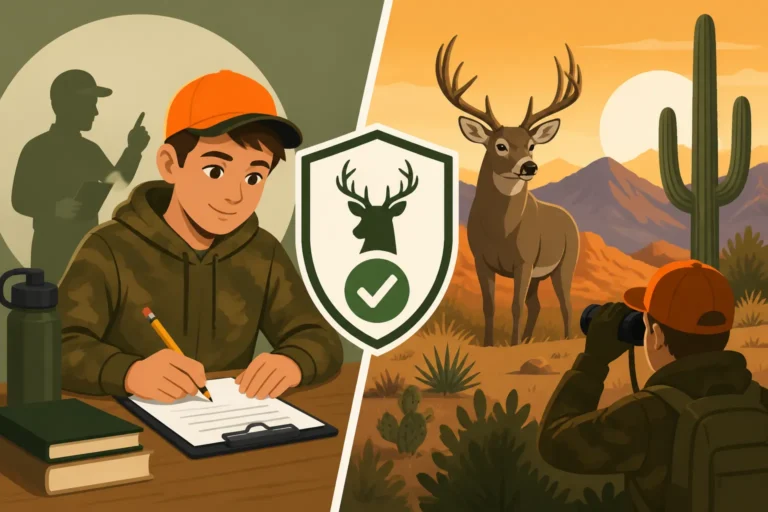
Arizona's primary focus for mandatory hunter education is on its younger participants. If you are a nonresident hunter under the age of 14, obtaining a hunter education certificate is generally a requirement before you can purchase a hunting license or tag for big game. This isn’t about making things difficult; it’s rooted in a deep commitment to safety and ensuring that the next generation of hunters understands ethical practices and firearm handling before they step into the field. The Arizona Game and Fish Department (AZGFD) wants to foster responsible hunters, and that starts with proper training. You can learn more about this general rule in depth by checking out our guide on Hunter Education Is Required Under 14 in Arizona.
Now, here's a crucial point that often surprises people: if you're an adult nonresident, say 18 years old or older, you typically aren't required to possess a hunter education certificate to purchase a general hunting license or specific tags in Arizona. This can be a relief for many seasoned hunters who might have completed a course decades ago but no longer have the physical card, or for those who simply started hunting later in life without a formal course requirement in their home state. However, while it might not be mandatory for adults to hunt, there's a powerful strategic reason why many nonresidents choose to complete the course anyway, which we'll dive into a bit later.
Reciprocity with Other States' Hunter Education Programs
One of the most common worries nonresidents have is whether their hunter education certification from their home state or province will be recognized in Arizona. And here's some good news: Arizona generally extends reciprocity to hunter education certifications issued by other states, Canadian provinces, or even other countries, as long as the course was approved by the International Hunter Education Association (IHEA). This means if you completed a hunter education course in, say, Texas or Alberta, that certificate should be valid in Arizona.
However, recognizing your certificate is one thing, and being able to prove it in the field is another. It's absolutely critical that you carry proof of your hunter education completion with you while hunting in Arizona. This could be your physical hunter education card, a clear digital image on your phone, or any official documentation that verifies your successful completion of an IHEA-approved course. Game and Fish officers prioritize safety and compliance, and having your credentials readily available demonstrates your commitment to hunting responsibly. To fully understand the scope of who needs to be certified, our post on Who Arizona's Hunter Education Rule Covers provides excellent details.
The Apprentice License: A Nonresident's Pathway Around Certification
For younger nonresident hunters, particularly those between the ages of 9 and 13, Arizona offers a valuable alternative to immediate hunter education certification: the Apprentice Hunting License. This license is designed to allow young hunters to gain practical experience in the field under direct supervision, without needing to complete the full hunter education course right away. It's a fantastic way to introduce new hunters to the sport, letting them experience a hunt firsthand before committing to the classroom and online components of education.
How the Apprentice License Works for Young Hunters
The Apprentice Hunting License in Arizona is pretty straightforward, but it comes with strict supervision requirements. A nonresident youth holding an apprentice license must be accompanied by an adult, 18 years of age or older, who holds a valid Arizona hunting license for the current year. This isn't just about being in the same general area; the adult must be in "direct supervision" of the apprentice hunter. This means they need to be close enough to hear and speak to the apprentice without yelling, and be able to provide immediate assistance and instruction. Think of it as hands-on, one-on-one mentorship right there in the field.
It's important to understand the details of The Apprentice License and What It Excludes. For instance, while the apprentice license allows the youth to participate in big game hunts, the supervising adult cannot be hunting big game themselves at the same time if they are only fulfilling the supervision role for the apprentice. They can, however, hunt small game concurrently. This ensures that the adult's full attention can remain on the safety and guidance of the young hunter. This option really shines for families who want to get their younger members involved in hunting without the immediate pressure of an education course, providing a flexible entry point into Arizona's diverse hunting opportunities.
Limitations and Considerations of the Apprentice License
While the Apprentice License is an excellent program, it's really designed as a stepping stone, not a permanent solution. For nonresidents, it's a way to get a taste of Arizona hunting, but it doesn't replace the long-term benefits of full hunter education certification. The main limitation, aside from the strict supervision requirements, is that completing your hunt via an apprentice license does not earn you a bonus point in Arizona's draw system, which is a significant incentive for many adult nonresidents.
Therefore, for any young hunter who plans to continue hunting in Arizona or other states regularly, completing an approved hunter education course remains the best long-term strategy. It instills a deeper understanding of safety, ethics, and conservation, which are lessons that will serve them throughout their hunting career. The apprentice license offers an initial opportunity, but full certification is the goal for true independence in the field. To get a better grasp of the minimum age for taking the course, check out The Youngest Age to Take Hunter Education.
Earning a Permanent Bonus Point Through Hunter Education
Now, for the big incentive that applies to all nonresidents, regardless of age: completing an Arizona-approved hunter education course can earn you a permanent bonus point in the state’s notoriously competitive big game draw. This is a game-changer for anyone serious about hunting Arizona’s trophy animals like elk, bighorn sheep, or even prime mule deer.
The Arizona Bonus Point System Explained
Arizona operates on a bonus point system for its limited-entry draw hunts. Essentially, the more bonus points you accumulate, the better your odds of drawing one of those coveted tags. Each year you apply and are unsuccessful, you earn another point for that species. But the hunter education bonus point is unique because it's a one-time, permanent point that doesn't depend on applying or being unsuccessful. It's a point you earn simply by becoming hunter education certified, and it's added to your record permanently. This is an incredible benefit, especially for nonresidents who face a 10% cap on tags, making every single point precious.
Consider the highly sought-after Arizona elk tags; draw odds can be abysmal, even with many points. That single hunter education point can literally be the difference between drawing a tag or not over a lifetime of applying. Many hunters use sophisticated tools like those offered by GoHunt to analyze draw odds and strategize their applications. Having that extra point on your record, right from the start, significantly boosts your long-term prospects. This is truly a "no-brainer" for any nonresident serious about their Arizona hunting future. Our post on The Permanent Point From Hunter Education goes into more detail about this valuable asset, and How a Course Earns You a Permanent Bonus Point breaks down the process.
How Nonresidents Can Obtain the Hunter Education Point
For nonresidents, earning this permanent bonus point typically involves completing an online hunter education course that is approved by the AZGFD. The beauty of online courses is their flexibility, allowing you to complete the coursework at your own pace from anywhere in the world. Many states, including Arizona, have adapted to modern learning styles, offering comprehensive, interactive online modules that cover everything from ethical hunting and wildlife conservation to firearm safety and first aid in the field.
A key point for nonresidents is that, for those 14 and older, Arizona's online hunter education courses generally do not require a separate field day to achieve certification. This differs from some other states that mandate an in-person, hands-on component. This flexibility is a huge advantage for nonresidents who can't easily travel to Arizona for a field session. You can generally finish the online course, pass the exam, and submit your certificate directly to AZGFD to get your point credited. To manage your expectations on the time commitment, take a look at How Long the Hunter Education Course Takes. It's a small investment of time for a permanent increase in your draw odds, which is a big deal when you look at the price of an Arizona tag. Furthermore, if you're curious about how this specific aspect works, our guide Does Hunter Education Include a Field Day? clarifies the requirements.
Practical Advice and Common Nonresident Questions
Navigating the specifics of nonresident hunter education in Arizona can still leave a few lingering questions. Let's tackle some common practical concerns to ensure you're fully prepared for your hunt.
Verifying Your Hunter Education Status
If you’ve taken a hunter education course in another state or country, it’s always a good idea to verify its reciprocity with Arizona well in advance of your hunt. While most IHEA-approved courses are accepted, a quick check with the Arizona Game and Fish Department can provide peace of mind. You can often do this by contacting their licensing division directly. It's far better to confirm your status beforehand than to run into issues when you're trying to purchase a license or are stopped by a game warden in the field.
What if you completed a course years ago and can't find your card? This happens all the time! Most states have a system for replacing lost hunter education cards, often through their online licensing portals or by contacting their game and fish department. Arizona can also help you look up your record if you took the course there. The important thing is not to wait until the last minute. Our article on Replacing a Hunter Education Card You Lost offers detailed steps on how to retrieve that essential documentation. Keep a digital copy on your phone and a physical one in your hunting pack—you can never be too prepared.
Planning Your Arizona Hunt with Education in Mind
Integrating hunter education into your overall hunt planning is a smart move, especially if you're aiming for those highly sought-after draw tags. For nonresidents, every little advantage counts. If you’re an adult nonresident and haven't taken a course, seriously consider completing an online Arizona-approved hunter education program specifically to gain that permanent bonus point. It's a small upfront effort that pays dividends for years to come in the draw. When you're using resources like GoHunt to research units and plan your application strategy, that extra point can significantly impact your choices and ultimately your success.
For families with younger, aspiring hunters, plan to have them complete their hunter education well before the season. While the Apprentice License is an option, full certification provides a deeper foundation and greater independence. Understanding The Arizona Hunter Education Age Requirement and the specific conditions for each age group will help you structure your family's hunting journey. Always factor in the time commitment for the course—even online, it's not something you can rush through in an hour. By making hunter education a priority, you're not just complying with regulations; you're investing in a safer, more ethical, and ultimately more rewarding hunting experience in Arizona. Remember, even with your Nonresident Arizona Hunting License Price and other costs, an extra bonus point is invaluable.
Disclaimer
Please note: The information provided in this guide is for general informational purposes only and is not legal advice. Hunting regulations can change frequently. Always consult the official Arizona Game and Fish Department regulations or contact them directly for the most current and accurate information before planning your hunt.