Who Arizona’s Hunter Education Rule Covers
The world of hunting regulations can feel like navigating a dense thicket, especially when you're trying to figure out something as fundamental as hunter education requirements. It’s easy to get lost in the jargon, wondering if you or your aspiring young hunter actually need that certification, what it entails, and what happens if you don't have it. This guide is designed to cut through that confusion, giving you a clear, empathetic, and detailed understanding of who Arizona's hunter education rule covers, why it matters, and how to successfully meet the requirements.
Who Arizona's Hunter Education Rule Covers
Navigating the various rules and stipulations set by the Arizona Game and Fish Department (AZGFD) can feel like a full-time job. One area that often causes a lot of head-scratching is hunter education. It’s not just a blanket requirement; it's nuanced, designed to ensure safety and ethical practices while still encouraging new participation in the hunting tradition. Understanding who is mandated to take the course versus who might benefit from it, even if not required, is crucial for staying on the right side of the law and fostering responsible hunting.
The Core Mandate for Big Game Hunters
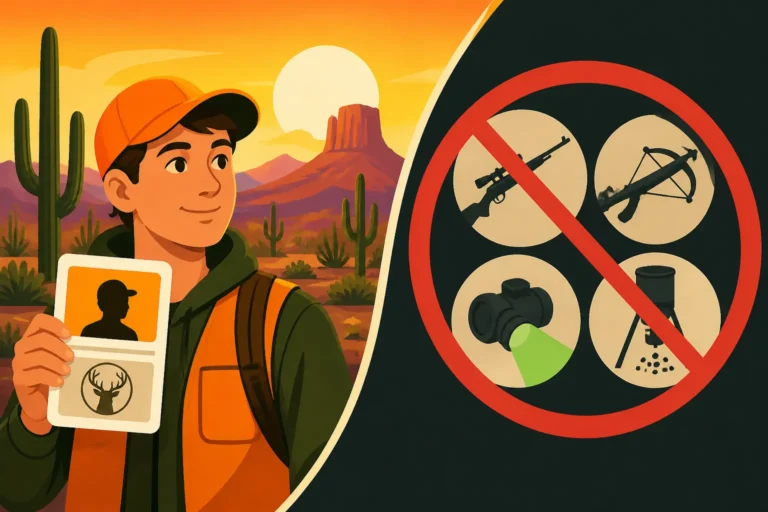
Let's get straight to the point: the primary group that must complete an Arizona Hunter Education course are those hunters under the age of 14 who want to hunt big game. This isn't just a suggestion; it's a hard rule designed to ensure that our youngest big game hunters have a foundational understanding of firearm safety, wildlife identification, and ethical hunting practices before they venture into the field. Imagine the stress of heading out for an eagerly anticipated elk hunt, only to realize at the last minute that your eager pre-teen hunting partner doesn't meet the legal requirements to carry a tag. That's a scenario no one wants, and this rule aims to prevent it.
This requirement specifically targets big game. Think about those highly sought-after deer, elk, or javelina tags. If you're planning a trip for any of Arizona's majestic species, and you have a young hunter in your party who will be holding their own tag, they absolutely need to have that hunter education card in hand. This isn't about being overprotective; it's about making sure every individual capable of harvesting an animal is equipped with the knowledge to do so safely and responsibly, particularly when dealing with powerful firearms or bows. It ensures a safer experience for the young hunter, their mentors, and everyone else afield.
For many families, this means planning ahead. The courses aren't always available at a moment's notice, and it takes time to complete them. So, if you're dreaming of a future hunt for your child, make sure to look into Hunter Education Is Required Under 14 in Arizona well in advance of any application deadlines or season openers. The AZGFD portal or even online mapping tools like GoHunt can provide season dates and application periods, helping you plan backward to ensure that all necessary certifications are in place.
Specifics for Different Age Brackets
The age breakdown is where things can get a little tricky, so let's clarify it. While the under-14 rule for big game is absolute, what about other age groups? If a hunter is 10, 11, 12, or 13 years old and wants to pursue big game, they need that hunter education certificate. There's no getting around it. This is a crucial safety measure, as these ages are often when young hunters are transitioning from observation to active participation.
However, if you're 14 years old or older, the Arizona hunter education requirement typically doesn't apply to you directly, unless you're a first-time hunter who has never held a hunting license in Arizona or another state. Confused? It essentially means that if you're an adult and have been hunting elsewhere, or have previously held an Arizona license, you're likely good to go. It's really aimed at bringing new, young hunters into the fold with a solid safety foundation. This also extends to older individuals who might be new to hunting altogether. If you're 25 and just getting into hunting, but have never had a license, the AZGFD wants to make sure you have the basics down.
It’s important to remember that these age brackets aren't just arbitrary lines in the sand; they're based on years of data and experience from wildlife agencies across the country. They aim to strike a balance between encouraging participation and maintaining a high standard of safety in the field. So, while an adult might not technically need the certificate, the knowledge gained from Hunter Education From Age Nine in Arizona can be invaluable, especially if you're stepping into hunting for the first time or revisiting it after a long hiatus.
How Non-Residents Fit into the Equation
For our friends visiting Arizona from other states, the hunter education rule also has specific provisions. It's often a point of anxiety for non-residents: "Do I have to take another course?" The good news is that Arizona generally recognizes hunter education certifications from other states or provinces. This is a common courtesy among wildlife agencies, understanding that safety principles are largely universal. So, if you've already completed a hunter education course in, say, Colorado, Texas, or British Columbia, and you have proof of that certification, you're usually all set for Arizona.
However, there's a critical caveat: you must be able to prove your certification. It’s not enough to just say you took a course; you need the actual card or a verifiable record. This is why it’s always a good idea to carry your hunter education card with you when you’re hunting, or at least have a clear, easily accessible photo of it on your phone. Imagine getting checked by a game warden deep in the Arizona backcountry, and you can’t produce proof. That could quickly turn a fantastic trip into a frustrating one. Many states, like Arizona, also have online portals where you can look up or print a replacement card if you've lost the original, which can be a lifesaver.
The key takeaway for non-residents is to do your homework well before your trip. A quick check of the AZGFD website or a call to their information line can clarify any specific concerns. You'll find that Arizona, like many western states, is very welcoming to out-of-state hunters, provided everyone adheres to the safety and legal requirements. So, yes, Do Nonresidents Need Arizona Hunter Education? — only if they're under 14 and pursuing big game without a prior recognized certification.
Understanding Age Requirements and Exemptions
The age at which a hunter needs to meet specific educational requirements can be one of the most confusing aspects of Arizona's hunting regulations. It's not a one-size-fits-all rule, and understanding the nuances is key to ensuring a smooth and legal hunting experience for everyone involved, especially our younger aspiring hunters. Arizona's system is designed to provide safety education when it's most impactful, without creating unnecessary barriers.
Minimum Age to Enroll in a Course
Arizona doesn't actually have a strict minimum age requirement to enroll in a hunter education course. This often surprises people, as some states do set a lower age limit. The philosophy here is that if a child is mature enough and interested enough to participate and understand the material, they shouldn't be held back. I've seen kids as young as eight or nine attend these courses with their parents, soaking up the information like sponges. Their parents might be there to guide them, answer questions, and generally reinforce the lessons.
However, while there's no enrollment minimum, there's a practical reality. The course material, especially the in-person field day aspects, can be quite challenging. It covers firearms safety, ethical hunting, wildlife identification, basic first aid, and even survival skills. A child needs a certain level of maturity and comprehension to truly benefit from the instruction and pass the final exam. So, while your seven-year-old could theoretically sit in, they might struggle to grasp complex concepts, making the experience more frustrating than educational. Most instructors would suggest waiting until a child is at least nine or ten, and truly expresses an interest, before enrolling them.
This flexible approach allows families to decide when their child is ready, fostering a more positive learning environment. Many parents find that taking the course with their child not only helps the child but also serves as a fantastic refresher for themselves. It reinforces good habits and reminds everyone of the core tenets of safe and ethical hunting. It also makes for a great shared experience, building excitement for future hunts together.
The "Under 14" Rule Clarified
This is the big one we touched on earlier, and it bears repeating with clarity: Anyone under 14 years of age who wishes to hunt big game in Arizona and possess their own big game tag MUST complete an Arizona Hunter Education course. There's no ambiguity here. If your 12-year-old has drawn a coveted junior elk tag, or you're planning an OTC archery deer hunt for your 13-year-old, that hunter education card is non-negotiable.
The rule exists for good reason. Hunting big game often involves powerful weapons, navigating rugged terrain, and making critical decisions in dynamic situations. A young hunter needs to understand shot placement, ethical retrieval, legal shooting hours (which you can learn about in Legal Shooting Hours and Blaze Orange in Arizona), and basic survival. The hunter education course provides this critical foundation. Without it, the risks—both to safety and to the integrity of the hunt—are simply too high. It's about empowering young hunters with knowledge, not just putting a weapon in their hands.
Consider a real-world scenario: a father and his 13-year-old daughter are hunting Coues deer in the Sky Islands. The daughter has a valid tag. If she hasn't completed hunter education, she's hunting illegally. Not only could they face fines, but the tag could be revoked, and future hunting privileges jeopardized. It's a risk simply not worth taking. The AZGFD wants to cultivate responsible hunters from a young age, and this rule is a cornerstone of that mission.
When Hunter Education Isn't Strictly Required
Despite the emphasis on education, there are situations where hunter education isn't a strict requirement in Arizona. The most prominent exemption is for individuals 14 years of age or older. If you're an adult who has already obtained a hunting license in Arizona or any other state (or country) in the past, you're generally exempt. The assumption is that you've either received prior education or have demonstrated sufficient experience through past licensing.
Another key exemption relates to small game. If your young hunter is only interested in pursuing small game like rabbits, squirrels, or quail, they don't need to complete a hunter education course, regardless of their age. This is often where many young hunters start, as it provides a fantastic entry point into the hunting tradition with less complex scenarios and typically lower-powered firearms like shotguns or .22 rifles. This allows families to ease into hunting, focusing on basic gun safety and outdoor ethics before moving into big game. The rule specifically states that Taking Two Unlicensed Children Afield for small game is permissible under certain conditions, further illustrating this flexibility.
This distinction between big game and small game is important. It acknowledges that the complexities and potential risks associated with hunting big game are different. It allows for a more progressive learning curve, enabling new hunters to build confidence and skills on small game hunts before tackling the challenges of big game. However, even if not required, the knowledge and skills taught in a hunter education course are always beneficial, fostering a more informed and responsible hunter in any pursuit.
The Apprentice Hunting License: A Stepping Stone
Arizona offers an "Apprentice Hunting License" which is a fantastic program designed to introduce new hunters of all ages to the sport, particularly those who haven't yet completed hunter education. It acts as a bridge, allowing supervised participation while encouraging formal education. It acknowledges that sometimes, the best way to learn is by doing, under the watchful eye of an experienced mentor.
What the Apprentice License Allows
An Apprentice Hunting License in Arizona permits an uncertified hunter to participate in hunting activities, but only under direct supervision. This "direct supervision" is a crucial component: it means that an adult, at least 18 years old, who does possess a valid hunting license and has completed hunter education (if required for their age/situation), must accompany the apprentice hunter and be close enough to provide immediate instruction and assistance. Think of it like a learner's permit for driving – you can operate the vehicle, but you need a licensed driver right there with you.
This license is an incredible opportunity for parents, guardians, or experienced hunters to share their passion without the immediate hurdle of hunter education certification for the beginner. It means a 12-year-old who hasn't completed the course yet can still join you on a javelina hunt, or a new adult hunter can try their hand at quail without having to wait for a course opening. It's about getting people into the field, experiencing hunting firsthand, and hopefully, sparking a lifelong interest in conservation and ethical sportsmanship.
The beauty of the apprentice license is its flexibility. It allows a young person to experience the thrill of the hunt, the beauty of the Arizona landscape, and the satisfaction of ethical harvesting, all while being guided by an experienced hand. It's often the spark that leads them to pursue full hunter education certification. For example, if your child or a new adult friend wants to join you on a trip, but a hunter education course isn't available immediately, the apprentice license provides a legal pathway to still participate.
Limitations of the Apprentice License
While the Apprentice Hunting License is a valuable tool, it does come with specific limitations that hunters must understand. The most significant one, as touched upon, is the requirement for direct supervision by a certified, licensed adult hunter. You cannot simply send an apprentice hunter out on their own, even if they have a tag. The supervisor must be close enough to maintain immediate control and provide guidance, which often means being within arm's reach or speaking distance. This is for the safety of the apprentice, other hunters, and the public.
Another critical limitation, and one that often catches people off guard, is what The Apprentice License and What It Excludes from the big game realm. While an apprentice license might allow an adult to hunt small game under supervision, it generally does not allow individuals under 14 to hunt big game without hunter education, even with supervision. This is where the core hunter education mandate for big game under 14 takes precedence. The apprentice license is more commonly used for individuals 14 and older who are new to hunting and haven't completed a course yet, or for young hunters pursuing small game.
It's vital to read the specific regulations thoroughly before relying on an apprentice license for a big game hunt involving a hunter under 14. The intent of the apprentice license is to introduce new hunters, not bypass fundamental safety requirements for high-risk activities. Always double-check the latest AZGFD regulations to ensure you're in full compliance. Making a mistake here could lead to penalties and a ruined hunting experience, so careful planning is paramount.
Mentoring Under an Apprentice License
Mentoring an apprentice hunter is a huge responsibility and a deeply rewarding experience. If you're the experienced hunter taking someone afield under an Apprentice Hunting License, you become the primary instructor and safety officer. Your role extends far beyond just pointing out game; you are responsible for teaching safe firearm handling, ethical decision-making, understanding game laws, and respecting wildlife. This means constantly communicating, demonstrating best practices, and intervening when necessary.
This mentoring period is arguably the most impactful part of a new hunter's journey. It’s where they learn not just the mechanics of hunting, but the deeper values of conservation, respect for nature, and the importance of responsible stewardship. It’s about teaching them to read the landscape, understand animal behavior, and appreciate the challenge of the hunt. Imagine being able to impart wisdom on how to track a javelina through prickly pear or how to set up for a shot on a desert mule deer. These are lessons best learned firsthand, from someone you trust.
While the apprentice license provides the legal framework, the true education comes from the mentor. It's an opportunity to build a lasting bond, instilling confidence and a profound appreciation for the outdoors. Tools like GoHunt can even help mentors and apprentices scout units together virtually, identifying potential hunting spots, terrain features, and access points, making the preparation part of the learning experience too. It's a chance to pass on a tradition, ensuring that future generations continue to cherish and protect Arizona's incredible wildlife.
How Hunter Education Benefits All Hunters
Beyond merely satisfying a legal requirement, hunter education offers a wealth of knowledge and skills that can profoundly enhance any hunter's experience. It's not just a hoop to jump through; it's an investment in safety, ethics, and ultimately, success in the field. Even if you're an experienced hunter who isn't technically required to take the course, the refreshers and new perspectives offered can be invaluable.
Safety First: A Foundation for Responsible Hunting
At its core, hunter education is about safety. It’s designed to prevent accidents, both in the field and at home. The course meticulously covers firearm and archery safety, emphasizing crucial rules like always pointing the muzzle in a safe direction, treating every firearm as if it's loaded, and being sure of your target and what's beyond it. These might seem like basic tenets, but consistent reinforcement is what prevents tragic mistakes.
Think about the sheer variety of terrain and situations an Arizona hunter encounters. From dense ponderosa pine forests on the Mogollon Rim to wide-open desert plains, each environment presents unique safety challenges. Hunter education prepares you for these diverse scenarios, teaching you how to safely cross fences, navigate challenging terrain with a loaded firearm, and communicate effectively with hunting partners. It also covers safe tree stand practices, proper field dressing techniques (especially important for Field Dressing in Desert Heat), and how to handle a retrieved animal.
This foundation of safety isn't just for the hunter; it extends to everyone in the outdoors. A safe hunter is a responsible member of the community, reducing the risk of accidental shootings or misidentification of targets. It helps instill confidence, knowing that you and your hunting partners are operating with a shared understanding of best practices, making the entire experience more enjoyable and less stressful. The AZGFD understands that the reputation of hunting relies heavily on the safety record of its participants.
Ethical Considerations and Conservation
Hunter education goes far beyond just safety; it deeply embeds ethical hunting practices and a strong sense of conservation. It teaches hunters the principles of fair chase, which means not taking undue advantage of an animal. This includes understanding appropriate shot distances, avoiding harassment of wildlife, and respecting private property boundaries. It’s about ensuring that the pursuit is challenging and honorable, reflecting well on the hunting community.
Moreover, the course provides a comprehensive overview of wildlife management and the critical role hunters play in conservation. Many new hunters don't realize that hunting license fees and excise taxes on hunting equipment are primary funding sources for wildlife agencies like AZGFD. Hunter education explains this North American Model of Wildlife Conservation, illustrating how responsible hunting directly contributes to healthy wildlife populations and habitat preservation for all species, not just those hunted. It paints a picture of why seasons and bag limits exist.
This ethical grounding is vital for maintaining the public's acceptance of hunting. When hunters operate ethically, retrieve game promptly, and respect the land, they act as ambassadors for the sport. The course explains topics like why Baiting Rules That Apply in Arizona exist and the importance of leaving no trace. It fosters a deep respect for the animals we pursue and the landscapes they inhabit, transforming hunting from a simple harvest into a meaningful connection with nature.
Beyond the Basics: Skills and Knowledge Gained
While safety and ethics form the backbone, hunter education courses in Arizona also equip participants with practical skills and knowledge that extend well beyond the obvious. You’ll learn about wildlife identification, not just of game species, but also protected or non-game animals you might encounter. This is critical for making informed decisions in the field and avoiding mistakes. Understanding how to differentiate a Coues deer from a mule deer, for instance, can be important if your tag specifies a certain species.
The curriculum often includes basic map and compass skills, which are invaluable in Arizona’s vast public lands, even in the age of GPS. Knowing how to read a topographic map can literally be a lifesaver if your electronic devices fail. You'll also learn about basic survival techniques, what to do if you get lost, and essential items to carry in your pack. These are skills that are useful not just for hunting, but for any outdoor recreation.
Additionally, many courses delve into tracking wounded game, proper field care of meat to ensure quality, and fulfilling mandatory reporting requirements after a harvest. This comprehensive approach ensures that new hunters are not just capable of taking an animal, but are also proficient in the entire process from pursuit to table, all while adhering to legal and ethical standards. This kind of holistic education empowers hunters to be self-reliant, knowledgeable, and responsible in every aspect of their outdoor adventures.
Navigating the Hunter Education Course Itself
Once you've determined that you or your young hunter needs to complete an Arizona Hunter Education course, the next step is to understand how to actually take it. The AZGFD has made efforts to offer flexible options, recognizing that people have different schedules and learning styles. It’s not just about sitting in a classroom anymore; there are pathways to fit various needs, all designed to deliver comprehensive instruction.
Course Formats: Online, In-Person, or Hybrid
Arizona offers a few different formats for hunter education, primarily: traditional in-person classes, online courses, and hybrid options that combine online learning with a mandatory field day. The best choice often depends on your learning preference, availability, and how quickly you need the certification.
The traditional in-person class is often preferred by those who thrive in a structured classroom setting and enjoy direct interaction with instructors and other students. These courses typically run over a weekend or several evenings, culminating in a written exam and often a practical firearms handling test. They provide hands-on experience and immediate feedback, which can be particularly beneficial for younger students or those with limited prior exposure to firearms. The camaraderie built in these classes can also be a positive experience, connecting you with fellow hunters and mentors.
Online courses offer immense flexibility. You can complete the coursework at your own pace, from the comfort of your home, fitting it around work or school schedules. This is a popular option for busy adults or older teens. However, a crucial point for Arizona is that simply completing an online course alone is generally not sufficient. Most online options require a follow-up field day. This brings us to the hybrid format, which combines the convenience of online learning for the theoretical material with the essential practical, hands-on experience of a field day. This often includes live-fire exercises, navigating mock hunting scenarios, and demonstrating safe gun handling. It’s a great balance, ensuring that while you learn the "how-to" online, you also get to "do" it safely in person.
What the Curriculum Covers
The Arizona Hunter Education curriculum is thorough, designed to produce well-rounded, responsible hunters. It covers a wide array of topics, ensuring that graduates are prepared for many situations they might encounter in the field. The goal is to provide a holistic understanding of hunting, not just the act of shooting.
Key areas of instruction include:
- Firearm Safety and Handling: This is foundational, covering proper loading, unloading, storage, transportation, and safe carrying techniques for rifles, shotguns, handguns, and even muzzleloaders. You'll learn the different action types and how to safely manipulate them.
- Archery Equipment: For bowhunters, the course also touches on safe archery practices, equipment components, and ethical shot placement for bows. This is increasingly important with the popularity of How to Hunt Arizona's Five-Month OTC Archery Deer Season.
- Wildlife Identification: Learning to distinguish between game species, identifying male vs. female animals when restricted by tag, and recognizing protected species is critical. This section also often covers basic animal anatomy relevant to ethical shot placement.
- Hunting Ethics and Laws: This delves into the principles of fair chase, respect for wildlife and landowners, understanding game laws, bag limits, season dates, and the importance of reporting harvests.
- Survival and First Aid: Basic outdoor survival skills, such as signaling for help, building a makeshift shelter, and administering basic first aid for common hunting injuries, are taught. This is particularly relevant in Arizona's remote and often rugged terrain.
- Map, Compass, and GPS Use: Fundamental navigation skills are covered, teaching students how to read topographic maps and use a compass, even if they primarily rely on GPS devices like those integrated into GoHunt for e-scouting.
- Conservation and Wildlife Management: This section educates students on the role of hunting in wildlife conservation, the North American Model, and how license fees fund habitat projects and scientific research.
- Hunter Responsibility: Emphasizing respect for non-hunters, proper field dressing and meat care, and leaving no trace are all key components that build responsible stewards of the land.
This comprehensive approach ensures that graduates are not just safe, but also informed and ethical participants in the hunting tradition.
Preparing for the Field Day (If Applicable)
If you've chosen an online or hybrid course, the field day is a mandatory and extremely important component. It's your chance to put theory into practice under the guidance of experienced instructors. Don't underestimate its importance; it’s where many critical safety and practical skills are solidified.
To prepare for your field day, first and foremost, ensure you've completed all the online coursework and passed any prerequisite quizzes. Arrive well-rested and ready to actively participate. Dress appropriately for the weather and outdoor activities, as you'll likely be spending time outside on a range or in a simulated field environment. Bring any required materials, such as your completed online certificate, a valid ID, and a pen. It's also wise to bring water and snacks, especially if it's a longer session, as Arizona weather can be unpredictable.
During the field day, expect to demonstrate safe firearm handling, including carrying, loading, unloading, and crossing obstacles. You’ll likely participate in live-fire exercises on a shooting range, where instructors will evaluate your marksmanship and adherence to safety protocols. There might also be scenarios where you identify safe zones of fire, practice ethical shot placement with simulated targets, and learn about blood trailing. This hands-on experience is invaluable and often includes a final practical exam in addition to a written test. Treating the field day seriously is paramount, as it's the final step to proving you have the practical skills to be a safe hunter.
What Happens After Certification?
Successfully completing your Arizona Hunter Education course isn't just about getting a piece of paper; it marks the beginning of a new chapter in your hunting journey. Beyond compliance, there are real benefits and responsibilities that come with your certification, solidifying your place in the hunting and conservation community.
Receiving Your Hunter Education Card
Once you’ve successfully completed all components of the Arizona Hunter Education course, including passing the final written exam and any required field day practical tests, you'll receive your official Arizona Hunter Education card. This small plastic card is your proof of certification and should be kept safe, just like your hunting license. It's the document that validates you've met Arizona's safety and educational standards.
Typically, instructors will issue a temporary certificate immediately upon successful completion. The official, more durable card is usually mailed to you within a few weeks. It's always a good idea to keep both the temporary certificate and the official card in a safe place. Many hunters keep a digital photo of their card on their phone as a backup, in case the physical card is misplaced while afield. Remember, a game warden can request proof of your hunter education if you're hunting in a capacity where it's required (e.g., if you're under 14 and hunting big game). Having it readily available prevents any unnecessary delays or complications.
This card is a significant milestone, representing your commitment to safe and ethical hunting. It's a badge of honor in the hunting community, signifying that you've taken the steps to educate yourself and become a responsible participant in this time-honored tradition. It's the gateway to being able to legally pursue big game as a young hunter, or for anyone who needs it, and a foundation for a lifetime of outdoor adventures.
The Permanent Bonus Point Benefit
One of the often-overlooked, but incredibly valuable, benefits of completing an Arizona Hunter Education course is the permanent bonus point you earn. Arizona's big game draw system is highly competitive, especially for species like elk and antelope. Every bonus point you accumulate significantly increases your odds of drawing a coveted tag. To earn a point that never expires, simply for taking a safety course, is a fantastic incentive.
This permanent bonus point is a powerful tool in a state with such sought-after hunts. It essentially gives you a head start in the draw, a permanent advantage that will stay with you throughout your hunting career in Arizona. Imagine trying for that trophy bull elk tag in a unit like 9, 10, or 23; every single point matters. This single point from hunter education can, over time, make a real difference in your draw odds, especially when combined with loyalty points and points earned from applying each year. It effectively rewards your commitment to safety with a tangible benefit that aids your pursuit of Arizona's magnificent big game.
It's important to understand how this point works within the Arizona draw system. It's a permanent point that adds to your application each time you apply for a species. For example, if you accumulate 5 points through applying, your hunter education point makes it 6. This point is a one-time award, but its impact is perennial. The AZGFD even offers an additional "loyalty point" for applying for five consecutive years, which further stacks the odds in your favor. Knowing How a Course Earns You a Permanent Bonus Point can truly shape your long-term draw strategy, making hunter education not just a requirement, but a strategic investment for any serious Arizona hunter.
Replacing a Lost Card
Life happens, and sometimes important documents like your hunter education card get lost, damaged, or simply misplaced. Don't panic! The Arizona Game and Fish Department understands this and has a process in place to help you replace a lost card. It’s a common issue, and thankfully, it's usually a straightforward fix.
The easiest way to replace your card is often through the AZGFD's online portal or by contacting their customer service. You'll typically need to provide some identifying information, such as your full name, date of birth, and possibly the year you completed the course. The department maintains records of all certified hunters, so they can verify your completion. Once verified, you can usually print a temporary card directly from the portal, and often request a physical replacement card to be mailed to you for a small fee. This online accessibility is incredibly convenient, especially if you realize you've lost your card just before a hunt.
It's a good practice to always keep your hunter education information updated in your AZGFD customer profile. That way, if you ever need to access it quickly, all your details are current. Remembering to Replacing a Hunter Education Card You Lost is crucial, as going afield without proof of certification, when required, can lead to unnecessary trouble. Just like you wouldn't forget your hunting license or tags, your hunter education card, if applicable, is an essential piece of documentation that you always want to have readily available.
Arizona Hunter Education Requirements at a Glance
To simplify all the information, here’s a quick reference table summarizing Arizona's hunter education requirements. This should help you quickly determine who needs what and when.
| Age Group | Hunting Activity | Hunter Education Required? | Notes |
|---|---|---|---|
| Under 14 | Big Game | Yes | Mandatory for any hunter under 14 who wants to possess their own big game tag. |
| Under 14 | Small Game | No | Not required. Recommended to hunt under supervision of an adult. |
| 14 and Older | Big Game | No | Generally not required IF you have previously held a hunting license in AZ or another state/country. If truly a first-time hunter, it's highly recommended and might be implied by certain license purchases. |
| 14 and Older | Small Game | No | Not required. |
| Any Age (Apprentice) | All Game | No (with supervision) | Requires an Apprentice License and direct supervision by a licensed, certified adult (18+). May have limitations for big game under 14. |
| Non-Resident | All Game | No (if certified elsewhere) | Arizona honors hunter education certifications from other states/provinces. Must be able to provide proof. If under 14 for big game, still need certification (AZ or elsewhere). |
This table should serve as a handy guide, but always remember that the official AZGFD regulations are the definitive source. When in doubt, always err on the side of caution and reach out to the department directly.
Disclaimer
This article is for general informational purposes only and does not constitute professional advice. Laws, prices and regulations vary by location and change over time. Consult a qualified professional for guidance on your specific situation.