Which Young Hunters Must Certify Before Big Game
Figuring out the ins and outs of Arizona's hunting regulations can feel like trying to track a Coues deer through a thick mesquite patch – confusing, full of twists, and if you get it wrong, it can lead to frustration or even a missed opportunity. One area that often leaves parents and guardians scratching their heads is exactly when their young hunter needs to complete hunter education before they can even think about chasing big game. It's not always a straightforward answer, and getting it wrong can mean a ruined hunt or even legal trouble. This guide will walk you through the specific requirements, clarify common misconceptions, and help you ensure your aspiring big game hunter is ready and legal for their next Arizona adventure.
Understanding Arizona's Hunter Education Mandate for Youth
Arizona has a clear, albeit sometimes nuanced, stance on hunter education for its youngest sportsmen and women. The core idea is to ensure that anyone participating in the pursuit of big game understands safety, ethics, and conservation principles. This isn't just about passing a test; it's about instilling a responsible mindset that lasts a lifetime in the field. Ignoring these rules isn't just a minor oversight; it's a direct risk to safety and the future of hunting.
The General Age Requirement and Exceptions
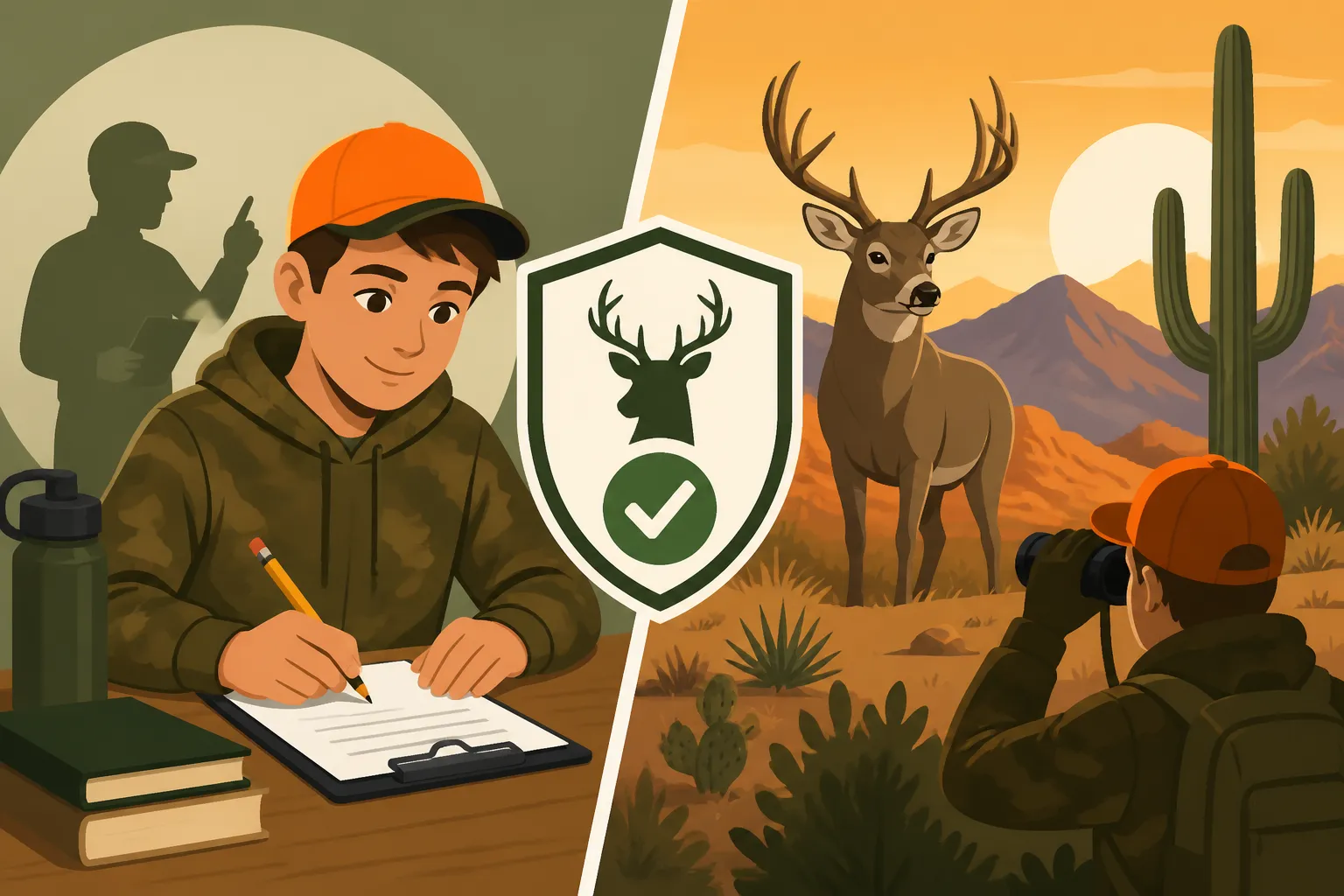
The Arizona Game and Fish Department (AZGFD) generally requires that any person under 14 years of age must complete a hunter education course before hunting big game in Arizona. This includes species like deer, elk, bear, mountain lion, bighorn sheep, bison, and javelina. It's a foundational requirement designed to ensure that even with adult supervision, young hunters have a basic understanding of safe firearm handling, shot placement, and game identification. It's easy to assume that if you're right there with them, teaching them as you go, that's enough, but Arizona law has a specific process for a reason.
However, there's a critical exception that often causes confusion: the Apprentice Hunting License. While it allows youth to hunt certain game under supervision without hunter education, this exception explicitly does not apply to big game. This is a crucial distinction that many overlook, leading to situations where families arrive at deer camp only to find their young hunter isn't legally cleared to participate. The intent is to provide an entry point for small game and general hunting experience while mandating a higher standard of safety and knowledge for the pursuit of larger, more challenging animals.
What "Big Game" Specifically Means in Arizona
When Arizona regulations talk about "big game," they are referring to a very specific list of species. This isn't just a casual term; it has legal implications for licensing and hunter education. The Arizona Game and Fish Department defines big game as elk, deer (both Coues and mule deer), pronghorn, bighorn sheep, bison, bear, mountain lion, and javelina. It's important to remember that javelina, while smaller than many other big game animals, is indeed classified as big game in Arizona, and therefore, the hunter education requirement applies to youth pursuing them.
This classification is important because the rules for small game, migratory birds, and predatory/furbearing animals often differ significantly. For example, a young hunter might be able to chase cottontails or quail with an Apprentice Hunting License under appropriate supervision, but that same license won't cut it for an archery deer hunt or a rifle javelina outing. Knowing this distinction upfront can save you a lot of headache and ensure your child isn't accidentally in violation of the law. You can delve deeper into what these hunts entail by looking into subjects like Arizona's Over-the-Counter Archery Deer Tag Explained or Javelina Is Arizona's Most Accessible Big Game.
The Apprentice Hunting License: A Stepping Stone or a Detour?
The Apprentice Hunting License program in Arizona is a fantastic initiative, designed to introduce new hunters of all ages, especially youth, to the sport without the immediate hurdle of completing hunter education. It allows participants to hunt under the direct supervision of an adult who is already licensed and at least 18 years old. This provides an invaluable mentorship opportunity, allowing experienced hunters to pass on their knowledge and passion directly in the field. Many states have similar programs, and they've been instrumental in recruiting new hunters.
When an Apprentice License Works for Small Game, But Not Big Game
While the Apprentice Hunting License is a wonderful tool for getting new hunters into the field, its limitations regarding big game are often misunderstood. An apprentice license allows youth (and adults) to hunt small game, predatory animals, furbearers, and even some migratory birds without first completing hunter education. This means a parent can take their child out for a dove hunt or to chase rabbits, teaching them the ropes firsthand. It's a practical way to gain experience and build confidence before committing to the full hunter education course.
However, when it comes to big game, the rules change. Arizona explicitly states that an Apprentice Hunting License does not authorize the holder to hunt big game. This means that if your child, who is under 14, wants to apply for an elk tag, or join you on an over-the-counter archery deer hunt, they must have completed a certified hunter education course, regardless of whether they hold an apprentice license. This is a key distinction that cannot be overstated. For more specifics, consider reading about Why an Apprentice License Excludes Big Game.
Supervising Young Hunters Without Certification
Even if your child is too young to be required to complete hunter education (i.e., under 10 years old, though AZGFD recommends starting around age 9 for the course), or if they are hunting small game on an apprentice license, strict supervision rules apply. The supervising adult must possess a valid Arizona hunting license, be at least 18 years of age, and remain within arm's length of the apprentice hunter at all times. This "arm's length" rule isn't just a suggestion; it's a critical safety measure ensuring immediate intervention is possible.
This level of direct, constant supervision underscores the responsibility placed on the mentor. It's not just about guiding the shot; it's about being present for every decision, every movement, and every lesson. If you're wondering about taking multiple uncertified children afield, you might find clarity in Taking Two Unlicensed Children Afield. This close mentorship is a cornerstone of responsible hunting and is something that platforms like GoHunt can help you plan for, by providing maps to identify safe, accessible public lands suitable for such close supervision.
Pathways to Certification: Online, In-Person, and Field Days
Once you understand that hunter education is a must for your young hunter to pursue big game in Arizona, the next step is figuring out the best way to get them certified. The Arizona Game and Fish Department offers a few different formats to accommodate varying schedules and learning styles, ensuring accessibility for families across the state. Each method aims to cover critical information, from firearm safety and game laws to wildlife identification and ethical considerations.
Navigating Online Hunter Education Courses
For many families, especially those with busy schedules or living in remote areas, the online hunter education course is an incredibly convenient option. These courses allow students to complete the academic portion of the training from the comfort of their home, at their own pace. Most online courses are engaging, using interactive modules, videos, and quizzes to teach the material. This flexibility is a huge benefit, as it removes the need for lengthy classroom sessions.
However, it's vital to understand that an online course alone is typically not enough to earn full certification in Arizona. While you can complete the bulk of the curriculum virtually, Arizona usually requires a practical, hands-on "field day" component. This is where students get to demonstrate their knowledge in a real-world setting, handling firearms safely, practicing shooting fundamentals, and participating in outdoor scenarios. Always double-check the specific requirements, as course structures can sometimes change. You can learn more about the duration by checking How Long the Hunter Education Course Takes.
The Importance of Field Days and Hands-On Training
The field day component of Arizona's hunter education is arguably the most critical part, particularly for young hunters. This is where theoretical knowledge translates into practical skills. During a field day, certified instructors guide students through various stations focusing on:
- Live-fire range practice: Safely handling and shooting firearms or bows under direct supervision.
- Tree stand safety: Proper use of harnesses and climbing techniques.
- Simulated hunting scenarios: Practicing shot selection, safe zones of fire, and recovery techniques.
- Map and compass/GPS navigation: Essential skills for navigating public lands.
- Game identification and ethics discussions: Reinforcing responsible hunting practices.
These hands-on experiences are invaluable. They build confidence, reinforce safety protocols that are hard to teach purely online, and provide an opportunity for direct interaction with experienced instructors. Missing out on a field day means missing the chance to solidify these practical skills, and most importantly, it means your young hunter won't receive their official certification, leaving them unable to hunt big game legally. If you're unsure if a particular course includes this, look for information like Does Hunter Education Include a Field Day?.
Planning Ahead for Your Young Hunter's First Big Game Season
There's nothing quite like sharing the excitement of a big game hunt with a young person. The anticipation, the scouting trips, the early mornings – these are memories that last a lifetime. But to ensure those memories are good ones and not marred by bureaucratic headaches, planning ahead is absolutely essential. Don't wait until a week before the season opener to realize your child's paperwork isn't in order.
Checking Certification Status and Deadlines
The first step in planning is always to verify your young hunter's current hunter education status. If they've completed the course, make sure you have their certification card or proof of completion readily accessible. Arizona, like many states, maintains records, and you can usually look up their status through the AZGFD website if you've misplaced a physical card. It's a good habit to keep digital copies of all licenses and certifications on your phone, just in case.
If certification is still needed, start early. Hunter education courses, particularly the in-person field days, fill up quickly, especially closer to popular hunting seasons. Check the AZGFD website for schedules and availability well in advance. For example, if you're hoping for an October deer hunt, you should be looking for courses in the spring or early summer. Platforms like GoHunt also often provide calendars or reminders for these kinds of deadlines, helping you stay on track with crucial dates. This foresight will help prevent last-minute scrambling and ensure your child isn't sidelined on opening day.
Mentoring Beyond the Course: Fostering Ethical Hunting Practices
Hunter education provides a solid foundation, but true mentorship goes far beyond the classroom or the field day. It's about instilling a deep respect for wildlife, the land, and the traditions of hunting. This involves continuous teaching about shot placement, ethical recovery, wildlife conservation, and understanding regulations such as Arizona Legal Shooting Hours for Big Game or Baiting Rules That Apply in Arizona. Talk to your child about why certain rules exist, the importance of fair chase, and the role hunters play in conservation funding.
Take your young hunter scouting with you, even if they aren't carrying a weapon. Teach them how to read sign, use optics (like those discussed in Optics Power for Arizona's Long Desert Sightlines), understand animal behavior, and appreciate the solitude and beauty of the wilderness. These experiences, coupled with their formal education, will shape them into responsible, ethical hunters. Remember, hunter education is a requirement, but mentorship is a legacy.
| Age of Hunter | License Required | Hunter Education for Big Game? | Adult Supervision Required? | Notes |
|---|---|---|---|---|
| Under 10 | No license for small game/furbearers; Apprentice for others | Not explicitly required for big game BUT highly recommended before big game. Some units have age minimums for tags. | Yes, within arm's length for Apprentice/small game. | AZGFD recommends starting hunter ed at age 9. |
| 10-13 | Apprentice License or General Hunting License | YES, REQUIRED for Big Game. | Yes, within arm's length for Apprentice; generally recommended for all youth. | Apprentice does NOT qualify for big game. Must complete Hunter Education for big game tags. |
| 14-17 | General Hunting License | YES, REQUIRED for Big Game. | Recommended, but not legally mandated for general hunting license holders. | Can purchase a general license after hunter ed. |
| 18+ | General Hunting License | No, not mandated (but highly encouraged for new hunters). | No. | Adult hunters benefit greatly from continued education. |
This table summarizes general guidelines. Always consult the current Arizona Game and Fish Department regulations for precise and up-to-date information.
Disclaimer
The information provided in this guide is intended for general informational purposes only and does not constitute legal advice. Hunting regulations in Arizona are subject to change, and it is the responsibility of every hunter to consult the most current Arizona Game and Fish Department regulations prior to engaging in any hunting activities. Always refer to official AZGFD publications or their website for the definitive and most up-to-date rules and laws.