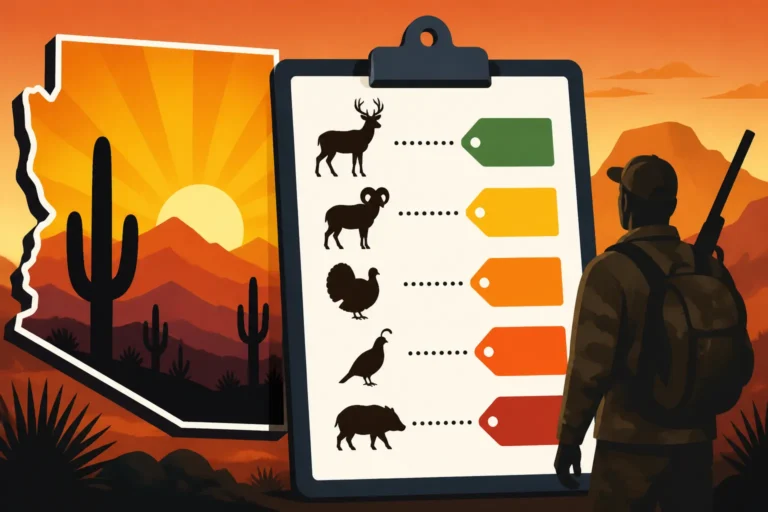
The Nonresident Arizona Hunting License Price
For nonresidents dreaming of hunting the diverse landscapes of Arizona, the financial commitment can feel like navigating a maze of fees, licenses, and draw costs. It’s not just about the tag itself; there’s a foundational license, application fees, and then the often-staggering price of the coveted big game permits. This comprehensive guide will meticulously break down all these elements, helping you understand exactly what to expect financially when planning your Arizona hunting adventure.
Understanding the Foundation: The Arizona Nonresident Hunting License
Before you even think about applying for a specific big game tag, every nonresident hunter in Arizona needs to purchase a general hunting license. This isn't just a formality; it's your essential entry ticket to legally pursue game animals in the state, even if you’re just scouting or planning an over-the-counter hunt.
Why the General Hunting License is Your Entry Ticket
Think of the general hunting license as your key to the hunting grounds of Arizona. Without it, you cannot legally apply for any big game draw, purchase an over-the-counter (OTC) tag, or even participate in small game seasons. It’s the baseline requirement for any hunting activity, establishing your right to be afield as a hunter. This license helps fund the Arizona Game and Fish Department's crucial conservation efforts, from habitat management to wildlife research and enforcement, ensuring that future generations have the same opportunities you do.
The cost of this general hunting license for nonresidents is typically around $160. This fee is a fixed annual cost, regardless of how many tags you eventually apply for or purchase. It's an investment in the state's wildlife resources, and a prerequisite that many new Arizona hunters often overlook in their initial budgeting. It’s also important to remember that this license is separate from any species-specific tags you might acquire; it simply grants you the privilege to hunt.
Annual vs. Short-Term Options and What They Cover
While the annual nonresident general hunting license is the most common and often the most cost-effective option for anyone seriously pursuing big game, Arizona does offer a few short-term alternatives, primarily for small game or specific limited-opportunity hunts. For instance, a nonresident may purchase a short-term license for small game, typically a 1-day or 3-day option. However, these short-term licenses do not qualify you to apply for big game draws or purchase big game tags, including the popular over-the-counter archery deer tags.
For most nonresidents with their sights set on elk, deer, or other big game, the annual license is the only viable choice. It's valid for 365 days from the date of purchase, allowing you to participate in different seasons throughout the year if you manage to draw multiple tags or pursue various OTC opportunities like javelina or bear. Understanding this distinction early on is crucial for proper planning, as opting for a short-term license could prematurely end your big game aspirations before they even begin.
What the License Price Actually Pays For
The $160 you spend on a nonresident general hunting license goes directly into supporting the Arizona Game and Fish Department (AZGFD). These funds are critical for a wide array of conservation and management programs. This includes everything from maintaining healthy game populations and conducting wildlife surveys to managing public access and enforcing hunting regulations. A portion of these funds also supports hunter education programs, ensuring responsible and ethical hunting practices across the state.
Unlike some states where general tax dollars heavily subsidize wildlife agencies, AZGFD relies significantly on license and tag sales. Therefore, your license fee isn't just a cost; it's a direct contribution to the long-term sustainability of Arizona's incredible wildlife resources, ensuring that the diverse species, from the tiny Coues deer to the majestic elk, continue to thrive for all to enjoy.
Beyond the License: Application Fees for the Draw
Once you've secured your general nonresident hunting license, the next financial step for many desired big game hunts involves application fees. Arizona operates on a draw system for most of its highly sought-after species, and simply applying to the draw comes with its own set of costs that are important to factor into your budget.
Per-Species Application Costs You Can't Skip
When you decide to throw your hat into the ring for an Arizona big game draw, whether it's for elk, deer, or antelope, you'll be charged a non-refundable application fee for each species you apply for. This isn't a massive cost compared to the tag itself, but it adds up, especially if you apply for multiple species across the two main draw cycles Arizona runs each year, Arizona Runs Two Draw Cycles, February and June. Typically, this fee is around $15 per species application.
For example, if you apply for both elk and deer in the same draw cycle, you'll incur two separate application fees. While $15 might seem small, it’s a committed expense that you won't get back, regardless of whether you're successful in drawing a tag. These fees cover the administrative costs associated with processing thousands of applications and running the complex lottery system. It’s part of the game, and a necessary expense for anyone hoping to land a coveted Arizona tag. You can find specific details on these costs by checking Arizona Application Fees Per Species.
The Non-Refundable Nature of Application Fees
This is a critical point that often catches new applicants off guard: application fees are strictly non-refundable. Whether you apply for elk and don't draw, or you change your mind after the deadline, that $15 per species is gone. This policy underscores the importance of being fully committed to your application choices before submitting them. It's not like a refundable deposit; it's a service charge for processing your entry into the draw.
Understanding this non-refundable aspect is key to smart budgeting. Many hunters choose to apply for species where their odds are extremely low just to gain a bonus point, knowing full well they likely won't draw. This strategy, aimed at Earning an Arizona Point by Applying, still incurs the application fee each year. It’s a small, recurring investment for a potential payoff years down the line, but an investment nonetheless.
Applying for Multiple Species in One Cycle
Arizona divides its big game draws into two primary cycles: one for elk and antelope, with a The Arizona Elk and Antelope Application Deadline typically in February, and another for deer, bighorn sheep, and bison, with a later deadline. This structure allows hunters to apply for multiple species across the year. You can apply for elk in February and then deer in June, but each application will require its own separate fee.
Savvy hunters often maximize their odds by applying for every species they're interested in, building points across the board. This multi-species approach also means accumulating more application fees. For example, a nonresident hunter could apply for elk, antelope, deer, bighorn sheep, and bison in a given year. At $15 per application, that's $75 just in application fees, regardless of drawing success. It’s a necessary consideration when you’re mapping out your annual hunting strategy for Arizona.
The Big One: Nonresident Tag Prices by Species
Here's where the rubber meets the road financially. Once you've navigated the license and application fees, securing an actual big game tag in Arizona as a nonresident carries a significant cost. These tag prices vary wildly depending on the species and the demand, reflecting the quality of hunting opportunities Arizona offers.
Trophy Tags: Elk, Bighorn, and Bison
For nonresidents, the tag prices for premier species like elk, desert bighorn sheep, Rocky Mountain bighorn sheep, and bison are substantial. These are often considered "trophy tags" due to their rarity and the incredible experience they offer. A nonresident Arizona elk tag, for example, typically runs about $665. This cost is separate from your general hunting license and the application fee. It's the price you pay only if you are successful in the draw, and it’s charged to your card after results are posted. For more specific details on this, you might find What a Nonresident Arizona Elk Tag Costs helpful.
The ultimate in trophy tags, bighorn sheep and bison, come with even higher price tags. Arizona considers these Arizona's Three Once-in-a-Lifetime Species, meaning if you draw and harvest one, you cannot draw another tag for that same species in Arizona again. A nonresident bighorn sheep tag can be upwards of $1,800, and a bison tag can be even more, sometimes exceeding $2,000. These are premium hunts for a reason, and the pricing reflects the limited availability and high demand for such unique opportunities.
Deer Species: Mule Deer and Coues Whitetail
Arizona is home to both magnificent mule deer and the elusive Coues whitetail. Nonresident tags for these deer species are considerably more affordable than elk or bighorn, but still represent a significant investment. A typical nonresident deer tag (which covers both species, though specific hunt codes will dictate which unit and species you pursue) costs around $315. This allows you to hunt either a mule deer or a Coues deer, depending on the hunt unit and season you draw.
Many hunters specifically target Coues deer in the "sky islands" of Southern Arizona, while others dream of the trophy mule deer of the Arizona Strip. Regardless of your preference, the base tag price remains the same. Understanding the specific Arizona Deer Seasons Across the Calendar is key to planning which draw you'll enter for deer. While easier on the wallet than an elk tag, $315 is still a serious commitment, one that justifies extensive pre-scouting and preparation.
Accessible Options: Javelina, Bear, Lion, and Turkey
For nonresidents looking for more accessible big game opportunities or wanting to build points without breaking the bank on a draw, species like javelina, bear, mountain lion, and turkey offer more palatable tag prices. A nonresident javelina tag, for instance, is typically around $115, making it one of the most affordable big game tags in the state. What's more, Arizona Javelina Tags Are Available All Year as an over-the-counter option, eliminating the draw anxiety.
Bear and mountain lion tags for nonresidents are usually in the range of $250-$300. These tags are often available over-the-counter in specific units or via limited draw, depending on population management goals. Turkey tags are generally around $90-$100 for nonresidents. These more "entry-level" big game tags provide fantastic hunting experiences and are a great way for nonresidents to explore Arizona's diverse habitats without the steep financial commitment of the premier species.
The Over-the-Counter Archery Deer Tag Explained
One of Arizona's most unique and popular opportunities for nonresidents is the over-the-counter (OTC) archery deer tag. This tag is unique because it doesn't require participation in the draw; you can simply purchase it online or from a license dealer. The cost for a nonresident Arizona Over-the-Counter Archery Deer Pricing is the same as a general drawn deer tag, around $315. However, this tag is specifically for archery-only seasons and often runs during late summer/early fall and again in winter.
The beauty of the OTC archery deer tag is its accessibility. It allows nonresidents to plan a hunt without the uncertainty of the draw, making it a favorite for those seeking a DIY adventure. This tag is valid for either mule deer or Coues deer, depending on the unit you choose to hunt. It's a fantastic way to experience Arizona deer hunting, though success rates can be challenging, given the pressure and the nature of archery hunting in the desert.
Strategic Planning: Budgeting for Your Arizona Hunt
Understanding the individual costs is one thing, but piecing them together into a realistic budget for your entire Arizona hunting trip is another. This requires a holistic view, combining all fees with travel, gear, and other expenses.
Combining License, Application, and Tag Costs
Let's look at a hypothetical scenario to illustrate how these costs add up for a nonresident.
Scenario: Nonresident applying for Elk and Deer, hoping for an Elk tag.
| Item | Cost (Approx.) | Notes |
|---|---|---|
| Nonresident General Hunting License | $160 | Annual, mandatory for any hunting activity. |
| Elk Application Fee | $15 | Non-refundable, charged when applying. |
| Deer Application Fee | $15 | Non-refundable, charged when applying. |
| Total to Apply (Pre-Draw) | $190 | This is spent upfront, regardless of drawing a tag. |
| Successful Draw: Nonresident Elk Tag | $665 | Charged to card only if successful in the draw. |
| Total if Elk Tag Drawn | $855 | ($190 license/app fees + $665 elk tag) |
| Alternative: If only Deer Tag Drawn | $315 | Charged to card only if successful in the deer draw. |
| Total if Deer Tag Drawn (no Elk) | $525 | ($190 license/app fees + $315 deer tag) |
| Alternative: If no Tags Drawn, but OTC Archery Deer pursued | $315 | Purchase OTC tag; still have annual license. |
| Total if OTC Archery Deer Pursued | $505 | ($190 license/app fees + $315 OTC deer tag) |
As you can see, even before considering other expenses, the financial commitment can range from just under $200 (if you apply, don't draw, and don't pursue OTC options) to well over $800 for a successful elk draw. This table highlights the progressive nature of costs and the importance of budgeting for the various outcomes of the draw.
Accounting for Other Hunt Expenses
The license and tag fees are just the beginning. A successful Arizona hunt, especially for a nonresident, involves numerous other expenses that can quickly add up. These include:
- Travel: Flights, rental car, fuel costs for driving across vast units.
- Lodging: Hotel stays, camping fees, or even RV rentals.
- Food & Water: Especially critical in the arid Arizona landscape. Dehydrated meals for backcountry trips, groceries for camp.
- Gear: Specialized optics (like those needed for Why Arizona Coues Hunting Is a Glassing Game), sturdy hiking boots for rocky terrain, appropriate clothing for temperature swings, and maybe even a good game bag system for meat retrieval in the heat.
- Meat Processing & Taxidermy: If successful, you'll need funds for processing your animal and potentially shipping meat or mounting a trophy back home.
- Guide Services: While not mandatory, many nonresidents opt for a guide, particularly for difficult species or terrain. This adds thousands, if not tens of thousands, to the total cost.
- Mapping Subscriptions: Tools like onX Hunt or Basemaps are invaluable for understanding Reading an Arizona Unit Boundary Before You Apply and identifying public land.
Ignoring these "hidden" costs can lead to financial strain and detract from the overall hunting experience. A thorough budget needs to encompass every aspect of the trip, from the initial application to the freezer full of game meat or the trophy on the wall.
Leveraging Resources Like GoHunt for Financial Planning
In today's digital age, hunters have access to incredible resources that can help demystify the draw process and associated costs. Platforms like GoHunt are invaluable for nonresidents planning an Arizona hunt. GoHunt provides detailed draw odds, application strategies, and extensive information on unit quality, but crucially, it also helps users understand the financial implications of different choices.
Their filtering tools often allow you to see the cost breakdown for licenses, applications, and tags by species and residency. This means you can quickly compare the total financial outlay for an elk tag versus a deer tag, or assess the cost-benefit of applying for a specific unit with better odds versus one with a higher trophy potential. Using such platforms can save hours of research and help you allocate your budget most effectively, ensuring you're not caught off guard by unexpected fees. They essentially act as your personal financial planning assistant for Western draws, giving you a clearer picture of your investment.
Navigating the System: Payment, Refunds, and Financial Considerations
Understanding how and when Arizona processes payments, as well as the policies surrounding refunds, is crucial for financial peace of mind. The state's draw system has specific timelines and rules that directly impact your bank account.
When Arizona Charges Your Card for a Tag
Unlike the immediate charge for your general hunting license and application fees, Arizona Game and Fish does not charge your credit card for the actual tag price until you are successful in the draw. This is a significant point for budgeting, as it means the large tag fee is only incurred if you get lucky. After the draw results are posted – which happens several weeks after the application deadline – the AZGFD will attempt to process payment for the tag(s) you drew.
It's critical to ensure the credit card on file has sufficient funds and hasn't expired, as a failed payment can result in your tag being forfeited. Many hunters even call their bank beforehand to notify them of a pending large charge from AZGFD, just to prevent any fraud alerts from blocking the transaction. Details on this process can often be found in resources like Paying Arizona Tag Fees After You Draw. This 'pay-if-you-draw' system helps manage cash flow for hunters, as you're not tying up hundreds or thousands of dollars for months waiting for results.
Understanding Refund Policies and Draw Failures
As mentioned, application fees are non-refundable. However, if you are unsuccessful in drawing a tag, you will not be charged the tag fee. This is the "refund" in essence – you simply don't have to pay the most significant portion of the cost. The money that was pre-authorized on your card during the application period will eventually be released back to your available balance. This release can sometimes take a few days or even a week after draw results are posted, depending on your bank.
It's important to differentiate between not drawing a tag and surrendering a tag you've already drawn. If you draw a tag but decide you can't go on the hunt for whatever reason, Arizona's refund policies for drawn tags are generally very strict, often involving specific deadlines and circumstances. In most cases, once a tag is issued and paid for, it's non-refundable unless there are extraordinary circumstances like a medical emergency, and even then, it's not guaranteed. Always read the specific regulations thoroughly before making your application choices to understand these policies fully.
The Value of Bonus Points in the Long Term
For nonresidents, Arizona's bonus point system is a cornerstone of long-term planning and financial strategy. While a point doesn't guarantee a tag, it significantly increases your odds in future draws for coveted species. Each year you apply for a species and are unsuccessful, you earn a bonus point for that species. These points accumulate and are multiplied in the draw process, giving you more chances to win. You can also earn points without applying for a tag by simply purchasing a bonus point during the application period, although this still carries an application fee.
The financial "value" of a bonus point isn't directly quantifiable, but it represents an investment in your future hunting opportunities. Hunters often spend hundreds of dollars over many years in application fees to accumulate enough points for a reasonable chance at a premier tag like a trophy elk or bighorn sheep. This long-term commitment requires continuous annual payments of application fees and the general hunting license. Understanding the nuances of how these points work, including The Arizona Loyalty Point After Five Years, is vital for any nonresident committed to hunting Arizona's best units. It's a strategic long-game approach where consistent small financial outlays eventually lead to big opportunities.
Disclaimer
Please remember that hunting regulations and fees can change. While every effort has been made to provide accurate and up-to-date information, it is always the hunter's responsibility to verify current Arizona Game and Fish Department regulations and fee schedules before applying or purchasing any licenses or tags.