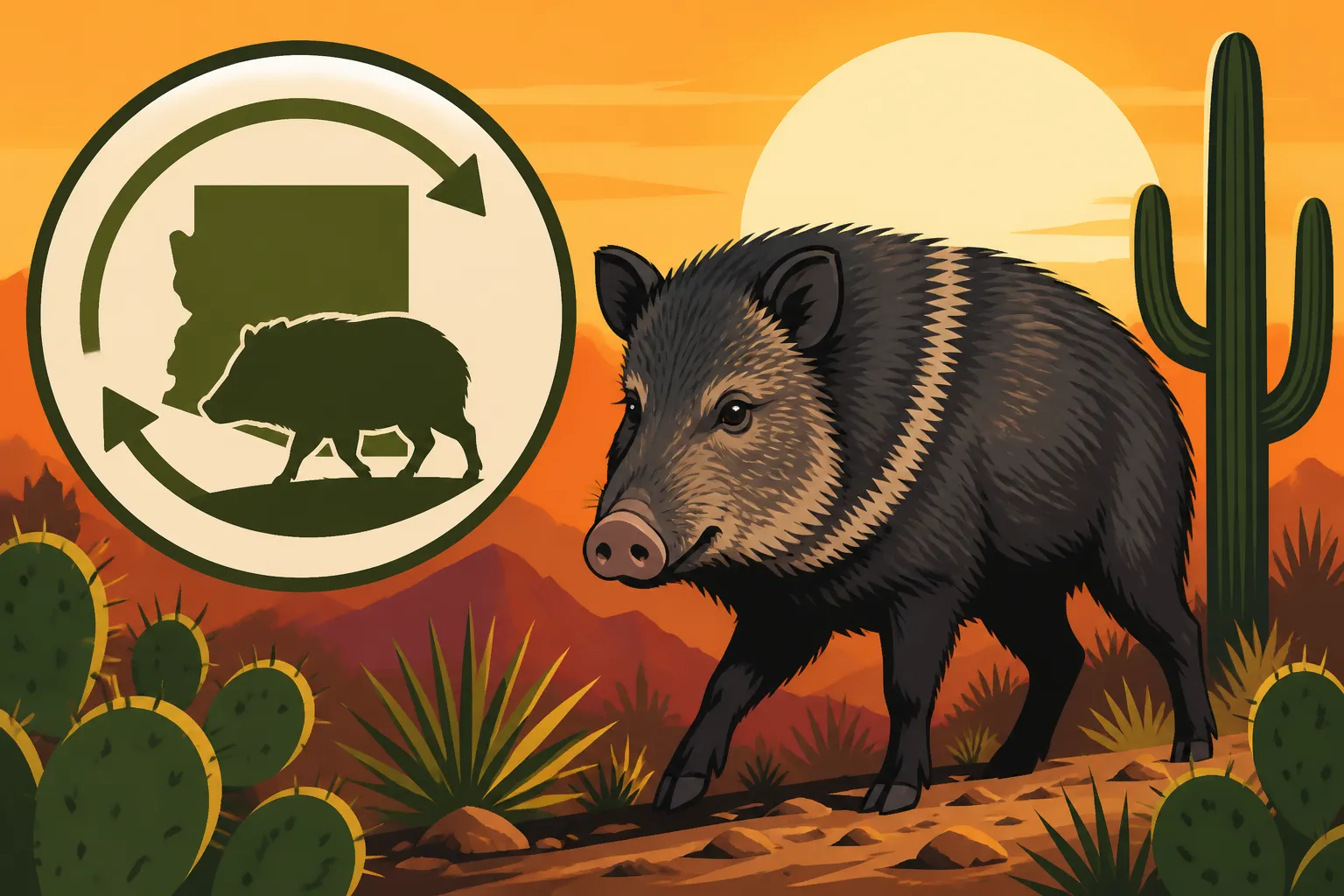
Arizona Javelina Tags Are Available All Year
There's a common misconception that getting a big game tag in Arizona means years of building points and facing slim draw odds. While that's often true for elk or prime mule deer, it's a completely different story for javelina, Arizona's smallest and arguably most accessible big game species. This guide will walk you through everything you need to know to secure a javelina tag, understand the varied seasons, and successfully hunt these unique desert dwellers, offering a fantastic entry point into Arizona's diverse hunting opportunities.
Understanding Arizona's Unique Javelina Opportunity
Javelina, often mistakenly called "wild pigs," offer one of the most exciting and available hunting experiences in Arizona. Unlike many other big game species that require navigating complex draws and long waiting periods, javelina provide consistent opportunities, often through over-the-counter (OTC) tags or hunts with high draw odds. This makes them an ideal target for both new hunters looking to gain experience and seasoned hunters seeking a challenge in the beautiful Arizona desert.
Why Javelina Are So Accessible
The accessibility of javelina hunting in Arizona stems from a few key factors. First, their population is robust and widespread across much of the state's central and southern desert regions. This healthy population allows the Arizona Game and Fish Department (AZGFD) to offer a variety of hunting seasons without severely limiting hunter numbers. You'll find options ranging from archery-only seasons that are literally open for months, to more structured handgun, archery, muzzleloader (HAM) seasons, and even general rifle hunts.
The most significant factor for accessibility is the prevalence of over-the-counter (OTC) tags, particularly for archery season. Imagine deciding on a Tuesday you want to hunt by the weekend. For archery javelina, that's often a reality. You can purchase your tag directly, often online or at a license dealer, and head out, provided you have a valid hunting license. This flexibility is almost unheard of for other big game species in the state, making javelina a fantastic last-minute option or a great way to introduce someone new to the field without the stress of the draw. This year-round opportunity means you're not locked into a single time frame, but can scout and hunt when conditions are best for you.
Javelina Aren't Pigs, They're Peccaries
Before we dive deeper into hunting strategies, it's crucial to clarify a common misunderstanding: javelina are not pigs. Scientifically, they belong to the family Tayassuidae, while true pigs are Suidae. They are technically known as collared peccaries, and while they share some physical similarities with pigs, their biological differences are significant. For example, javelina only have one stomach chamber, similar to deer, while pigs have a multi-chambered stomach. They also have a distinctive scent gland on their rump, which they use for communication and territorial marking.
This scent gland, located on their lower back, emits a musky odor that can be quite strong, especially when a herd is spooked or excited. This unique biological feature plays a vital role in their social structure, allowing herd members to recognize each other and communicate their presence. As a hunter, understanding this scent is critical. You’ll often smell a herd before you see them, especially in calm air, which can be an excellent locator. However, it also means that if the wind is wrong, they’ll almost certainly smell you, and their strong sense of smell is one of their primary defenses. The unique social dynamics of these animals, always moving in herds, also sets them apart from the solitary nature often associated with larger wild boars.
The Various Ways to Hunt Javelina in Arizona
Arizona offers a diverse range of javelina hunting opportunities, catering to different weapon preferences and hunting styles. Understanding the nuances of each season type – archery, HAM, and general rifle – is key to planning a successful hunt. Each method presents its own set of challenges and rewards, from the intimate experience of an archery hunt to the longer-range potential of a rifle hunt.
Over-the-Counter Archery Seasons
For many, the over-the-counter (OTC) archery season for javelina is the pinnacle of accessible hunting in Arizona. What's truly remarkable about this season is its sheer duration; it's practically Year-Round Archery Javelina in Arizona in most units. This extended window gives archers incredible flexibility to hunt when weather conditions are favorable, when they have time off, or even to combine it with another hunt. You don't need to apply in a draw; you simply purchase your archery javelina tag and a valid Arizona hunting license, and you're good to go. This makes it an ideal choice for spontaneous trips or for those who might not have drawn a tag for other species.
Hunting javelina with a bow and arrow is a close-quarters affair, demanding patience, stealth, and a keen understanding of their habits. Javelina herds often move through dense brush, making long shots rare. You'll typically be looking for shots inside of 40 yards, often much closer. This necessitates rigorous practice with your bow and broadheads. Focusing on vital shot placement is paramount, as javelina are tough animals, and a poorly placed arrow can lead to a difficult tracking job in thick cover. Archery hunting for javelina often involves significant still-hunting through washes and mesquite bosques or spot-and-stalk tactics after locating a herd from a vantage point. Controlling your scent is absolutely critical, as their noses are sharp, and an errant gust of wind can bust your entire setup.
General and HAM Seasons for Javelina
Beyond the expansive archery opportunities, Arizona also offers Handgun, Archery, and Muzzleloader (HAM) seasons, as well as general rifle seasons for javelina. The HAM hunts are particularly interesting because they bridge the gap between archery and modern firearm hunts, offering a unique challenge. What a HAM Hunt Actually Is is essentially a specific hunt type that limits hunters to certain weapon choices, often during times of year when general rifle seasons might be closed. These seasons tend to have good draw odds and can provide a great opportunity for those who enjoy the challenge of a handgun or muzzleloader. With a handgun, hunters are typically operating at closer ranges than with a rifle, requiring similar stalking skills to archery, but with the added punch of a bullet. Muzzleloaders, too, require a different skillset, focusing on single-shot accuracy and traditional hunting methods.
General rifle seasons for javelina typically take place in late winter, often in January or February, providing a cooler hunting experience. These seasons are generally shorter than archery or HAM hunts, often lasting only a few days. Rifle hunts allow for longer-range shots, which can be advantageous in the more open desert terrain where javelina sometimes forage. However, don't mistake longer ranges for easier hunting; javelina herds are often camouflaged incredibly well in the desert brush, and spotting them before they spot you can be a real challenge. For these rifle hunts, checking the specific unit regulations and draw odds through resources like GoHunt is essential, as some units will be harder to draw than others, though still significantly easier than elk or deer. Regardless of the weapon, understanding the specific season dates and regulations for your chosen unit, detailed in the Resident Arizona Javelina Season Structure, is a non-negotiable step before hitting the field.
Navigating Javelina Tags and Licenses
Getting ready for your javelina hunt isn't just about scouting and gear; it's also about understanding the administrative side of things. Thankfully, for javelina, the process is usually straightforward, especially compared to the complexities of drawing tags for other Arizona big game species. However, there are still a few critical steps you need to follow to ensure you're legally compliant and ready to hunt.
Purchasing Your Javelina Tag
For archery javelina, obtaining your tag is often an over-the-counter affair, meaning you don't have to go through the draw process. This is fantastic for flexibility. You can purchase your tag directly from the Arizona Game and Fish Department website, through a licensed dealer in Arizona, or at AZGFD offices. The beauty of this system is that you can often decide to go hunting relatively last minute and still secure a tag. For HAM and general rifle seasons, javelina tags are typically issued through the draw. While these aren't OTC, the draw odds for javelina are generally quite favorable, especially compared to species like elk or bighorn sheep. Many hunters find they can draw a javelina tag consistently, even with few or no bonus points.
When it comes to cost, there's a difference between resident and nonresident tag prices. Nonresidents will pay a higher fee for both the annual hunting license and the javelina tag itself. For example, a nonresident javelina tag will cost more than a resident one, and that's on top of the annual nonresident hunting license. It's crucial to factor these costs into your hunt budget, especially if you're traveling from out of state. Always check the current year's AZGFD regulations for the most up-to-date pricing. This information is readily available on the AZGFD website and within the annual hunting regulations booklet, making it simple to plan your finances.
The Importance of a Valid Hunting License
Before you can even think about purchasing a javelina tag, you absolutely must have a valid Arizona hunting license. Think of the hunting license as your "entry ticket" to hunt any game species in the state, while the tag is specific permission to harvest a particular animal. You cannot legally hunt javelina, or any other game, without first possessing an active hunting license for the current year. This is a common point of confusion for new hunters, but it's a fundamental rule across virtually all states.
Just like tags, hunting license fees vary depending on whether you are an Arizona resident or a nonresident. The Nonresident Arizona Hunting License Price is significantly higher than the resident fee, reflecting the state's prioritization of its own residents, though it still offers great value for the opportunities available. For youth hunters, Arizona has specific licensing requirements and pricing. Children under a certain age might not need a license for small game, but for big game like javelina, a license is typically required, often at a reduced rate. It's also important to remember that if you're planning to hunt javelina during a HAM or general rifle season, you'll need to apply for the tag during the specific application periods, which are usually in late spring or early summer for the following year's hunts. While archery tags are OTC, the other methods fall into the general draw schedule.
Finding and Scouting Javelina Habitat
Successfully hunting javelina often boils down to effective scouting and understanding their preferred habitat. These unique desert dwellers aren't everywhere, but once you learn to read the landscape, you'll start to identify those prime spots where they're likely to be. It’s all about finding the right mix of food, water, and cover that allows a javelina herd to thrive.
Identifying Prime Javelina Country
Javelina are creatures of the Sonoran Desert and its fringes, but they have particular tastes within that vast landscape. Their ideal habitat consists of dense, thorny brush — think mesquite thickets, cholla cactus patches, and areas dense with prickly pear. These plants provide not only food (javelina love prickly pear pads and fruits) but also crucial cover from predators and the harsh Arizona sun. Washes, arroyos, and canyon bottoms are also prime locations, as they offer travel corridors, denser vegetation, and often hold moisture longer after rain. They prefer areas that allow them to remain hidden while still having access to forage.
When you're trying to figure out where to hunt, start by looking at a topographical map or using a digital mapping tool like GoHunt. Zoom in on potential units and identify areas that show these characteristics: dense drainages, areas with high concentrations of mesquite and prickly pear, and rocky hillsides that provide good escape cover. E-Scouting an Arizona Unit Before the Season can give you a massive head start. Pay attention to elevation as well; while they are desert animals, you'll find them from the desert floor up into the lower pinyon-juniper zones. Identifying units known for healthy javelina populations is the first step, then narrowing down to specific areas within those units that offer the perfect blend of food, water, and escape cover.
Reading Sign and Locating Herds
Once you're in promising habitat, the real detective work begins: finding fresh javelina sign. Javelina leave distinct clues that can tell you if a herd is in the area and, more importantly, if they've been there recently. Tracks are a dead giveaway – their hooves are small and often leave a clear imprint in soft dirt, especially near water sources or along wash bottoms. Look for groups of tracks, as javelina almost always travel in herds. Scat is another key indicator; it's typically dark, pellet-like, and found in communal droppings areas. The freshness of the scat can tell you if a herd is actively using the area.
Beyond tracks and scat, disturbed ground from their rooting and foraging activities is a strong sign. They'll dig up bulbs, roots, and insects, leaving small depressions and overturned soil. Their bedding areas, often under thick mesquite or palo verde trees, might show flattened vegetation. Perhaps the most unique and helpful sign, however, is their scent. As mentioned, javelina have a prominent scent gland. When you're still-hunting or walking through their territory, pay close attention to the air. A sudden musky, skunk-like odor often means a herd is nearby, even if you can't see them. Understanding How Javelina Use Scent to Communicate is invaluable in tracking them. Finally, don't underestimate the power of glassing. Find a good vantage point overlooking a large expanse of javelina habitat, and systematically glass, even for small movements. While you might associate it more with deer, applying Glassing Grids for Arizona Coues Deer principles to javelina country, methodically searching for their grayish-brown bodies against the desert backdrop, can be incredibly effective.
Effective Javelina Hunting Tactics and Strategies
Hunting javelina can be an incredibly engaging and challenging experience. Their keen senses and tendency to inhabit dense cover mean you need a solid strategy to get within range. Success often comes down to a blend of patience, stealth, and knowing when to make a move. Let's explore some of the most effective tactics.
Still-Hunting and Spot-and-Stalk Approaches
Still-hunting is perhaps the most productive tactic for javelina, especially in the thick mesquite and thorny brush they call home. This involves moving incredibly slowly, taking a few steps, then stopping to scan and listen for several minutes. The goal isn't to cover ground quickly, but to move through the habitat without being detected, letting your eyes and ears do most of the work. You're looking for any flick of an ear, a patch of hide, or even the subtle movement of brush. Always play the wind; javelina have an excellent sense of smell, and if they catch your scent, they'll be gone before you even know they were there. Using washes and natural terrain features to break up your silhouette and muffle your footsteps is crucial. This slow, deliberate movement demands intense focus, but it dramatically increases your chances of spotting a herd before they spot you.
Once you've located a herd, the spot-and-stalk comes into play. This is where the real cat-and-mouse game begins. Planning your approach requires careful consideration of the wind, terrain, and the javelina's current activity. Utilize every piece of cover available – washes, large cacti, mesquite clumps – to close the distance. Their hearing is decent, but their eyesight is not their strongest sense, especially when they are focused on feeding. However, any sudden movement will often send them scattering. For archers, this means closing the distance to 20-40 yards. For rifle hunters, it might be 100-200 yards, but getting closer always improves your odds. Often, the best strategy is to be patient and let the javelina move into a more favorable position, especially if they are feeding or traveling slowly. As with hunting Coues deer, Why Coues Deer Reward Patience Over Movement rings true for javelina; rushing a stalk rarely pays off.
Calling and Ambush Techniques
While not as commonly associated with calling as elk or deer, javelina can certainly be called in under the right circumstances. There are specific javelina calls available, typically mimicking a distress squeal from a young javelina or a social grunt. These calls can be incredibly effective, particularly if a herd is just out of sight in thick cover or if you've spooked them and want to try to bring them back. A soft distress call can pique their curiosity and draw them closer, as they are very protective of their young. It's often best used sparingly and with patience, as over-calling can spook them. If you hear a herd "woofing" or "chattering" in the brush, it can be a sign they are agitated or trying to locate each other, and a well-timed call might just draw them in.
Ambush techniques also work well, especially during warmer parts of the day or drier periods when javelina will be seeking out water. Setting up an ambush near known water sources, such as stock tanks or desert seeps, can be a productive strategy. Javelina need to drink regularly, so focusing on these areas can increase your odds. Identifying active water sources during your scouting trips is key. Similarly, ambushing along common travel corridors between bedding areas and feeding grounds can also be effective. This often means finding a concealed spot downwind of a wash or a well-used game trail and waiting patiently. For the patient hunter, Sitting Water for Javelina and Deer can be a highly successful tactic, as you're letting the animals come to you rather than trying to track them through dense cover.
Tracking Javelina Through Thick Cover
Tracking javelina through their preferred thick, thorny cover can be a challenging, yet rewarding, endeavor. These animals are incredibly adept at navigating dense vegetation, and a spooked herd can seemingly vanish into thin air. If you've made a shot and the animal doesn't go down immediately, or if you're trying to locate a herd you've jumped, a systematic tracking approach is necessary. Start by marking the spot where you last saw the animal and the direction it was heading. Then, slow down and look for every possible sign: faint tracks, disturbed leaves, broken twigs, or drops of blood.
Javelina often run in groups, so distinguish the track of your wounded animal if possible. Their small hooves can be hard to follow on rocky or hard-packed ground, but they often leave good impressions in sandy washes or soft soil. When tracking, it's a good idea to move perpendicular to the last known direction of travel for a short distance, then slowly circle back in, expanding your search pattern. Don't push too hard, especially if you suspect the animal is wounded. Giving them time to bed down can result in a shorter, easier track. In very dense areas, the musky scent of a javelina can sometimes guide you even when visual signs are minimal. The skill of Tracking Javelina Through Prickly Pear and other dense vegetation is a crucial one for any serious javelina hunter, demanding both patience and persistence.
Essential Gear for Your Arizona Javelina Hunt
Hunting javelina in Arizona's diverse and often rugged terrain requires careful consideration of your gear. From your choice of weapon to the optics you carry, having the right equipment can significantly impact your comfort, safety, and success. The desert can be unforgiving, so preparing for its unique demands is paramount.
Weapon Choices and Considerations
Your weapon choice for a javelina hunt will depend on the season you've drawn or purchased an OTC tag for. For archery season, a compound bow, recurve, or longbow with a draw weight suitable for big game is necessary. When it comes to broadheads, ensure they meet Arizona's minimum width requirements, typically specified for big game. Are Mechanical Broadheads Legal in Arizona? Yes, mechanical broadheads are legal in Arizona, but ensure they deploy reliably and create a good cutting diameter for a quick, ethical harvest. For HAM hunts, you'll be using a handgun, archery equipment, or a muzzleloader. Handgun hunters should practice extensively to achieve accuracy at typical javelina ranges. Muzzleloader hunters will need to be proficient with their chosen firearm, understanding powder charges and projectile types for optimal performance.
During general rifle seasons, common calibers for javelina include the .223 Remington, .243 Winchester, 6.5 Creedmoor, and .30-30 Winchester. While javelina are not huge animals, they are tough, and shot placement is critical. A good quality bullet designed for adequate expansion and penetration is more important than sheer power. Practice shooting from various positions you might encounter in the field, such as kneeling, sitting, or using shooting sticks over brush. Regardless of your weapon, familiarity and confidence in its use are your greatest assets.
Optics, Clothing, and Navigation
Good optics are non-negotiable for javelina hunting, especially if you're planning on spot-and-stalk tactics. A quality pair of binoculars, like an 8x or 10x power, is essential for scanning the brush, picking apart dense vegetation, and confirming distant movements. Using a spotting scope can also be beneficial in vast, open areas for identifying herds at extreme distances before making a move. You don't need the absolute top-tier gear, but reliable glass will make a huge difference. GoHunt and similar platforms often feature gear reviews and recommendations that can help you pick the right tools for your budget.
Clothing needs to be versatile and suitable for the desert environment. Arizona's weather can swing dramatically, from chilly mornings to surprisingly hot afternoons, even in winter. Layering is key. Think breathable base layers, insulating mid-layers, and a quiet, durable outer shell that can withstand thorns and brush. Camouflage patterns that blend with the desert scrub and rocks are ideal. Sturdy, comfortable hiking boots are a must, as you'll likely be covering many miles over uneven, rocky, and potentially thorny terrain. For navigation, don't rely solely on cell service. A reliable GPS unit or a smartphone with a downloaded mapping app (such as those offered by GoHunt, which provide excellent public land layers) is crucial for staying found and understanding unit boundaries. Carry a physical map and compass as a backup, and know how to use them.
Water, Food, and Emergency Preparedness
This is where desert hunting separates itself from other environments. The desert is dry, and hydration is not a suggestion; it's a survival imperative. Always carry more water than you think you'll need. For a full day of hunting, a minimum of 3-4 liters per person is a good starting point, but in warmer weather or strenuous activity, you'll need even more. Water You Must Carry on a Day Hunt is not just about comfort, but about preventing potentially life-threatening dehydration. Electrolyte supplements can also be very helpful.
Pack high-energy, non-perishable food that can withstand desert temperatures. Jerky, nuts, energy bars, and dried fruit are good options. Beyond sustenance, always carry a comprehensive first-aid kit, including specific treatments for snake bites (though prevention is always best). A satellite communication device like a Garmin inReach or a Zoleo is an excellent investment for emergency communication, as cell service is often nonexistent in remote hunting areas. A headlamp, fire starter, knife, and a small survival kit should also be standard in your pack. Tell someone where you're going and when you expect to return. The Arizona desert is beautiful, but it demands respect and thorough preparation.
Post-Harvest Care and Regulations
Congratulations, you've successfully harvested an Arizona javelina! Now, the work isn't quite over. Proper post-harvest care is crucial for preserving the meat and complying with state regulations. Skipping these steps can lead to spoiled meat or legal issues, so it's vital to know what to do once your javelina is on the ground.
Field Dressing and Meat Care in the Desert
Javelina meat, when handled correctly, is absolutely delicious. However, given Arizona's often warm climate, especially during early archery seasons, immediate and thorough field dressing is paramount. As soon as you recover your javelina, get to work. Gutting the animal promptly helps to cool the carcass rapidly, which is the most important step in preventing spoilage. Remove all internal organs, taking care to avoid puncturing the intestines. If you're comfortable, skinning the animal in the field can further accelerate the cooling process, though it's not always practical in every situation.
Once field dressed, get the carcass out of direct sunlight and allow air to circulate around it. If you have ice, placing bags of ice inside the chest cavity can help bring the temperature down even faster. For Field Dressing in Desert Heat, having some game bags is invaluable. These breathable bags protect the meat from flies and dirt while still allowing it to cool. Plan your retrieve. Javelina are relatively small, making them easier to pack out than an elk, but you still want to minimize the time the meat is exposed to heat. Get the meat to a cooler with plenty of ice as quickly as possible. Many hunters in Arizona will quarter their javelina in the field to make packing easier and to fit into coolers more efficiently.
Tagging and Reporting Requirements
After harvesting your javelina, the first and most critical step is to properly tag it. In Arizona, this means detaching the appropriate tag from your license and attaching it immediately to the animal. The tag must remain affixed to the carcass until it is processed and ready for consumption. Make sure the tag is filled out accurately with the date and time of harvest. Failing to tag your animal immediately and correctly can result in fines and loss of hunting privileges, so don't overlook this crucial step. How Soon You Must Tag a Downed Animal is typically "immediately," meaning before any transport or significant movement.
Arizona also requires hunters to report their javelina harvest to the Arizona Game and Fish Department. This reporting can usually be done online through the AZGFD website or sometimes via a specific phone number. The reporting period is generally within a few days of harvest, so make sure you understand the exact deadline for your specific season. This data is vital for wildlife management, helping biologists monitor javelina populations and set future hunting regulations. Always keep your hunting license and tag information handy to ensure a smooth reporting process.
| Hunt Type | Season Length | Primary Weapons | Typical Experience |
|---|---|---|---|
| OTC Archery | Nearly year-round | Vertical bows (compound, recurve, longbow) | Close-range stalking, high engagement. No draw required. |
| Note: This table provides general guidance. Specific hunts and seasons are listed on the AZGFD website, and hunters should always check the most current regulations for their chosen unit and hunt type. GoHunt can be a helpful tool for reviewing past draw odds and unit breakdowns to assist with planning. | |||
| JJavelina Tag Options and Seasons | |||
| JJavelina Tag Options and Seasons | |||
| Javelina Tag Options and Seasons | |||
| Note: This table provides general guidance. Specific hunts and seasons are listed on the AZGFD website, and hunters should always check the most current regulations for their chosen unit and hunt type. GoHunt can be a helpful tool for reviewing past draw odds and unit breakdowns to assist with planning. | |||
| Javelina Tag Options and Seasons | |||
| Javelina Hunt Type Comparisons | |||
| Note: This table provides general guidance. Specific hunts and seasons are listed on the AZGFD website, and hunters should always check the most current regulations for their chosen unit and hunt type. GoHunt can be a helpful tool for reviewing past draw odds and unit breakdowns to assist with planning. | |||
| Javelina Hunt Type Comparisons | |||
| Disclaimer: The information contained in this guide is for general knowledge and educational purposes only. It is not intended to be a substitute for professional hunting guidance or to replace the current regulations set forth by the Arizona Game and Fish Department. Hunting laws and regulations can change, and it is the responsibility of the hunter to be aware of and comply with all applicable rules and regulations. Always prioritize safety and ethical hunting practices. | |||
| Javelina Hunt Type Comparisons | |||
| Javelina Hunt Type Comparisons | |||
| Javelina Hunt Type Comparisons |
JDisclaimer
The information contained in this guide is intended for general informational purposes only and is subject to change. While we strive to provide accurate and up-to-date information, hunting regulations and seasons in Arizona are dynamic and can be complex. It is always the individual hunter's responsibility to consult the most current official Arizona Game and Fish Department (AZGFD) hunting regulations booklet and website before planning or engaging in any hunting activities. This guide should not be considered a substitute for legal advice or official government publications. Always prioritize safety, ethics, and compliance with all applicable laws.