Sitting Water for Javelina and Deer
The sweltering heat of the Arizona desert can be brutally unforgiving, pushing both wildlife and hunters to their absolute limits. If you've ever found yourself struggling to locate deer or javelina in vast, seemingly empty country, you know the frustration. This guide is all about simplifying your strategy by focusing on one undeniable truth: every living creature needs water, especially in Arizona. We'll dive deep into how to effectively hunt over water sources for both javelina and deer, turning those parched landscapes into your advantage.
Why Water Sources Are Magnets in Arizona's Arid Landscape
Let's be real, Arizona is a dry state. Even during our "wet" seasons, water can be a precious commodity, especially in the vast stretches of public land. This fundamental need for hydration creates natural congregation points for wildlife, and for hunters, these spots are like golden tickets.
Understanding the Desert's Thirst
Imagine spending your days under a relentless sun, temperatures soaring well over 100 degrees in summer, and even feeling pretty warm in the cooler months in the lower deserts. Animals like javelina and deer aren't immune to this. Their bodies constantly lose moisture, and they have to replenish it. Unlike some more temperate regions where animals might wander far and wide for food and water, in Arizona, available water often dictates their entire home range and daily movements.
This isn't just about survival; it's about comfort and energy conservation. If a deer or javelina can find a reliable water source close to good cover and forage, they'll often stick to that area like glue. This makes understanding their needs paramount. You're not just looking for water; you're looking for their water, the one they depend on daily or every few days. From a hunter's perspective, these limited water sources drastically shrink the playing field, making it much easier to predict animal movement. When you're trying to figure out where to start scouting a new unit, always consider where the water is first. A valuable tool like GoHunt can provide satellite imagery and water source overlays that help identify these crucial areas before you even step foot in the desert.
How Javelina and Deer Utilize Water Sources
While both javelina and deer rely heavily on water, their habits around these sources can differ, and understanding these nuances is key to success.
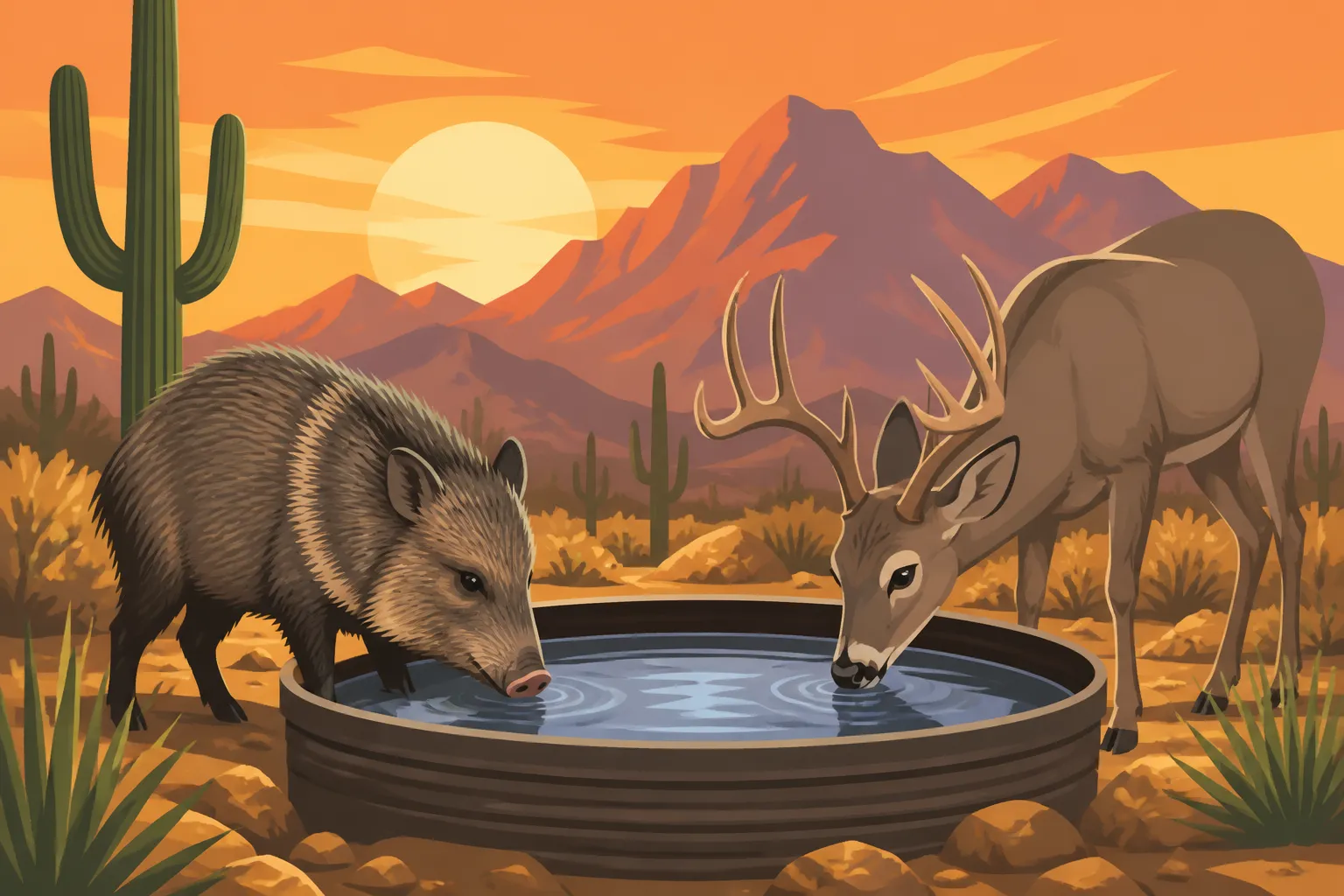
Javelina, often found in larger herds, tend to be very habitual creatures. If they find a good water source, they’ll visit it regularly, sometimes several times a day, especially during hotter periods. Their sense of smell is incredible, and they communicate extensively through scent, which means their presence can often be detected around water even when they're not there. You might find tracks, droppings, or even the distinct musky odor left by their scent glands. They aren't typically as wary as deer around water, often approaching somewhat openly, especially if they feel safe in numbers. For a deeper dive, check out How Javelina Use Scent to Communicate.
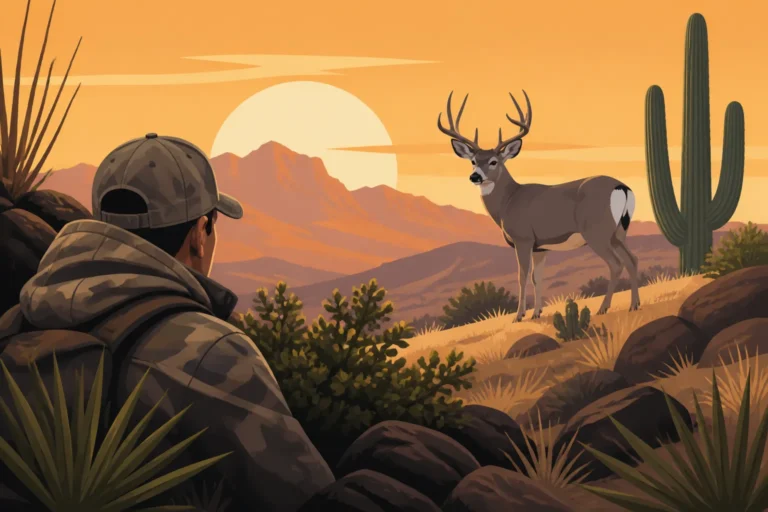
Deer, whether mule deer or Coues deer, are usually a bit more cautious. They'll often approach water under the cover of darkness or during low light conditions at dawn and dusk. Bedding areas are frequently within a reasonable distance, allowing them to quench their thirst and then quickly retreat to security cover. In arid regions, deer may not water every single day if there's enough moisture in their forage, but when temperatures rise, or if they've been pressured, they'll seek out water with more urgency. A big mule deer buck might only visit a tank every few days, often waiting for prime hours or even the dead of night. For Coues deer, often called "gray ghosts," their approach to water can be even more subtle, making patience absolutely critical. If you're targeting How Close a Bowhunter Needs to Get on Coues, a water source can be a great way to close that distance.
The Ethical Considerations of Water Hole Hunting
Hunting over water, while effective, comes with significant ethical responsibilities, especially in a state like Arizona where water is often developed for wildlife. These water sources, whether natural tanks, man-made guzzlers, or even cattle troughs, are life-sustaining for countless animals.
First and foremost, never contaminate a water source. This means no litter, no leaving trash, and absolutely no field dressing in or near the water itself. The goal is to leave the area exactly as you found it, or better. Secondly, be mindful of over-pressuring a water source. If you hunt the same spot day after day, animals will quickly catch on and avoid it, potentially pushing them into less optimal areas, or worse, making them more vulnerable to predators by forcing them to drink at less secure times. Rotating your spots or limiting your sits is a responsible approach.
It's also crucial to remember that some water sources are actively managed by Arizona Game and Fish Department (AZGFD) for specific wildlife benefit, and there might be rules about how close you can be, or what kind of setup is allowed. Always consult the current hunting regulations. A good rule of thumb is to treat every water source as a critical lifeline for all wildlife, not just your target species. Ethical hunting isn't just about legality; it's about respect for the animals and the environment that sustains them. This aligns with the principles taught in courses like The Ethically Hunting Arizona Course Explained.
Scouting and Setting Up Your Water Hole Ambush
You can't just stumble upon any puddle and expect success. Effective water hole hunting requires thorough scouting and meticulous setup. This is where your pre-season homework truly pays off.
Identifying Productive Water Sources
Finding water in Arizona isn't always easy, and finding productive water is even harder. Start by pouring over maps—USGS topographical maps, Forest Service maps, and satellite imagery from tools like GoHunt are invaluable. Look for blue dots, dashed lines indicating washes, and areas with denser vegetation that might hint at moisture. Specifically, seek out:
- Stock Tanks: These are man-made ponds, usually dug out to collect rainwater for cattle, but they're goldmines for wildlife.
- Guzzlers: These are purpose-built wildlife waters, often camouflaged and designed to collect rain and funnel it into a drinking trough. They are common in Arizona and critical in dry areas.
- Natural Seeps/Springs: These are rarer but offer consistent, natural water flow. Look for greener patches on satellite maps.
- Ephemeral Water: Puddles in washes after a heavy monsoon rain can be temporary hotspots, but usually not reliable for consistent hunting.
Once you've identified potential spots on a map, it's time for boots on the ground. Visit these locations well before the season to look for sign: tracks (fresh is best!), droppings, rubs, and trails leading to and from the water. Note the direction of entry and exit trails. Is there heavy browse nearby? Is there good bedding cover within a reasonable distance? The more consistent sign you find, the higher the probability of success. Remember, Finding Water in Arizona's Dry Country can be a challenge, but diligent scouting makes all the difference.
Wind, Cover, and Approach: The Perfect Setup
Selecting your exact ambush location requires careful consideration of several factors to remain undetected.
- Wind Direction: This is arguably the most critical element. Animals will almost always approach water from downwind, sniffing the air for danger. You must set up so the prevailing wind carries your scent away from their likely approach routes and away from the water itself. Check historical wind data for your unit, but also be prepared for shifts. A thermos of coffee and a wind checker are your best friends.
- Cover: You need adequate cover to conceal yourself, whether it's a natural brush blind, a rock outcrop, or a well-placed ground blind. Your goal is to break up your silhouette and blend into the environment. Don't just sit in the open.
- Approach and Exit: Plan your route to and from your stand or blind to minimize disturbance. Avoid walking directly across game trails or through bedding areas. Your approach should be quiet and covered, especially in the dark before dawn.
- Shooting Lanes: Clear any small branches or obstructions that might impede your shot. Practice drawing your bow or shouldering your rifle from your exact setup position to ensure you have a clean line of sight to the water and common approach paths.
- Sun Position: Consider where the sun will be throughout your sit. You don't want to be backlit at prime shooting light, silhouetting yourself against the sky. A little shade for comfort doesn't hurt either, especially if you're trying to manage Heat Management on an Arizona Early Season Hunt.
A table can help visualize some of these considerations:
| Factor | Deer Approach | Javelina Approach | Ideal Setup |
|---|---|---|---|
| Time of Day | Low light (dawn/dusk), often nocturnal | Any time, but often mid-morning/late afternoon | Morning until mid-day or late afternoon until dark |
| Wind | Always play the wind; highly scent-sensitive | Sensitive, but herd security may override | Downwind of water and approach trails |
| Cover | Extremely wary, needs significant cover | Wary but often move in groups, some cover | Dense brush, rock blinds, ground blind |
| Vigilance | Very high, scanning for danger | Alert, but often focused on the herd | Constant scanning, minimal movement |
| Distance | May water quickly, often at edges | Can linger, may enter water to cool off | Set for ethical shot distance based on weapon |
Legalities and Regulations Around Water Sources
Before you even think about setting up, you need to understand the rules. Arizona has specific regulations regarding hunting near developed waters and within certain proximity to man-made structures.
Always consult the current Arizona Game and Fish Department (AZGFD) hunting regulations booklet. It will outline any restrictions on hunting within a certain distance of occupied dwellings, developed water sources, or designated wildlife areas. For instance, some stock tanks or guzzlers might be on private land, or if on public land, they might have restrictions on how close you can park or set up. Websites like GoHunt and public land mapping tools are excellent for checking property boundaries and identifying specific regulations tied to certain units. Being aware of Reading an Arizona Unit Boundary Before You Apply is not just good practice, it's a legal necessity.
Additionally, while sitting water is legal, certain activities around these sources might not be. For example, baiting rules apply to some species, and while water isn't considered bait, it's important to understand the distinctions. Ensure any ground blinds are removed after your hunt, unless they meet specific criteria for temporary placement and are clearly marked. The general rule is to leave no trace. Ignorance of the law is never an excuse, so do your homework beforehand.
Strategies for Success: Patience and Precision
Water hole hunting isn't a quick-and-dirty method; it's a game of strategic waiting, requiring immense patience and the ability to execute precisely when the moment arrives.
Timing Your Sit for Peak Activity
Knowing when to be at the water hole can make or break your hunt. While deer and javelina might visit water at any time, certain periods offer higher probabilities.
For deer, especially in hotter temperatures, dawn and dusk are prime times. They often move under the cover of low light. However, during the full moon, some deer might become more nocturnal, watering in the dead of night. If you're hunting during When Arizona OTC Archery Deer Season Opens in August or September, mid-day sits can sometimes pay off as the heat drives them to drink. On cooler days or in higher elevations, deer might be more active later in the morning or earlier in the afternoon. For mature bucks, they might wait until the very last minute of legal shooting light, or even after dark, to approach water, making precision timing and quick decision-making crucial.
Javelina, being more diurnal, are often seen at water throughout the day, though mornings and late afternoons are generally most productive. They might take their sweet time, sometimes lingering to wallow if it's muddy, or just standing in the water to cool off. This can present longer shot opportunities, but it also means you need to be prepared for a herd to appear suddenly. If you're after Javelina Is Arizona's Most Accessible Big Game, water sources offer fantastic opportunities throughout their season.
Consider the temperature. On extremely hot days, animals are more likely to water during the hottest parts of the day. On cooler days, or after a rain, their need for water might be less urgent, and they might spend more time feeding. Use weather forecasts to help plan your sits.
Gear Essentials for Water Hole Hunting
Sitting still for hours requires the right gear to stay comfortable, alert, and ready.
- Optics: Good binoculars (10×42 or 10×50 are great all-around) are non-negotiable. You'll be scanning constantly, often looking for subtle movements in the brush. A spotting scope can be useful if you're sitting a long distance from the water or trying to judge antler quality on a wary buck.
- Comfortable Seat: Whether it's a lightweight portable stool, a hunting chair for a ground blind, or just a comfortable cushion, you'll thank yourself for investing in something that allows you to sit still for hours.
- Camouflage: Full camo is essential, including face paint or a mask, and gloves. Movement is your enemy, but breaking up your outline is also critical.
- Hydration and Snacks: Even when sitting, the Arizona climate can be dehydrating. Bring plenty of water and quiet snacks to keep your energy up.
- Wind Checker: A small bottle of powder or a handheld wind indicator is vital for constantly monitoring wind direction.
- Weapon: Ensure your bow or rifle is sighted in and you're proficient with it. Practice shooting from a sitting position, as that will likely be your shooting posture.
- Rangefinder: Critical for confirming distances to the water and any reference points.
- Pack: A comfortable pack to carry all your gear, and to pack out meat if you're successful.
- First-Aid Kit: Always carry one, especially in remote areas.
If you're using a ground blind, set it up a few days or even weeks beforehand if possible. This allows animals to get accustomed to its presence and view it as just another part of the landscape.
Playing the Wind and Minimizing Your Presence
You can scout perfectly, pick the ideal spot, and have all the right gear, but if you don't play the wind, you've wasted your time. Deer and javelina have an incredible sense of smell, far superior to ours.
Before you even leave your vehicle, check the wind. As you approach your setup, check it again. And throughout your sit, check it regularly. Wind can swirl, especially in canyon bottoms or around topographical features. If the wind shifts and blows your scent towards the water or where you expect animals to come from, you're better off moving or calling it a day. A blown sit is a lesson learned.
Minimizing your presence goes beyond scent. It includes:
- Sound: Be as quiet as possible. No crunching leaves on your approach, no rattling gear, no loud talking. Even the slightest unnatural noise can put animals on high alert.
- Movement: This is a killer. Animals are constantly looking for movement. Move slowly, deliberately, and only when you're sure you're unobserved. When you spot an animal, freeze. Don't fidget. Keep movements minimal until you're ready to draw or shoulder your weapon.
- Silhouette: Avoid silhouetting yourself against the sky or an open backdrop. Use natural cover to break up your outline.
- Reflection: Be mindful of reflections from optics, watch faces, or other shiny surfaces.
Remember, this isn't just about being still; it's about being invisible. Many hunters get busted not by smell, but by movement or sound.
Beyond the Sit: What to Do After the Shot
Congratulations! All that patience and precision paid off. But the hunt isn't over when the shot breaks. The actions you take immediately after, and in the hours that follow, are crucial for ethical recovery and meat preservation, especially in Arizona's often-hot climate.
Retrieving Game and Field Dressing Challenges
Once an animal is down, the first priority is ethical recovery. If the animal runs, give it time. The amount of time depends on the shot placement, but generally, 30 minutes to an hour for a well-hit animal, and several hours for a questionable shot, is a good rule of thumb. Mark the last spot you saw the animal and the point of impact. Then, slowly and methodically follow the blood trail. GoHunt maps can be incredibly helpful for marking these spots and navigating dense terrain.
Arizona's terrain can be rugged and unforgiving. Retrieving Game From Private Land in Arizona can also be a significant issue if the animal crosses a boundary. Always know your boundaries and have a plan for contacting landowners if necessary. Once you locate the animal, proper field dressing is paramount, especially for Getting Meat Cooled on an Early Season Hunt.
Desert heat can spoil meat quickly. As soon as you confirm the animal is deceased, begin field dressing immediately. Remove the entrails to allow the body cavity to cool as rapidly as possible. If it's a larger animal like a mule deer, consider quartering it in the field to allow even faster cooling and easier packing. Hang the quarters in game bags in the shade, allowing air to circulate. If you have ice, pack it around the meat as soon as possible. In extreme heat, you might even need to make multiple trips to pack out meat, so having a plan and sturdy game bags is essential.
Mandatory Reporting and Evidence of Sex Requirements
Arizona, like many states, has specific requirements after you harvest big game.
- Tagging: Immediately upon harvesting, you must punch your tag, affixing it to the carcass as required by law. The details for this are outlined in the AZGFD regulations. This is not something you can delay.
- Evidence of Sex: For certain species, like deer, you must leave evidence of sex naturally attached to the carcass, or a portion thereof, until the animal is transported from the field or to a meat processor. This typically means leaving the head or antlers attached to the body or one of the quarters. This regulation helps enforcement ensure that hunters are taking legal animals according to their tag.
- Reporting: Some harvests, particularly bear and mountain lion, require mandatory reporting to AZGFD within a specific timeframe. Always check the regulations for your specific species and hunt. While deer and javelina usually don't have mandatory in-person reporting, it's always good practice to understand all the post-harvest rules. The Arizona Hunt Portal is a great resource for managing your tags and understanding reporting requirements.
Failing to follow these post-harvest requirements can result in citations and loss of hunting privileges. It’s the final, crucial step in ethical hunting.
Disclaimer
Please remember that hunting regulations can change. It is always the hunter's responsibility to consult the most current Arizona Game and Fish Department regulations prior to heading afield. This guide provides general information and should not be considered a substitute for official legal documentation.