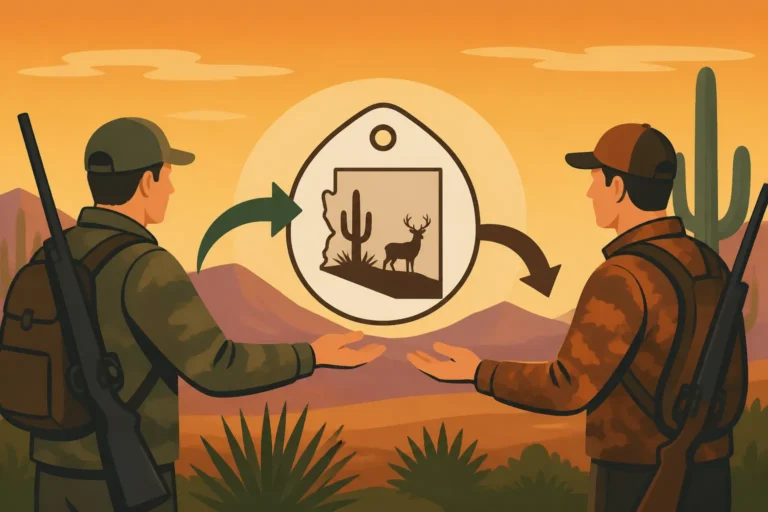
Arizona Military License Provisions
It can feel incredibly complicated to navigate state hunting regulations, especially when you're serving our country or have transitioned out of military service. Moving from base to base, or dealing with the unique challenges that come with military life, often makes understanding hunting license provisions a real headache. This guide will clarify Arizona's specific provisions for active duty military, veterans, National Guard, and their families, ensuring you can enjoy the Grand Canyon State's incredible hunting opportunities without unnecessary stress.
Understanding Arizona's Commitment to Military Hunters
Arizona has a deep appreciation for its service members and veterans, and this is reflected in many of its hunting and fishing regulations. The state aims to remove some of the bureaucratic hurdles that often prevent military personnel from enjoying the outdoors they defend. For those who move frequently or are deployed, simply establishing "residency" can be a significant challenge, but Arizona's Game and Fish Department (AZGFD) has specific rules designed to make this process much smoother. It’s all about making sure that those who sacrifice so much have equitable access to the same hunting experiences as lifelong residents.
Resident Status for Active Duty Military
One of the biggest advantages for active duty military members stationed in Arizona is the ability to quickly establish resident status for hunting and fishing purposes. This isn't just a small discount; it means access to tags and licenses at significantly reduced prices compared to nonresidents, and in many cases, better draw odds for coveted big game permits. To qualify as an Arizona resident for hunting while on active duty, you must be permanently stationed in the state. This typically involves presenting your military ID and official orders that confirm your assignment to an Arizona military installation.
The process is generally straightforward, but it's important to have your paperwork in order. You'll need to demonstrate that Arizona is your current duty station. This might involve showing a copy of your orders or a letter from your commanding officer confirming your assignment. This special provision recognizes that military families often cannot establish traditional residency in the same way as civilians due to frequent relocations. Therefore, Arizona simplifies this to ensure that your time in the state can include enjoying its vast hunting landscapes. Remember, this applies even if your "home of record" or state of legal residence for tax purposes is elsewhere.
Licenses and Tags Available to Military Residents
Once active duty military personnel establish their Arizona residency, a whole world of hunting opportunities opens up at resident pricing. This includes the annual general hunting license, which is your foundational document for hunting most small game and for applying for big game tags. A major financial benefit is visible when you look at big game tags; for instance, the difference between a nonresident and resident elk tag can be hundreds of dollars, making resident status incredibly valuable for those hoping to draw a premier tag. You can find detailed breakdowns of these costs under topics like Arizona Resident Hunting License Price on our site.
Resident active duty military can apply for any big game tag through the state's draw system, just like any other Arizona resident. This means applying for species like elk, deer, pronghorn, and bighorn sheep. The draw system in Arizona is competitive, and having resident status significantly improves your chances for certain tags compared to the much smaller percentage of tags allocated to nonresidents. Don't forget, Arizona runs two main draw cycles, as explained in our article Arizona Runs Two Draw Cycles, February and June, so knowing those deadlines is crucial for applying. For those interested in immediate opportunities, Arizona also offers many over-the-counter (OTC) tags for species like archery deer, javelina, bear, and mountain lion, which can be purchased anytime without going through the draw, and again, at resident prices.
Provisions for Arizona-Based Military Spouses and Dependents
Arizona's consideration for military families extends beyond just the active duty member. Spouses and dependents of active duty military personnel who are permanently stationed in Arizona can also qualify for resident hunting and fishing privileges. This is a huge benefit for military families who want to share outdoor experiences together. For a dependent to qualify, they must typically be living with the active duty member in Arizona and meet the state's definition of a dependent (usually under 18 or a full-time student under a certain age).
The process for spouses and dependents to claim resident status usually involves providing documentation that links them to the active duty service member's Arizona assignment. This can include marriage certificates, birth certificates, and the service member's military ID and orders. It's a thoughtful provision that acknowledges the family unit's relocation due to service. This ensures that the entire family can participate in Arizona's rich hunting tradition without the financial burden of nonresident fees. Imagining a family outing chasing Tracking Arizona Javelina Through Prickly Pear or setting up camp for a deer hunt becomes much more accessible when everyone qualifies for resident rates.
Special Considerations for Returning Veterans and National Guard Members
While active duty provisions are one aspect, Arizona also makes specific efforts to support its veterans and National Guard members, recognizing their unique contributions and circumstances. The transition from active service to civilian life, or the balance of civilian life with Guard duties, can present its own set of challenges, and Arizona endeavors to make outdoor recreation a source of healing and enjoyment.
Disabled Veteran License Options
Arizona stands out with its commitment to disabled veterans, offering significant license and tag fee reductions, and in some cases, exemptions. These provisions are designed to make hunting and fishing more accessible for those who have sustained service-connected disabilities. Typically, to qualify for a disabled veteran license, you must be an Arizona resident and have a service-connected disability rating from the U.S. Department of Veterans Affairs (VA). The specific disability rating required can vary, so it's always best to check the current AZGFD regulations or visit their website for the most up-to-date information.
The application process for these licenses usually involves submitting proof of your VA disability rating along with your Arizona residency documentation. These benefits can significantly reduce the cost of an annual hunting license and certain big game tags. For example, some programs might offer a reduced-fee combination hunting and fishing license, or even free privileges for those with very high disability ratings. This is truly an impactful provision, directly addressing the financial barriers that might otherwise prevent disabled veterans from participating in the outdoor activities they love. We've dedicated a specific article, Disabled Veteran License Options in Arizona, to delve deeper into these important benefits.
Arizona National Guard and Reserve Member Benefits
For those currently serving in the Arizona National Guard or Reserve, specific provisions may also be available, recognizing their ongoing commitment to both state and federal service. While active duty status brings a clear path to resident rates, National Guard and Reserve members might have slightly different pathways depending on their specific orders or deployment status. Generally, if a National Guard or Reserve member can establish Arizona as their permanent home of record and primary residence, they would qualify for resident rates just like any other citizen.
However, there can be nuances, particularly for those who reside out of state but serve in the Arizona Guard, or who are on temporary active duty orders. It's crucial for these members to verify their specific residency status with AZGFD. Some states offer specific benefits for their Guard members, regardless of their immediate residency, but Arizona's primary framework revolves around establishing residency. Therefore, understanding the general requirements for resident status is key, as is checking for any special programs that might emerge for state-level Guard service. Keep an eye on AZGFD announcements, as these programs can sometimes be introduced or modified.
Hunter Education Requirements for Military Personnel
Hunter education is a critical component of responsible hunting, ensuring safety and ethical practices in the field. Arizona, like many states, mandates hunter education for certain age groups, as covered in Hunter Education Is Required Under 14 in Arizona. However, for military personnel, there can sometimes be exemptions or alternative pathways to fulfill this requirement, recognizing the extensive firearms and safety training they receive during their service.
For active duty military members and veterans, Arizona often accepts proof of prior military firearms training or completion of an equivalent hunter safety course from another state as satisfying its hunter education requirement. This can save valuable time and effort, especially for those who have already undergone rigorous safety training in a military context. You'll typically need to provide official documentation of your training, such as a DD-214, military ID, or a certificate from a recognized hunter education program. Always confirm with the AZGFD exactly what documentation they require, as rules can occasionally change. Even if an exemption applies, many military hunters still find value in taking the Arizona-specific course, as it covers local regulations, ethics, and species identification pertinent to the Grand Canyon State.
Navigating the Application Process and Key Deadlines
Understanding the provisions is one thing, but successfully navigating the application process and hitting those crucial deadlines is where the rubber meets the road. Arizona's draw system is complex, and even with military benefits, missing a deadline means missing an entire hunting season for many coveted species.
Proving Military Status and Residency
The first and most critical step for any military personnel seeking Arizona's resident hunting privileges is to formally prove their status and residency to the Arizona Game and Fish Department. This isn't something you want to leave until the last minute before a major draw deadline. AZGFD typically requires specific documents to verify your eligibility. For active duty personnel, this often includes your military ID, current duty station orders assigning you to an installation within Arizona, and possibly a recent Leave and Earnings Statement (LES) showing Arizona as your duty station.
Veterans, especially disabled veterans, will need to provide their VA disability rating documentation, alongside proof of Arizona residency (like a driver's license or utility bills). Dependents will need documentation linking them to the active duty service member and proving their dependency status. It’s highly recommended to gather all these documents well in advance and, if possible, submit them to AZGFD for review and approval of your residency status before the draw application periods even open. This proactive approach ensures there are no last-minute surprises or delays that could jeopardize your ability to apply for a tag. For a general understanding of how to manage your applications, a walkthrough of the A Walkthrough of the Arizona Hunt Portal can be incredibly helpful.
Leveraging Online Resources and Application Portals
In today's digital age, much of the hunting license and tag application process happens online, and Arizona is no exception. The AZGFD online portal is an invaluable resource for all hunters, including military personnel. This portal allows you to create an account, purchase licenses, apply for big game draws, and check application status. It’s where you’ll typically upload necessary documentation for residency verification. Using a platform like GoHunt can also be immensely beneficial. GoHunt provides detailed draw odds, unit analyses, and application strategies that can help you make informed decisions about which units to apply for, especially critical for competitive tags like elk and mule deer. They often break down information in an easy-to-digest format, which is a blessing when you're trying to quickly understand complex regulations.
Beyond the AZGFD portal, numerous online forums and communities exist where military hunters share their experiences and offer tips specific to Arizona. These communities can be a great place to ask questions about current regulations, unit access, or even tips on Heat Management on an Arizona Early Season Hunt. Staying connected and leveraging these digital tools can significantly simplify the application process and boost your confidence in making the right choices for your hunt. GoHunt, for example, offers incredible insights that can help you pinpoint units with better draw odds for residents.
Important Deadlines and Application Cycles
Arizona's hunting calendar revolves around two primary draw cycles, and military members must be acutely aware of these dates to maximize their hunting opportunities. The first major draw, typically in February, covers premier big game species like elk and antelope. If you're hoping for a coveted elk tag, knowing The Arizona Elk and Antelope Application Deadline is absolutely non-negotiable. Missing this window means you'll have to wait until the next year.
The second major draw, usually in June, is for species such as deer (both Coues and mule deer), bighorn sheep, and bison. For deer hunters, especially those hoping to draw a high-quality unit, The Arizona Deer, Sheep and Bison Deadline is equally critical. It's wise to mark these deadlines on your personal calendar, set reminders, and begin preparing your application well in advance. While GoHunt can help you understand the odds and potential units, the responsibility of submitting your application on time rests solely with you. Remember that even with resident status, these tags are highly sought after, and a successful application begins with timely submission.
| License Type | Active Military Resident Cost (Approx.) | Non-Resident Cost (Approx.) | Required Documentation |
|---|---|---|---|
| General Hunting License | $37 | $160 | Military ID, Current Orders (for residency) |
| Elk Tag Application Fee | $15 | $15 | None (added to license fee) |
| Drawn Elk Tag (if successful) | $140 | $665 | AZGFD Portal Application |
| OTC Archery Deer Tag | $45 | $300 | Military ID, Current Orders (for residency) |
| Disabled Veteran License | $0 – $15 (depending on rating) | N/A | VA Disability Letter, AZ Residency Proof |
Note: Prices are approximate and subject to change by AZGFD. Always check the official Arizona Game and Fish Department website for the most current fees and regulations.
Disclaimer
The information provided in this guide is for general informational purposes only and does not constitute legal advice. Hunting regulations, fees, and military provisions in Arizona are subject to change. Always consult the official Arizona Game and Fish Department (AZGFD) regulations, website, or contact them directly for the most accurate and up-to-date information before planning any hunting activities.