How Javelina Differ From Wild Pigs
It’s a really common mistake, especially for folks new to hunting in Arizona or those coming from states where true wild pigs roam. You see a javelina, and your mind immediately goes to “wild hog” or “feral pig.” But let me tell you, while they might look a bit similar at first glance, javelina are not pigs, and understanding that distinction is key for a successful and ethical hunt here in the Grand Canyon State. This guide is all about setting the record straight, helping you understand the biological, physical, and behavioral differences so you can confidently identify these unique desert dwellers.
The Biological Truth: Not a Pig at All
The biggest and most fundamental difference between a javelina and a wild pig (or feral hog, wild boar, whatever you call them) is right there in their biology. They belong to completely separate scientific families. This isn't just a fun fact; it dictates everything from their physical traits to their behavior and how game agencies manage them.
A Peccary, Not a Porcine
Javelina, officially known as collared peccaries, are part of the Tayassuidae family. They are native to the Americas, ranging from the southwestern United States down into South America. Wild pigs, on the other hand, belong to the Suidae family, which includes domestic pigs, warthogs, and true wild boars. These animals originated in Eurasia and Africa. Think of it this way: a javelina is about as closely related to a wild pig as a rabbit is to a mouse – they're both mammals, but that's where the close similarities end. They evolved on different continents, under different pressures, leading to distinct evolutionary paths.
This distinction is actually quite important from a wildlife management perspective. Javelina are considered native wildlife in Arizona, an indigenous species that has adapted perfectly to the desert environment. They're a cherished part of the ecosystem. Wild pigs, however, are non-native, invasive species. They can cause significant damage to habitats, agriculture, and even outcompete native wildlife for resources. In many states, wild pigs are aggressively managed as pests, often with year-round, unlimited hunting opportunities. While Arizona does have an abundant javelina population, they are managed with specific season dates, bag limits, and draw opportunities, much like deer or elk, as you can see if you look at the details of the "Javelina Season Dates by Weapon" or "Arizona Javelina Tags Are Available All Year" posts.
Unique Digestive and Dental Systems
Another biological differentiator lies in their digestive and dental systems. Javelina have a more complex, four-chambered stomach, which is characteristic of many herbivores, allowing them to digest tough, fibrous plant material like prickly pear pads, agave, and roots that are common in their desert diet. Their teeth, particularly their canines (tusks), are short and straight, growing straight up and down, making them ideal for cutting and crushing plant matter.
Wild pigs, however, have a simpler, single-chambered stomach, much like humans, and are true omnivores, eating almost anything they can find—from acorns and roots to small animals, eggs, and even carrion. Their tusks are long, curved, and grow outwards and upwards, continuously sharpening against each other. These formidable tusks are designed for rooting, fighting, and tearing meat, showcasing their more aggressive and opportunistic feeding habits. It's a stark difference that tells you a lot about their natural history.
Physical Characteristics: Spotting the Differences in the Field
When you're out in the desert, trying to make a quick identification, knowing the subtle (and not-so-subtle) physical differences can save you from a misidentification. Trust me, it happens! Many hunters have stories of mistaking a group of javelina for something else, especially when they're moving through thick brush.
Size, Shape, and Hair
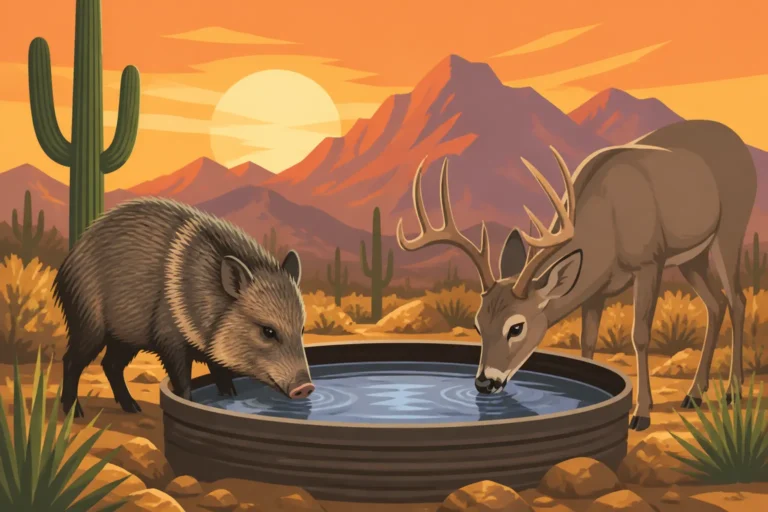
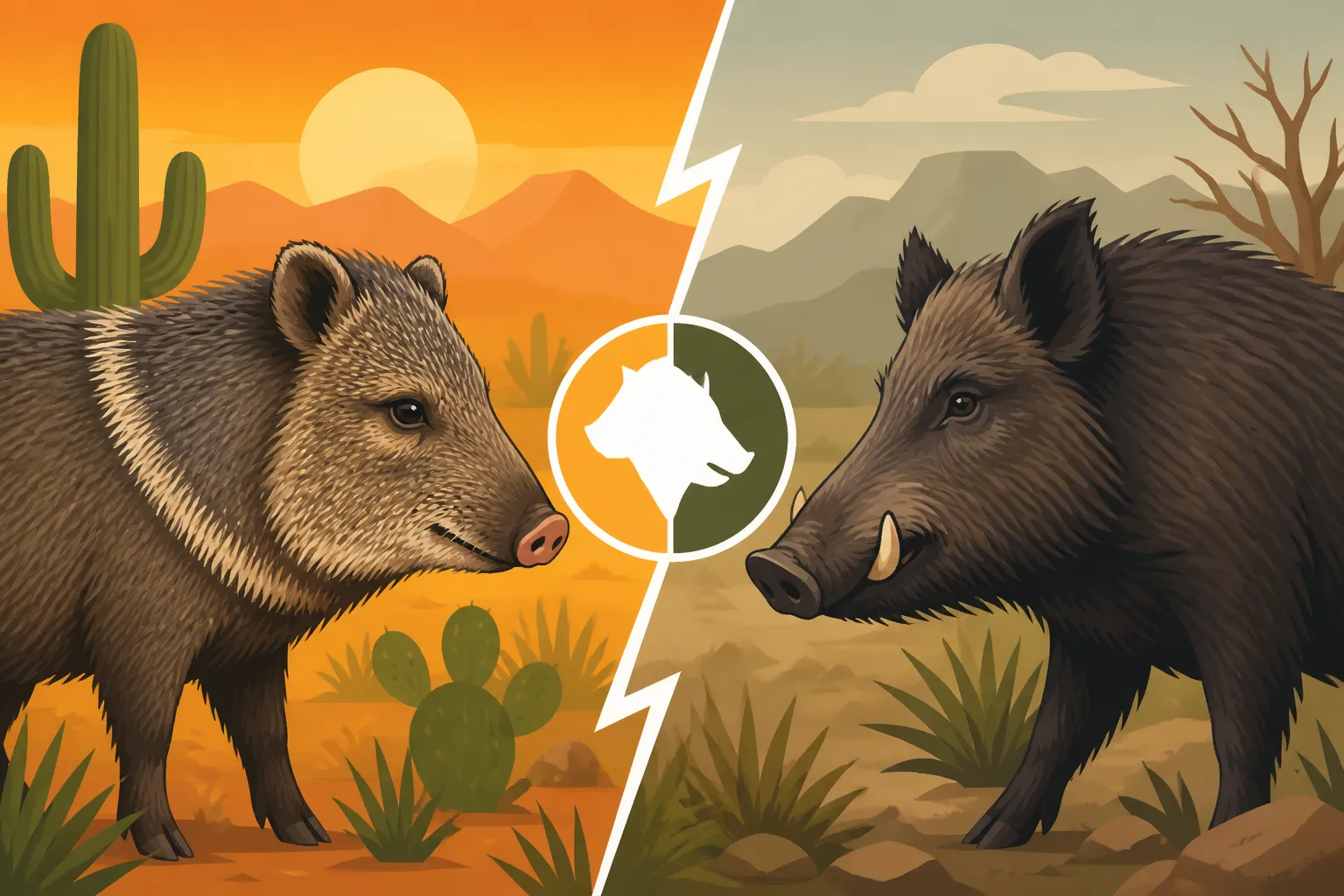
Let's talk about overall appearance. Javelina are generally much smaller than most wild pigs you'd encounter. An adult javelina typically stands about 1.5 to 2 feet tall at the shoulder, is 2.5 to 3.5 feet long, and weighs between 30 to 60 pounds. They have a compact, stocky body with relatively thin legs. Their coat is coarse, bristly, and typically a grizzled gray or black, with a distinctive lighter band or "collar" around their neck and shoulders – hence the name "collared peccary." This collar can be subtle or quite pronounced, depending on the individual. They also have a very short, almost non-existent tail.
Wild pigs, on the other hand, are significantly larger. Adults can easily weigh 100 to 300 pounds, with some boars pushing even heavier. They are taller, longer, and much more powerfully built. Their hair can vary greatly in color from black, brown, red, or spotted, often depending on their domestic ancestry, and it can be quite thick and shaggy. One of the most obvious differences is the tail: wild pigs have a long, often curly tail, similar to a domestic pig, which is a dead giveaway if you can get a good look.
Here's a quick comparison table to keep handy:
| Feature | Javelina (Collared Peccary) | Wild Pig (Feral Hog/Boar) |
|---|---|---|
| Scientific Family | Tayassuidae (Peccary family) | Suidae (Pig family) |
| Origin | Native to the Americas | Introduced from Eurasia/Africa |
| Size | Small (30-60 lbs, 1.5-2 ft shoulder) | Large (100-300+ lbs, 2.5-3.5+ ft shoulder) |
| Tail | Very short, almost non-existent | Long, often curly |
| Snout | Shorter, more pointed | Longer, disc-shaped end |
| Tusks (Canines) | Short, straight, point downwards | Long, curved, point outwards/upwards |
| Coat Color | Grizzled gray/black with a light collar | Variable (black, brown, red, spotted) |
| Stomach | Four-chambered | Single-chambered |
| Diet | Primarily herbivore | Omnivore |
Heads and Tusks
The head and snout offer clear distinctions. Javelina have a relatively short, pointed snout. Their small, sharp canines (tusks) are noticeable but don't protrude far from the mouth. They point straight down, almost parallel to each other. When you see a javelina, those tusks aren't the dramatic, curving weapons you associate with a wild boar.
Wild pigs possess a longer, more mobile snout that often ends in a distinct, leathery disc, perfect for rooting through soil. Their prominent tusks are a defining feature, especially on older boars. These canines grow continuously and are typically curved, projecting out and up from the mouth, sometimes reaching impressive lengths. They're formidable weapons used for defense and territorial disputes. If you’re ever curious to see the difference up close, a quick search for images will clarify this dramatic difference immediately.
Tracks and Sign
Even their tracks tell a different story. Javelina tracks are small and neat, showing four toes on both front and hind feet, but only the two central toes register clearly. The dewclaws are rarely visible unless the ground is very soft. They often walk in a fairly straight line.
Wild pig tracks are larger and more splayed, and crucially, their dewclaws often show prominently, especially in soft ground. They tend to walk with a wider, more deliberate stride. When it comes to "Tracking Javelina Through Thick Cover", you'll quickly learn to distinguish their smaller, more delicate prints from the larger, deeper impressions left by a large hog. Plus, wild pigs are notorious for extensive "rooting" behavior, tearing up large swaths of ground in search of food. While javelina do root around for tubers, their excavations are usually much smaller and less disruptive.
Behavioral Distinctions: How They Act
Beyond their looks, javelina and wild pigs behave in distinct ways that are important for hunters to recognize. These behavioral patterns influence how they move, feed, and react to threats, which in turn impacts your hunting strategy.
Social Structure and Communication
Javelina are highly social animals, living in herds that typically range from 5 to 15 individuals, though larger groups aren't unheard of. This herd mentality means you rarely find a solitary javelina, and if you do, its herd is usually not far off. They communicate through various vocalizations—grunts, barks, and a distinctive "chatter" when agitated—and, significantly, through scent marking. Each herd has a communal scent gland on its back, which they rub on trees, rocks, and other members of the group to reinforce their social bonds and mark territory. This is why "Javelina Herd Behavior and Scent" is such an important topic for hunters; understanding their reliance on scent can be a game-changer for finding them.
Wild pigs also live in groups, often called sounders, but their social structure can be more fluid. While sows and their offspring form tight-knit groups, boars are often more solitary, especially older, larger individuals. Their communication involves grunts, squeals, and warning barks, but they don't rely on the specialized communal scent gland for marking like javelina do. Their behavior is often characterized by a more aggressive and unpredictable nature, especially when cornered or protecting young.
Habitat and Diet Preferences
While both animals are adaptable, their primary habitats and diets differ, especially in Arizona. Javelina thrive in arid and semi-arid regions, preferring desert scrub, chaparral, and oak woodlands. Their diet is largely herbivorous, focusing on prickly pear cactus, agave, roots, tubers, and mesquite beans. They are incredibly efficient at extracting moisture from these plants, which allows them to survive in harsh, dry environments. This is why when you're scouting for "Javelina Range Across Southern Arizona", you're often looking for those specific plant communities. Using mapping tools like GoHunt can be incredibly helpful here, as you can layer satellite imagery and vegetation maps to pinpoint potential prickly pear patches or washes where they might find roots.
Wild pigs, being non-native, are more generalist in their habitat. They prefer areas with dense cover, water sources, and abundant food, which can include woodlands, forests, swamps, and agricultural fields. Their omnivorous diet allows them to exploit a wider range of food sources, from crops to insects and small mammals, making them highly adaptable and often destructive. If Arizona were overrun with wild pigs, they would likely be found in diverse habitats, not just the desert ecosystems favored by javelina.
Hunting Implications: Why Knowing the Difference Matters
Beyond the academic interest, these distinctions have very real implications for hunters, especially in Arizona. Correct identification is not just about being knowledgeable; it's about legality, ethics, and having a realistic expectation for your hunt.
Legal and Ethical Responsibilities
In Arizona, hunting javelina is regulated by the Arizona Game and Fish Department (AZGFD) with specific seasons, draw requirements, and bag limits. They are a managed big game species. Taking a javelina outside of season, without a tag, or exceeding bag limits carries significant penalties, just like any other big game animal. You'll need to apply for a tag through the draw, or purchase an over-the-counter archery tag during the designated season, which is one reason "Why Javelina Is the Easiest Arizona Tag to Get" for many hunters. The rules and regulations for these animals are clearly outlined in the annual hunting regulations booklet.
The key thing to remember is that there are no free-ranging populations of true wild pigs in Arizona that are managed by AZGFD as a huntable species. Any pig-like animal you encounter in Arizona that isn't a javelina would likely be a domestic animal that has escaped, and therefore would not be legal to hunt under big game regulations. While other states have specific regulations for feral hogs, Arizona does not. This means misidentifying a javelina as a "wild pig" from another state's regulations could lead to a serious violation of Arizona hunting laws. This underscores why taking an "The Ethically Hunting Arizona Course Explained" is so important for all hunters.
Hunting Strategies and Expectations
Because javelina are social animals that rely on scent and specific habitats, hunting them requires a different approach than hunting solitary, wide-ranging wild pigs. When hunting javelina, you're often looking for that distinctive "javelina smell" that a herd leaves, or you're glassing for a group moving through their preferred prickly pear country. Knowing their routine—where they bed, feed, and water—is critical. Using tools like GoHunt, you can really dive into the topography and vegetation of a unit to find these prime spots.
Calling for javelina can also be effective, as their social nature makes them curious or aggressive towards distress calls or challenges. You might use a predator call or even a specific javelina call to try and bring a herd in. Hunting "Best Units for an Archery Javelina Hunt" requires a keen eye and patience, often involving long hours of glassing to locate a herd. Once located, a careful stalk is usually required to get within bow range.
Wild pig hunting often involves different tactics, such as baiting (where legal), hunting over agricultural fields, or using dogs to bay them. Their generally larger size also changes shot placement considerations. For javelina, shot placement is similar to deer, aiming for the vitals behind the shoulder, keeping in mind their smaller size. Field dressing them requires specific considerations for "Field Dressing in Desert Heat", especially if you want to salvage the meat, which can be quite delicious, despite some misconceptions. Speaking of which, if you've ever wondered "Is Javelina Meat Worth Eating?", the answer is a resounding yes, when handled properly!
In short, knowing your quarry is not just good practice, it's essential for a safe, legal, and rewarding hunting experience in Arizona. So next time you're out there, remember, it's a javelina, and it's a truly unique animal that deserves our respect and proper management.
Disclaimer
Please remember that hunting regulations can change. Always consult the most current Arizona Game and Fish Department regulations before planning any hunt to ensure you are up-to-date on all rules and requirements.