Javelina Herd Behavior and Scent
Hunting javelina in Arizona is often a humbling experience. You might spend hours glassing vast desert landscapes, convinced you have a herd patterned, only for them to vanish into thin air or appear where you least expect them. This frustration stems from their incredibly keen sense of smell and complex herd behaviors. This comprehensive guide will pull back the curtain on the subtle art of understanding javelina herd dynamics and, more importantly, how their powerful scent communication can be the key to unlocking your success in the field, even when they're playing their "gray ghost" routine.
Understanding Javelina Social Dynamics: The Core of Their Existence
Javelina, often mistakenly called "pigs," are actually peccaries, a unique family of even-toed ungulates native to the Americas. Their social structure is incredibly intricate and central to their survival in the harsh Arizona desert. Without understanding how they interact within their herd, and how that translates to their presence on the landscape, you're essentially hunting blind.
The Structure of a Javelina Herd
A typical javelina herd, also known as a squadron, usually consists of 5 to 15 individuals, though larger groups of up to 50 have been observed, especially around abundant food sources or during favorable conditions. These herds are tightly knit, operating with a clear, though often fluid, social hierarchy. There isn't always one singular "alpha" in the way you might see with other species; instead, leadership can shift based on specific tasks like foraging, defense, or navigating new territory. This communal living offers significant benefits, from collective defense against common predators like mountain lions and coyotes to more efficient foraging and group thermoregulation in extreme temperatures. A lone javelina is a vulnerable javelina, making solitary animals a rare sight outside of temporary excursions or older, less social individuals.
The size of a javelina herd has a direct impact on its overall scent profile in an area. A larger herd means more animals consistently marking territory, leaving behind their unique musk. This concentrated odor acts like a beacon for an observant hunter. Imagine a small group of five javelina browsing through a mesquite flat versus a squadron of twenty. The latter will leave a far stronger, more pervasive scent trail and a greater amount of visual sign, making their presence much easier to detect with a keen nose or a careful inspection of the ground. Learning to differentiate the intensity of these scent markers can give you clues about the size of the herd you're pursuing.
Foraging and Movement Patterns
Javelina are primarily diurnal, meaning they are active during the day, though they often exhibit crepuscular activity—moving most heavily during dawn and dusk—especially in hotter months to avoid the midday sun. Their diet is largely herbivorous, favoring prickly pear cactus, agaves, mesquite beans, and roots, but they are opportunistic and will consume insects, grubs, and even small vertebrates if available. These dietary preferences dictate their foraging grounds, which can shift seasonally. For instance, after monsoon rains, they might concentrate on areas with fresh green-up or ripe prickly pear fruit, creating temporary hot zones of activity and, consequently, concentrated scent.
Their movement patterns are intimately tied to food and water availability. In dry periods, their travel corridors will invariably lead to reliable water sources, making these areas prime for ambush or still-hunting. As the season progresses and food sources change, so too will their routes, sometimes subtly, sometimes dramatically. Each of these movements, whether a quick jaunt between feeding areas or a longer trek to a distant waterhole, leaves behind a distinct scent signature. Understanding these shifts, perhaps by utilizing scouting tools or apps like GoHunt to analyze vegetation and water sources in a unit, allows hunters to predict where javelina might be, and more importantly, where their scent will accumulate.
The Role of the Rump Gland
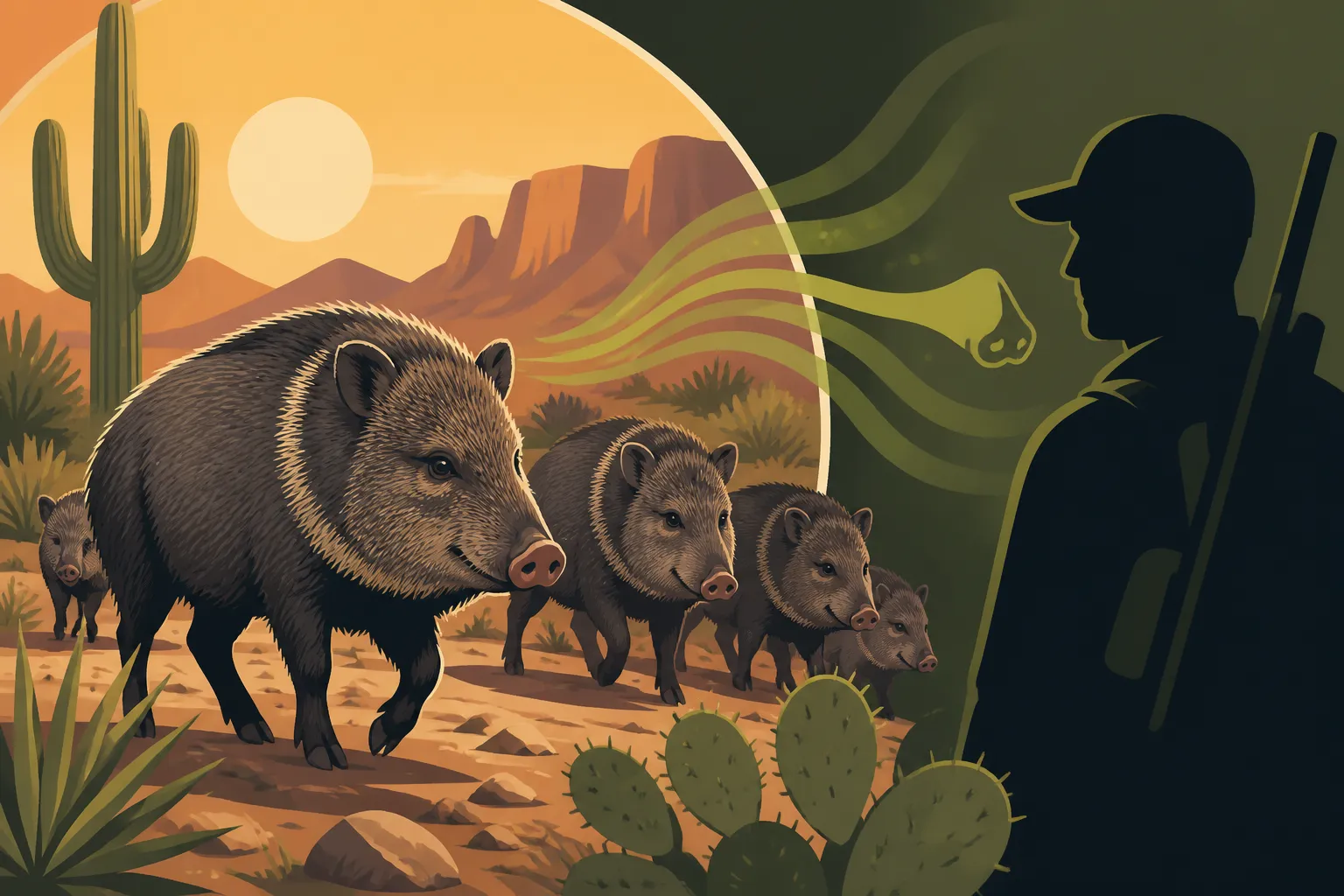
Perhaps the most unique and critical aspect of javelina communication is their dorsal scent gland, located on their rump. This highly active gland produces a musky, potent odor that is central to their social interactions. Javelina regularly rub this gland on trees, rocks, and even other herd members, effectively "branding" their territory and creating a shared scent within the group. This communal scent acts as a powerful identifier, allowing individual javelina to recognize their herd mates and distinguish them from outsiders. It's their unique family perfume, if you will.
For hunters, this rump gland is a game-changer. The musky scent, often described as a mix of skunk, wet dog, and something earthy, is unmistakable once you've learned to recognize it. Detecting this scent in the air or on marked vegetation is a strong indicator of recent javelina activity, even if you don't see them. It's particularly noticeable on still, humid mornings or after a rain when the air holds moisture, helping the scent particles linger. Learning to key into this specific odor can drastically improve your chances of locating a herd, especially in thick cover where visual detection is difficult. It’s a primal communication system that, when understood, provides an invaluable advantage.
The Javelina's Olfactory World: Decoding Scent Communication
The javelina's world is dominated by scent. Their noses are their primary tools for understanding their surroundings, finding food, identifying danger, and communicating with their herd. For a hunter, tapping into this olfactory world means learning to "smell" the hunt as much as seeing it.
Territorial Marking and Home Range
Javelina herds establish a home range, an area they regularly use for foraging, bedding, and watering. While they aren't as strictly territorial as some other species, they do actively mark these areas with their dorsal scent glands, as well as with urine and feces. These scent posts, often found along well-used trails, around feeding areas, or near bedding sites, serve as advertisements to other javelina herds that this patch of desert is currently occupied. The size of a javelina's home range can vary widely depending on the availability of resources; in areas with abundant food and water, their range might be smaller and more concentrated, whereas in more barren landscapes, they might roam over many square miles.
The overlap of home ranges between different herds is common, but intense scent marking helps minimize direct conflict. For a hunter, finding these actively marked zones is like striking gold. A strong, fresh javelina musk lingering in the air, combined with visual signs like tracks and rooting, tells you that you're within an active herd's domain. When scouting, pay close attention to the base of mesquite trees, palo verde trunks, or prominent rocks, as these are common spots for javelina to rub their glands. These markers provide a roadmap to recent activity and can help you pinpoint where to focus your efforts.
Alarm Scents and Predator Detection
When a javelina senses danger, it doesn't just bolt; it often releases a powerful burst of alarm pheromones from its dorsal gland. This sudden, intensified musky odor acts as an immediate warning signal to the rest of the herd, prompting them to either freeze, scatter, or gather for defense. This alarm scent is distinct from their regular territorial marking scent—it’s sharper, more pungent, and indicates an elevated state of alert or fear. The wind then becomes a crucial player, carrying this warning signal downwind, potentially alerting any nearby javelina to your presence long before you see them.
This inherent defense mechanism highlights why wind direction is absolutely paramount when hunting javelina. Approaching a herd from upwind is almost a guaranteed way to spook them. Even if they don't see or hear you, their incredibly sensitive noses will pick up your scent or the alarm scent of a startled herd member. A single whiff is enough to send them crashing through the brush, making them incredibly difficult to track down again. Understanding how to Reading Wind on a Sky Island Stalk is just as vital for javelina in the low desert as it is for deer in the high country.
Recognizing and Interpreting Javelina Scent
Learning to recognize and interpret javelina scent is a skill developed over time in the field. The unique javelina odor is often described as a strong, musky, slightly skunky aroma, sometimes with earthy undertones. It’s a scent that once you recognize it, you’ll never forget. Differentiating fresh scent from old is critical; a strong, pungent smell often indicates very recent activity, perhaps within minutes or hours, while a fainter, more dissipated scent might mean the herd passed through earlier in the day or even the day before. The best conditions for detecting this scent are often during damp weather, like after a light rain or on a humid morning, when moisture in the air helps suspend and carry the scent molecules. Still air can also allow scent to linger longer in a localized area.
Beyond just identifying the presence of scent, understanding its intensity and location can provide valuable clues. A faint scent might suggest a small, fast-moving group, while a pervasive, strong odor localized around a particular patch of thicket could indicate a bedding area where a larger herd has spent considerable time. This sensory input often works in conjunction with visual cues. Imagine catching a whiff of that distinctive musk while simultaneously spotting fresh tracks and rooted-up ground. That's a strong indicator you're very close to a herd. For the diligent hunter, a good nose, coupled with extreme patience and careful observation, can be a more effective tool than binoculars alone in certain situations. It’s all about immersing yourself in their world.
Reading the Landscape for Javelina Sign and Scent
Javelina, like all wild animals, leave behind a story on the landscape. Learning to read these clues, both visual and olfactory, is what separates a casual observer from a successful javelina hunter. It’s about understanding where they’ve been, what they’re doing, and where they might go next.
Identifying Active Javelina Trails and Bedding Areas
Javelina are creatures of habit when it comes to travel. They often use established trails, especially in dense cholla or mesquite thickets, creating well-worn paths that are noticeable upon close inspection. Along these trails, you'll find other visual signs: their distinctive two-toed tracks, which are smaller and rounder than those of a deer, and their scat, which looks like small, dark pellets. More tellingly, you'll often see rooted-up ground, where they've dug for tubers, roots, and grubs, leaving behind disturbed soil. These areas of intense rooting are clear indicators of recent feeding activity.
Their bedding areas are equally important. Javelina seek out dense cover for protection from predators and the elements. This often means thick prickly pear patches, dense catclaw acacia, rocky outcroppings with overhangs, or shaded washes that offer both cover and a cool escape from the desert sun. These bedding sites are where their communal scent becomes most concentrated. A strong, musky odor hanging heavy in the air within a thicket, even without immediate visual confirmation, is a prime indicator that javelina are either bedded nearby or have recently departed. It’s in these areas that you might also find the highest concentration of rubbed scent glands on low-hanging branches or rocks. Learning to Tracking Javelina Through Prickly Pear is essential, as these thorny thickets are often their preferred sanctuaries.
Utilizing Topography for Scent Management
The undulating terrain of the Arizona desert, with its washes, ridges, and canyons, significantly influences air currents and, consequently, how scent travels. This makes understanding topography and its effect on thermals absolutely crucial for javelina hunting. In the mornings, as the sun begins to warm the earth, thermals generally rise, carrying scent upwards. In the evenings, as the desert cools, thermals reverse and begin to fall, drawing scent down into washes and low-lying areas. Javelina are acutely aware of these thermal shifts and often use them to their advantage, moving with rising thermals in the morning to keep their scent from being carried down to predators below, and using falling thermals in the evening to detect threats from above.
For hunters, this means meticulously planning your approach to ensure you are always positioned downwind, or at least crosswind, of where you anticipate javelina to be. If you’re glassing a hillside in the morning, remember that your scent might be rising, giving you some leeway, but if you push into a wash, your scent could be carried right into a bedded herd below. Conversely, in the evening, hunting from high ground can be risky as your scent will be falling. Terrain features like small ridges or deep washes can act as natural scent blockers or funnels, and understanding these micro-thermals is key. A valuable resource for this kind of planning is mapping software like GoHunt, which allows you to study topography and anticipate wind currents before you even step foot in the field, helping you minimize scent dispersal.
Integrating Technology for Scent Tracking
Modern hunting technology has revolutionized how we approach the landscape, and for javelina, it can be a significant advantage. While no app can "smell" for you, tools like GoHunt provide layers of information that can help you predict where javelina might be, and consequently, where their scent will likely concentrate. By analyzing satellite imagery, topographical maps, and public land boundaries, you can identify key habitat features like dense vegetation, historical water sources—remembering to check for active ones as well, as Finding Water in Arizona's Dry Country is paramount—and potential travel corridors. This data-driven approach helps you narrow down vast tracts of desert to high-probability areas.
Furthermore, these mapping applications often include features that allow you to track wind direction in real-time and even predict thermal shifts throughout the day. This isn't just about general wind direction; it's about understanding how localized topography can create swirling winds or funnel air currents, drastically altering scent dispersion. You can plot your approach routes to ensure you're consistently downwind of likely javelina locations, or to position yourself strategically based on anticipated thermal shifts. This proactive planning, integrating technology with your traditional scouting, helps you avoid busting a herd by giving away your scent, turning potential frustrations into successful encounters.
Hunting Strategies Based on Javelina Behavior and Scent
Successfully hunting javelina is less about brute force and more about finesse, patience, and a deep respect for their keen senses. Incorporating an understanding of their behavior and scent communication into your strategy will undoubtedly increase your odds.
Still Hunting and Scent Control
Still hunting for javelina requires an almost meditative pace. These animals are masters of camouflage in their native habitat, often blending seamlessly with the scrub brush and rocky terrain. Your movement must be slow, deliberate, and constantly punctuated by long periods of standing motionless, scanning the landscape, and listening intently. The goal is to move so slowly that you're essentially becoming part of the environment, allowing you to spot them before they spot you. But even more critically, it's about moving in a way that minimizes the spread of your human scent.
Scent control is absolutely paramount during still hunting. You must be hyper-aware of wind direction at all times. Before taking a step, stop, check the wind (a small squeeze bottle of powder or a handheld anemometer is invaluable), and adjust your route if necessary. Always strive to keep the wind in your favor, blowing your scent away from where you anticipate javelina might be. This might mean making wide detours, backtracking, or waiting for a thermal shift. Wearing clean clothing, using scent-eliminating sprays, and avoiding strong human odors like cologne or campfire smoke can further reduce your scent footprint. The frustration of still hunting comes when you move too quickly or ignore the wind, only to hear the tell-tale "woof" of a spooked javelina crashing through the brush, having smelled you long before you saw them.
Calling and Scent-Based Tactics
While javelina are not typically thought of as call-responsive animals in the same vein as elk or turkeys, certain calls can be effective under the right circumstances. Distress calls, mimicking a javelina in trouble, can sometimes draw in curious herd members, particularly if they believe one of their own is in peril. Challenge calls, though less commonly used, might pique the interest of a dominant animal. The key with calling javelina is subtlety and timing. Over-calling or calling too loudly can easily spook them. It's often best used when you've located a herd but they are just out of sight, trying to draw them into a visible opening or closer to your position.
As for scent-based tactics, the use of natural javelina musk or even synthetic cover scents can be a double-edged sword. While theoretically, a javelina musk might attract curious individuals, introducing foreign scents can also alert wary animals to something unnatural in their territory. Most experienced hunters agree that focusing on eliminating human scent and understanding natural javelina scent is far more effective than trying to "call" them with artificial odors. If you do experiment with scents, use them sparingly and strategically, perhaps on a drag rag to create a false trail downwind of your position. Often, the best "scent-based tactic" is simply to remain completely odorless to the javelina and let their own communal scent guide you.
Patient Observation and Ambush Hunting
Perhaps the most consistent and successful strategy for hunting javelina, especially in the vast, open country of Arizona, is patient observation combined with ambush hunting. This typically involves finding a high vantage point at first light, preferably with good visibility over a large area, and settling in for an extended glassing session. High-quality binoculars and a spotting scope are indispensable here. Use a systematic grid-glassing method, slowly picking apart every patch of brush, every rock, and every shaded wash. Javelina often appear suddenly from seemingly nowhere, so constant, meticulous scanning is crucial. Tools like GoHunt can help identify historical bedding or feeding areas where you might concentrate your glassing efforts.
Once a herd is located, the real work begins: planning your stalk. This is where your understanding of their movement patterns, the terrain, and especially the wind becomes critical. Your goal is to get into a position downwind, within comfortable shooting range, without being seen or smelled. This might involve long detours, crawling through prickly pear, or waiting hours for the herd to move into a more favorable position. Setting up an ambush along known travel corridors between bedding and feeding areas, or particularly, at a reliable water source, can be highly effective. Sitting Water for Javelina and Deer is a time-honored desert hunting strategy, as javelina are creatures of necessity when it comes to hydration. Patience here is not just a virtue; it's a necessity. Waiting for them to present the right shot, or to walk into your downwind trap, is often the difference between success and a frustrating empty-handed hike back to the truck.
Ethical Considerations and Conservation of Javelina
As hunters, we bear a significant responsibility for the species we pursue. This includes understanding their ecological role, ensuring humane harvesting, and contributing to their long-term conservation. Javelina, being such a unique and iconic Arizona species, deserve our utmost respect.
Respecting Javelina Behavior and Habitat
Understanding and respecting javelina behavior is paramount to ethical hunting. This means minimizing disturbance to herds as much as possible. While hunting involves taking an animal's life, it doesn't mean causing undue stress or disrupting their natural routines beyond what's necessary for the hunt. For instance, repeatedly spooking a herd just for the thrill of seeing them run, or pushing them off critical feeding grounds, isn't respectful. Instead, focus on clean, efficient stalks that result in a quick, humane harvest. Recognize their unique ecological role in the desert, particularly how their rooting activity can help aerate soil and spread seeds, impacting plant communities.
Furthermore, respecting their habitat involves leaving no trace and adhering to all land use regulations. Arizona's desert ecosystems are fragile, and every hunter has a part to play in keeping them pristine. This means packing out all trash, avoiding off-road vehicle travel in restricted areas, and being mindful of fire restrictions, especially during dry periods. An informed hunter knows that their actions in the field reflect not just on themselves, but on the entire hunting community, and that protecting javelina habitat ensures future hunting opportunities for generations to come.
Responsible Harvesting and Meat Care
Ensuring a responsible harvest is fundamental to ethical hunting. For javelina, this means taking a clean, ethical shot that results in a quick kill, minimizing any suffering for the animal. Their relatively small size and tough hide mean shot placement is crucial. Always wait for a clear, unobstructed shot at the vitals. Following up on a shot animal is also an ethical imperative; even if you don't immediately see it drop, assume it's hit and begin a thorough grid search, paying close attention to blood trails and tracks. For help with this, refer to tips on Tracking Javelina Through Prickly Pear.
Once an animal is down, proper field dressing is essential, especially given Arizona's often warm temperatures. Javelina meat has garnered an unfair reputation for being gamey or tough, but this is almost always due to improper care in the field. The key is to cool the meat as quickly as possible. This means skinning and gutting the animal promptly, getting it off the ground, and into a cooler with ice as soon as possible. Don't let the meat sit in the sun for any length of time. When handled correctly, javelina meat is surprisingly delicious, lean, and versatile. Dispelling myths about its quality, as detailed in discussions like Is Javelina Meat Worth Eating?, helps ensure that every ethically harvested animal is fully utilized, honoring the animal and the hunt. Also, considering Heat Management on an Arizona Early Season Hunt is critical for preserving the meat.
Conservation Efforts and Management
Javelina populations in Arizona are actively managed by the Arizona Game and Fish Department (AZGFD) to ensure their sustainability and provide hunting opportunities. This management involves regular population assessments, habitat monitoring, and setting tag allocations based on scientific data. Understanding How Many Javelina Run in a Herd in a particular unit helps AZGFD biologists make informed decisions. Hunters play a vital role in these conservation efforts, not just by adhering to regulations but also through their financial contributions. License and tag fees directly fund wildlife research, habitat restoration, law enforcement, and other critical programs that benefit javelina and countless other species across the state.
The relatively abundant and widespread nature of javelina makes them one of Javelina Is Arizona's Most Accessible Big Game species, offering fantastic opportunities for both resident and nonresident hunters. Programs like Arizona's year-round archery javelina seasons, as detailed in When Arizona Archery Javelina Is Open, further enhance accessibility. It is the responsibility of every hunter to understand the regulations, participate ethically, and support the broader conservation goals that ensure these unique animals will thrive in Arizona's deserts for generations to come. It’s a testament to sound management and hunter commitment that we can continue to enjoy these fascinating creatures and the hunting opportunities they provide.
Javelina Scent vs. Visual Sign Detection
When pursuing javelina, both scent and visual cues are invaluable. However, their reliability and detectability can vary greatly depending on environmental conditions. Here's a quick comparison to help you prioritize your senses in the field:
| Feature | Scent Detection | Visual Sign Detection |
|---|---|---|
| Primary Sense | Olfactory (Nose) | Ocular (Eyes) |
| Best Conditions | Humid, still air; after rain; cool mornings/evenings | Bright daylight; open terrain; glassing from vantage points |
| Challenges | Dry, windy conditions; human scent contamination; weak nose | Dense cover; low light; movement; poor glassing technique |
| Types of Sign | Musky odor (fresh or lingering); alarm pheromones | Tracks, scat, rooting, rubs on vegetation, actual animals |
| Distance | Can detect animals not visible (downwind) | Requires direct line of sight |
| Accuracy | Indicates presence, recent activity, or alarm state | Confirms presence, size, direction of travel, current activity |
| Hunter Action | Adjust approach for wind, move slowly, listen for movement | Glass systematically, identify patterns, plan stalk |
Disclaimer
Please remember that hunting regulations and conditions can change. Always consult the latest official Arizona Game and Fish Department regulations before planning or undertaking any hunting activity. This guide provides general information and best practices, but it is not a substitute for official legal documents or sound judgment in the field.