Why Javelina Are Not Wild Pigs
It’s a question that echoes through many a new hunter's mind, and frankly, even some seasoned folks get it mixed up: "Are javelina just small wild pigs?" You wouldn't be alone if you thought so, given their bristly coats, snouts, and often group-oriented behavior. But for hunters heading out into Arizona's vast and diverse landscapes, understanding the distinct differences between a javelina and a true wild pig isn't just a matter of biological curiosity; it has real implications for how you approach your hunt and adhere to regulations. This guide is here to clear up that widespread confusion, diving deep into the fascinating world of both species and why one is absolutely not the other.
Understanding the Common Confusion
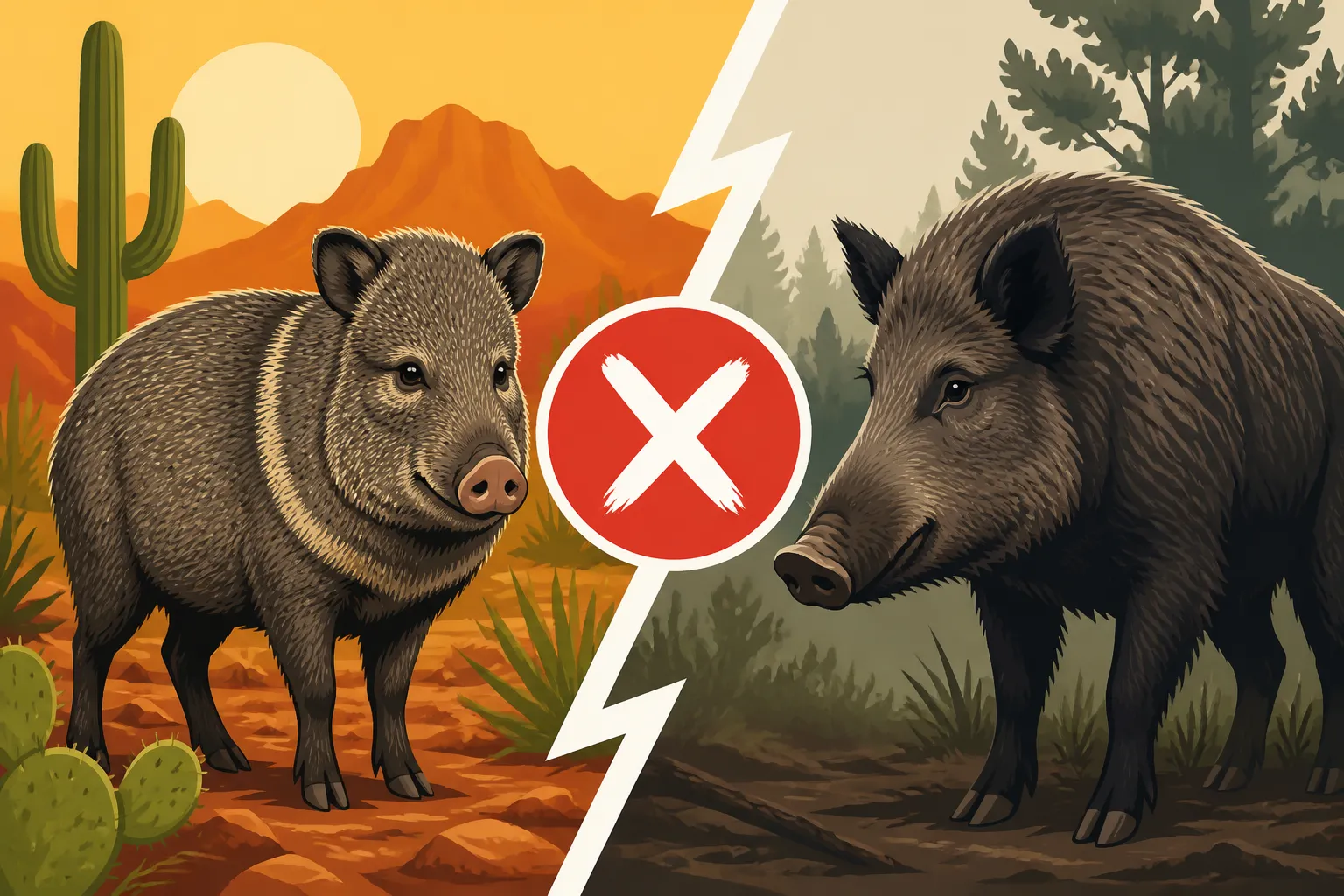
Let's be honest, at first glance, a javelina really does look like a miniature wild pig, especially when you catch a fleeting glimpse of them rustling through the desert scrub. Their general appearance, foraging habits, and even their vocalizations can certainly lead to mistaken identity. This isn't just a casual error; it's a deeply ingrained misconception that stems from a lack of precise biological understanding and a reliance on superficial similarities.
A Look at Shared Traits
Both javelina and wild pigs share some rather convincing superficial traits that make them easy to confuse. For starters, they both possess those distinctive, bristly coats, ranging in color from gray to reddish-brown, often with lighter patches. They both have robust, compact bodies built for pushing through dense vegetation, and their short legs and stout build are strikingly similar. You'll often see both species rooting around in the dirt, snouts to the ground, searching for food – a behavior that further solidifies the "pig" image in many people's minds. Even their social structures can appear somewhat alike from a distance; javelina are known for their tight-knit family groups, and while true wild pigs can be more solitary, they also form sounders, particularly sows with their piglets.
Where the Misconception Takes Root
The perception of javelina as "pigs" really takes root when people consider their general habitat and foraging style. Both animals thrive in diverse environments, from dense chaparral to arid desert washes, and their omnivorous diets often see them consuming similar plant matter, roots, insects, and even small vertebrates. Historically, before a clearer understanding of North American fauna became widespread, many indigenous peoples and early European settlers simply lumped them into the broader category of "wild hog" or "peccary," a term that didn't always carry the strict biological distinction we now recognize. Add to this the fact that many hunters from other states are familiar with hunting feral hogs, and they naturally assume that Arizona's bristly desert dwellers are just another regional variant. It's a testament to how easily visual cues can override scientific fact when precise information isn't readily available.
The Biological Divide: What Javelina Really Are
Now, let’s get down to the scientific truth that truly separates these animals. While they might look like cousins, they're actually from entirely different evolutionary branches, much like a wolf is different from a domestic dog, or a bear from a badger. The biological distinctions are far more profound than their shared rough appearance suggests.
Peccaries, Not Pigs
Javelina, known scientifically as Pecari tajacu, belong to the family Tayassuidae, commonly known as peccaries. This family is native to the Americas, with species found from the Southwestern United States all the way down to Argentina. True pigs, on the other hand, belong to the family Suidae, which includes domestic pigs, wild boars (Sus scrofa), and warthogs, all of which originated in the Old World (Europe, Asia, and Africa).
This isn't just a taxonomic detail; it means peccaries have been evolving independently from true pigs for millions of years. Their ancestors diverged long before humans even entered the picture. They developed unique characteristics perfectly suited to their New World habitats, creating an entirely separate lineage. When you're out there glassing the Arizona desert, perhaps with the help of detailed maps from resources like GoHunt, understanding that you're looking for a distinct American species, not just a smaller version of an Old World animal, adds a whole new layer to the hunting experience. For more on what makes them unique, you might want to read What Family Javelina Actually Belong To.
Physical Differences That Matter
Beyond their genetic lineage, there are several key physical differences that clearly distinguish javelina from true pigs:
- Dentition (Teeth): This is one of the most significant identifiers. Javelina have tusks that are relatively short and point straight down, growing in a knife-like fashion. True wild pigs, however, possess much longer, curved tusks that sweep upwards and outwards from their mouths, often visible even when their mouth is closed. These different tusk structures reflect distinct feeding habits and defense mechanisms.
- Skull Structure: A closer look at their skulls reveals further divergence. Javelina have a single-chambered stomach, unlike the multi-chambered stomachs of ruminants, but still different from the digestive system of a true pig. Their jaw and teeth structure are adapted for crushing tough desert vegetation.
- Feet/Hooves: Javelina have two main toes on their hind feet, with a small, vestigial dewclaw. True pigs, however, have four functional toes on their hind feet. This might seem like a minor detail, but it's a clear anatomical distinction.
- Scent Gland: Perhaps the most immediately noticeable physical difference in the field (besides their size) is the prominent dorsal scent gland on a javelina's back, just in front of its tail. This gland produces a musky odor, which javelina use to mark their territory and identify herd members. This is why when you approach a group of javelina, you'll often catch their distinct, pungent scent on the air. True wild pigs do not possess such a prominent, external dorsal scent gland. This strong scent is a key part of How Javelina Use Scent to Communicate.
- Tail: Javelina have a practically non-existent tail, often just a small stub that's barely visible. Wild pigs, conversely, have a much more pronounced tail, often thin and reaching down to their hocks, which they can twitch or curl.
These aren't just minor variations; they are fundamental anatomical differences that biologists use to categorize species, proving that javelina are indeed a unique species in their own right, perfectly adapted to their unique role in the desert ecosystem.
Wild Pigs: True Swine of the Southwest
While javelina are indigenous to the Americas, true wild pigs – or feral hogs, as they're commonly called – are an introduced species in North America, including parts of Arizona. Understanding their origins and impact is crucial to distinguishing them from javelina.
Feral Hogs and Their Origins
When we talk about "wild pigs" in North America, we're almost exclusively referring to feral hogs (Sus scrofa). These are domestic pigs that have escaped captivity and reverted to a wild state, or they are hybrids of escaped domestic pigs and wild boars originally introduced from Europe. They are, in every sense of the word, pigs. Spanish explorers brought the first domestic pigs to the Americas in the 16th century, and subsequent settlers continued to introduce them. Over centuries, many escaped and established wild populations, adapting remarkably well to various environments.
In Arizona, feral hog populations are much less widespread and dense compared to states like Texas or Florida. They are typically found in more riparian areas or agricultural zones where they can access water and abundant food sources. These animals are direct descendants of domestic livestock, meaning they carry the same biological blueprint as the pigs you might see on a farm, just without the human intervention that shapes their appearance and behavior for domestication.
The Impact of True Wild Pigs
The presence of true wild pigs, or feral hogs, is a serious concern for land managers and conservationists across the United States. Unlike javelina, which are a native species with an established ecological niche, feral hogs are an invasive species. Their destructive rooting behavior can cause significant damage to agricultural crops, native plant communities, and sensitive riparian habitats. They compete with native wildlife for food resources, and they can also transmit diseases to livestock and even humans.
Their prolific breeding rates and lack of natural predators in many areas contribute to their rapid spread and environmental devastation. This makes them a species that wildlife agencies often encourage hunters to pursue without many restrictions, as part of population control efforts. It's a stark contrast to the management of native species like the javelina, which are carefully managed through limited tag draws and specific seasons.
Hunting Regulations: Why It Matters for Hunters
For anyone planning an Arizona hunting trip, knowing the difference between a javelina and a feral hog isn't just for bragging rights; it's absolutely vital for staying legal and ethical. The Arizona Game and Fish Department (AZGFD) treats these two animals as entirely separate species with vastly different regulations.
Different Management Strategies
The AZGFD manages javelina as a big game species, just like deer or elk. This reflects their status as a native, ecologically important animal. Management objectives for javelina often focus on maintaining healthy populations, ensuring sustainable harvest, and balancing their numbers with available habitat. This means limited tags, specific hunting seasons, and strict bag limits. Hunters must participate in a draw or purchase an over-the-counter (OTC) tag with defined seasons.
Conversely, feral hogs are often considered an unregulated nuisance species in Arizona, much like coyotes or rabbits, though they don't have the same statewide distribution as those common predators. Because they are non-native and destructive, the goal for feral hogs is typically population reduction, not sustainable harvest. This fundamental difference in management strategy directly impacts how, when, and where you can hunt them.
Tagging and Season Differences
This is where the rubber truly meets the road for hunters. For javelina, you absolutely need a specific tag. Arizona offers Arizona Javelina Tags Are Available All Year through specific seasons, including popular archery seasons, HAM (handgun, archery, muzzleloader) hunts, and general rifle seasons. These tags are unit-specific and have set bag limits, typically one javelina per hunter per year. You can purchase an OTC archery javelina tag, which allows for hunting during designated archery-only periods, or apply for a draw tag for rifle or HAM seasons. You can find detailed information about Arizona Javelina Season Dates by Weapon in the annual regulations.
For feral hogs, the regulations are much looser. In many areas where they exist, feral hogs can be hunted year-round without a specific tag, provided you have a valid Arizona hunting license and adhere to general hunting rules regarding private property, weapon restrictions, and shooting hours. This significant difference means that mistaking a javelina for a feral hog could lead to serious legal trouble, including citations and loss of hunting privileges, if you harvest one without the proper tag. Always double-check current regulations from the AZGFD to be sure, and perhaps consult resources like GoHunt for specific unit information on what species are present and what rules apply.
Habitat and Behavior: Subtle but Significant Differences
While both javelina and feral hogs can be found in Arizona, their preferred habitats and behavioral patterns often diverge, offering further clues for identification in the field. Understanding these nuances can greatly improve your chances of success and proper identification.
Javelina Herd Behavior and Scent
Javelina are highly social animals, almost always found in cohesive herds ranging from a few individuals to more than a dozen. These herds are often family units, and they stick together closely, foraging, bedding, and moving as one. This strong social bond is evident in their constant communication through grunts, chirps, and the distinctive musky odor emitted from their dorsal scent gland. If you've ever been in close proximity to a herd, you know that smell! This scent is crucial for herd cohesion and is a defining characteristic. Learn more about How Many Javelina Run in a Herd for insights into their social structure.
Their habitat preference leans towards arid and semi-arid regions of the Sonoran Desert, often associating with dense thornscrub, palo verde, mesquite, and prickly pear cactus. They rely on this thick cover for protection from predators and the scorching Arizona sun. They are particularly active during cooler parts of the day – dawn and dusk – often bedding down in dense thickets, under rock overhangs, or in abandoned burrows during midday heat. When Tracking Javelina Through Thick Cover, knowing these habits can be extremely helpful.
Feral Hog Adaptability and Diet
Feral hogs, while sometimes seen in groups (sounders), tend to be more opportunistic and less rigidly social than javelina. Their social structure can be more fluid, and older boars are often solitary. They are incredibly adaptable and can thrive in a much wider range of habitats, from dense forests to swamps and even arid rangelands if water is available. In Arizona, you're more likely to encounter them near riparian areas, agricultural fields, or areas with reliable water sources, unlike the more widespread desert distribution of javelina.
Their feeding habits are famously destructive. Feral hogs are true omnivores and will eat almost anything: roots, tubers, acorns, fruits, insects, eggs, small mammals, reptiles, and even carrion. Their powerful snouts are used to root up large areas of ground, often leaving behind noticeable "plowed" patches of earth. This rooting behavior is a clear sign of their presence and a major reason for their ecological impact. Javelina will also root, but their rooting is generally less extensive and destructive than that of a large feral hog.
Field Identification: Telling Them Apart in the Wild
When you're out in the field, the pressure is on. You need to make a quick, accurate identification to ensure you're hunting legally and ethically. While the biological details are fascinating, practical field cues are what truly matter in the moment.
Key Visual Cues
Learning to differentiate javelina from feral hogs visually takes practice, but once you know what to look for, it becomes much easier:
- Size: This is usually the most obvious indicator. Javelina are significantly smaller. An adult javelina typically weighs between 30-60 pounds and stands about 20 inches tall at the shoulder. Feral hogs, by contrast, are much larger, with adults often weighing 100-400 pounds or more, and standing considerably taller. The sheer scale difference is usually enough to rule out one or the other if you have a clear view.
- Coloration and Coat: While both are bristly, javelina often have a more uniform grayish-black coat with a distinctive lighter band or "collar" around their shoulders and neck, which can be quite pronounced. Feral hogs exhibit a much wider range of colors, from black to brown, red, or even spotted, often with patchy, coarser hair.
- Snout and Face: Javelina have a more pointed, pig-like snout, but their head is generally smaller and more triangular. Their eyes appear relatively large. Feral hogs have a larger, flatter snout and often a more elongated, sloped head profile, similar to a domestic pig.
- Tusks: Remember those tusk differences? While hard to see at a distance, if you get a good view, javelina tusks point straight down. Feral hog tusks curve outwards and upwards, often protruding visibly from the sides of their mouth.
Behavioral Tells to Observe
Beyond physical appearance, paying attention to how these animals behave can also provide crucial identification clues:
- Group Dynamics: Javelina almost invariably travel in tight-knit herds. If you see one, chances are more are nearby, often moving in close proximity. Feral hogs can be solitary, especially large boars, or form looser sounders. If you see a lone "pig," it's more likely a feral hog than a javelina.
- Reaction to Presence: Javelina can be quite skittish, often fleeing quickly and noisily into dense cover when they detect a threat. They might vocalize with sharp barks or grunts as they scatter. Feral hogs, especially large boars, can sometimes be more aggressive or stand their ground, though they also often flee. Their charge, if it comes, is a serious threat.
- Vocalizations: Javelina have a range of distinct grunts, barks, and chattering sounds, often communicating constantly within their herd. Feral hogs have a broader range of grunts, squeals, and even bellows, sometimes sounding very much like domestic pigs.
- Dorsal Scent Gland: As mentioned, javelina have that prominent scent gland. When they get agitated or excited, or even just in their routine movements, you might notice them rubbing against trees or rocks to mark territory. Keep an eye out for this behavior.
By combining these visual and behavioral observations with your knowledge of Javelina Range Across Southern Arizona, you'll be much better equipped to correctly identify your target.
Here's a quick reference table to help solidify the differences:
| Feature | Javelina (Peccary) | Wild Pig (Feral Hog) |
|---|---|---|
| Scientific Family | Tayassuidae | Suidae |
| Origin | Native to the Americas | Introduced from Old World (domestic ancestors) |
| Average Weight | 30-60 lbs | 100-400+ lbs |
| Height | ~20 inches at shoulder | ~24-36+ inches at shoulder |
| Tusks | Short, point straight down | Long, curved, sweep upwards/outwards |
| Tail | Vestigial (barely visible stub) | Longer, often reaching hocks |
| Scent Gland | Prominent dorsal scent gland | No prominent dorsal scent gland |
| Hind Toes | Two functional toes | Four functional toes |
| Social Structure | Cohesive, tight-knit herds (family) | Solitary (boars) or looser sounders |
| Habitat | Arid/semi-arid scrub, desert washes | Riparian, agricultural, diverse (opportunistic) |
| Management | Big Game (tag required, limited season) | Nuisance (often no tag, year-round where present) |
This comprehensive overview should provide a clear understanding of why these two animals, despite their superficial similarities, are fundamentally different. Knowing these distinctions is not just good knowledge; it's essential for responsible and successful hunting in Arizona.
Disclaimer
Please note: Hunting regulations and laws can change. Always consult the most current Arizona Game and Fish Department regulations before planning any hunt. This guide is for informational purposes only and should not be considered legal advice.