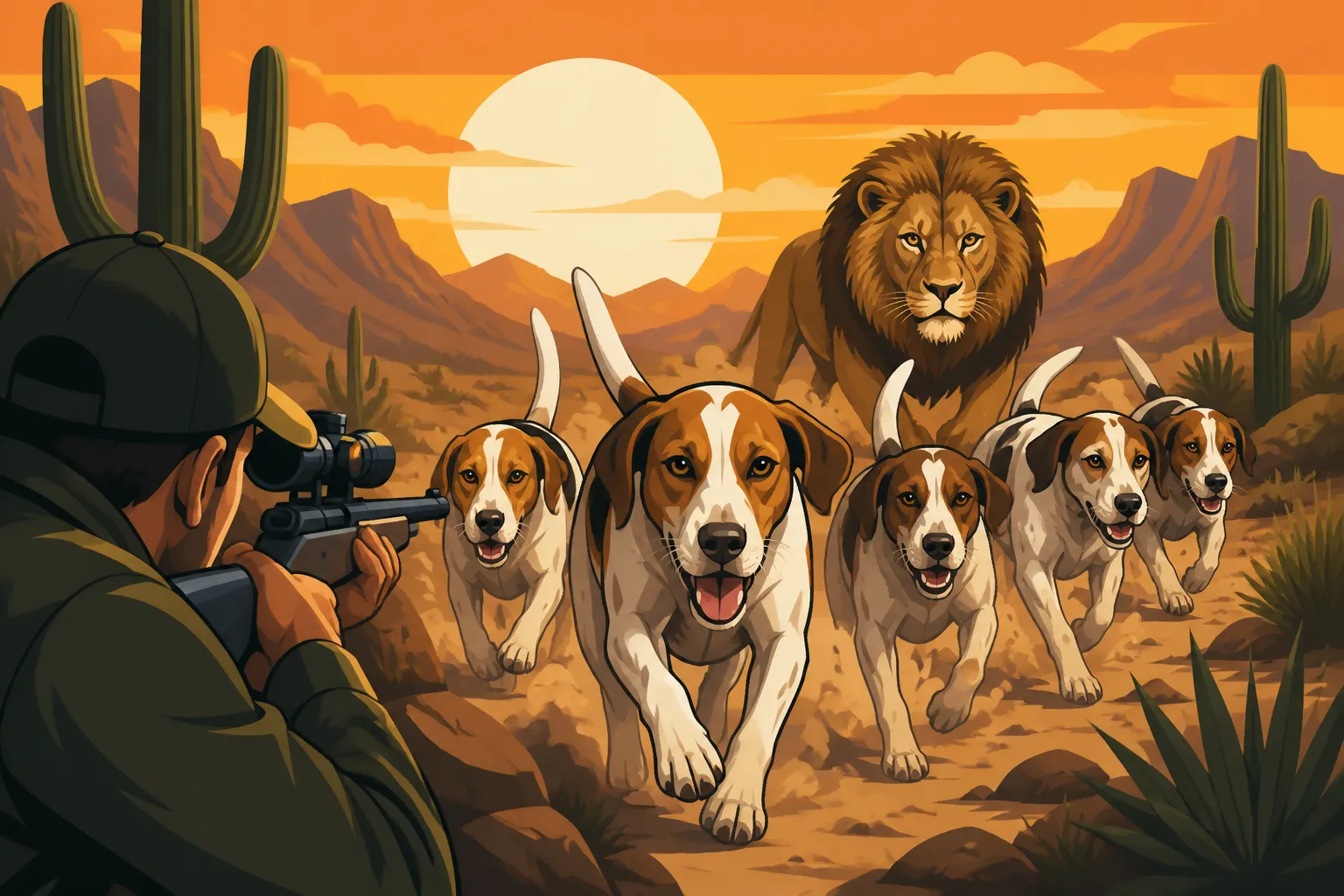
Hunting Lions Behind a Pack of Hounds
For many hunters, the image of chasing big game across rugged terrain, pushed by a baying pack of hounds, is the stuff of legend. In Arizona, mountain lion hunting with dogs isn't just a pursuit; it's a deep dive into an ancient tradition that tests both hunter and canine. This guide will walk you through the unique world of hunting lions behind hounds in Arizona, explaining the rules, the demands, and the incredible experience it offers.
The Deep Allure of Hound Hunting for Arizona Mountain Lions
There's something incredibly primal about the sound of a hound's voice echoing through a canyon, signifying that a track has been picked up. For those who choose to hunt mountain lions in Arizona, doing so behind a pack of dedicated hounds is often the most effective, and certainly one of the most exhilarating, ways to pursue these elusive predators. It's a method steeped in tradition, demanding incredible skill from both the hunter and the dogs.
Why Hounds Are Essential for Lion Hunting
Mountain lions, often called "ghosts of the desert," are masters of stealth and evasion. Their territory can encompass vast, often impenetrable, expanses of rugged mountains, dense chaparral, and rocky canyons where human eyes might never spot a track, let alone the cat itself. This is precisely where hounds become not just an asset, but almost a necessity. Their unparalleled sense of smell allows them to pick up a lion's scent trail, often hours or even a full day old, and follow it across terrain that would be impossible for a human to navigate efficiently while trying to cut sign.
Imagine trying to still-hunt a mountain lion in the Bradshaw Mountains after a dry spell. The ground is hard, the tracks faint, and the cat could be bedded in any one of a thousand rocky crevices. Now picture a well-trained pack of hounds, noses to the ground, working that same country. They'll methodically unravel the invisible tapestry of scent, eventually leading you to where the cat has taken refuge. It's an experience that truly highlights the incredible capabilities of a dog's nose.
The Unique Experience of the Chase
The thrill of a hound hunt isn't just in the harvest; it's deeply ingrained in the chase itself. It starts with finding fresh sign – a track in the dust, scat, or a kill site. From there, the dogs are often "turned loose" on the track. What follows can be a sprint, a marathon, or a careful crawl through rough country, depending on the terrain and how hot the trail is. The baying of the dogs, initially excited and searching, transitions into a focused, purposeful bark as they close in. This chorus of canine voices communicates the progress of the hunt, from "on track" to "treed" or "bayed up" in a cave or on a rocky ledge.
This isn't a passive sport. You are actively participating in the chase, often scrambling over rocks, pushing through thick brush, and navigating steep grades to keep up with the dogs. It demands significant physical endurance and a stubborn refusal to quit. The satisfaction of finally reaching the treed lion, seeing your dogs' hard work pay off, and then executing an ethical harvest is a profound experience, deeply connecting you to the landscape and the animal. It's a true test of dedication and grit.
Navigating Arizona's Regulations for Lion and Hounds
Hunting mountain lions in Arizona isn't a free-for-all; it's a tightly managed pursuit designed to ensure healthy populations while providing hunting opportunity. Understanding the specific regulations, especially concerning the use of hounds, is critical before you even think about hitting the trail. Arizona's approach balances hunter opportunity with conservation, and that means staying informed is paramount.
Legal Framework for Hound Hunting
In Arizona, hunting mountain lions with the aid of dogs is a legal and common practice. However, it's not simply a matter of turning your dogs loose. Hunters must possess a valid Arizona hunting license and a mountain lion tag. Beyond that, the use of dogs falls under specific regulations detailed by the Arizona Game and Fish Department (AZGFD). These rules govern everything from the number of dogs you can use to how you must manage your pack, ensuring ethical and fair chase practices are maintained. You can't just unleash any dog; they need to be under control and focused on the task.
It's also important to remember that all state hunting regulations, including those specific to hounds, are subject to change. Before planning any hunt, always make sure to consult the most current regulations. Think of it like a seasoned guide always re-checking their map for new trail closures. Platforms like GoHunt often compile regulatory updates and draw odds, but nothing beats reading the official AZGFD documentation for specifics. For a complete understanding, always refer to Reading the Arizona Hunt Regulations Booklet directly.
Harvest Limits and Unit Closures
One of the most critical aspects of hunting mountain lions in Arizona is the dynamic nature of harvest limits and unit closures. Unlike deer or elk seasons which have fixed dates, mountain lion hunts operate on a "harvest objective" system. This means that certain units, or groups of units, have a predetermined number of lions that can be harvested, sometimes further broken down by sex (e.g., number of females). Once that harvest objective is met, the season for that unit or group of units closes immediately.
This can be a real frustration for hunters planning a trip, as a unit could close with little notice if harvest rates are high. Imagine driving five hours to a trailhead, only to discover the unit closed yesterday afternoon! Hunters are responsible for checking the AZGFD website or hotline frequently to see which units are still open. This is where tools from companies like GoHunt, which often integrate real-time season closure data, can be incredibly helpful for staying current while you're afield or planning your hunt. It's a vital part of responsible lion hunting to know if you can even legally be pursuing a cat in your chosen area. Be sure to understand Arizona Mountain Lion Harvest Limits by Unit for your planned area.
Fair Chase and Ethical Considerations
The use of hounds in hunting, particularly for predators like mountain lions, sometimes sparks debate about fair chase ethics. However, a responsible hound hunter adheres to a strict code of conduct that emphasizes respect for the animal and the spirit of the hunt. This means ensuring the dogs are well-trained, disciplined, and that the hunt is not simply about an easy kill. The challenge lies in the pursuit, the tracking, and the physical exertion required to get to the treed or bayed cat.
Ethical considerations extend to the shot itself. Once a lion is treed, hunters have the opportunity to assess the animal, ensure a safe backdrop, and make a clean, humane shot. It's not a rush. It's about taking the time to ensure a quick and ethical harvest. Furthermore, knowing and respecting private land boundaries is paramount, especially when dogs may cross property lines in pursuit. Recovering your dogs and adhering to trespass laws is non-negotiable. For a deeper dive into ethical hunting practices across the state, consider exploring The Ethically Hunting Arizona Course Explained.
The Essential Elements of a Successful Arizona Hound Hunt
A successful mountain lion hunt with hounds in Arizona is far more than just turning dogs loose. It's a complex interplay of well-trained canines, a deep understanding of the terrain, and a hunter's unwavering commitment to physical and mental endurance. Missing any one of these elements can turn a promising track into a frustrating, empty pursuit.
The Dedicated Dog Pack
At the heart of any hound hunt are the dogs themselves. Lion dogs are usually specific breeds known for their scenting ability, endurance, and tenacity, such as Treeing Walkers, Plotts, or Redbones. These aren't your average family pets; they are specialized athletes that undergo extensive training, often from puppyhood, to hone their skills. They learn to ignore deer or rabbit scent, focusing solely on the subtle, lingering odor of a mountain lion. A good pack works together, some dogs excelling at picking up a cold track, others at pushing a hot one, and all contributing to the baying chorus that tells you they've got the cat.
Hunters often invest years and significant resources into developing their pack. It's a testament to their dedication to the craft. Each dog in a pack often has a distinct role and a unique voice, which experienced hunters learn to interpret. Understanding your dogs, their individual strengths, and how they perform under different conditions is a continuous learning process. Without a well-trained, healthy, and cohesive pack, a lion hunt with hounds is simply not possible.
Terrain, Conditions, and Tracking
Arizona's diverse landscape plays a huge role in the success of a hound hunt. From the rugged Sky Islands of the south to the rim country, lions inhabit incredibly varied terrain, each presenting its own tracking challenges. Dry, rocky ground makes it incredibly difficult for dogs to pick up a scent, often requiring a "cold nose" dog or a very fresh track. Conversely, a thin layer of snow or moist ground can be a hound hunter's best friend, holding scent beautifully and making tracks easy to read. However, heavy rain can wash out a trail entirely, bringing a hunt to a grinding halt.
Elevation also matters. Cats in higher, timbered country might tree more readily, while those in open, rocky desert might bay up in a cave or on an inaccessible ledge, presenting different challenges for the hunter trying to reach them. A successful hound hunter develops a keen understanding of these variables and knows how to "read" the conditions, choosing when and where to start a track for the best chances. Scouting the units you intend to hunt, both on foot and with tools like GoHunt's satellite imagery, can give you a significant advantage in understanding the terrain beforehand.
The Hunter's Role and Essential Gear
While the dogs do the heavy lifting of tracking, the hunter's role is anything but passive. Pursuing hounds over Arizona's backcountry demands exceptional physical conditioning. You will be traversing steep slopes, dodging cacti, pushing through dense scrub, and potentially covering many miles in a day, often off-trail. Being in good shape isn't just about endurance; it's about safety. Getting to a treed lion in remote country requires stamina, agility, and a strong will. Consider reading up on Physical Conditioning for a Sky Island Hunt to prepare.
Beyond physical fitness, critical gear includes reliable tracking collars with GPS capabilities for your dogs – you need to know where they are, especially if they run far. A handheld GPS for yourself is also crucial for navigation and safety in unfamiliar territory. Robust boots are a must for traversing rocky and uneven ground; check out options for Choosing Boots for Rocky Desert Ground. Don't forget plenty of water, especially in Arizona's arid climate. You will need Water You Must Carry on a Day Hunt, often more than you think. Other essentials include a good pack, appropriate layers of clothing for fluctuating temperatures, a first-aid kit, and ideally, a satellite communication device for emergencies in areas without cell service.
| Hunt Stage | Dog's Action | Hunter's Role | Typical Environment |
|---|---|---|---|
| Finding the Track | Searching, excited barks, "striking" a cold scent | Identifying fresh sign, choosing starting point, releasing dogs | Roadsides, washes, canyons, areas with recent snow/moisture |
| The Chase | Focused baying, running, occasionally "losing" and re-finding scent | Following dogs, navigating terrain, monitoring GPS, encouraging pack | Steep hillsides, dense brush, rocky slopes, thick timber |
| The Tree/Bay | Continuous, excited baying directed upward or into cover | Locating dogs, safely approaching, assessing the lion, preparing for shot | High in a tree, on a rock ledge, inside a cave, thicket |
| The Harvest | Holding position, often at the base of the tree/cover | Ensuring ethical shot, safety, quickly dispatching the animal | Near the treed/bayed lion, stable shooting position |
| Recovery | Excited post-harvest, resting | Field dressing, packing out, caring for dogs, reporting harvest | Remote backcountry, steep terrain, requiring physical effort |
Responsible Hunting: Ethics and Logistics for Lion Hounds
Hunting with hounds, particularly for a formidable animal like a mountain lion, comes with a heightened responsibility. It's not just about compliance with regulations; it's about upholding ethical standards, ensuring animal welfare, and managing the intricate logistics that are part and parcel of this demanding pursuit. Responsible hunting is crucial for the future of the sport.
Post-Harvest Responsibilities
Once a mountain lion has been harvested, your responsibilities as a hunter are far from over. Arizona requires specific reporting procedures for mountain lions, often within a very short timeframe after the kill. This is not optional; it's a critical part of wildlife management, providing data that helps the AZGFD monitor populations and adjust harvest objectives. You'll typically need to contact the department to physically present the lion for inspection and sealing, which involves placing a tamper-proof tag on the animal. Failure to report can result in serious penalties. For full details, make sure you understand Mountain Lion Reporting Requirements in Arizona.
Beyond reporting, proper field dressing and care of the carcass are essential, especially in Arizona's often warm climate. The meat of a mountain lion is excellent, but like any game, it needs to be cooled quickly to preserve its quality. This means having a plan for packing out the animal, which, given the remote and rugged nature of many lion hunts, can be a significant undertaking. Respect for the animal extends to utilizing its meat and hide as much as possible.
Caring for Your Hounds
Your dogs are your hunting partners, and their well-being is paramount throughout the hunt. This means ensuring they are physically fit for the chase, well-hydrated, and have appropriate protection from the elements and the rough terrain. Hunting in Arizona often exposes dogs to sharp rocks, cacti, snakes, and extreme temperatures. Carried first-aid supplies for your dogs, including paw protection and basic wound care, are just as important as your own.
After a long chase, your dogs will be exhausted. Proper rest, nutrition, and hydration are crucial for their recovery. Inspect their paws for cuts and thorns, and check them thoroughly for signs of injury or fatigue. A responsible hound hunter prioritizes the health and comfort of their pack, understanding that these animals give their all in pursuit of the game. Their dedication deserves nothing less than the best care.
Community and Stewardship
Being a hound hunter in Arizona is also about being a good steward of the land and a respectful member of the hunting community. This means understanding and adhering to local customs, respecting other hunters, and leaving no trace behind. It also involves being an advocate for the sport, educating others about ethical hound hunting practices, and participating in conservation efforts.
Arizona's public lands are a shared resource, and it's up to all of us to maintain them. This includes proper waste disposal, minimizing disturbance to wildlife and habitat, and respecting any closures or restrictions, such as those related to seasonal road access or fire danger. By acting responsibly and ethically, hound hunters contribute to a positive image of hunting and help ensure that this unique tradition can continue for future generations in Arizona.
Disclaimer
This article is for general informational purposes only and does not constitute professional advice. Laws, prices and regulations vary by location and change over time. Consult a qualified professional for guidance on your specific situation.