Why Fawn Ratios Predict Next Season
It's a familiar ache in the pit of your stomach, isn't it? That feeling when you’ve put in countless hours scouting, analyzing maps, and drawing a precious Arizona tag, only to wonder if the deer numbers in your unit will even be there come opening day. We've all been there, staring at an empty landscape and asking ourselves if this is just a "down year." But what if there was a powerful, often overlooked piece of information that could give you a serious head start in predicting the health of a deer herd and your chances of success next season? This guide will dive deep into fawn ratios, explaining exactly what they are, why they are such a critical indicator, and how you can use them to make more informed decisions about your Arizona hunting strategy.
Understanding Fawn Ratios: What They Are and Why They Matter
When we talk about the future of hunting in Arizona, especially for species like deer, it all boils down to population dynamics. And at the heart of those dynamics is recruitment – how many young animals are making it into the adult population. This is precisely where fawn ratios become an invaluable tool for both wildlife biologists and savvy hunters.
More Than Just a Number: What Fawn Ratios Represent
A fawn ratio, simply put, is the number of fawns observed per certain number of adult females (does) or sometimes per 100 adults (total deer). For instance, a ratio of "60 fawns per 100 does" means that for every 100 adult female deer counted during a post-fawning survey, biologists observed 60 fawns. It's not an exact count of every single fawn born, but rather a snapshot, a representative sample taken from aerial surveys or ground observations. These surveys are typically conducted in late summer or early fall, after the fawns have been born and had a few months to survive.
Think of it as the ultimate report card for the deer herd’s reproductive success and initial fawn survival for a given year. A high ratio indicates a healthy reproductive season and good survival rates for the young, meaning lots of new blood is entering the population. A low ratio, on the other hand, is a red flag, signaling potential issues with reproduction, fawn mortality, or even overall herd health. For us hunters, it’s a direct window into the pipeline of future deer, giving us crucial insight into whether the upcoming seasons are likely to be abundant or challenging. Understanding this can truly influence Why Fawn Ratios Predict Next Season.
The Silent Language of Survival: Factors Influencing Fawn Ratios
Fawn ratios don't just magically appear; they are the cumulative result of a complex interplay of environmental factors and biological realities. Arizona's diverse and often harsh landscape plays a massive role in how many fawns make it through their vulnerable early months.
One of the most significant factors, especially in our desert and semi-arid regions, is rainfall and drought conditions. Good winter and spring rains mean lush forage. This translates to healthier does going into fawning season, better milk production, and stronger fawns at birth. Conversely, prolonged drought can severely stress does, leading to lower birth rates, smaller fawns, and less cover for them to hide in. You can almost see the fawn ratio numbers dip and climb with the monsoon season reports.
Predation pressure is another huge player. Coyotes, bobcats, and even mountain lions are constantly looking for an easy meal, and young fawns are prime targets. If predator numbers are high in a particular unit, or if habitat changes make fawns more exposed, those ratios will reflect it. Disease outbreaks, while less common for widespread impact, can also decimate a fawn crop, as can severe weather events in higher elevations, though harsh winters are less of a universal concern across most of Arizona's deer country. The general health and age structure of the doe population also matter; younger, healthier does tend to have more successful births.
How Fawn Ratios Translate to Hunting Success in Arizona
Now that we know what fawn ratios are and what influences them, let's connect the dots to what really matters to us: punching that tag. It’s not always a direct, immediate correlation, but understanding the lag effect and how to interpret the data is key to strategic hunting.
The Lag Effect: Why This Year's Fawns Are Next Year's Bucks
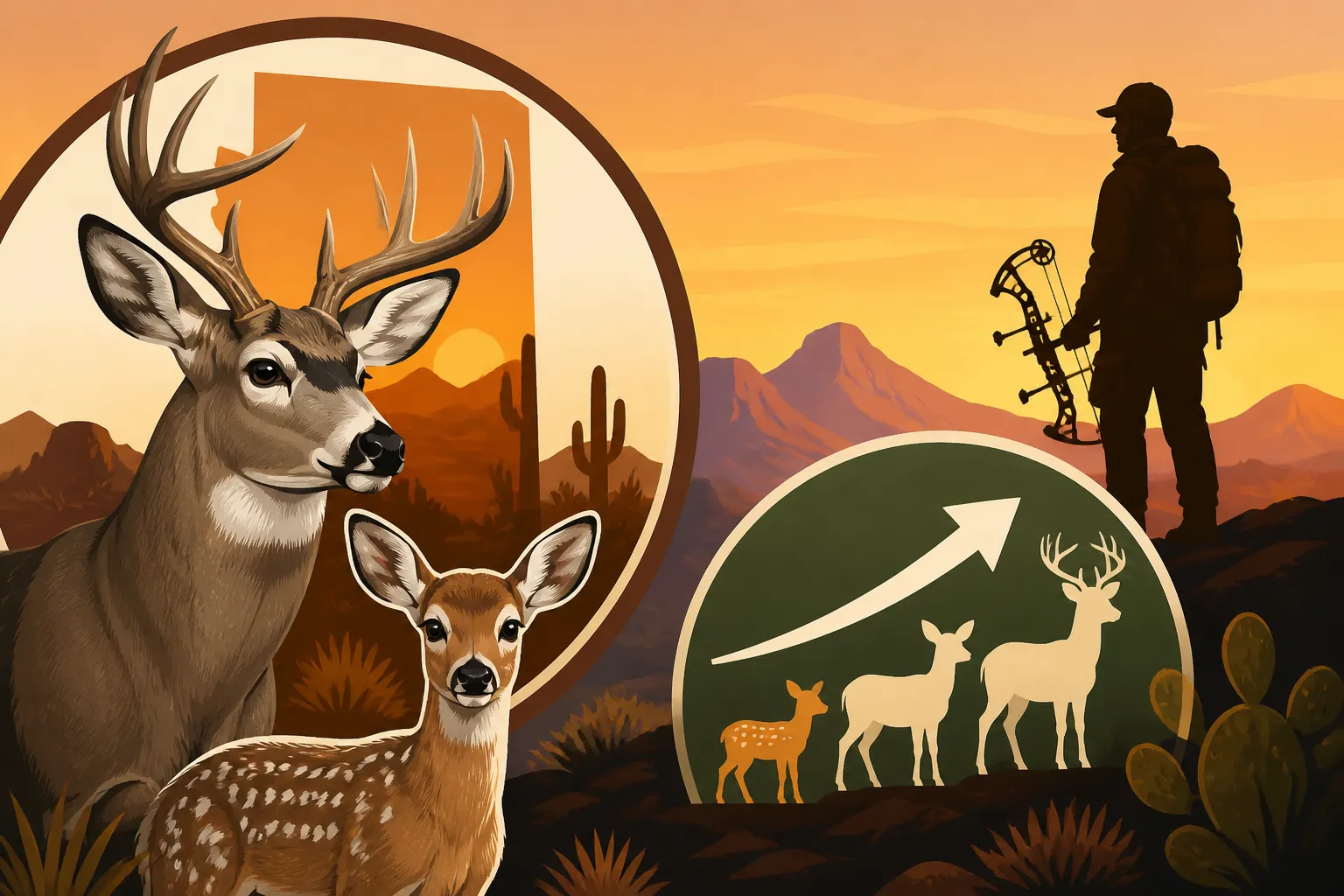
This is probably the most important concept to grasp: fawn ratios don't typically impact this year's hunting season, but rather future seasons. A fawn born this spring isn't going to be a legal buck this fall (unless you're hunting small spike bucks in very specific situations, which isn't the primary driver for most Arizona deer hunts). For most deer species, especially the Mule Deer and Coues Deer we chase in Arizona, it takes a few years for a fawn to mature into a harvestable buck.
- Year 1: Fawns are born. They contribute to the fawn ratio. If it's a strong year, those fawns represent new life, but they're still just fawns.
- Year 2: Those fawns are now yearlings. For some species and units, a yearling buck might be a legal target, but they're still small. They've survived their first winter, which is a big hurdle.
- Year 3-5: This is when the magic starts to happen. Those yearlings become 2.5-year-old, 3.5-year-old, and 4.5-year-old bucks – the kind of animals we dream of. A strong fawn crop two to three years prior directly translates into more bucks in these age classes, increasing your chances of encountering a mature animal.
So, if you're looking at current fawn ratio data for a unit, you're essentially getting a glimpse into the potential buck population two to four years down the road. This long-term thinking is crucial for planning those coveted draw tags. For instance, if you saw a banner fawn ratio year three years ago, that's definitely a unit to look at now, as those fawns are likely mature bucks.
Reading Between the Lines: Using Fawn Data for Strategic Planning
This is where you can turn raw data into actionable intelligence for your next hunting adventure. Wildlife agencies in Arizona diligently collect and publish this kind of information, and resources like GoHunt often compile it into easily digestible formats for hunters.
First, know where to find the data. The Arizona Game and Fish Department (AZGFD) publishes annual hunt regulations and often provides unit-specific reports on population trends, including fawn ratios. While they might not be plastered on every page, a little digging on their website can yield a treasure trove of information. Additionally, platforms like GoHunt specialize in breaking down this data, offering historical trends and analysis that can simplify your research significantly. They often have tools that allow you to compare Arizona Hunt Permit Application Data across different units and years.
Once you have the data, interpret the trends. Don't just look at a single year's number. A consistently high fawn ratio over several years is a much stronger indicator of a robust, growing population than a single spike year. Conversely, a steady decline is a warning sign. Look for units that have shown strong fawn recruitment two to five years prior to your desired hunt year. This indicates a pipeline of bucks entering the harvestable age classes.
Connecting high fawn ratios to potential increases in tag allocations or better draw odds is the next step. If AZGFD biologists see a healthy, growing population, they might feel comfortable increasing tag numbers for future draws, which could improve your chances of drawing that dream tag. While it's not a guarantee, it's a piece of the puzzle. This information becomes invaluable when you are Scouting an Arizona Unit Before the February Deadline or even just E-Scouting an Arizona Unit Before the Season, allowing you to prioritize units with the best long-term prospects.
Real-World Scenarios: Applying Fawn Ratio Knowledge to Your Hunt
Knowing the theory behind fawn ratios is great, but applying it to your actual hunt planning is where the rubber meets the road. Let's look at how high and low fawn ratios might influence your decisions.
When the Numbers Are Up: What a Strong Fawn Crop Means
Imagine you’ve been watching the data for Unit X, a fantastic Coues Deer unit in southeastern Arizona, and the fawn ratios have been consistently strong for the past three to four years, perhaps averaging 70-80 fawns per 100 does. What does this likely mean for your upcoming hunt?
Firstly, it generally points to an increased overall deer population in that unit. More fawns surviving means more deer of all age classes on the landscape in the years to come. This doesn't necessarily mean a huge increase in "trophy" bucks overnight, but it does mean a greater density of deer overall.
Secondly, you can expect more younger bucks entering the population. Those fawns that survived three years ago are now 3.5-year-old bucks, potentially sporting respectable antlers. This translates to more opportunities to see deer, and a higher likelihood of encountering a legal buck during your hunt. If the fawn ratios have been stellar across the board, the state might even feel confident in increasing tag allocations for that unit, which could nudge your draw odds in a positive direction. When applying for your tag, resources like GoHunt often incorporate these trends into their draw odds projections, giving you a comprehensive view.
Ultimately, strong fawn ratios mean you’re going into a season with potentially better odds of encountering deer. While trophy-class bucks always require skill, patience, and a little luck, a robust population ensures you're not hunting a ghost town. This is particularly relevant for units known for Coues Deer in the Southeastern Sky Islands, where strong population health directly impacts hunt quality.
Navigating a Down Year: Adjusting Expectations and Tactics
Conversely, what if the fawn ratios for your preferred unit have been low for the last few years, perhaps consistently dipping below 40 fawns per 100 does? This is a much tougher pill to swallow, but it’s still valuable information that can help you adjust your strategy and avoid disappointment.
A sustained period of low fawn ratios suggests harder hunting in future years. The recruitment into the adult population is weak, meaning fewer young deer are replacing older ones. This can lead to a shrinking overall population and, consequently, fewer bucks on the landscape. This doesn't mean the unit is devoid of deer, but rather that the density will be lower.
In such a scenario, your focus might need to shift. Instead of hoping to bump into numerous bucks, you might need to focus more intensely on mature animals. These older, more experienced bucks have already survived multiple seasons, often by being more elusive. Your hunting strategy might need to be even more patient and methodical. You might consider expanding your scouting efforts or revisiting your unit selection, perhaps looking at units with better historical performance.
You might also consider alternative units or species that show better population health. Arizona offers diverse hunting opportunities, and sometimes, a down year for deer in one area might coincide with a banner year for javelina or a different deer unit. Tactics might also shift to areas where deer are more concentrated, such as focusing heavily on Hunting a Stock Tank During Early Archery or diligently Finding Water in Arizona's Dry Country. If the numbers are low, every bit of advantage you can gain from thorough glassing and strategic movement, like using The Grid Glassing Method, Step by Step, becomes even more critical.
Here’s a quick overview of how fawn ratios can inform your hunt planning:
| Fawn Ratio Trend | Short-Term (Current Year) | Long-Term (2-4 Years Out) | Hunter Strategy |
|---|---|---|---|
| Consistently High | Minimal direct impact | Increased deer population, more younger bucks, potential for more tags | High confidence, focus on specific areas, good general opportunity |
| Fluctuating | Minimal direct impact | Variable population, potential for boom/bust cycles | Research specific strong years, adjust expectations year-to-year |
| Consistently Low | Minimal direct impact | Decreased deer population, fewer young bucks, potential for fewer tags | Lower confidence, focus on mature animals, consider alternative units |
By paying attention to these vital statistics, you're not just hoping for the best; you're actively engaging in a deeper understanding of Arizona's wildlife, which ultimately makes you a more knowledgeable and, often, a more successful hunter.
Disclaimer
This article is for general informational purposes only and does not constitute professional advice. Laws, prices and regulations vary by location and change over time. Consult a qualified professional for guidance on your specific situation.