Chukar Along Arizona’s Rocky Slopes
Chukar hunting in Arizona can be one of the most physically demanding, yet incredibly rewarding, upland bird pursuits in the West. If you've ever found yourself staring up at a seemingly impossible, rock-strewn slope, hearing those distinct calls echoing down, you know the frustration and the allure. This guide is here to walk you through everything you need to know about finding and successfully hunting chukar along Arizona's rugged, rocky slopes, validating the challenges and equipping you with practical strategies.
Understanding Arizona's Chukar Habitat and Behavior
Chukar are fascinating birds, originally from Asia, that have found a surprising niche in some of Arizona's most unforgiving landscapes. They're not found everywhere, and understanding their preferred haunts and habits is the first step to even thinking about chasing them. Forget flat fields; chukar are vertical athletes.
Where Chukar Call Home in Arizona
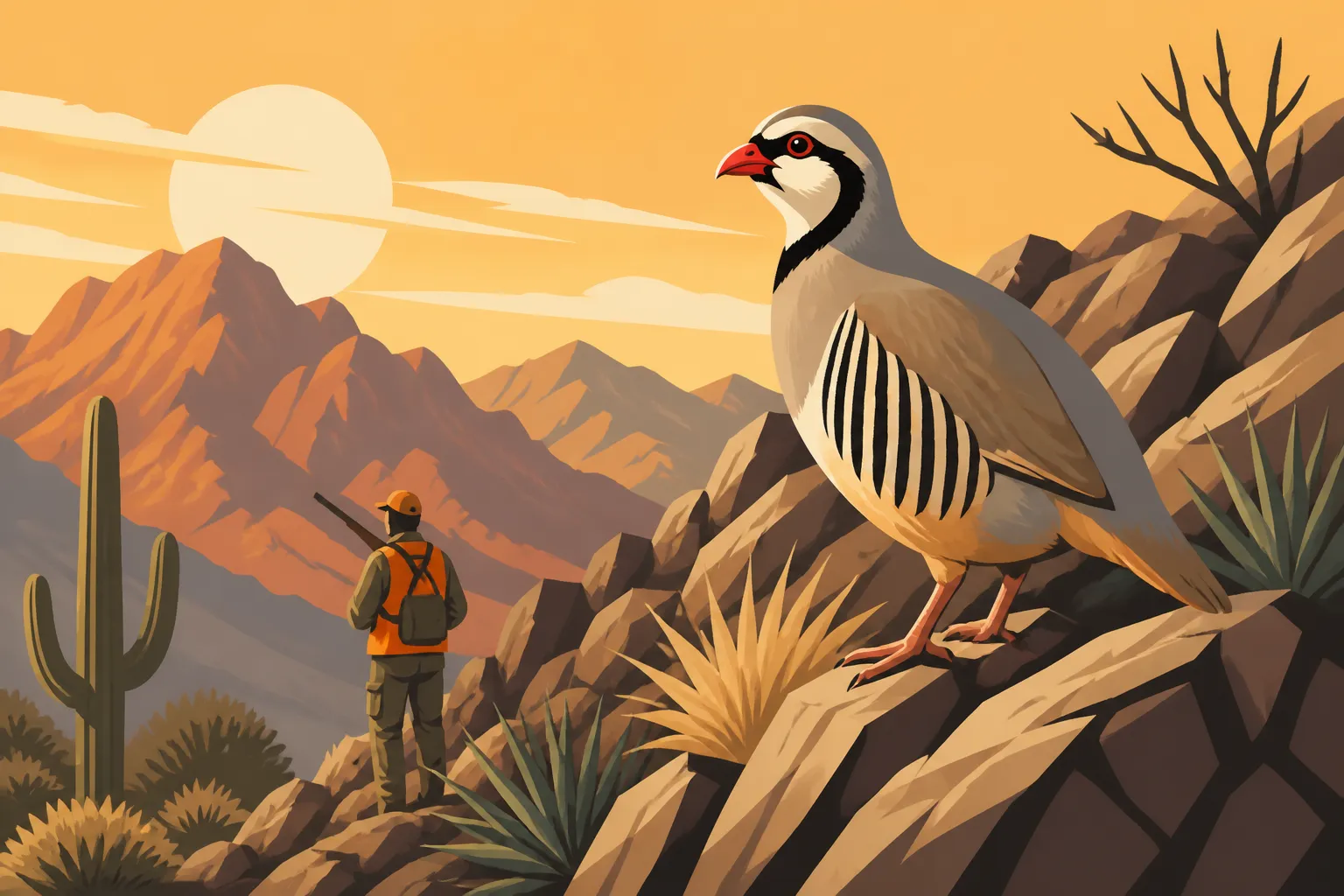
When we talk about chukar in Arizona, we're really talking about specific, often isolated pockets of suitable habitat. These aren't birds you'll find in the typical desert flatlands or the ponderosa pine forests of the Mogollon Rim. Instead, chukar prefer steep, rocky slopes, often with sparse grasses, sagebrush, and a scattering of junipers or pinyon pines. Think arid, broken country with plenty of escape cover in the form of rocks and ledges. You'll often find them at elevations where the desert meets more mountainous terrain, typically in the western and northwestern parts of the state, though some populations exist elsewhere.
What makes these areas so ideal for chukar? It’s a combination of factors. First, the rocky, broken terrain provides excellent cover from predators, both aerial and terrestrial. They can literally disappear among the rocks with surprising speed. Second, these areas often have the right mix of vegetation for their diet, providing seeds and insects. And crucially, water sources, even small seeps or intermittent springs, are absolutely vital. Chukar are rarely found far from water, especially during drier periods. This makes scouting for water a key element of any chukar hunt. Water Sources That Concentrate Arizona Desert Game is a helpful resource for understanding this. They thrive where humans don't tend to linger, creating an atmosphere of true wilderness hunting.
The Elusive Nature of Chukar
If you've never hunted chukar before, prepare for a humbling experience. These birds are legendary for their elusiveness. They're not like quail that might hold tight in a bush. Chukar are masters of uphill running. When disturbed, their first instinct is almost always to run straight up the steepest, rockiest slope imaginable. They use the terrain to their advantage, often putting a ridge or a series of boulders between themselves and the hunter before taking flight. When they do fly, it's typically downhill, gaining incredible speed and often gliding for long distances before pitching up into another steep, rocky hillside.
This behavior means that getting within shooting range often requires significant effort and smart tactics. You'll spend a lot of time glassing, spotting birds from afar, and then devising an approach that attempts to cut them off or get above them. The "chukar chuck" call is distinctive, a rapid series of chuk-chuk-chuk-kar sounds that can lead you to their general vicinity, but getting them to hold for a flush is another matter entirely. Patience, persistence, and a healthy dose of physical stamina are non-negotiable when pursuing these birds. You might hear them constantly but only catch a fleeting glimpse.
Chukar Diet and Water Needs
Understanding what chukar eat and drink is crucial for locating them. Their diet primarily consists of seeds, grasses, and insects. They're not particularly picky, feeding on a variety of forbs and grasses found in their arid habitat. During the spring and summer, insects can make up a larger portion of their diet, providing protein for growing chicks. As the seasons progress into fall and winter, seeds become their primary food source.
However, the most critical factor influencing chukar distribution is water. Chukar need to drink regularly, especially in the hot, dry Arizona climate. This means you'll almost always find them within reasonable proximity to a reliable water source: a spring, a guzzler, a cattle tank, or even a shaded seep. Early morning and late afternoon are prime times for them to visit water, making these locations hotspots for scouting and hunting. Finding Water in Arizona's Dry Country can give you more insight into this. When you're scouting, look for fresh tracks and droppings near water, as this is a tell-tale sign of chukar activity. Areas with multiple small water sources clustered together can be particularly productive.
Essential Strategies for Hunting Arizona Chukar
Chukar hunting isn't for the faint of heart or the poorly prepared. It demands specialized gear, a keen understanding of terrain, and often, the help of a good bird dog. Success hinges on a blend of physical endurance, strategic thinking, and a willingness to embrace the climb.
Gear Up for Rocky Terrain
Your gear list for chukar hunting in Arizona will look a bit different from a typical quail hunt. First and foremost, footwear is paramount. You need comfortable, sturdy boots with excellent ankle support and aggressive soles. Think mountaineering boots or high-quality hiking boots, not light trail runners. You'll be traversing loose rock, scree, and steep, uneven ground for hours. Blisters or a twisted ankle can end your hunt instantly.
Next, consider your clothing. Layers are key. Arizona mornings can be chilly, even in chukar country, but climbing those steep slopes will have you sweating in no time. Breathable, moisture-wicking layers are essential. Blaze orange is often a good idea for visibility, especially if hunting with partners, though it's not always legally required for upland birds. A good quality bird vest with plenty of storage for shells, water, and harvested birds is also a must.
Beyond that, optics are incredibly important. Binoculars are your best friend for spotting birds from a distance before you commit to a brutal climb. A 10×42 or 12×50 power is a good starting point. You'll be spending a lot of time glassing, often from vantage points, trying to locate coveys before they see you. A GPS or a reliable mapping app like GoHunt, loaded with public land boundaries and topographical maps, is indispensable for navigating the complex terrain and marking covey locations or water sources. Don't forget ample water and high-energy snacks; you'll burn through calories faster than you think. Choosing Boots for Rocky Desert Ground provides even more detailed advice on footwear.
The Art of the Uphill Climb
Chukar hunting is often described as a "vertical pursuit," and for good reason. These birds love elevation. The most effective strategy often involves getting above the birds, or at least at the same elevation, to cut off their uphill escape routes. This means you'll be doing a lot of climbing, and it will be steep. One common tactic is to approach a chukar-holding slope from above, or from a flanking ridge, and work your way down. This can be less strenuous on the initial approach and may allow you to push birds downhill or across a contour line, making them more likely to flush within range.
Another strategy, especially when hunting alone or with a less experienced dog, is to use the terrain to funnel birds. Identify natural draws, saddles, or benches that chukar might run along or fly over. Try to position yourself to intercept them there. Remember, chukar will almost always try to go up first. If you're below them, be prepared for a long chase or a frustrating downhill flush out of range. Physical conditioning is not just recommended; it's a prerequisite for success. Start training those legs and lungs well before the season opens. Preparing Physically for a Desert Hunt can offer more insights into getting ready for these rigorous adventures.
Working With Your Dog in Chukar Country
A well-conditioned, biddable bird dog can significantly increase your success rate and overall enjoyment of a chukar hunt. However, chukar country is not for every dog. Your dog needs to be tough, have excellent stamina, and be able to navigate extremely rough terrain without injuring their paws. Booties for their paws can be a lifesaver, protecting them from sharp rocks and thorns.
The key with chukar is often to get your dog to range out wide and high, pushing birds towards you or holding them in difficult cover for a flush. Chukar will run and try to outsmart a dog, so a dog that understands how to work the wind and read the terrain is invaluable. A close-working dog might be good for quail, but a chukar dog often needs to be more independent and aggressive in its search. Training for retrieve in rocky, steep terrain is also important, as downed birds can easily tumble a long way. Always carry plenty of water for your dog, perhaps even more than for yourself, and watch them closely for signs of overheating or injury. The desert can be brutal on canine companions.
When working a dog, remember that chukar will often hold for a dog if they feel trapped or if the dog is persistent enough. This is where a good pointing dog shines. If you're hunting with a flushing dog, aim to push them into natural funnels or against steep cliffs where they have fewer escape options.
Arizona Chukar Regulations and Season Overview
Before you even lace up your boots, understanding Arizona's regulations for chukar is non-negotiable. Like all hunting, it's about respecting the resource and hunting legally and ethically.
Navigating Seasons and Bag Limits
Chukar in Arizona fall under the small game regulations. Unlike big game, which often requires a draw, chukar tags are generally available over-the-counter. The season dates for chukar hunting in Arizona typically run from fall through winter, offering a good window of opportunity. It's crucial to check the current Arizona Game and Fish Department hunting regulations booklet for the exact dates each year, as they can shift slightly. You can usually find the most up-to-date information on the department's website.
Bag limits are also important to note. There will be a daily bag limit, which is the maximum number of birds you can harvest in one day, and a possession limit, which is the total number of birds you can have on hand, including those taken on previous days. Always adhere strictly to these limits. Exceeding them is a serious violation. Chukar are considered a game bird, so their season will likely run alongside other upland species like Gambel's quail, but always double-check the specific regulations for chukar. Arizona Quail Season Opening Dates might give you an idea of the small game calendar.
License Requirements for Chukar Hunting
To hunt chukar in Arizona, you'll need a valid Arizona hunting license. This is a basic requirement for hunting any game species in the state. If you're a nonresident, the cost of a hunting license will be higher than for a resident, but it's your entry ticket to enjoying Arizona's diverse hunting opportunities. Children generally have different requirements, with specific rules for youth licenses and hunter education. Hunter Education Is Required Under 14 in Arizona is important to note if you're bringing young hunters along.
You can typically purchase your Arizona hunting license online through the Arizona Game and Fish Department portal, or from authorized license dealers across the state. It's always best to purchase your license well in advance of your hunt. Remember, your hunting license also serves as your permit for accessing Arizona State Trust Land for recreational purposes, which is a huge benefit given how much trust land is in Arizona. Arizona State Trust Land Needs a Permit, and Your License Counts explains this in detail. Always carry your license with you while afield.
Ethical Considerations for Chukar Hunters
Hunting chukar, like any other pursuit, comes with a responsibility to hunt ethically and respectfully. Given the challenging terrain, it's easy to push yourself and your dog to the limit. Always prioritize safety. Tell someone where you're going and when you expect to return. Carry a first-aid kit, a fully charged cell phone (though service will be spotty), and consider a satellite communication device for true backcountry hunts.
Retrieving downed birds is paramount. In steep, rocky country, a crippled bird can quickly disappear. Make every effort to recover all game. This is where a good dog with a strong retrieve can be invaluable. Don't take shots you're not confident in, especially in areas where recovery would be impossible.
Respect the land and other users. Pack out everything you pack in. Leave no trace. Be aware of your surroundings, including private property boundaries and any active livestock operations. Use a mapping tool like GoHunt to stay on public land and avoid trespassing. Finally, be mindful of fire restrictions, especially during dry seasons. A small spark from a vehicle or a discarded cigarette can quickly turn into a devastating wildfire. Fire Restrictions During Hunting Season is a good article to review before any hunt.
Planning Your Arizona Chukar Adventure
A successful chukar hunt isn't just about finding birds on the day; it's about meticulous planning and preparation. From choosing your unit to scouting the terrain, every step contributes to your chances of success and safety.
Choosing the Right Units and Terrain
Arizona has over 200 game management units, but only a handful will offer good chukar hunting opportunities. As discussed, you're looking for units with significant amounts of steep, rocky, arid terrain, often in the transition zones between desert and higher elevation mountains. Western and northwestern Arizona generally hold the strongest chukar populations. Looking at topographic maps and satellite imagery is crucial for identifying suitable habitat. Pay attention to areas with a good mix of broken rock, sparse brush, and most importantly, proximity to water sources.
Tools like GoHunt are incredibly useful for this. You can overlay public land boundaries, topo maps, and even identify potential water sources or access roads. Look for areas with less human impact, as these often hold more undisturbed birds. Don't be afraid to travel to less accessible areas; often, the harder it is to get to, the better the hunting can be. Units that historically produce other desert species like mule deer or even desert bighorn sheep in certain rocky areas might also have pockets of chukar. E-Scouting an Arizona Unit Before the Season provides great general advice that applies directly to chukar planning.
Scouting for Chukar Sign and Water
Pre-season scouting is absolutely vital for chukar hunting. Since these birds are so tied to specific habitat and water, spending time in the field before the season can pay huge dividends. Look for tracks, droppings, and dusting bowls near water sources or along ridgelines. The distinctive "chukar chuck" call is also a great locator. Hike the terrain, not necessarily to find birds, but to understand the lay of the land, identify potential travel corridors, and assess the difficulty of the climbs.
Focus your scouting efforts around water. Springs, guzzlers, and stock tanks are natural magnets for chukar. If you find fresh sign around water, you've likely found a covey's general area. Note these locations on your map. Early morning is often the best time to scout, as birds are active and vocal. Drive forest roads or two-tracks that access potential chukar habitat and then get out and walk. Use your binoculars to glass distant slopes; you might spot birds moving or hear their calls carrying on the morning air. Scouting also helps you assess access points and determine the best approach routes for a hunt.
Managing Expectations and Embracing the Challenge
Let's be real: chukar hunting is tough. It's often called one of the most physically demanding upland hunts there is. You're going to climb, you're going to sweat, and you're probably going to get frustrated when birds flush wild or run out of sight. It's entirely possible to hike for miles and not fire a shot. This is why managing your expectations is so important. Go into a chukar hunt with the mindset that the experience itself – the challenge, the stunning scenery, the physical exertion – is part of the reward.
Success, in terms of birds in the bag, is a bonus. Celebrate the small victories: spotting a covey, getting a good flush, or watching your dog work hard in difficult country. Don't get discouraged by empty vests. Every failed attempt is a learning opportunity, teaching you more about chukar behavior and the terrain. Embrace the challenge, enjoy the solitude of Arizona's rugged landscapes, and appreciate the unique opportunity to pursue these hardy, elusive birds. Remember, few things are as satisfying as a hard-earned chukar from a steep, rocky slope.
| Aspect of Chukar Hunting | Key Considerations | Why it Matters |
|---|---|---|
| Habitat | Steep, rocky slopes, sparse vegetation, arid environments. | Chukar are specialized; understanding this directs your search. |
| Water | Essential daily need; look for springs, guzzlers, stock tanks. | A primary locator for chukar, especially in dry Arizona. |
| Behavior | Masters of uphill running, downhill gliders when flushed. | Dictates your hunting strategy; get above them if possible. |
| Footwear | Sturdy, high-ankle support, aggressive soles. | Prevents injury and provides traction on treacherous terrain. |
| Optics | 10x or 12x binoculars for long-distance spotting. | Locates birds from afar, saving energy and improving approach. |
| Mapping | GPS or app with topo & public land layers (e.g., GoHunt). | Critical for navigation, staying legal, and marking finds. |
| Dog Selection | High stamina, tough paws, biddable, wide-ranging. | An effective dog greatly increases flush and retrieve rates. |
| Physical Prep | Leg and lung conditioning, cardio endurance. | The hunt is extremely demanding; avoid injury and exhaustion. |
| Regulations | Valid hunting license, daily & possession bag limits. | Ensures legal and ethical hunting practices. |
| Ethics | Safety, game recovery, leave no trace. | Respects the resource, fellow hunters, and the environment. |
Disclaimer
This article is for general informational purposes only and does not constitute professional advice. Laws, prices and regulations vary by location and change over time. Consult a qualified professional for guidance on your specific situation.