Where Mule Deer Range on the Plateaus
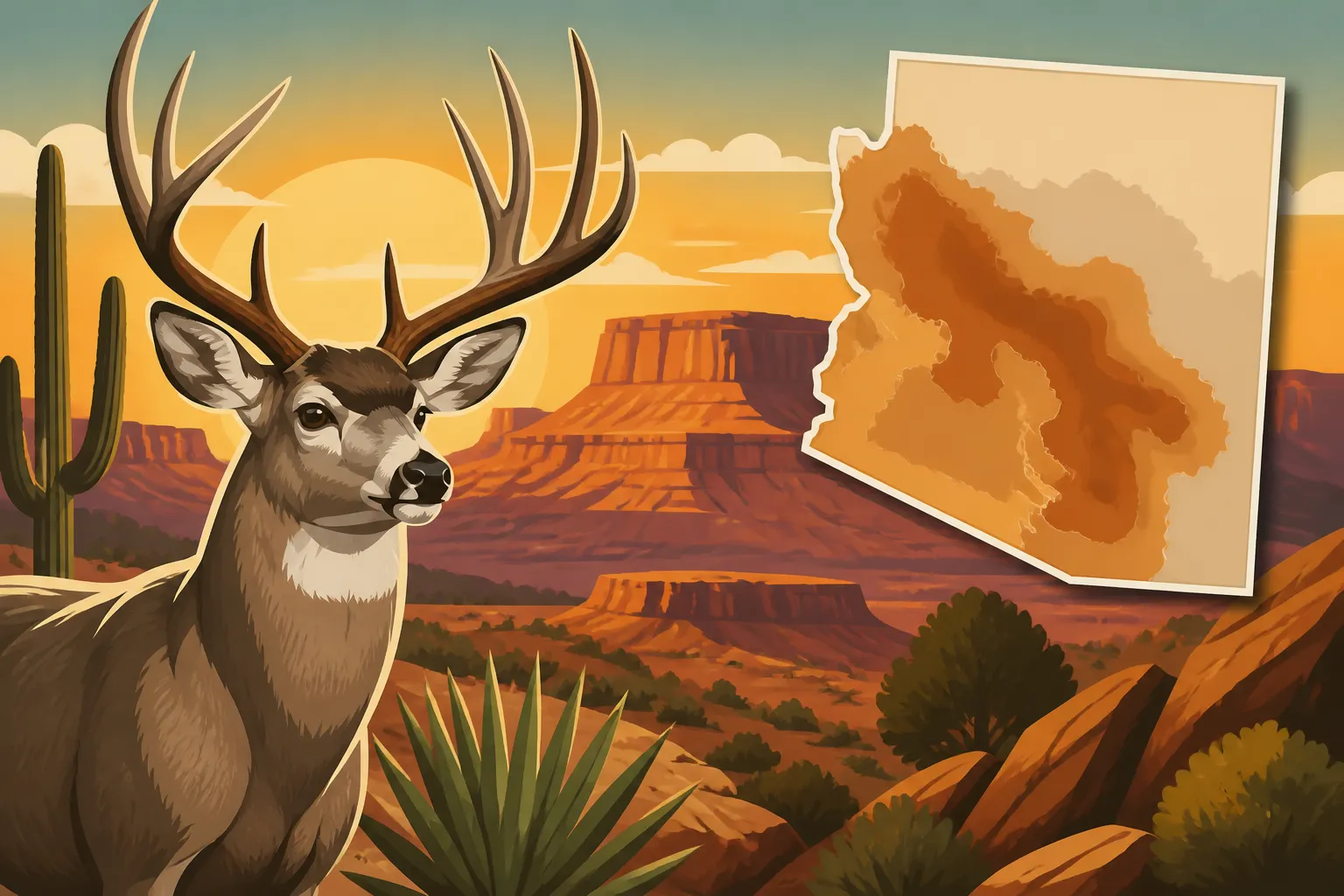
Hunting mule deer in Arizona can be both exhilarating and incredibly challenging, especially when you're trying to pinpoint their preferred habitats on those vast, sprawling plateaus. It's not like chasing whitetails in dense timber where you might know every bedding thicket. Here, the landscape is immense, and finding those "gray ghosts" of the high country requires a deep understanding of where they live and why they choose those particular areas. This guide will walk you through the primary plateau regions across Arizona where mule deer thrive, helping you decipher their movements and preferred environments so you can plan your next hunt with greater confidence.
The Kaibab Plateau: A Classic Mule Deer Mecca
When you talk about mule deer in Arizona, the conversation almost always starts with the Kaibab Plateau. This isn't just a legend; it's a reality rooted in the unique geography and ecosystem found north of the Grand Canyon. The Kaibab is essentially a vast, elevated landmass covered primarily in ponderosa pine, Douglas fir, and aspen forests, interspersed with grassy meadows and sagebrush flats. It's a striking contrast to the desert landscapes many people associate with Arizona, and this high-elevation environment is absolutely perfect for mule deer.
These deer thrive here because the Kaibab offers everything a mule deer needs: abundant forage, extensive cover, and reliable water sources. During the warmer months, they spread out across the plateau, utilizing the rich understory of forbs and grasses. As autumn progresses and the first snows begin to fall, you'll see a natural migration pattern. The deer move from the higher elevations, often dropping down into the pinyon-juniper and sagebrush country along the "breaks" of the Kaibab, seeking out more moderate temperatures and access to browse that isn't buried under deep snow. This seasonal shift is critical to understand for anyone hoping to tag a Kaibab buck. For a deeper dive into this renowned area, check out Kaibab Plateau Mule Deer Quality.
The hunting here is heavily regulated through a draw system, making a tag a coveted prize. The reputation of the Kaibab is built on its potential for trophy-class mule deer, and while success isn't guaranteed, the opportunity for a truly magnificent buck exists. Successful hunters often spend countless hours glassing the openings and timber edges, patient and persistent in their approach. Understanding the different sections of the plateau, from the heavy timbered areas to the more open transition zones, is crucial for effective scouting. You'll want to use tools like GoHunt to study unit maps and historical draw odds before you even think about putting in for one of these highly sought-after tags. It's a different kind of hunting, where the sheer size of the landscape means you're often covering ground on foot or via strategically placed vehicle routes, then getting out to glass, glass, and glass some more.
The Arizona Strip: Rugged and Remote Mule Deer Country
Just west of the Kaibab, but equally legendary and notoriously difficult to draw, is the Arizona Strip. This vast, rugged expanse of land north of the Grand Canyon and south of the Utah border is a different beast entirely. Unlike the forested Kaibab, the Strip is characterized by vast, open sagebrush flats, pinyon-juniper breaks, deep canyons, and scattered pockets of more diverse vegetation. It's remote, unforgiving, and exactly the kind of place where big mule deer bucks can grow old and wise. The isolation, combined with specific forage and water resources, makes this a prime location for these elusive animals.
Mule deer on the Arizona Strip are masters of their environment. They blend seamlessly into the broken terrain, utilizing every fold in the earth, every juniper thicket, and every wash to their advantage. Their survival depends on their ability to remain unseen in a landscape that, at first glance, seems to offer little cover. These deer often feed in the more open areas during low light hours, then retreat to the safety of the pinyon-juniper stands and deeper canyons as the sun climbs higher. Water sources, often scattered and difficult to find, become critical focal points for deer activity, especially during drier periods. This terrain demands extreme physical fitness and meticulous e-scouting, often relying on detailed satellite imagery and topographical maps, which platforms like GoHunt excel at providing. Learning to interpret Reading a Unit Before You Ever Walk It is essential for the Arizona Strip.
Hunting the Strip is an epic endeavor. Tags are incredibly hard to come by, and those fortunate enough to draw one commit to an experience that is as much about survival and perseverance as it is about hunting. Hunters here often cover immense amounts of ground, either on foot, with ATVs, or by vehicle on designated roads, always with high-quality optics in hand. Optics Power for Arizona's Long Desert Sightlines isn't just a suggestion here; it's a necessity. The deer here are accustomed to minimal human presence, but they are also acutely aware of any intrusion. Success often comes down to spotting deer at extreme distances, then planning a careful, often multi-hour stalk across incredibly challenging terrain. The Strip and Kaibab Mule Deer Reputation is well-earned, attracting hunters from all over, but it's not for the faint of heart.
High Country Roamers: Mule Deer on the Mogollon Rim and White Mountains
Moving south into the heart of Arizona, the Mogollon Rim and the White Mountains offer another significant habitat for mule deer, albeit with a different character than the northern plateaus. The Mogollon Rim is a massive geological escarpment that cuts across the state, forming the southern edge of the Colorado Plateau. Above the Rim, you find vast expanses of ponderosa pine forest, mixed conifer, and mountain meadows. This higher elevation, timbered country is crucial mule deer habitat, providing cool summer ranges and dense cover.
Mule deer in these areas exhibit similar seasonal movements to their northern cousins, albeit often on a smaller scale. During the spring and summer, they are spread throughout the high country, enjoying the lush forage. As winter approaches, many of these deer will migrate to lower elevations, seeking refuge in the pinyon-juniper and chaparral zones below the Rim, where snow depths are less severe and browse is more accessible. Understanding these migration corridors and wintering grounds is key for preseason scouting and anticipating deer movements during specific hunt dates. These transitions often make for challenging hunting, as deer can be found in a wide variety of terrain types, from dense timber to open sagebrush pockets.
The White Mountains, in the eastern part of the state, share many similarities with the Mogollon Rim, featuring expansive forests, numerous small lakes and streams, and diverse topography. Here, mule deer coexist with a healthy elk population, utilizing similar food sources and cover. Glassing is still a primary tactic, particularly in the more open timber stands, old burn areas, and mountain meadows at dawn and dusk. Access here is generally good via a network of forest roads, but don't let that fool you—the country is still vast, and the deer are adept at disappearing into the timber. Hunters often find success by combining active still-hunting through favorable cover with periods of patient glassing from strategic vantage points. This region is home to some of the Best Units to Draw for a Mature Mule Deer, though draw odds can still be tough.
Other Northern Plateaus and Scattered Pockets
While the Kaibab, Strip, and Mogollon Rim are the marquee names for Arizona mule deer, it’s important not to overlook other significant plateaus and mountain ranges across northern and central Arizona that hold viable populations. These areas might not have the same legendary status or trophy potential as the Kaibab or the Strip, but they offer excellent hunting opportunities, often with slightly better draw odds or less pressure.
Many of these smaller plateaus and higher-elevation areas are characterized by a mix of ponderosa pine, pinyon-juniper woodlands, and pockets of chaparral. Deer here are often more spread out, and success frequently hinges on persistent scouting and adapting to localized conditions. These deer don't always follow dramatic migrations; instead, they might shift elevation within a single unit or move between different habitat types based on forage availability, pressure, and water sources. Scouting these areas involves a blend of e-scouting on platforms like GoHunt, looking for potential bedding areas, feeding zones, and travel corridors, combined with boots-on-the-ground reconnaissance. For insights into effective scouting techniques, refer to E-Scouting an Arizona Unit Before the Season.
Consider the various units that encompass parts of the Coconino and Prescott National Forests, for instance. These areas often have healthy mule deer populations that utilize the diverse habitats. From rimrock country to deep canyons and high ponderosa forests, these deer are adaptable. Their presence is often tied to the availability of seasonal browse and reliable water sources. Hunting strategies typically involve a lot of glassing, still-hunting through dense cover, and focusing on transition zones between different habitat types. Pay attention to how the Mule Deer Across Northern Arizona adapt to these more varied landscapes.
Regional Characteristics for Mule Deer Hunting
Here's a quick overview of some key characteristics of Arizona's primary mule deer plateaus:
| Region | Dominant Habitat | Typical Elevation Range (approx.) | Primary Hunt Style | Key Challenges |
|---|---|---|---|---|
| Kaibab Plateau | Ponderosa Pine, Aspen, Mixed Conifer | 6,000-9,000 ft | Glassing, Spot & Stalk | High pressure, dense timber, coveted tags |
| Arizona Strip | Sagebrush, Pinyon-Juniper, Deep Canyons | 3,000-6,000 ft | Extreme Spot & Stalk | Remoteness, rugged terrain, limited water |
| Mogollon Rim | Ponderosa Pine, Mixed Conifer, Chaparral | 5,000-8,000 ft | Still-hunting, Glassing | Diverse terrain, migratory patterns |
| White Mountains | Ponderosa Pine, Spruce-Fir, Meadows | 7,000-11,000 ft | Still-hunting, Glassing | Coexisting with elk, higher elevations |
Understanding Mule Deer Movements and Behavior on Plateaus
Mule deer movements on these Arizona plateaus are highly influenced by several factors: weather, forage availability, water, and hunting pressure. During the early archery and rifle seasons, which often coincide with warmer weather, deer will be tightly bound to water sources. Identifying active tanks, springs, and creeks, and understanding Water Sources That Concentrate Arizona Desert Game, can be incredibly productive. As temperatures drop and particularly when snow starts to fall, their focus shifts to finding easily accessible forage and thermal cover. This is when understanding Where Arizona Mule Deer Winter becomes paramount, as they often concentrate in lower-elevation pinyon-juniper or brush country.
The rut, or breeding season, is another critical period that influences deer location and behavior. While specific timing can vary slightly by region and year, the mule deer rut generally peaks in late November and early December in many of these plateau areas. During this time, bucks become far more active and less cautious, often cruising for does. This can make them more visible and vulnerable, but also means they can be found in areas they might not frequent during other times of the year. Knowing When the Mule Deer Rut Actually Starts in your chosen unit is crucial for maximizing your chances. During the rut, bucks might be seen chasing does across open flats or through sparse timber, presenting unique opportunities for a stalk or an advantageous shot.
For successful hunting, particularly on these vast plateaus, your optics are your best friend. A good pair of binoculars, a quality spotting scope, and a sturdy tripod are indispensable. You'll spend hours behind glass, systematically searching every hillside, canyon, and patch of timber. The grid glassing method, where you meticulously scan an area in an organized pattern, is highly effective for picking apart these expansive landscapes. Coupled with careful e-scouting, where you analyze terrain features like benches, saddles, and drainages for likely travel routes or bedding areas, you can significantly increase your odds. Remember, the goal is often to find the deer first, then formulate a plan to close the distance. Field Judging a Mule Deer Buck Quickly is a skill you'll hone as you spend more time behind glass in these open environments.
Scouting and Strategy for Plateau Mule Deer
Pre-season scouting is not just a good idea; it's practically a requirement for success on Arizona's mule deer plateaus. Since you can't be in the unit constantly, leveraging technology and understanding historical data is vital. Websites and apps that offer robust mapping and data analysis, such as GoHunt, can be invaluable for identifying key terrain features, public land access points, and potential areas of deer activity. You can often see historical burn areas which, a few years after a fire, can provide excellent new browse for deer. Using satellite imagery to identify water sources, dense cover, and travel corridors before you ever set foot in the field will save you countless hours of unproductive walking.
When you do get boots on the ground, focus on transition zones: where forest meets open country, where pinyon-juniper gives way to chaparral, or where a ridge drops into a canyon. These are often high-traffic areas for deer moving between bedding and feeding. Also, pay close attention to topography. Deer often use benches on hillsides for bedding, and saddles or natural drainages as travel routes to avoid detection. Knowing Terrain That Hides an Approach in Desert Country can help you predict where deer will move and how you might approach them.
Whether you're hunting the forested Kaibab or the open Arizona Strip, patience and adaptability are key. The weather can change drastically, and deer patterns can shift overnight. Be prepared for long days, challenging conditions, and the need to adjust your strategy on the fly. Carrying enough water, knowing your shooting limitations (especially in wide-open country where Rifle Zero Distance for Open Desert matters greatly), and being familiar with your unit's access rules, including seasonal road closures, will make all the difference. Remember, the reward of harvesting a mule deer from Arizona's plateaus is not just a set of antlers, but the experience of mastering a challenging landscape and understanding the movements of one of the West's most iconic game animals.
Disclaimer
This article is for general informational purposes only and does not constitute professional advice. Laws, prices and regulations vary by location and change over time. Consult a qualified professional for guidance on your specific situation.