Judging Coues Antlers Against Mule Deer
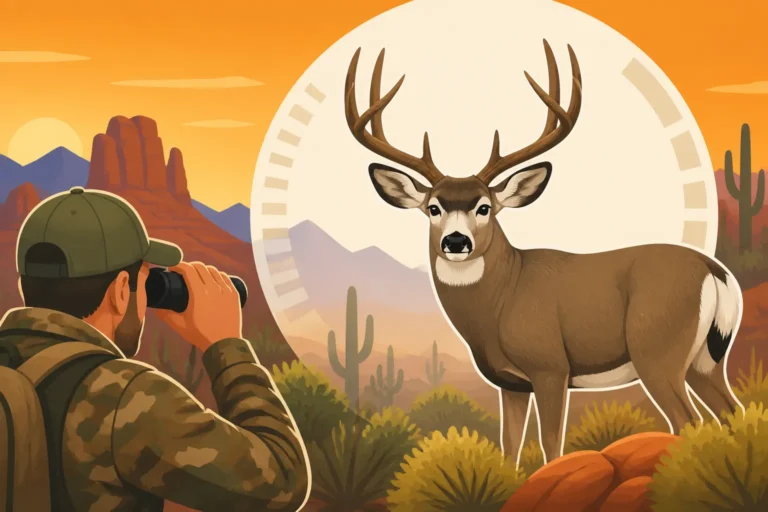
One of the trickiest challenges for any hunter venturing into Arizona’s diverse landscapes is confidently identifying the deer species in their sights. It’s a moment of truth that can leave even seasoned veterans second-guessing, especially when trying to discern the subtle yet significant differences between a Coues whitetail and a mule deer by their antlers alone. This guide dives deep into the distinguishing features that will help you confidently tell these majestic creatures apart, ensuring you're always making the right call in the field.
The Elusive "Gray Ghost" Versus The High Desert Monarch
Arizona is a truly special place for deer hunters, offering opportunities for both the dainty Coues whitetail and the robust mule deer. While both are incredible game animals, their physical characteristics, particularly their antlers, are distinct. Getting this identification right isn't just about bragging rights; it's absolutely crucial for legal and ethical hunting, as your tag is species-specific. Many hunters have faced that gut-wrenching moment of uncertainty, wondering if the deer standing before them belongs to the Coues or mule deer category. It’s a common frustration, especially with young or non-typical bucks.
Understanding the General Reputation
The Coues whitetail, often affectionately called the "Gray Ghost" due to its uncanny ability to disappear into sparse cover, is known for its smaller body size and proportionally smaller antlers. These deer thrive in the rugged, brushy "sky island" mountain ranges of southern Arizona, where their compact build and agility serve them well. A mature Coues buck might only weigh 100-120 pounds live, making its antlers seem quite impressive on its small frame.
In stark contrast, mule deer are the monarchs of Arizona's higher elevations and vast plateaus. These are bigger-bodied deer, often exceeding 200 pounds, with a presence that matches their impressive stature. You'll find them roaming the extensive ponderosa pine forests of the Mogollon Rim, the juniper breaks, and the sprawling desertscrub of northern Arizona. Their antlers tend to be much larger and heavier, befitting their larger frame. The sheer scale difference is often the first clue, but relying solely on size can be misleading when you're looking at a juvenile mule deer or a particularly impressive Coues.
The Importance of Early Identification
Misidentification can lead to serious consequences, from a wasted tag to legal infractions. Imagine having an archery Coues deer tag and mistakenly harvesting a mule deer, or vice versa. Not only is it a punch to the gut emotionally, but it carries stiff penalties from the Arizona Game and Fish Department. This isn't just about fines; it can include license revocations and loss of hunting privileges. That's why understanding the nuances before you're in the heat of the moment is paramount. For more on these incredible animals, you might want to read about What Makes a Coues Deer Different.
Antler Architecture: A Tale of Two Deer
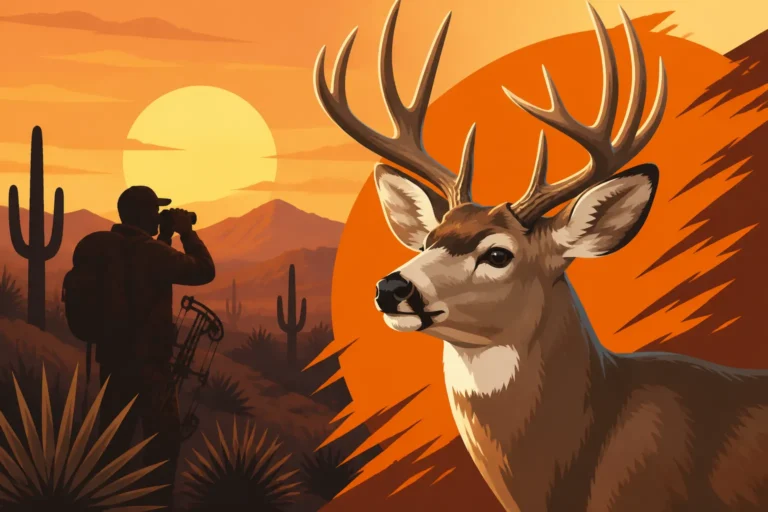
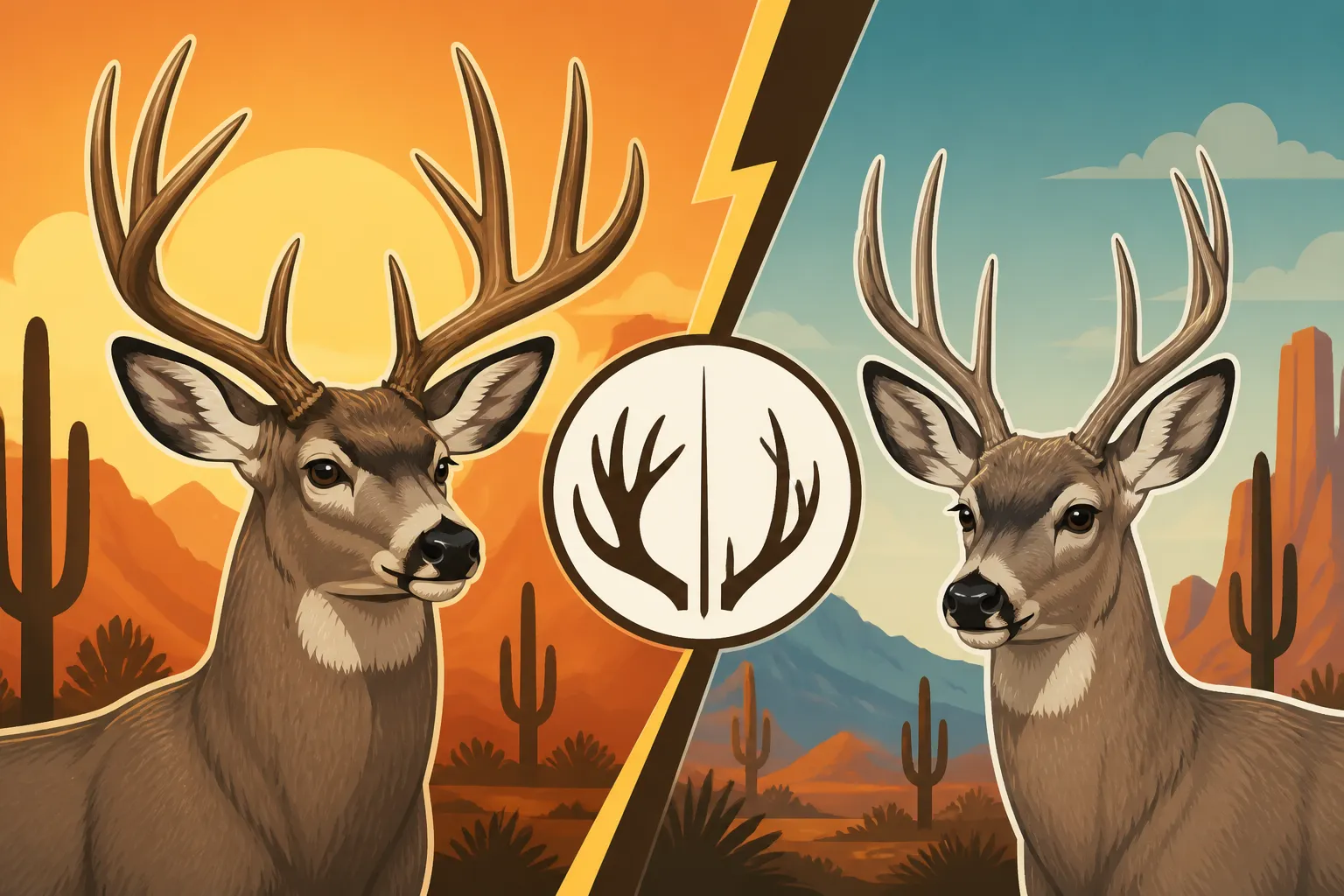
When it comes to antlers, Coues whitetail and mule deer really diverge. This is the primary characteristic most hunters use for identification, and for good reason. Paying close attention to the branching patterns, tine structure, and overall mass can make all the difference.
The Distinctive Whitetail Branching Pattern
Coues whitetail antlers, like all whitetails, typically exhibit a forward-curving main beam with individual tines branching off upward from that main beam. Picture a hand with fingers extending from the palm; the palm is the main beam, and the fingers are the tines. Most Coues bucks will have unbranched points (often called "forks" incorrectly by some, as a true fork is characteristic of mule deer) coming directly off the main beam. A common mature Coues rack will have a strong G2 (second point) and G3 (third point) coming off the main beam, with potentially smaller brow tines (G1s).
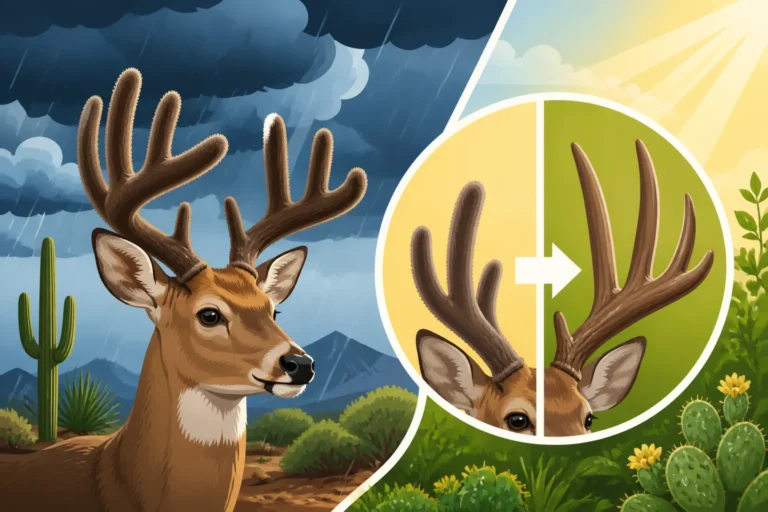
The key here is the lack of bifurcation on the individual tines. While some Coues bucks can certainly grow impressive racks with extra stickers or drops, the fundamental structure remains a single main beam with points rising off it. The typical Coues rack is often described as having a "baseball bat" or "golf club" look to its main beam, curving forward and inward at the tips. When field judging a Coues buck at distance, look for that clean, upward sweep of points off the main beam. They rarely feature secondary forks on those individual tines.
Mule Deer's Bifurcated Tines and Spreading Racks
Mule deer antlers, on the other hand, are famous for their unique "bifurcated" or "forked" pattern. Instead of tines coming straight off a main beam, a mule deer's main beam typically divides, or forks, into two points. Then, each of those points can fork again. This creates a distinctive "double fork" or "crab claw" appearance, where each point forks off another point. This branching pattern is arguably the single most reliable characteristic for distinguishing a mule deer from a whitetail by its antlers.
Their antlers also tend to be wider and heavier, often creating an impressive basket-like or highly symmetrical spread that towers above their head. While some mule deer, especially younger bucks, might only have simple forks, the tendency for repeated bifurcation is what sets them apart. When you're scanning the landscape for Mule Deer Across Northern Arizona, look for that characteristic double-forking. It’s not uncommon to see a mule deer with four points on each side (a "4×4") where each point has forked at least once.
Non-Typical Racks: The Ultimate Curveball
Of course, nature loves to throw us curveballs, and non-typical antlers exist in both species. A non-typical Coues whitetail might have extra points coming off its main beam, drop tines, or even some small palmation, but the underlying structure of points coming off a main beam usually remains. A non-typical mule deer, conversely, might have tines that don't fork perfectly, or even single points where you'd expect a fork. These can be incredibly challenging to judge in the field and are often where misidentification occurs. When confronted with a truly non-typical rack, focus on other characteristics like body size, ear length, and tail shape, which we'll discuss next. For more on assessing antler quality, check out Judging an Arizona Coues Buck at Distance and Judging a Mule Deer Buck in the Field.
Here's a quick comparison table for antler characteristics:
| Feature | Coues Whitetail Antlers | Mule Deer Antlers |
|---|---|---|
| Main Beam | Typically curves forward, points branch off upward. | Forks, then forks again, often forming a "basket." |
| Tine Structure | Points generally single, branching off main beam. | Tines bifurcate (fork) repeatedly from other tines. |
| Overall Shape | More upright, narrower spread, often "golf club" look. | Wider, more symmetrical, massive, "double-forked." |
| Mass | Generally lighter, proportional to smaller body size. | Heavier, thicker beams, proportional to larger body. |
| G1 (Brow Tine) | Often present, can be small or absent. | Usually present and can be significant. |
Beyond the Rack: Body Size and General Appearance
While antlers are often the focal point, smart hunters use a combination of factors to make a positive identification. Body size, ear length, and tail configuration are crucial secondary indicators that can provide definitive answers when antlers are ambiguous or hard to see.
Size and Proportions: The Coues' Compact Frame
The Coues whitetail is noticeably smaller and more delicately built than its mule deer cousin. A mature Coues buck typically stands about 32-36 inches at the shoulder and weighs in the range of 100-140 pounds. Their legs appear slender, and their bodies are compact, allowing them to navigate dense brush and rocky terrain with remarkable agility. Their overall profile is one of grace and slightness. This smaller body size, paired with a head that appears proportionally smaller, is a strong indicator.
When you're glassing vast expanses of The Sky Island Ranges That Hold Coues, even at long distances, the sheer scale difference between a Coues and a mule deer becomes apparent. If you spot what seems like a mature buck, but it appears no bigger than a large dog, you're likely looking at a Coues. This compact size also contributes to their "ghostly" ability to vanish, as they can slip through vegetation that would impede a larger animal.
Mule Deer: The Bulkier, Broader Stature
Mule deer, in contrast, are stockier, heavier-boned animals. A mature mule deer buck can stand 40-45 inches at the shoulder and easily weigh 180-300 pounds, with some exceptional individuals exceeding that. They have a broader chest, thicker legs, and a more robust, powerful appearance. Their head also appears larger in proportion to their body than a Coues' head.
When you see a mule deer, particularly in the open country Where Mule Deer Range on the Plateaus, their imposing size is often the first thing that strikes you. They carry themselves with a more deliberate, powerful gait, and their overall bulk makes them stand out, even from afar. The sheer mass and robust build of a mule deer are unmistakable, especially when compared directly to the delicate frame of a Coues.
Ear Length: A Clear Identifier
One of the most reliable visual cues, especially at distance, is ear length. Mule deer are named for their large, mule-like ears. These ears are strikingly long, often reaching 8-10 inches, and are typically as long or longer than their head from tip to jaw. When a mule deer turns its head, those ears seem to extend almost comically far, like two large paddles.
Coues whitetails, however, have much shorter, more rounded ears. While still adequate for excellent hearing, they are proportionally much smaller than a mule deer's, typically 5-7 inches in length, and are usually shorter than their head. If you can clearly see the ears, this often provides an instant and definitive identification, regardless of antler configuration.
The Tale of the Tail: Color and Shape
The tail is another critical, often overlooked, identifier. Coues whitetails have the classic whitetail flag: a relatively long, thin tail that is reddish-brown on top but pure white underneath. When alarmed, they will raise this tail straight up, revealing the bright white underside—hence the "flag" moniker—and wave it back and forth as they bound away. This bright white signal is a clear whitetail characteristic.
Mule deer possess a much different tail. Their tails are shorter, thicker, and often rope-like, usually cream-colored at the base with a prominent black tip. They rarely raise their tail high like a flag. Instead, they typically hold it down, sometimes flicking it side to side, or slightly elevated but not fully flagged. The black tip is the defining feature; if you see a deer bounding away with a white tail and a distinctive black tip, it’s a mule deer. This difference is stark and easily recognizable, even in low light or at long range.
Habitat, Behavior, and Movement Patterns
Knowing where these deer typically live and how they behave can offer critical clues for identification before you even get a good look at their physical attributes. Their preferred environments shape their morphology and habits.
Coues Deer: Masters of the Sky Islands and Desert Brush
Coues whitetail deer are creatures of the rugged, arid mountains and foothills of southern Arizona, primarily found in the "sky island" ranges such as the Chiricahuas, Huachucas, and Santa Ritas. Their habitat consists of oak woodlands, juniper-mesquite brushlands, and rocky slopes, often at elevations ranging from 3,000 to 7,000 feet. They are masters of using dense vegetation for cover, slipping through seemingly impenetrable thickets with ease. They thrive in areas with diverse topography that offers both cover and browse.
Their behavior reflects this environment. Coues deer are typically very reclusive and wary, often moving under the cover of darkness or during the twilight hours of dawn and dusk. When spooked, they tend to "ghost" through the brush, using quick, low bounds and sharp changes in direction to evade predators. They rarely run long distances in the open. When scouting a unit before the February deadline, knowing whether you're in prime Coues or mule deer country can significantly narrow down your possibilities. If you're hunting in the southern mountain ranges and see a deer, the odds are strongly in favor of it being a Coues. Consider packing lighter archery gear for these smaller, more agile deer, as discussed in Compound, Recurve or Longbow for Coues Deer.
Mule Deer: Rulers of the Plateaus and Ponderosas
Mule deer, by contrast, prefer the more open, expansive landscapes of central and northern Arizona. You'll find them in the vast ponderosa pine forests of the Kaibab Plateau and Mogollon Rim, the pinyon-juniper woodlands, and the high desert grasslands. They are comfortable in country that offers more open lines of sight, often relying on their keen eyesight and hearing to detect threats from a distance.
Their movement patterns also differ. When alarmed, mule deer often engage in a distinctive stiff-legged bounding gait called "stotting," where all four feet push off the ground simultaneously. This isn't a fast escape, but it allows them to clear obstacles and gain elevation quickly. They are more likely to run across open spaces when pressured than Coues deer. If you're exploring areas like Unit 9 or the vast stretches of the Arizona Strip Mule Deer Reputation, you should primarily expect to encounter mule deer. Their habitat is typically higher in elevation and can endure more severe winters than the Coues' southern range.
Field Judging Challenges and Strategies in Arizona
Actually applying these identification rules in the field, especially under pressure, can be tough. Arizona’s vast, rugged, and often sparse terrain presents unique challenges. From long distances to shifting light, a hunter needs reliable strategies.
The Art of Glassing and Optics Power
Arizona is a glassing state, meaning you'll spend far more time looking through optics than walking. This is particularly true for Coues deer, where long hours behind binoculars or a spotting scope are essential to pick apart distant hillsides. When you finally spot a deer, the first challenge is getting a clear, steady view to assess its characteristics. This is where quality optics and proper technique come into play. For mule deer in more open country, strong binos and a solid tripod are also indispensable.
When Optics Power for Arizona's Long Desert Sightlines is crucial, remember that mirage and heat shimmer can distort images significantly, especially during midday. Early morning and late evening light, while often ideal for animal activity, can also play tricks with shadows and contrast, making antler details difficult to discern. Always try to observe the animal for an extended period, if possible, allowing it to move and present different angles. Use a good spotting scope on a sturdy tripod to resolve fine details like ear length and tail shape that might be blurry through handheld binoculars. Utilize tools like the GoHunt mapping system to identify potential habitat overlaps or areas where one species is more dominant based on historical data.
Distance, Light, and Angle Distortions
Judging any deer at long range is inherently difficult. What looks like a small point could be a significant fork, or vice versa, depending on the angle. A Coues buck standing on a distant ridge might appear much larger than it truly is due to optical illusions. Conversely, a mule deer in a deep canyon might look smaller.
Always strive to get closer or use your optics to gain a better vantage point before making a final decision. If the light is poor, or the angle is against you, patience is your best friend. Wait for the animal to move, or for the light to improve. Never rush a shot if you are unsure of the species. Remember, a lost opportunity is always better than an illegally harvested animal. Leveraging e-scouting tools like those offered by GoHunt can help you understand the terrain beforehand, allowing you to anticipate better glassing positions and potential animal locations. This can make a huge difference in getting good looks at deer in the field.
Practice Makes Perfect: Mock Judging
The best way to get better at field judging is to practice. Spend time watching deer, both in person and in videos, focusing specifically on their antler structure, ear length, and tail. Go on scouting trips where you're not hunting, just observing. Carry your hunting optics and practice identifying species and judging antler size.
Many online resources offer photos and videos of both Coues and mule deer from various angles and distances. Engage with these resources and mentally "tag" or "pass" the deer based on the criteria we've discussed. The more you consciously practice these distinctions, the more ingrained they will become, and the faster and more accurately you'll be able to make a decision when it truly counts in the field. This also helps when you are E-Scouting an Arizona Unit Before the Season, as you can study terrain features and mentally picture how a deer might look there.
The Stakes: Why Accurate Identification Matters
Beyond the excitement of the hunt, there's a serious side to deer identification in Arizona. It's not just about getting the right animal for your tag; it's about upholding the law, ensuring ethical hunting practices, and preserving your hunting privileges.
Legal Ramifications of Misidentification
Arizona Game and Fish Department regulations are clear: you must possess the correct tag for the species you harvest. If you have a valid Coues deer tag and shoot a mule deer, or vice versa, you have committed a serious offense. Penalties can range from hefty fines that can easily run into thousands of dollars, to the confiscation of your harvested animal, hunting equipment, and even the suspension or permanent revocation of your hunting license and privileges. This isn't a slap on the wrist; it's a severe blow to your hunting career.
The legal system views these violations as poaching, even if the error was unintentional. Ignorance of the law is rarely an excuse in a court of law. Therefore, it's incumbent upon every hunter to be absolutely certain of their target's species before pulling the trigger. This also means being intimately familiar with Reading an Arizona Unit Boundary Before You Apply to ensure you're in the correct area for your specific tag.
Ethical Considerations and Fair Chase
Beyond the legal aspect, there's a deep ethical responsibility. As hunters, we are stewards of the wildlife and the hunting tradition. Harvesting an animal incorrectly, even by mistake, undermines that tradition and can reflect poorly on the entire hunting community. Ethical hunting means making every reasonable effort to ensure a clean, legal harvest. Part of that ethical framework is proper species identification.
Imagine the frustration of another hunter who has waited years, accumulated bonus points, and finally drawn a coveted mule deer tag, only for a fellow hunter to mistakenly take one on a Coues tag. It affects the resource and the opportunities for all. This is where the concept of "fair chase" extends beyond the shot itself to the entire process of identifying and pursuing game. Using resources like GoHunt's draw odds data and unit information can help you understand the density of each species in your chosen unit, further aiding in your preparation and ethical considerations.
Preserving Hunting Opportunities
Wildlife management relies on accurate harvest data. When hunters misidentify and illegally harvest animals, it skews population estimates and management strategies. This can lead to misallocated tags, reduced quotas in future seasons, or even season closures, ultimately harming future hunting opportunities for everyone.
By taking the time to learn and apply proper identification techniques, you're not just ensuring a successful hunt for yourself; you're contributing to the integrity of the Arizona hunting system and helping to ensure healthy wildlife populations and robust hunting opportunities for generations to come. Your commitment to accurate identification helps preserve the very future of Arizona hunting.
Disclaimer
Please remember that hunting regulations and wildlife management practices can change. Always consult the most current Arizona Game and Fish Department regulations before heading into the field. This article provides general information and should not be considered legal advice.