What Makes a Coues Deer Different
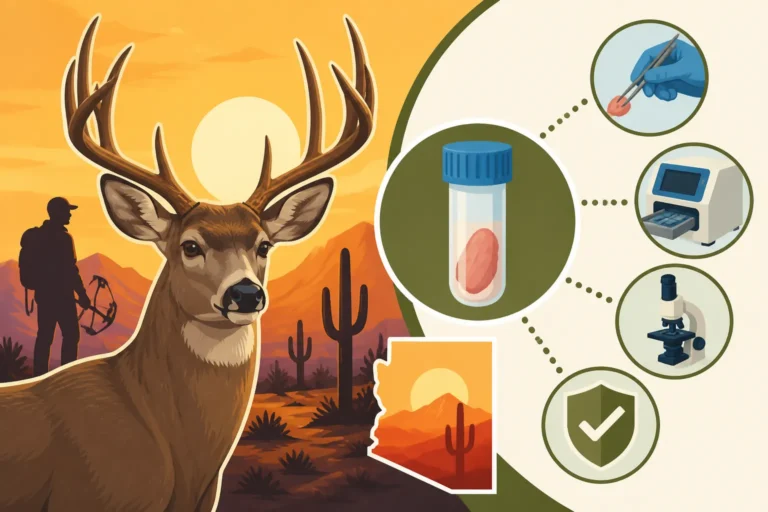
If you've spent any time researching deer hunting in Arizona, you've undoubtedly stumbled upon the term "Coues deer," often accompanied by hushed reverence or the frustrated sighs of those who've pursued them. These aren't your typical whitetails, and mistaking them for their larger, more common cousins is a surefire way to be left scratching your head on a rocky ridge. This guide is here to unravel the mystery, diving deep into what truly sets the Coues deer apart from any other deer you might encounter, helping you appreciate their unique place in the rugged Arizona landscape.
The 'Gray Ghost' Phenotype: Appearance and Adaptations
When you first hear "whitetail deer," most hunters conjure an image of a stocky, reddish-brown animal with a broad tail, often found in agricultural fields or dense timber. The Coues deer, on the other hand, immediately challenges those preconceived notions. They are a creature perfectly sculpted by the harsh, beautiful environment of the Sonoran and Chihuahuan deserts, earning them the nickname "gray ghost" for a reason.
Size and Body Proportions
One of the most immediate and striking differences you'll notice about a Coues deer is its diminutive size. Compared to the Eastern whitetail, which can easily tip the scales at 150-200 pounds or more in some regions, a mature Coues buck rarely breaks the 100-pound mark. Often, an adult Coues buck will weigh in at a mere 70-80 pounds on the hoof. Does are even smaller, sometimes as little as 50 pounds. This isn't just a slight variation; it's a fundamental difference in their overall body plan. Their legs are slender and well-muscled, built for agile movement across steep, rocky terrain rather than powerful bursts through thick cover. Their bodies are compact, allowing them to navigate dense scrub and rocky outcroppings with incredible grace. Imagine trying to hide a full-sized Eastern whitetail behind a small mesquite bush – it wouldn't work. A Coues deer, however, can practically disappear into minimal cover, thanks to its small stature and incredible ability to compress its body.
Antler Characteristics and Growth
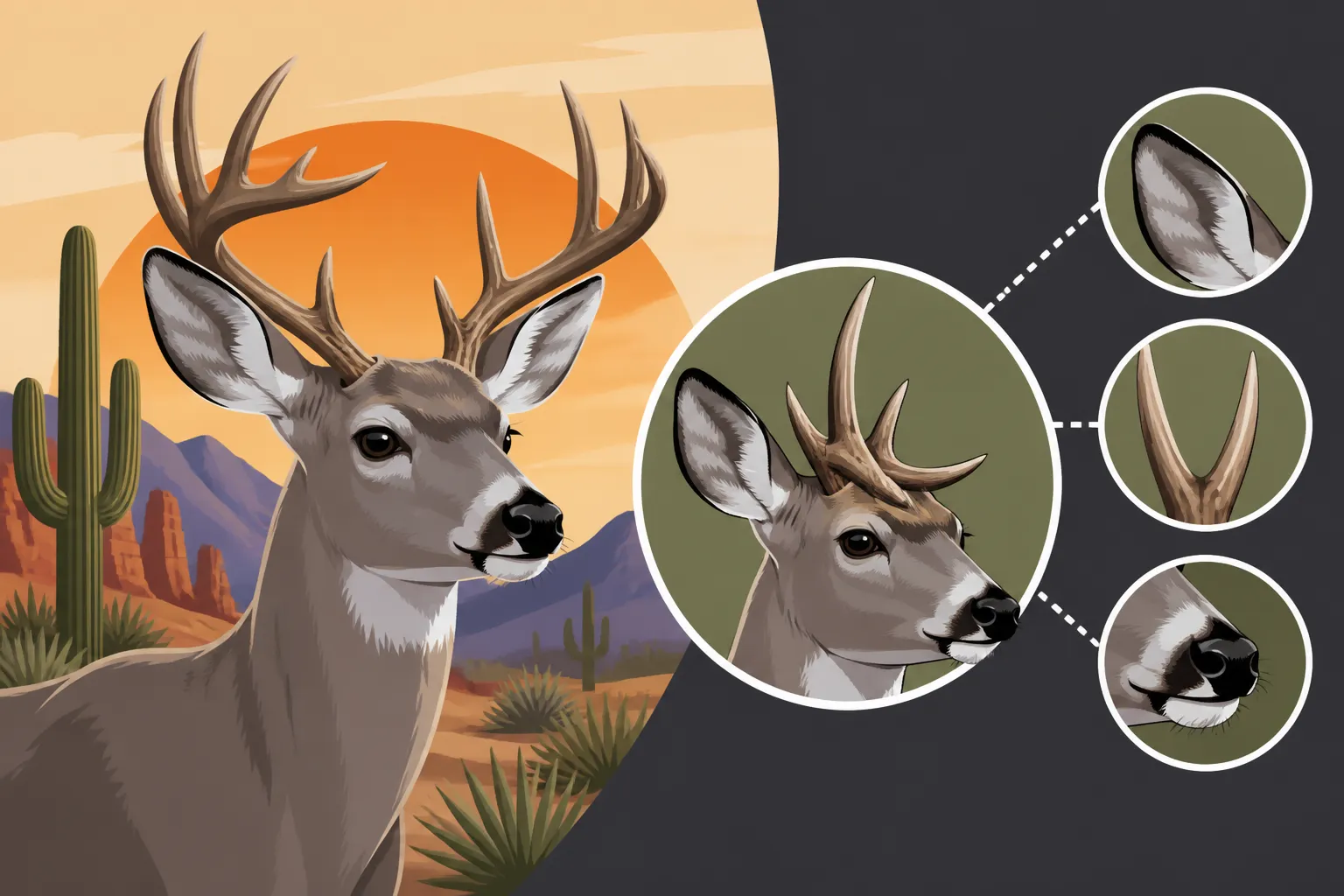
While still displaying the forward-tined antler growth typical of whitetail deer, the antlers of a Coues buck are noticeably smaller and more compact than those of an Eastern whitetail or even many mule deer. A trophy Coues buck is often considered one that scores over 100 inches Boone and Crockett, a number that would be considered average or even small for a mature Eastern whitetail. The beams are typically shorter, and the tines are more slender. What's often remarkable is the sheer symmetry and density of bone for their size. You'll frequently see bucks with perfect forks and solid bases, even if the overall mass isn't comparable to a Midwest giant. This smaller antler size is another adaptation to their environment. Navigating thick, thorny vegetation like catclaw acacia, wait-a-minute bush, and prickly pear would be far more challenging with a massive rack. Instead, their antlers are streamlined, allowing them to move through their habitat without getting hung up. For more on what separates them, check out What Separates a Coues From a Whitetail.
Coat Coloration and Camouflage
The "gray ghost" moniker isn't just poetic; it's a perfect description of their incredible camouflage. Their coat is typically a drab, grayish-tan or grayish-brown, perfectly blending with the dusty, rocky, and often muted color palette of their desert and chaparral habitats. Unlike the often reddish-brown hues of Eastern whitetails or the sometimes darker browns of mule deer, the Coues' coat is specifically designed to disappear against the sun-baked hillsides and shadows of the canyons. In the fall and winter, their coats can take on an even stronger gray tone, further enhancing their ability to vanish amidst the leafless scrub or the granite outcroppings. This phenomenal camouflage, combined with their small size and uncanny ability to remain motionless, makes spotting a Coues deer an immense challenge. They don't flee at the first sign of danger like some deer; instead, they often freeze, relying on their coloration and the broken terrain to make them virtually invisible.
A Niche Habitat: Life in Arizona's Sky Islands
One of the most defining characteristics of the Coues deer is its highly specialized habitat. You won't find them munching corn in an Iowa soybean field or browsing dense hardwood forests in Pennsylvania. Instead, the Coues deer is a creature of the mountains, specifically the "Sky Islands" of Arizona and parts of New Mexico and northern Mexico.
Elevational Preferences and Vegetation Zones
Coues deer thrive in the mid to high elevations of Arizona's mountain ranges, typically from around 4,000 feet up to 9,000 feet or more. This isn't continuous forest; rather, it's a mosaic of vegetation zones that change dramatically with elevation. At lower reaches, they inhabit the Sonoran Desert scrub, characterized by saguaro cactus, mesquite, and palo verde. As you ascend, this transitions into chaparral, a dense, thorny brushland dominated by oak, mountain mahogany, and manzanita. Higher still, you'll find pine-oak woodlands, and at the highest elevations, mixed conifer forests. The Coues deer are masters of utilizing all these zones, often moving between them depending on the season, water availability, and hunting pressure. Their favorite haunts tend to be the steep, broken terrain of the chaparral and pine-oak zones, offering abundant browse and crucial escape cover. These dramatic elevational shifts within relatively small geographical areas are what define the Sky Islands, and they are central to Where Coues Whitetail Live in Arizona and how Coues deer survive.
Water Dependency and Desert Resilience
Despite living in a generally arid region, Coues deer are surprisingly water-dependent. Unlike some desert animals that can go extended periods without direct water, Coues deer typically need access to water sources every day or two, especially during the hot, dry periods of spring and early summer. This makes springs, seeps, stock tanks, and intermittent creeks critical focal points for scouting and hunting. However, their resilience in finding and utilizing these scarce resources is remarkable. They will travel significant distances from bedding areas to water, often at dawn or dusk, and are incredibly adept at finding hidden pockets of moisture that most humans would overlook. This dependency on water shapes their daily movements and can concentrate them in specific areas, especially during the dry seasons, making understanding water sources a vital part of Hunting a Stock Tank During Early Archery in Arizona.
Home Range and Movement Patterns
Coues deer generally have relatively small home ranges compared to their Eastern whitetail counterparts, often only a few hundred acres. However, these small ranges are incredibly vertical and rugged, encompassing dramatic elevation changes within their boundaries. They are creatures of habit within their chosen areas, often using the same trails, bedding sites, and feeding grounds unless disturbed. Their movements are dictated by food availability, water access, and the need for security cover. During the hunting season, especially with increased pressure, they can become highly nocturnal or retreat into the thickest, steepest, most inaccessible terrain, making them incredibly difficult to pattern. They don't typically undertake long-distance migrations, but they will shift between elevational bands seasonally, moving to higher, cooler country in the summer and lower, more protected slopes in the winter when snow can make high country difficult to navigate.
Behavioral Quirks: Understanding the Coues Mind
If their appearance and habitat set them apart, their behavior solidifies their reputation as one of North America's most challenging deer to hunt. The "gray ghost" isn't just about their looks; it's about their elusive nature and uncanny ability to outwit hunters.
The Elusive Nature and Evasion Tactics
The elusiveness of the Coues deer is legendary. They are incredibly wary animals, constantly on alert, with exceptional eyesight, hearing, and an acute sense of smell. They live in a land filled with predators—mountain lions, coyotes, and bears—which has honed their survival instincts to an extreme degree. When spooked, they don't always crash through the brush like a mule deer or flat-out run like an Eastern whitetail in open country. Instead, they often execute a series of incredibly fast, short bursts, weaving through the thickest cover, pausing abruptly, and then melting into the landscape, often before you even realize they were there. Their small size allows them to slip through gaps in vegetation that would stop a larger deer, and their agility on steep terrain is breathtaking. They are also masters of using topography to their advantage, often circling downwind of perceived threats or using ridgelines and washes to make an undetected escape. This makes them a true challenge for even the most seasoned hunter. For insights into their cunning nature, many veterans understand Why Coues Deer Are Called Gray Ghosts.
Rutting Behavior and Timing
The Coues deer rut, or breeding season, typically peaks in late December and through January, extending into early February in some areas. This timing is distinctly different from the fall ruts of most other North American deer species. This later rut coincides with a cooler, often wetter time of year in Arizona, which can reduce heat stress on the deer during this energetically demanding period. During the rut, bucks, usually solitary, become more active during daylight hours, traveling more widely in search of receptive does. They will engage in sparring matches, rub trees, and make scrapes, though these signs are often less pronounced than with larger whitetails. While this increased activity can offer a window of opportunity for hunters, the Coues deer's innate wariness doesn't completely disappear. Bucks are still incredibly cautious, and the rugged terrain makes pinpointing their movements even during the rut a significant undertaking. Understanding When the Coues Rut Peaks is crucial for planning a hunt.
Social Structure and Group Dynamics
Coues deer are generally less gregarious than many other deer species. While does will often form small family groups with their fawns and sometimes yearlings, mature bucks are typically solitary outside of the rut. You might occasionally see a small bachelor group of bucks in the early fall, but this is less common and usually doesn't last long once hunting pressure begins or the pre-rut approaches. Their small herd sizes are another adaptation to their habitat, where abundant, accessible browse might be scattered, making large gatherings less efficient. This solitary nature can make them even harder to locate, as you often aren't looking for a large group of deer but rather a single, perfectly camouflaged animal.
The Hunter's Puzzle: Strategies for Coues Deer
Hunting Coues deer is not for the faint of heart or the impatient. It's a game of patience, optics, and physical endurance. The strategies employed are largely dictated by their small size, their elusive behavior, and the expansive, rugged terrain they call home.
Glassing as the Primary Tactic
Forget still-hunting through dense timber; that's almost entirely ineffective for Coues deer. The sheer vastness and broken nature of their habitat, combined with their incredible camouflage, make still-hunting a needle-in-a-haystack endeavor. The undisputed primary tactic for Coues deer is glassing. This involves finding a high vantage point, often called a "glassing knob," and systematically sweeping the opposing hillsides, canyons, and draws with high-quality binoculars and spotting scopes. Hunters spend hours, sometimes days, behind their optics, painstakingly dissecting every shadow, rock, and patch of brush, looking for the faintest flick of an ear, the shimmer of an antler, or a patch of hide that doesn't quite match its surroundings. This is not casual glassing; it's focused, intense work that demands exceptional optics and an understanding of how light and shadows play on the landscape. Many successful Coues hunters will tell you that Why Arizona Coues Hunting Is a Glassing Game is because without it, you're practically blind. This is where tools like GoHunt's mapping and data insights can really shine, helping hunters identify potential glassing points and understand historical deer movement in specific units.
Stalking Challenges in Rugged Terrain
Once a Coues deer is spotted, the real challenge often begins: the stalk. The terrain is frequently steep, rocky, and covered in thorny vegetation. Closing the distance to within shooting range, especially for bowhunters, requires an immense amount of stealth, careful route planning, and an understanding of wind and thermals. A successful stalk often involves dropping into and climbing out of multiple canyons, crawling through brush, and moving excruciatingly slowly to avoid detection. The Coues deer's keen senses mean that one wrong step, one gust of wind shifting your scent, or one flash of movement can send them vanishing into the "gray ghost" ether. For rifle hunters, understanding Rifle Zero Distance for Open Desert is important, as shots can often be long after a difficult stalk. Bowhunters face an even greater challenge, needing to get How Close a Bowhunter Needs to Get on Coues, which often means navigating within 40-50 yards in incredibly demanding conditions. Reading the wind, especially in the canyon systems, is paramount; a sudden thermal shift can reveal your presence instantly, making Reading Wind on a Sky Island Stalk an essential skill.
Gear Considerations for Coues Hunts
Given the nature of Coues hunting, specialized gear is not just helpful, it's often essential. High-quality optics are at the top of the list. A good pair of 10x or 12x binoculars, often mounted on a tripod for stability during long glassing sessions, is crucial. A powerful spotting scope (20-60x or 25-75x) is equally important for identifying and evaluating deer at extreme distances, helping with Spotting Scope Power for Coues Country. Durable, comfortable boots that can handle miles of rocky, steep terrain are non-negotiable. Lightweight clothing that can layer effectively for temperature swings from cold mornings to hot afternoons is also key. Pack capacity needs to be sufficient for carrying water, food, optics, and potentially game meat over long distances. Lastly, a reliable rifle capable of accurate shots at varying distances or a bow tuned for precision is a must. Many hunters utilize mapping apps like those offered by GoHunt to scout and navigate the complex public land boundaries and terrain of Arizona's Coues country.
More Than Just a Small Whitetail: Genetic and Taxonomic Identity
While visually distinct, the Coues deer is, in fact, a subspecies of the larger white-tailed deer (Odocoileus virginianus). However, its unique evolutionary path and isolation have led to significant differences that transcend mere size.
Subspecies Classification and Evolution
The scientific name for the Coues deer is Odocoileus virginianus couesi. It's one of several recognized subspecies of white-tailed deer found across North and Central America. Its classification as a distinct subspecies highlights the unique genetic adaptations it has undergone to thrive in the harsh, mountainous, and arid environments of the Southwest. Over millennia, environmental pressures—such as limited water, unique vegetation, and a distinct predator suite—have driven the development of the Coues deer's specific traits: smaller body size, a gray coat, and behavior geared towards extreme elusiveness in broken country. This evolutionary journey has effectively created a deer that, while still a whitetail, is almost a different animal in terms of its ecological niche and how it interacts with its environment.
Genetic Divergence from Other Whitetails
Recent genetic studies have further illuminated the unique identity of the Coues deer. While sharing a common ancestor with other white-tailed deer, the Coues population exhibits distinct genetic markers that differentiate it from both Eastern whitetails and even other desert whitetail populations found further south in Mexico. This genetic isolation, driven by geographical barriers like vast deserts and river systems, has allowed for the development of its specialized traits without significant gene flow from other whitetail populations. This means that its adaptations are truly inherent and not simply a result of environmental factors influencing a generalist whitetail. It's a testament to the power of natural selection shaping species to perfectly fit their specific ecosystem.
Conservation Status and Management Efforts
Thankfully, Coues deer populations in Arizona are generally healthy and well-managed. The Arizona Game and Fish Department (AZGFD) monitors herd numbers through aerial surveys, harvest data, and habitat assessments. Hunting seasons are carefully regulated to ensure sustainable populations, and tags are typically allocated through a limited-entry draw system. While their numbers fluctuate with rainfall and habitat conditions, Coues deer are not considered endangered or threatened. Conservation efforts often focus on habitat preservation, water development projects (like building and maintaining remote wildlife drinkers), and managing predator populations. Understanding the dynamics of these herds and the units they inhabit can be significantly aided by platforms like GoHunt, which provide current season data and draw odds.
Side-by-Side: Coues vs. Mule Deer and Eastern Whitetails
To truly grasp what makes a Coues deer different, it helps to directly compare it to other prominent deer species hunters encounter. While often confused with mule deer due to shared habitat, and distantly related to Eastern whitetails, the distinctions are profound.
Physical Traits Compared
Let's break down the most observable physical differences in a simple table.
| Feature | Coues Deer | Mule Deer | Eastern Whitetail |
|---|---|---|---|
| Size | Smallest (70-100 lbs for bucks) | Medium to Large (150-300 lbs for bucks) | Medium to Large (120-250 lbs for bucks) |
| Antlers | Compact, typical whitetail form, slender | Bifurcated (forked), typically wider spread | Can be massive, typical whitetail form, strong mass |
| Ear Size | Medium (whitetail-proportioned) | Very Large ("mule-like") | Medium (whitetail-proportioned) |
| Tail | Long, narrow, brown on top, white underneath, "flag" when running | Short, narrow, white, black tip, rope-like; does not flag | Broad, flattened, brown on top, white underneath, "flag" when running |
| Coloration | Grayish-tan/brown, blends with desert/chaparral | Light brown to gray, often darker face | Reddish-brown in summer, grayish-brown in winter |
| Rump Patch | Small, indistinct white rump patch | Large, distinct white rump patch | Small, indistinct white rump patch |
| Movement | Agile, stealthy, fast short bursts, weaving | "Bouncing" or "stotting" gait | Smooth run, powerful leaps |
This table clearly highlights that the Coues deer stands alone in its combination of physical characteristics. While both Coues and Eastern whitetails "flag" their tails when running, the Coues tail is much thinner and less pronounced. Mule deer have those iconic "mule" ears and their distinctive bounding gait, which is completely absent in a Coues deer. Judging Coues Antlers Against Mule Deer often comes down to understanding the fundamental growth patterns.
Habitat and Distribution Contrasts
Mule deer in Arizona, particularly the famed Kaibab Plateau mule deer, typically inhabit more open, high-desert country, ponderosa pine forests, and rimrock areas. You'll find Mule Deer Across Northern Arizona in units like 9, 10, and 12, often at lower elevations than Coues in the southern ranges, but still preferring broken terrain. Eastern whitetails, as mentioned, are primarily found in forests, agricultural lands, and suburban areas across the eastern and central United States. Coues deer, conversely, are concentrated in the Sky Islands of southern Arizona, southern New Mexico, and parts of Mexico, preferring the dense, steep, and thorny chaparral and pine-oak woodlands. They are much more specialized in their habitat than either mule deer or Eastern whitetails, which tend to be more adaptable generalists. This habitat specificity is a major reason for their unique adaptations and elusive nature.
Hunting Approaches: A Divergent Path
The hunting approaches for these three species are as varied as the deer themselves. For Eastern whitetails, stand hunting over food plots, still-hunting through woodlots, or driving deer are common tactics. For mule deer, hunters often cover vast amounts of ground, glassing open country, or still-hunting through more open timber. With Coues deer, as discussed, glassing from high vantage points is almost universally the most effective strategy, followed by extremely careful, tactical stalks. You won't find many Coues deer in open fields, nor will you typically still-hunt through the dense, noisy chaparral with much success. The sheer scale of the landscape and the deer's ability to hide means that a different mindset, different gear, and different skills are required. Hunting them demands a unique blend of extreme patience, physical toughness, and exceptional glassing ability, making a Coues deer hunt a distinctive challenge in the world of North American deer hunting.
Disclaimer
Please remember that hunting regulations, seasons, and licensing requirements can change frequently. Always consult the most current Arizona Game and Fish Department regulations booklet before planning any hunt. This article is for informational and entertainment purposes only and should not be considered legal advice or a substitute for official sources.