Why Arizona Counts the Bighorns Separately
Many hunters, especially those new to the Grand Canyon State, find themselves scratching their heads when they hear talk of Arizona's bighorn sheep. It’s not just "bighorn sheep" here; the Arizona Game and Fish Department (AZGFD) actually counts and manages two distinct subspecies separately. This distinction is crucial for understanding hunt opportunities, draw odds, and even the unique challenges each presents. This guide will walk you through why this separation exists, what it means for conservation, and how it impacts your hunting aspirations.
Understanding Arizona's Bighorn Sheep Landscape
Arizona is a truly special place, boasting an incredible diversity of wildlife, and its bighorn sheep populations are a prime example. But the term "bighorn sheep" itself can be a bit of a broad stroke, encompassing two very different animals in this state. Grasping the unique characteristics and histories of these two species is the first step toward appreciating Arizona's thoughtful approach to wildlife management.
The Two Distinct Species: Desert vs. Rocky Mountain
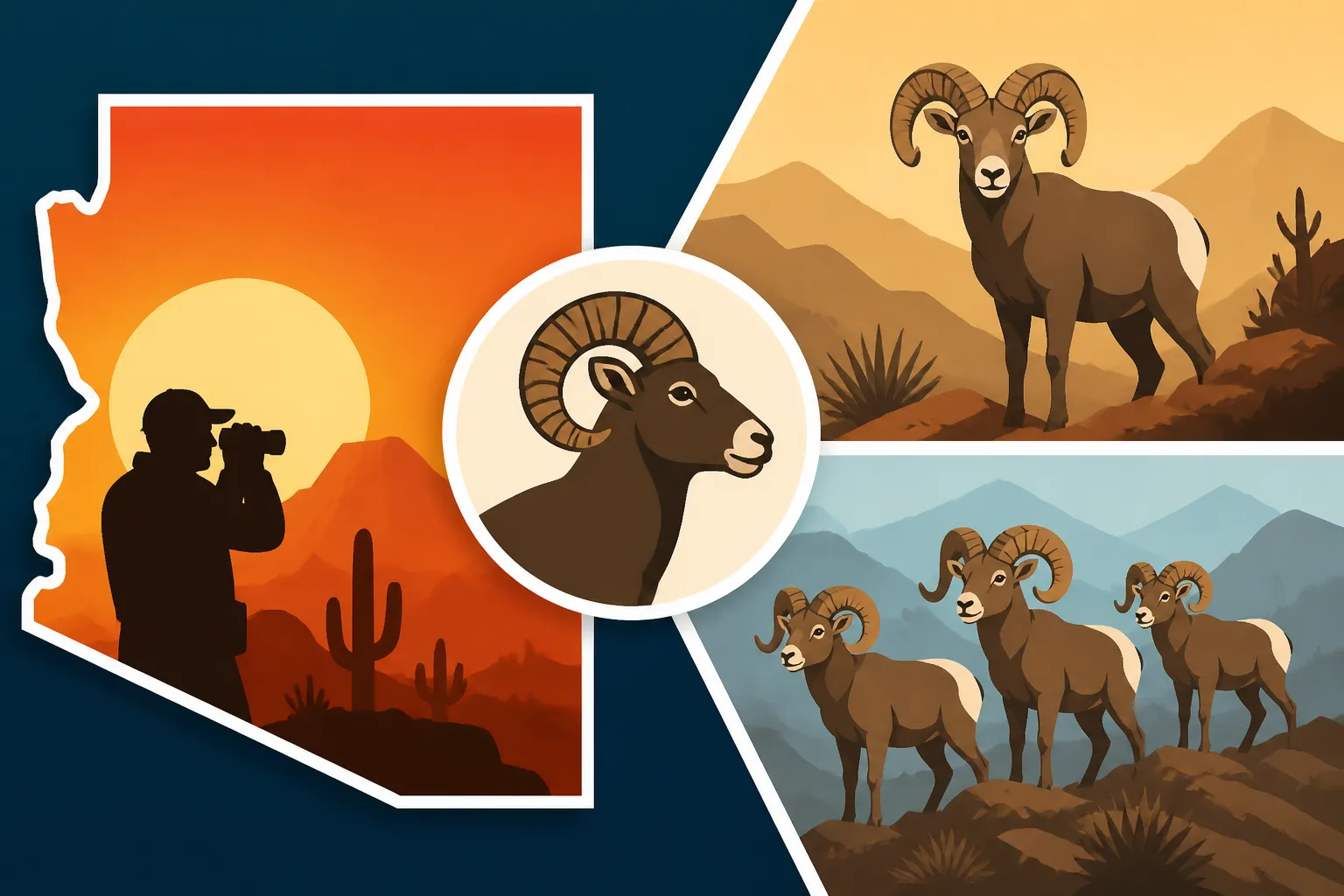
At the heart of Arizona's bighorn management lies a fundamental biological truth: there are two distinct subspecies roaming its diverse landscapes. We have the Desert Bighorn Sheep (Ovis canadensis nelsoni), often seen in the rugged, sun-baked mountain ranges that define much of Southern and Western Arizona. Then there's the Rocky Mountain Bighorn Sheep (Ovis canadensis canadensis), which typically inhabits higher elevations, more temperate forest, and riparian zones, primarily along the Black River and parts of the Salt River system.
These aren't just arbitrary distinctions. From a biological standpoint, these two animals evolved in different environments, leading to unique adaptations. Desert bighorns are generally lighter in color, a beautiful, sun-bleached tan that blends seamlessly with the desert rocks. Their bodies are built to handle extreme heat and prolonged periods without surface water. They often appear more "trim" and agile, perfectly suited for navigating steep, unforgiving terrain in scorching temperatures. Rocky Mountain bighorns, on the other hand, tend to be darker, a rich brown that offers camouflage in timbered mountains. They are typically larger-bodied, with thicker coats, built to endure colder temperatures and snowpack often found in their preferred high-elevation habitats. While both possess impressive horns, the curl and mass can vary subtly between the subspecies, reflecting their genetic lineage. Understanding these inherent differences is key to appreciating why they're treated as separate entities in a hunter's mind and in conservation efforts.
Geographical Distribution Across the State
The distinct physiological adaptations of these bighorn subspecies directly influence where you'll find them in Arizona. The Desert Bighorns, as their name suggests, are masters of the arid environment. They are widespread across the Sonoran and Mojave deserts, inhabiting the isolated mountain ranges that dot the landscape from Yuma to Tucson and up toward Kingman. Think of places like the Kofa Mountains, Plomosa Mountains, Big Horn Mountains, or the Catalinas near Tucson – these are classic Desert Bighorn haunts. These majestic animals can survive on incredibly sparse vegetation and often go days without direct water access, relying on moisture from plants or dew. Their world is one of volcanic rock, saguaro cactus, and vast, open vistas where every shadow provides a crucial hiding spot.
In stark contrast, the Rocky Mountain Bighorns are found in Arizona's higher, more northern, and eastern mountain ranges, particularly in areas associated with perennial water sources and more abundant vegetation. Historically, their populations were stronger in the eastern parts of the state, with significant herds found along the Black River on the Fort Apache and San Carlos Apache Reservations. While their range within Arizona is much more limited than their desert cousins, these populations are vital. They prefer rugged, steep country often interspersed with ponderosa pine, juniper, and oak, offering different types of forage and cover. If you're scouting areas like the Blue Range Primitive Area or along the Mogollon Rim in specific pockets, you might be looking at Rocky Mountain Bighorn habitat. This geographic separation reinforces the need for different management strategies, as the challenges facing a herd in the scorching low desert are entirely different from those facing a herd in a snow-dusted, high-elevation canyon.
Ecological and Biological Separations
Beyond just looking a little different and living in separate parts of the state, the ecological and biological underpinnings of Arizona's two bighorn species are profoundly divergent. This isn't just about superficial appearances; it’s about deep-seated evolutionary paths that have sculpted two distinct animals, each perfectly suited to its niche. Understanding these differences clarifies why conservationists and wildlife managers go to such lengths to manage them separately.
Habitat Preferences and Adaptations
Desert Bighorns, truly iconic to the American Southwest, have evolved remarkable physiological and behavioral adaptations to survive in some of the harshest environments on Earth. They are absolute champions of the arid Sonoran Desert. Their bodies are incredibly efficient at conserving water, able to withstand significant dehydration – up to 30% of their body weight loss – and then rehydrate rapidly when water is found. They've learned to extract moisture from the plants they eat, like cacti and desert succulents, often foregoing surface water for extended periods. When summer monsoons hit, they will drink deeply, but during the dry, scorching months, they're incredibly resilient. Their preferred habitat is steep, rugged, rocky terrain that provides security from predators and access to sparse forage. These "escape routes" are crucial, as their primary defense mechanism is their incredible agility and ability to scale precipitous cliffs. They are often found on south-facing slopes in winter for warmth and north-facing slopes in summer for shade, always maximizing thermal regulation.
Rocky Mountain Bighorns, on the other hand, require a different suite of resources and possess different adaptations. While still preferring steep, rocky escape terrain, their habitats are typically at higher elevations, receiving more precipitation and supporting denser vegetation. You'll find them in areas with more consistent water sources like rivers, perennial streams, or high mountain springs, often surrounded by mixed conifer forests, pine-oak woodlands, or lush riparian zones. Their diets include a wider variety of grasses, forbs, and shrubs, reflecting the greater botanical diversity of their environment. They're built for colder weather, with denser coats and larger body mass, making them better equipped to handle snowy winters and cooler temperatures. This ecological divergence means that what works for managing a desert herd – say, developing remote water sources – might be completely irrelevant or even detrimental to a Rocky Mountain herd, highlighting the necessity of distinct management approaches.
Genetic Distinctiveness and Conservation Efforts
The separate classification of Desert Bighorn and Rocky Mountain Bighorn in Arizona is not merely based on their appearance or where they live; it's rooted in their genetic distinctiveness. While both are subspecies of Ovis canadensis, they are genetically separate populations that have evolved independently over millennia. Maintaining this genetic purity is a cornerstone of modern wildlife conservation. Crossbreeding between subspecies can lead to what's known as "outbreeding depression," where hybrid offspring are less adapted to either parental environment, potentially weakening the overall population's resilience to disease, climate change, or other stressors.
Arizona Game and Fish Department (AZGFD) has invested significant resources in bighorn sheep restoration efforts over the decades, successfully reintroducing both Desert and Rocky Mountain bighorns into suitable habitats where they had been extirpated. For instance, populations of Desert Bighorn in Arizona's Mountain Ranges have seen incredible recovery thanks to trap-and-transplant efforts. Similarly, efforts have focused on bolstering Rocky Mountain Bighorn Along the Salt River and other specific areas. For these efforts to be successful long-term, it's critical to ensure that translocated animals are genetically appropriate for the recipient habitat and don't dilute the unique genetic makeup of existing populations. By counting and managing them separately, AZGFD ensures that conservation strategies are tailored to the specific needs and genetic integrity of each subspecies, maximizing their chances for long-term survival and thriving populations. This meticulous approach is vital for the health of both bighorn populations in the state.
Management and Regulatory Implications for Hunters
For the dedicated hunter dreaming of a bighorn tag, the distinction between Desert and Rocky Mountain Bighorns isn't just academic; it has profound, practical implications for how you apply, what tags you pursue, and ultimately, whether you can achieve that once-in-a-lifetime hunt. The Arizona Game and Fish Department's separate management is directly reflected in its draw systems and regulations.
Separate Draw Systems and Tag Allocations
This is where the rubber meets the road for hunters. Because Desert Bighorn and Rocky Mountain Bighorn are managed as distinct populations, AZGFD maintains completely separate draw systems for each. This means that if you apply for a Desert Bighorn tag, that application does not count towards a Rocky Mountain Bighorn tag, and vice-versa. You'll find unique hunt codes, distinct tag allocations, and different bonus point structures for each species. It’s essentially two separate dreams within the larger bighorn category.
For example, when you review the AZGFD regulations or use a platform like GoHunt to analyze draw odds, you'll notice specific units designated for Desert Bighorn hunts and other, entirely different units for Rocky Mountain Bighorn hunts. Each has its own pool of tags, which are often incredibly limited. Drawing either a Desert or a Rocky Mountain bighorn tag is an extraordinary feat, often requiring many years – sometimes decades – of accumulating bonus points. You can build points for one species without impacting your points for the other. This separate system can be a bit frustrating for hunters who just want "a bighorn tag," but it ensures that the limited tags for each unique subspecies are allocated fairly and strategically. It also means that a hunter could, theoretically, draw a Desert Bighorn tag, harvest an animal, and then years later, draw and hunt a Rocky Mountain Bighorn, making for two separate "once-in-a-lifetime" experiences in Arizona. Remember, Arizona runs its major big game draws in two cycles, one in Arizona Runs Two Draw Cycles, February and June, and bighorn applications typically fall within one of those.
Different Season Structures and Harvest Limits
The distinct management approach extends to the nitty-gritty details of hunting seasons and harvest limits. AZGFD meticulously sets season dates, defines specific unit boundaries, and establishes harvest quotas individually for Desert Bighorns and Rocky Mountain Bighorns. These decisions are not arbitrary; they are based on rigorous unit-specific population assessments, reflecting the unique health, recruitment rates, and population densities of each subspecies in its respective habitat.
For example, a unit with a thriving Desert Bighorn population might have a slightly higher tag allocation or a longer season compared to a struggling Rocky Mountain Bighorn unit, or vice-versa. The season timing might also differ, aligning with rutting periods or optimal weather conditions that are specific to that subspecies and geography. These varying harvest limits and season structures directly impact your chances of drawing a tag and your potential success in the field. When checking draw odds, you’ll find that Arizona Desert Bighorn Draw Odds are calculated entirely separately from those for Rocky Mountain Bighorns. Furthermore, Arizona also implements a nonresident tag cap, where Arizona Caps Nonresidents at Ten Percent of Every Hunt, but this cap applies to each species’ tag allocation individually. This means a nonresident's chance at a Desert Bighorn tag is distinct from their chance at a Rocky Mountain Bighorn tag, adding another layer of complexity to an already challenging draw process. These granular differences are a testament to the department's commitment to biologically sound management practices for both cherished bighorn populations.
Hunting Strategies and Considerations
Okay, so you've managed to beat the odds and draw one of these coveted tags—first of all, congratulations! Now the real work begins. Hunting Desert Bighorn and Rocky Mountain Bighorn in Arizona, while both incredibly challenging, demand different strategies, gear, and physical preparations due to their distinct habitats and behaviors. This is where understanding the ecological separation truly pays off.
Glassing and Stalking in Varied Terrains
Hunting Desert Bighorns is primarily a game of long-range glassing. The vast, open, rugged mountain ranges of the Sonoran Desert mean you'll often be spotting sheep from miles away. Patience and quality optics are paramount. Hunters typically find a high vantage point, settle in, and meticulously pick apart every rock and shadow with their binoculars and spotting scope. The heat shimmering off the desert floor can make glassing incredibly difficult, demanding top-tier glass and a keen eye. Once a ram is spotted, the stalk can be brutal. Crossing expansive, open country, navigating loose scree fields, and climbing incredibly steep, unforgiving terrain while staying out of sight of an animal with incredible eyesight is a supreme challenge. You'll need to use every wrinkle in the landscape, every sparse creosote bush, to conceal your approach.
In contrast, hunting Rocky Mountain Bighorns in Arizona can often involve more broken, timbered, or riparian country. While glassing is still crucial, especially in high alpine bowls or open canyon systems, the denser vegetation and varied terrain might require closer-range scouting and different stalking tactics. You might be glassing from one timbered ridge into another, or scrutinizing brushy river breaks. Stalks might involve navigating through thicker stands of ponderosa or oak, requiring quieter movement and a different set of concealment skills. The elevation itself presents its own challenge; climbing at 7,000+ feet in Arizona's eastern mountains is a different beast than scaling a 3,000-foot desert peak. Regardless of the species, success hinges on your ability to spot game, understand the terrain, and execute a flawless, often physically exhausting, stalk. For either species, having top-tier glass is non-negotiable; for advice on magnification, consider reading about Spotting Scope Power for Coues Country.
Gear and Logistics for Each Bighorn Hunt
Given the wildly different environments, your gear and logistical planning will vary significantly between a Desert Bighorn hunt and a Rocky Mountain Bighorn hunt. For a Desert Bighorn hunt in units like the Kofa or Plomosa, water is king. You'll be operating in extreme heat for much of the season, and carrying enough Water You Must Carry on a Day Hunt isn't just important; it's a matter of survival. This often means caching water or relying on a dedicated support team to ferry it in. Footwear needs to be robust, offering excellent ankle support and grip on loose, rocky slopes, but also breathable to manage heat. Clothing should be lightweight, quick-drying, and offer maximum sun protection. Heat Management on an Arizona Early Season Hunt is a constant concern, and things like wide-brimmed hats, cooling towels, and electrolyte supplements become essential.
For a Rocky Mountain Bighorn hunt, especially in higher elevations, you'll be preparing for cooler temperatures, potentially snow, and varying weather conditions. Layering becomes much more critical. While water is still vital, it might be more accessible from natural sources, though purification is always necessary. Boots need to be waterproof and insulated if hunting in late seasons. Navigation tools are crucial in more densely timbered areas where visibility might be limited. Access can also differ greatly; some Desert Bighorn units are accessible by rough two-track roads, while some Rocky Mountain Bighorn areas might require extensive backpacking or pack stock to reach the best country. Given the extreme difficulty and the once-in-a-lifetime nature of these hunts, many hunters choose to employ the services of an experienced outfitter. Understanding the Cost Expectations for an Arizona Desert Bighorn Hunt gives a good baseline, but remember, the specialized nature of each species means finding a guide with specific expertise in that habitat is crucial. Planning meticulously for the unique demands of your specific tag is the key to a successful bighorn adventure.
Arizona Bighorn Sheep: A Comparative Overview
| Feature | Desert Bighorn Sheep (O. c. nelsoni) | Rocky Mountain Bighorn Sheep (O. c. canadensis) |
|---|---|---|
| Primary Habitat | Arid desert mountains, lower elevations, Sonoran and Mojave deserts | Higher elevation mountains, riparian zones, mixed conifer forests |
| Geographic Range | Southern and Western Arizona (Kofa, Plomosa, Catalinas) | Eastern and Northern Arizona (Black River, Salt River, select high units) |
| Physical Traits | Lighter tan color, more slender build, adapted for heat tolerance | Darker brown coat, larger body mass, adapted for colder climates |
| Key Adaptations | Water conservation, heat regulation, sparse vegetation diet | Cold tolerance, diverse forage diet, consistent water sources |
| Hunting Style | Extensive long-range glassing, brutal desert stalks, extreme heat | Glassing in broken country, timbered stalks, elevation challenges |
| Water Needs | Highly water-independent, relies on plant moisture, remote tanks | More reliant on surface water (rivers, springs, snowmelt) |
| Conservation Focus | Water developments, habitat connectivity in arid zones | Disease management, habitat improvement in mountain ecosystems |
| AZGFD Management | Separate draw, hunt codes, tag allocations, and point system | Separate draw, hunt codes, tag allocations, and point system |
Why "Once-in-a-Lifetime" Applies to Each
For many hunters, a bighorn sheep tag represents the pinnacle of Western big game hunting, a true "once-in-a-lifetime" opportunity. In Arizona, this concept takes on an even more unique dimension, as the state's separate management of Desert and Rocky Mountain Bighorns effectively creates two distinct "lifetime" quests for the most dedicated applicants.
The Rarity and Value of Each Tag
Drawing a bighorn tag in Arizona, whether for a Desert or Rocky Mountain ram, is an exceptionally rare event. These are some of the toughest tags to acquire in the entire country, often requiring decades of consistent application and accumulating bonus points. The sheer scarcity of tags – sometimes only a handful are offered statewide for each species in any given year – amplifies their value. It's not just a hunt; it's the culmination of years of dreaming, saving, and meticulously planning. When you finally receive that coveted notification, it truly feels like winning the lottery.
Crucially, because Arizona's Game and Fish Department recognizes and manages these two subspecies as distinct biological entities, the "once-in-a-lifetime" rule applies to each species independently. This means that if you are fortunate enough to draw and harvest a Desert Bighorn ram, you have fulfilled your "once-in-a-lifetime" opportunity for that specific subspecies. However, you are still eligible to apply for and potentially draw a Rocky Mountain Bighorn tag in the future. This creates a unique scenario where an Arizona hunter could, with incredible persistence and luck, achieve two separate "lifetime" bighorn hunts. This structure gives hopeful hunters a double incentive to keep applying and accumulating Earning an Arizona Point by Applying for both species, making the pursuit even more compelling for those who cherish the challenge. The state's commitment to this distinction highlights the incredible value placed on each unique bighorn population. If you do manage to draw, it's wise to be prepared for What Happens After You Take an Arizona Bighorn, as there are specific rules and requirements for reporting your harvest.
The Importance of Conservation and Respect
The policy of separately counting and managing Arizona's bighorn sheep populations is more than just a regulatory quirk; it's a profound statement about conservation. By treating Desert Bighorns and Rocky Mountain Bighorns as unique entities, AZGFD reinforces the critical conservation value of each distinct population. This approach allows biologists to tailor management plans, conduct targeted research, and implement specific restoration efforts that address the unique threats and needs of each subspecies. For instance, disease outbreaks in a Rocky Mountain herd might be treated differently than those in a desert population, reflecting their varied ecological contexts.
For hunters, this means a heightened ethical responsibility. When you apply for a bighorn tag, you are not just hoping for a trophy; you are engaging with a deeply managed, precious resource. Understanding the biological and ecological distinctions between the two species fosters a deeper respect for the animals and their habitats. It means recognizing that the Desert Bighorn ram you might pursue in the Kofas is a genetically and ecologically distinct animal from a Rocky Mountain ram on the Black River. This separate management is a testament to the AZGFD's commitment to maintaining robust, healthy, and genetically pure bighorn populations across the state. It allows us as hunters to appreciate the incredible diversity within the bighorn family and to play a direct role in the continued conservation of these magnificent creatures for generations to come.
Disclaimer
Please remember that hunting regulations, seasons, and tag allocations can change. Always consult the most current Arizona Game and Fish Department hunting regulations and official publications before planning any hunt. This guide is for informational purposes only and does not constitute legal advice.