Arizona Bison on House Rock Wildlife Area
Hunting Arizona bison is more than just a hunt; it's a monumental undertaking that challenges even the most seasoned outdoorsmen. Many hunters dream of pursuing these magnificent animals, but the reality of drawing a tag, understanding their habitat, and executing a successful hunt in a unique place like the House Rock Wildlife Area can feel overwhelming. This comprehensive guide will demystify the process, offering practical, real-world advice to help you navigate the journey of an Arizona bison hunt.
Unraveling the Enigma of Arizona's Bison Herds
Arizona isn't the first state that comes to mind when you think of bison, but these incredible creatures have carved out a fascinating existence in a few distinct pockets of the Grand Canyon State. Their story here is one of reintroduction, careful management, and a stark contrast to the vast prairie herds of the past. For hunters, understanding this backdrop is crucial to appreciating the unique opportunity an Arizona bison tag represents.
A Glimpse into Arizona's Bison History
The presence of bison in Arizona is a testament to conservation efforts. While they once roamed parts of the state centuries ago, their numbers dwindled significantly, or they were entirely extirpated, as human settlement expanded. The herds we see today largely stem from reintroduction programs. The House Rock herd, for example, traces its lineage back to the early 20th century, when individuals were brought in to re-establish a population. These weren't just tossed out into the wild; their reintroduction was a deliberate, long-term project designed to thrive in a high-desert, mountainous environment, which is vastly different from their traditional prairie homes.
Over the decades, these bison have adapted remarkably to the varied landscapes of northern Arizona, from pinyon-juniper woodlands to open grasslands nestled between towering mesas. This adaptation has shaped their behavior, making them different from their northern cousins. They are tougher, more elusive, and often inhabit rougher terrain, which adds an extra layer of challenge and excitement to the hunt. For those interested in the broader context, understanding Where the Free-Ranging Bison Herds Live can provide further insights into their statewide distribution.
The Distinct Challenges of Bison Management in the Southwest
Managing bison in Arizona presents a unique set of challenges compared to other states. It's not just about managing numbers; it's about balancing herd health, habitat impact, and public land use, all while navigating the complexities of their presence near iconic natural landmarks like the Grand Canyon. The Arizona Game and Fish Department (AZGFD) works tirelessly to ensure these herds remain healthy and sustainable, employing strategies that often involve specific harvest quotas and unit boundaries.
One of the primary concerns is preventing overgrazing in sensitive habitats, especially given the arid nature of Arizona. Bison are large animals with significant dietary needs, and managing their numbers carefully helps preserve the delicate balance of the ecosystem. This careful management also dictates the limited number of tags available each year, making drawing an Arizona bison tag one of the most difficult and sought-after in the country. The demand far outstrips supply, which only adds to the mystique and value of securing a permit.
House Rock Wildlife Area: Arizona's Premier Bison Ground
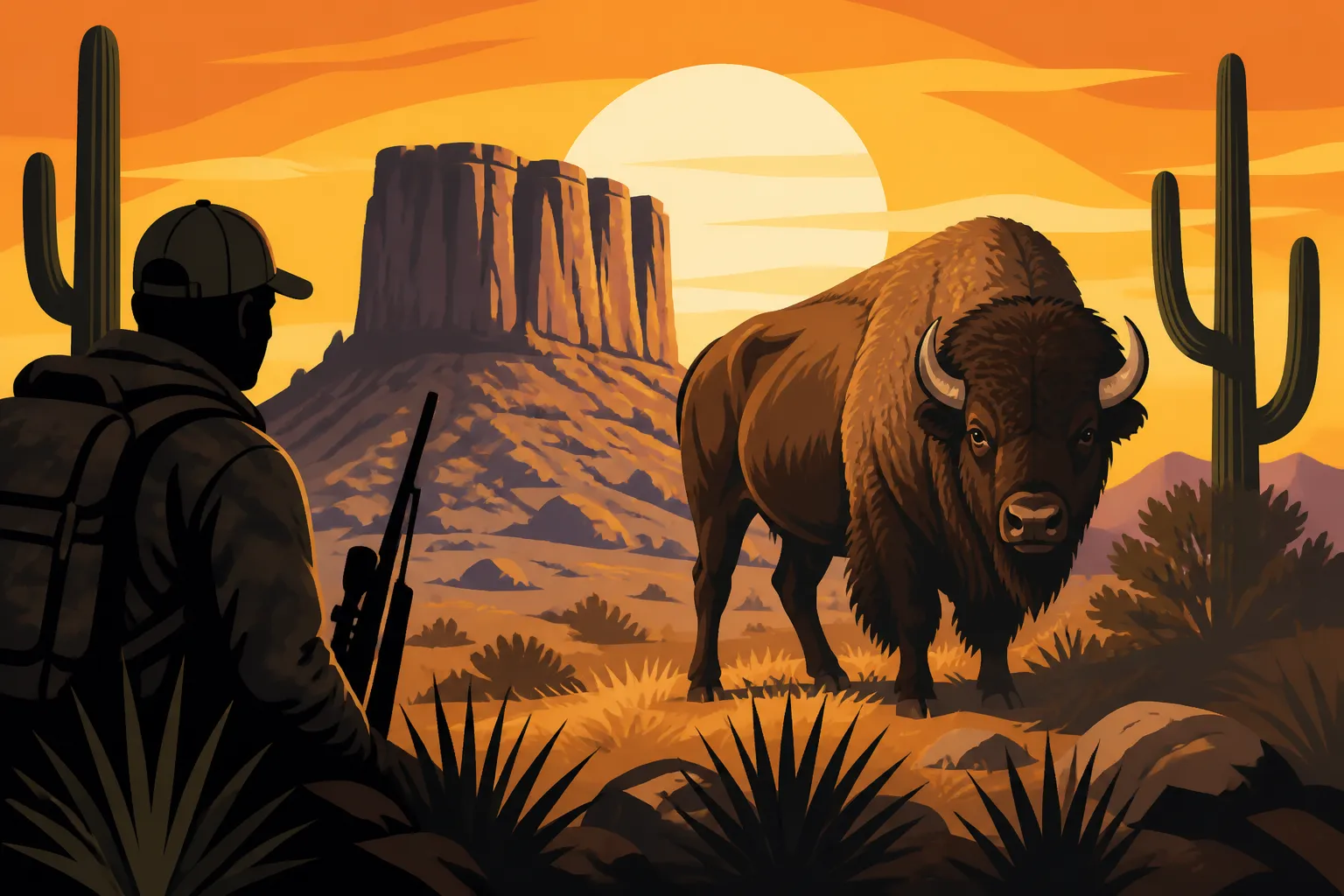
When someone talks about hunting bison in Arizona, more often than not, they're referring to the House Rock Wildlife Area. This expansive and rugged landscape, nestled in the vast expanse of northern Arizona, is synonymous with the state's most iconic bison herd. It's a place of incredible beauty, stark contrasts, and formidable hunting challenges.
Locating and Accessing the House Rock Valley
The House Rock Valley is situated in what feels like the middle of nowhere, just east of the Grand Canyon's North Rim. It’s remote, and getting there requires planning and an understanding of the terrain. Most hunters approach from the north or south via Highway 89A, turning off onto dirt roads that wind through the juniper and sagebrush. These roads, while generally passable for 2WD vehicles in dry conditions, can quickly become an impassable mess with rain or snow. Always check road conditions before heading out, as weather in this region can be unpredictable.
The valley itself is a high-desert basin surrounded by plateaus and mesas, offering diverse terrain ranging from open grasslands where bison graze to thick stands of pinyon and juniper that provide crucial cover. Access points are often marked, but understanding the local road network and land ownership boundaries is absolutely essential. Using tools like mapping apps with public land layers can be a game-changer here. Before you even set foot on the ground, dedicate serious time to Reading an Arizona Unit Boundary Before You Apply and understanding the specific access points, especially if you plan to navigate the area yourself.
The Unique Ecosystem Supporting House Rock Bison
The ecosystem of House Rock Wildlife Area is a fascinating blend of high desert and plateau country. Elevations typically range from 5,000 to 7,000 feet, which means you'll encounter a mix of plant life that supports the bison. Open grasslands provide forage, while the scattered juniper and pinyon forests offer shelter from the elements and a place for bison to bed down. Water sources, often in the form of stock tanks or natural springs, are critical and can dictate bison movements, especially during drier periods.
The bison here have adapted to this landscape over generations, learning to navigate the rocky washes, climb steep slopes, and find sustenance in what appears to be a harsh environment. They're often on the move, covering vast distances in search of fresh forage or water, making them truly free-ranging. This intimate relationship between the bison and their unique habitat is what makes hunting them here so special, yet so demanding. It's not a feedlot hunt; it’s a genuine wilderness experience.
Understanding the House Rock Bison Hunt Units
The Arizona Game and Fish Department divides the House Rock Wildlife Area into specific hunt units, primarily Unit 13A for bison, with occasional tags spilling into neighboring units depending on management objectives. When you apply for a bison tag, you're usually applying for a specific unit and hunt type (e.g., bull, cow, youth). Each unit has its own unique characteristics, and while House Rock is the primary focus, it’s always important to double-check the exact unit boundaries on your tag and the current regulations.
It's common for bison to roam between units, especially larger bulls or during periods of drought when they might expand their range in search of better feed. This means that while your tag is for a specific unit, understanding the surrounding landscape and how bison use it can be beneficial. Using resources like GoHunt's insider information or similar scouting tools can provide critical data on herd movements and historical harvest locations within these specific units, greatly assisting your pre-hunt planning.
Navigating the Arizona Bison Tag Draw
Let's be brutally honest: drawing an Arizona bison tag is like winning the lottery. It's one of the toughest big game draws in North America, and for good reason. The tags are extremely limited, and the demand is astronomically high. But don't let that discourage you entirely; understanding the process is the first step toward beating the odds, however slim they may be.
The Lowdown on Arizona Bison Draw Odds
The simple truth is that Arizona Bison Draw Odds are incredibly low. We're talking single-digit percentages, often less than 1% for nonresident bull tags. Residents have slightly better odds, but even for them, it's a long shot. This isn't a draw you bank on hitting every year; it's a dream tag that takes years, if not decades, of consistently applying to accumulate bonus points. These bonus points are your primary tool for increasing your chances, though even with max points, it's never a guarantee.
The AZGFD allocates tags based on a bonus point system, where applicants with more points have a higher probability of drawing. There's also a random draw component, so even someone with zero points could theoretically draw a tag, but the odds are much, much lower. This is where patience becomes a virtue. Many serious bison hunters apply year after year, meticulously building points, knowing that one day, their number might just come up. Websites like GoHunt provide excellent historical draw odds and application data, which can be invaluable for strategizing your applications and managing your expectations.
Applying for a Highly Coveted Arizona Bison Tag
The application process for Arizona bison tags falls under the Arizona Game and Fish Department's primary draw cycles. Bison are typically included in the fall big game draw, which usually has a June deadline. You'll need an Arizona hunting license first, and then you can apply for the specific bison hunt code. It's crucial to pay close attention to the deadlines and ensure your application is submitted correctly and on time. Missing a deadline means missing out on a year of point accumulation, and nobody wants that.
When applying, you'll need to decide between a bull or cow tag, and sometimes there are youth-specific hunts. Bull tags are generally more coveted and have even lower odds. Cow tags offer slightly better odds but are still incredibly difficult to draw. Carefully review the Arizona hunting regulations booklet each year, as details and hunt numbers can change. It’s a painstaking process, but every step counts. For nonresidents, remember that Arizona Caps Nonresidents at Ten Percent of Every Hunt, further tightening the odds.
Understanding the Costs Involved
Beyond the application fee itself, which is relatively small, the real financial commitment comes if you actually draw a tag. The cost of an Arizona bison tag is substantial. For a nonresident, a bison tag can be upwards of $1,200-$1,500, plus the cost of your hunting license. For residents, it's significantly less, but still a considerable investment.
| Category | Resident Price (Approx.) | Nonresident Price (Approx.) |
|---|---|---|
| Hunting License (Annual) | $37 | $160 |
| Bison Tag (Bull/Cow) | $225-$400 | $1,210-$1,500 |
| Application Fee (Per Species) | $15 | $15 |
Prices are estimates and subject to change by AZGFD. Always check current regulations.
These costs don't even include the expenses of the hunt itself: travel, lodging, gear, food, and potentially meat processing. A guided bison hunt in Arizona can easily run into the tens of thousands of dollars, reflecting the extreme difficulty and the trophy potential of these animals. While the upfront application cost is minimal, be prepared for the financial commitment if you're lucky enough to draw.
Strategies for Hunting Bison in House Rock
Drawing a bison tag is only half the battle; successfully harvesting one is where the real work begins. House Rock bison are formidable animals, and hunting them requires physical conditioning, thorough preparation, and a solid understanding of their behavior and the terrain.
Essential Gear for a House Rock Bison Hunt
Hunting bison in House Rock is physically demanding, so your gear needs to be up to the task. First and foremost, you'll need a reliable, powerful rifle. Bison are incredibly tough, and ethical shot placement with sufficient knock-down power is paramount. Calibers like .300 Win Mag, .338 Win Mag, .375 H&H, or larger are highly recommended. Don't skimp on quality bullets; premium bonded or monolithic bullets are essential for deep penetration.
Optics are equally vital. You’ll be spending a lot of time glassing vast landscapes. High-quality binoculars (10x-15x) and a powerful spotting scope (20x-60x or higher) are non-negotiable. A sturdy tripod for your optics will save your neck and eyes. Given the rugged, often rocky terrain, choosing durable Choosing Boots for Rocky Desert Ground that provide excellent ankle support and traction is critical. Layered clothing suitable for fluctuating desert and high-country temperatures is also key, as mornings can be freezing and afternoons surprisingly warm. Don't forget a substantial pack capable of carrying water, emergency supplies, and potentially the first load of meat.
Effective Scouting and Hunting Tactics
Bison in House Rock are often found in two primary areas: open grasslands for feeding and thicker pinyon-juniper areas for bedding and cover. Early morning and late evening typically find them grazing in more open areas, making them visible for glassing. During the day, they might retreat to shaded areas or dense cover. Your strategy should revolve around intense glassing from vantage points. Spending hours behind the glass, slowly picking apart the landscape, is the most effective way to locate these animals. This isn't a walk-and-stalk hunt initially; it's a glass-and-approach game.
Once a bison is spotted, the stalk begins. This is where the terrain can become your biggest challenge. Washes, ridges, and sparse cover can aid or hinder your approach. Always pay attention to wind direction; bison have an incredible sense of smell. Be prepared for long, arduous stalks, potentially covering miles in steep, broken country. Understanding their behavior – how they react to pressure, their travel routes, and their preferred bedding areas – will increase your success. Resources like GoHunt's mapping tools can help in E-Scouting an Arizona Unit Before the Season, identifying potential glassing knobs and travel corridors before you even leave home.
Ethical Shot Placement and Recovery in Bison Hunting
Bison are massive animals, and their anatomy is different from deer or elk. Their shoulder bones are incredibly thick, and their vital organs sit lower and farther forward than many hunters expect. A common mistake is aiming too high. For an ethical kill, aim for the "crease" behind the shoulder, slightly lower than you might for a deer, targeting the heart and lungs. A broadside shot is always preferred, but if the animal is quartering away, a shot that angles into the vitals is necessary.
Be prepared for the animal to absorb a well-placed shot and still travel a distance. Do not assume a bison is down for good until you confirm it. Follow up quickly and cautiously. Bringing a partner or two on a bison hunt is highly advisable, not just for safety, but for the immense task of field dressing and packing out. They are incredibly tough animals, and a wounded bison can be dangerous. Always ensure you have a clear, calm shot and are confident in your ability to place it precisely. Remember your Arizona Legal Shooting Hours for Big Game and always ensure you are hunting within legal times.
Post-Harvest: From Field to Freezer
Successfully harvesting an Arizona bison is an incredible achievement, but the work is far from over. In fact, for many, this is where the real "hunt" begins. The sheer size of a bison means that field dressing, quartering, and packing out the meat is a monumental task that requires significant effort and planning.
Field Dressing and Meat Care in Remote Areas
A mature bison bull can weigh over 2,000 pounds, with cows often exceeding 1,000. This is not an animal you can drag or easily move. You will be butchering it in the field. Having a sharp knife, a bone saw, and game bags is absolutely essential. You’ll need to quarter the animal into manageable pieces immediately to start the cooling process. Given the often warm temperatures of Arizona, especially during early season hunts, rapid cooling of the meat is critical to prevent spoilage. This means getting the hide off and the meat into game bags as quickly as possible.
Consider bringing along a sturdy tarp to keep the meat clean as you work. The process will be messy and physically demanding, taking several hours even with multiple people. Think about Field Dressing in Desert Heat and what that entails – plenty of water, shade if possible, and a systematic approach to breaking down the animal. This is where having a few strong, experienced partners makes all the difference.
Mandatory Reporting and Logistics
Arizona has mandatory reporting requirements for big game harvests, and bison are no exception. After you've tagged your animal and begun the field dressing process, you must notify the Arizona Game and Fish Department within a specific timeframe – usually 24 to 48 hours, but always check current regulations for specifics. They may require you to present the skull and hide for inspection, especially for species like bison. Be sure you understand the Mandatory Reporting After an Arizona Harvest guidelines before your hunt.
Packing the meat out of the remote House Rock area is perhaps the biggest logistical challenge. A mature bull can yield hundreds of pounds of bone-in meat. You'll need multiple trips with sturdy packs, or ideally, a pre-arranged plan for pack horses or an ATV if terrain and regulations allow. Often, hunters will cache meat in game bags in shaded areas while they make multiple trips. Once out of the field, you'll need a plan for prompt cooling and processing. Whether that's a local butcher or your own cooler system, Getting Meat Cooled on an Early Season Hunt is paramount to preserving this incredible bounty. This is where physical conditioning truly pays off; a bison hunt is as much a test of endurance as it is hunting skill.
Disclaimer
Please be aware that hunting regulations, fees, and season dates are subject to change by the Arizona Game and Fish Department. Always consult the most current official AZGFD hunting regulations booklet and website before planning or undertaking any hunting activity. This guide is for informational purposes only and does not supersede official state regulations.