Why Rainfall Drives Quail Numbers
Anyone who has spent a few seasons chasing Gambel's quail across the Arizona desert, or perhaps Mearns quail through the oak foothills, knows the feeling: one year, the coveys are everywhere, bursting from every wash and prickly pear patch. The next year, it feels like you’re walking for miles just to kick up a single bird. This boom-and-bust cycle isn't just frustrating; it's a fundamental part of hunting in an arid environment like Arizona. The single biggest driver behind these dramatic swings in quail numbers? Rainfall. This guide will dive deep into why those precious drops from the sky are the absolute lifeline for Arizona's quail populations, directly influencing everything from nesting success to chick survival.
The Lifeline of the Desert: How Rain Directly Impacts Quail Reproduction
It might seem obvious that water is important in the desert, but for quail, it's not just about drinking. It's about a cascade of biological events that begin and end with precipitation. Imagine the desert floor as a sleeping giant, waiting for the first touch of rain to awaken it into a vibrant, teeming ecosystem. For quail, that awakening is everything.
Rainfall and Forage Abundance
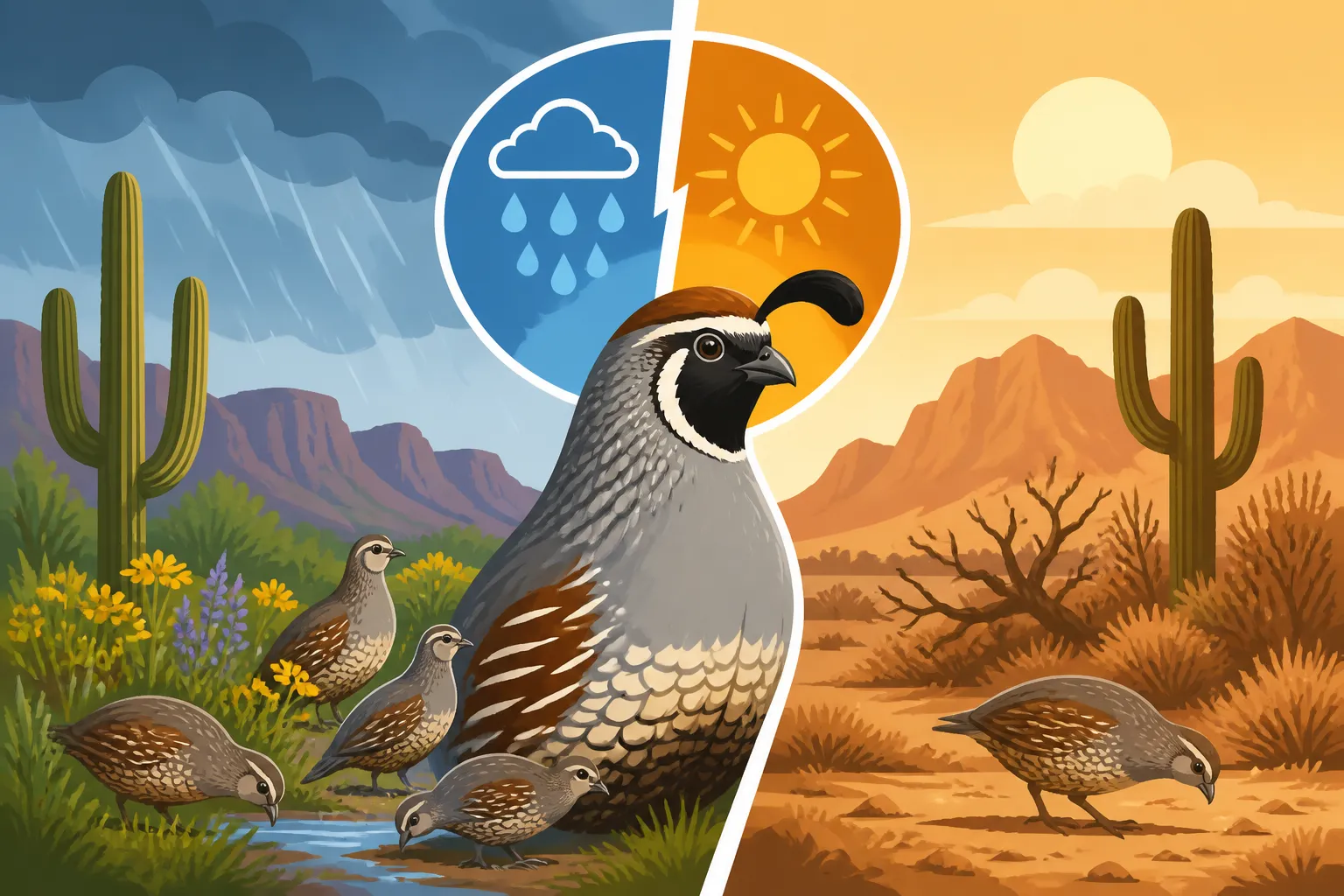
When sufficient rain falls, especially during key periods, it triggers a botanical explosion. Suddenly, the bare ground is carpeted with annual grasses and forbs. These plants quickly produce a bounty of seeds – tiny, energy-rich packages that are the primary food source for adult quail throughout the year, but especially during nesting and brood-rearing. Without ample rain, these crucial seed crops simply don't materialize in significant quantities. The desert remains barren, and quail are left scavenging for scarce resources.
But it's not just seeds. Lush vegetation from good rainfall also fuels an explosion in insect populations. Grasshoppers, beetles, ants, and countless other invertebrates thrive in a green desert. For newly hatched quail chicks, these insects are an indispensable source of protein. They’re essentially protein-packed capsules that tiny, rapidly growing quail need for development. Young chicks can't survive on seeds alone; they need that insect boost to get a strong start. If the rains fail, so do the insects, and chick survival plummets. It's a cruel reality, but one that desert wildlife lives by. This is why when you check a resource like GoHunt for unit conditions, rainfall reports are often a key indicator.
Water Sources for Chicks and Adults
Unlike some other desert creatures that can travel long distances for water, quail are less mobile, especially with young broods. While adult quail don't necessarily need open standing water every day, they do require a certain amount of moisture, which they often obtain directly from their diet. During wet years, the vegetation itself becomes a vital hydration source. Succulent leaves and green plant matter are full of moisture, reducing the birds' reliance on external water sources. This is a critical point that many hunters overlook. It's not just about seeing a stock tank; it's about the moisture within their food.
For tiny, vulnerable quail chicks, this dietary moisture is even more paramount. They have limited ability to regulate their body temperature and can quickly dehydrate. The tender, green shoots and juicy insects available after good rains provide much of the water they need to survive those first few critical weeks. Without it, even if they find some seeds, they simply can't thrive, leading to high mortality rates for entire broods. You can see how important water sources are for all game by reading about Water Sources That Concentrate Arizona Desert Game.
Nesting Cover and Predator Protection
Beyond food and water, rainfall dramatically improves nesting success and chick survival by providing essential cover. When the desert is green and vibrant, there's a dense understory of grasses, forbs, and even annual wildflowers. This thick vegetation offers myriad hiding places for quail hens to build their nests, camouflaging them from aerial predators like hawks and terrestrial threats like coyotes or snakes. A well-hidden nest is exponentially more likely to hatch successfully.
Once the chicks emerge, this same dense cover becomes their sanctuary. They can quickly disappear into the thickets, evading predators and staying out of sight during their most vulnerable stage. In drought years, the landscape is sparse and exposed. Nests are easier for predators to find, and young chicks have nowhere to hide. Every bush, every clump of grass, every patch of forbs becomes a crucial piece of the puzzle for survival. Think about the open ground of a poor rainfall year – a quail would stand out like a sore thumb.
The Seasonal Rhythms: Winter Rains vs. Monsoon Rains for Arizona Quail
Arizona's rainfall isn't uniform; it comes in distinct seasonal patterns, each playing a specific role in the life cycle of a quail. Understanding these rhythms is key to predicting a good season. It's not just if it rains, but when it rains, and how much.
The Critical Role of Winter Rains
For Arizona's quail, particularly Gambel's and Scaled quail, the winter rains are often the most crucial. These rains typically fall from October through March, and their timing is absolutely essential. Good, soaking winter rains lead to the germination and growth of annual plants. These plants will then mature in late winter and early spring, producing the abundant seed crops that adult quail rely on to build up their body condition for the breeding season. Hens need to be in peak physical shape to lay clutches of eggs and endure the demanding process of incubation.
Furthermore, these winter-grown annuals provide the initial wave of insects and green forage that become available just as the first broods are hatching in late spring. If winter is dry, the cupboard is bare come spring. There’s no fuel for the adults, and no protein-rich insects for the chicks. This is why biologists pay close attention to winter precipitation data, as it often sets the stage for the entire year's reproductive success. When you're looking at GoHunt or similar scouting tools, checking historical rainfall data for the winter months in a particular unit can give you a strong hint about the upcoming season for species like Gambel's Quail Across the Desert or Scaled Quail on Arizona Grassland.
Monsoon's Late Season Boost
While winter rains lay the foundation, the summer monsoon rains, typically from July to September, can deliver a powerful late-season boost to quail populations. These dramatic summer thunderstorms green up the desert again, sometimes creating a "second spring." For quail that have already had a successful first hatch, or for those that re-nest after an early failure, the monsoons can significantly improve the chances of a second, successful brood.
The fresh flush of green vegetation and the renewed insect activity provide vital resources for these late-hatching chicks. More food and better cover mean higher survival rates for these younger birds, adding significantly to the overall population numbers. These late broods might be smaller or hatch later in the season, but their contribution can be substantial, especially in years where the winter rains were moderate. The monsoons also ensure better carryover for the adult population into the following winter, as they can regain condition before the colder months.
Drought's Devastating Impact
When either or both of these critical rainfall periods fail, the effects on quail are devastating. Prolonged drought means:
- Scarcity of Food: Minimal seed production and very few insects, leading to malnourishment in adults and extreme difficulty for chicks to find the necessary protein and moisture.
- Lack of Cover: Sparse, dry vegetation leaves nests exposed and young chicks vulnerable to predators, drastically increasing mortality rates.
- Reduced Reproductive Effort: Hens, stressed by poor conditions, may lay smaller clutches, re-nest less frequently, or even forgo breeding altogether in severe drought years.
- Increased Vulnerability: Quail that are dehydrated and malnourished are more susceptible to disease and less able to evade predators.
The impact of drought can be so severe that it takes several good rainfall years for populations to fully rebound. Hunters often feel this directly, seeing very few birds, or only very small coveys, during and after drought periods. It's a stark reminder of how fragile life is in the desert. We see similar impacts on other species, as detailed in How Drought Affects Desert Deer Numbers.
Beyond Rainfall: Other Factors Influencing Quail Populations
While rainfall is undeniably the primary driver, it's not the only factor influencing the robust health of Arizona's quail. Several other elements work in concert with, or sometimes against, the effects of precipitation to shape the overall population numbers.
Habitat Quality and Land Management
Even with perfect rainfall, poor habitat quality can limit quail numbers. Factors like excessive grazing, which removes vital cover and seed-producing plants, or extensive human development that fragments and destroys habitat, can negate the benefits of good rain. Conversely, thoughtful land management practices can enhance quail habitat, making it more resilient to dry periods. Areas with a diverse mix of native grasses, shrubs, and forbs tend to hold more quail, as they offer varied food sources and escape cover.
Controlled burns, when applied strategically, can also stimulate new growth of beneficial plants, creating mosaic patterns of vegetation that quail thrive in. It's about maintaining a healthy, complex ecosystem that supports every stage of the quail's life cycle. Land management plans, often studied by experts like those at GoHunt, delve into these nuances. Understanding a Reading a Herd Unit Management Plan can give insights into broader species management that benefits quail.
Predator Pressure and Disease
When quail populations are robust, and habitat is abundant thanks to good rainfall, predator pressure is generally less of a concern. There's enough food and cover to support everyone, and quail have plenty of places to hide. However, during lean years caused by drought, predator pressure can become a much more significant factor. With less cover, quail are more exposed, and their reduced body condition makes them less able to escape. A higher percentage of a smaller population can be lost to predators like bobcats, coyotes, and various raptors.
Similarly, disease can sometimes impact quail, though it's less commonly cited as a primary driver of boom-and-bust cycles compared to rainfall. However, in stressed populations, especially during drought, birds may be more vulnerable to pathogens. Healthy, well-fed quail, on the other hand, are generally more resilient.
Hunting Pressure and Ethical Considerations
Arizona has very specific rules regarding Arizona Quail Bag Limits by Species and When Arizona Quail Season Opens. These regulations are carefully crafted to allow for sustainable hunting, recognizing the natural fluctuations in quail populations. In years following poor rainfall, the bag limits might be adjusted, or hunters might simply find fewer birds, leading to naturally reduced pressure. The ethics of hunting dictate that we respect these natural cycles.
Responsible hunters understand that their impact is usually minimal compared to environmental factors like rainfall, especially if they adhere to regulations. The seasons and bag limits are set to allow sufficient birds to survive and breed, ensuring that the population can rebound in favorable years. The challenge for hunters is often adjusting expectations. A good year might mean generous limits and plentiful opportunities, while a lean year calls for patience, lower expectations, and perhaps exploring other opportunities.
Here's a quick comparison of how winter vs. monsoon rains typically affect quail:
| Factor | Winter Rains (Oct-Mar) | Monsoon Rains (Jul-Sep) |
|---|---|---|
| Primary Impact | Foundation for primary breeding cycle, adult health | Boost for secondary hatches, late-season chick survival |
| Food Source | Annual seeds, critical for adult conditioning | Fresh green browse, insects for late broods |
| Nesting Cover | Establishes initial dense cover for nests | Renews cover for re-nesting and young chicks |
| Chick Protein | Fuels early insect blooms for first broods | Creates late insect blooms for secondary broods |
| Overall Population | Determines initial population potential | Adds significantly to overall numbers, carryover |
| Drought Impact | Severely limits initial breeding success | Compounds earlier drought, impacts late-season growth |
As you can see, both rainfall periods are essential, but they contribute in distinct ways to the overall health and abundance of Arizona's quail.
In conclusion, if you're planning an Arizona quail hunt, start by looking at the skies, or rather, the rainfall reports. The amount and timing of precipitation throughout the year, particularly the winter and monsoon seasons, are the most critical determinants of whether you'll experience a banner year or a tough grind. While other factors certainly play a role, the rain sets the stage for everything else. Keep an eye on those weather patterns, and you’ll have a much better idea of what to expect when Hunting Gambel's Quail Across the Desert or any other covey in the Grand Canyon State.
Disclaimer
This article is for general informational purposes only and does not constitute professional advice. Laws, prices and regulations vary by location and change over time. Consult a qualified professional for guidance on your specific situation.