Gambel’s Quail Across the Desert
The sun is barely kissing the eastern horizon, painting the Arizona desert in hues of orange and pink, and you're already out there, boots crunching on gravelly soil, ears straining for that unmistakable "chi-CA-go" call. But all too often, the sound is there, just out of reach, and the birds flush before you even see them. Hunting Gambel's quail in Arizona is an exhilarating challenge, a test of stealth and endurance against one of the desert's most iconic and elusive game birds. This guide aims to pull back the curtain on these speedy desert dwellers, giving you the insights and strategies you need to find more coveys and enjoy a more successful hunt.
Unraveling the Gambel's Quail Mystique: Where They Call Home
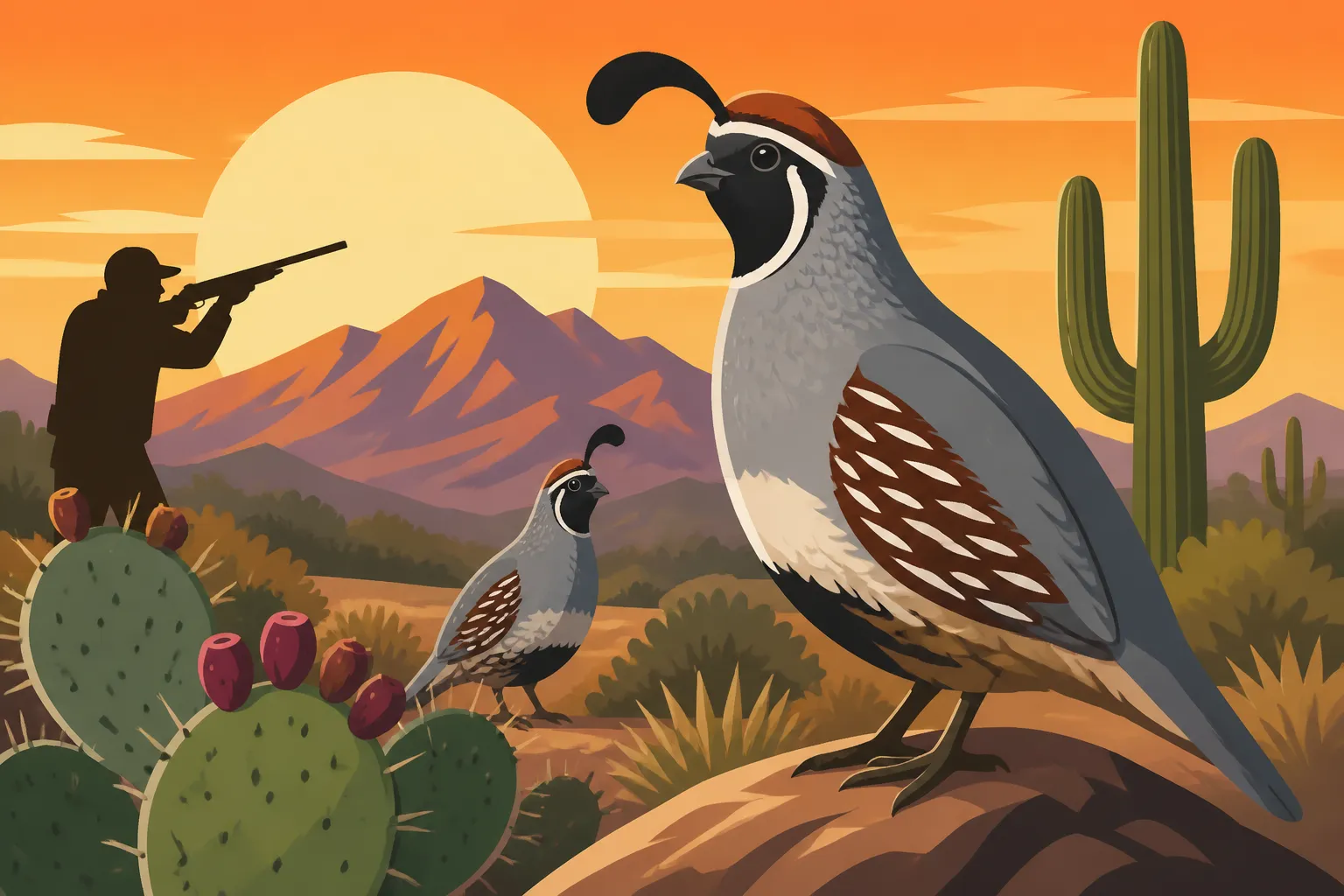
Arizona's Gambel's quail (scientific name: Callipepla gambelii) are true denizens of the desert, perfectly adapted to the arid landscapes that define much of our state. They're not just any quail; they're our quail, a symbol of the Sonoran and Mojave deserts. Understanding where they prefer to live is the first crucial step to finding them when the season opens. It’s not about aimlessly wandering through the cactus; it’s about knowing which specific elements draw them in.
Preferred Habitat and Cover Requirements
Gambel's quail thrive in diverse desert environments, but they have very specific preferences when it comes to cover. Think dense, thorny vegetation that offers both shade from the relentless Arizona sun and protection from aerial predators like hawks, as well as ground-dwelling threats like coyotes. Mesquite bosques, catclaw acacia thickets, and stands of prickly pear cactus are prime examples of the kind of thorny cover they rely on. These plants create a natural fortress, allowing quail to escape quickly by darting through the impenetrable branches. You'll often find them along washes and arroyos where this type of vegetation tends to grow more densely, providing vital escape routes and loafing cover.
It’s not just about the density, though; the structure matters. They need open ground for foraging, but immediate access to dense cover is non-negotiable. Imagine a covey feeding on fallen mesquite beans or fresh desert greens in a relatively open area, but with a thicket just a few yards away. That's their ideal setup. They’ll dart into that cover at the first sign of danger, running through it at incredible speeds or, if cornered, bursting into the air with a loud whirring of wings. This strategy is precisely what makes them so challenging, and so rewarding, to hunt. Their ability to seemingly vanish into thin air right before your eyes is a skill honed by generations of desert living.
The ground cover is equally important. Areas with a good mix of grasses and forbs provide food and further concealment. Overgrazed areas or places with sparse undergrowth generally won't hold large, healthy coveys because they lack the necessary food and protection. Successful Gambel's quail hunting often hinges on reading the landscape correctly, identifying these unique pockets of habitat where everything aligns for these birds. It’s a puzzle, and each piece – the thorny cover, the open feeding areas, the escape routes – has to fit just right.
The Crucial Role of Water Sources
In the desert, water is life, and for Gambel's quail, this couldn't be more true. While they are remarkably adept at surviving in arid conditions, they still require regular access to water, especially during the hotter parts of the year and when raising young. This makes dependable water sources absolute magnets for coveys. Think natural springs, seeps, stock tanks, and even man-made wildlife waters, often called "guzzlers." These locations become critical focal points for hunters because they offer reliable places to find birds.
Gambel's quail typically water in the morning and late afternoon, usually shortly after sunrise and then again before sunset. This is a pattern that experienced quail hunters learn to exploit. If you can locate a reliable water source, you've found a high-probability area. However, it’s not as simple as just sitting by the tank; quail are wary creatures. They'll approach water cautiously, often staging in nearby cover, sending out a scout bird or two before the entire covey moves in to drink. This brief window of vulnerability is what hunters hope to capitalize on.
The importance of water is magnified during dry years. When the desert sees less rainfall, the available water sources shrink, concentrating birds around the remaining ones. This can make finding them easier but also puts more pressure on the birds. In wetter years, with more ephemeral pools and widespread moisture, the birds might be more dispersed, making the hunt a wider-ranging affair. Using tools like topographical maps or online mapping platforms can help identify potential water sources within a unit. Understanding the seasonal variations in water availability is key to patterning quail, whether you're early season or late. Identifying Water Sources That Concentrate Arizona Desert Game is a critical skill for any Arizona hunter, especially for quail.
Geographic Distribution Across Arizona's Deserts
Gambel's quail are widely distributed throughout Arizona, primarily in the lower and middle elevations of the Sonoran and Mojave deserts. You'll find them across southern and central Arizona, extending up into the western parts of the state. From the saguaro-studded landscapes surrounding Tucson and Phoenix to the vast expanses of the Kofa Mountains and the western reaches near Lake Havasu, Gambel's quail are at home. They generally prefer elevations below 4,500 feet, avoiding the higher, cooler pine forests where other species like Mearns' quail might be found.
Units in areas like the Ironwood Forest National Monument, Cabeza Prieta National Wildlife Refuge, and various state trust lands are classic Gambel's country, though access and regulations vary, so always check before you go. The sheer scale of the Arizona desert means there's a lot of ground to cover, and local knowledge can be a huge advantage. Chatting with local biologists or other hunters can provide valuable insights into current population trends and hot spots. However, even without hyper-local knowledge, by understanding their habitat needs, you can effectively narrow down vast landscapes into manageable search areas.
Tools like GoHunt's mapping system can be incredibly useful for pinpointing specific areas that fit the habitat profile, allowing you to identify potential covey locations from your computer long before you set foot in the field. They can help you visualize areas with the right blend of washes, thorny cover, and proximity to water. While you might not find Gambel's quail in the Ponderosa pine forests near Flagstaff, you'll certainly encounter them along the periphery of those higher elevations, where the desert scrub transitions into foothills. Their distribution is vast, but their preferred zones are quite specific, making target-rich environments identifiable with the right planning and understanding.
Understanding Gambel's Quail Behavior and Life Cycle
Hunting Gambel's quail isn't just about finding them; it's about understanding them. These birds have a fascinating social structure and predictable daily routines that, once you learn to read, can significantly improve your chances of success. They're not solitary creatures, and their survival depends heavily on their communal living arrangements and finely tuned instincts.
Covey Dynamics and Social Structures
Gambel's quail are famously social birds, living in groups called coveys. These coveys can range in size from a handful of birds to several dozen, especially after a successful breeding season and before the hunting pressure of winter. The covey is their primary defense mechanism. More eyes and ears mean more chances to spot a predator, and when danger strikes, the covey explodes in a cacophony of wings and calls, disorienting threats and scattering in multiple directions. This sudden explosion is often what frustrates hunters, as multiple birds flush at once, making it hard to pick out a single target.
Throughout the day, a covey will stay relatively close together, moving as a unit. They communicate constantly with their distinctive "chi-CA-go" or "cha-cha-ka" calls, allowing them to keep track of each other, especially when moving through dense cover. If the covey gets separated, these calls become more frequent and insistent as they work to re-group. This is a critical piece of information for hunters: if you flush a covey and manage to take a bird or two, wait a few minutes and listen. Often, the remaining birds will begin calling to each other, giving away their new positions. This is known as "re-calling," and it's a prime opportunity for a follow-up shot.
The covey structure provides warmth in colder desert nights and collective protection. Even when dispersed after a flush, they have an innate desire to re-group, which is a testament to the strength of their social bonds. Understanding these dynamics means you're not just chasing individual birds, but a collective intelligence. This also speaks to the importance of ethical hunting, ensuring that enough birds remain to maintain the covey structure and allow for future breeding success.
Feeding Habits and Daily Routines
Gambel's quail are primarily ground foragers, with their diet consisting of a wide variety of seeds, leaves, berries, and insects. They are opportunistic eaters, adapting their diet to whatever is seasonally available. During the cooler months, seeds from mesquite, paloverde, and various grasses form a significant portion of their diet. In the spring and summer, they'll feast on fresh green shoots, fruits from prickly pear cactus, and a higher proportion of insects, especially when protein is needed for egg laying and chick development. This shift in diet can subtly influence where you find them.
Their daily routine is quite predictable, largely dictated by the sun and the need for food and water. They typically leave their roosting sites shortly after sunrise, moving towards feeding areas. They'll spend the morning scratching and pecking, moving slowly but steadily. As the sun climbs higher and temperatures begin to soar, especially in late fall and early winter, they’ll seek shade and loafing cover, becoming less active during the hottest part of the day. This mid-day lull can be a challenging time to find them actively moving.
In the late afternoon, as temperatures cool, they’ll embark on another feeding foray, often moving towards a water source before heading back to their roosting sites just before dark. This makes early morning and late afternoon the "golden hours" for quail hunting. During these times, birds are more active, more vocal, and generally easier to intercept. Planning your hunt around these routines is crucial; trying to hunt them aggressively during the midday heat is often a fruitless endeavor, burning out both you and your dogs. Observing these routines through pre-season scouting can give you a significant edge.
Breeding Season and Population Fluctuations
The breeding season for Gambel's quail typically begins in late spring, often triggered by the onset of monsoon rains which bring new growth and an abundance of food. Males become more vocal, calling to attract females and establish territories. Hens will lay clutches of 10-15 eggs, often in well-hidden nests at the base of dense shrubs or cactus. The incubation period is relatively short, around 21-23 days, and once hatched, the chicks are precocial, meaning they are active and able to follow their parents within hours.
The success of the breeding season has a direct and profound impact on quail populations and, consequently, on hunting prospects for the following fall. Years with good winter rainfall followed by timely monsoon rains generally lead to abundant food resources, higher nesting success, and robust chick survival, resulting in large coveys and excellent hunting. Conversely, prolonged drought can severely depress populations, leading to fewer and smaller coveys. This boom-and-bust cycle is a natural part of desert ecosystems and is something hunters must contend with.
Arizona Game and Fish Department (AZGFD) monitors these population fluctuations through various surveys, and their annual forecast often provides a good indication of what to expect. While you can't control the weather, you can certainly factor these population trends into your hunt planning. A great resource for understanding these trends and for detailed hunting information is GoHunt. Their platform offers harvest data and draw odds which, while primarily for big game, can offer indirect insights into overall wildlife health within a unit, especially when combined with your own scouting. Being aware of these cycles helps manage expectations and makes successful hunts even more rewarding when populations are high.
Strategic Scouting and Hunting Approaches
Finding Gambel's quail can feel like searching for needles in a desert haystack if you don't have a plan. These birds are quick, masters of camouflage, and experts at using the terrain to their advantage. A strategic approach, combining both pre-season planning and on-the-ground execution, is essential for consistent success.
Pre-Season Planning and E-Scouting for Quail
Long before your boots hit the desert floor, a significant portion of your quail hunt can and should happen from behind a screen. This is where e-scouting comes into its own. Start by identifying potential units using the Arizona Game and Fish Department’s hunt regulations. Once you have a unit or two in mind, dive into satellite imagery. Look for the "green ribbons" of washes and arroyos, which are often bordered by the dense mesquite, catclaw, and prickly pear that quail love. Pay close attention to areas where these washes intersect or where denser vegetation seems to congregate.
Additionally, identify permanent water sources. Stock tanks, guzzlers, and natural springs are prime areas to focus your efforts. Overlaying public land boundaries is critical, as much of Arizona is a patchwork of federal, state trust, and private lands. Tools like GoHunt or onX Hunt are invaluable for this, showing you exactly where you can legally hunt and helping you identify Reading a Land Ownership Layer Correctly to avoid trespassing. You can also use topographical maps to identify subtle changes in elevation, benches, or rolling hills that might offer strategic advantages for glassing or approaching coveys.
Consider the history of the unit. Has it historically produced good quail numbers? What's the precipitation like for the current year? These factors, though not always available at a hyper-local level, can help you prioritize your e-scouting efforts. Don't be afraid to drop pins on your digital map for potential covey locations, water sources, and even access points or potential camping spots. This detailed pre-season work drastically reduces wasted time and effort once you're in the field, allowing you to focus on hunting, not just searching.
On-the-Ground Tactics for Flushing Coveys
Once you're actually in the field, your e-scouting work should guide your initial approach. Head to those identified washes, water sources, and thickets. The most common tactic for hunting Gambel's quail is to simply walk them up. This means covering ground, systematically working through likely cover. However, it's not a mindless wander. Move deliberately, pausing frequently to listen for calls or the tell-tale rustle of birds in the brush. Quail are masters of holding tight, and sometimes the only way to get them to flush is to nearly step on them.
When moving, keep the wind in mind. While not as critical as for big game, Reading Wind on a Sky Island Stalk is important for all hunting, and quail might scent danger. Try to walk into the wind when possible, as it can help carry sound and scent to you, while also helping your dogs. When you hear calls or see sign, slow down and be prepared. The rush of wings can be startling, so ensure your gun is ready and you're mentally prepared for the shot. After the initial flush, mark where the birds scattered. Gambel's quail tend to fly relatively short distances before pitching down into new cover. Once they've settled, they'll often hold tighter than the initial covey, presenting opportunities for single birds.
It's tempting to rush in after the first few shots, but patience is your friend. Give the scattered birds a few minutes to settle, listen for re-calling, and then methodically work the area where they landed. This is often where a good bird dog truly shines, but even without one, slow, deliberate movement can turn up singles. The desert can be tough on boots and bodies, so plan your routes to minimize unnecessary backtracking and always carry enough water.
Working with Dogs and Ethical Shot Selection
Hunting Gambel's quail with a good bird dog is an experience unlike any other. A well-trained pointing or flushing dog will cover significantly more ground than a human, efficiently locate coveys, and help retrieve downed birds in dense cover. Dogs will scent birds, point them up, and hold them long enough for you to get into position. The sheer joy of watching a dog work a covey, nose to the ground, tail wagging with excitement, is a reward in itself. However, hunting with dogs also adds a layer of responsibility. Ensure your dog is conditioned for the desert heat, has paw protection, and is well-hydrated. The desert is unforgiving, and a dog can overheat quickly.
Whether hunting with a dog or walking them up solo, ethical shot selection is paramount. Gambel's quail are relatively small birds, and using the right shotgun and ammunition is important for clean kills. Most hunters opt for a 12 or 20 gauge shotgun, typically with a modified or improved cylinder choke. Loads of 7.5 or 8 shot are common choices, offering a good pattern density for these fast-moving targets without over-penetrating. Shotguns, Ammunition, and Choke Choices provides more detail on this. Aim for clean, close-range shots. Avoid "sky-busting" or taking shots at birds too far away, which often results in wounded birds that are difficult to recover.
After a shot, immediately mark where the bird falls and retrieve it as quickly as possible. The desert cover can swallow a downed quail in an instant. If hunting with a dog, train them for reliable retrieves. If solo, use landmarks to pinpoint the fall. Lost birds are wasted birds, and our responsibility as hunters is to ensure every ethically taken animal is recovered. Always prioritize a clean kill and swift recovery as a testament to your respect for the game.
Essential Gear for a Successful Gambel's Quail Hunt
The Arizona desert is a beautiful but demanding environment. Heading out unprepared for a Gambel's quail hunt can quickly turn a fun outing into a miserable, even dangerous, experience. Having the right gear isn't about luxury; it's about safety, efficiency, and increasing your chances of success.
Shotguns, Ammunition, and Choke Choices
For Gambel's quail, quick-handling shotguns are preferred. Over-and-unders, side-by-sides, and semi-automatics are all popular choices. A 12 gauge is versatile and common, but many hunters opt for a lighter 20 gauge, or even a 28 gauge, especially when covering many miles. The lighter gauges can reduce fatigue over a long day of walking and still deliver plenty of punch for quail. The key is to find a shotgun that points naturally for you and that you can swing quickly on fast-flushing birds.
When it comes to ammunition, lead shot is generally legal for upland birds in Arizona. Shot sizes 7.5 or 8 are ideal. These smaller pellets provide a dense pattern, which is crucial for hitting fast-moving, relatively small birds, while still carrying enough energy for a clean kill at typical quail ranges (20-35 yards). Carry plenty of shells, as quail hunts can often involve multiple flushes and follow-up shots. A good rule of thumb is to carry more than you think you'll need.
Choke selection is also important. For Gambel's quail, which often flush close and scatter, an Improved Cylinder or Modified choke is a popular choice. These chokes provide a wider pattern, increasing your chances of hitting a bird in the chaos of a covey rise. Some hunters even run a Skeet or Cylinder choke in their first barrel for the initial close flush, paired with a Modified or Full choke in the second barrel for longer follow-up shots on singles. Experiment at the shooting range to see what patterns best with your shotgun and chosen ammunition.
Footwear, Hydration, and Field Carry Systems
Perhaps no piece of gear is more critical than your footwear. You'll be covering miles over uneven, rocky, and often thorny terrain. A sturdy, comfortable pair of hiking boots, broken in well before the hunt, is non-negotiable. Look for boots with good ankle support to prevent twists and turns on unpredictable ground, and a durable sole that can withstand sharp rocks and cactus spines. Many hunters choose boots with tough leather or synthetic uppers for added protection. Investing in Choosing Boots for Rocky Desert Ground is a smart move for any Arizona hunter.
Hydration is paramount in the desert. Even in the cooler months of fall and winter, you can quickly become dehydrated. Carry significantly more water than you think you’ll need. A hydration pack integrated into your vest or backpack is an excellent option, allowing you to drink hands-free. Plan for at least 1-2 liters per hour of walking, adjusting for temperature and exertion. Electrolyte supplements can also be beneficial.
For carrying your gear, a good upland vest or small backpack is essential. This needs to comfortably hold your ammunition, water, snacks, a first-aid kit, and most importantly, have a large game bag for your birds. Many vests also have specialized pockets for radios, GPS devices, and even a collar remote for dog handlers. Look for systems that distribute weight evenly and allow for unrestricted movement while swinging your shotgun. Blaze orange accents on your vest are also a good idea for safety, even though it's not strictly required for archery hunting, it’s a smart practice for upland bird seasons.
Navigation Tools and Emergency Preparedness
Getting lost in the vastness of the Arizona desert is a very real possibility, so reliable navigation tools are absolutely critical. While a traditional compass and paper map are always good to have as a backup, modern GPS units or smartphone apps (like GoHunt or onX Hunt) are invaluable. These tools allow you to pinpoint your exact location, track your movement, mark waypoints for covey flushes or vehicle parking, and most importantly, navigate back to your starting point. Make sure your device is fully charged and consider carrying a portable power bank. Download offline maps before you leave cell service, as many prime hunting areas have no signal.
Beyond navigation, a comprehensive emergency kit is essential. This should include:
- First-Aid Kit: Tailored for the desert, including provisions for cuts, scrapes, snake bites (though prevention is key, having a kit is a precaution), blisters, and cactus spine removal.
- Signaling Device: A whistle, mirror, or personal locator beacon (PLB) can be life-saving if you get lost or injured.
- Fire Starter: Matches, a lighter, or a ferro rod.
- Knife/Multi-tool: For various tasks.
- Headlamp/Flashlight: With extra batteries, in case you get caught out after dark.
- Extra Water and Snacks: Enough for an unexpected overnight stay.
Never hunt alone if possible, and always let someone know your exact hunting plans, including your unit, intended route, and expected return time. The desert can turn on you quickly, from sudden storms to unexpected injuries, so being prepared for the worst is part of being a responsible hunter. Remember, safety first, always.
Navigating Arizona's Gambel's Quail Regulations
Understanding and adhering to hunting regulations is not just about avoiding a citation; it's about respecting the game, ensuring sustainable populations for future generations, and maintaining the integrity of our hunting heritage. Arizona has specific rules for Gambel's quail, and staying informed is crucial.
Season Dates, Bag Limits, and Legal Shooting Hours
Arizona's Gambel's quail season typically opens in early October and runs through early February. The exact dates can shift slightly year to year, so always consult the most current Arizona Game and Fish Department (AZGFD) hunting regulations booklet. This annual publication is your definitive source for all legal hunting parameters. Many hunters eagerly await these dates, as they signal the start of one of Arizona's most exciting upland seasons. It's often a great opportunity to get out in the field before or after some of the big game hunts. You can check Arizona Quail Season Opening Dates for specific current information.
The daily bag limit for Gambel's quail is generally generous, allowing hunters to take a certain number of birds per day. This limit is set based on population assessments to ensure sustainable harvesting. There's also usually a possession limit, which dictates the maximum number of birds you can have in your possession at any given time (e.g., in your freezer at home). For example, it might be 15 birds daily with a 45-bird possession limit. Always verify these numbers in the official regulations.
Legal shooting hours for quail generally follow the standard for small game in Arizona: one-half hour before sunrise to sunset. This window allows for ethical shooting in good light conditions and aligns with the birds' most active feeding times. Hunting outside of these hours is illegal and unethical, as low light conditions make identification difficult and increase the risk of wounding birds. Planning your start and end times around these legal parameters is a standard part of responsible hunting.
Here's a generalized table of typical Arizona Quail Regulations (always verify with current AZGFD regulations):
| Regulation Type | Typical Arizona Standard |
|---|---|
| Season Dates | Early October – Early February (Check current AZGFD regulations for specific dates) |
| Daily Bag Limit | 15 Gambel's Quail (Combined with other quail species like Scaled or Mearns, if applicable) |
| Possession Limit | 45 Gambel's Quail |
| Shooting Hours | One-half hour before sunrise to sunset |
| License Required | Valid Arizona Hunting License, plus an Upland Bird Stamp (if applicable) |
| Lead Shot | Generally legal for upland birds on most lands (verify for specific areas/refuges) |
| Blaze Orange | Not legally required for small game, but highly recommended for safety |
Licensing Requirements and Public Land Access
To hunt Gambel's quail in Arizona, you'll need a valid Arizona hunting license. If you're a resident, this is typically an annual license. Nonresidents also need an Arizona hunting license, which can be purchased for various durations. In addition to the base hunting license, an Arizona Migratory Bird Stamp may be required, depending on the specific regulations for upland birds that year. Always check the current regulations to ensure you have all the necessary stamps and endorsements. These licenses and stamps directly fund wildlife conservation efforts, so they are a vital part of protecting the very resources we enjoy.
Arizona offers vast amounts of public land for hunting, including Bureau of Land Management (BLM) land and National Forests. Generally, these lands are open to hunting with a valid license, provided you follow all regulations. However, there are nuances. BLM and Forest Ground Across Arizona Needs No Permit, but you should always confirm. State Trust Lands, which comprise a significant portion of Arizona, require a State Trust Land permit, though your valid hunting license often serves this purpose for hunting specific game. Arizona State Trust Land Needs a Permit, and Your License Counts explains this in more detail. National Parks and certain developed recreation areas are typically closed to hunting, so it's critical to know your boundaries.
The best way to ensure you're on legal hunting ground is to use a reliable mapping app like GoHunt or onX Hunt. These apps clearly display land ownership boundaries, allowing you to confidently navigate the mixed-ownership landscapes of Arizona. Always be mindful of private property, which can be intermingled with public land. Trespassing, even accidentally, is a serious offense. Respect all posted signs and boundaries, and if in doubt, err on the side of caution. Knowing Reading an Arizona Unit Boundary Before You Apply is fundamental to responsible hunting in Arizona.
Ethical Hunting Practices and Respect for the Resource
Ethical hunting goes far beyond simply following the law. It encompasses a broader respect for the animal, the land, and fellow hunters. For Gambel's quail, this means practicing good sportsmanship, making clean shots, and ensuring full recovery of downed birds. As discussed, lost birds are a waste, and a responsible hunter will do everything in their power to recover every bird taken. This might mean pausing a hunt to search thoroughly, or relying on a well-trained dog.
Another aspect of ethical hunting is mindful interaction with other outdoor users. The desert is a shared space, used by hikers, campers, bird watchers, and other recreationalists. Be courteous, and always maintain a safe distance from non-hunters. When you encounter others, keep your firearm pointed in a safe direction and consider temporarily unloading it. Your actions reflect on the entire hunting community, so present yourself as a responsible and respectful individual.
Finally, leave no trace. Pack out everything you pack in, and perhaps even pick up any trash left by others. Dispose of spent shell casings properly. Maintaining clean and healthy hunting grounds benefits everyone and preserves the wild beauty of Arizona for generations to come. By practicing these principles, we not only ensure the longevity of our hunting traditions but also foster a positive image of hunting in the broader community.
Disclaimer
Please note: Hunting regulations and season dates are subject to change. Always consult the most current Arizona Game and Fish Department (AZGFD) official regulations booklet before planning or undertaking any hunting activity. This content is for informational purposes only and does not constitute legal advice or a substitute for official hunting regulations.