Arizona Turkey Hunting Units
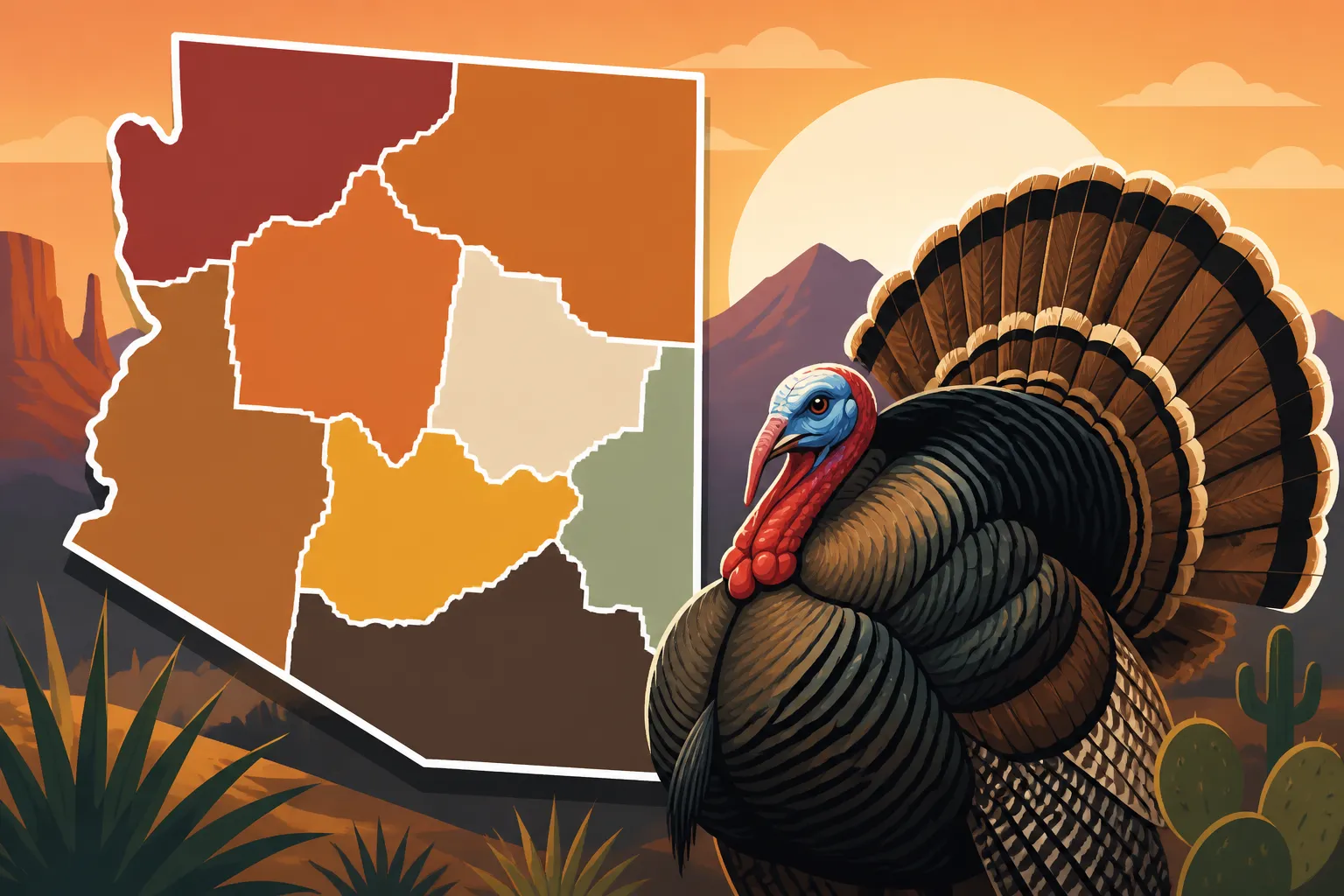
Trying to figure out which Arizona hunting units hold turkeys can feel like searching for a needle in a haystack, especially with two distinct species calling different parts of the state home. It’s not just about drawing a tag; it's about knowing where those birds actually live and thrive within the vast and varied landscapes of Arizona. This guide is going to walk you through how to pinpoint those prime turkey hunting units, understand what makes them special, and give you the best shot at hearing a gobble echo through the pines or oak-studded hills.
Understanding Arizona's Turkey Habitat and Units
Arizona is a truly unique state when it comes to turkey hunting, largely because we have two magnificent subspecies: the Merriam's and the Gould's. Each prefers a distinct type of habitat, which means your unit selection is inherently tied to the species you're hoping to chase. Knowing the difference and where to find them is your first step toward success.
Merriam's and Gould's Turkeys in Arizona
Let's talk turkeys. The Merriam's turkey is probably what most folks picture when they think of Western wild turkeys. These birds are stunning, with iridescent bronze and blue-green body feathers, and distinct creamy-white barred tail feathers. They absolutely thrive in the higher elevations, preferring the majestic ponderosa pine forests, mixed conifer stands, and even the pinyon-juniper woodlands that blanket much of Arizona's central and northern mountain ranges. Think of the cool, crisp air of the Mogollon Rim or the expansive White Mountains; that's prime Merriam's country. Their habitat selection directly dictates the units you'll find them in.
Then we have the Gould's turkey, a truly special bird, larger and darker than the Merriam's, with more defined white tips on their tail feathers and rump. These beauties are typically found in the "sky island" mountain ranges of southeastern Arizona, like the Huachucas, Chiricahuas, and Santa Ritas. Their preferred habitat is typically higher elevation oak woodlands, often mixed with pines and sycamores, usually near riparian areas. Gould's turkeys are only found in a few spots in the US, with Arizona being one of the primary ones, making them a highly sought-after hunt. This distinction is critical because if you apply for a unit in northern Arizona, you're chasing Merriam's, and if you're in the southeast, you're hoping for a Gould's. The hunting experience, the terrain, and even the calling strategies can differ significantly between the two. You can read more about Merriam's Turkey Through Arizona's High Country and Gould's Turkey in Southern Arizona.
Reading the Arizona Game and Fish Regulations
Navigating the Arizona Game and Fish Department's annual hunting regulations can feel like deciphering ancient texts, but it's absolutely essential for turkey hunting. Every year, they publish a detailed booklet (available online and in print) that outlines the units open for turkey hunting, the specific hunt numbers, season dates, bag limits, and any special restrictions.
Here's the deal: each unit will have a specific number (like Unit 1, Unit 27, etc.), and within those units, you'll find hunt codes for spring and fall turkey seasons. These codes specify the weapon (archery, shotgun/rimfire, or general), the species, and the exact dates. You need to pay close attention to which units are designated as general turkey units and which might have more limited opportunities or specific requirements. For instance, some units might only be open for a short spring archery season, while others offer longer shotgun hunts. Don't just skim it; sit down with a cup of coffee and really dig into the details for the units you're interested in. The regulations are the definitive source for what's legal and where you can go.
Mapping Out Prime Turkey Country
Once you've got a handle on the species and the general units, it’s time to get down to the nitty-gritty of mapping. This is where you really start to visualize the terrain and pinpoint potential turkey hotspots. Digital mapping tools, like those offered by GoHunt, have become invaluable for this process. They allow you to layer different geographical features, view land ownership, and identify prime turkey habitat from your computer or phone.
Look for areas within your chosen unit that have a good mix of mature timber (especially pines for Merriam's, or oaks for Gould's), diverse topography with ridges and drainages, and importantly, proximity to water sources. Turkeys need roosting trees, feeding areas, and reliable water. On a map, this often translates to dark green patches indicating dense forest, alongside open meadows or clearings for feeding, and blue lines or symbols representing creeks, springs, or stock tanks. Identifying these features on a map before you even step foot in the field can save you countless hours of unproductive scouting. It's about working smarter, not harder, to narrow down your focus within those large Arizona units.
Key Factors for Choosing an Arizona Turkey Unit
Choosing the right turkey hunting unit in Arizona isn't just about throwing a dart at a map. It involves a strategic assessment of several key factors, from elevation and habitat to public access and water availability. Each element plays a crucial role in determining whether a unit will hold birds and offer you a quality hunting experience.
Elevation and Habitat Suitability
Arizona's elevation changes dramatically, and with it, the vegetation. Turkeys, especially Merriam's, are highly dependent on specific forest types. For Merriam's, you're typically looking for elevations ranging from about 5,000 to 9,000 feet. This elevation band is where you'll find extensive ponderosa pine forests, often mixed with firs, spruces, and aspens. These majestic trees provide crucial roosting cover, foraging opportunities for seeds and insects, and thermal protection. If you're looking at a unit map, identify areas with large concentrations of these conifer forests. South-facing slopes can sometimes warm up earlier in the spring, leading to quicker green-up and insect activity, which can be attractive to turkeys.
For Gould's turkeys, the elevation can be similar, but the habitat shifts to dense oak woodlands, often above 4,500 feet, within the "sky island" mountain ranges. These areas are characterized by robust oak trees, often interspersed with pines, junipers, and other mixed conifers. The acorn crops from the oaks are a vital food source for Gould's. Understanding these subtle yet critical habitat differences is paramount. Scouting areas within a unit that deviate from these preferred habitats is often less productive.
Public Land Access and Pressure
Let's be real: most of us are hunting public land, and public land often means other hunters. Arizona has a vast amount of public land, including National Forests and Bureau of Land Management (BLM) acreage, but not all of it is equally accessible or holds the same density of turkeys. You might find a promising-looking unit on paper, only to discover that the most accessible areas are pounded with pressure during the season.
When evaluating units, consider how easily you can get away from roads and popular trailheads. Look for areas requiring a bit more effort to reach—longer hikes, steeper terrain, or areas with less obvious vehicle access. These spots are often where the less-pressured birds hang out. Tools like GoHunt can display public land boundaries and even popular access points, helping you identify these potential sanctuaries. While some high-pressure units might still hold birds, finding success often means venturing deeper or getting creative with your approach. Remember, turkeys have keen senses, and they learn quickly how to avoid human activity. Exploring Units With the Highest Public Land Percentage might lead you to more solitude. Sometimes, choosing a unit with slightly lower bird numbers but significantly less pressure can lead to a more rewarding hunt.
Water Sources and Turkey Concentration
Water is life, especially in the arid Arizona landscape, and it's an undeniable magnet for wild turkeys. Unlike deer or elk, turkeys need to drink regularly, often daily, especially during dry spells or warmer weather. Identifying reliable water sources within a unit is incredibly important for locating turkeys.
Look for perennial springs, seeps, stock tanks, and creeks on your maps. Turkeys will often roost near water sources, use them as morning gathering points, and feed in the surrounding areas. During dry seasons, these water points become even more critical, concentrating birds into predictable patterns. If you're physically scouting, look for turkey tracks, droppings, and dusting bowls around water. Sometimes, a unit might have excellent habitat, but if reliable water is scarce, so too might be the turkeys. Prioritize units or specific areas within units that offer consistent access to water. This applies whether you're chasing Merriam's in the high country or Gould's in the sky islands; water is always a major draw. You might want to explore Water Sources and Ethics in Arizona Desert Hunting for a broader understanding of this critical resource.
Top Arizona Turkey Hunting Units (General Overview)
While specific unit recommendations can change based on annual surveys and draw odds, there are certainly regions and types of units in Arizona that consistently offer good turkey hunting opportunities. It's helpful to break these down by the species you're pursuing, as their preferred environments are quite different.
Mogollon Rim and White Mountains Units
When it comes to Merriam's turkeys, the expansive forests of the Mogollon Rim and the White Mountains are legendary. These areas encompass numerous units that boast classic ponderosa pine and mixed conifer habitat, which Merriam's absolutely adore. Units generally located in the Coconino National Forest, Apache-Sitgreaves National Forests, and parts of the Tonto National Forest fall into this category.
Here, you'll find vast tracts of public land, deep canyons, and rolling hillsides covered in towering pines. Turkeys use the tall trees for roosting at night and spend their days foraging on the forest floor, in meadows, and along the edges of timber. Some popular units for Merriam's in these regions often include units in the 1, 3, 4, 5, 27, and 23 complex, though this can vary. These units are known for their picturesque scenery and often challenging terrain. Hunters here need to be prepared for covering a lot of ground, using locator calls effectively, and understanding how birds move through the diverse landscape. Success often comes to those who are patient, persistent, and willing to explore beyond the easily accessible areas. You can also gain insight into Apache-Sitgreaves National Forest Access or Coconino National Forest Access in Arizona to understand these units better.
Southeastern Arizona Sky Island Units
For those dreaming of a Gould's turkey, your focus shifts dramatically to the unique "sky island" mountain ranges of southeastern Arizona. These are isolated mountain ranges that rise dramatically from the surrounding desert, creating distinct pockets of high-elevation, moisture-rich habitat. The Coronado National Forest plays a significant role here, encompassing many of these ranges.
Units in this region that are known for Gould's turkeys might include areas like Unit 36A, 36B, 35A, 35B, and 29. These units feature rugged terrain, characterized by steep slopes, canyons, and dense oak woodlands interspersed with pines, sycamores, and other hardwoods. Hunting Gould's is a truly distinct experience. They often respond well to calling, but their tendency to be in extremely steep and brushy country makes closing the distance a real test of endurance and stealth. Access can be limited to certain forest roads, and hunters often find themselves hiking extensively. Finding water sources within these units is critical, as the desert surroundings make these islands of life even more precious to wildlife.
Lesser-Known Units and Overlooked Opportunities
It’s easy to get caught up in the buzz around the "top-tier" units, but don't overlook the potential in lesser-known or adjacent areas. Sometimes, a unit that might not show up at the very top of a harvest success report can still offer fantastic hunting, especially if it receives less pressure. This is where your detailed mapping and scouting come into play.
Consider units that border the traditionally high-producing areas. Turkeys don't read unit boundary lines; they move based on habitat, food, and water. A less-pressured unit might have pockets of equally good habitat, perhaps just not as extensive or as easily accessible. Also, think about units with a lower overall turkey population but with excellent, albeit smaller, patches of prime habitat. These "honey holes" can offer incredible hunting if you're willing to do the legwork to find them. The key is to look for the same habitat characteristics—pines, oaks, water, varied terrain—even in units that aren't household names among turkey hunters. Sometimes, a little extra effort in scouting and exploring can unlock a truly memorable hunt in an unexpected place.
Scouting and Researching Your Chosen Unit
Drawing a turkey tag is exciting, but the real work begins after you have it in hand. Effective scouting and research are what transform a tag into a successful hunt. This isn't just about showing up on opening morning; it's about understanding your chosen unit inside and out, long before the season begins.
Leveraging Online Resources and Draw Odds
In today's hunting world, online resources are a goldmine, and ignoring them would be a huge disservice to your efforts. The Arizona Game and Fish Department website is your primary source for annual hunt regulations, draw odds, and harvest reports. These reports are particularly insightful, showing how many tags were issued for each unit, the number of hunters who reported a harvest, and the overall success rate. While past success doesn't guarantee future results, it gives you a strong indication of a unit's potential.
Beyond the official channels, tools like GoHunt offer advanced mapping capabilities and often compile draw odds and harvest data in an easily digestible format. You can overlay satellite imagery with public land boundaries, identify potential water sources, and even look at terrain features like elevation and aspect, all from your computer. This E-Scouting phase is critical for narrowing down specific drainages, ridges, or sections within a large unit that hold the highest promise. You can identify potential roosting areas, travel corridors, and feeding grounds without ever setting foot on the ground. This saves time and effort, allowing you to focus your physical scouting on the most promising spots. Don't forget to check Where Arizona Publishes Unit Harvest Statistics for detailed reports.
Boots-on-the-Ground Scouting Strategies
While e-scouting is an incredible tool, nothing beats "boots-on-the-ground" scouting. It's the only way to truly confirm what you see on a map and discover the subtle nuances of the terrain that digital imagery can't convey. Ideally, you want to scout your unit weeks or even months before the season opens.
During scouting trips, look for direct turkey sign: tracks in dusty roads or near water, droppings (larger and more coiled for gobblers, more amorphous for hens), feathers (especially primary wing feathers under roost trees), and dusting bowls. Listen for gobbling at dawn and dusk, trying to pinpoint active roosting areas. Pay attention to food sources—what acorns are available, what grasses or insects are prevalent? Notice how turkeys might move between roosting, feeding, and watering areas. Understand the natural pinch points, funnels, and ridges they might use for travel. Even if you're scouting in the fall for a spring hunt, understanding the lay of the land, identifying access points, and finding water will be invaluable. Remember that E-Scouting an Arizona Unit Before the Season complements, but does not replace, this crucial step.
Understanding Hunt Success and Population Trends
When you're sifting through draw odds and harvest reports, it's important to interpret the data realistically. A high harvest success rate for a unit might indicate a healthy turkey population, but it could also mean the unit receives a lot of hunting pressure, or that the harvest numbers include birds taken in easily accessible areas that are quickly "shot out." Conversely, a lower success rate might mean tougher hunting, but could also indicate fewer hunters or a more challenging landscape, which could appeal to someone looking for solitude.
Also, consider population trends. Arizona Game and Fish biologists conduct surveys and track populations, and sometimes you can find this information in their annual reports or management plans. Factors like drought, wildfire, and predator numbers can all impact turkey populations year-to-year. A unit that was fantastic three years ago might not be as strong this year due to environmental factors. While this information isn't always readily available for every unit, paying attention to broader regional trends can help inform your decision-making. Don't just look at a single number; try to understand the story behind it.
| Feature | Merriam's Turkey | Gould's Turkey |
|---|---|---|
| Primary Habitat | Ponderosa pine, mixed conifer, pinyon-juniper forests | Oak woodlands, mixed conifer-oak forests |
| Elevation Range | 5,000-9,000 feet | 4,500-8,000 feet (often in "sky island" ranges) |
| Geographic Region | Central and Northern Arizona (Mogollon Rim, White Mtns) | Southeastern Arizona (Chiricahuas, Huachucas) |
| Plumage | Creamy-white tail feather tips, bronze/blue-green body | White-tipped tail feathers, darker overall body |
| Typical Terrain | Rolling hills, deep canyons, vast timber | Steep, rugged slopes, dense brush, isolated ranges |
| Food Sources | Seeds, insects, acorns, berries | Acorns, insects, pine nuts, grasses |
| Access Often | Extensive forest roads, some wilderness areas | More limited road access, significant hiking often required |
Disclaimer
This article is for general informational purposes only and does not constitute professional advice. Laws, prices and regulations vary by location and change over time. Consult a qualified professional for guidance on your specific situation.