Merriam’s Turkey Through Arizona’s High Country
When you dream of turkey hunting, images of sprawling oak bottoms or agricultural fields often come to mind. But here in Arizona, our Merriam's turkeys aren't loafing around the corn stubble; they're high in the mountains, challenging hunters with their elusive nature and the rugged terrain they call home. This guide is going to dive deep into what makes hunting Merriam's in Arizona's stunning high country a unique and rewarding experience, covering everything from their habitat to the tactics you'll need to punch your tag.
Understanding Merriam's Turkey Habitat in Arizona's High Country
Arizona's high country is a mosaic of different forest types, but for Merriam's turkeys, there's a definite preference. These birds aren't found just anywhere; they thrive in specific environments that provide both food and protection from predators, often miles from the nearest paved road. Understanding these habitats is your first step to locating these magnificent birds.
The Ponderosa Pine and Mixed Conifer Connection
Merriam's turkeys are deeply tied to our towering ponderosa pine forests and the mixed conifer stands that dot the higher elevations. Think about the cool, crisp air of the Mogollon Rim or the White Mountains—that's prime Merriam's country. These areas provide the perfect blend of mature trees for roosting, open understories for foraging, and dense pockets of cover for escape. You'll often find them utilizing areas where ponderosas transition into firs, aspens, or oaks, creating a diverse food source. The ponderosa seeds, acorns from scrub oaks, and various berries found in these mixed forests are critical components of their diet, shifting with the seasons. They aren't just in the biggest trees either; often the younger, denser stands offer excellent thermal cover and protection. Apache-Sitgreaves National Forest Access and Coconino National Forest Access in Arizona are two prime examples of where you'll encounter these birds in their preferred ponderosa and mixed conifer habitat.
Elevation and Seasonal Movements
Arizona's high country isn't static, and neither are its turkeys. Their movements are largely dictated by elevation and the changing seasons, driven by food availability and weather. In the spring, when our turkey hunts typically occur, they're often found at mid-elevations, congregating in areas where the snow has melted and new green growth is emerging. As the summer progresses, and especially if dry conditions persist, they might move higher in search of cooler temperatures and more consistent water sources. Conversely, with the first heavy snows of fall, they'll often drop to lower, more accessible elevations where forage is still available and the snow isn't quite as deep. Understanding these vertical migrations is crucial for a successful hunt. This means scouting the various elevation bands of a unit, sometimes shifting your focus by hundreds or even thousands of feet over the course of a season or even a single hunt.
Water Sources and Roosting Areas
Water is life in Arizona, and that's just as true for our Merriam's turkeys. While they can get some moisture from green vegetation and dew, reliable water sources like seeps, springs, stock tanks, and even temporary puddles after a rain are magnets for turkeys. Knowing where these water points are, especially in drier periods, can give you a significant advantage. Finding Water in Arizona's Dry Country is a crucial skill for any hunter here. Turkeys will often roost relatively close to water, or at least in a place they can fly down to a water source shortly after dawn. Roosting areas themselves are typically mature, tall trees with strong horizontal limbs that offer security and an elevated vantage point. These are usually the tallest trees in a given area, often on a ridge or overlooking a canyon, giving the birds a clear view of their surroundings as they fly up to roost and fly down in the morning. Identifying these specific trees or groves, often by finding droppings or feathers beneath them, is a key piece of information for planning your morning approach.
Distinctive Traits of Arizona's Merriam's Turkeys
Merriam's turkeys, a subspecies of wild turkey, are unique birds with specific behaviors and physical characteristics that distinguish them from their eastern, Florida, or Rio Grande cousins. Understanding these traits is vital for any hunter hoping to connect with one in Arizona's rugged high country. They're not just a different shade of brown; their habits are truly shaped by the mountain environments they inhabit.
Appearance and Vocalizations
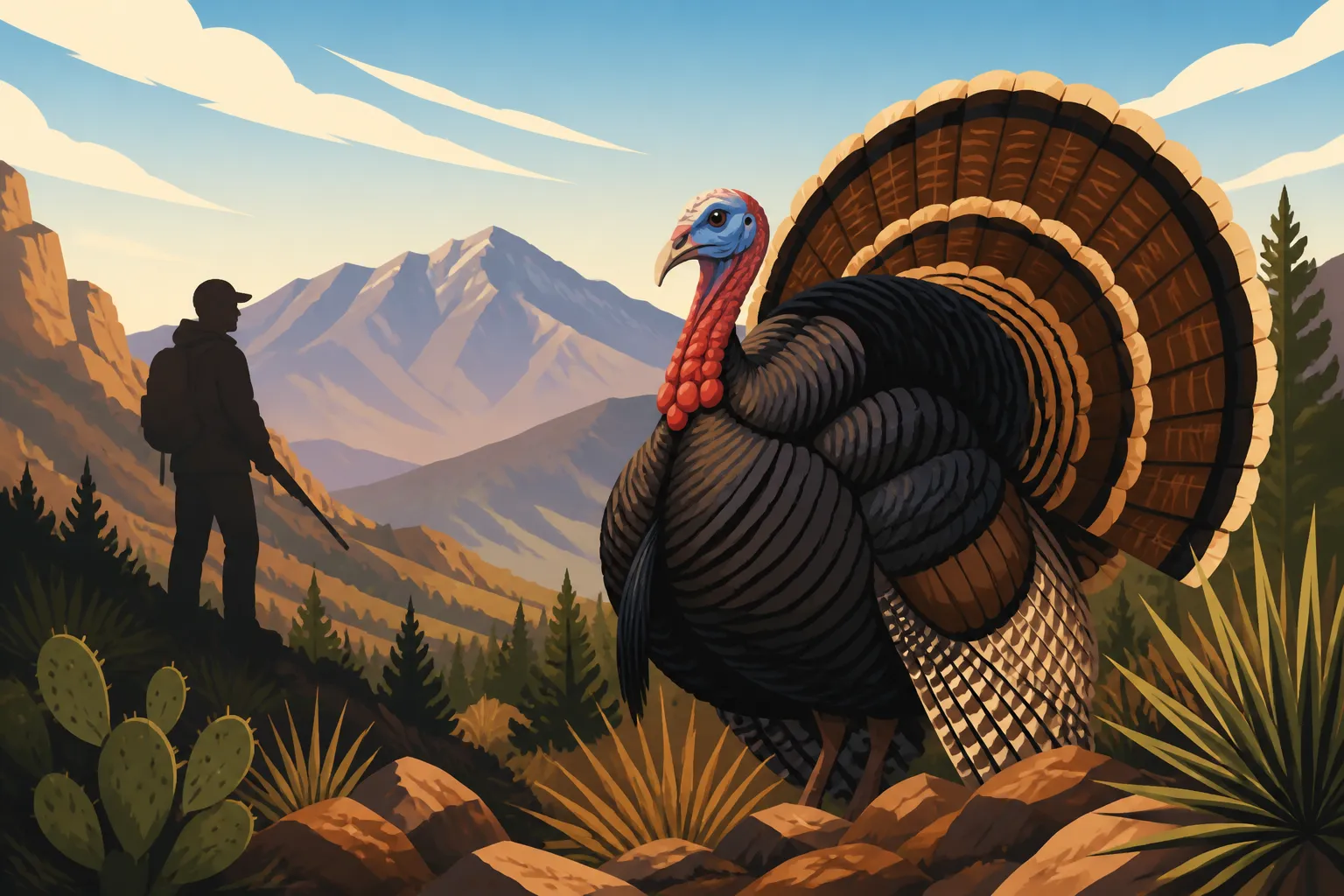
Visually, Merriam's turkeys are often described as the "mountain ghost" due to their striking white and buff-colored feathers on the lower back and tail fan, contrasting sharply with the darker body feathers. Their primary wing feathers are also distinctly barred with white, creating a light patch on the wings when they're fanned or in flight. This lighter coloration helps them blend into the snowy and sun-dappled environments of the high country. When it comes to vocalizations, Merriam's gobblers possess the same range of calls as other wild turkeys: yelps, clucks, purrs, and the classic gobble. However, experienced hunters often note that Merriam's gobbles can sometimes sound a bit more "canned" or less resonant than those of Easterns, possibly due to the thinner mountain air or different acoustic properties of their habitat. They can also be notoriously quiet at times, especially when pressured, which adds to the challenge. Don't expect them to gobble on the roost indefinitely; sometimes a single morning gobble is all you get to pinpoint their location.
Flock Dynamics and Daily Routine
Merriam's turkeys often live in smaller, more dispersed flocks compared to the large groups you might see in agricultural regions. This is a direct adaptation to their mountainous environment, where food resources can be more spread out. During the spring breeding season, gobblers will separate from the winter flocks and establish territories, often accompanied by a small harem of hens. Their daily routine is fairly consistent: fly down from the roost shortly after daylight, hit a water source if available, then move into feeding areas throughout the morning, often working their way uphill or along benches as the day warms. Mid-day can see them loafing in shady areas or dusting, before they begin moving towards their evening roost, often stopping for a last drink of water. Understanding these patterns, and predicting where they'll be at various times of the day, is crucial. If you locate a roost tree, paying attention to their flight path off the roost can give you clues about their morning travel routes. This is where detailed topographic maps, like those available on platforms like GoHunt, become invaluable for planning your approach.
Adapting to Mountain Terrain
The high country environment fundamentally shapes the Merriam's turkey's behavior. Unlike their flatland relatives, these birds are expert navigators of steep slopes, dense timber, and rocky outcrops. They are incredibly agile, capable of scaling inclines with surprising speed and using terrain features to their advantage, disappearing over a ridge or into a wash in seconds. This means hunters need to be physically prepared for challenging hikes and be ready to adapt their strategies to the constantly changing contours of the land. When a gobbler sounds off, you might have to climb a thousand feet to get into position, and then descend another five hundred to intercept him. Their ability to utilize elevation changes for cover and escape makes them formidable prey. They are masters of using saddles, draws, and dense pockets of pines to move silently and unseen.
Effective Strategies for Hunting Merriam's in Arizona's High Country
Hunting Merriam's turkeys in Arizona's high country demands a different playbook than hunting other subspecies. The terrain, the sparse populations, and the birds' sometimes-skittish nature mean you need a blend of physical endurance, keen observation, and strategic calling. This isn't always a run-and-gun affair; sometimes it's about patience and stealth.
Pre-Season Scouting and E-Scouting Techniques
Success often hinges on what you do before the season even opens. Pre-season scouting, both physically and virtually, is paramount. Physically getting boots on the ground to locate roosting areas, feeding zones, water sources, and travel corridors is invaluable. Look for droppings, feathers, scratch marks in the dirt, and dust bowls. Pay attention to topography—turkeys will often use saddles and benches to travel, avoiding unnecessary climbs or descents. Scouting an Arizona Unit Before the February Deadline is a great time to be out there looking for sign.
E-scouting is equally powerful, especially when covering vast amounts of high-country terrain. Tools like GoHunt's mapping overlays can help you identify potential roosting ridges, dense timber patches, and water sources from your computer. Look for south-facing slopes that might melt out earlier in the spring, offering fresh forage. Identify areas of mixed conifer and ponderosa pine at suitable elevations. Pinpoint potential access points and areas that might hold less pressure. E-Scouting an Arizona Unit Before the Season can save you countless hours of walking in the wrong direction. Cross-reference satellite imagery with topographic maps to understand the lay of the land and how a turkey might move through it.
Calling Tactics for Arizona Merriam's
Merriam's turkeys can be responsive callers, but they can also be notoriously shy, especially after they've been pressured. The key is often moderation and realism. Start with soft tree yelps and clucks on the roost, waiting for the birds to fly down before getting more aggressive. A locator call, like an owl hoot or a crow call, can be effective for getting a shock gobble without giving away your exact position.
Once they're on the ground, a variety of calls can work. Box calls, slate calls, and diaphragms all have their place. Focus on realistic yelps, clucks, and purrs, mimicking a hen looking for a gobbler. Don't be afraid of silence; sometimes, the best call is no call at all, especially if you know a gobbler is heading your way. Setting up quickly and quietly in a good ambush position is often more important than continuous calling. If a gobbler hangs up, try subtle clucks and purrs, or even a soft "lost hen" assembly call. Remember, the goal isn't to bring the gobbler to you, but to bring him to an ethical shooting distance within your setup. Calling Bulls on Arizona's Mogollon Rim can offer some transferable insights on calling strategies in similar terrain.
Stalking and Ambush Approaches in Rugged Terrain
Merriam's are masters of their mountainous domain, and successful hunting often involves a combination of smart setup and calculated movement. If you hear a gobbler on the roost, your primary goal is to get as close as possible without being detected before he flies down. Use terrain features, draws, and dense timber to mask your approach. Once he's on the ground, find a natural ambush point with good cover and clear shooting lanes. Setting up where he expects the hen to be, such as a slight rise or a clearing, can be highly effective.
Stalking a turkey in the high country is incredibly challenging but can be necessary, especially if birds are quiet or hung up. This requires extreme stealth, utilizing every fold in the terrain, every tree, and every bush for cover. Move slowly, deliberately, and always be aware of the wind, as turkeys have an excellent sense of hearing and vision. You might have to climb hundreds of feet to get above a gobbler, then work your way down to intercept him. Often, the best "stalk" is a patient sit. If you locate birds in an open area, rather than charging in, consider circling widely to get ahead of them or setting up on a natural travel route you've identified through scouting. This patience, combined with smart use of the landscape, is a key to success.
Arizona Turkey Season Overview and Key Regulations
Arizona offers fantastic turkey hunting opportunities, but like all big game pursuits here, it comes with specific seasons, draw requirements, and regulations. It's crucial to understand these rules to ensure a legal and ethical hunt.
General Season Structure and Drawing Opportunities
Arizona's turkey seasons primarily occur in the spring, usually beginning in late April or early May, and sometimes extending into early June depending on the hunt area. There are often fall turkey seasons as well, typically in October. These seasons are managed through a limited-entry draw system for spring hunts, meaning you'll need to apply for a tag. Fall hunts sometimes have over-the-counter options or specific draw requirements. The draw process in Arizona can be competitive, especially for prime spring gobbler tags in popular units. Arizona Turkey Season Dates in Spring and Arizona Fall Turkey Season Timing provide specific windows. It’s important to pay attention to the application deadlines and to apply for the specific hunt unit and weapon type (shotgun or archery) you desire. Using a resource like GoHunt can help you analyze draw odds and select units that align with your point accumulation and hunting goals.
Licensing Requirements and Tag Acquisition
Before you can even think about drawing a turkey tag, you'll need a valid Arizona hunting license. This is your baseline requirement for any hunting activity in the state. Once you have your license, you can apply for the limited-entry draw for turkey tags. If successful, you'll then purchase your turkey tag. Remember, regulations and fees are subject to change, so always check the current Arizona Game and Fish Department regulations booklet before planning your hunt. Non-residents face different pricing structures for licenses and tags, which is important to factor into your planning. Always ensure you have your physical license and tag with you while in the field, ready to be attached to your bird immediately upon harvest.
Ethical Considerations and Conservation
Hunting turkeys in Arizona's high country demands a strong commitment to ethical behavior and conservation. This means adhering strictly to bag limits (often one bearded turkey per year, though this can vary by hunt code), understanding legal shooting hours, and ensuring you can positively identify your target before taking a shot. Arizona Legal Shooting Hours for Big Game are critical to know. Practice your calling and shooting skills well before the season to ensure clean, ethical harvests. Beyond regulations, consider your impact on the land; pack out all trash, respect private land boundaries, and minimize disturbance to wildlife. Turkeys, like all game animals, are a public resource, and our actions as hunters directly influence their continued health and future hunting opportunities. Supporting conservation efforts, reporting violations, and setting a good example are all part of being a responsible Arizona turkey hunter.
Disclaimer
This article is for general informational purposes only and does not constitute professional advice. Laws, prices and regulations vary by location and change over time. Consult a qualified professional for guidance on your specific situation.