Why Arizona Treats the Two Bighorns Separately
If you've spent any time researching big game hunts in Arizona, you might have noticed something intriguing, perhaps even a bit confusing: the state often talks about two distinct types of bighorn sheep. Many hunters, especially those new to the Grand Canyon State, wonder why Arizona treats these magnificent animals — the Desert Bighorn and the Rocky Mountain Bighorn — as entirely separate species when it comes to hunting tags and management. This guide is here to unravel that mystery, explaining the biological reasons, the critical conservation implications, and most importantly, how this distinction impacts your chances and strategy for drawing one of Arizona's most coveted tags.
The Two Bighorn Species of Arizona: A Closer Look
Arizona is a truly diverse state, and that diversity extends to its bighorn sheep populations. While both are undeniably bighorns, they have evolved to thrive in very different environments and possess unique genetic lineages. Understanding these fundamental differences is the first step in appreciating why the Arizona Game and Fish Department (AZGFD) manages them separately. After all, you can't manage what you don't understand, and for conservation to be effective, it needs to be precise.
Desert Bighorn: The Icon of the Southwest Deserts
When most people picture an Arizona bighorn, they're likely imagining the Desert Bighorn (Ovis canadensis nelsoni). These animals are the quintessential symbol of the American Southwest's rugged, arid mountain ranges. They are masters of survival in extreme heat and scarcity, their very existence a testament to adaptation.
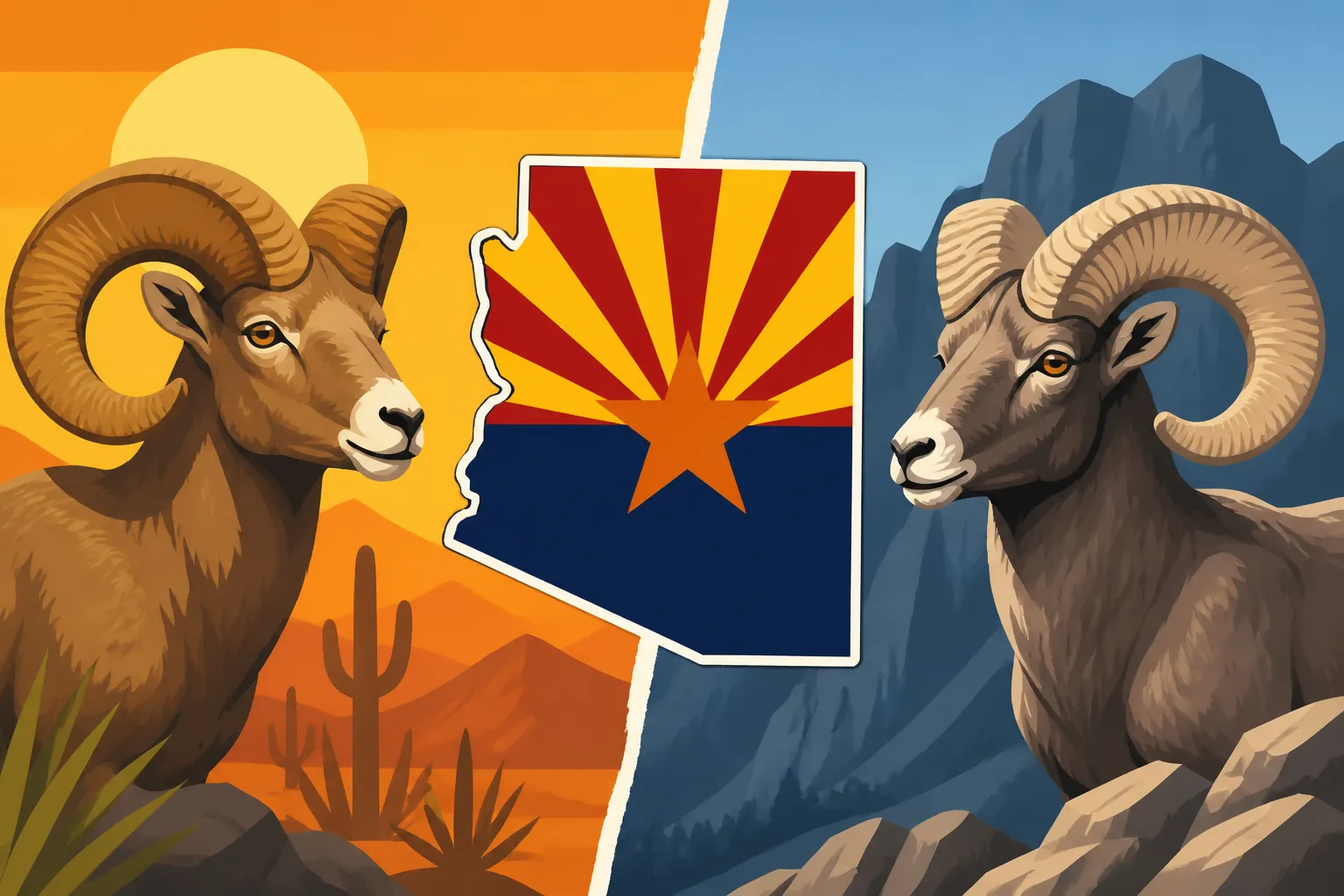
Desert Bighorns typically inhabit incredibly steep, rocky terrain in lower-elevation desert mountains, often characterized by saguaro cactus, palo verde trees, and creosote bush. Think of the mountains ringing Tucson, Phoenix, or those in the vast stretches of western Arizona – that's prime Desert Bighorn country. Their coat is usually a lighter, sandy brown, providing excellent camouflage against the desert rock and soil. They are incredibly hardy, capable of going long periods without water by extracting moisture from desert plants, though they still rely on precious water sources during the hottest months. These animals represent ancient populations that have been in Arizona for millennia, evolving alongside the desert itself. Their historical presence and resilience make them a true heritage species of the state.
Rocky Mountain Bighorn: An Adopted Arizonan
In contrast to their desert-adapted cousins, the Rocky Mountain Bighorn (Ovis canadensis canadensis) found in Arizona has a somewhat different story, largely tied to reintroduction efforts. While historically present in some areas, many of the current populations along Arizona's major river systems are the result of successful transplant programs. You can read more about these amazing conservation successes in articles like Transplant Programs That Rebuilt Herds.
These bighorns typically feature a darker brown coat, often with a more pronounced white rump patch, and their horns tend to have a slightly different curl pattern compared to their desert counterparts, sometimes even appearing heavier. In Arizona, you'll primarily find Rocky Mountain Bighorn Sheep inhabiting the rugged canyons and cliffs adjacent to the Colorado River and its major tributaries, such as the Salt and Verde Rivers, particularly where there's denser vegetation and access to more consistent water. Their habitat is still steep and challenging, but often incorporates more riparian elements and higher-elevation areas compared to the truly arid ranges of the Desert Bighorn. They are, in essence, an extension of the broader Rocky Mountain population found in states further north, adapted to a specific, more mesic Arizona niche.
Beyond Biology: Why the Distinction Matters for Management
The differences between these two bighorn species go far beyond their appearance or preferred hangouts; they are fundamental to how Arizona manages its wildlife resources. The AZGFD doesn't just draw a line in the sand for fun; there are profound ecological and conservation reasons behind treating these populations separately. This distinction is critical for ensuring the long-term health and viability of both unique bighorn populations.
Separate Populations, Separate Needs
Imagine trying to manage two distinct groups of people with vastly different health issues using the exact same medical treatment. It wouldn't work, right? The same principle applies to bighorn sheep. Each species, occupying its specific niche, faces unique challenges, threats, and resource requirements.
Desert Bighorns, for instance, are acutely sensitive to changes in water availability, disease vectors carried by domestic livestock, and habitat fragmentation caused by human development in the fragile desert ecosystems. Their populations are often smaller, more isolated, and rely on scattered water sources. Management for them might focus heavily on protecting existing water catchments, developing new ones, and mitigating disease transmission risks.
Rocky Mountain Bighorns, while still facing challenges like disease (Bighorn Sheep Disease Die-Offs Explained), might contend more with issues related to river corridor management, interactions with other wildlife in more timbered areas, or even the impacts of human recreation along the Colorado River. Their population dynamics, herd sizes, and dispersal patterns can be quite different. By treating them separately, AZGFD can allocate research, resources, and conservation efforts precisely where they are most needed, based on specific population data and threats. They develop unique Reading a Herd Unit Management Plan for each, allowing for tailored approaches to ensure robust populations.
Genetic Purity and Conservation Efforts
Maintaining genetic distinctiveness is a cornerstone of modern wildlife conservation. When different species or subspecies interbreed, it can lead to a phenomenon known as "genetic dilution," where unique adaptations that allow a species to thrive in its specific environment are lost. For example, the Desert Bighorn's incredible ability to conserve water and tolerate extreme heat is a result of thousands of years of natural selection in the Sonoran Desert. If they were to extensively hybridize with Rocky Mountain Bighorns, those hard-won genetic traits could be weakened or lost entirely.
Arizona's separate management strategy helps prevent this. It ensures that conservation programs aimed at strengthening one species don't inadvertently compromise the genetic integrity of the other. This dedication to genetic purity is vital for preserving the rich biodiversity of Arizona and maintaining healthy, resilient bighorn populations for future generations.
The Hunter's Perspective: How This Impacts Your Tag
For hunters, the separate classification of Arizona's bighorns isn't just a biological curiosity; it has very real, tangible consequences for how you apply, draw, and hunt these animals. It directly influences your strategy, your chances, and the rules you must follow if you are lucky enough to draw one of these rare and highly sought-after tags.
Species-Specific Draws and Once-in-a-Lifetime Tags
One of the most significant impacts of this distinction is on the draw system. Arizona runs separate draws for Desert Bighorn Sheep and Rocky Mountain Bighorn Sheep. This means you apply for one or the other, not a generic "bighorn" tag. Your bonus points accumulate independently for each species. This is important to remember because it means Why Arizona Bonus Points Are Species-Specific, and points for Desert Bighorn won't help you draw a Rocky Mountain Bighorn tag, and vice-versa.
Furthermore, Arizona has a "once-in-a-lifetime" rule for certain trophy species, and both bighorn sheep species fall under this umbrella. However, the critical detail here is that the "once-in-a-lifetime" applies to each species independently. This is a huge piece of information for aspiring bighorn hunters. As detailed in Arizona's Three Once-in-a-Lifetime Species, if you successfully draw and harvest a Desert Bighorn, you are still eligible to apply for a Rocky Mountain Bighorn tag in the future (and vice versa). This means that a truly dedicated hunter theoretically has two separate "once-in-a-lifetime" opportunities for bighorn in Arizona! What Happens After You Take an Arizona Bighorn explains the process after a successful harvest.
This dual opportunity provides a unique, albeit incredibly challenging, prospect for hunters aiming for the pinnacle of North American big game. Tools like GoHunt can be invaluable in navigating these draw intricacies, helping you analyze the separate Arizona Desert Bighorn Draw Odds and Rocky Mountain Bighorn odds to make the most informed application choices.
Hunt Units and Opportunities
Because the two species inhabit different ecological niches, their hunt units are also distinct. You won't find Desert Bighorns and Rocky Mountain Bighorns in the same hunt unit with a single tag. When you apply, you'll be selecting a unit specifically designated for Desert Bighorn or for Rocky Mountain Bighorn.
This geographic separation means that your scouting, research, and application strategy will be entirely different depending on which species you're pursuing. If you're dreaming of a Desert Bighorn, you'll be poring over maps of rugged, arid ranges in southern and western Arizona, looking for water sources and escape terrain. If a Rocky Mountain Bighorn is your goal, you'll likely focus on units along the Colorado River or other major waterways, often in more canyon-like environments. Using resources to accurately delineate these boundaries, like learning about Reading an Arizona Unit Boundary Before You Apply, is paramount.
Understanding these separate units and their specific bighorn populations allows hunters to concentrate their efforts and knowledge, increasing their chances of success, however slim those odds might be for these highly coveted tags.
Understanding Ram Curl and Regulations
Even with their distinct identities, both bighorn species are managed under stringent regulations designed for conservation. However, the nuances of these regulations, especially regarding harvest criteria, are applied specifically to ensure the health of their respective populations. This ensures that the unique biological characteristics and population dynamics of each bighorn type are taken into account.
Specific Harvest Criteria
Arizona Game and Fish Department sets very clear Ram Curl Requirements Arizona Enforces for legal harvest. These regulations are designed to ensure that only mature rams are taken, protecting younger animals for breeding and promoting healthy age structures within the herds. For instance, a ram might need to be "full curl" or meet specific age criteria to be legally harvested. While the general principle of targeting mature rams applies to both species, the specific interpretation or visual assessment of "full curl" can sometimes differ subtly due to the natural variation in horn growth patterns between Desert and Rocky Mountain bighorns.
Here's a simplified comparison of key considerations for both bighorn species in Arizona:
| Feature | Desert Bighorn Sheep | Rocky Mountain Bighorn Sheep |
|---|---|---|
| Scientific Name | Ovis canadensis nelsoni | Ovis canadensis canadensis |
| Primary Habitat | Arid, rugged mountain ranges; low elevation desert | River corridors, high canyons; more mesic areas |
| Typical Coat Color | Lighter, sandy brown | Darker brown, often with more distinct white rump |
| Key Threats | Water scarcity, disease from domestic animals | Disease, habitat changes in river systems |
| Draw Applications | Separate draw, points specific to Desert Bighorn | Separate draw, points specific to Rocky Mountain Bighorn |
| "Once-in-a-Lifetime" | Applies to this species; still eligible for RMS | Applies to this species; still eligible for DBS |
| Harvest Criteria | Full curl/age requirements, specific to DBS biology | Full curl/age requirements, specific to RMS biology |
| Conservation Focus | Water development, disease mitigation in arid lands | Riparian habitat protection, herd reintroductions |
This table highlights how, even with shared "bighorn" status, the management lens is finely tuned for each. It underscores the careful consideration AZGFD puts into its regulations, ensuring they align with the biological realities of each population. This is also why Which Arizona Tags You May Only Fill Once has special nuances for these two species.
Conservation Through Regulation
Ultimately, these distinct regulations serve a higher purpose: conservation. By understanding the specific needs, vulnerabilities, and population dynamics of Desert Bighorn and Rocky Mountain Bighorn separately, Arizona can implement targeted harvest quotas and rules that ensure hunting remains sustainable and contributes positively to the overall health of these iconic herds.
For instance, if a Desert Bighorn population in a particular unit is experiencing a temporary dip due to drought, AZGFD might adjust tag allocations for that specific unit and species without affecting a healthy Rocky Mountain Bighorn population elsewhere. This granular approach prevents overharvest of vulnerable populations and allows for more robust management of thriving ones. It's a testament to sound wildlife management, acknowledging that "bighorn" isn't a single, monolithic entity but rather two distinct wonders of the natural world, each deserving of its own carefully crafted path to survival and prosperity.
The separate classification isn't about making things complicated for hunters; it's about making management effective and preserving these magnificent animals for generations to come.
Disclaimer
This article is for general informational purposes only and does not constitute professional advice. Laws, prices and regulations vary by location and change over time. Consult a qualified professional for guidance on your specific situation.