Turkey Across Arizona’s High Country
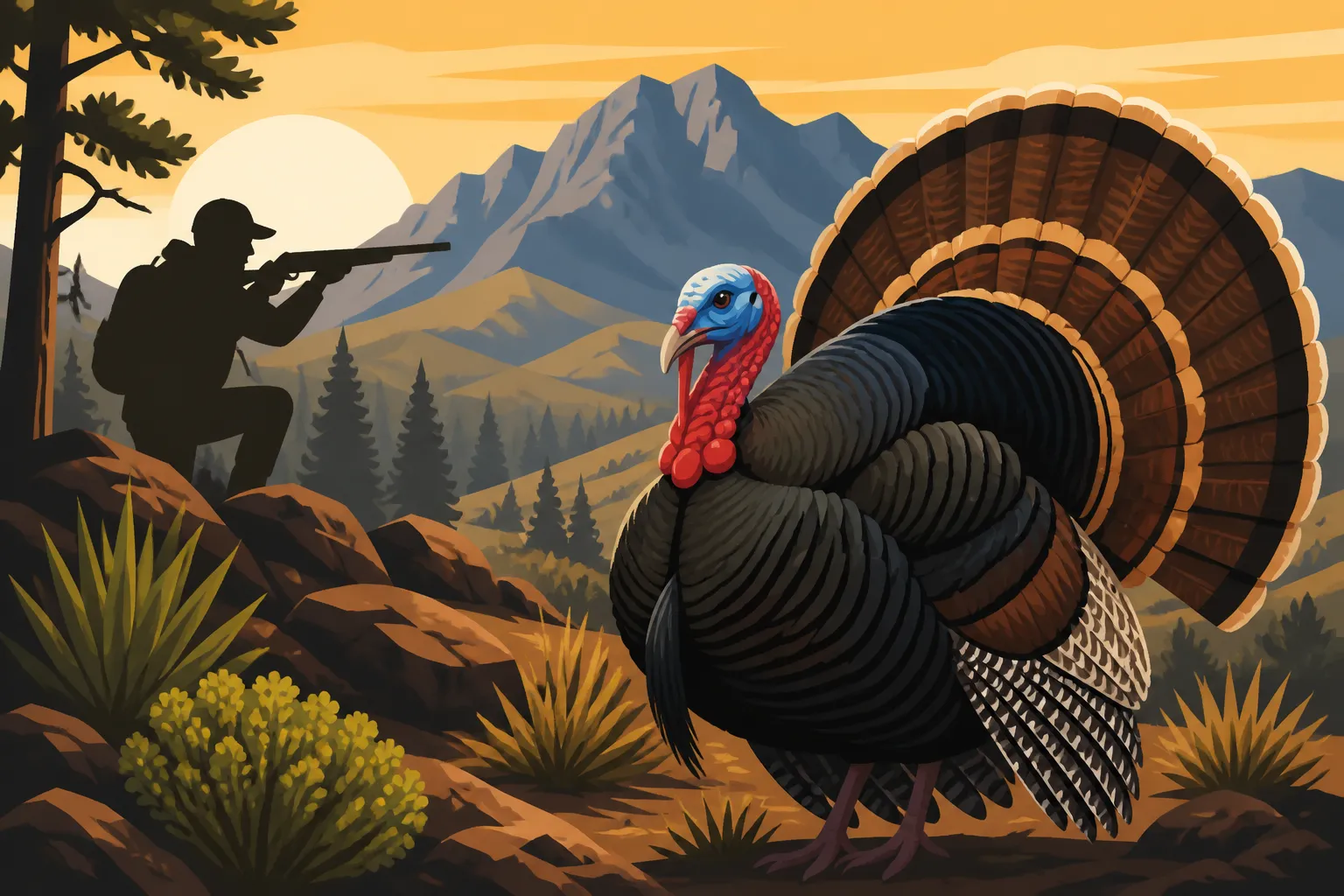
There’s nothing quite like the sound of a gobbler echoing through the Ponderosa pines as the Arizona sun kisses the horizon. It's a sound that stirs the soul of any turkey hunter, but chasing these wily birds in Arizona's high country presents its own unique set of challenges. This guide is dedicated to helping you unravel the mysteries of Arizona's turkey hunting, from understanding the distinct species to mastering the art of the call, ensuring you're well-prepared for your next adventure.
The Kings of Arizona's High Country: Merriam's and Gould's Turkeys
Arizona is a special place for turkey hunters because it hosts two distinct subspecies of wild turkey, each offering a unique hunting experience. While both are undeniably turkeys, understanding their differences is key to finding success and appreciating the unique challenges each presents.
Merriam's Turkey: The Classic Mountain Bird
When most people think of wild turkeys in Arizona, they're picturing the Merriam's. These magnificent birds are truly creatures of the high country, thriving in the expansive Ponderosa pine and mixed conifer forests that blanket much of Arizona's northern and eastern landscapes. You'll find them strutting their stuff on the Mogollon Rim, throughout the White Mountains, and even up on the Kaibab Plateau. Their feathers often have a striking iridescent blue-green sheen on the body, with buff-colored tips on the tail feathers and tail coverts, giving them a lighter appearance compared to their Eastern counterparts.
Hunting Merriam's can be incredibly rewarding, but it's rarely easy. These birds often live in more open timber than turkeys in other parts of the country, which means they can spot you from a long way off. Getting within range after they've flown down from the roost requires patience, stealth, and often, a bit of luck. Their gobble is a vibrant, resounding call that can travel far in the crisp mountain air, a sound that, once heard, is hard to forget. The frustration of having a bird "hang up" just out of range, gobbling his heart out but refusing to commit, is a rite of passage for Merriam's hunters. It's in those moments you learn the value of subtle movements, perfect camouflage, and knowing exactly when to stay put and when to make a calculated move.
Gould's Turkey: A Rare Southwestern Gem
For a truly unique turkey hunting experience in Arizona, you'll set your sights on the Gould's turkey. These birds are distinct and beautiful, characterized by their longer legs, larger body size, and noticeable white tips on their tail feathers and upper tail coverts, a stark contrast to the Merriam's. Gould's turkeys are primarily found in the "sky island" mountain ranges of southeastern Arizona, such as the Chiricahua, Huachuca, and Santa Rita mountains, where they prefer the oak woodlands and pine-oak transition zones. Their range is much more limited than the Merriam's, and consequently, securing a tag for a Gould's is a significantly more challenging endeavor, typically requiring participation in a special draw.
The limited availability and unique habitat make the Gould's turkey a highly coveted trophy for many hunters. While they can be vocal, especially during the spring breeding season, their tendency to inhabit steeper, more rugged terrain can make accessing them and closing the distance a true test of endurance and skill. The pursuit of a Gould's often means navigating thorny brush, steep canyons, and a landscape that is both breathtakingly beautiful and incredibly demanding. It's an experience that speaks to the heart of wilderness hunting, where every encounter feels like a hard-won victory.
Where the Gobblers Roam: Prime Arizona Turkey Habitat
Understanding where turkeys prefer to live and forage is paramount to locating them, and Arizona's varied high country offers specific ecosystems that these birds call home.
Ponderosa Pine and Mixed Conifer Forests
The quintessential Merriam's turkey habitat in Arizona is undeniably the vast Ponderosa pine and mixed conifer forests. These towering woodlands, often found at elevations ranging from 5,000 to 9,000 feet, provide everything a Merriam's turkey needs: sturdy trees for roosting, an abundance of insects, seeds, and acorns for foraging, and ample cover for nesting and evading predators. You'll find these prime habitats stretching across iconic areas like the Mogollon Rim, within the Apache-Sitgreaves National Forest Access and the Coconino National Forest Access in Arizona, and in the high country surrounding Flagstaff and the White Mountains.
During the spring, turkeys often concentrate in areas with good sun exposure, like south-facing slopes, which warm up faster and provide earlier green-up of forage. Access to reliable water sources, whether they are natural springs, stock tanks, or creeks, is also crucial, especially as the season progresses and temperatures rise. Hunters often find birds feeding in meadows or open parks surrounded by timber in the mornings and evenings, moving into denser timber during the midday heat. Learning to read the subtle nuances of these forests – identifying areas with good acorn crops, recent burns that bring up new growth, or well-used travel corridors – becomes an intuitive skill developed over years of chasing these birds.
Oak Woodlands and Sky Islands
While Merriam's turkeys dominate the larger pine forests, the unique "sky island" mountain ranges of southeastern Arizona are the domain of the Gould's turkey. These isolated mountain chains, rising dramatically from the surrounding desert lowlands, create distinct ecological zones, with oak woodlands being particularly important for Gould's. The Coronado National Forest and the Sky Islands is a prime example of such habitat, offering a mosaic of elevation bands that support these birds.
Gould's turkeys thrive in these dense oak and juniper woodlands, often intermixed with patches of pine, at elevations typically between 4,000 and 8,000 feet. The abundant acorns provide a critical food source, especially in the fall, while the thick understory offers excellent protection. Hunting these areas requires navigating extremely rugged and steep terrain, often characterized by dense brush that can make spotting birds and moving quietly a significant challenge. However, the reward of encountering a Gould's in its native, dramatic landscape is an unparalleled experience, one that speaks to the wildness and beauty of Arizona's diverse ecosystems.
Chasing Gobblers: Arizona's Turkey Seasons and Tags
Navigating Arizona's turkey seasons and tag system can feel a bit like deciphering a complex puzzle, but understanding the options available is your first step toward a successful hunt.
Spring and Fall Seasons: Understanding the Opportunities
Arizona offers two distinct turkey seasons: spring and fall, each with its own character and hunting methods. The spring season, running from late April through May, is by far the most popular among hunters. This is the breeding season, when gobblers are actively strutting, gobbling, and seeking hens, making them highly responsive to calling. Spring turkey hunting is an active, engaging pursuit, relying heavily on calling techniques to lure a gobbler into shotgun or bow range. Success in the spring often comes down to early morning roosting efforts, aggressive calling sequences, and patience to wait out a hung-up bird.
Fall turkey hunting, typically in October, offers a different experience. While gobblers might still respond to calls, particularly early in the season, the primary strategy often shifts to breaking up flocks and then calling individual birds back together. Fall turkeys are more focused on feeding to fatten up for winter, and less on breeding. This means you might find them in larger groups, often hens and jakes, making for excellent table fare. The fall hunt can be a great way to introduce new hunters to the sport, as success often hinges on good woodsmanship and patience rather than precise calling. It's also a fantastic opportunity to explore Arizona's high country during a beautiful time of year, often with fewer hunters afield than in the spring. You can get a detailed breakdown of the specific dates and units by reviewing the Arizona Turkey Season Windows in the current regulations.
Applying for a Tag: Draw vs. Over-the-Counter
Acquiring a turkey tag in Arizona depends on the species and season. For spring Merriam's turkey hunts, most opportunities are allocated through the Arizona Game and Fish Department's draw system. This means you submit an application, typically in the fall (usually October), hoping to draw a tag for a specific unit and season. The draw can be competitive for popular units, especially those known for trophy birds or high success rates. Websites like GoHunt provide invaluable data for analyzing draw odds and strategizing your applications, helping you make informed decisions on which units to apply for based on your bonus points and preferences. Using their detailed research platform can significantly increase your chances of drawing a tag that aligns with your hunting goals.
Conversely, fall Merriam's turkey tags are often available over-the-counter (OTC) for many units, meaning you can purchase them directly without going through a draw. This provides much more flexibility for hunters who can't plan months in advance or who want a more spontaneous hunting trip. For Gould's turkey, however, tags are always extremely limited and are exclusively issued through a highly competitive draw, usually in the spring for the following year's hunts. Because of their limited range and population, drawing a Gould's tag is often a once-in-a-lifetime opportunity for many hunters. Always check the Arizona Game and Fish Department's regulations well in advance of the season to confirm application deadlines and tag availability for both species and seasons.
Strategies for Success: Scouting and Calling Arizona Turkeys
Turkey hunting is as much an art as it is a science, combining meticulous preparation with on-the-fly decision-making. In Arizona's expansive high country, these skills are amplified.
Pre-Season Scouting: Locating Roosts and Strut Zones
Effective turkey hunting in Arizona truly begins long before opening day. Pre-season scouting is not just an advantage; it’s often a necessity. You need to identify potential roosting areas, feeding grounds, and strut zones where gobblers will be looking for hens. Start with digital tools: satellite imagery and topographical maps are your best friends. Platforms like GoHunt offer incredible mapping layers that allow you to analyze terrain, identify potential water sources, and pinpoint promising stands of Ponderosa or oak where birds might frequent. Look for areas where different habitat types meet, or where canyons provide natural travel corridors. This kind of E-Scouting an Arizona Unit Before the Season can save you countless hours of aimless walking.
Once you've narrowed down potential areas on a map, it's time for boots on the ground, usually a few weeks before the season. Your goal is to locate fresh turkey sign: tracks, droppings, scratch marks in the leaves where they’ve been foraging, and most importantly, feathers under large roost trees. Listen for gobbles at dawn or dusk, which can give away roost locations. Turkeys are creatures of habit, and often roost in the same general areas. However, be mindful not to disturb the birds too much during scouting, as you don't want to educate them before the season even begins. A quiet, observant approach is best. Identifying these key locations will drastically increase your chances of being in the right place at the right time on opening morning.
Mastering the Call: Decoys and Vocalizations
Calling is arguably the most crucial skill in spring turkey hunting. There's an endless array of calls out there – slate calls, box calls, diaphragm calls, mouth calls – and each has its place. The key is to learn to make realistic hen vocalizations: yelps, clucks, purrs, and cutts. Start simple, mastering a basic three-note yelp, and then expand your repertoire. The most common mistake hunters make is over-calling. Often, less is more. Listen to the bird; let him tell you what he wants. If he's gobbling aggressively, a few sharp cutts might entice him. If he’s hesitant, soft purrs and clucks might be all it takes to convince him to commit those last few yards.
Decoys can be incredibly effective, especially in Arizona's more open timber where visual cues are important. A single hen decoy or a jake and hen setup can draw an aggressive gobbler right into range. Place your decoys where they are visible from a distance but also where they draw the gobbler past your shooting lane. Always ensure you have a solid backdrop when setting up with decoys to prevent other hunters from mistaking you for a turkey. Remember, a gobbler's primary drive in spring is breeding, so appealing to that instinct, both audibly and visually, is often the winning ticket.
The Art of the Stalk and Ambush
While aggressive calling from a static position works wonders, sometimes turkeys in Arizona's high country require a different approach. The "hung-up" gobbler, strutting just out of range but refusing to come closer, is a common frustration. This is where the art of the stalk or a patient ambush comes into play. If a bird consistently hangs up, you might need to try a subtle, slow stalk to close the distance, using terrain features like ridges, washes, or dense vegetation for cover. This is a high-risk, high-reward maneuver, as turkeys have exceptional eyesight. Moving silently and deliberately is paramount.
Another tactic for a stubborn bird is to change your setup entirely. If a gobbler is committed to staying on a particular ridge, you might need to circle around and approach from a different direction, or even attempt to get ahead of him if you can predict his travel path. Alternatively, setting up an ambush point near a known travel corridor, water source, or dusting bowl, and waiting patiently, can be highly effective. This requires an understanding of turkey movement patterns and a whole lot of self-control. Knowing How Far to Stalk a Bedded Coues Buck can provide useful insights into applying similar stealth tactics to other wary game like turkeys. It's about blending into the environment and letting the woods work for you.
Essential Gear and Preparation for Arizona Turkey Hunts
Hunting Arizona's diverse high country for turkeys demands specific gear and a level of physical readiness that will significantly impact your success and comfort.
Weapon Choices: Shotguns, Bows, and Considerations
For most turkey hunters, a shotgun is the weapon of choice. A 12-gauge or 20-gauge, usually with a full or extra-full choke, is standard. The specific shot size is crucial; heavier loads like #4, #5, or even #6 shot are effective for turkeys, especially newer TSS (Tungsten Super Shot) loads that provide denser patterns and increased range. Patterning your shotgun before the season is non-negotiable. You need to know exactly how your gun, choke, and chosen ammunition perform at various distances (20, 30, 40 yards) to ensure ethical and clean kills. Modern turkey hunting shotguns often come with pistol grips and shorter barrels, designed for maneuverability in thick cover.
For those seeking an even greater challenge, bowhunting for turkeys is incredibly rewarding. While it significantly reduces your effective range, bringing a wary gobbler into close quarters (20-30 yards) with a bow is a supreme test of skill. Ensure your bow meets Arizona's minimum draw weight requirements for big game, which is Arizona Sets Bow Draw at 30 Pounds and Crossbows at 125 for vertical bows. Broadheads must also be wider than 7/8 inch. Mechanical broadheads are popular for turkeys due to their large cutting diameter, which helps anchor the bird quickly. Decoys are almost essential for bowhunting turkeys to distract the bird and provide a clear, static shot. Practice shooting from seated or kneeling positions, as this will be your most common shooting stance in the field.
Optics, Camouflage, and Comfort
Optics play a more significant role in turkey hunting than many realize, especially in Arizona's open high country. A good pair of binoculars (10×42 is often ideal) allows you to glass distant ridges, spot roosted birds at dawn, or identify subtle turkey movement without spooking them. While spotting scopes aren't typically necessary for turkey, high-quality binoculars are invaluable for confirming what you’re seeing.
Camouflage is critical. Full head-to-toe camouflage is advised, including face masks and gloves, as turkeys have incredibly sharp eyesight. Breakup patterns that mimic the local vegetation – shades of green, brown, and tan – are most effective. Sitting still and blending into your surroundings are more important than the specific pattern, but good camo helps. Don't forget an orange vest for when you're moving through the woods, especially during the fall season when other hunts may be occurring; just remember to remove it when you set up to call.
Comfortable, supportive boots are a must. You'll be covering a lot of ground, often on uneven, rocky, or steep terrain. Blisters can quickly ruin a hunt. Layering your clothing is also essential, as temperatures in Arizona's high country can fluctuate dramatically between chilly mornings, warm midday sun, and cool evenings. Dressing in layers, as explored in Layering for Rim Country Temperature Swings, allows you to adjust to changing conditions throughout the day.
Physical Fitness and Navigation
Turkey hunting in Arizona, particularly for Gould's in the sky islands or Merriam's in vast Ponderosa forests, is physically demanding. You'll often be hiking at elevation, up and down steep slopes, and covering several miles a day. Being in good physical condition will not only make the hunt more enjoyable but also increase your chances of success. Pre-season training that includes cardio and strength building for your legs will pay dividends.
Reliable navigation is non-negotiable. A GPS device or a smartphone with a robust mapping app (like those offered through GoHunt's platform) loaded with public and private land boundaries is essential. You need to know exactly where you are, where public land ends and private land begins (to avoid accidental trespass), and how to get back to your vehicle, especially when navigating dense timber or unfamiliar terrain. Understanding Reading an Arizona Unit Boundary Before You Apply is important for pre-hunt planning, and equally important for in-the-field navigation. Always carry a compass and a physical map as a backup, and know how to use them. Cell service can be spotty at best in many of Arizona's remote hunting units, so don't rely solely on your phone.
Ethical Hunting and Conservation in Arizona's Turkey Woods
Being a responsible hunter in Arizona's turkey woods extends beyond simply following the rules; it encompasses a commitment to ethical practices and conservation that ensures these magnificent birds thrive for generations to come.
Respecting the Resource and Fair Chase
Ethical hunting is about respecting the animal, the land, and fellow hunters. For turkeys, this means making every effort for a clean, humane kill. Only take shots when you are confident in your abilities and within your effective range. Never shoot at a "ground blur" or a turkey you cannot clearly identify; confirm it's a legal bird and you have a clear shot at the head and neck. In many areas, especially during spring, gobblers will come in with hens. Resist the urge to harvest a hen during spring, as they are crucial for reproduction and are typically not legal to take during this season.
Understanding and adhering to all local and state regulations is fundamental. This includes legal shooting hours, bag limits, and specific unit rules. Arizona's commitment to ethical hunting is so strong that the state offers courses like The Ethically Hunting Arizona Course Earns a Permanent Point for hunters, which delve into these principles in depth. Always be aware of your surroundings, especially if hunting on public land, and be courteous to other outdoor enthusiasts, including hikers, birdwatchers, and other hunters. Fair chase means giving the animal a reasonable chance, and it guides every decision we make in the field.
Tagging, Reporting, and Meat Care
Once you've successfully harvested a turkey, the responsibility shifts to proper tagging and care of the bird. In Arizona, you must immediately validate and attach your tag to the turkey in the field, as specified in the regulations. This ensures accountability and helps the Arizona Game and Fish Department manage populations effectively. Familiarize yourself with these tagging requirements before you even head out.
Reporting your harvest might also be required for certain hunts or species, so double-check the current regulations. This data is vital for wildlife biologists to monitor populations, assess harvest rates, and make informed management decisions for future seasons.
Finally, proper meat care is not only ethical but ensures you get to enjoy the delicious reward of your hunt. Turkeys, especially if harvested in warmer spring weather, need to be field dressed quickly to allow the carcass to cool. Get the bird out of the sun and into a cooler with ice as soon as possible. Plucking or skinning and butchering can be done later, but the initial cooling is crucial to prevent spoilage. In the desert heat, meat can spoil rapidly, so having a plan for cooling and transport, especially on a multi-day hunt, is absolutely essential.
Arizona's High Country Turkey Table
| Feature | Merriam's Turkey | Gould's Turkey |
|---|---|---|
| Appearance | Iridescent blue-green body, buff/white-tipped tail | Larger body, longer legs, distinct white-tipped tail |
| Primary Habitat | Ponderosa pine, mixed conifer forests | Oak woodlands, pine-oak transition zones, Sky Islands |
| Elevation | 5,000 – 9,000+ feet | 4,000 – 8,000 feet |
| Geographic Range | Northern & Eastern Arizona (Mogollon Rim, White Mtns) | Southeastern Arizona (Chiricahua, Huachuca Mtns) |
| Tag Type (Spring) | Primarily Draw-Only | Highly Competitive Draw-Only (Limited Tags) |
| Tag Type (Fall) | Often Over-the-Counter (OTC) | Not typically available in fall seasons |
| Hunting Difficulty | Challenging due to open timber visibility | Very challenging due to rugged terrain & limited tags |
| Conservation Status | Stable, managed through regular draw | Protected, limited harvest to ensure population health |
Disclaimer
Hunting carries inherent risks, including but not limited to those related to physical exertion, wildlife encounters, and firearm use. Always prioritize safety, adhere to all Arizona Game and Fish Department regulations, and respect private property. This guide is for informational purposes only and should not replace official regulations or professional guidance. Rules and seasons can change, so always consult the most current Arizona Game and Fish Department hunting regulations before planning any hunt.