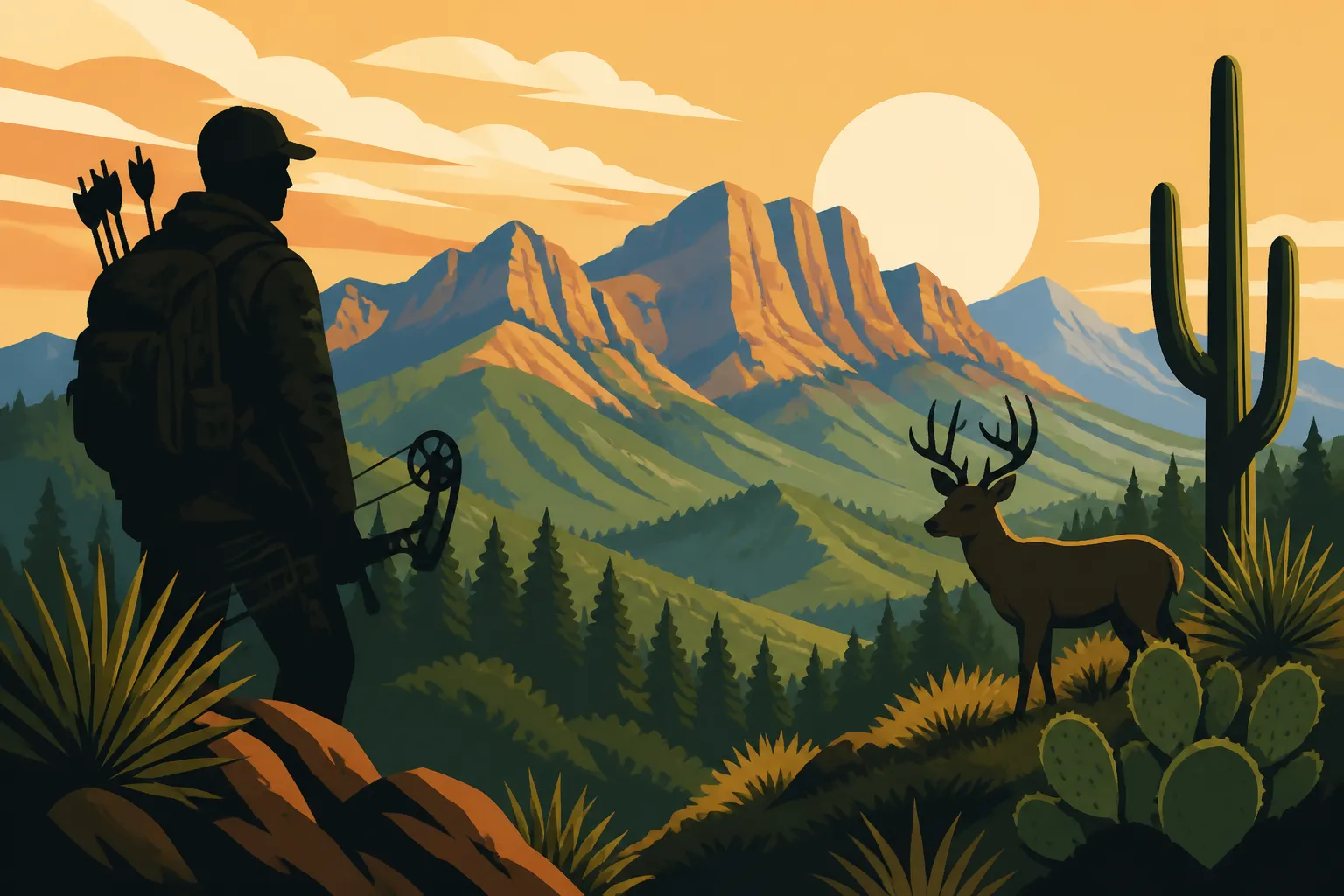
Coronado National Forest and the Sky Islands
Hunting the Arizona Sky Islands, especially within the vast and rugged Coronado National Forest, can feel like stepping into an entirely different world from the low desert. It's a challenging, rewarding experience, but the unique topography and elusive game can certainly test your patience and preparation. This guide will walk you through what makes these "islands in the sky" so special for hunters, from the distinct game species they harbor to the critical strategies and gear you'll need to navigate their steep, brushy slopes and deep canyons.
Understanding the Sky Islands Ecosystem
The concept of "Sky Islands" might sound like something out of a fantasy novel, but for Arizona hunters, it's a very real and incredibly unique ecological phenomenon. These isolated mountain ranges, rising dramatically from the surrounding desert lowlands, create distinct habitats that are crucial for a variety of game species. The Coronado National Forest is essentially a collection of these mountainous islands, each with its own character and challenges.
What Makes a Sky Island Unique for Hunting?
Imagine a series of biological skyscrapers scattered across the desert floor. That's essentially what the Sky Islands are. They are mountain ranges that are high enough to capture more moisture and support cooler temperatures, fostering diverse ecosystems that are vastly different from the arid lands below. You might start your hunt in the saguaro and ocotillo of the Sonoran Desert, drive an hour, and find yourself among towering pines and aspens at 9,000 feet. This dramatic shift in elevation and vegetation creates unique "islands" of habitat that are often isolated from one another by stretches of inhospitable desert.
For hunters, this isolation means that animal populations, while sometimes dense within a specific range, can be genetically distinct and behave differently than those in more connected ecosystems. The elevation changes create complex thermal drafts and wind patterns that are critical to understand when stalking game. The terrain itself is often incredibly steep, rocky, and covered in thick brush, making every step a deliberate act. This isn't flat-land hunting; it's vertical, demanding, and requires a different kind of endurance. You'll quickly learn that these mountains hold secrets, and unlocking them requires patience, keen observation, and a willingness to put in the work.
Key Sky Island Ranges within Coronado National Forest
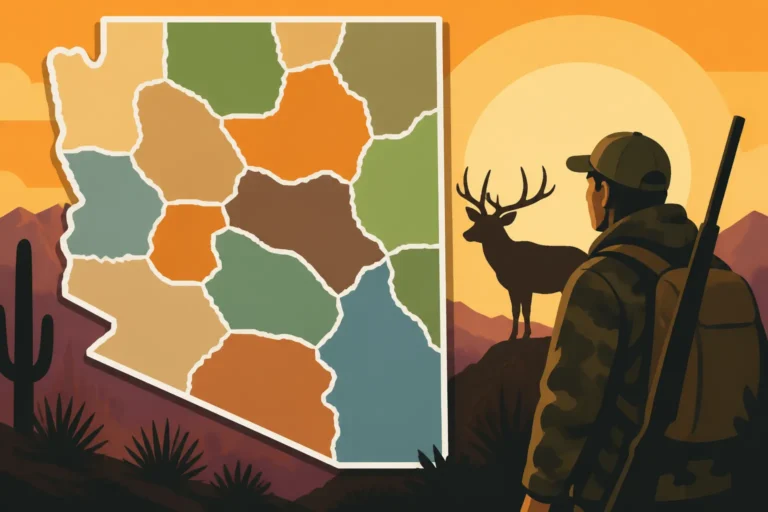
The Coronado National Forest isn't just one big mountain; it's a tapestry woven from several prominent Sky Island ranges, each offering unique hunting opportunities and challenges. Understanding these individual ranges is key to effective scouting and planning. The major players include the Chiricahua Mountains, the Huachuca Mountains, and the Santa Rita Mountains, among others. Each of these ranges functions as its own distinct ecosystem, often supporting different densities of game or requiring specialized access methods.
The Chiricahuas, for instance, are known for their incredible biodiversity and rugged, remote feel, often drawing hunters looking for a true backcountry experience. The Huachucas, while perhaps more accessible in parts, still present significant vertical challenges and dense cover. The Santa Ritas, perhaps best known for their iconic peaks visible from Tucson, hold robust populations of specific game. Hunters often focus on one range per season, diving deep into its topography, drainages, and game patterns. When you're looking at a map, whether it's a traditional paper map or a digital tool like onX Hunt, you'll see these distinct mountain masses clearly delineated, surrounded by lower, flatter desert lands. Identifying the specific range you'll focus on is often the first step in successful Sky Island hunting. Coronado National Forest Sky Island Access can be tricky, so knowing your target range helps immensely.
| Sky Island Range | Primary Game Species | Noted Features for Hunters |
|---|---|---|
| Chiricahua Mountains | Coues Deer, Black Bear, Javelina, Turkey | Extremely rugged, high elevation, remote |
| Huachuca Mountains | Coues Deer, Black Bear, Javelina | Steep slopes, dense oak brush, good water |
| Santa Rita Mountains | Coues Deer, Black Bear, Javelina | Iconic peaks, varied terrain, closer to population centers |
| Whetstone Mountains | Coues Deer, Javelina | Smaller range, still challenging, less pressure |
| Pinaleno Mountains | Mule Deer, Elk (small population), Black Bear, Turkey | Highest peaks in Southern Arizona, distinct habitats |
Game Species in the Coronado National Forest
While the Coronado National Forest supports a diverse array of wildlife, certain game animals truly define the hunting experience in these Sky Islands. The star of the show for many is undoubtedly the Coues deer, but opportunities for other big game, as well as smaller species, are also present, adding to the allure of these unique mountain ranges.
Coues Deer: The Gray Ghost of the Sky Islands
Ah, the Coues deer. The "Gray Ghost." If you've spent any time researching hunting in Arizona's Sky Islands, you know this little whitetail is the main event. What makes a What Separates a Coues From a Whitetail? They're smaller, often lighter in color, and incredibly elusive. Their small stature and camouflaged coats make them masters of disappearing in the dense, broken cover of the Sky Islands, even when you've just seen them. Their habitat within the Coronado National Forest typically ranges from 3,500 feet up to 8,000 feet or more, encompassing oak brush, junipers, pinyon pines, and eventually ponderosa pines and aspens at higher elevations. They thrive in the steep, rocky canyons and brushy hillsides, often preferring areas where they have multiple escape routes and vantage points.
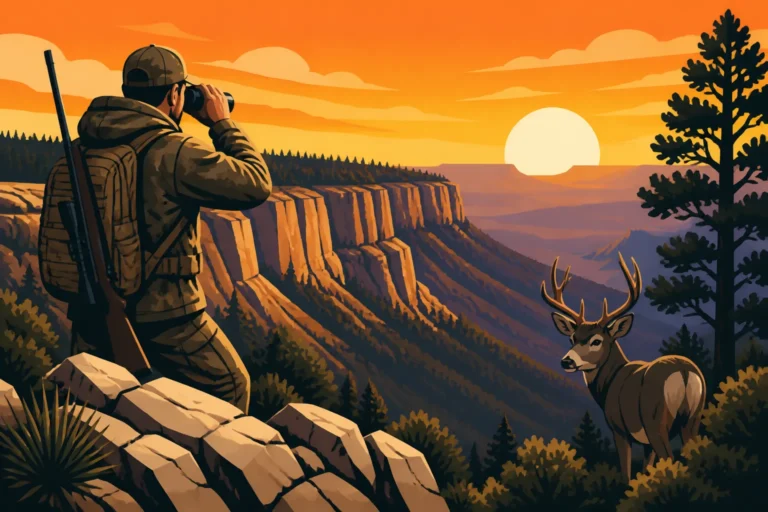
Hunting Coues deer is primarily a glassing game. You won't be still-hunting thick timber for these guys in the same way you might for a mule deer up north. Instead, you'll spend hours, sometimes days, perched on a vantage point, meticulously picking apart distant hillsides with your binoculars and spotting scope. Their behavior is often dictated by thermals, bedding high in the mornings and moving to feed or water lower down, only to climb back up as the day progresses. The frustration comes when you spot one, make a careful stalk over incredibly challenging terrain, and arrive at the last known location only to find empty air. They are masters of the vanishing act, hence the "ghost" moniker. Persistence, keen eyesight, and a solid understanding of their preferred habitats are your best friends here.
Other Big Game Opportunities
While Coues deer hold the spotlight, the Coronado National Forest also offers exciting hunting opportunities for other big game species, each presenting its own unique challenge. Black bear and mountain lion are present in good numbers across many of the Sky Island ranges. Bear hunts are often structured with harvest limits that can close units mid-season, making it crucial to stay informed through the Arizona Game and Fish Department's official channels. Arizona Bear Season and Harvest Limits are important to track. These bears frequent the oak thickets, feeding on acorns, and can often be found higher in the pines. Hunters might pursue them opportunistically while deer hunting, or specifically during their dedicated seasons, often using baits or hounds where legal.
Mountain lions, another elusive predator, are also present. These powerful cats are notoriously difficult to hunt without hounds due to their secretive nature and vast territories. Lion tags are generally available over-the-counter for many units in the Coronado, but successful hunts often require specialized skills or the assistance of experienced hound hunters. Always be aware of Mountain Lion Reporting Requirements in Arizona after a harvest. Then there are javelina, those fascinating "collared peccaries." While not pigs, their herd behavior and distinct musky scent make them an exciting and accessible hunt, particularly during archery seasons, which often overlap with deer seasons. They prefer the lower to mid-elevations, often found in prickly pear and mesquite flats adjacent to the steeper mountain slopes, making them a popular option for combination hunts.
Small Game and Upland Birds
Beyond the big game species, the Coronado National Forest provides ample opportunities for small game and upland bird hunters. This can be a fantastic way to introduce new hunters to the field or to simply enjoy a different kind of challenge in the same beautiful country. Quail hunting is a popular pastime in the Sky Islands. You'll primarily find Gambel's quail at lower to mid-elevations, often in the washes and denser brush, and the more elusive Mearns' quail in the oak grasslands at higher elevations, particularly after summer monsoons. Hunting Mearns' is a completely different experience; they hold tight for pointing dogs and explode from underfoot in coveys.
Turkey hunting is another draw, with Merriam's turkeys inhabiting the pine and oak country of the higher Sky Islands. Spring turkey seasons offer a chance to call in gobblers in scenic mountain settings, while fall hunts often focus on locating flocks and employing still-hunting or ambush tactics. Cottontail rabbits and various squirrel species also offer opportunities for hunters seeking to fill their small game bag limits. Many of these small game hunts occur outside the more restrictive big game seasons, offering flexibility and year-round reasons to explore the diverse landscapes of the Coronado National Forest.
Accessing and Navigating Coronado National Forest
Navigating the vast and often rugged terrain of the Coronado National Forest is a significant part of the hunting challenge. Unlike some flatter public lands, access here often means dealing with steep grades, rough roads, and remote trailheads. Understanding the lay of the land, from established road systems to protected wilderness areas, is paramount for a safe and successful hunt.
Road Systems and Trailheads
Getting into the heart of the Sky Islands often involves traversing a network of Forest Service roads, which can vary dramatically in quality. While some main arteries might be relatively well-maintained, many side roads and spurs quickly degrade into rough, rocky tracks that demand a high-clearance, four-wheel-drive vehicle. You'll frequently encounter steep climbs, washouts, and areas where rockfalls are common. It's not uncommon for a "road" on a map to be little more than a faint two-track overgrown with brush. Always be prepared for punctures, and carry recovery gear. I've had more than one trip where a fallen tree or sudden flash flood closed a route, forcing long detours.
Trailheads, which serve as entry points for foot travel into more remote areas, are often located at the end of these challenging roads. These can be bustling hubs during popular seasons or completely deserted at other times. It's crucial to check local Forest Service conditions and road closures before you head out, especially after heavy rains or snow in the higher elevations. Tools like GoHunt's mapping features or onX Hunt are invaluable here, as they often update road conditions and show seasonal closures. Remember, a road marked on a map doesn't always mean it's passable, or even still exists as a distinct vehicle track. Plan for extra travel time and have backup routes in mind.
Wilderness Areas and Their Restrictions
Within the Coronado National Forest, several designated Wilderness Areas protect some of the most pristine and remote Sky Island habitats. These areas offer an incredible opportunity for solitude and true backcountry hunting, but they come with strict rules designed to preserve their wild character. The primary restriction is that no motorized or mechanized vehicles are allowed. This means no ATVs, dirt bikes, mountain bikes, or even game carts. All travel must be by foot or horseback. If you're hunting a wilderness area, be prepared to pack everything in and pack everything out, including any harvested game, on your back or with the help of pack animals.
This rule significantly impacts hunting strategies, requiring hunters to be physically fit and capable of carrying heavy loads over rugged terrain for extended distances. It also necessitates careful planning for game retrieval. Scouting in wilderness areas requires boots on the ground, often covering many miles. While demanding, the reward is often a less pressured hunting experience and the chance to truly immerse yourself in the untamed beauty of the Sky Islands. Make sure to consult detailed maps and understand the exact boundaries of any wilderness areas you plan to hunt, as these boundaries can sometimes follow seemingly arbitrary lines on the ground. Wilderness Rules Inside Arizona Forests are paramount to follow.
Identifying Land Ownership
One of the biggest headaches for hunters across Arizona, and particularly in areas with mixed ownership like the Coronado National Forest, is accurately identifying public versus private land. You might be glassing a ridge only to realize the prime bedding area you're looking at is technically private property. Many areas feature a mosaic of National Forest, State Trust Land, and private inholdings, making boundary awareness crucial to avoid unintentional trespass.
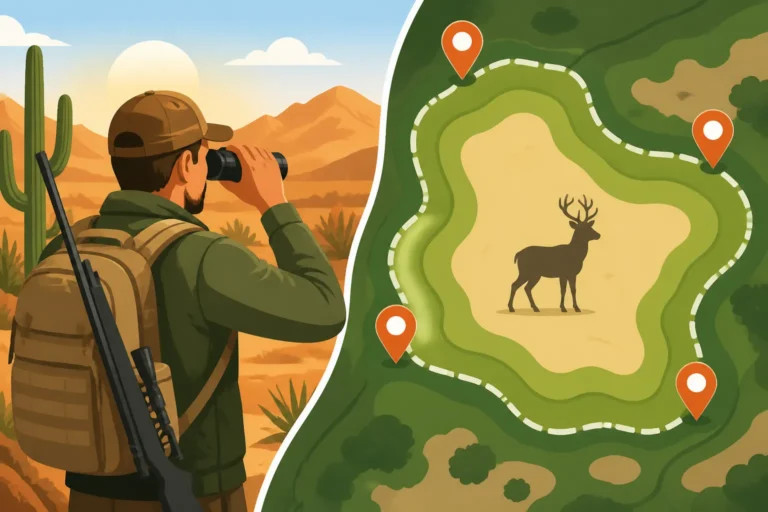
This is where modern mapping applications become indispensable. Services like onX Hunt provide detailed land ownership layers that clearly show public, private, and State Trust Land boundaries, often with landowner names. They can also show you Reading a Land Ownership Layer Correctly. While a hunting license generally serves as your permit for State Trust Land for hunting purposes, it's still vital to know where those boundaries lie. Always cross-reference your digital maps with physical maps if possible, and pay attention to fencing, signage, and natural boundaries on the ground. A little pre-hunt digital scouting with these tools can save you a lot of grief and ensure you're hunting legally and ethically on accessible public ground.
Hunting Strategies for Sky Island Terrain
Hunting in the Sky Islands is a unique beast, demanding a different set of skills and strategies than many other hunting environments. The terrain, vegetation, and the behavior of the game animals themselves necessitate a highly specialized approach, particularly when pursuing the elusive Coues deer.
Glassing as a Primary Tactic
If there's one skill that will define your success in the Sky Islands, it's glassing. Forget still-hunting through thick timber; the dense, broken country makes it nearly impossible to consistently spot game before they spot you. Instead, you'll spend countless hours behind your optics, systematically dissecting distant hillsides, canyons, and brushy slopes. This isn't just a quick scan; it's a slow, methodical process, often described as "picking apart" the landscape. You're looking for subtle movements, a horizontal line in a vertical world, an ear flick, or the distinctive silhouette of an antler against the brush. Glassing Arizona's Sky Islands for Coues Deer is an art form.
Finding a good vantage point is the first step. You want a spot that offers a wide, unobstructed view of potential game habitat, ideally with the sun at your back. Set up your spotting scope and binoculars on a sturdy tripod—this is non-negotiable for comfort and stability during long glassing sessions. Divide the terrain into small grids and examine each section meticulously, moving your gaze slowly. Pay close attention to shaded areas, the edges of cover, and any breaks in the terrain. Coues deer are masters of camouflage, and they can seemingly materialize out of nowhere. Patience is paramount; a good glassing session might last for hours, but that one flash of movement could be the buck you've been dreaming of.
Stalking and Approach Considerations
Once you've spotted an animal through your glass, the real work often begins: the stalk. This is where the Sky Island terrain truly tests a hunter's mettle. The steep, rocky, and often brush-choked slopes make quiet, undetected movement incredibly difficult. You'll need to utilize every bit of available cover, from large boulders to thick stands of oak brush, to break up your silhouette and mask your movement. Every step needs to be deliberate, testing the ground for loose rocks or snapping twigs.
Thermals are another critical factor. As the sun rises, thermals typically move uphill, carrying your scent with them. In the evenings, they reverse and flow downhill. Understanding these patterns is essential for planning your approach. An uphill stalk in the morning or a downhill stalk in the evening might put your scent directly in front of your quarry. Reading Wind on a Sky Island Stalk involves not just the prevailing wind, but also these localized thermal currents. Always try to approach from downwind and downhill when possible, using the terrain to your advantage. Be prepared for long, slow, and physically demanding stalks that might take hours to cover relatively short distances, and don't be afraid to back out and try again if the conditions aren't right.
Water Sources and Game Movement
In the arid environment of Arizona, water is life, and this holds especially true for game animals in the Sky Islands. While the higher elevations receive more precipitation than the desert floor, natural water sources can still be limited and are often key congregating points for deer, bear, javelina, and other wildlife. Identifying and understanding these water sources can give you a significant advantage. These can include natural springs, seepages, perennial creeks in canyon bottoms, or man-made stock tanks and guzzlers placed by wildlife agencies.
During drier periods, game animals will often travel considerable distances to access reliable water. Setting up for an ambush near a water source, or at least understanding the travel corridors leading to them, can be a highly effective strategy, particularly during early archery seasons when temperatures are high. Keep an eye out for fresh tracks, droppings, and rubbed trees near water. While hunting over water sources is generally legal on public land in Arizona, ethical considerations and specific unit rules should always be checked. Use mapping tools like onX Hunt to identify potential water sources (often marked as springs or tanks) and then scout them from a distance for sign. Remembering that Water Sources That Concentrate Arizona Desert Game are vital throughout the season will help you focus your efforts.
Essential Gear and Preparation for Sky Island Hunts
A hunt in the Coronado National Forest's Sky Islands is not a casual endeavor. The rugged terrain, extreme temperature swings, and challenging nature of the hunt demand meticulous preparation and a carefully curated gear list. Skipping corners on either can quickly turn an exciting adventure into a miserable ordeal.
Optics: Your Most Important Tool
I cannot emphasize this enough: quality optics are not just an advantage in the Sky Islands; they are an absolute necessity. You will spend far more time behind glass than with your rifle or bow in hand. Investing in the best binoculars and spotting scope you can afford will dramatically increase your chances of success. For binoculars, a 10x or 12x magnification is standard for all-day glassing, but some hunters prefer 15x to cover more ground. Pair them with a comfortable bino harness to keep them secure and accessible.
A high-quality spotting scope, ideally 60x or even 80x magnification, mounted on a rock-solid tripod, is crucial for scrutinizing distant details and identifying those subtle movements that betray a Coues deer's presence. Light transmission, edge-to-edge clarity, and ergonomic design are all critical features. Remember, it's not just about seeing something, it's about seeing it clearly enough to judge its size, sex, and determine if it's worth a several-hour stalk. Your optics setup should be an extension of your eyes, allowing you to patiently pick apart every inch of the complex terrain. The investment will pay dividends. Optics Power for Arizona's Long Desert Sightlines is key to success here.
Physical Fitness and Acclimatization
Hunting the Sky Islands is a marathon, not a sprint. The terrain is relentlessly steep, rocky, and often covered in dense, unforgiving brush. You'll be gaining and losing thousands of feet of elevation daily, often carrying heavy packs over uneven ground. If you're not accustomed to hiking in mountains, the physical toll can be severe. Preparing Physically for a Desert Hunt means more than just hitting the gym a few times. It means consistent cardio, strength training, and ideally, hiking with a weighted pack on terrain similar to what you'll encounter.
Furthermore, many of these ranges reach significant elevations (over 9,000 feet in some areas), and if you're coming from sea level, altitude sickness can quickly derail your hunt. Plan to arrive a day or two early to allow your body to acclimatize to the higher elevation. Stay hydrated, eat well, and don't push yourself too hard on the first day. Your physical conditioning will directly impact your ability to glass effectively for long hours, execute demanding stalks, and safely pack out an animal. This isn't just about bagging a buck; it's about being safe and enjoying the incredible, yet challenging, environment.
Navigation and Communication
Getting lost in the vastness of the Coronado National Forest, especially in its remote Sky Island wilderness areas, is a real possibility and a serious safety concern. Reliable navigation tools are non-negotiable. While a GPS unit or a smartphone with mapping apps like onX Hunt is incredibly useful for real-time positioning and understanding land ownership, always carry a physical map and compass as a backup. Batteries die, and electronics fail. Learn how to use them proficiently before you're out in the field.
Communication can also be a challenge. Cell service is notoriously spotty or non-existent in many of the deep canyons and remote ridges of the Sky Islands. Consider carrying a satellite communication device, such as a satellite messenger or phone, for emergencies. These devices allow you to send and receive messages or call for help even when traditional cell service is unavailable. Sharing your hunt plan with someone responsible back home, including your expected route and return time, is a basic but critical safety measure. Always be prepared for the unexpected, and ensure you have the means to navigate and communicate should things go awry. Satellite Communication From a Hunting Camp can be a literal lifesaver.
Disclaimer
This article is for general informational purposes only and does not constitute professional advice. Laws, prices and regulations vary by location and change over time. Consult a qualified professional for guidance on your specific situation.