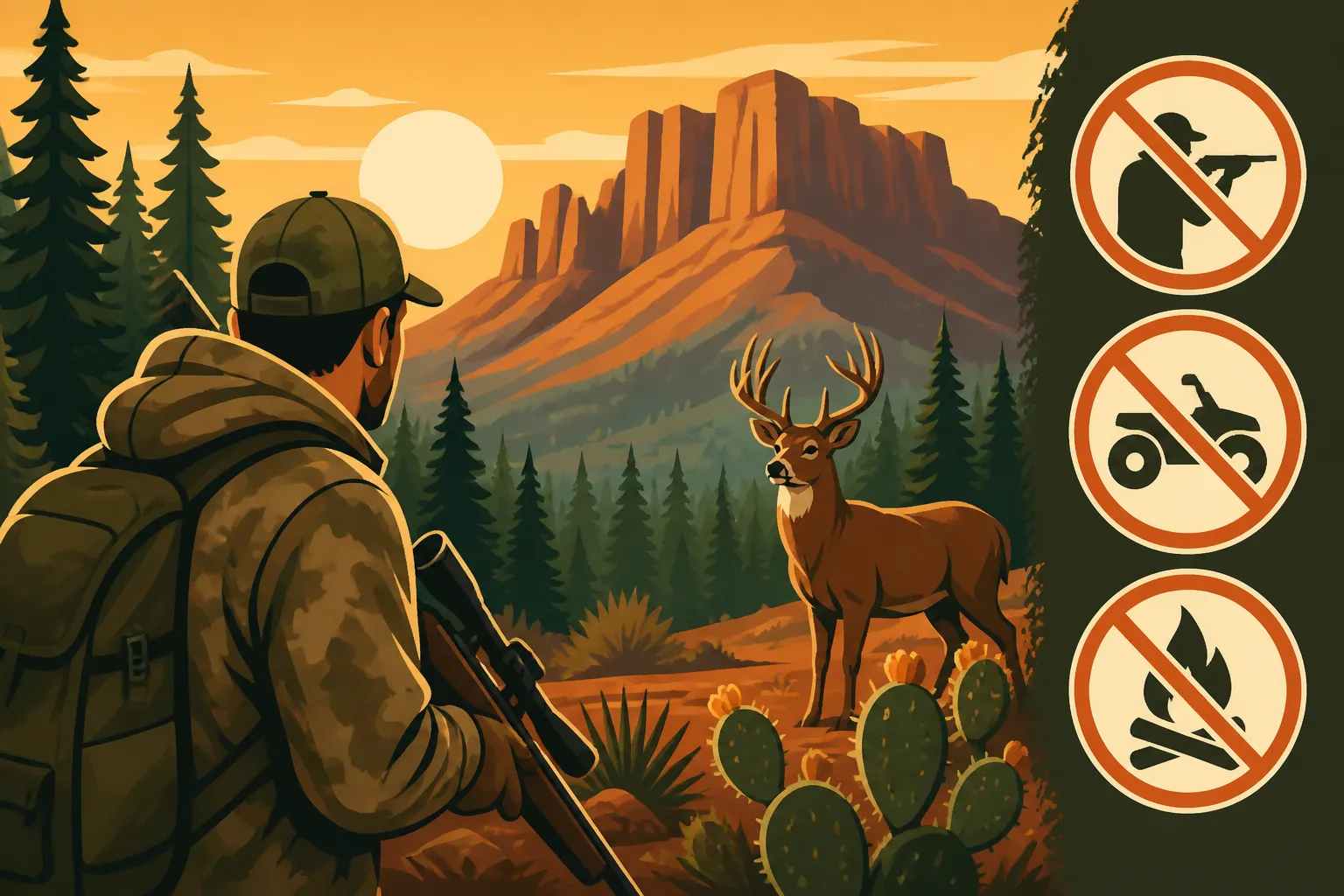
Wilderness Rules Inside Arizona Forests
Navigating Arizona’s vast public lands can feel like piecing together a complex puzzle, and nowhere is that more true than when you start looking at the designated wilderness areas within our national forests. It's easy to assume that all public land is treated equally, but wilderness areas have a unique set of rules that often trip up even seasoned hunters. This guide will walk you through the specific regulations and the underlying philosophy behind hunting in Arizona’s designated wilderness, helping you avoid costly mistakes and ensuring you respect these special places.
Understanding Arizona's Wilderness Areas
When you look at a map of Arizona, you'll see huge swaths of green and tan representing National Forests and BLM land, which often feel like open country where you can roam. But tucked away within these larger public land designations are "Wilderness Areas," set aside with a different, much stricter set of rules. Understanding what makes these areas unique is the first step to hunting them responsibly and legally.
What Defines a Wilderness Area?
The concept of a "wilderness area" stems from the federal Wilderness Act of 1964, a landmark piece of legislation designed to preserve certain areas in their "natural condition" – essentially, places "where the earth and its community of life are untrammeled by man, where man himself is a visitor who does not remain." This isn't just a flowery description; it's the core principle that dictates every rule you'll encounter. For hunters, this means embracing a primitive experience. You won't find roads, permanent structures, or even motorized vehicles. The idea is to maintain an environment where solitude is possible and the landscape truly feels untouched by modern intervention. This is a stark contrast to many other public lands where vehicle access might be allowed on designated routes, or where you might encounter more signs of human development. These areas are truly meant to be wild, and our access to them is a privilege that comes with significant responsibility.
The "untrammeled by man" aspect is key. It means that humans are meant to have as little lasting impact as possible. When you’re hunting in a wilderness area, you're expected to leave no trace of your presence – literally, no trash, no human waste that isn't properly buried, and no lasting changes to the landscape. This ethos directly translates into prohibitions on things like building permanent blinds, cutting down trees for firewood without specific permission, or even moving rocks to create a more comfortable camp. It’s about being a temporary guest, experiencing the wild on its terms, and then disappearing without a trace, preserving that primitive character for the next visitor and for the wildlife that calls it home.
Where Are Arizona's Forest Wilderness Areas?
Arizona is incredibly fortunate to have numerous designated wilderness areas, many of which are nestled within our sprawling national forests. You'll find significant wilderness tracts within the Coconino National Forest, like the West Clear Creek or Sycamore Canyon Wilderness, offering rugged, challenging terrain. The Tonto National Forest, one of the largest in the state, hosts the expansive Mazatzal Wilderness and the iconic Superstition Wilderness Hunting Access, both demanding incredible self-sufficiency from hunters. Over in the southeastern part of the state, the Coronado National Forest encompasses several Sky Island wilderness areas, such as the Chiricahua Mountains and the Santa Catalina Wilderness, which are prime habitat for Coues deer.
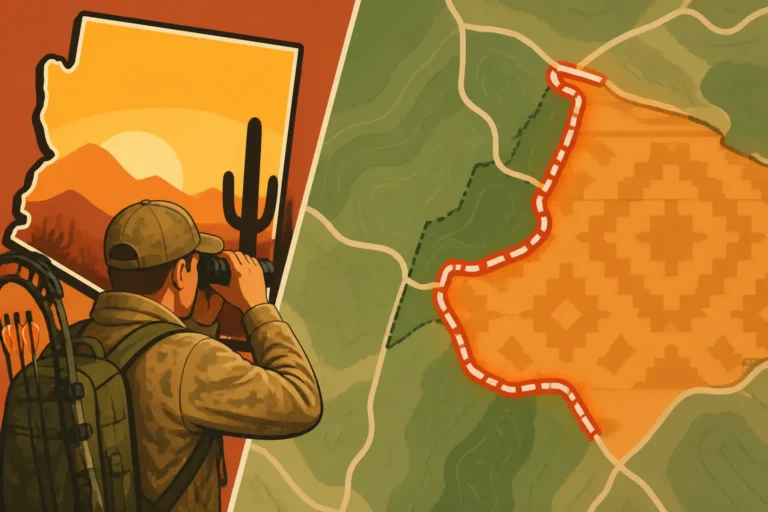
Further east, the Apache-Sitgreaves National Forests hold gems like the Blue Range Primitive Area, one of the most remote and wild sections of the state. Even the Kaibab National Forest, famous for its mule deer, has its own wilderness segments. And don't forget the Prescott National Forest, which includes the Granite Mountain Wilderness near Prescott. Identifying these areas on a map is crucial before you ever leave home. You can often find detailed wilderness maps on the respective National Forest websites, or you can use digital mapping tools like onX Hunt which clearly overlay wilderness boundaries, allowing you to see exactly where these special regulations kick in. Always double-check your maps and digital layers to ensure you’re respecting these boundaries, as straying into a wilderness area with a prohibited item can lead to serious trouble.
These wilderness boundaries aren't always marked on the ground, so relying solely on physical signage can be risky, especially in remote areas or heavy cover. That's why tools for E-Scouting an Arizona Unit Before the Season are so valuable. By studying the topography and boundary lines from home, you can anticipate where you might encounter wilderness boundaries and plan your approach, camp locations, and game retrieval strategies accordingly. It’s not just about knowing where the deer are; it’s about knowing the rules of the land you're pursuing them on, particularly in these sensitive wilderness zones.
Key Prohibitions and Restrictions for Hunters
The "untrammeled by man" philosophy translates into some very specific and often strict rules for hunters in Arizona's wilderness areas. These aren't just minor inconveniences; they're fundamental to the wilderness experience and can lead to significant penalties if ignored.
Motorized and Mechanized Transport
This is probably the biggest and most commonly misunderstood rule: absolutely no motorized vehicles or mechanized transport of any kind is allowed within a designated wilderness area. This means your truck, ATV, dirt bike, or even an electric mountain bike is strictly prohibited. You cannot drive in to retrieve a downed animal, nor can you use any sort of electric cart or motorized device. The intent is to preserve the primitive character and the experience of solitude that is core to wilderness designation. If you drive past a wilderness boundary, even by accident, you are violating federal law.
The implications for hunters are profound. If you harvest an animal deep in a wilderness area, you are responsible for packing it out entirely by human power, or with the help of traditional Pack Stock Rules Inside Wilderness such as horses or mules. This isn't just about the meat; it’s also about the cape, skull, and antlers if you're planning a full trophy retrieve. This often necessitates multiple trips, extensive physical conditioning, and careful planning regarding Getting Meat Cooled on an Early Season Hunt if you're in there during warmer seasons. Forget about cruising out on your ATV with a loaded cooler – that's simply not an option. You must be prepared for the physical demands of packing out your animal over rugged, often trailless, terrain. This rule really separates the casual backcountry hunter from those truly committed to a primitive experience.
Many hunters are accustomed to using specific trails or forest roads that might skirt wilderness boundaries. It’s absolutely essential to consult maps like the Motor Vehicle Use Maps for Forest Ground to ensure you understand exactly where these motorized routes end and where wilderness begins. Do not assume a trail is open to vehicles just because it looks well-used. When in doubt, walk. The penalties for unauthorized vehicle use in a wilderness area are severe, including substantial fines, impoundment of your vehicle, and even potential jail time. It’s a risk simply not worth taking, especially when digital mapping solutions make it so easy to know exactly where you stand.
Permanent Camps and Structures
Another crucial aspect of wilderness preservation is the prohibition on permanent camps, structures, or any lasting alterations to the environment. This means no building cabins, erecting permanent blinds, setting up game feeders, or even creating elaborate, long-term camp facilities. The idea is that when you leave, the area should look as if you were never there. Your presence should be transient, not imprinted on the landscape.
While you can set up a temporary camp for the duration of your hunt, there are still rules about minimizing your impact. Fires, if allowed by current restrictions, should be contained in existing fire rings or in a small, dug pit that can be completely obliterated when you leave. Shelters must be temporary, like tents or tarps, and should not involve cutting living trees or creating permanent structures. When you break camp, you must take everything with you, including any trash, food scraps, and even properly pack out or bury human waste away from water sources. The principle of "Leave No Trace" is not just a suggestion in wilderness areas; it's a fundamental expectation that ensures the primitive character remains intact.
This rule about leaving no permanent structures also applies to hunting aids. You can't construct a permanent tree stand or ground blind that remains year-round. Any stand or blind you use must be temporary and removed when you leave the area. This impacts how you might scout or prepare for a hunt, requiring a more mobile, less intrusive approach. For instance, rather than having a fixed stand location you check regularly with trail cameras (which are also often restricted or entirely prohibited in wilderness), you'll need to rely more on traditional scouting methods, understanding game movement, and employing still-hunting or spot-and-stalk techniques.
Commercial Guiding and Outfitting
It might seem counterintuitive for wilderness areas, but commercial guiding and outfitting are permitted, though under very strict conditions and through special use permits issued by the managing agency, typically the U.S. Forest Service. This isn't a free-for-all; these permits are limited, highly sought after, and come with stringent operational requirements designed to minimize impact and maintain the wilderness character. An outfitter or guide operating in a wilderness area must adhere to all the same rules regarding motorized vehicles, permanent camps, and leave-no-trace principles, often with even greater scrutiny.
For hunters considering a guided trip into an Arizona wilderness area, it's vital to ensure your outfitter is properly permitted and operating legally. Don't be shy about asking to see their special use permit. A reputable guide will be happy to provide this proof. These guides are expected to exemplify the highest standards of wilderness ethics and low-impact practices, as they are essentially stewards of these special places. Their operations are regularly monitored to ensure compliance with permit stipulations, which often include limits on client numbers, duration of stays, and specific areas of operation to disperse impact.
While the presence of an outfitter doesn't change the wilderness rules for individual hunters, it does mean that if you choose to go with a guide, they should be intimately familiar with these regulations and ensure your hunt adheres to them. A good wilderness outfitter will have horses or mules for packing in gear and packing out game, and they will run a camp that is entirely temporary and leaves absolutely no trace behind. They represent a bridge for some hunters to access challenging wilderness areas while still upholding the core values of the Wilderness Act, offering an experience that is primitive yet supported.
Essential Practices and Hunter Responsibilities
Hunting in a wilderness area is a different ballgame than hunting more accessible public lands. It demands a heightened sense of personal responsibility, meticulous planning, and a deep respect for the environment. These are the practices that become non-negotiable.
Navigation and Trip Planning
When you step into an Arizona wilderness area, you are stepping into a realm where traditional infrastructure vanishes. There are no marked trails in many places, no cell service in vast stretches, and certainly no easy way out if you get turned around. This makes expert navigation and comprehensive trip planning absolutely critical. You can't rely on getting quick help or finding a shortcut if you misjudge your route. Carrying a reliable GPS unit with pre-loaded maps, along with a physical map and compass, and knowing how to use them, is paramount. Digital tools like onX Hunt can be a lifesaver, allowing you to download offline maps to your phone or tablet, but never put all your eggs in that basket – batteries die, and technology fails. Always have a backup.
Beyond navigation, your trip planning needs to encompass every potential contingency. How much Water You Must Carry on a Day Hunt is a crucial calculation, especially in the arid Arizona wilderness, and planning for resupply points or reliable water sources is vital for longer excursions. What happens if you get injured? Do you have a satellite communication device like a Garmin inReach or a Zoleo? What about first aid? Your food, shelter, and emergency gear must be entirely self-contained and sufficient for the duration of your stay, plus a buffer for unexpected delays. The sheer remoteness means that any miscalculation can quickly turn into a serious, even life-threatening, situation. Hunters must embrace self-reliance as the core principle of a wilderness hunt.
This level of planning also extends to understanding the terrain, elevation changes, and potential hazards specific to the wilderness area you're entering. For instance, some wilderness areas like the Superstitions are notorious for their labyrinthine canyons and sharp, rocky peaks, demanding significant physical conditioning and experience on rough ground. Others, like the Blue Range, might involve vast, timbered country where visibility is limited. Using detailed topographic maps in conjunction with satellite imagery during your e-scouting phase can give you a significant advantage in understanding the lay of the land and planning realistic routes and escape options.
Packing It In, Packing It Out
The "Leave No Trace" principle is a cornerstone of wilderness ethics, and for hunters, it means meticulous attention to everything you bring in and everything you leave behind. This isn't just about not littering; it’s about ensuring that your presence leaves absolutely no lasting impact on the ecosystem or the experience of future visitors. Every single piece of trash, no matter how small – candy wrappers, spent casings, cigarette butts, even fruit peels – must be packed out. If you pack it in, you pack it out.
This also extends to biological waste. In many wilderness areas, especially those near water sources or popular corridors, burying human waste might not be sufficient; you may be required to pack it out using specialized waste bags. Always check specific wilderness regulations for these details. When it comes to field dressing an animal, you should do so away from water sources and trails, distributing the gut pile as widely as possible to encourage natural decomposition and minimize its impact on a single spot. Even bones and non-edible parts of the carcass must be left in a manner that allows nature to quickly reclaim them without creating an unsightly or unsanitary mess. The idea is to leave the place as pristine as you found it, preserving its wild character.
Consider the weight and volume of everything you bring. Every item needs to serve a purpose and be easily packed out once used. This encourages lightweight, efficient gear choices, from your tent to your cooking system. When hunting with a partner, coordinate gear to avoid duplication. This mindful approach to packing is not just about convenience; it's a direct reflection of your commitment to preserving these invaluable wild spaces. It also plays into overall physical preparation, as the less you leave behind, the less you have to carry out, making for a lighter pack on your way home.
Ethical Considerations and Solitude
Hunting in a wilderness area demands a strong ethical compass and a deep appreciation for the spirit of solitude and wildness these places represent. The Wilderness Act explicitly aims to provide opportunities for solitude, meaning you should strive to minimize your impact on the experience of other visitors and animals. This isn’t the place for loud conversations, blaring radios, or excessive noise that disrupts the natural quiet. It's about immersing yourself in the wild, being present, and moving through the landscape with respect and quiet intention.
Ethical hunting, already a critical component of our sport, takes on an even sharper focus in wilderness. This includes taking clean, humane shots, understanding shot distances in challenging terrain, and being prepared for rigorous tracking and retrieval. Losing an animal in a wilderness area is not only heartbreaking but can be incredibly difficult to recover, making precision and good judgment paramount. Additionally, the use of electronic calls is generally prohibited in designated wilderness areas, reinforcing the primitive hunting experience. You'll need to rely on your own calling skills or traditional, non-electronic devices.
Beyond the specific rules, there's a broader ethic of respecting wildlife and minimizing disturbance. This means not harassing animals, especially during sensitive times like calving or fawning, and giving them ample space. It also means appreciating the opportunity to be in such a pristine environment. These areas are not merely places to hunt; they are ecological treasures that offer a unique connection to the wild. By acting as responsible stewards, hunters ensure these wilderness areas remain vital habitats for wildlife and provide opportunities for primitive experiences for generations to come.
Consequences of Non-Compliance and Resources
Ignoring wilderness rules isn't just about bending a suggestion; it's a serious matter with legal repercussions. Understanding these consequences, and knowing where to get the definitive rules, is crucial for any hunter planning to venture into Arizona's designated wild lands.
Penalties for Violations
Let's be blunt: violating wilderness rules can carry stiff penalties. It's not uncommon for infractions like unauthorized vehicle use, leaving trash, or building illegal structures to result in significant fines. These fines can range from hundreds to thousands of dollars, depending on the severity and nature of the offense. In some cases, particularly for repeat offenders or egregious violations, federal charges can be brought, leading to potential jail time. Additionally, any equipment used in the violation, such as an ATV or vehicle, could be confiscated. Imagine having your hunting vehicle seized miles into a forest road because you crossed a wilderness boundary you didn't know existed. The headache and financial loss can be immense.
Beyond the monetary and legal consequences, there's also the potential loss of hunting privileges. Agencies take these violations very seriously, as they undermine the very purpose of wilderness preservation. A conviction could lead to a suspension of your hunting license or even a ban from accessing public lands for a period of time. It's a heavy price to pay for a lack of awareness or a deliberate disregard for the rules. This is why vigilance and proactive research are so critical. Ignorance of the law is never an acceptable defense in the eyes of law enforcement.
| Violation Type | Potential Consequences | Example Scenario |
|---|---|---|
| Motorized Vehicle Entry | Substantial fines, vehicle impoundment, potential jail | Driving an ATV down an old two-track past a "Wilderness Boundary" sign to retrieve a downed elk. |
| Leaving Litter/Trash | Fines, cleanup orders | Leaving food wrappers, spent casings, or unburied human waste at a camp site. |
| Creating Permanent Structures | Fines, mandatory removal, restoration costs | Building a semi-permanent ground blind with sawed logs or leaving a tree stand up for multiple seasons. |
| Unauthorized Commercial Activity | Heavy fines, permit revocation, potential jail | An unpermitted guide bringing clients into a wilderness area for a hunt. |
| Electronic Devices (e.g., e-calls) | Fines, confiscation of device | Using an electronic game call for elk in a wilderness unit where they are typically prohibited. |
These penalties highlight just how seriously federal agencies view the protection of these primitive areas. It’s a clear message that the privilege of accessing wilderness comes with a strict adherence to its unique regulations. Getting caught on the wrong side of these rules can turn a memorable hunting trip into a regrettable and costly legal ordeal. Always consult official sources for the most current information, as rules can change. For a broader understanding of legal consequences, you might also find information on Penalties for Breaking Arizona Travel Rules helpful, although wilderness violations often carry even higher stakes.
Where to Find Specific Wilderness Regulations
The best place to find accurate and up-to-date wilderness rules is directly from the source. For any federally designated wilderness area within a National Forest, the specific rules are managed by the U.S. Forest Service. This means you should visit the website of the particular National Forest you plan to hunt in (e.g., Coconino, Tonto, Coronado, etc.) and look for information under their "Wilderness" sections. These pages will often have specific prohibitions, maps, and contact information for the local Ranger District. These local districts are your best resource for clarification if you have any doubts.
Beyond the Forest Service, the Arizona Game and Fish Department (AZGFD) also publishes regulations that apply to hunting within these areas. While the Forest Service governs land use, AZGFD governs hunting activities. It's crucial to check both, as there can be overlaps or specific hunting regulations that pertain to wilderness environments, such as restrictions on certain calling devices. Always download and read the most current Arizona hunting regulations booklet before your season, and look for any sections specifically addressing wilderness areas.
In addition to official government sources, many reputable hunting resources and community platforms can help you navigate these complex rules. Websites like GoHunt often provide unit-specific information and can sometimes help hunters interpret regulations, though they should always be cross-referenced with official sources. Digital mapping tools, as mentioned earlier, are fantastic for visualizing boundaries, but the written regulations are where you'll find the letter of the law. Make it a habit to check all these sources before you pack your bags, and if in doubt, make a phone call to the local Forest Service Ranger District – a few minutes on the phone can save you a world of trouble and ensure you hunt ethically and legally in Arizona's cherished wilderness.
Disclaimer
This article is for general informational purposes only and does not constitute professional advice. Laws, prices and regulations vary by location and change over time. Consult a qualified professional for guidance on your specific situation.